

Vatican
Pope Leo XIV expected to begin first Latin America tour in Uruguay this November
Pope Leo XIV is expected to make his first visit to Latin America this November, with Uruguay likely to be the first stop on a tour that AdVaticanum understands will also include Argentina and Peru. Preparations are already underway and Vatican officials are visiting key sites ahead of the expected announcement later this month Pope Leo XIV is expected to make his first visit to Latin America in November, with Uruguay set to become one of the destinations on a tour that is also expected to include Argentina and Peru. Although the Holy See Press Office has yet to publish the official itinerary, Cardinal Daniel Sturla, Archbishop of Montevideo, has said preparations are already underway and expressed confidence that the visit will take place. He described the visit as a moment of great significance for the Church in Uruguay after decades without a papal visit. Speaking at a press conference at the headquarters of the Uruguayan Episcopal Conference, Cardinal Sturla announced that Vatican officials had arrived in the country to continue preparations for the anticipated journey. Although the Cardinal stressed that the final dates and programme remain subject to confirmation by the Holy See, with an announcement expected at the end of July, he said the visit would be in November as part of what will be Leo XIV’s first visit to the Americas since his election in May 2025. The Cardinal revealed that he had personally extended an invitation to the newly elected Pope only days after the beginning of his pontificate. Recalling their first meeting, Cardinal Sturla said he told Leo: “Holy Father, we are waiting for you. We come from Uruguay. Remember that Francis did not visit Uruguay or Argentina, so we are waiting for you.” Those remarks alluded to the long-standing disappointment felt by many Catholics in both Uruguay and neighbouring Argentina that Pope Francis never returned to either country during his pontificate, despite repeated speculation that such a journey would eventually take place. Leo XIV’s anticipated visit would represent the first papal visit to Uruguay since St John Paul II travelled there in 1988. Although no official programme has yet been released, Cardinal Sturla indicated that Montevideo is expected to feature prominently on the itinerary, while a possible visit to Paysandú, in the north of the country, remains under consideration. “Our desire is to be the first ones visited,” His Eminence said, adding that “there are many signs” suggesting Uruguay will open the South American tour. Nevertheless, the Cardinal cautioned against assuming details that have not yet been formally confirmed. “The idea is for him to go to a department in the north; it might be Paysandú, but since it’s not confirmed, we shouldn’t raise false expectations.” Among the principal events under discussion is a Mass at the National Shrine of the Virgin of the Thirty-Three in Florida on 8 November, coinciding with the feast of Uruguay’s patroness. Cardinal Sturla expressed the hope that Pope Leo would preside over the celebration, describing such a possibility as “a tremendous gift for the Virgin and for all of us who can celebrate Holy Mass with the Pope there.” Preparatory work has already extended beyond logistical planning. According to the Cardinal, Vatican representatives have visited Montevideo, Florida and Paysandú to assess venues and organise the practical arrangements required for the papal visit. Particular attention has also been given to Casavalle, one of the most disadvantaged areas of Montevideo, where the Catholic Church has long been involved in extensive charitable and pastoral work. Cardinal Sturla said it was important that the Holy Father should witness those initiatives first-hand and have the opportunity to meet those who benefit from them. Alongside the pastoral programme, Pope Leo is also expected to meet President Yamandú Orsi, who personally presented the invitation to visit Uruguay during a meeting at the Vatican. However, Cardinal Sturla indicated that no address to the Uruguayan Parliament is expected as the Vatican generally avoids institutional events that could become politically contentious. “The Pope is a unifying factor, and if something provokes controversy, he will surely not speak in Parliament,” he said. . Also participating in the press conference was communications consultant Yago de la Cierva, who coordinated Pope Leo XIV’s recent visit to Spain. He urged those beginning preparations to prepare well in advance. “What I am here to tell you is that you have no idea what is coming your way,” he warned those who will prepare the Uruguay papal visit. Unlike the Pope’s recent visit to Spain, which focused on a single country, the forthcoming apostolic journey is expected to mirror the structure of his African tour by encompassing several nations in one regional visit. While attention has understandably centred on Uruguay following Cardinal Daniel Sturla’s announcement, AdVaticanum understands that the November journey has been conceived as a wider South American tour that will also include Peru and Argentina. Elements of the Peruvian itinerary have already begun to emerge, while preparations are advancing across all three countries ahead of the Holy See’s formal announcement, expected later this month.
Jul. 15, 2026
Vatican launches healthcare initiative for missionaries and religious outside insurance system
Not all consecrated religious and missionaries are covered by the Vatican’s internal health insurance. A new initiative aims to change that, creating a dedicated healthcare framework built around solidarity rather than employment status The Vatican has launched a new initiative aimed at expanding access to healthcare for consecrated men and women, missionaries and other Church personnel who fall outside the scope of its existing health insurance system. An agreement signed on 13 July between the Governorate of Vatican City State, RBHold S.p.A. and the Futuro Salute ETS Foundation establishes what the Vatican described as a project of “ethical and social value” intended to study, develop and implement a sustainable model of healthcare for categories of people who are either not enrolled in, or are ineligible for, the Vatican’s Health Insurance Fund. The agreement was signed at the Governorate Palace by Sr Raffaella Petrini, President of the Governorate of Vatican City State, together with Roberto Favaretto, President of RBHold S.p.A., and Marco Favaretto, Managing Director of the Futuro Salute ETS Foundation. Rather than creating an immediate replacement for the Vatican’s existing healthcare arrangements, the project seeks to establish a long-term organisational and financial framework capable of supporting prevention, medical treatment and assistance for those who have traditionally remained outside the reach of the Holy See’s internal healthcare structures. Announcing the initiative, the Governorate said the project aims to “promote access to prevention and treatment pathways through a dedicated organisational and economic model”. It added that the initiative would be developed according to “an economic and financial model based on the principles of mutual solidarity and sustainability, excluding any individual profit-making purpose”. The Governorate also stressed that “the resources committed will be used to support and develop the solidarity objectives that constitute its mission”, adding that the project would be built around a “sustainable medium- and long-term economic model”. Under the terms of the agreement, responsibilities are divided between the three parties. The Governorate will identify those eligible to benefit from the programme while overseeing clinical governance through its Directorate of Health and Hygiene, which will evaluate the appropriateness of treatments and coordinate healthcare pathways. RBHold will contribute its expertise in designing the organisational and financial architecture underpinning the initiative, drawing on its experience in supplementary welfare, healthcare administration, insurance services and pension management. Meanwhile, the Futuro Salute ETS Foundation will focus on promoting the project’s charitable dimension, supporting solidarity initiatives and securing the financial resources required to sustain the programme over the long term. There have long been limitations within the Vatican’s existing healthcare arrangements. Medical coverage for those connected with the Holy See has traditionally centred on the Fondo di Assistenza Sanitaria (FAS), the Vatican’s internal Health Insurance Fund, which primarily serves Vatican employees, residents and other eligible personnel directly linked to the Holy See’s institutions. However, many consecrated religious and missionaries have never fallen within those eligibility criteria. Members of religious institutes often belong to communities that are legally and financially independent of Vatican employment structures, while missionaries frequently serve in countries where access to stable healthcare can be unpredictable and where they rely largely on the resources of their religious communities or local healthcare systems. Although religious orders have historically sought to care for their members through their own networks and charitable support, access to preventive medicine, specialist treatment and long-term care has often varied considerably depending on location and financial resources. The new agreement establishes a dedicated framework specifically tailored to these groups rather than attempting to extend the existing Health Insurance Fund itself. RBHold is an Italian holding company with extensive experience in supplementary welfare systems, healthcare administration and insurance management. Through subsidiaries specialising in healthcare claims administration and technological services, the group has developed expertise in managing large-scale healthcare programmes and welfare systems. The Futuro Salute ETS Foundation, by contrast, is a non-profit organisation dedicated to developing new models of welfare and healthcare based on solidarity. The foundation has previously collaborated with the Vatican on healthcare initiatives, including supporting the Directorate of Health and Hygiene through the donation of ambulances in 2024. Although the agreement represents only the beginning of the initiative, it is an important development in the Governorate’s approach to welfare which will ensure that consecrated men and women, missionaries and other excluded groups are able to benefit from organised healthcare support through a system designed around their circumstances rather than their employment status.
Jul. 15, 2026
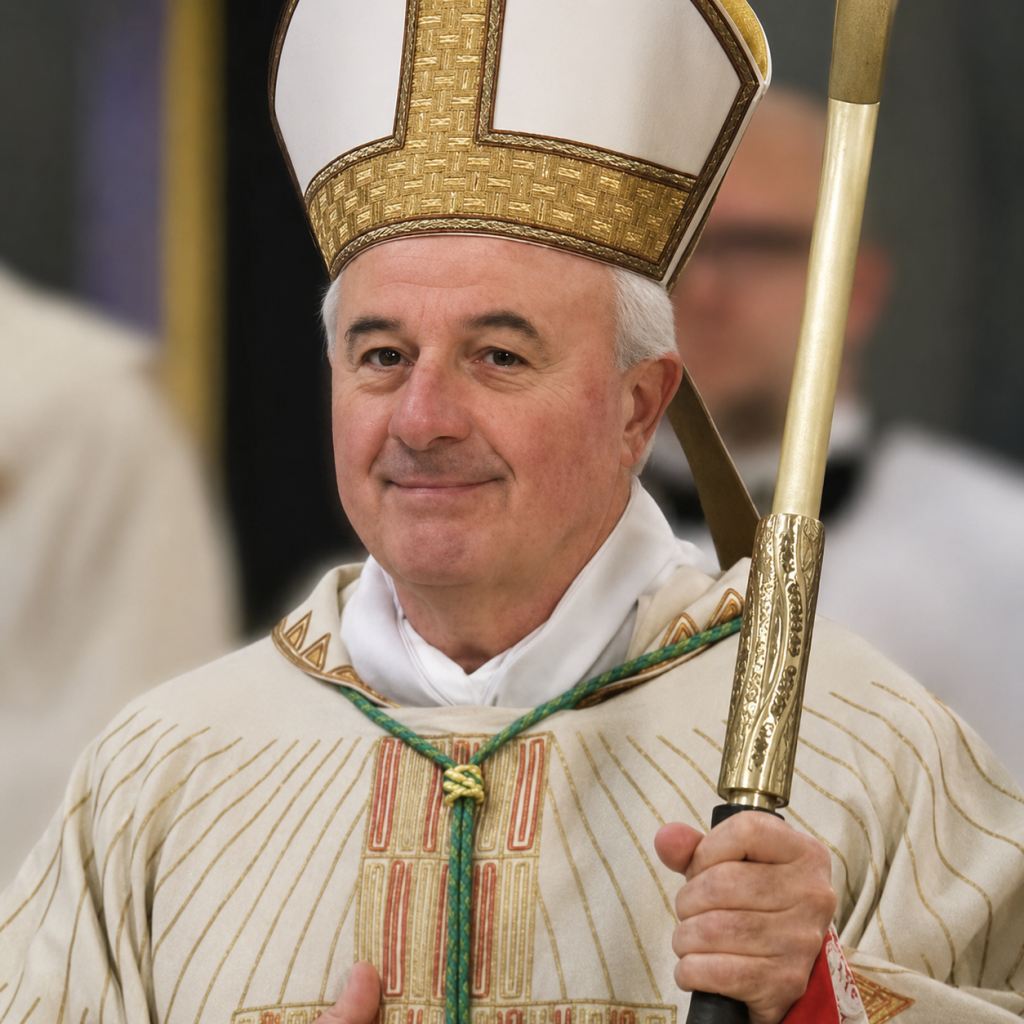
Francis era appointments unroofed from Rome: Di Tolve tipped for Chioggi
Bishop Michele Di Tolve, appointed as an auxiliary bishop of Rome by Pope Francis in 2023, is reportedly set to be transferred to the Diocese of Chioggia. This move is part of the latest Francis-era appointments being unroofed from Rome. An Auxiliary Bishop of the diocese of Rome may move to Chioggia, a seaside town south of Venice. According to an exclusive report by MessainLatino , Bishop Michele Di Tolve, an auxiliary bishop of Rome appointed by Pope Francis and currently serving as rector of the Pontifical Roman Major Seminary, is set to be transferred to the Diocese of Chioggia. According to MessainLatino , sources in the Diocese of Chioggia have indicated that this move is forthcoming, though it has not yet been formally confirmed by the Holy See. Bishop Di Tolve was born in Milan on 19 May 1963 and grew up in the parish of San Francesco d’Assisi in Grancia and Pagliera di Lainate. He completed his priestly formation at the Milanese archiepiscopal seminaries. Ordained deacon on 4 December 1988 in Cesano Maderno by Cardinal Carlo Maria Martini, he was ordained a priest on 10 June 1989 in Milan Cathedral by Cardinal Martini. In 2007, Cardinal Dionigi Tettamanzi appointed him head of the Catholic Religious Education Service and the School Pastoral Service. From 2008 to 2014, he served as the Supreme Moderator’s Delegate at the Higher Institute of Religious Sciences in Milan. In 2014, Cardinal Angelo Scola named him rector of the archiepiscopal seminary of Milan, effective from 2015. Pope Francis appointed him auxiliary bishop of Rome and titular bishop of Orrera on 26 May 2023. On 4 July 2023, he was named rector of the Pontifical Roman Major Seminary with the task of strengthening relationships between priestly formation institutions in the territory of the Diocese of Rome and coordinating their activities. This potential transfer forms part of small but substantial changes to the Francis-era appointments that have rooted themselves within the ecclesiastical personnel of the Vicariate and the Roman Curia, where the Pope has already implemented structural changes, correcting substantial parts of Francis’s reform. Gradual but firm, these adjustments reflect a deliberate approach to diocesan governance in Rome. On 30 June, Pope Leo XIV issued the motu proprio Confirma Fratres Tuos , rolling back key parts of Pope Francis’s 2023 reform of the Diocese of Rome. The document recentres diocesan governance around the Cardinal Vicar as the principal authority in the day-to-day government of the Pope’s diocese. After announcing the consecration of four new auxiliary bishops of Rome on 25 February, Pope Leo established a commission comprising all the auxiliary bishops and the Cardinal Vicar to review the apostolic constitution In Ecclesiarum Communione . Francis’s reform had significantly reduced the power of the Cardinal Vicar and increased the powers of the vicegerent and the episcopal council. Article 10 of In Ecclesiarum Communione described the Cardinal Vicar as “an auxiliary and vicar general” who would exercise episcopal ministry with ordinary vicarious power. The revised text under Pope Leo simplifies this, eliminating the description of the Cardinal Vicar as “an auxiliary and vicar general” and instead affirming that the Cardinal Vicar has “the high and effective direction of the Vicariate”, with only brief mention of the vicegerent at the end. Pope Francis had also dismissed most of his auxiliary bishops in favour of loyalty and abolished the historic centre pastoral sector of the Diocese of Rome. Beyond the structural reforms in the Diocese of Rome, Pope Leo has been slowly unwinding elements of the Curia. Cardinal Michael Czerny, who owed his Curia position to Pope Francis and was made a cardinal by him in 2019, was replaced as prefect of the Dicastery for Promoting Integral Human Development by Sister Alessandra Smerilli, FMA. Sister Smerilli had been an auditor at the 2018 Synod on Youth. Pope Francis appointed her as councillor of the Vatican City State and consultant to the General Secretariat of the Synod of Bishops in 2019. In 2020, she coordinated the economic task force of the Vatican Covid-19 Commission. She became undersecretary of the Faith and Development Section of the dicastery in March 2021, interim secretary in August that year, and permanent secretary in April 2022. Sources close to the dicastery told AdVaticanum she is “relatively popular internally and she is scandal free”. Cardinal Fabio Baggio, CS, was appointed pro-prefect alongside her. The Dicastery for Communication has seen a particularly striking change. The dicastery under Paolo Ruffini as prefect was viewed as entrenched in the Francis way of operating. Paolo Ruffini and his associates, described as the “Palazzo Pio Gang”, were seen as deeply connected to that approach, including Ruffini’s defence of Fr Rupnik. Montserrat Alvarado’s appointment as prefect in June to replace him was therefore incredible, coming as something of an unexpected move from an outsider. Sources told AdVaticanum that she told His Holiness that “she wanted to bring back orthodoxy”. Pope Leo XIV has also replaced Cardinal Konrad Krajewski, a loyalist of Pope Francis, as head of the Vatican’s principal charitable office, appointing the Spanish Augustinian Bishop Luis Marín de San Martín as the new Almoner of His Holiness and Prefect of the Dicastery for the Service of Charity. Cardinal Krajewski had served in the role since 2013 and became the first prefect of the dicastery following the Roman Curia reforms of 2022. The replacement of the cardinal, who is only 62 and well below the usual age for such transitions, raised questions. Nothing has been said about whether the change followed a request from the cardinal himself. Such abrupt transitions are uncommon in the Roman Curia, particularly when they involve a relatively young cardinal whose term has not reached its natural conclusion. Viewed in their entirety, these developments illustrate a slow but steady reorientation. The potential move of Bishop Di Tolve from his prominent roles in Rome to the Diocese of Chioggia would align with this pattern, removing one of the more recent Francis-era appointments from the centre of Roman ecclesiastical life.
Jul. 10, 2026
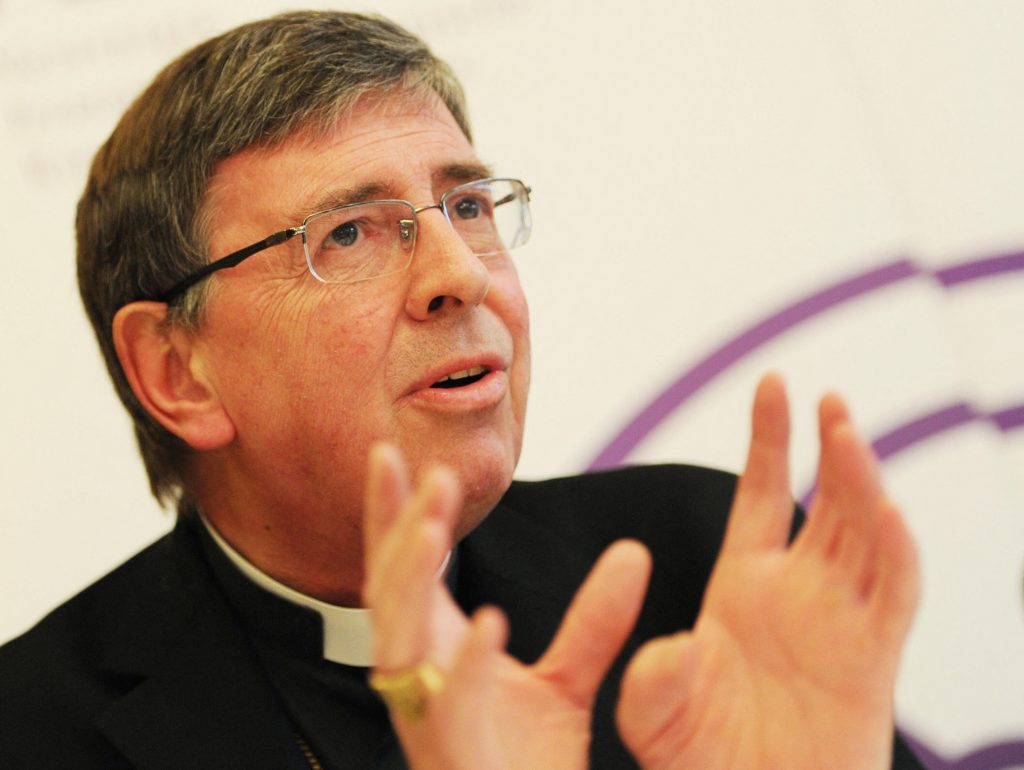
Cardinal Koch says reconciliation with SSPX remains possible
Cardinal Kurt Koch has expressed hope that dialogue between the Holy See and the Society of Saint Pius X can one day resume despite the recent episcopal consecrations. Speaking on the Communion podcast, the Prefect for Promoting Christian Unity also questioned whether the current situation can yet be described as a formal schism. Cardinal Kurt Koch has expressed hope that dialogue between the Holy See and the Society of Saint Pius X (SSPX) can eventually resume despite the Society’s recent episcopal consecrations. Speaking on the Communion podcast, the Swiss cardinal, Prefect of the Dicastery for Promoting Christian Unity, described excommunication as a “medicinal penalty” intended to encourage repentance rather than permanently sever communion with the Church. He insisted that the penalties incurred should not be viewed as the final chapter in relations between Rome and the traditionalist movement. “An excommunication is a medicinal penalty. It is not intended to be definitive; rather, it is meant to invite repentance so that one may find the way back,” Cardinal Koch said. Although the Prefect acknowledged that prospects for renewed discussions appear remote in the immediate aftermath of the consecrations, he nevertheless expressed confidence that reconciliation remains possible over the longer term. “I hope it will be possible in the future to resume new talks, so that they may find their way back into the Catholic Church,” he said, before adding: “At the moment I do not see that happening, but it would also be far too early.” Cardinal Koch suggested that patience would be required, pointing to previous ecclesiastical disputes that took years before meaningful conversations could begin again. Drawing a historical comparison, he noted that meaningful dialogue with the Old Catholics only became possible after several decades. He suggested a similar period of reflection may now be necessary before relations with the Society can progress. The cardinal also questioned whether it is yet accurate to describe the current situation as a formal schism. “I am not entirely convinced that one can already speak of a schism,” he said. Referring to the illicit episcopal consecrations carried out by Archbishop Marcel Lefebvre in 1988, Koch observed that Pope John Paul II had deliberately used the expression “schismatic act” rather than declaring that a completed schism existed. “Even in 1988, Pope John Paul II spoke of a ‘schismatic act.’ That is not necessarily the same thing, because a schismatic act concerns those who carried out the act and those who submitted themselves to it. That is not yet schism in the proper sense.” The distinction suggests that, in Koch’s view, the canonical consequences of the recent consecrations should not automatically be understood as creating a separate ecclesial body. Cardinal Koch also rejected suggestions that the Society has already established a fully fledged parallel Church. While acknowledging that the Society possesses bishops, he argued that it lacks the ordinary hierarchical structures that would normally characterise such a body. According to Koch, the Society has consistently maintained bishops for the sacramental power of orders rather than granting them ordinary jurisdiction. The Prefect noted that the Society continues to be governed by a priest superior rather than by a diocesan-style episcopal hierarchy, making the description of a parallel Church difficult to sustain. Earlier this year, when asked by this publication’s Vatican correspondent about dialogue with the SSPX, Cardinal Koch replied: “I am not involved in the dialogue with the SSPX. It is the responsibility of the Dicastery for the Doctrine of the Faith. Because of that I cannot be disponible for the meetings.” Cardinal Koch devoted considerable attention to what he sees as the deeper theological issues that continue to divide Rome and the Society. The Prefect argued that one of the central contradictions lies in the Society’s attitude towards papal authority. “This amounts to a form of self-authorisation for carrying out episcopal consecrations,” he said. He continued, “…a self-contradiction: on the one hand, they invoke the authority of the Pope in the most beautiful terms, yet on the decisive issues they go their own way.” Furthermore, Cardinal Koch argued that disagreement with particular papal decisions amounts to an incomplete acceptance of the post-conciliar papacy. “To me, this gives the impression of an abstract recognition of the Petrine primacy rather than a concrete recognition of the present Pope and of all the Popes since the Second Vatican Council.” Alongside his criticisms of the Society, however, Koch argued that recent events should also prompt self-examination within the wider Church. “It would be good to take the present dispute with the Society of St. Pius X as an opportunity to beat our own breast and reflect on what needs to be corrected,” the Prefect said. The prefect identified three areas where he believes misunderstandings or distortions have emerged in the decades following the Second Vatican Council. The first concerns the continuing relationship between the traditional Roman liturgy and the post-conciliar form of the Roman Rite, which he described as an unresolved question. Secondly, he criticised what he called ecclesiological pluralism within modern ecumenical thinking, arguing that some approaches wrongly treat all Churches and ecclesial communities as essentially equal, thereby obscuring the Catholic Church’s unique identity. His third concern was religious pluralism, which he described as the widespread belief that all religions provide equally valid paths to God. Koch maintained that these developments should not be confused with the authentic teaching of the Second Vatican Council itself. Instead, he suggested they represent later interpretations that have developed in the years since the Council. Furthermore, Cardinal Koch appeared to acknowledge that some of the concerns long raised by the Society relate to genuine post-conciliar tendencies, even while insisting that these should not be attributed to the Council’s actual texts. Despite the tensions created by the latest consecrations, Cardinal Koch believes that any return to formal discussions will require time, patience and, ultimately, the work of the Holy Spirit. As he put it, while the Church is responsible for what is possible, “the impossible is the realm of the Holy Spirit.”
Jul. 6, 2026
Keep Trad and carry on!
Following the Vatican’s declaration that the SSPX bishops have excommunicated themselves, Dom Alcuin Reid calls for renewed work for Catholic unity + Ad te Domine, clamabo, Deus meus, ne sileas a me; ne quando taceas a me, et assimilabor descendentibus in lacum, the Church sings the Introit of this Holy Mass. “To thee, O Lord, I call; my rock, be not deaf to me, lest, if thou be silent to me, I become like those who go down to the Pit.” With these first words of Psalm 27 the Sacred Liturgy aptly expresses the distress of many souls in the light of ecclesial events of recent days. Whether or not one accepts that conscientious disobedience to positive (i.e. man-made, not divine) law (in respect of the consecration of bishops) is or was justified in current circumstances, and can therefore tolerate material but not formal (i.e. in fact gravely sinful) disobedience to ecclesiastical authority, we now face a new crisis—one of the pastoral order, whereby the faithful whose sole desire is to be faithful to the Church and save their souls and those of their families are menaced by the threat of the sin of schism and of the penalty of excommunication. Their distress is real and it is compounded by commentary that is often far from accurate and is lacking in the necessary pastoral precision. Rightly, they feel that this is all simply too much. With just cause do many cry out this morning: “To thee, O Lord, I call; my rock, be not deaf to me, lest, if thou be silent to me, I become like those who go down to the Pit.” So let us be clear: there is no sin (of schism or of any other sort) in simply seeking the salvation of one’s soul through the traditional liturgical rites of the Church, as the prayers for the Pope and the Diocesan Bishop which they contain attest. These prayers in fact bear witness the exact opposite of schism. They are public manifestations at the very heart of our public worship of Catholic unity and of communion, not of sectarian division. And one is not excommunicated because one’s access to the older liturgical rites is sometimes or usually through a community who, before God, believed that they had no choice other than to engage in conscientious material disobedience to Church law in order to survive and remain faithful to their vocation and mission. Whatever of the culpability of clerics—and this is not the occasion to discuss that—even the official documents cited by the Holy See in recent days make it clear that the lay faithful simply seeking to worship Almighty God and receive the sacraments do not incur the penalty of excommunication thereby. (see: Explanatory Note, Pontifical Council for Legislative Texts, 24 August 1996) In the face of the ongoing brouhaha, one might well say: ‘Keep trad and carry on.’ For it remains true that “what earlier generations held as sacred, remains sacred and great for us too, and it cannot be all of a sudden entirely forbidden or even considered harmful.” (Benedict XVI, Letter to the Bishops, 7 July 2007) Of course, this truth was subjected to an orchestrated attack through that scandalous back-room ideological plot fuelled by the paranoia of ageing ecclesiastical liberals and based on downright lies that shamelessly manipulated the will of world’s bishops that we know only too well: the pastoral, liturgical and ecclesial disaster Traditiones Custodes (16 July 2021) that sought to end the peaceful worship of God according to the older rites that increasing numbers had grown fruitfully to love, driving faithful Catholics underground or away from parishes and dioceses and at times even outside of the visible communion of the Church. That orchestrators of this scandal and the high priests of its heartless implementation remain at the centre of power to this day is a cause of very deep concern. It may also go some way to explain the technocratic severity with which the Vatican has acted in recent days. That Traditiones Custodes has not yet been set aside—quietly or otherwise—and that diocesan bishops continue to use it to forbid the celebration of the older liturgical rites cries out to heaven for justice. Rightly, this morning, do we sing: “To thee, O Lord, I call; my rock, be not deaf to me, lest, if thou be silent to me, I become like those who go down to the Pit.” The matter-of-fact severity with which the Vatican has responded to the events of recent days, and indeed the silence of the Holy Father in their wake, is indeed another source of serious concern. For some time now we have been repeating the words of Pope Benedict XVI—a pope who worked earnestly and fruitfully for ecclesial unity and liturgical peace: “Looking back over the past, to the divisions which in the course of the centuries have rent the Body of Christ, one continually has the impression that, at critical moments when divisions were coming about, not enough was done by the Church’s leaders to maintain or regain reconciliation and unity. One has the impression that omissions on the part of the Church have had their share of blame for the fact that these divisions were able to harden. This glance at the past imposes an obligation on us today: to make every effort to enable for all those who truly desire unity to remain in that unity or to attain it anew.” (Letter to the Bishops, 7 July 2007) This morning, unfortunately, his words, are all the more pertinent. More could and should have been done in recent months, weeks and days. More must be done to build bridges and to open doors. The teaching of the Parable of the Lost Sheep (Mt 18:12-14) applies no matter what one thinks of the sheep concerned or how obstinate one believes it or they to be. In his pursuit of Church unity, in 2008 Pope Benedict XVI lifted the excommunications from the (then) four bishops of the Society of St Pius X. In his own words, “the quiet gesture of extending a hand gave rise to a huge uproar, and thus became exactly the opposite of a gesture of reconciliation.” So much so that the Pope found it necessary to write an unprecedented apologia to the bishops of the world. The questions he raised therein are more than pertinent in these days: “Was it, and is it, truly wrong in this case to meet half-way the brother who ‘has something against you’ (cf. Mt 5:23ff.) and to seek reconciliation? … Can it be completely mistaken to work to break down obstinacy and narrowness, and to make space for what is positive and retrievable for the whole? …Can we be totally indifferent about a community which has 733 priests, 264 seminarians, 5 seminaries, 94 schools, 2 university-level institutes, 144 religious brothers, 250 religious sisters and thousands of lay faithful? Should we casually let them drift farther from the Church? I think for example of the 733 priests…I do not think that they would have chosen the priesthood if…they did not have a love for Christ and a desire to proclaim him and, with him, the living God. Can we simply exclude them, as representatives of a radical fringe, from our pursuit of reconciliation and unity? What would then become of them? [statistics updated to those published in 2025] Certainly, for some time now, and once again on this specific occasion, we have heard from some representatives of that community many unpleasant things – arrogance and presumptuousness, an obsession with one-sided positions, etc… But should not the great Church also allow herself to be generous in the knowledge of her great breadth, in the knowledge of the promise made to her? Should not we, as good educators, also be capable of overlooking various faults and making every effort to open up broader vistas? And should we not admit that some unpleasant things have also emerged in Church circles? …During the days when I first had the idea of writing this letter, by chance, during a visit to the Roman Seminary, I had to interpret and comment on Galatians 5:13-15. I was surprised at the directness with which that passage speaks to us about the present moment: “Do not use your freedom as an opportunity for the flesh, but through love be servants of one another. For the whole law is fulfilled in one word: ‘You shall love your neighbour as yourself’. But if you bite and devour one another, take heed that you are not consumed by one another.” …sad to say, this “biting and devouring” also exists in the Church today, as expression of a poorly understood freedom. Should we be surprised that we too are no better than the Galatians? That at the very least we are threatened by the same temptations? That we must always learn anew the proper use of freedom? And that we must always learn anew the supreme priority, which is love?” (Letter to the Bishops, 10 March 2009) The purpose of these observations is not to declare for or against any group or person, let alone to judge them or to seek to exclude them. Let us not forget that whilst the prodigal son sinned shamelessly, his self-righteous elder brother did so also. (cf. Lk 15:11-32) Both were guilty of grave matter of which they needed to repent. And this is most certainly not an attack on our Holy Father—we do know his motivations or intentions, and even if his silence leaves a significant vacuum, we own him the patience that is part of filial respect. Let us pray earnestly for the Holy Father in these days! The purpose of these observations is solely to recall some fundamental truths and to insist that we are all called to pray and work in whatever way we can for their recognition and for reconciliation and Catholic unity. Even as we may share the distress and fear of the psalmist that all may be lost and that we are descending ever more rapidly into the Pit (or that we have already been cast into it) the Sacred Liturgy now takes us up to the Altar of God, where, by the infinite merits of Christ’s Sacrifice on the Cross, all that seems lost can be found again, and all that was dead can rise to new life (cf. Lk 15:32). Much as our hearts may be heavy, and much as we may feel wounded and distressed and even abandoned, let us never doubt that if we are faithful the Lord shall hear our plea and save us. For the grace of that fidelity and for an increase of the grace of supernatural hope in ourselves and in others, let us pray earnestly in this Holy Mass. +
Jul. 5, 2026
Superior General responds to Pope Leo after excommunication decree
The Superior General of the Society of Saint Pius X has responded to Pope Leo XIV following the decree of excommunication issued by the Dicastery for the Doctrine of the Faith. In a letter sent from Écône on 3 July 2026, Fr Davide Pagliarani responded to the notification signed by the Prefect of the Dicastery, […] The Superior General of the Society of Saint Pius X has responded to Pope Leo XIV following the decree of excommunication issued by the Dicastery for the Doctrine of the Faith. In a letter sent from Écône on 3 July 2026, Fr Davide Pagliarani responded to the notification signed by the Prefect of the Dicastery, Cardinal Víctor Fernández. Fr Pagliarani opens his letter with a pointed reference to St Luke’s Gospel, asking whether a father would give his son a stone instead of bread, a serpent instead of a fish, or a scorpion instead of an egg. He applies this imagery to the Society’s recent appeals to the Holy See. The decision, he suggests, demonstrates the difficult situation facing the universal Church. He goes on to explain that what the SSPX has done, and continues to do, is simply an effort to save souls amid confusion. The Society does not seek to replace the Church but only to remain faithful to her. He writes that, in conscience, the SSPX could not ignore its duty towards souls, a point previously made to the Pope both privately and publicly. The letter continues by explaining that the Society had asked only for “a measure of understanding for a sincere case of conscience”. “We are certain that one day a Pope will wish to employ it for the good of the universal Church,” Fr Pagliarani states. Despite the sanctions, Fr Pagliarani renewed an earlier promise made to the Holy Father. He quotes from his personal letter of 21 November 2025: “The Society promises You […] to devote all its energies to preserving Tradition and placing it at the service of the Church. In doing so, the Society of Saint Pius X does not merely maintain ancient customs; it fosters and preserves priestly vocations, religious vocations, and large, deeply Christian families—in a word, everything that manifests the vitality of the Church, of grace, and of the Catholic faith. Our intention is not to offer the Church a museum of antiquities, but rather the entirety of Tradition: fruitful, a source of spiritual life, embodied and lived out within souls.” The SSPX promises not to receive the new sanctions “with bitterness or revolt”. Instead, Fr Pagliarani writes, the suffering will be offered for the good of souls and of the Church. The sanctions, he says, compel the Society to love the Church more deeply and to provide for her needs with even greater determination. Looking ahead, the Superior General of the SSPX expressed confidence that a future Pope will adopt St Pius X’s programme, Instaurare omnia in Christo (“To restore all things in Christ”). On that day, the Holy Father will find in the SSPX “not a nest of serpents and scorpions, but a small army of loyal sons, ready to do anything to sustain Him in the restoration of all things in Our Lord, and to vindicate before all mankind the imprescriptible rights of Christ the King over all souls and over all nations”. Those souls, he adds, are bound to the Church not upon the “shifting sands of an ambiguous dialogue”, but upon “the rock of the faith of Peter”. Fr Pagliarani asks the Blessed Virgin Mary to hasten that day and prays that Pope Leo XIV may soon experience the joy it will bring. In the meantime, he humbly requests a blessing “as Your sons”, despite the recent decision. “For us, nothing has changed, and nothing ever will change.” The letter closes with an expression of trust in Divine Providence, which sees into every heart, and is signed as the Pope’s “most devoted son in the Lord”. This response comes after the Dicastery for the Doctrine of the Faith (DDF) issued its decree on 2 July. The document declares the excommunications incurred automatically by those involved in the recent consecrations. It refers to earlier admonitions addressed to the Superior General and cites the canonical penalties for the schismatic act. The explanatory note accompanying the decree reviews the history of reconciliation efforts since Pope Paul VI, noting that the latest consecrations without pontifical mandate have worsened the situation. It reaffirms the 1988 judgment that such disobedience constitutes a schismatic act and sets out the implications for ministers and faithful associated with the SSPX, including the illicit administration of the sacraments and the invalidity of marriages assisted by its clergy. The note nevertheless presents the Church as a loving mother, open to those seeking full communion. “Notwithstanding the admonitions addressed to the Superior General of the Priestly Fraternity of Saint Pius X, Bishop Alfonso de Galarreta, having performed a schismatic act by means of the episcopal consecration of four priests, without pontifical mandate and against the will of the Supreme Pontiff, has incurred ipso facto the penalties provided for in can. 1387 and can. 1364 §1 CIC 2021.” Signed by Cardinal Fernández, Prefect of the Dicastery for the Doctrine of the Faith, Mons. Armando Matteo, Secretary for the Doctrinal Section, and Archbishop John J. Kennedy, Secretary for the Disciplinary Section, the decree continues: “It is therefore declared, for all legal effects, that the aforementioned Bishop Alfonso de Galarreta, as well as Pascal Schreiber, Michael Goldade, Michel Poinsinet de Sivry, and Marc Hanappier, have incurred ipso facto the penalty of latae sententiae excommunication reserved to the Apostolic See.” The decree goes further than the excommunications declared in 1988 by stating that “clergy and lay faithful are admonished not to adhere to the schism of the Priestly Fraternity of Saint Pius X, lest they incur ipso facto the penalty of latae sententiae excommunication.” Accordingly, SSPX faithful may also incur the excommunication declared by Rome. Unlike in 1988, when the decree was issued by the Congregation for Bishops, this decree has been issued by the Dicastery for the Doctrine of the Faith. The explanatory note further advises the faithful against formal association with the Society, stating: “Finally, all the faithful are exhorted to remain steadfast in communion with the Roman Pontiff, with the bishops in communion with him, and with the whole Church (cf. Lumen Gentium , 22; can. 751 CIC), and to abstain from participating in the celebrations and activities promoted by the aforementioned Priestly Fraternity of Saint Pius X.” The explanatory note also raises further questions for SSPX faithful by stating: “It is finally noted that the Holy People of God are informed that the sacred ministers of the Priestly Fraternity of Saint Pius X administer the sacraments and the sacrament of Penance illicitly, and that the marriages assisted by them are invalid.” Archbishop Marcel Lefebvre founded the SSPX to preserve traditional priestly formation and liturgy in the years following the Second Vatican Council. The 1988 episcopal consecrations without papal approval led to the original break. Periods of dialogue followed under successive popes, including the lifting of the bishops’ excommunications in 2009 as a gesture intended to facilitate reconciliation. Nevertheless, differences over authority, doctrine, and the role of Tradition have persisted.
Jul. 4, 2026