

Nigeria
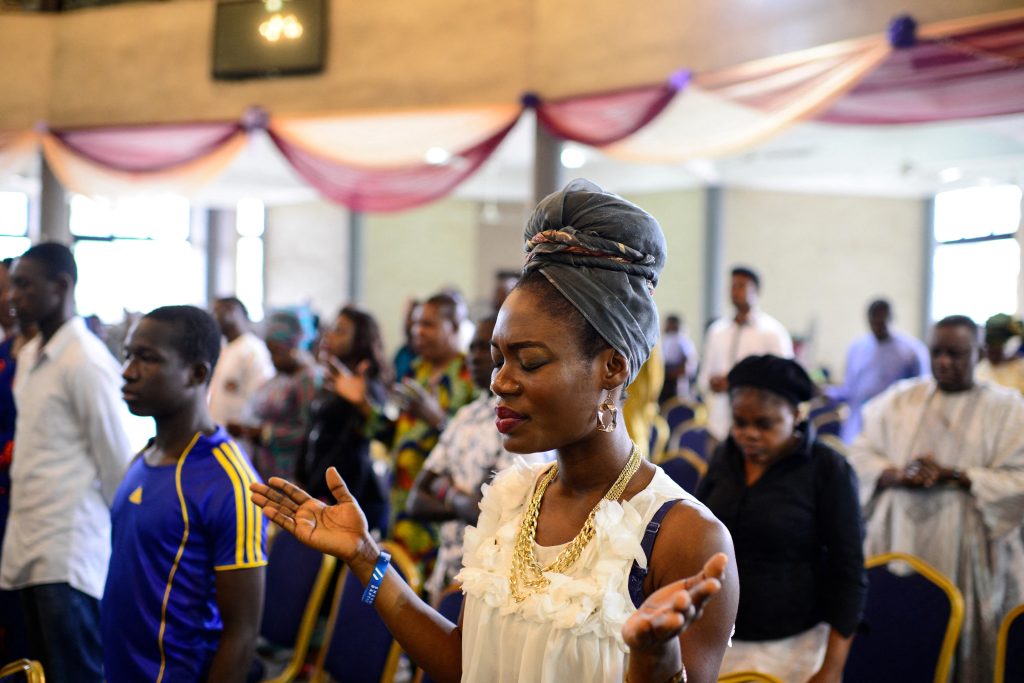
Attacks on Christians in Nigeria on the rise again
Reports from Nigeria indicate that attacks on Christian communities are once again increasing. At least 121 people were reportedly killed in Plateau State between May and 11 July, while further attacks in Plateau and Benue states have been reported in recent days It appears that violence against Christians has once again taken grip in Nigeria. Testimonies are appearing online of a recent spate of attacks against Christians led by Fulani Militias. Reports from Plateau State, in Nigeria’s Middle Belt, are detailing that at least 121 people were killed between May and July 11, 2026. The Berom Youth Moulders Association, who combilled the data said that the state had seen 62 deaths in May, 43 in June and another 16 during the first 11 days of July. The association describes the deaths as being caused by a “fresh wave of coordinated attacks.” Furthermore in Plateau State On July 12, it is believed that 9 members of a single family were killed in Kum village and Jol District was subject to repeated raids between July 14 to 17. In one video circulating online, a Christian missionary explains how 30 people were killed in the Chrisitian village of Kubat, also Plateau State. When he and some other Christians tried to reach the village, there was another attack and multiple other Christian villages were targeted. He describes the incidents as “well-cordinated” with the terrorists having “achieved” their goals. Other videos have circulated showing Fulani militias surrounding the remains of what appears to be Chrisitan houses and shouting “allahu akbar”. In Otukpo-Nobi, Benue State, also on July 12 16 were killed in what local media have described as a “suspected herdsmen attack.” The attack is said to have target the residents of the village whilst they were asleep and most of the victims were women and children. On July 14th, another resident of Otukpo Local Government Area, in the neighbouring village of Ondo-Ugboju was killed. The attacks are thought to be at least in part reprisals for the June 26th murder of Alhaji Ardo Risku Muhammad, the Benue State chairman of the Miyetti Allah Cattle Breeders Association of Nigeria (MACBAN). Risku’s position meant that much of his job was to represent the Fulani cattle breeders in Nigeria. According to Open Doors international, Nigeria is the 7th most dangerous country in the world to be Christian. In northern Nigeria, 12 states have implemented Islamic law which has created a system where Christians live as second-class citizens, and conversion from Islam can be severely punished. Here, groups such as Boko Haram, have launched a regime of terror against Christians living in the region. . In the middle belt of the country the violence is prodomently carried out by Islamic militants among the Fulani people, who disproportionately attack Christian communities with horrific violence. In 2024 Nigeria was the country with the highest number of Christians killed for their faith, with 3,100 Christians killed and 2,830 kidnapped that year.
Jul. 21, 2026
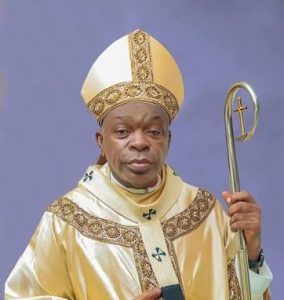
Former Nigerian bishops’ conference president Archbishop Augustine Akubueze dies aged 69
Archbishop Augustine Akubueze, former president of the Catholic Bishops’ Conference of Nigeria and Archbishop of Benin City, has died aged 69. He led the Nigerian bishops during some of the country’s most challenging years as violence against Christians intensified and was widely credited with strengthening two of Nigeria’s most vibrant dioceses Augustine Obiora Akubueze, former president of the Catholic Bishops’ Conference of Nigeria, has died at the age of 69. Born in 1956, he was ordained a priest in 1987 and consecrated as the first Bishop of the Diocese of Uromi in 2006, taking the episcopal motto Ut Testimonium Perhibeam Veritati (“That I may bear witness to the Truth”). He oversaw the growth of the dynamic and youthful diocese and is credited with the strong position it finds itself in today, with 113 diocesan priests serving 45 parishes and 54 men in training for the priesthood. In 2011, his hard work was recognised, and he was appointed Archbishop of Benin City, one of Nigeria’s oldest and most influential Catholic jurisdictions. Under his leadership, the number of priests grew from 104 to 173, while the number of parishes increased from 62 to 94. The number of women religious also almost doubled, from 73 to 135. Archbishop Akubueze served as President of the Catholic Bishops’ Conference of Nigeria from 2020 to 2024. Nigeria has long been in the grip of violent religious conflict. In 2020, at the beginning of his tenure as president, Nigeria was classified by Open Doors as the 12th most dangerous country in the world in which to be a Christian. By 2024, it had risen to sixth due to a sharp increase in Islamist violence against Christian communities, particularly in the country’s Middle Belt. Archbishop Akubueze’s death was announced on Thursday by the Catholic Secretariat of Nigeria in a statement shared on its official Facebook page. The statement reads: “In total surrender to God’s will and sure hope of the Resurrection, the Catholic Secretariat of Nigeria invites all the faithful and people of goodwill to unite in prayer for the eternal repose of the soul of Most Rev. Augustine Obiora Akubeze, Metropolitan Archbishop of Benin City and former President of the Catholic Bishops’ Conference of Nigeria. May the Lord, in His infinite mercy, grant him everlasting rest. And may his soul, together with the souls of all the faithful departed, through the mercy of God, rest in peace. Amen.”
Jul. 10, 2026
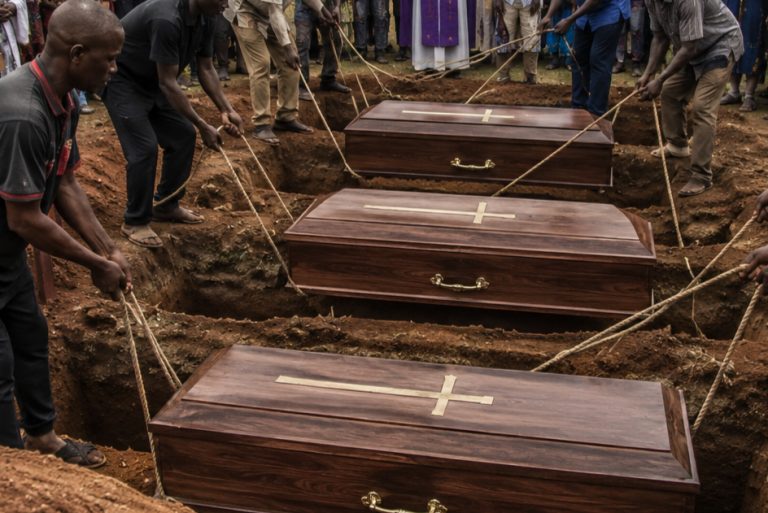
Four sentenced to death over 2022 massacre of 41 Catholics at Nigerian church
Four men have been sentenced to death for the 2022 attack on St Francis Xavier Catholic Church in Owo, Nigeria, in which 41 worshippers were killed during a Pentecost Mass. The ruling comes almost four years after one of the deadliest attacks on Christians in the country’s recent history Four men have been sentenced to death for the massacre of 41 worshippers at a Catholic church in Nigeria in a landmark ruling, almost four years after one of the country’s deadliest attacks on Christians. The Federal High Court in Abuja found Idris Abdulmalik Omeiza, Al Qasim Idris, Jamiu Abdulmalik and Abdulhaleem Idris guilty of terrorism offences connected to the Pentecost Sunday attack on St Francis Xavier Catholic Church in Owo, Ondo State, on 5 June 2022. The gunmen stormed the church during Mass and opened fire on the congregation before detonating explosives, leaving dozens dead and more than 100 people injured in scenes that horrified Catholics across Africa and beyond. Delivering judgment, Justice Emeka Nwite said the evidence against the four men was “neither shaken nor contradicted during cross-examination”. “Hence this court finds the first to fourth defendants guilty of all nine counts,” he said. The court imposed death sentences for the killings and handed down additional prison terms for terrorism-related offences, including membership of a terrorist organisation. A fifth defendant, Momoh Otuho Abubakar, was acquitted after the court ruled that prosecutors had failed to prove their case against him. The attack on Owo sent shockwaves through Nigeria because it took place in the predominantly Christian south-west, a region that had largely escaped the scale of violence experienced in other parts of the country. Worshippers had gathered to celebrate Pentecost when the attackers struck. Witnesses described hearing gunfire and explosions as panic spread through the packed church. Among those killed were children. One of the most harrowing testimonies heard during the trial came from a survivor who lost both legs below the knee and an eye after an explosive device detonated during the assault. The prosecution argued that the four convicted men had planned and carried out the attack as members of a terrorist network. Prosecutor Ayodeji Adedipe welcomed the verdict, telling the court: “Justice has been served. Justice has been done to the deceased who were murdered in cold blood.” Defence lawyers said the convictions would be appealed. The massacre drew condemnation from political and religious leaders around the world. Then-President Muhammadu Buhari described it as a “dastardly act”, saying that “only fiends from the nether region” could have carried out such a crime. Ondo State Governor Rotimi Akeredolu, who visited the scene shortly after the attack, called it a “vile and satanic attack” on innocent worshippers. Pope Francis also remembered the victims in his prayers, expressing his closeness to those who had been “painfully stricken in a moment of celebration”. The killings became a symbol of Nigeria’s worsening security crisis, which has seen churches, schools, villages and transport links targeted by armed groups across the country. At the time of the attack, no group immediately claimed responsibility, although Nigerian authorities later linked the atrocity to Islamist extremists operating in the region. The assault came amid growing concern among Christian leaders over attacks on clergy and worshippers. In the weeks surrounding the Owo massacre, kidnappings of priests and other church leaders were reported in several parts of the country, while armed gangs continued to terrorise communities through abductions and raids. Although Nigeria’s government rejects claims that Christians are being systematically targeted, church leaders have repeatedly called for stronger action to protect vulnerable communities and places of worship. The convictions are among the most significant secured by Nigerian authorities in relation to a major terrorist attack on a church. Under Nigerian law, the death sentences will require further legal processes before they can be carried out, and appeals are expected to follow. Another deadly incident was the coordinated Christmas Day church attacks in 2011, primarily the bombing at St Theresa’s Catholic Church in Madalla, near Abuja. On 25 December, Boko Haram carried out multiple strikes on Christian worshippers, with the Madalla attack killing at least 37 to 40 people and injuring dozens more as congregants left Mass. Bombings and shootings also targeted churches in Jos, Gadaka and Damaturu that day, contributing to a total death toll of around 40 to 50 across the affected sites. Another major massacre occurred in Yelewata, Benue State, in mid-June 2025, when Fulani militants attacked a displacement camp sheltering Christians. Reports indicate that around 200 people were killed in a single night, with attackers storming storefronts that had been converted into temporary shelters and using guns and other weapons against men, women and children.
Jun. 10, 2026
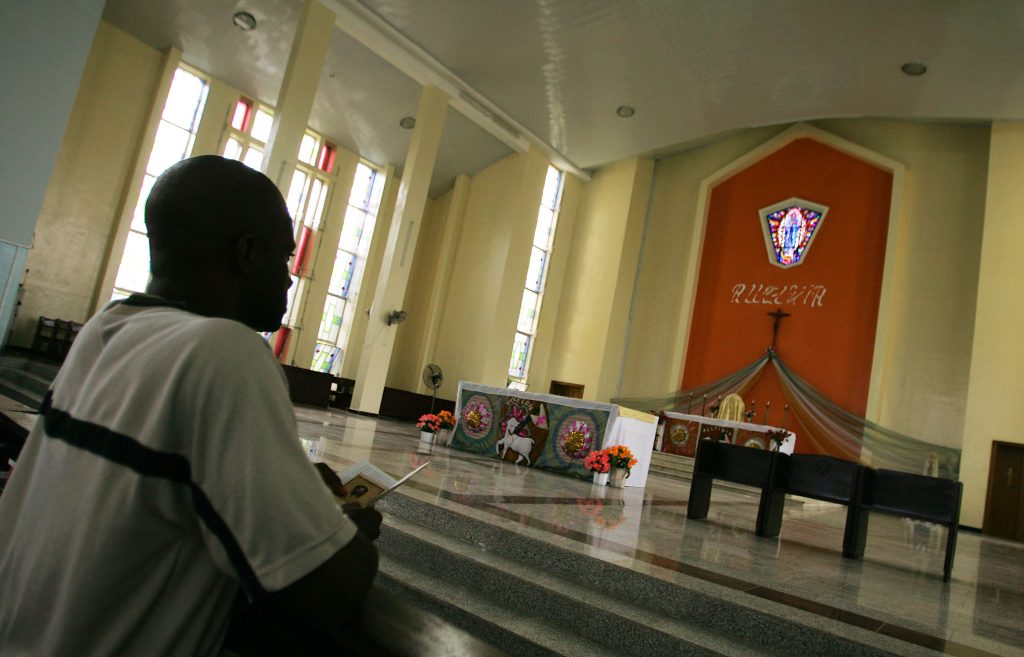
Nigerian archdiocese orders week of reparation after Blessed Sacrament stolen
The Archdiocese of Owerri has declared a week of prayer and reparation after thieves broke into an adoration chapel through the roof and stole a monstrance containing the Blessed Sacrament The Archdiocese of Owerri in southern Nigeria has declared a week of prayer and reparation after thieves broke into an adoration chapel and stole a monstrance containing the Blessed Sacrament. The desecration took place at St Mulumba Parish, Wetheral Road, Owerri, during the early hours of 29 April after intruders reportedly entered the chapel through the roof. In a statement to the faithful, Archbishop Lucius Iwejuru Ugorji said: “It is with great sadness that we inform you of the desecration of the Chapel of Adoration of St Mulumba Parish, Wetheral Road, Owerri. As reported by the parish priest, Rev. Fr Raymond Madu, unknown persons opened parts of the roof, gained access through the ceiling, and made away with the monstrance containing the Blessed Sacrament.” The archbishop ordered a week of prayer in reparation from 1 May to 8 May between 4pm and 6pm each day for parishioners of St Mulumba Parish. He also instructed priests across the archdiocese to observe more closely the Church’s regulations governing Eucharistic adoration. “All priests in the Owerri Archdiocese are reminded to strictly adhere to the norms and directives regarding the exposition of the Blessed Sacrament and adoration to avoid any recurrence,” Archbishop Ugorji said. “We emphasise that exposition is to take place only when a fitting attendance of the faithful is assured (cf. Can. 942). The Blessed Sacrament must never be left unattended during exposition,” the archbishop concluded. Fr Humphrey Tatah Mbuy told the Catholic World Report that prayers of reparation are offered after acts of sacrilege against churches or the Eucharist. “A prayer of reparation is a liturgical rite and spiritual act performed to make amends for the sacrilege committed against God and to restore the sacred character of the building,” Fr Mbuy said. He added: “The prayer is a way for the Church to apologise to God for the offence committed against His house.” Nigeria continues to experience significant violence against Christians, particularly in the north and Middle Belt. This often involves attacks by Fulani militants, Boko Haram affiliates or armed bandits, with churches and clergy frequently targeted. For example, over this year’s Easter season, armed attackers stormed two churches in the Ariko community of Kachia Local Government Area, Kaduna State, during services at the Evangelical Church Winning All (ECWA) and St Augustine’s Catholic Church. The gunmen opened fire indiscriminately, killing at least five worshippers and abducting dozens more. The Catholic Archdiocese of Kafanchan also confirmed the abduction of Fr Nathaniel Asuwaye after armed men attacked the priest’s residence in Karku in February. In a statement issued after the assault, the archdiocese described the incident as a “terrorist invasion”, while local Catholics organised Masses and rosaries for the safe return of the priest and those kidnapped alongside him. According to Open Doors, in 2024 Nigeria was the country with the highest number of Christians killed for their faith, with 3,100 Christians killed and 2,830 kidnapped that year. The Catholic Bishops’ Conference of Nigeria has warned on several occasions that attacks on churches, rectories and Christian villages are creating widespread fear among the faithful. Aid organisations including Aid to the Church in Need and the United States Commission on International Religious Freedom have also documented repeated incidents involving church burnings, abductions and the killing of clergy across the country.
May 12, 2026