Bishop Hugh Gilbert OSB of Aberdeen has expanded provision for the Traditional Latin Mass across his diocese while simultaneously strengthening his opposition to the planned episcopal consecration of the founder of the Sons of the Most Holy Redeemer.
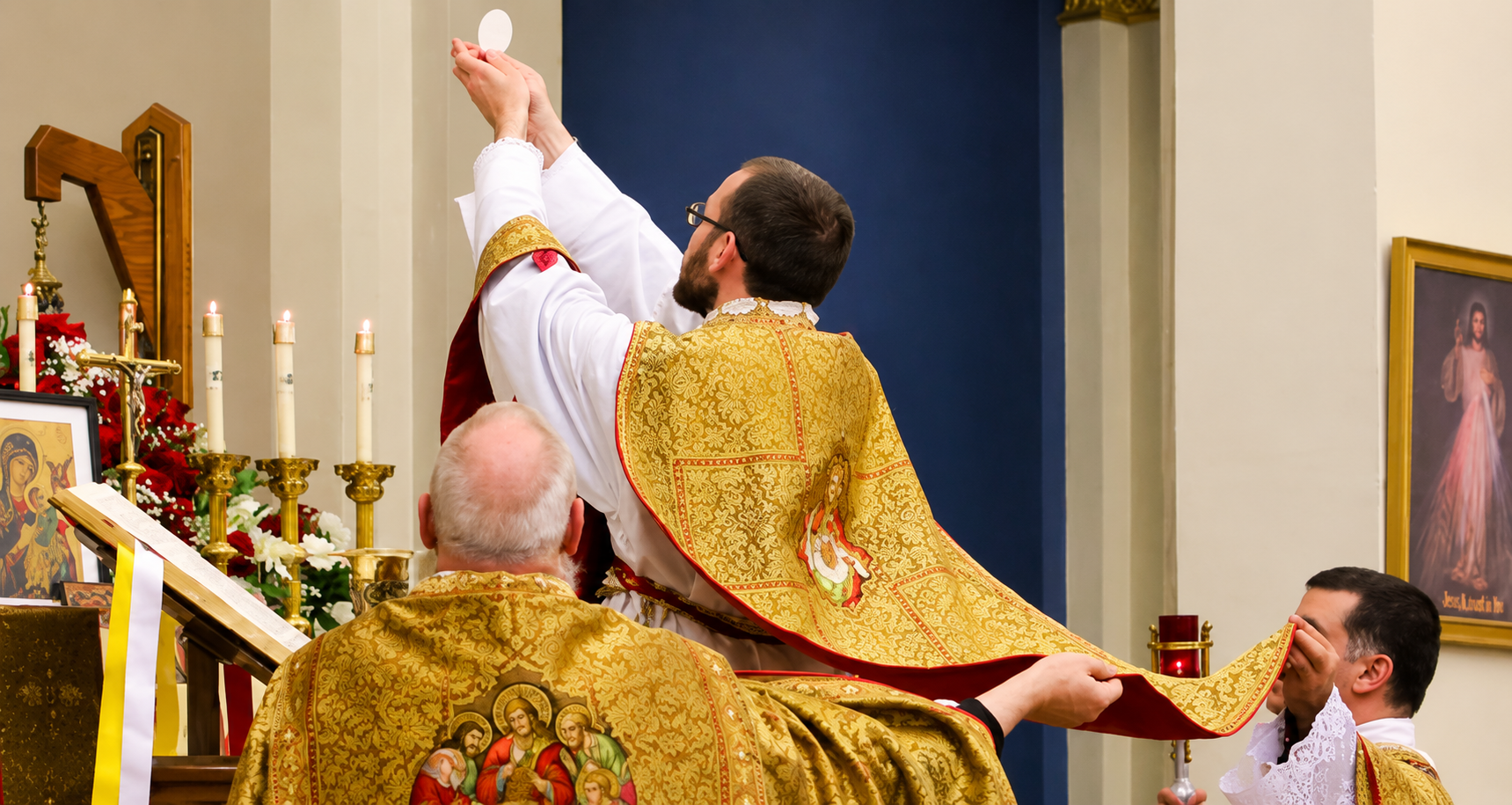
The decision means the Traditional Latin Mass will now be celebrated every Sunday at the Church of Our Lady of the Garioch and St John the Evangelist in Fetternear, Aberdeenshire, replacing the previous monthly schedule. The liturgies will be offered by Fr Yousef Marie, F.SS.R., and Fr Peter Mary, F.SS.R., priests of the Sons of the Most Holy Redeemer who have dissociated themselves from the direction taken by the leadership based on Papa Stronsay over the planned episcopal consecration without papal mandate.
The Masses had previously been celebrated by members of the Papa Stronsay community. However, after its leadership began issuing statements rejecting recent papal documents and asserting that the popes elected since the Second Vatican Council were illegitimate, Bishop Gilbert removed responsibility for the apostolate from the community, initially asking the diocesan priest Fr Bruno Murphy to continue celebrating the liturgy before approving the new arrangement.
The expansion of the Traditional Latin Mass comes less than a week before Fr Michael Mary, F.SS.R., the 72-year-old founder and Superior General of the community, is due to receive episcopal consecration on Papa Stronsay. The ceremony, scheduled for 25 July, is expected to be carried out by three sedevacantist bishops with Canadian sedevacantist bishop Pierre Roy as the principal consecrator.
Ahead of the planned consecration, Bishop Gilbert instructed priests throughout the Diocese of Aberdeen to celebrate Masses using the Roman Missal’s prayers “For the Unity of the Church”. In a pastoral letter read in parishes over the weekend of 18–19 July, the bishop said the forthcoming ceremony represented a direct rupture with the Catholic Church.
“Recently, the Society of St Pius X chose to ordain four new bishops without the permission (or mandate) of the pope. This constitutes an act of schism,” Bishop Gilbert wrote. “Next Saturday, July 25, something similar is scheduled to occur in Orkney when the Superior of the Sons of the Most Holy Redeemer intends to be ordained bishop by three unauthorised bishops from the Americas. This likewise constitutes an act of schism and will place those engaged in it outside the Catholic Church.”
The bishop noted that both developments had particular significance for his own diocese. “Both of these actions, and especially the latter, touch our own Diocese of Aberdeen, and not in a good way,” he wrote. “Objectively, we are dealing with a break from the unity of the Church.”
The bishop’s pastoral letter followed an earlier diocesan statement issued after news of the planned consecration emerged. Because the ceremony is expected to take place within the geographical boundaries of the Diocese of Aberdeen, Bishop Gilbert said he was obliged to make the Church’s position unmistakably clear. “This ordination would be celebrated without a papal mandate, by a group of bishops who deny that Our Holy Father Pope Leo XIV is actually the pope,” the bishop said.
Bishop Gilbert added: “Since this consecration is due to take place within the geographical boundaries of the Diocese of Aberdeen, I am obliged to make clear to the faithful of the diocese that any such episcopal ordination would be unlawful and a grave act of disobedience, separating those taking part from communion with the Catholic Church.”
The bishop also urged Catholics not to attend the ceremony, saying: “No member of the faithful should attend. This action is not ‘for the good of the Catholic Church’ as is falsely claimed.”
The Benedictine bishop also launched an erudite defence of the papacy. “It is not by chance that every Catholic Mass throughout the world names the current pope,” the bishop wrote. “It is a sign that every diocese, parish or community is not just a gathering of ‘chums’, but part of something wider and greater.”
“The papacy saves us from a Christianity in our own image, a Christianity merely reflecting our own pet ideas or the current cultural ‘take’ on things. The papacy connects our ‘here’ to everywhere the Gospel has taken root and will, and our ‘now’ with the lasting will of Christ for his Church.”
The bishop concluded with a warning about the consequences of breaking communion with the Roman Pontiff. “With the papacy we are spared the fate of becoming a merely national Church or a sect, or followers of some self-appointed authority. We are kept open to the fullness of the faith and the full breadth of the call to charity. With Peter the mission flourishes; without him it withers. And to refuse communion with him is spiritual suicide.”
The consecration was announced by Bishop Pierre Roy in June. Explaining his decision, the Canadian bishop argued that the community’s growing apostolate required its own bishop, pointing to its houses in Scotland, New Zealand and the United States, and its missionary work elsewhere in Oceania. “The Redemptorists have houses in Scotland, New Zealand, and the United States,” Bishop Roy wrote. “From these houses, they visit Samoa, Australia, and other places.”
The sedevacantist bishop argued that it had become increasingly difficult for him to provide episcopal oversight personally and that it was therefore “reasonable and necessary to give the Redemptorists a bishop who could properly care for a flock that already knew the sound of his fatherly voice”.
Bishop Roy also acknowledged that the consecration would proceed “in the absence of an apostolic mandate”, maintaining that such authorisation could not be sought because those currently occupying the Holy See were not legitimate popes.
The community was founded by Fr Michael Mary in 1988. Distinct from the worldwide Redemptorist congregation founded by St Alphonsus Liguori, the Sons of the Most Holy Redeemer established themselves first in Kent, then on the remote island of Papa Stronsay.
The election of Pope Benedict XVI opened a path to reconciliation for several traditionalist communities. The Sons of the Most Holy Redeemer entered into full communion with the Holy See in 2008, and four years later Bishop Gilbert granted the institute canonical recognition as a clerical religious institute of diocesan right.
In October 2025, the community issued an open letter declaring: “We repudiate the Synodal Church as distinct from the Divinely constituted Catholic Church.” The break widened further on 26 May 2026 when the community published a declaration describing the popes elected since the Second Vatican Council as “papal pretenders”. The statement also expressed regret over the community’s reconciliation with Rome, arguing that even after returning to full communion it had remained “forced by faith to resist the Conciliar authorities, although in a different manner.”