

United States Conference Of Catholic Bishops
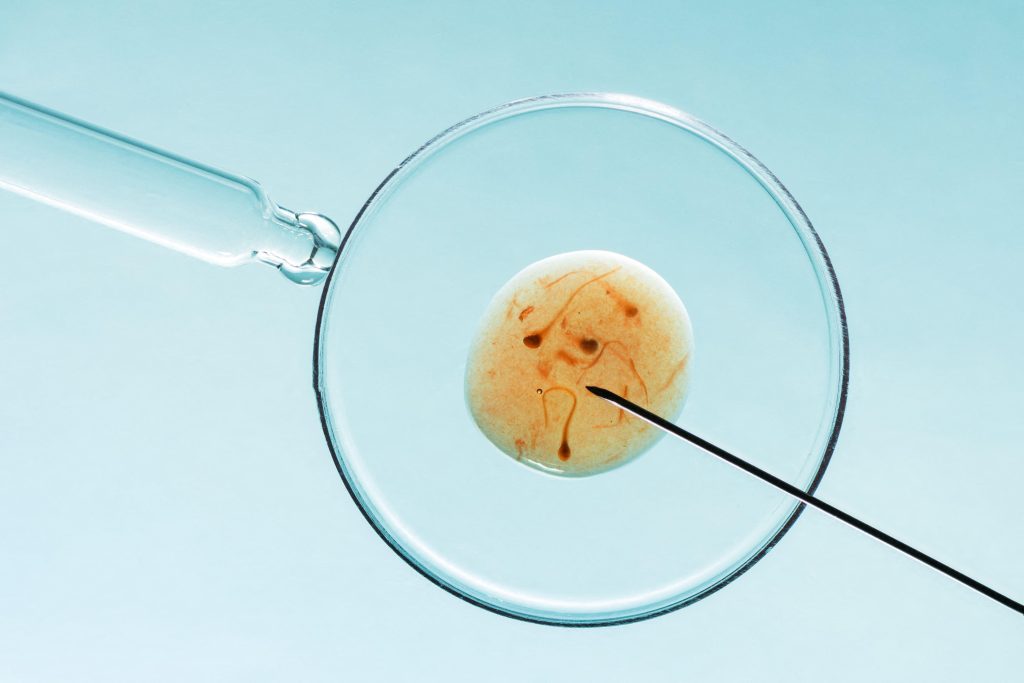
US bishops say Trump administration should remove IVF from fertility benefits rule
The US Conference of Catholic Bishops has submitted a 17-page response to the Trump administration’s proposed fertility benefits rule, arguing that IVF should be removed and that federal policy should instead support treatments that address the underlying causes of infertility The United States Conference of Catholic Bishops has urged the Trump administration to remove in vitro fertilisation (IVF) from a proposed federal rule designed to expand fertility benefits. In a 17-page submission to the Departments of Labour, Health and Human Services, and the Treasury, the bishops welcomed the administration’s recognition that infertility is “a serious matter” and supported efforts to assist couples suffering from it. However, they contended that the proposed regulation should instead prioritise treatments that address the underlying causes of infertility. “We urge the Departments to refocus the rule on therapeutic, restorative treatments, and to abandon its inclusion of IVF, which is profoundly flawed both legally and morally,” wrote William J. Quinn, the USCCB’s general counsel, and Daniel Balserak, associate general counsel, in the closing recommendations of the public comment submitted on 13 July. While President Donald Trump has repeatedly expressed support for expanding access to IVF, the bishops argue that any federal framework should distinguish between restorative medical care and assisted reproductive technologies. At the centre of the bishops’ argument is the claim that infertility should be understood principally as a symptom of underlying medical conditions rather than as a disease in itself. Consequently, they argue that public policy should encourage medical interventions that seek to restore normal reproductive function. “The Church affirms the deep desire of spouses to welcome children and supports medical efforts to address infertility,” the submission states. “At the same time, public policy should not promote practices that undermine the dignity of human life or sever the connection between procreation and the marital act.” The bishops devote considerable attention to restorative reproductive medicine (RRM), describing it as an approach that seeks to identify and treat the causes of infertility rather than circumvent them. They welcomed sections of the proposed rule that would permit employers to offer benefits covering the diagnosis and treatment of infertility-related conditions, including disorders such as endometriosis, polycystic ovary syndrome and hormonal imbalances. They also praised the administration’s acknowledgement that medical treatments addressing the root causes of infertility should be encouraged, arguing that these provisions should be made even more explicit in the final regulation. According to the submission, restorative reproductive medicine “seeks to cooperate with or restore the normal physiology and anatomy of the human reproductive system without the use of methods that are inherently suppressive, circumventive, or destructive to natural human functions.” The bishops proposed several amendments that would strengthen support for restorative care, including clearer references to such treatments in the regulations, greater public awareness of restorative reproductive medicine, and safeguards ensuring that patients are able to access providers even when they are located outside their home states. They also suggested that employers offering fertility benefits should consider requiring restorative treatments before resorting to assisted reproductive technologies. The submission argues that IVF is fundamentally different from restorative medicine because it does not treat infertility but instead bypasses the medical conditions causing it. “In contrast to restorative reproductive medicine, in vitro fertilization does not aim to treat the underlying causes of infertility but seeks to bypass them,” the USCCB wrote. The document goes on to argue that IVF “kills countless children and violates others’ rights and dignity”, asserting that the destruction, freezing and selection of embryos represent a profound violation of human dignity. While acknowledging that couples pursuing IVF often do so with “the most sincere and loving intentions”, the bishops maintain that the procedure itself cannot be morally justified. “It must be said that being conceived by IVF does not make a person have any less dignity than anyone else,” the submission states. “All people bear the image and likeness of God and have equal, infinite dignity as a result. It is precisely for that reason that we advocate protecting them and their dignity in all circumstances and at all stages of life.” Beyond moral objections, the bishops also question whether IVF can properly be regarded as a treatment for infertility. They argue that because the procedure does not cure reproductive disorders, its inclusion within an excepted health benefit stretches the legal meaning of therapeutic care. They further contend that the proposed rule risks moving beyond healthcare into what they describe as a broader “family-formation benefit”, which they argue Congress did not authorise through existing legislation. The submission also criticises the proposal’s suggested lifetime benefit cap of $120,000, arguing that the figure has effectively been determined by the cost of IVF rather than by the cost of genuinely therapeutic medical treatment. Should the administration nevertheless decide to retain IVF within the final rule, the bishops’ conference calls for extensive safeguards. These include limiting the number of embryos created during each treatment cycle, excluding coverage for embryo destruction, selective reduction abortions and genetic screening, requiring fuller informed consent about IVF’s success rates and risks, and ensuring that IVF is used only after a confirmed diagnosis of infertility. Quoting Pope Francis, the submission states that children have “a right to grow up in a family with a father and a mother capable of creating a suitable environment for the child’s growth and emotional development”, arguing that the proposed regulations should define infertility in relation to the inability of a married man and woman to conceive naturally. The document concludes by setting out seven principal recommendations, including limiting fertility benefits to therapeutic treatments, redefining infertility in medical rather than social terms, recalibrating benefit limits around restorative medicine instead of IVF, strengthening religious liberty protections and excluding assisted reproductive technologies that the bishops believe violate human dignity. “The proposed rule represents a valuable opportunity to advance real solutions to infertility that respect the God-given dignity of parents and of children, born and preborn,” Quinn and Balserak conclude. “We urge the Departments to refocus the rule on therapeutic, restorative treatments, and to abandon its inclusion of IVF, which is profoundly flawed both legally and morally.”
Jul. 17, 2026
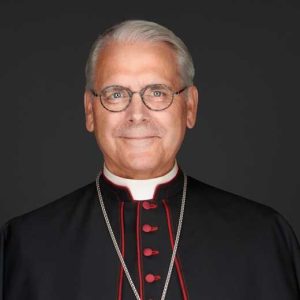
Archbishop Coakley calls for simpler presentation of synodality
The president of the United States Conference of Catholic Bishops has called for a simpler presentation of synodality. Speaking after a Vatican meeting with Pope Leo XIV, Archbishop Paul Coakley said synodality must be explained in a way that is readily understood by Catholics in the pews The president of the United States Conference of Catholic Bishops has called for a simpler presentation of synodality, warning that unfamiliar language risks distancing ordinary Catholics from the process. Archbishop Paul Coakley of Oklahoma City made the appeal while speaking to the Catholic News Service following a meeting at the Vatican with Pope Leo XIV, where participants reviewed progress in implementing the final document of the Synod on Synodality and discussed the challenges facing its reception across the world. Although bishops reported encouraging signs that synodal practices are becoming more firmly established in North America, Archbishop Coakley said one of the principal obstacles remains explaining synodality in a way that is readily understood by Catholics in the pews. The president warned that technical language risks limiting participation rather than broadening it. “Synodality is often presented and perceived by many as a cumbersome and complicated process with language and terminology that is unfamiliar to most Catholics,” the archbishop said. “Unless we can simplify how synodality is presented, it risks becoming the exclusive domain of specialists or ‘the initiated’ rather than a way of simply living our faith together.” The meeting, held in Rome from 23 to 25 June, brought together representatives from Latin America, Africa, Asia, Europe, Oceania, the Middle East and North America, together with the coordinators of the continental synodal teams. Part of the discussions centred on how local Churches have been putting into practice the Synod on Synodality’s final document, issued in October 2024, as preparations continue for the next phase of the worldwide process. The North American delegation included Archbishop Coakley, Auxiliary Bishop Juan Miguel Betancourt of Hartford, who serves as the United States bishops’ liaison for the synod, Bishop Pierre Goudreault, president of the Canadian Conference of Catholic Bishops, and Julia McStravog, senior adviser to the United States synod leadership team. Speaking after the meeting, Archbishop Coakley said a clear conclusion from the discussions was the need for better formation in synodality, not only in understanding its methods but also its spiritual foundations. Rather than creating entirely new structures, the archbishop suggested that the Church should continue developing the consultative bodies that already exist in parish and diocesan life. He noted that the Church in the United States has long encouraged lay participation through parish pastoral councils, diocesan councils, finance committees and advisory bodies. The task now, Coakley said, is to deepen discernment within those existing structures and to foster “an appropriate spirituality based on discernment and rooted in prayer”. Bishop Betancourt said synod leaders from across the United States continue to meet each month to exchange experiences and priorities, with those conversations strengthening cooperation between dioceses and helping local Churches adopt the synodal method of “conversations in the Spirit”. According to the bishop, the process has already influenced pastoral planning in several dioceses, informing decisions on parish consolidation, Mass schedules, the allocation of clergy and the distribution of diocesan resources. The Bishop of Hartford also highlighted the cultural diversity of the Catholic Church in the United States, describing it as an opportunity to broaden participation, encourage co-responsibility and strengthen missionary outreach. At the same time, the bishop acknowledged that two significant challenges remain: the unfamiliar language surrounding synodality and continuing reluctance among some Catholics to become involved in the process. Wider participation by the lay faithful, particularly those who are distant from the life of the Church, is essential if synodality is to become embedded, he said, because every baptised person shares responsibility for the Church’s mission. The bishop said: “Increasing participation by the lay faithful across the global Church, especially among the marginalized or distant, is essential to making the Church’s work more synodal.” Addressing concerns that synodality represents a departure from Catholic tradition, Bishop Betancourt rejected that interpretation. Instead, he described it as a recovery of the Church’s own tradition of communal discernment ordered towards evangelisation rather than institutional change. “Synodality is not parting from Catholic tradition but a deeper return to it,” he said. “It’s about discerning God’s will, not about personal preferences or agendas.” Bishop Goudreault also revealed that, after eight years as bishop, he had invited his diocesan team to evaluate his own ministry, describing accountability as a natural consequence of synodality. The exercise, he said, had allowed him to recognise both strengths and areas requiring improvement. The discussions in Rome also offered further insight into Pope Leo XIV’s priorities as he continues the work begun under Pope Francis. Archbishop Coakley said the Pope “clearly wants to build on the synodal vision outlined and presented by Pope Francis” while developing it in his own way. Bishop Betancourt said Pope Leo has consistently presented synodality as a means of strengthening communion throughout the Church rather than altering Catholic teaching. The Pope, he said, has “repeatedly made clear that synodality is not about changing doctrine or undermining the hierarchical communion of the Church”. Instead, it provides “a foundation for evangelisation, a shared process of listening, discerning, and building relationships”. The meeting came only days after the Vatican published the full programme for an October gathering marking the tenth anniversary of Amoris Laetitia . A preparatory framework issued jointly by the Dicastery for the Laity, Family and Life and the General Secretariat of the Synod invites Church leaders to reflect on five principal themes as they consider how the Gospel can be proclaimed more effectively to families. Attention will now turn to the next stages of the synodal process. Diocesan and eparchial evaluation assemblies are scheduled during the first half of 2027, followed by national and regional gatherings later that year. Continental assemblies will meet in early 2028 before an ecclesial assembly convenes in Rome with Pope Leo XIV in October 2028.
Jul. 7, 2026
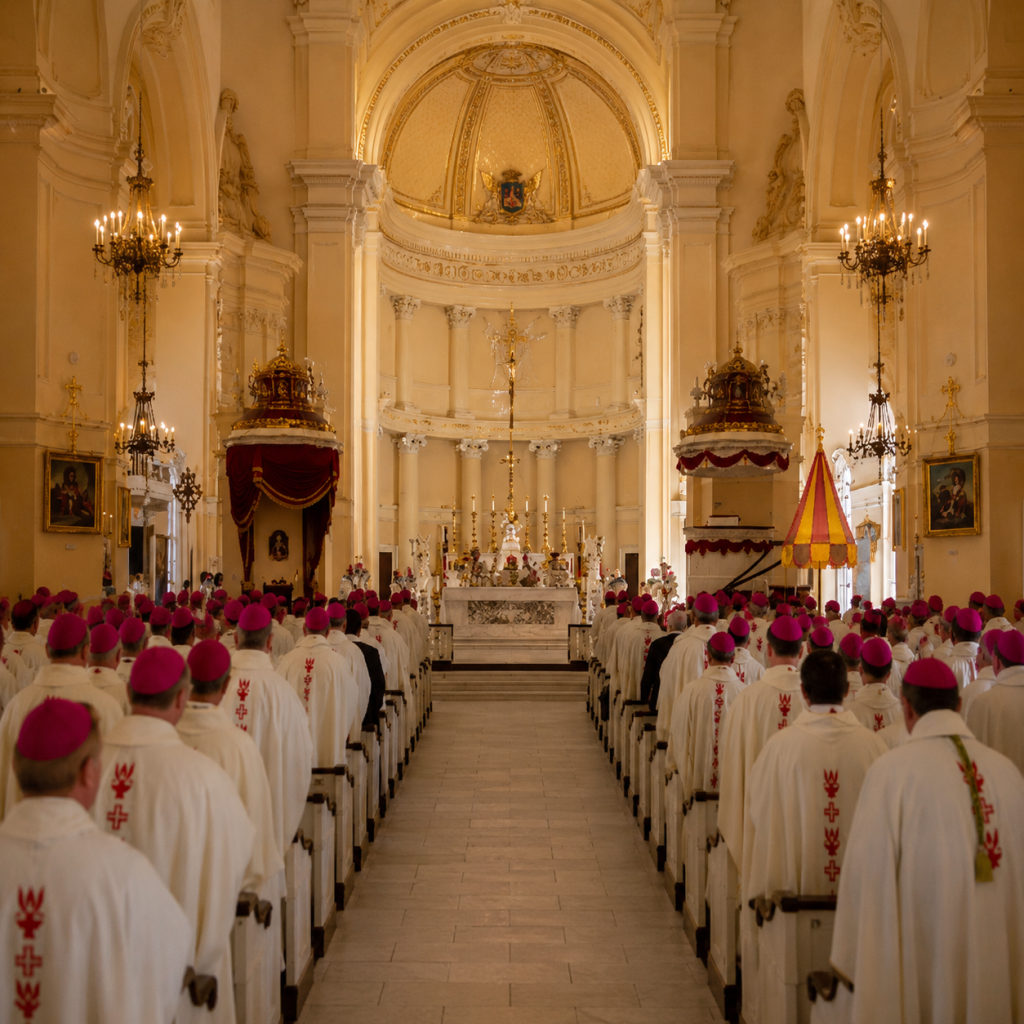
Consecration, canonisation causes and safeguarding votes headline US bishops’ meeting
The US bishops have concluded their Spring Plenary Assembly in Orlando after approving revisions to the Dallas Charter, advancing two sainthood causes and carrying out a national consecration of the United States to the Sacred Heart of Jesus The bishops of the United States have concluded their 2026 Spring Plenary Assembly in Orlando, Florida, with a series of votes on liturgy, safeguarding and sainthood causes, culminating in the historic consecration of the nation to the Sacred Heart of Jesus as part of the country’s semiquincentennial celebrations. The three day meeting of the United States Conference of Catholic Bishops (USCCB), held from 10 to 12 June at the Omni Resort in ChampionsGate, was the first spring assembly under the leadership of Archbishop Paul S. Coakley of Oklahoma City since his election as president of the conference last year. Public sessions were held on 10 and 11 June before the bishops moved into private discussions and concluding business. The gathering opened with prayer, the approval of the agenda and minutes from previous meetings, and addresses from Archbishop Coakley and the Apostolic Nuncio to the United States, Archbishop Gabriele Giordano Caccia. Bishops also received reports on synodality, Hispanic ministry, prison outreach and safeguarding, while voting on a number of key measures affecting the life of the Church in the United States. In his presidential address, Archbishop Coakley centred his remarks on the theme of Christian hope, warning that contemporary society faces profound threats to human dignity and increasing social fragmentation. The archbishop said the bishops had a responsibility to restore hope wherever it had been lost, particularly through defending the dignity of every human person. “Society tends to disregard and cast aside what it deems useless,” Archbishop Coakley said. “But life, human life, can never be adequately valued based on it being useful or useless. Or a burden or unworthy of protection.” “To restore hope necessitates preaching exactly that, that life is a gift from God. Every life has value and dignity, and we cannot forfeit that dignity, even when it is besmirched by sin and wickedness. It comes from God.” The USCCB president linked this mission to opposition to abortion, euthanasia, racism, abuse and the neglect of the poor, arguing that the Church must be a visible witness to the value of every human life. Archbishop Coakley also highlighted the problem of political and ecclesial division, describing polarisation as a serious obstacle to the Church’s mission. “Polarisation within our country, and even within our Church, is a scandal that can only be overcome through encounter, through the cultivation of interpersonal relationships and conversations between those who may disagree,” the archbishop said. “We must never give up on those who are different or see things differently. We must continue to proclaim the truth of Christ, and the dignity given to each person by the Lord.” The archbishop said the bishops’ conference was working to promote faithful citizenship by encouraging dialogue and placing faith before politics: “A faith that inspires hope, respect, and the pursuit of the common good.” Archbishop Coakley also referred to a January visit to the White House, describing it as cordial while stressing the importance of continued engagement with political leaders. “[W]e must stay in the conversation,” he said, adding that “now is the time for dialogue and building bridges”. One of the most significant discussions of the assembly concerned Catholic higher education. Bishops heard from educational leaders about the challenges facing Catholic colleges and universities at a time of declining religious identity and increasing secularisation. Among the contributions was a presentation by Dr Jonathan J. Schnell, president of the University of St Thomas in Houston, who urged Catholic institutions to recover a stronger sense of their mission. Dr Schnell argued that Catholic universities should embrace their distinctive religious identity rather than resemble secular institutions or political organisations. He said academic freedom must always be ordered towards truth and warned against reducing higher education to workforce preparation. Instead, he said, Catholic colleges should understand themselves as forming the Church’s future intellectual leaders and potentially future Doctors of the Church. Dr Schnell expressed concern about declining numbers of Catholics among faculty and students, revealing that he had recently declined an offer to lead a Catholic institution where most staff and students were not Catholic. “We have changed the demographic and the composition of the faculty and the student body to the point that it has affected what [John Henry] Newman called the genius loci, the spirit of the place,” he said. Drawing on Newman’s vision of a Catholic university, Dr Schnell said Catholic identity depended not only on liturgies and theology classes but on the culture of campus life itself, including student conversations, traditions and the shared assumptions of the academic community. “This Catholic identity can be formed but not engineered,” he said, arguing that it should influence curricula, appointments and decisions about public honours and speaking invitations. Addressing the bishops directly, Dr Schnell urged them to take a more active role in safeguarding Catholic identity. “You could be more vocal, you could be more pushy, and I think you are being too respectful. You own the word ‘Catholic’. We academic administrators don’t,” he said. The assembly also advanced two causes for canonisation. By voice vote, the bishops authorised the opening of the diocesan cause of Monsignor Joseph Francis Buh, a Slovenian born missionary priest who ministered in Minnesota during the nineteenth century and became known for his pastoral work among immigrant communities. The bishops likewise approved the advancement of the cause of Servant of God John Rick Miller, a Catholic layman, husband, father, businessman and international missionary whose spirituality was marked by devotion to the Sacred Heart, the Immaculate Heart of Mary and Eucharistic adoration. The cause was promoted by Bishop Thomas John Paprocki of Springfield in Illinois and Archbishop Thomas Wenski of Miami. The bishops also approved portions of a new edition of the Lectionary for Mass and voted in favour of the 2025 Roman Missal–Liturgy of the Hours Supplement, continuing a years long process of revising liturgical texts for use in the United States. Safeguarding issues occupied a substantial part of the second day of the assembly, when bishops debated and ultimately approved revisions to the Charter for the Protection of Children and Young People, commonly known as the Dallas Charter. First adopted in 2002 in response to the clerical abuse crisis, the Charter sets national standards for the protection of minors and for responding to allegations of abuse involving clergy. The revised text passed by a vote of 176 to 22, with six abstentions, after an unsuccessful effort to postpone the decision until November. Archbishop Shawn McKnight of Kansas City proposed delaying the vote so bishops could consult diocesan review boards, priest councils and abuse survivors. “We will be morally committing ourselves, and everybody under us in our dioceses, to what we hold out in this statement,” Archbishop McKnight said. Bishop Earl Fernandes of Columbus supported the proposal, saying: “I don’t know that we lose very much by delaying.” “When they aren’t sufficiently consulted, there’s been strong pushback,” the bishop added. Several bishops echoed those concerns. Archbishop Paul Etienne of Seattle said he would welcome additional consultation with diocesan bodies and safeguarding officials. “I think the request that’s being made is very legitimate,” Archbishop Etienne said. Bishop Oscar Cantú of San Jose argued that little would be lost through a delay and that broader consultation would strengthen support for the document in local Churches. “Maybe many of us have become synodality weary, but I would say this is an occasion where, as has been mentioned, very little is lost in delaying and much is to be gained,” Bishop Cantú said. However, Bishop Barry C. Knestout of Richmond, chairman of the Committee on the Protection of Children and Young People, insisted that the revisions had already undergone extensive consultation and were ready for approval. “I’m not quite sure what’s gained through the additional time,” Bishop Knestout said. “There has been quite a bit of consultation already.” Auxiliary Bishop Adam Parker of Baltimore, a member of the drafting committee, likewise argued that several years of consultation had already taken place and that further delays were unlikely to produce substantial changes. The motion to postpone failed by 126 votes to 73, with five abstentions, clearing the way for the final vote. The revised Charter seeks to maintain an exclusive focus on the abuse of minors by clergy while clarifying terminology and balancing support for victims and survivors with due process protections for accused priests. Bishop Knestout indicated that a separate document addressing misconduct involving adults and vulnerable adults is being developed. The most visible moment of the assembly came on the afternoon of 11 June when the bishops travelled to the Basilica of the National Shrine of Mary, Queen of the Universe for the consecration of the United States to the Sacred Heart of Jesus. The act followed a national novena and formed part of the Church’s contribution to the 250th anniversary of the Declaration of Independence. Relics of Saint Margaret Mary Alacoque, whose seventeenth century visions helped spread devotion to the Sacred Heart, were present during the liturgy. Archbishop William E. Lori of Baltimore preached the homily, focusing on reconciliation, mercy and hope. The consecration was livestreamed nationally and received support from President Donald Trump. The ceremony marked the first time the United States had been formally consecrated to the Sacred Heart by the nation’s bishops and followed a devotion promoted by numerous popes, including Pope Leo XIII, who consecrated the world to the Sacred Heart in 1899. As the bishops concluded their meeting, the themes of hope, renewal and evangelisation remained at the forefront. The combination of practical decisions on liturgy and safeguarding, discussions on Catholic identity and synodality, and the unprecedented consecration of the nation to the Sacred Heart gave the Orlando assembly a significance that extended beyond routine conference business.
Jun. 13, 2026
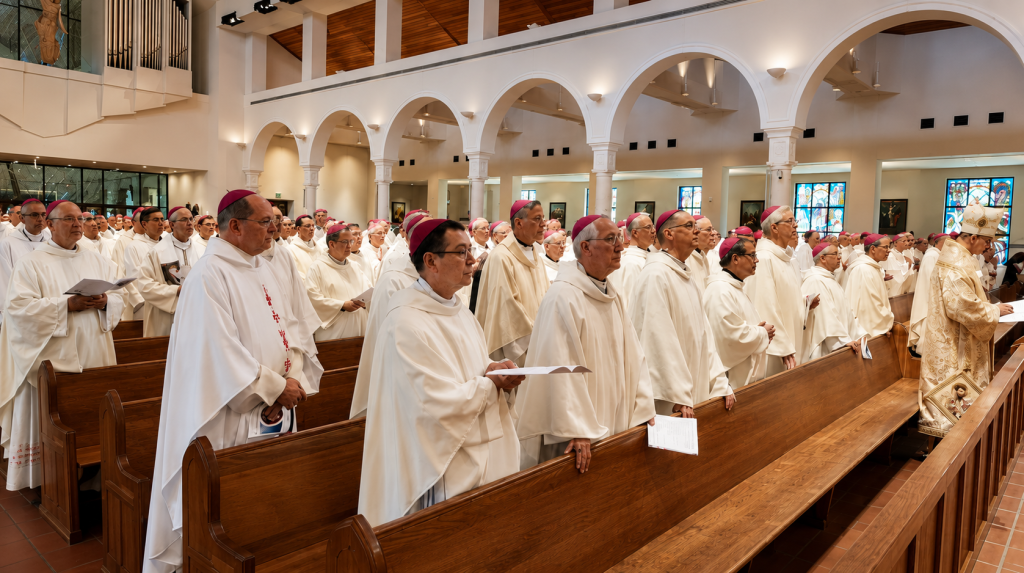
“The future belongs to God”: US bishops consecrate America to the Sacred Heart
Gathering in Orlando, the Catholic bishops of the United States placed both the Church and the nation under the protection of the Sacred Heart The Catholic bishops of the United States have consecrated the nation to the Sacred Heart of Jesus, marking the 250th anniversary year of American independence. The act of consecration took place on 11 June during the spring plenary assembly of the United States Conference of Catholic Bishops in Orlando, Florida. Bishops from across the country took part in the public act of prayer and devotion that organisers said was intended to place both the Church and the nation under the protection and mercy of Christ. Preaching at the Mass, Archbishop William Lori of Baltimore said the occasion was not primarily a celebration of the nation’s approaching semiquincentennial but an act of faith. “We gather, not first to celebrate ourselves, but to consecrate. To entrust. To place the Church in the United States, and indeed the whole nation, into the Sacred Heart of Jesus Christ,” Archbishop Lori said. He told the congregation that the consecration acknowledged that history is ultimately shaped by God’s providence rather than human achievement alone. “We consecrate our nation, not because it is perfect, but because it is beloved by God,” he said. “We entrust to the Heart of Christ our achievements and failures, our hopes and anxieties, our present challenges and our future aspirations.” The archbishop said the Church approached the moment with gratitude for the blessings received throughout American history while recognising the need for repentance and renewal. “We cannot come to the Heart of Christ while pretending we have no need of His mercy,” he said. Drawing on the Gospel reading in which Christ tells His disciples to remain in His love, Archbishop Lori described the Sacred Heart as “the revelation of God’s love made flesh” and said devotion to it offered an antidote to political and ideological division. “The Sacred Heart does not divide; it reconciles. It does not harden hearts; it transforms them. It does not simply invite us to receive love; it sends us forth to share it,” he said. “The future belongs to God,” Archbishop Lori said. “And so we place into His Heart not only ourselves but generations yet unborn, and all those who will inherit the Church and the nation we leave behind.” The consecration itself was led by Archbishop Paul Coakley of Oklahoma City, president of the bishops’ conference. In the prayer, the bishops entrusted the nation to the Sacred Heart and asked for healing, justice, reconciliation and peace. The prayer gave thanks for the blessings received by the United States, sought forgiveness for sins committed against God and human dignity, and asked that the Church become an ever clearer sign of Christ’s presence in society. Repeated invocations of “Most Sacred Heart of Jesus, have mercy on us” were offered throughout the ceremony. The act of consecration followed a period of reflection by several bishops on the significance of devotion to the Sacred Heart in contemporary society. Archbishop Alexander Sample of Portland argued that devotion to the Sacred Heart offered an answer to what he described as the spiritual anxieties of modern life, including loneliness, insecurity and the search for identity. “The Sacred Heart of Jesus is not merely a symbol,” Archbishop Sample said. “It is the living Heart of the Risen Lord, still beating with love for humanity.” Reflecting on Christ’s sacrificial love, Archbishop Sample said believers could find freedom from the need to base their worth on success or failure. “When we know that we are loved by Christ, we no longer need to build our identity on achievements or failures,” he said. Archbishop Shelton Fabre of Louisville focused on the relationship between devotion to the Sacred Heart and ecclesial unity. He urged bishops to model genuine communion within the Church and resist reducing people to ideological categories. “The Sacred Heart of Jesus never encounters us as categories,” Archbishop Fabre said. “Jesus Christ does not love abstractions. He loves people.” He argued that Christian communion is founded not upon personal preference or political affinity but upon participation in the life of Christ. Archbishop Bernard Hebda of St Paul and Minneapolis spoke about the transforming power of Christ’s love upon wounded hearts. Referring to the motto of St John Henry Newman, Cor ad cor loquitur , or “heart speaks to heart”, he encouraged deeper prayer and a more intimate relationship with Christ. “Drawing near to the heart of Jesus, entering into that intimate dialogue with Jesus, changes everything,” Archbishop Hebda said. Before the Mass, the bishops participated in Eucharistic adoration and venerated relics associated with St Margaret Mary Alacoque, the seventeenth-century French Visitation nun whose visions helped spread devotion to the Sacred Heart throughout the Catholic world. The consecration took place against the backdrop of preparations for the 250th anniversary of the Declaration of Independence in 2026 and formed part of the programme of commemorations taking place across the United States. Devotion to the Sacred Heart occupies a prominent place in Catholic spirituality. Rooted in the Gospel accounts of Christ’s love and sacrifice, it gained renewed prominence through the revelations received by St Margaret Mary between 1673 and 1675. The devotion was subsequently promoted by numerous popes and religious orders and became one of the most widespread expressions of Catholic piety. In 1899, Pope Leo XIII consecrated the entire human race to the Sacred Heart, describing the act as one of the most important of his pontificate.
Jun. 12, 2026