

Traditional Latin Mass
Vatican declares SSPX bishops excommunicated after Écône consecrations
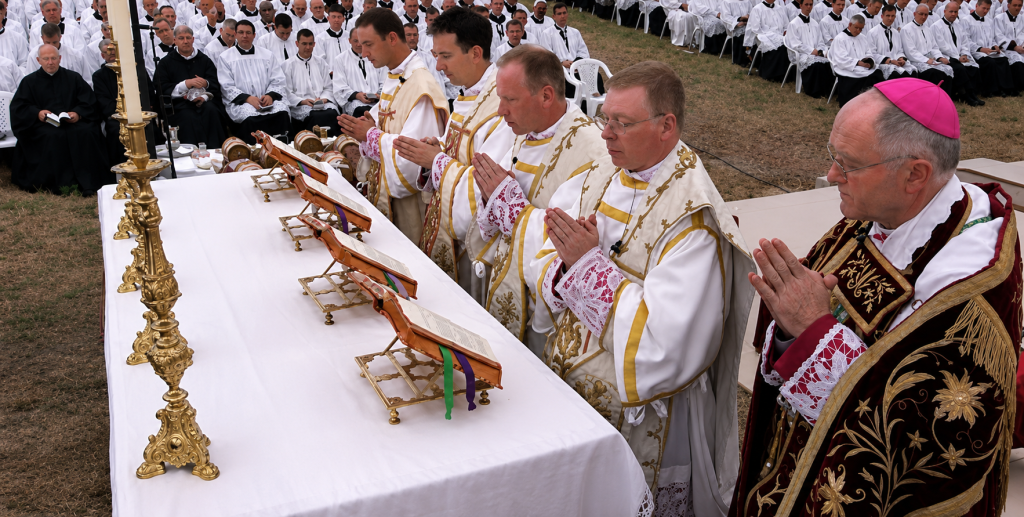
The Vatican has declared that the bishops consecrated by the Society of Saint Pius X in Écône, together with Bishop Alfonso de Galarreta, have incurred latae sententiae excommunication following Wednesday’s episcopal consecrations. The decree also warns clergy and lay faithful against adhering to what it describes as the SSPX’s schism and outlines the canonical consequences for those who do so. The Vatican has declared that the bishops of the Society of Saint Pius X have excommunicated themselves. The day after the episcopal consecrations in Écône, which saw Fr Pascal Schreiber, Fr Michel Poinsinet de Sivry, Fr Marc Hanappier and Fr Michael Goldade consecrated as bishops, the Dicastery for the Doctrine of the Faith released a decree stating: “Notwithstanding the admonitions addressed to the Superior General of the Priestly Fraternity of Saint Pius X, Bishop Alfonso de Galarreta, having performed a schismatic act by means of the episcopal consecration of four priests, without pontifical mandate and against the will of the Supreme Pontiff, has incurred ipso facto the penalties provided for in can. 1387 and can. 1364 §1 CIC 2021.” Signed by Cardinal Fernández, Prefect of the Dicastery for the Doctrine of the Faith, Mons. Armando Matteo, Secretary for the Doctrinal Section, and Archbishop John J. Kennedy, Secretary for the Disciplinary Section, the statement continues: “It is therefore declared, for all legal effects, that the aforementioned Bishop Alfonso de Galarreta, as well as Pascal Schreiber, Michael Goldade, Michel Poinsinet de Sivry, and Marc Hanappier, have incurred ipso facto the penalty of latae sententiae excommunication reserved to the Apostolic See.” The decree goes further than the excommunications declared in 1988 by stating that “clergy and lay faithful are admonished not to adhere to the schism of the Priestly Fraternity of Saint Pius X, lest they incur ipso facto the penalty of latae sententiae excommunication.” Therefore, SSPX faithful also face the possibility of incurring the excommunication declared by Rome. In this instance, the decree has been issued by the Dicastery for the Doctrine of the Faith, whereas in 1988 the document was issued by the Congregation for Bishops. The explanatory note further advises against formal association with the Society among the faithful, stating: “Finally, all the faithful are exhorted to remain steadfast in communion with the Roman Pontiff, with the bishops in communion with him, and with the whole Church (cf. Lumen Gentium , 22; can. 751 CIC), and to abstain from participating in the celebrations and activities promoted by the aforementioned Priestly Fraternity of Saint Pius X.” The explanatory note also raises further questions for SSPX faithful by stating: “It is finally noted that the Holy People of God are informed that the sacred ministers of the Priestly Fraternity of Saint Pius X administer the sacraments and the sacrament of Penance illicitly, and that the marriages assisted by them are invalid.” This relates to the question of jurisdiction, under which confessions and marriages can only be validly and licitly celebrated if the bishop or ordinary has granted the necessary faculties. The explanatory note also reassures those who wish to be fully reconciled with the Church that they will be welcomed “with sincere affection and lively solicitude”. It further states that “the Apostolic Nunciatures will make available the procedures that the Ordinaries may use in the various cases.”
Jul. 2, 2026
SSPX consecrate Bishops without Papal mandate
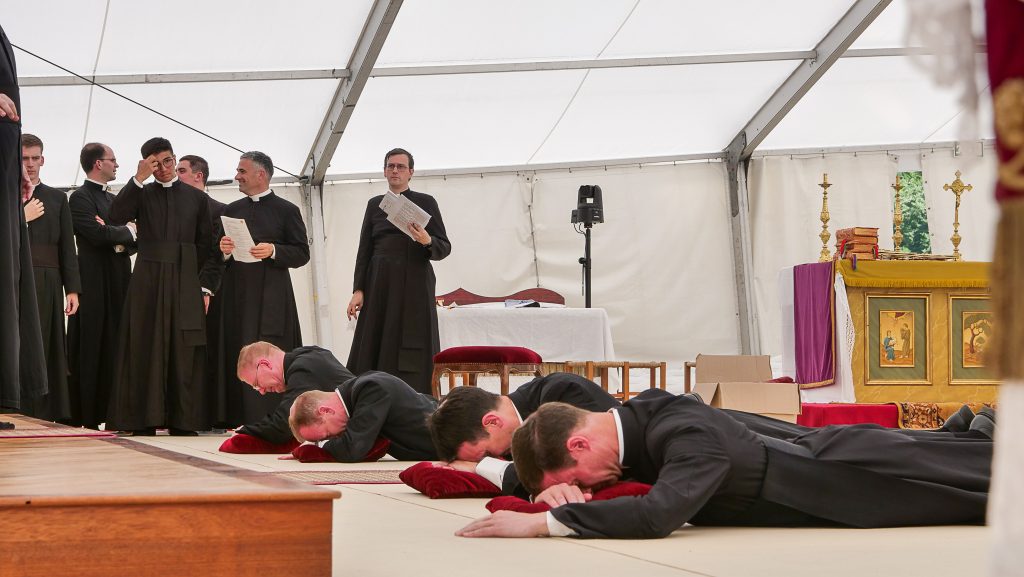
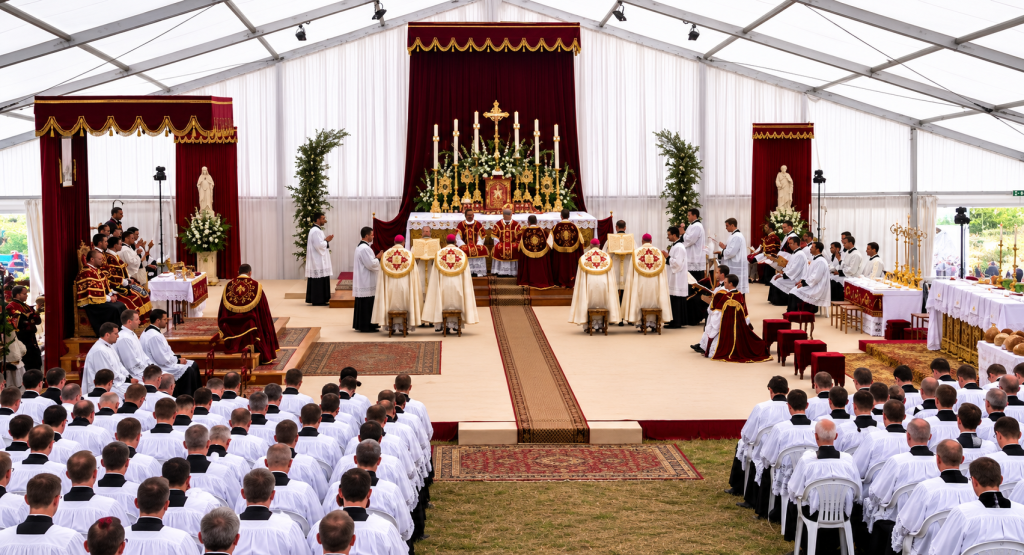
Without papal mandate, the Society of Saint Pius X has consecrated four new bishops in Écône The Society of Saint Pius X has consecrated four bishops without papal mandate. The event, announced in February this year, has seen more than 15,000 pilgrims arrive in Écône, Switzerland, at the Society’s international seminary. Bishop Pascal Schreiber (Switzerland), Bishop Michael Goldade (USA), Bishop Michel Poinsinet (France) and Bishop Marc Hanappier (France) were consecrated in a ceremony lasting more than three hours. The decision to consecrate bishops is justified by the Society as a “grave necessity”. With just two of the four bishops consecrated by Archbishop Marcel Lefebvre in 1988 still alive, Bishop Alfonso de Galarreta and Bishop Bernard Fellay, the Society explains that “the two remaining bishops do not suffice for the task” and that “the SSPX must equip itself to continue its apostolate, thereby responding to the pastoral needs of the faithful”. The Society has grown considerably since it was established in 1970, with more than 750 priests, 264 men training for the priesthood and 145 lay brothers. There are also 88 SSPX nuns and 19 SSPX-affiliated religious communities. Across the world, the SSPX’s ministries in 77 countries comprise 17 districts with 184 priories. There are 798 Mass centres serving what is believed to be around one million “SSPX faithful”, those who regularly attend SSPX services. The Vatican, and Pope Leo himself, have repeatedly warned against the consecrations. Yesterday, on the eve of the event, in a letter dated 29 June, the Feast of Saints Peter and Paul, Pope Leo wrote to Fr Davide Pagliarani, the SSPX Superior General, stating: “I plead with you and ask you with all my heart: please turn back!” Calling the consecrations a “schismatic act”, the Holy Father stated that “the Church is open to a path of dialogue and understanding that the Holy Spirit can make possible and fruitful.” Responding to the letter, Fr Davide Pagliarani spoke of the good the Society had done, noting the “thousands of souls who have rediscovered the Catholic Faith” and that the SSPX existed so that they might “attain salvation through this instrument which divine providence has placed at their disposal”. The priest concluded by asking the Holy Father to “please give us your blessing”. In today’s homily, Fr Davide Pagliarani explained that they were not carrying out the consecrations to separate themselves from the Church, but rather to assist the Church’s mission, adding that these bishops would in turn benefit the Church. The ceremony was carried out on the Feast of the Precious Blood, which, prior to the liturgical reforms of the 1960s, was celebrated separately from Corpus Christi on 1 July throughout the Church. The consecrations are carried out within the context of Holy Mass, beginning after the Gradual and, once concluded, the Mass continuing with the Gospel. At the beginning of the consecrations, the bishop’s duties are read to the candidates, explaining that “the bishop must judge, interpret, consecrate, ordain, offer, baptise and confirm.” A notable moment, which has been seen on only a couple of occasions over the past 50 years, was the bishops’ offertory procession. Here the bishops presented two loaves of bread, two candles and two barrels of wine emblazoned with their coats of arms, representing the three consumable elements used in the Holy Mass. The consecration of the bishops’ hands is similar to that used for priests, but the oil used is the Sacred Chrism rather than the Oil of Catechumens, referencing the kingly consecration of bishops. “May whatsoever you shall bless be blessed, whatsoever you may sanctify be sanctified, and may the imposition of your consecrated hands and your thumb contribute to the salvation of souls.” Just like any other sacrament, the consecration requires form and matter. At the end of the Litany of the Saints, the imposition of hands constitutes the matter of the sacrament. Here, the Gospels are placed upon the bishops-elect’s shoulders, resting on their head, where they remain until the giving of the bishop’s ring. The consecratory Preface then concludes with the form by which the priests become bishops. The ceremony that follows is almost exactly the same as that standardised in the Rite of Consecration of a Bishop following the Council of Trent. After the consecration, Holy Mass resumed. The newly consecrated Bishops received the Body of Christ from the same, larger, Host and the Precious Blood from the same chalice.
Jul. 1, 2026
Owensboro Bishop Medley ends parish TLM and grants “permission” for Novus Ordo ad orientem instead
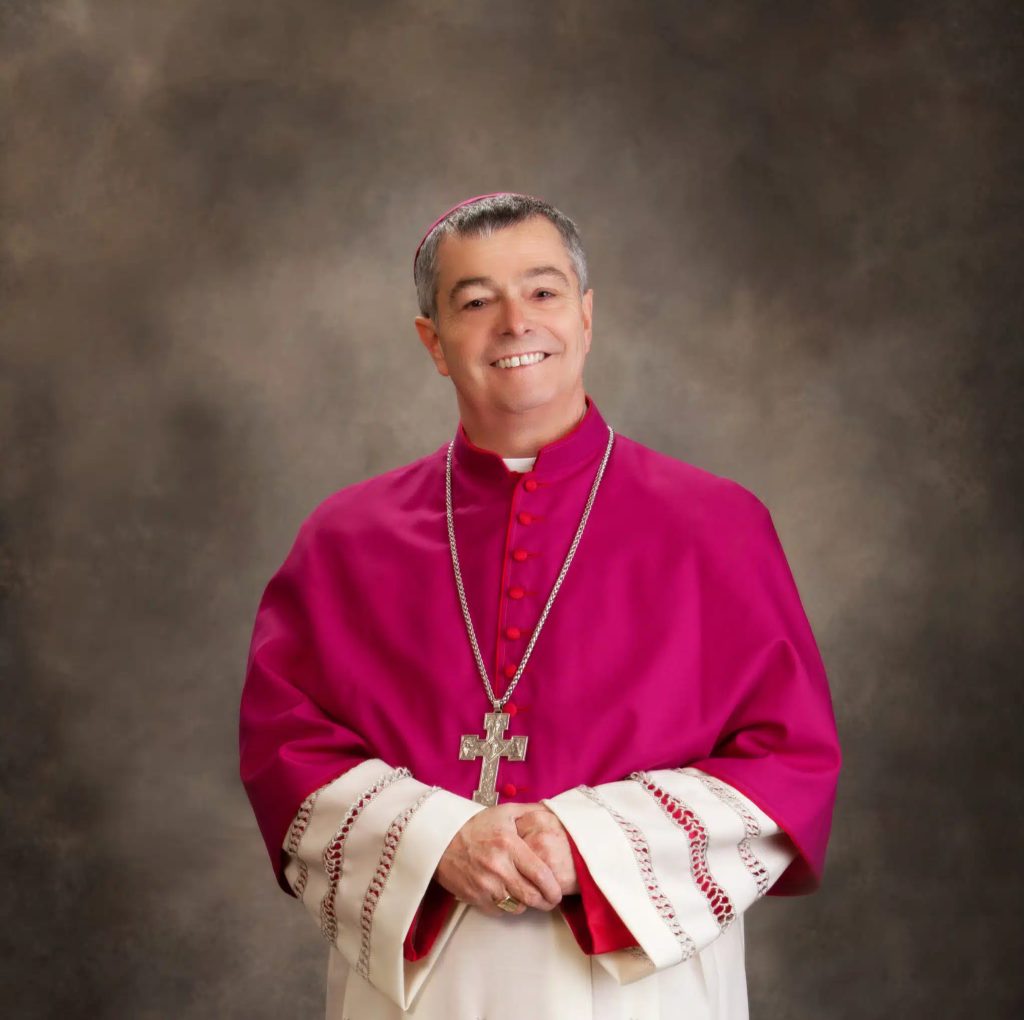
Bishop William Medley of Owensboro has ended the Traditional Latin Mass at a parish in Kentucky and granted “singular permission” for the Novus Ordo to be celebrated ad orientem in its place A Kentucky bishop has ordered the end of the Traditional Latin Mass in a diocesan parish after concluding that he could not satisfy Vatican conditions for permission to continue celebrating according to the 1962 Roman Missal. Bishop William F. Medley of Owensboro instructed Fr David Kennedy of Immaculate Conception Parish in Earlington to cease offering the Traditional Latin Mass after June 30, while granting “singular permission” for the celebration of the Novus Ordo ad orientem , which he suggests is said in Latin. In a letter dated May 18, Bishop Medley said he had reviewed correspondence received from the Holy See in 2023 regarding permission for the continued celebration of the older form of the Roman Rite. He wrote that Rome had indicated that any request to renew the permission would need to be accompanied by a report detailing attendance at the Masses and recounting “the steps which have been taken to lead the faithful who are attached to the antecedent liturgy towards the celebration of the liturgy according to the liturgical books reformed by decree of the Second Vatican Council and which form the unique expression of the lex orandi of the Roman Rite”. “As I am unable to demonstrate that this condition has been met, I have no standing to request an extension of the Holy See’s instruction, and I am directing you not to celebrate the Mass according to the Roman Missal of 1962 after June 30, 2026,” the bishop wrote. Bishop Medley said he recognised that some Catholics attached to the older liturgy had accepted attendance at the Mass of Paul VI celebrated in Latin. “I know that in some dioceses the faithful who have shown a preference for the Mass celebrated in Latin have accepted the Novus Ordo Mass celebrated in the Latin language,” he wrote. “I trust that between now and July 1, 2026, you can obtain the appropriate Missal of Paul VI in Latin. I will grant the singular permission to offer this Mass ad orientem.” The bishop revealed that he had delayed acting on the Vatican instruction for almost a year. “As we discussed, I have permitted nearly a year to pass beyond reception of this consent from the Holy See,” the bishop wrote. “I did this in recognition of the death of Pope Francis.” The Bishop of Owensboro added that he had allowed the continuation of the Traditional Latin Mass following the election of Pope Leo XIV “to see if he would reconsider the matter of the Mass offered in parish churches”. “After more than a year, and the January Consistory of the College of Cardinals in which they specifically chose not to review Traditionis Custodes, I feel obligated as bishop to act in accord with the direction of the Holy See,” Bishop Medley wrote. Addressing possible objections from parishioners, he told Fr Kennedy: “For the faithful who may object to this directive, you may certainly refer them to me, but please make clear that I am acting in accord with my promise to the Pope, the Bishop of Rome.” The letter concluded with the bishop thanking the priest for his ministry to what he described as a “small and unique community”. Traditionis Custodes placed limitations on the celebration of Mass according to the 1962 Missal and declared the liturgical books promulgated after the Second Vatican Council to be the “unique expression” of the Roman Rite. The document effectively reversed the approach taken by Pope Benedict XVI in Summorum Pontificum, his 2007 apostolic letter which granted priests broad freedom to celebrate the Traditional Latin Mass without requiring permission from their bishops. Since the promulgation of Traditionis Custodes, bishops throughout the United States and elsewhere have implemented the Vatican’s directives in different ways, with some restricting the older liturgy to designated locations while others have gradually withdrawn permissions altogether.
Jun. 22, 2026
Father João Silveira denied permission to celebrate Mass in Ávila
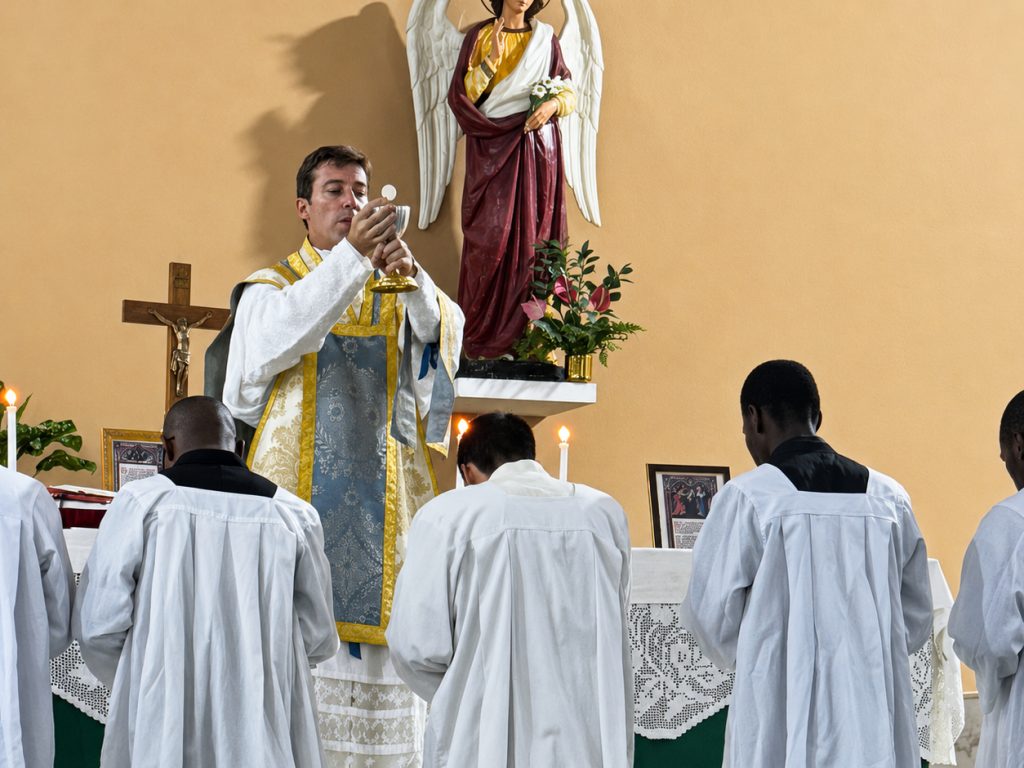
Father João Silveira was denied permission to celebrate Holy Mass in Ávila after diocesan officials told him the local bishop had said: “That Mass is prohibited in this diocese” Father João Silveira, a Portuguese missionary priest, has been denied permission to celebrate Holy Mass at a chapel in Ávila, Spain. On 15 June, Fr Silveira was leading a group of pilgrims from the United States who had specifically requested his accompaniment because he exclusively celebrates the older form of the Roman Rite. When they arrived in Ávila, a Spanish city north-west of Madrid, the priest arranged to use a chapel to celebrate Holy Mass. He was then informed that, in order to do so, he would need authorisation from the local bishop, Bishop Jesús Rico García. As the Mass was private, Fr Silveira did not require permission. However, out of respect for the community allowing him to use the church, he agreed to seek it. When Fr Silveira arrived at the bishop’s residence with his celebret to demonstrate that he was a Catholic priest in good standing, he was received by the Vicar General of the diocese. After waiting for some time, he was informed by a diocesan employee that he did not have permission to celebrate the Mass and that the bishop had said: “That Mass is prohibited in this diocese.” Fr Silveira was then left to show himself out. Ordained a priest by Pope Saint John Paul II in 1979 and appointed bishop by Pope Francis in 2023, Bishop Jesús Rico García has held a variety of positions across the Spanish-speaking Church, including Spiritual Director of the Pontifical Spanish College of St Joseph and Rector of the Mosén Sol de México Seminary. He made local headlines when he used his episcopal consecration to call for a “Church open to all”. Responding to the situation, Fr Silveira asked on X: “What harm could possibly come to the world?” He also pointed out that the rite is “exactly the same one used in the convents of the Discalced Carmelites, stemming from the reform of Saint Teresa of Ávila and Saint John of the Cross”, and asked how it could have been “good for those great saints, but now it is bad for us?” The priest also pointed to Canon 932 §1, which states: “The Eucharistic celebration must be carried out in a sacred place unless, in a particular case, necessity requires otherwise; in that case, it must be celebrated in a decent place.” He argued that, in this case, the bishop had created a “necessity”, resulting in Holy Mass being celebrated in a hotel room rather than a church. Fr Silveira said this was not the first time he had been subject to such a ruling and stated that “Pope Leo must act quickly to put an end to these abuses of authority”. Fr Silveira is well known and respected among Catholics who attend the Traditional Latin Mass. As a missionary priest, he travels throughout the world to offer the Traditional Latin Mass, particularly in places where it is not readily available. His work regularly takes him to remote parts of Africa and Asia, where the Church is growing rapidly. At the time of writing, the priest’s post had been viewed more than 200,000 times. The Diocese of Ávila has not responded to AdVaticanum’s request for comment. However, speaking to the Spanish publication Religión Confidencial, the bishopric cited Pope Francis’s motu proprio Traditionis Custodes, explaining that “it clearly specifies that ‘the liturgical books promulgated by the Holy Pontiffs Paul VI and John Paul II, in conformity with the decrees of the Second Vatican Council, are the sole expression of the lex orandi of the Roman Rite’ (Article 1) and that ‘the diocesan bishop, as moderator, promoter, and custodian of all liturgical life in the particular Church entrusted to him, is responsible for regulating liturgical celebrations in his own diocese. Therefore, it is within his exclusive competence to authorise the use of the 1962 Missale Romanum in the diocese, following the guidelines of the Apostolic See’ (Article 2).” Commenting further on the situation, Fr Silveira wrote: “Of course, the bishop is the moderator of the liturgy in his diocese. However, among these powers of moderation, or organisation, the power to prohibit the Traditional Mass at his own discretion is not included. To do so is an abuse of authority, as can be understood from the arguments given earlier.” The priest quoted Pope Benedict XVI’s well-known assessment that “what was sacred for previous generations remains sacred and great for us as well, and cannot all of a sudden be entirely forbidden or even considered harmful”. He also noted that the same conclusion had been reached by the commission of nine cardinals convened in 1986 by Pope Saint John Paul II. He further argued that, because this was a private Mass, there was even less justification for prohibiting it. Fr Silveira asked: “It is not strange that ‘foreign’ priests pass through there: it is something that happens continuously. Would a priest of the Byzantine Rite also have been prohibited from celebrating?”
Jun. 18, 2026
‘Our Lady of Christendom’: UK establishes a ‘sibling’ pilgrimage to Chartres
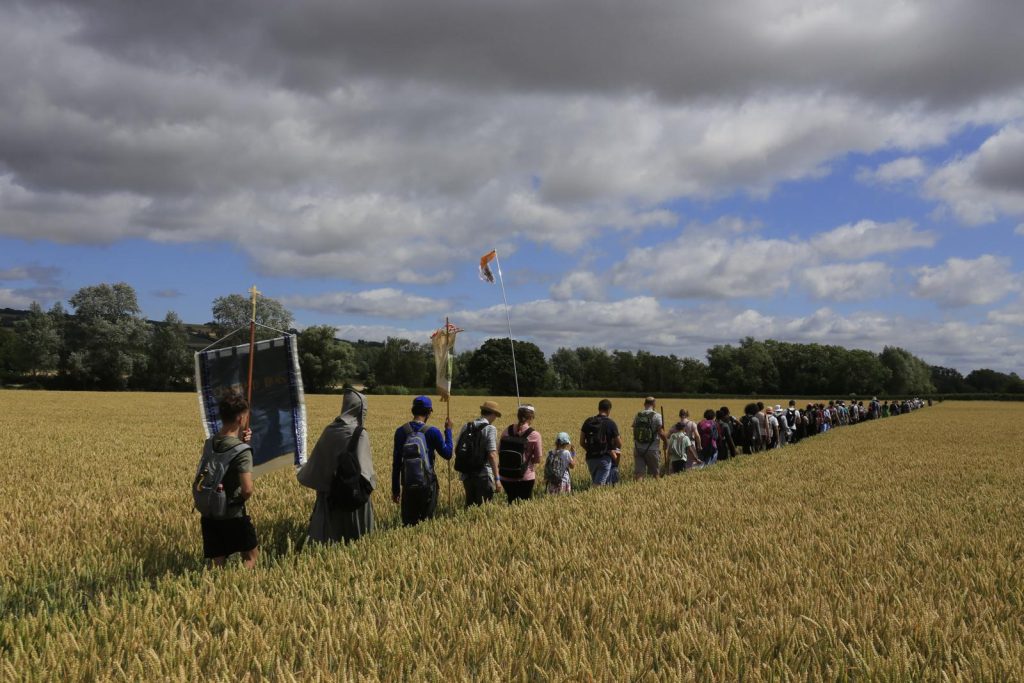
More than 20,000 pilgrims walked from Paris to Chartres this Pentecost. Now the UK has launched its own version. Inspired by the famous Chartres pilgrimage, Our Lady of Christendom will lead pilgrims from Oxford to Evesham Abbey, the site of the first recorded apparition of Our Lady in England This year’s Pentecost weekend marked the 44th annual Notre-Dame de Chrétienté pilgrimage, where more than 20,000 pilgrims made the journey on foot from Paris to Chartres. With an average age of 22 and hundreds of priests and religious accompanying the pilgrims, Notre-Dame de Chrétienté has become associated with a revival of Catholic worship and devotion to the traditional liturgy of the Church. Although most pilgrims are French, the Notre-Dame de Chrétienté pilgrimage has attracted participants from abroad since its founding in 1982. Witnessing the energy and vitality the pilgrimage brings to those who take part, many have returned to their home countries seeking to establish similar routes. Now the UK has organised its own. Organised by the apostolate Our Lady of Christendom, the pilgrimage begins at St Gregory and St Augustine’s in Oxford, a parish renowned for its reverent celebration of the Traditional Latin Mass in a city where the ancient rite is already well represented. Pilgrims will then walk through the Cotswolds, camping for two nights before arriving at the ruins of Evesham Abbey on the third day. Evesham is the site of the earliest recorded Marian apparition in England, where, according to tradition, the Virgin Mary appeared to a pig keeper named Eof. The apparition led St Ecgwine, Bishop of Worcester, to found a monastery on the site, which grew into Evesham Abbey and became an important centre of Marian pilgrimage. During the Dissolution of the Monasteries in the 1530s, most of the abbey was destroyed, although the bell tower survives today. The origins of the pilgrimage can be traced to a one-day pilgrimage held last year from Tewkesbury Abbey, the of the UK’s second-oldest Marian apparition, to the ruins of Evesham Abbey. A Dominican Rite Sung Mass was offered at The Immaculate Conception and St Egwin’s Catholic Church in Evesham, and the pilgrimage carried relics of St Mary Margaret Alacoque and St Claude de la Colombière, linking participants spiritually with Chartres. Last year’s pilgrims pray before the relics of St Mary Margaret Alacoque and St Claude de la Colombière Organisers hope the pilgrimage will contribute to the restoration of the Kingdom of Christ in the UK and foster devotion to the Blessed Virgin Mary. The initiative comes at a time of growing interest in Catholicism across the UK. Westminster has recorded a 100 per cent increase in adult baptisms over the past two years, while the Oxford Oratory received more adults into the Church this February than during the whole of the previous year. By bringing together Catholics for three days of prayer, penance and pilgrimage, organisers hope to build on that renewed interest and encourage a deeper commitment to the faith. The pilgrimage’s president, Andrea Cabanas, attributes its existence to divine providence, telling AdVaticanum that it is “only through God’s Providence that ‘Our Lady of Christendom Pilgrimage’ exists today”. She said organisers have received support from “both Chartres and Covadonga pilgrimages”, as well as from their chaplain and local faithful who have donated and prayed for the pilgrimage’s success. She added that organisers have placed particular trust in the intercession of St Joseph, St John Henry Newman and Blessed Dominic Barberi. Cabanas is encouraging others to get involved, asking people to “support and volunteer with their God-given gifts in the restoration of the Kingdom of Christ here in Britain, especially those who live in this country and have been attending Chartres pilgrimage for many years”. Those wishing to attend this year’s pilgrimage have until 19 June to register via the pilgrimage website . Priests and religious are invited to attend free of charge, and priests will be able to celebrate their own private Masses during the pilgrimage.
Jun. 5, 2026