

Spain
Another “influencer priest” leaves the priesthood
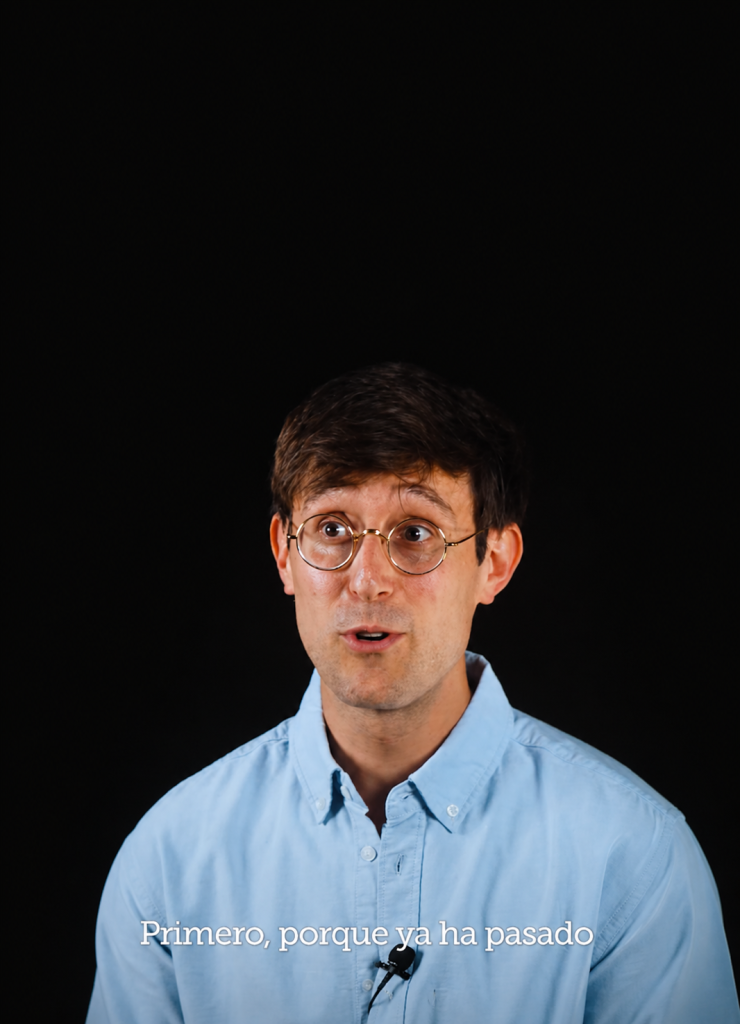
Fr Damián María Montes, a Spanish Redemptorist priest, has announced that he will no longer exercise his priestly ministry. A well-known figure across Spain, Fr Damián came to prominence through his participation in the third series of La Voz in 2015, where he reached the quarter-finals. During the programme, he performed secular songs including “Angels” […] Fr Damián María Montes, a Spanish Redemptorist priest, has announced that he will no longer exercise his priestly ministry. A well-known figure across Spain, Fr Damián came to prominence through his participation in the third series of La Voz in 2015, where he reached the quarter-finals. During the programme, he performed secular songs including “Angels” by Robbie Williams. Originally from Granada in southern Spain, he entered the Redemptorist postulancy at the age of 18. After studying at the Pontifical University of Comillas in Madrid, he spent a year on mission in Kolkata, India. On his return, he took his perpetual vows and was ordained a priest in Granada in 2013. He later held a variety of posts in Madrid before being transferred in 2024 to Granada, where he served as rector and superior at the Sanctuary of Our Lady of Perpetual Help. Throughout his years in active ministry, he maintained a substantial online presence, with almost 750,000 followers on TikTok and more than 35,000 on Instagram. His videos often took a catechetical form, with Fr Damián answering questions about the faith, alongside posts of himself in secular dress, often connected to the performing arts. One of his most recent Instagram posts showed him graduating after completing studies related to the Spanish poet, playwright and theatre director Federico García Lorca. On his website, he describes his academic career as being “characterized by a marked interdisciplinary approach that integrates literature, theater, pedagogy and humanistic thought.” In his most recent video, explaining his decision to leave the priesthood, he says: “After almost three years of questions, searching, silences and a deep inner struggle, I have decided to definitively retire from the exercise of the priestly ministry.” He adds that he is stepping back “in peace and with a clear conscience, knowing that I truly loved each mission entrusted to me, that I have paved the way, and that I have built necessary bridges of dialogue.” He does not go into detail about his reasons, telling his audience: “There are compelling reasons that I will keep to myself, reasons that support this decision and that made my missionary service extremely difficult.” While speaking warmly about his years as a missionary, he describes recent years as “very sad and very difficult”. He says that, in future, he hopes there will be new opportunities for him and that he might even be able to build a family. On his website, he states that he currently works as academic vice-director of the Ernesto Cardenal Foundation and as a language and literature teacher at the European Lyceum. The story of consecrated men and women leaving their vocations after achieving fame, often dubbed “influencers”, has become increasingly common. Cristina Scuccia, who won the 2014 edition of The Voice Italy , left her order in 2022. Similarly, Father Alberto Ravagnani, an Italian priest with a substantial online following and millions of views on YouTube, also announced his intention to leave the priesthood in February this year in a video posted on Instagram that bore notable similarities to Fr Damián’s. His Instagram account presented a life shaped by secular influences, including skincare, dancing and photographs of himself at the gym, alongside religious content. In 2025, he took part in a paid sponsorship post with Bondsupplements under the caption “Holy yes, but also healthy”. His departure was accompanied by a farewell book, which he promoted on his channel. Last year, the Vatican hosted a gathering of more than 1,000 priests for the Jubilee of Digital Missionaries and Catholic Influencers. While many priests and religious use social media successfully as a tool of evangelisation, bringing people closer to the Church, questions have arisen in recent years about whether such visibility can contribute to the secularisation of holy orders.
Jun. 24, 2026
Spanish Catholics filmed committing sacrilege at wedding Mass
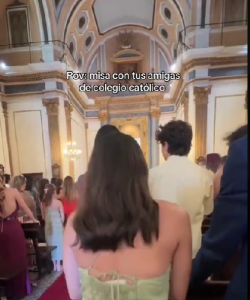
A video filmed at a wedding Mass in Spain has gone viral after appearing to show a group mocking the liturgy and the Eucharist A video showing a group of Spanish Catholics mocking the Mass and committing sacrilege against the Eucharist has gone viral. Published with the caption “POV: misa con tus amigas de colegio católico” (“Mass with your friends from Catholic school”), and apparently filmed in the Spanish city of Valencia, the video shows a group attending a wedding Mass and sitting towards the back of the church. The description reads: “Señor, no soy digno de que entres en mi casa, pero una palabra tuya bastará para sanarme” (“Lord, I am not worthy that you should enter under my roof, but only say the word and I shall be healed”). The video opens with the group making a loud noise. Then, during the part of the Mass in which the priest says “es justo y necesario” (“it is just and necessary”), the person filming points the camera at another member of the group and says “más justo y necesario” (“more right and more necessary”). The person on camera then says “es el dictador” (“he is the dictator”), apparently referring to the priest. The woman filming then asks another member of the group, “¿Tú vas a tomar la comunión?” (“Are you going to receive Communion?”), before adding: “Nos van a echar” (“They are going to throw us out”). Another member of the group then sings “ven a nuestras almas” (“come to our souls”) while making a mocking gesture. The most controversial part of the video comes when one of the group, having just returned from receiving the Eucharist, sticks out his tongue to show the Sacred Host and makes a horn-like hand gesture with his thumb, index finger and little finger extended. The video was originally posted on TikTok by the account “bellidamen”, but has since been deleted. The account, and an Instagram account under the same name, contain various other pieces of content, a significant portion of which is hostile to non-Spaniards living in Spain. In one video, “bellidamen” says: “Blondies, go home.” Despite the apparent disdain for Catholicism, another video on the account appears to celebrate a local Holy Week procession, with the caption: “What a cool tradition, full of flowers, colours and joy in the Poblats Marítims.” The TikTok account “bellidamen” has since deleted the original video, but it was later reuploaded by the Spanish Catholic group Universitarios Católicos . The caption on the reuploaded post reads: “What little education and what little respect there is in our society. Laughing at our faith (yes, always against the same ones) and playing with what is most sacred and important, committing a most grave sacrilege. Whoever eats the Lord unworthily eats his own condemnation.” At the time of writing, the reuploaded video has been viewed more than 800,000 times. AdVaticanum has contacted several of the people seen in the video, as well as the Diocese of Valencia, for comment. At the time of publication, none had responded.
Jun. 23, 2026
A week later: what Pope Leo’s Spain trip tells us
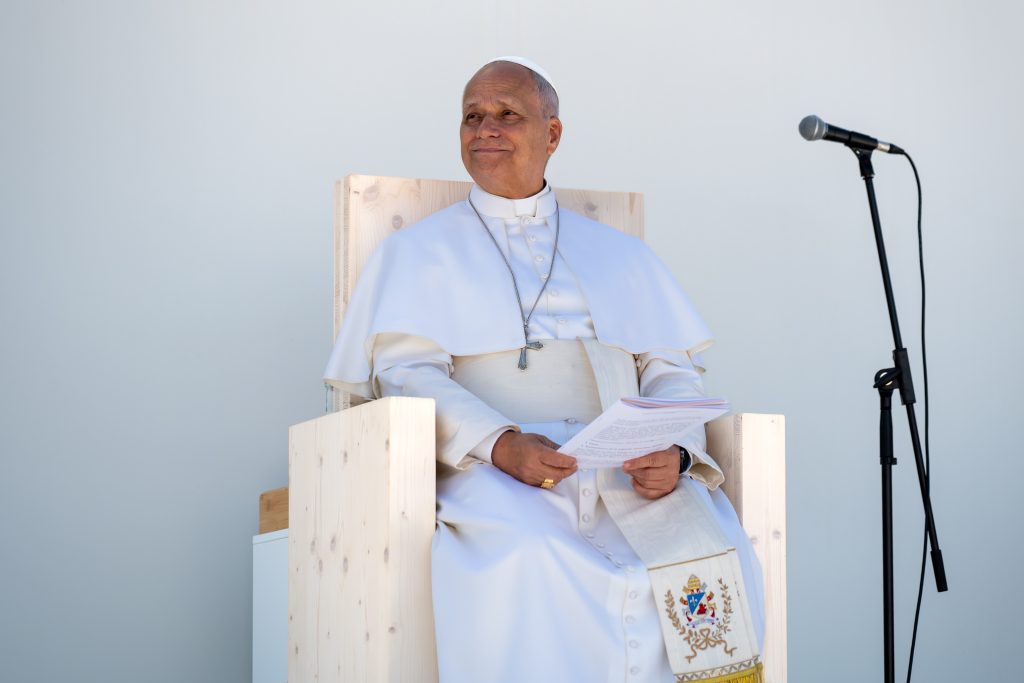
More than 1.5 million people attended Pope Leo XIV’s Corpus Christi Mass in Madrid. Yet the lasting significance of the trip may lie in what it revealed about Spain’s culture, politics and religious identity A week on from the first apostolic visit to Spain in more than a decade, a great deal has happened in the life of the Church. Cardinal Camillo Ruini, one of the most respected churchmen of his generation, has died. The Holy Father has addressed the situation with the Society of Saint Pius X in off-the-cuff remarks. Details of the June consistory have been leaked. But despite the unusually busy week, the aftermath of the trip can still be felt. The Holy Father used his Wednesday General Audience to reflect on the “warmth” of the reception he received, and the themes he brought to Spain are still being discussed across the country. The trip, and the reaction that followed, offered several insights into both Pope Leo’s pontificate and the state of the Church in Spain. The first is that Pope Leo has the ability to speak with clarity on matters of faith and morals without sitting comfortably in any political camp. Spain is currently under a particularly strong strain of progressivism, with Pedro Sánchez’s socialist government aggressively separating the country from its Catholic past and attacking the sanctity of life, notably through the introduction of assisted suicide. Pope Leo appeared entirely at ease using his speech to the Spanish Parliament, the first by a pontiff, to address politicians’ treatment of the vulnerable. He asked: “Can a community that casts into the shadows the unborn child, the elderly, the sick, those who suffer in silence, or those who depend entirely on the care of others be called fully just?” In case the point was not clear enough, the pontiff also told the politicians that “every human life must be recognised and safeguarded from conception to its natural end, in every circumstance of its existence.” It made for uncomfortable listening in a country which, less than a month earlier, had been scandalised that the government’s commitment to assisted suicide had resulted in the death of Noelia Castillo, a 25 year old disabled survivor of sexual abuse. When the pontiff turned to migration, he adopted a tone that neither the PP and Vox on the right nor Sánchez’s Spanish Socialist Workers’ Party could fully embrace. The Pope called for compassion towards those who have experienced the “tragic drama of migration”, which “challenges the conscience of nations and the ethical foundation of the international order today”. He also stated that wherever there is discrimination based on “national, ethnic, religious or linguistic origin”, human dignity is “seriously violated”. Such sentiments stand in contrast to Vox’s calls for mass deportations and restrictions on citizenship and residence permits for those from what it describes as an “Islamic culture”. At the same time, the Pope was equally keen to defend the right of people to remain in their homelands, a point rarely addressed in contemporary European debates on migration. He said that the matter “goes beyond any purely demographic or economic analysis”, a point which seemed to point to Sánchez’s disproportionate emphasis on the supposed economic benefits of migration. He also stated that the situation “goes beyond the mere management of migration flows”, words that seemed particularly pertinent given the Spanish government’s recent decision to regularise hundreds of thousands of illegal immigrants. Another lesson is that the pain caused by clerical sexual abuse is far from over. As the Pope himself told journalists during the outbound flight to Madrid, sexual abuse remains an “open wound”. He told Spain’s bishops that “one of the most painful encounters is with those who have been wounded precisely by those who were supposed to care for them”. He urged the ecclesial community to respond through “listening, truth, justice, reparations and an even more determined commitment to prevention and a culture of care”. Spain has been comparatively slow in confronting the legacy of clerical sexual abuse, and it was only this year that the country’s bishops’ conference reached an agreement with the government to establish a process for support and reparations for survivors. The theme followed the Holy Father as he left Madrid and travelled to Barcelona. On the second day of the Catalan leg of the trip, he visited the Benedictine Abbey of Montserrat, a symbol of Catalan identity. Yet the abbey has also made headlines in recent years because of revelations concerning abuse committed by former monks. In 2019, it emerged that Andreu Soler, a monk who died in 2008, had abused at least twelve minors over several decades at the institution. During the same year, another monk abused a 17 year old. Jaume Soler Villegas, known as Brother Gabriel, was sentenced to two years in prison, while the monastery was ordered to pay €20,000 in compensation. Miguel Hurtado, the first person to report abuse at Montserrat, sent a letter to the Apostolic Nunciature in Madrid requesting that the papal visit to the Abbey be cancelled. While thousands gathered outside to welcome the Pope, local and international media focused on the abuse scandals and questioned whether an abbey so recently associated with such cases should receive a papal visit. The third lesson, and perhaps the most significant, is that the Catholic character of Spain remains far stronger than many assume. Before the visit, establishing precisely what that meant was remarkably difficult. The Vatican’s pre-visit statistics painted an exceptionally positive picture, listing 45 million Catholics in a population of 49 million, suggesting that 93.25 per cent of Spaniards are Catholic. Based largely on baptismal records, the figures appeared impossibly high. Pew Research put the figure at around 70 per cent in 2020, while the Spanish Centre for Sociological Research (CIS) found that 54.3 per cent of Spaniards identify as Catholic today. At the same time, a poll conducted by Fundación SM found that 45 per cent of Spaniards aged between 15 and 29 identify as Catholic, compared with 31.6 per cent in 2020. The figures are inconsistent and difficult to interpret, but that ambiguity mirrors the reality of the Spanish Church itself. Millions attend Holy Week processions every year, and religious festivals remain a central feature of Spanish life. A man from Málaga once told me that, despite never having been baptised, he always visits his favourite statue of Christ during Holy Week. Six of Spain’s ten national public holidays are religious in origin, including the Assumption and the Immaculate Conception. Even many secular celebrations retain a religious dimension. Spain’s National Day falls on the feast of Our Lady of the Pillar, while New Year’s Day is, for many, the Solemnity of Mary, Mother of God. Alongside this visible Catholic culture, however, there is also widespread religious indifference. While the hermandades , or brotherhoods, continue to attract many young people, Sunday Mass in the average Spanish town will often have few under fifty. Spain has the largest number of monasteries in the world and more than 1,000 men preparing for the priesthood, yet almost 150 religious houses closed between 2012 and 2022. A history of anti-clericalism and the long association of the Church with Francoism have left the Church’s place in society less secure than in neighbouring Italy, where Catholic identity remains more closely intertwined with national identity, or in Malta, a former Spanish possession where legal protections for unborn children remained in place until very recently. Yet Pope Leo’s visit represented a major vote of confidence in the Church. Around 1.5 million people attended the Corpus Christi Mass celebrated by the Holy Father. By comparison, Madrid’s population is approximately 3.5 million, making the scale of attendance proportionally huge. It was one of the largest gatherings of Catholics in Europe outside World Youth Day and represented a 50 per cent increase on attendance during Pope Saint John Paul II’s visit to the city in 2003. Much of the press enjoyed pointing out that the Pope was competing with Bad Bunny, who was touring Spain at the same time. In reality, there was little competition. Despite the remarkable success of the Puerto Rican singer, whose residency broke records for ticket sales by a single artist in Spain, his three-week tour attracted fewer than a quarter of the people who attended events during the Holy Father’s one-week visit. The apostolic visit to Spain was always going to be a significant test. Spain is a religiously complex country, marked by both anti-clerical sentiment and intense religious devotion. In the end, it proved a remarkable personal success for the Holy Father and for the Church more broadly. Yet the pace of the modern papacy allows little time for reflection. Attention will soon turn to the next major challenge. If there is a country capable of matching Spain’s combination of deep Catholic roots and anti-clerical tradition, it is the Church’s eldest daughter, France, which Pope Leo is due to visit in September.
Jun. 20, 2026
Father João Silveira denied permission to celebrate Mass in Ávila
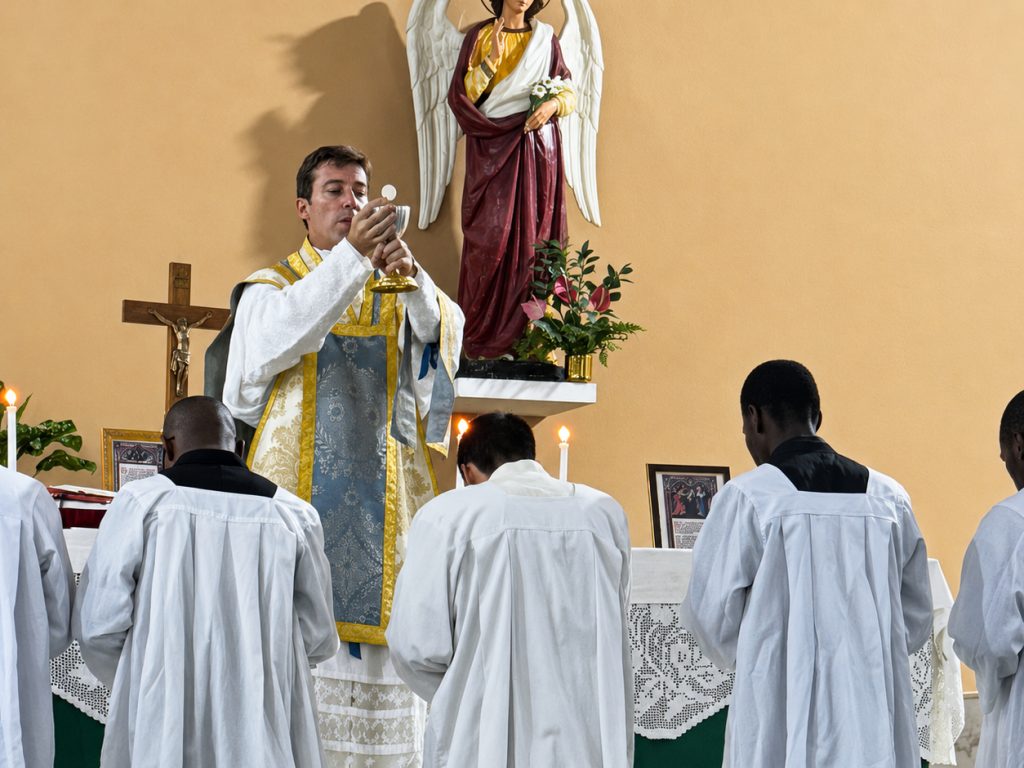
Father João Silveira was denied permission to celebrate Holy Mass in Ávila after diocesan officials told him the local bishop had said: “That Mass is prohibited in this diocese” Father João Silveira, a Portuguese missionary priest, has been denied permission to celebrate Holy Mass at a chapel in Ávila, Spain. On 15 June, Fr Silveira was leading a group of pilgrims from the United States who had specifically requested his accompaniment because he exclusively celebrates the older form of the Roman Rite. When they arrived in Ávila, a Spanish city north-west of Madrid, the priest arranged to use a chapel to celebrate Holy Mass. He was then informed that, in order to do so, he would need authorisation from the local bishop, Bishop Jesús Rico García. As the Mass was private, Fr Silveira did not require permission. However, out of respect for the community allowing him to use the church, he agreed to seek it. When Fr Silveira arrived at the bishop’s residence with his celebret to demonstrate that he was a Catholic priest in good standing, he was received by the Vicar General of the diocese. After waiting for some time, he was informed by a diocesan employee that he did not have permission to celebrate the Mass and that the bishop had said: “That Mass is prohibited in this diocese.” Fr Silveira was then left to show himself out. Ordained a priest by Pope Saint John Paul II in 1979 and appointed bishop by Pope Francis in 2023, Bishop Jesús Rico García has held a variety of positions across the Spanish-speaking Church, including Spiritual Director of the Pontifical Spanish College of St Joseph and Rector of the Mosén Sol de México Seminary. He made local headlines when he used his episcopal consecration to call for a “Church open to all”. Responding to the situation, Fr Silveira asked on X: “What harm could possibly come to the world?” He also pointed out that the rite is “exactly the same one used in the convents of the Discalced Carmelites, stemming from the reform of Saint Teresa of Ávila and Saint John of the Cross”, and asked how it could have been “good for those great saints, but now it is bad for us?” The priest also pointed to Canon 932 §1, which states: “The Eucharistic celebration must be carried out in a sacred place unless, in a particular case, necessity requires otherwise; in that case, it must be celebrated in a decent place.” He argued that, in this case, the bishop had created a “necessity”, resulting in Holy Mass being celebrated in a hotel room rather than a church. Fr Silveira said this was not the first time he had been subject to such a ruling and stated that “Pope Leo must act quickly to put an end to these abuses of authority”. Fr Silveira is well known and respected among Catholics who attend the Traditional Latin Mass. As a missionary priest, he travels throughout the world to offer the Traditional Latin Mass, particularly in places where it is not readily available. His work regularly takes him to remote parts of Africa and Asia, where the Church is growing rapidly. At the time of writing, the priest’s post had been viewed more than 200,000 times. The Diocese of Ávila has not responded to AdVaticanum’s request for comment. However, speaking to the Spanish publication Religión Confidencial, the bishopric cited Pope Francis’s motu proprio Traditionis Custodes, explaining that “it clearly specifies that ‘the liturgical books promulgated by the Holy Pontiffs Paul VI and John Paul II, in conformity with the decrees of the Second Vatican Council, are the sole expression of the lex orandi of the Roman Rite’ (Article 1) and that ‘the diocesan bishop, as moderator, promoter, and custodian of all liturgical life in the particular Church entrusted to him, is responsible for regulating liturgical celebrations in his own diocese. Therefore, it is within his exclusive competence to authorise the use of the 1962 Missale Romanum in the diocese, following the guidelines of the Apostolic See’ (Article 2).” Commenting further on the situation, Fr Silveira wrote: “Of course, the bishop is the moderator of the liturgy in his diocese. However, among these powers of moderation, or organisation, the power to prohibit the Traditional Mass at his own discretion is not included. To do so is an abuse of authority, as can be understood from the arguments given earlier.” The priest quoted Pope Benedict XVI’s well-known assessment that “what was sacred for previous generations remains sacred and great for us as well, and cannot all of a sudden be entirely forbidden or even considered harmful”. He also noted that the same conclusion had been reached by the commission of nine cardinals convened in 1986 by Pope Saint John Paul II. He further argued that, because this was a private Mass, there was even less justification for prohibiting it. Fr Silveira asked: “It is not strange that ‘foreign’ priests pass through there: it is something that happens continuously. Would a priest of the Byzantine Rite also have been prohibited from celebrating?”
Jun. 18, 2026
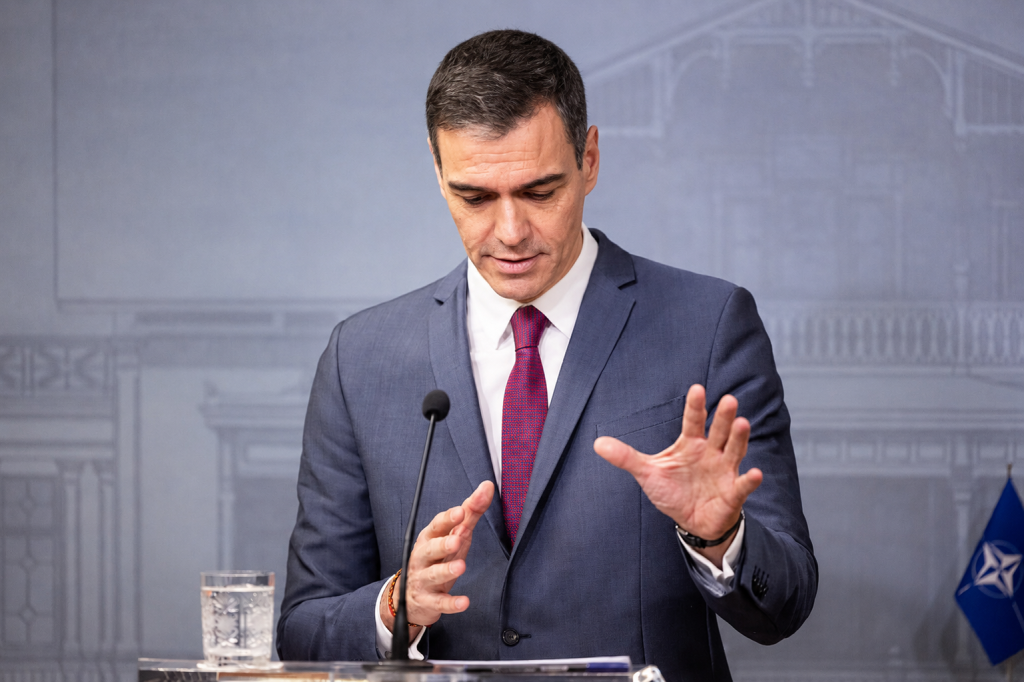
The biggest loser from Pope Leo XIV’s trip to Madrid: Pedro Sánchez
Madrid delivered vast crowds, Spanish flags, a packed Bernabéu and one of Europe’s largest Catholic gatherings outside World Youth Day. For Pedro Sánchez, Pope Leo XIV’s visit may have been a reminder that the Spain he opposes remains very much alive Pedro Sánchez has been noticeably absent during the papal visit to Madrid. He made the trip to the airport to greet the Holy Father and had a private audience before the Pope’s speech at the Spanish parliament, but apart from that, Spain’s prime minister has kept away. With the papal convoy heading to Barcelona, where the apostolic visit will take a turn for the Catalan, that absence will likely continue. However, he is due to make appearances in the third leg of the trip, in the Canary Islands. It is fair to assume that Sánchez is decidedly unhappy with the whole Madrid part of the event. Much of the secular media have covered the papal visit as an endorsement of the leader of the Spanish Socialist Workers’ Party, as he happens to hold views on migrants which are broadly similar to the Holy Father’s. But when one realises that the status of migrants is, shockingly, not the only issue popes and prime ministers can hold opinions on, the situation becomes more complex and, particularly in Madrid, decidedly less favourable for Sánchez. To understand this, it is important to know how Spanish society sees itself. Spaniards will often speak of there being two Spains. There is the socially conservative Spain which is proud of its cultural heritage. Bullfighting, saints and festivals, costumes and pageantry all exist in this Spain, where Catholicism takes pride of place. The Franco era is not openly celebrated, unless you take a turn to the fringes, but in this Spain it is understood, albeit quietly, as not being all bad. The royal family are beyond reproach, unless in favour of the Carlist pretender. The socially conservative Spain finds Madrid as its motherland, with the famous cities of Andalucía, Seville, Granada and Málaga, as its summerhouses. It holds the regions pushing for independence in disdain, with Catalonia being particularly offensive. Dressing smartly, or having a la Rojigualda, the nickname of the Spanish flag, bracelet is generally considered a sign of belonging to this Spain. The other Spain is equally definable, partly because it defines itself as being the opposite of the other. It abhors bullfighting, finds pomp unbearable and is still deeply troubled by the Spanish Civil War and indeed the entire Franco period. The monarchy is either tolerated or actively opposed. Severing the Church from Spanish life is a principal aim. All semblance of the morality of the Church should first be ridiculed and then removed. The unborn have no rights and assisted suicide is the way to sanitise suffering, since suffering is Catholic and therefore bad. Pedro Sánchez comfortably sits within the second Spain. For many, he is the poster boy of left-wing politics and has made it surprisingly appealing. He looks well put together and polished, a far cry from the purple-haired radical left. Under his administration, the second Spain has launched one of its most aggressive attacks on the first. In 2019, after more than four decades of burial at the vast basilica, the remains of Franco were removed from the Valley of the Fallen and, in 2022, the Democratic Memory Law redesignated the Valley of the Fallen as the Valley of Cuelgamuros. The law also accelerated the removal of Franco-era symbols from public life, and abolished a number of noble titles granted during the dictatorship. In 2021, Sánchez introduced assisted suicide, making the apparently Catholic Spain one of the few countries in Europe to permit state-sanctioned suicide. In the same year, LOMLOE, the Celaá Law, was introduced, removing Religious Education from pupils’ grade averages. The law also removed public funding from single-sex schools. Based on no credible pedagogical research, the move was seen as an intentional attempt to harm the country’s hundreds of Opus Dei schools, which are predominantly single-sex. The Pope’s Madrid leg of his trip has been a true celebration of everything the first Spain holds dear. There has been an entire event held to showcase Spanish art and culture, where the Pope asked the Spanish to consider: “What is it that we are sowing today, what exactly is flourishing and what is silently withering in our society; what values are we preserving and which are we allowing to die?” He also delivered a forceful address at the Spanish parliament. In it, he asked: “Can a community that casts into the shadows the unborn child, the elderly, the sick, those who suffer in silence or those who depend entirely on the care of others be called fully just?” Sánchez, who has shown a considerable disinterest in the unborn and elderly through his political opinions, would have been distinctly deterred by the Pope’s question. At Madrid’s Santiago Bernabéu Stadium, he attended a gathering of the dioceses of Madrid, Alcalá de Henares and Getafe in celebration of faith, family and ecclesial communion. He was given a rock star-like welcome, with crowds chanting, “Contigo, León, un solo corazón” (“With you, Leo, one heart”). It was the kind of reception Sánchez could only dream of receiving. The numbers will also be a shock to a prime minister who has no love for the Church. Some 1.5 million attended the Pope’s Corpus Christi Mass, making it one of the largest gatherings of Catholics outside World Youth Day. Sánchez was absent, but with a crowd equivalent to almost half of Madrid gathered, waving Spanish flags and partaking in one of the most ancient solemnities of the Church, the first Spain was out in force. When Sánchez joins the Pope in the Canary Islands, he will be relieved to be reunited on the issue of migration, which will dominate the final leg of his journey. But the magnitude of Madrid will stick with him. A celebration of all things Catholic and traditionally Spanish will likely not have been well received. The numbers will also be a concern, as few could have predicted such a gigantic turnout. The crowds are in line with an apparent resurgence in Catholic identity in the country, with a recent survey finding that 45 per cent of Spaniards aged 15 to 29 identify as Catholic today, compared with 31.6 per cent in 2020. For a socialist, that is a very bad thing.
Jun. 9, 2026
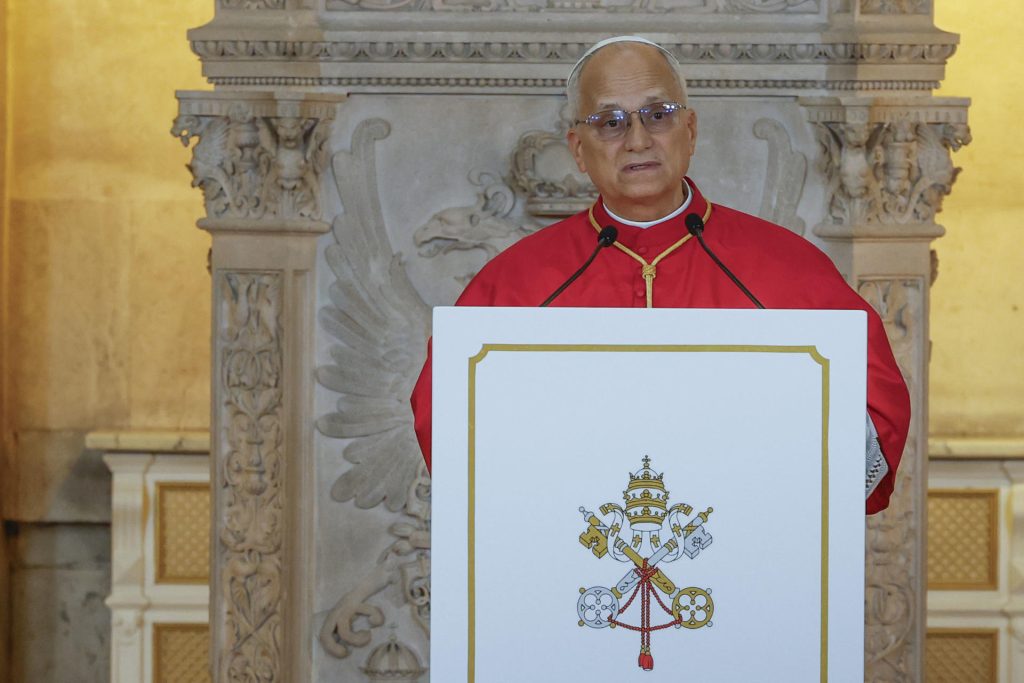
Day one of Pope Leo XIV’s apostolic journey to Spain
The Holy Father arrived in Madrid, met the Spanish Royal Family, called for unity and dialogue, visited a Catholic centre serving the homeless, and concluded the day with a youth prayer vigil attended by hundreds of thousands of people Pope Leo XIV arrived in Madrid on Saturday for the first day of his apostolic journey to Spain, a visit that will focus on evangelisation, youth, social outreach and the enduring Christian identity of one of Europe’s most historic Catholic nations. The papal aircraft departed Rome at 8am bound for Madrid, with the Holy Father using the flight to speak with journalists travelling with him. One exchange quickly generated attention beyond the religious press when Elise Ann Allen of Crux asked whether he supported Real Madrid or Barcelona. The Pope responded: “That’s easy… the Pope is for all teams, but Prevost is Real Madrid,” prompting an immediate reaction on social media. The Pope also reflected on signs of renewed religious interest among younger generations when questioned by CNN’s Christopher Lamb. Noting that Puerto Rican music personality Bad Bunny was performing in Madrid on the same evening, Pope Leo acknowledged the competing attractions facing young people in modern society. “If they are confronted with the question: do they want to see Bad Bunny or do they want to see the Pope, I think many will see Bad Bunny,” His Holiness said. Yet the Pope suggested that the growing number of young people exploring Christianity pointed to a deeper spiritual search. Speaking about a generation that has often grown up without a strong religious foundation, he said many were beginning to recognise “an emptiness” and “a lack of a sense of meaning”, adding that his visit might help awaken questions they were still struggling to define. The Holy Father touched down at Adolfo Suárez Madrid-Barajas Airport at 10.30am, where he was welcomed by Their Majesties King Felipe VI and Queen Letizia of Spain, His Eminence Cardinal José Cobo Cano, Archbishop of Madrid and Prime Minister Pedro Sánchez. Ahead of the arrival, Sánchez had issued a public message welcoming the pontiff to Spain, describing the country as “diverse” and “open” and expressing the hope that the papal visit would help strengthen “dialogue, understanding and hope”. A Vatican press document distributed to journalists covering the trip, a so-called working booklet prepared by the Dicastery for Communication, included a favourable biographical profile of Socialist Prime Minister Sánchez, crediting him with having “revitalised economic growth and social rights in Spain”. Sánchez’s government has supported abortion and euthanasia legislation, and the working document made no mention of either issue. The Holy See Press Office noted that the publication was intended as a journalistic working tool rather than an official Vatican text. From the airport, Pope Leo travelled to Madrid’s Royal Palace for the formal welcome ceremony in the Plaza de la Armería. Military honours were rendered and the national anthems of Spain and Vatican City State were performed before the pontiff proceeded to a private audience with King Felipe VI and Queen Letizia. He also met Princess Leonor, Princess of Asturias, and Infanta Sofía, continuing a tradition of cordial relations between the Spanish Crown and the Holy See that stretches back centuries. The first major speech of the journey followed shortly afterwards during a gathering with political authorities, representatives of civil society and members of the diplomatic corps. Addressing those assembled in the Royal Palace, Pope Leo said he had come to Spain “to affirm, encourage and instil a renewed fidelity to the Gospel among believers, as well as a deeper reconciliation and collaboration among the various elements of this nation”. While praising Spain’s commitment to international cooperation, His Holiness also encouraged efforts to strengthen social cohesion within the country. He thanked Spain for its “faithful adherence to international law and multilateralism”, which he said was demonstrated through “an active commitment to peace and solidarity among peoples”. The Pope’s remarks repeatedly returned to the themes of dialogue, unity and the common good. His Holiness called on Spaniards “to cultivate dialogue and civic friendship within your own country” and urged political and civic leaders to consider the perspectives of the poor and the young when shaping the future. Referring to tensions that have periodically emerged over questions of regional autonomy and national identity, the Pope encouraged the nation “to harmonise the claims for autonomy and unity”, while also expressing support for European cooperation as a contribution to the wider human family. Pope Leo also used the address to place his visit within the broader context of Spain’s Christian history. Describing the country as “a great country that, for nearly two millennia, has welcomed the Gospel”, he recalled the ancient tradition linking the evangelisation of the Iberian Peninsula to St James the Greater. The reference carried particular significance in a nation whose spiritual heritage remains closely connected to the shrine of Santiago de Compostela, one of Christianity’s most important pilgrimage destinations. The Pope noted that the tradition expressed the Spanish Church’s awareness of its continuity with the apostolic mission entrusted to the first disciples of Christ. After the official ceremonies and meetings in the centre of Madrid, the focus of the papal visit shifted towards the Church’s charitable mission. In the early evening, the Holy Father travelled to the CEDIA 24 Horas centre operated by Cáritas Madrid, a facility dedicated to serving people experiencing homelessness and social exclusion. The centre provides round-the-clock assistance and supported more than 2,500 people during the previous year while receiving dozens of visitors every day. Before arriving at CEDIA, Pope Leo spent time with a group of around 40 people affected by disability and illness. He was then welcomed at the centre by Cardinal José Cobo Cano, Archbishop of Madrid, together with staff, volunteers and beneficiaries of the project. During the visit, he listened to testimonies from Niurka, a woman originally from Cuba, Khadri, a migrant from Senegal, and Alicia, a volunteer representing the many people involved in the Church’s charitable outreach. Each offered a personal account of hardship, support and renewal before presenting symbolic gifts to the Pope. Responding to the testimonies, Pope Leo spoke warmly of the welcome he had received since arriving in Spain. Referring to a phrase used by Cardinal Cobo, he noted that “Anyone who is in Madrid is from Madrid” before adding: “And so I, too, am here among you as another Madrilenian.” Thanking those present for making him feel part of “a large and wonderful family”, he described the centre as a concrete example of Christian fraternity in action. “In this home, no one remains alone,” he said. “Here, each person’s joy and sorrow are the joy and sorrow of all.” The Pope said the work carried out at CEDIA reflected Christ’s own identification with the poor, vulnerable and forgotten. Referring to a song performed during the gathering, he highlighted the words, “In every dream I sought you, and none was in vain”, suggesting that they captured both the experiences shared during the visit and the spirit that sustained the centre’s daily mission of service. The final event of the Pope’s first day in Spain drew vast crowds to Madrid’s Plaza de Lima, where hundreds of thousands of young people gathered for an evening prayer vigil described by organisers as a festival of faith. Following introductory remarks by Cardinal Cobo on the challenges facing young people in contemporary society, the Pope answered a series of questions posed by youth representatives. Asked about the figures who had most influenced his faith, he cited St John Chrysostom, St Thomas of Villanova and St Turibius of Mogrovejo, praising their commitment to truth, charity and justice. He also reflected on his years as a missionary in Peru, recalling how encounters with communities facing hardship had deepened both his faith and his understanding of the Gospel. Throughout the encounter, Pope Leo encouraged young Catholics to cultivate prayer, silence and discernment in a noisy and distracted age. He urged them to seek God’s voice with sincerity, remain committed to truth and recognise that both marriage and religious life represent authentic Christian vocations. The vigil concluded with Eucharistic adoration, bringing to an end a demanding opening day that saw Pope Leo move from the ceremonial grandeur of state occasions to encounters with the poor, the sick and the young. (Photo credit: : J.J. Guillén/EFE)
Jun. 6, 2026