

Spain
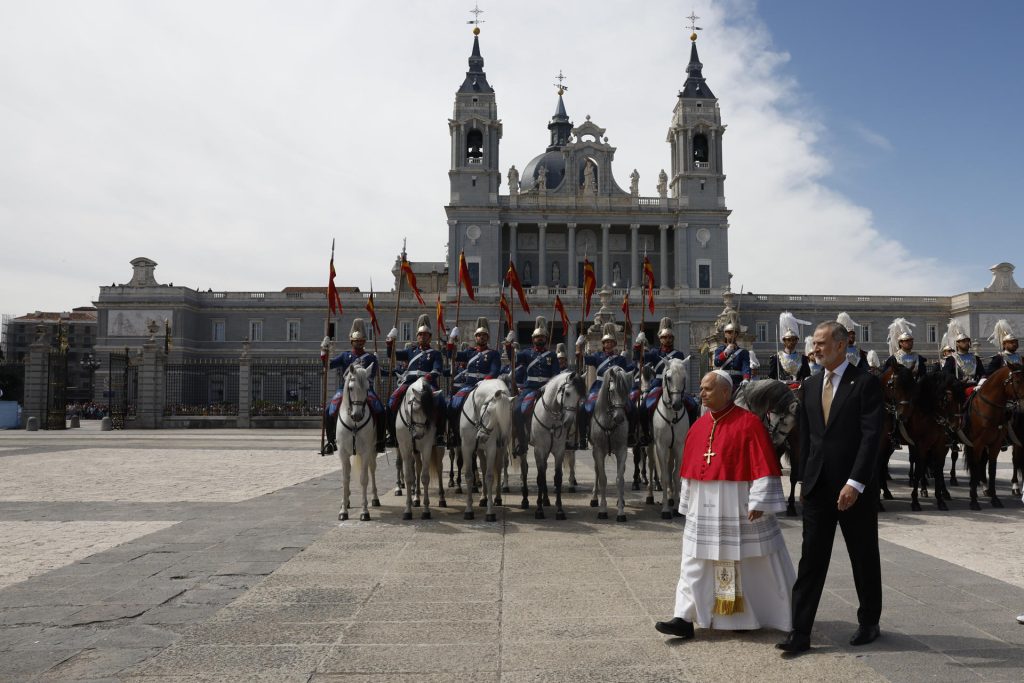
Pope Leo XIV’s first day in Spain in pictures
Pope Leo XIV has arrived in Spain for his first apostolic to the country. Our photo gallery captures the Holy Father’s arrival in Madrid, his meeting with King Felipe VI and Queen Letizia, the official welcome at the Royal Palace, and the opening moments of a visit focused on evangelisation, youth and the Church’s charitable mission Pope Leo XIV arrived in Madrid on Saturday to begin his first apostolic journey to Spain, a visit centred on evangelisation, youth and the Church’s charitable mission. During a packed opening day, the Pope met King Felipe VI and Queen Letizia at the Royal Palace, addressed political leaders and diplomats, visited a Cáritas centre serving people experiencing homelessness, and concluded the day before a crowd of hundreds of thousands of young people gathered for a prayer vigil in Plaza de Lima. Pope Leo XIV arrives at Adolfo Suárez Madrid–Barajas Airport to begin his first apostolic journey to Spain, which will last until 12 June. The Holy Father is greeted by Their Majesties King Felipe VI and Queen Letizia of Spain at Adolfo Suárez Madrid–Barajas Airport. At Madrid airport, the Pope is also greeted by the Prime Minister of Spain, Pedro Sánchez. Sánchez’s government has been responsible for some of the most aggressively secular and anti-Catholic laws the country has ever experienced, notably limiting religious education in Catholic schools and introducing assisted suicide. Pope Leo XIV arrives for a welcome ceremony at the Royal Palace of Madrid, where both the Spanish national anthem and the Pontifical Hymn are performed .(Photo credit: EFE/J.J. Guillén POOL) The Holy Father meets His Majesty King Felipe VI, Her Majesty Queen Letizia, Her Royal Highness the Princess of Asturias, and Her Royal Highness Infanta Sofía in the Gasparini Room of the Royal Palace of Madrid. Queen Letizia exercises the traditional privilège du blanc by wearing white in the Pope’s presence .(Photo credit: EFE/Ballesteros POOL) In the Hall of Columns, both the King and the Holy Father address the Diplomatic Corps. Pope Leo tells those gathered: “I come among you to confirm, encourage and inspire a renewed fidelity of believers to the Gospel, as well as a deeper reconciliation and cooperation between the various forces of this nation” Pope Leo arrives at the CEDIA 24-Hour Centre of Caritas Madrid, a project providing comprehensive care for people experiencing homelessness and social exclusion. (Photo credit: J.J. Guillén/EFE) Pope Leo, accompanied by his personal secretary, Monsignor Edgard Iván Rimaycuna Inga, listens to music performed by Niña Pastori, one of Spain’s most famous flamenco singers. (Photo credit: J.J. Guillén/EFE) Pope Leo shares a private word with His Eminence Cardinal José Cobo Cano, Cardinal Archbishop of Madrid. (Photo credit: J.J. Guillén/EFE) The Holy Father speaks to service users of Cáritas Madrid’s 24-Hour Emergency and Comprehensive Care Centre. The centre specialises in assisting people experiencing homelessness. On average, 82 people visit the day centre each day. In 2025, the centre assisted 2,562 people. (Photo credit: J.J. Guillén/EFE) Young people gather for a prayer vigil in Lima Square. Described as a “festival of faith”, the vigil includes music, the Rosary and Eucharistic Adoration. (Photo credit: Gabriel Gonzalez-Andrío) Spanish bishops wait for the Pope to arrive in Lima square. (Photo credit: Marcos Nogales) Pope Leo is welcomed at the vigil by some 600,000 young people. A recent survey found that 45 per cent of Spaniards aged 15 to 29 identify as Catholic today, compared with 31.6 per cent in 2020. (Photo credit: Luismagan) Pope Leo is welcomed at the vigil by some 600,000 young people. A recent survey found that 45 per cent of Spaniards aged 15 to 29 identify as Catholic today, compared with 31.6 per cent in 2020. (Photo credit: Luismagan) The Holy Father leads the crowd in Eucharistic Adoration, bringing the first day of his apostolic journey to Spain to a close. On Sunday, he will celebrate the Solemnity of Corpus Christi in Cibeles Square in central Madrid. (Photo credit: J.J. Guillén/EFE)
Jun. 6, 2026
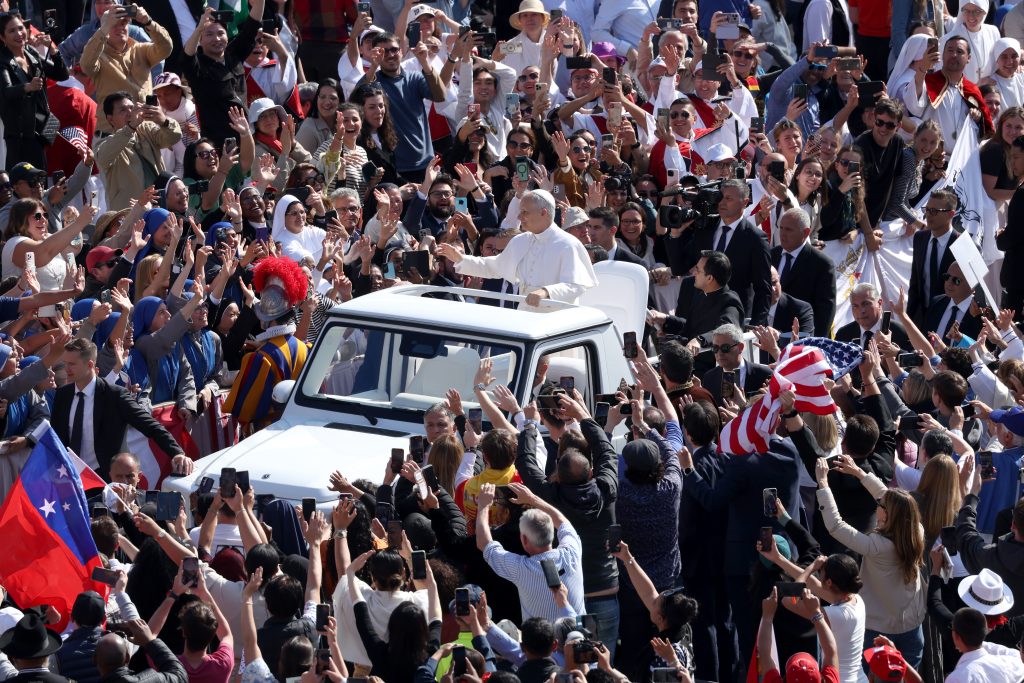
Inside the popemobiles for Pope Leo XIV’s apostolic journey to Spain
As Pope Leo XIV begins his apostolic journey to Spain, AdVaticanum can reveal details of the vehicles that will accompany him across Madrid, Barcelona and the Canary Islands during the six-day visit. The Pope will travel in two popemobiles brought from Rome and three specially adapted electric vehicles designed to allow closer contact with the […] As Pope Leo XIV begins his apostolic journey to Spain, AdVaticanum can reveal details of the vehicles that will accompany him across Madrid, Barcelona and the Canary Islands during the six-day visit. The Pope will travel in two popemobiles brought from Rome and three specially adapted electric vehicles designed to allow closer contact with the faithful during a packed programme of public events. The arrangements form part of a major logistical operation involving the Vatican, Spanish Church authorities and the Spanish Armed Forces. The two popemobiles arrived in Spain aboard Spanish Air Force transport aircraft, first stopping to deposit one of the cars in Barcelona before the other was taken to Madrid. Both carry the Vatican registration SCV 1. The first vehicle, a Mercedes-Benz 500, will serve during the Madrid portion of the journey before being flown to Gran Canaria. Iconic in design, Mercedes-Benz popemobiles have been the backbone of the Vatican’s fleet for decades. The Mercedes-Benz 500 which will be used during the Madrid and Gran Canaria legs of the journey The Barcelona popemobile has been made by the Japanese automobile maker Isuzu and is labelled as the D-MAX. Isuzu popemobiles came to prominence during the 2015 papal trip to the Philippines, and during this papal trip the vehicle will be used for the Pope’s engagements in the Catalan capital before it is transferred to Tenerife to meet the Pope upon his arrival on the largest of Spain’s Canary Islands. The Isuzu D-MAX which will be used for Barcelona and Tenerife Alongside the popemobiles, Leo XIV will also use three electric buggy-style vehicles specially designed for indoor settings and to facilitate close encounters with pilgrims. Two of the electric vehicles are being prepared in Spain, with one built in Madrid and another adapted in the Canary Islands, while a third has been transported from Rome. The papal visit, which runs from 6 to 12 June, will take Leo XIV to Madrid, Barcelona, Gran Canaria and Tenerife. It is the first papal visit to Spain since Pope Benedict XVI travelled to Madrid for World Youth Day in 2011. Pope Francis never visited the country, and Pope Leo’s decision to visit the historically Catholic country so early in his pontificate is generally seen as an acknowledgement that Spain is due a papal appearance. Historically, popes moved amongst crowds using the sedia gestatoria , a portable ceremonial throne consisting of an armchair upholstered in fine silk, mounted on a raised platform and carried on the shoulders of twelve attendants in uniform. It was last used during the very brief 1978 pontificate of John Paul I. Pius XII using the sedia gestatoria The first instance of a pope owning a car came when Pius X was given a 20/30 Itala by the Archbishop of New York, John Farley, in 1909. Pius reportedly refused to use the car, preferring his horse-drawn carriage. Pope Pius XI is known to have used a car, though his car use would have been limited to short trips in the Rome area. Having adopted the title “prisoner of the Vatican”, his movements were restricted. Even after the 1929 Lateran Treaty went a significant way towards regularising relations between the Italian state and the papacy, Pius XI’s travel did not extend much beyond the short drive to Castel Gandolfo, the papal summer residence. In 1930, Mercedes-Benz gave Pius XI a Nürburg 460, which is often described as the first popemobile, though the term had not yet been coined. It was not until Paul VI that the papacy began significant international travel, with Paul visiting 20 countries across six continents during his reign. Paul VI used specially adapted vehicles during these journeys, but the famous popemobiles seen today, with their raised papal seat, became common during the pontificate of John Paul II, who visited 129 countries during his 26-year pontificate. For John Paul II’s 1979 papal trip to the United States, Ford specially designed a 1979 Bronco for the visit, which is believed to be the first vehicle commonly called a “popemobile”. Since then, the name has stuck with each pontificate. There have been variants of the car to match the wishes of each pope, but they have retained their iconic design and become a feature of the papacy.
Jun. 5, 2026
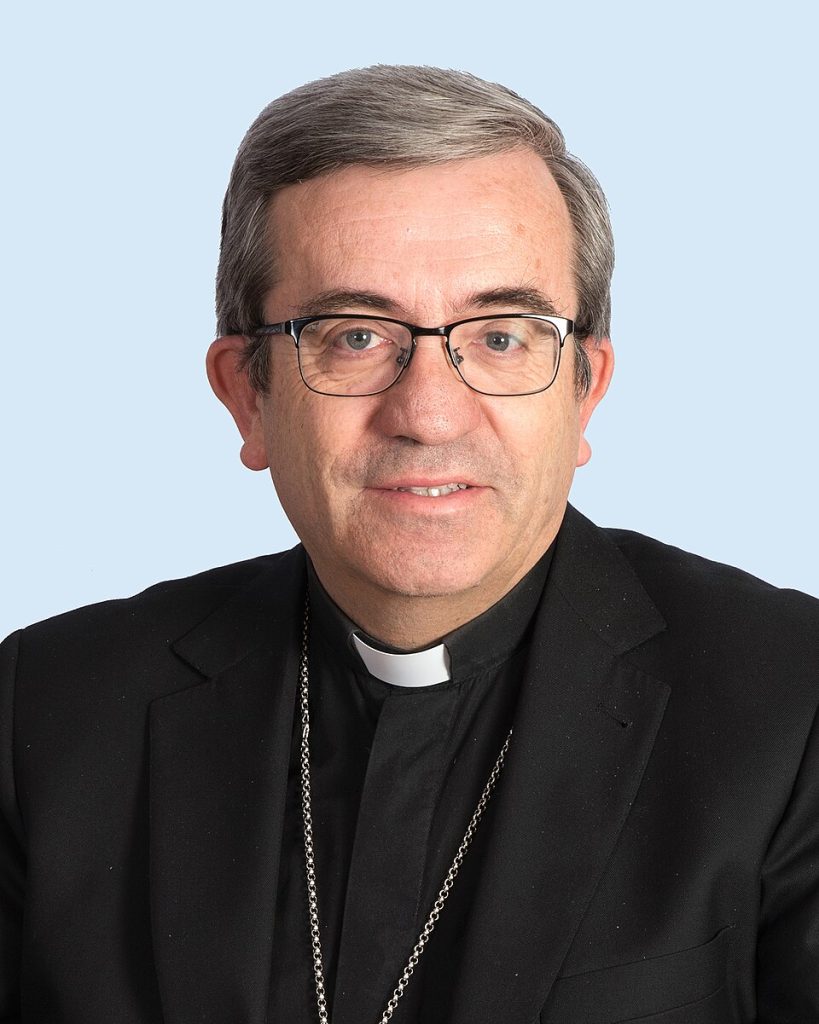
Archbishop Argüello issues Corpus Christi reminder on who may receive Communion
Archbishop Luis Argüello, president of the Spanish Bishops’ Conference, has reiterated that Catholics living in a new conjugal relationship following the breakdown of a valid sacramental marriage cannot receive Holy Communion The president of the Spanish Bishops’ Conference has reminded Catholics that those living in a new conjugal relationship following the breakdown of a valid marriage cannot receive Holy Communion. Archbishop Luis Argüello of Valladolid made the remarks in a pastoral message for Corpus Christi in which he reflected on the Eucharist and the dispositions required to receive it worthily. “When a marital relationship has broken down and those who were part of that marriage are living a new conjugal relationship,” Communion cannot be received, the archbishop said. Archbishop Argüello said those in such circumstances remained members of the Church, but that “this breaking of the Sacrament of the Covenant prevents Eucharistic communion”. “They may participate in the celebration, as well as in the life of the Church in many ways, but receiving Holy Communion is not possible,” the president of the Bishops’ Conference said. The Archbishop of Valladolid issued the message as Catholics in Spain prepare to celebrate Corpus Christi later this month. In the reflection, published as part of his diocesan pastoral programme for the first half of June, Argüello also referred to other situations which he said were incompatible with receiving Communion. These included “participating in a sinful relationship”, as well as abuses committed against others “whether in the economic or labour sphere, or in the psychological or emotional sphere”. He also referred to those publicly defending positions contrary to Christian morality. “In those cases, we cannot approach Communion without a firm decision to change our lives, making reparation for the damage caused by our situation of sin,” the archbishop said. Archbishop Argüello said the inability to receive Communion should encourage Catholics to seek a resolution consistent with the Church’s teaching on both marriage and the Eucharist. “The pain of not receiving Communion should awaken the desire to seek a solution that respects the meaning of the two sacraments at stake: Matrimony and the Eucharist,” Archbishop Argüello said. The intervention comes as Archbishop Luis Argüello prepares to accompany Pope Leo XIV during the pontiff’s apostolic visit to Spain from 6 to 12 June. Archbishop Argüello, who was elected president of the Spanish Bishops’ Conference in 2024, has become one of the most prominent voices in the Spanish Church. His election was widely viewed as signalling a more doctrinally direct approach from the episcopal conference following the presidency of Cardinal Juan José Omella. Catholic teaching holds that a valid sacramental marriage is indissoluble. For that reason, those who enter a new conjugal relationship while a previous sacramental marriage remains valid are ordinarily unable to receive the Eucharist. The issue received renewed attention during and after the Synods on the Family convened by Pope Francis and following the publication of the apostolic exhortation Amoris Laetitia in 2016. Archbishop Argüello’s latest remarks, however, amounted to a straightforward restatement of the Church’s doctrine.
Jun. 2, 2026
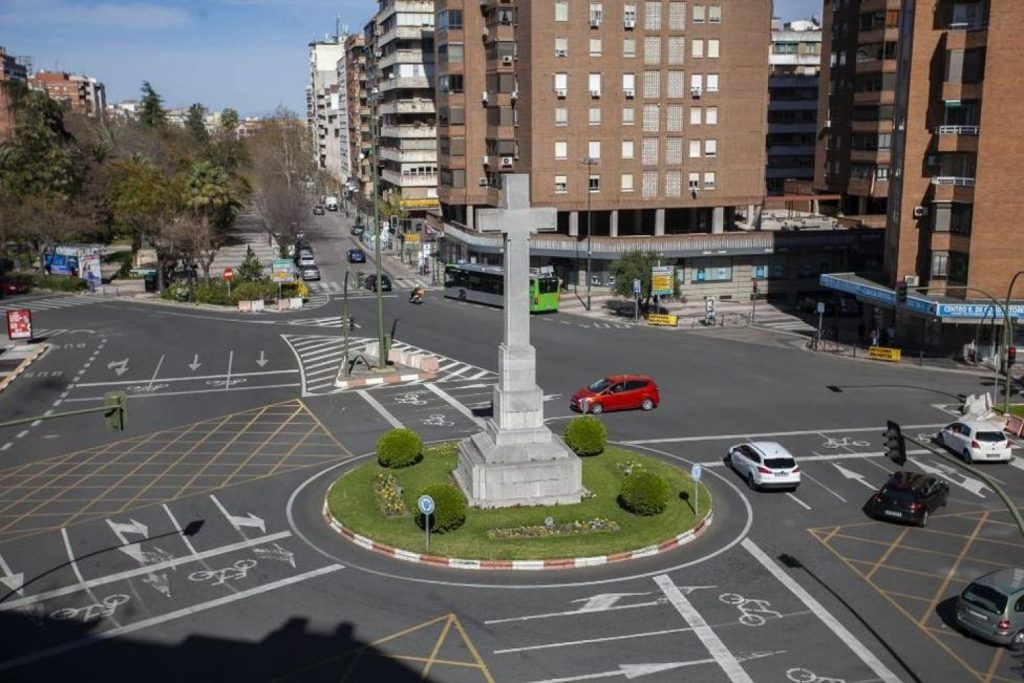
Spanish government orders removal of Cáceres Civil War cross amid heritage battle
The Spanish government has given Cáceres three months to remove the Cross of the Fallen, arguing it is a Francoist symbol incompatible with Spain’s Democratic Memory Law. Local and regional authorities are challenging the order in court and seeking heritage protection for the monument The Spanish government has given the city of Cáceres three months to remove a prominent Civil War-era cross after formally designating the monument as a symbol contrary to Spain’s democratic memory laws. The Cross of the Fallen, which stands in Plaza de América in the western city of Cáceres, was added in April to the national catalogue of symbols and elements considered incompatible with the principles of Spain’s 2022 Democratic Memory Law. The measure was accompanied by an order requiring its removal from public space, with the government arguing that the monument constitutes a Francoist symbol and lacks the artistic or historical significance necessary to justify an exemption. The decision has been fiercely opposed by local and regional authorities, who insist the cross is primarily a religious monument and forms part of the city’s historic landscape rather than a political statement. Rafael Mateos, the Popular Party mayor of Cáceres, has pledged to challenge the order through the courts. The city council argues that the monument has long since ceased to function as an instrument of political exaltation and that its presence in the city centre is now understood in a broader historical and cultural context. Municipal officials have also raised procedural objections. According to the council, the original removal order issued in April was signed by an authority that lacked the legal competence to do so. Although the government later issued a fresh resolution in May, the city intends to contest that decision as well and seek a suspension of the deadline while legal proceedings are underway. The dispute has drawn in the regional government of Extremadura, which has begun proceedings to grant the monument Bien de Interés Cultural status, Spain’s highest form of heritage protection. Such a designation would strengthen the case for preserving the cross and could complicate attempts to remove it. Laureano León, Extremadura’s regional minister for culture, tourism and sport, has indicated that he believes the monument fulfils the criteria required for heritage protection. Speaking to journalists before appearing before the regional parliament’s culture committee, León said the designation process was already under way and would continue through the normal administrative channels. “Certainly, my opinion is that it meets the conditions,” he said, while adding that the final determination would depend on technical reports produced during the process. The controversy has also become a flashpoint in wider political tensions between Madrid and Extremadura. The regional administration is governed by the Popular Party with the support of Vox, and both parties have defended the monument’s continued presence. Álvaro Sánchez-Ocaña Vara, Vox’s deputy spokesman in the Extremadura Assembly, accused the central government of targeting the cross for political reasons and linked the dispute to the governing arrangement between Vox and regional president María Guardiola. “The Cross is not to be touched,” Sánchez-Ocaña told reporters in Mérida. He described the government’s resolution as “an outrage” and “political persecution”, arguing that the monument is “inherently religious, but above all historical and devoid of any political exaltation”. Sánchez-Ocaña further maintained that the legal justification for removing the cross was flawed because the monument no longer serves any ideological purpose. He called on the government to allow the structure to remain in place while appeals are considered. “We demand that the central government, until the appeal is resolved, leave the Cross where it is,” he said. “The Cross is the heritage of the people of Cáceres and it must remain so.” The dispute centres on competing interpretations of the monument’s meaning nearly nine decades after it was erected. The cross was built in 1938 during the Spanish Civil War, a conflict that claimed hundreds of thousands of lives and culminated in the victory of General Francisco Franco’s Nationalist forces. Throughout Spain, monuments dedicated to the “fallen” were erected during and after the war, often commemorating those who died fighting for the Nationalist cause. Many of these memorials incorporated overt political symbolism linked to Franco’s regime, while others took the form of large Christian crosses that remained in public spaces long after Spain’s transition to democracy. Since the end of the Franco dictatorship, Spanish governments have grappled with how to address such monuments. Efforts to remove Francoist symbols accelerated under the Historical Memory Law of 2007 and were expanded significantly through the Democratic Memory Law adopted in 2022. The legal challenge now being prepared by the city council is likely to determine whether the monument remains in Plaza de América or becomes the latest casualty of Spain’s long-running reckoning with the legacy of the Civil War and the Franco era.
Jun. 1, 2026
Spain’s religious orders turn to professional investment managers
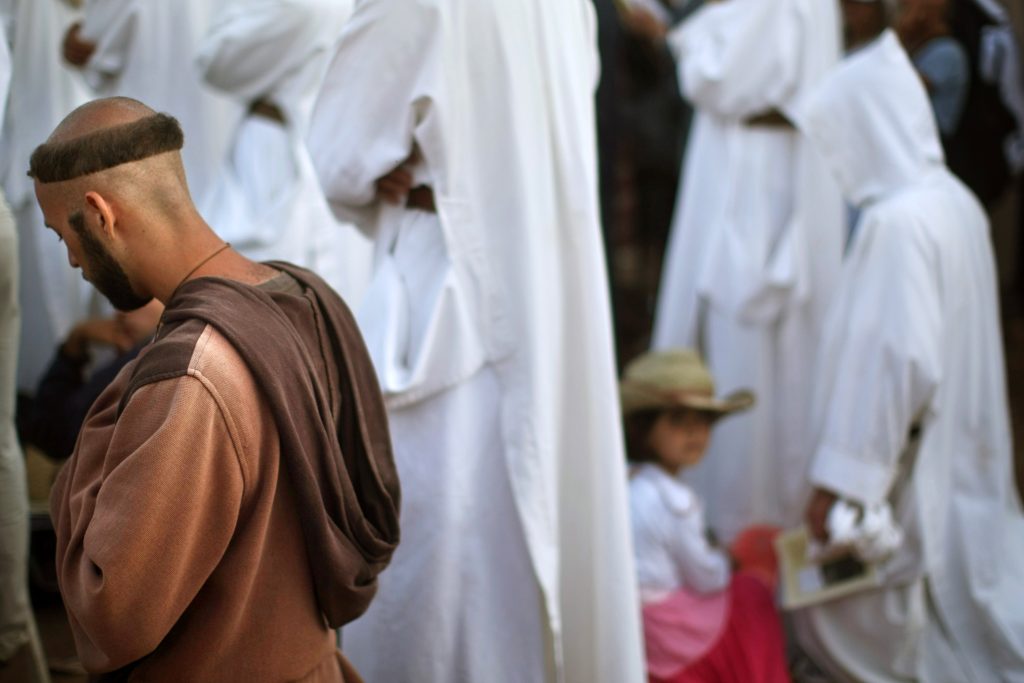
Religious orders and dioceses across Spain are increasingly turning to professional investment managers and ethically screened funds as ageing communities, falling vocations and rising maintenance costs force Catholic institutions to modernise their finances Spain’s religious orders are increasingly turning to professional investment managers and ethical funds as declining vocations, ageing communities and rising maintenance costs force Catholic institutions to modernise the way they manage their finances. According to Bloomberg News, the change was evident during a seminar held at the Theological Institute of Religious Life in Madrid, where members of religious congregations met bankers and financial advisers to discuss investment strategies, artificial intelligence and the economic uncertainty caused by Donald Trump’s second term in the White House. The gathering is indicative of a shift taking place across the Spanish Church, which has traditionally relied on donations, rental income and a system allowing taxpayers to allocate 0.7 per cent of their income tax to the Catholic Church. But falling numbers in religious life and growing financial pressures have led many dioceses and congregations to professionalise the management of their assets. Figures published by the Spanish bishops’ conference show the number of men and women in religious orders in Spain fell by around 45 per cent between 2014 and 2024. The number of priests has also continued to decline during the same period, though recent years have seen a small increase in the number of seminarians. Many religious communities possess valuable property portfolios, including schools, hospitals, convents and apartments in major cities, but these assets have not always been managed with profitability in mind. Guillermo Vanrell, head of finance and administration for a diocese in eastern Spain, said he was struck by the outdated state of Church administration when he first entered the role more than a decade ago. “I hadn’t seen an Olivetti typewriter since I was a kid,” he said, recalling how receipts were still being produced manually. He said diocesan investments had been concentrated in fixed-term deposits and banking products with little long-term strategy behind them. Since then, he has worked to modernise accounting systems and restructure investments while monitoring financial markets more closely. The scale of Church assets can vary widely between religious institutions. Smaller congregations often struggle with limited resources, while larger orders may oversee international portfolios worth hundreds of millions of euros. Many institutions must also navigate both civil and canon law obligations, particularly where schools, hospitals and heritage properties are concerned. The growing complexity of Church finances led CaixaBank and the Universidad Pontificia Comillas in Madrid to establish Spain’s first postgraduate programme dedicated to the administration of ecclesiastical property and religious institutions. Some congregations have been forced to make difficult decisions about properties they can no longer afford to maintain. The owners of Hospital La Milagrosa in Madrid sought outside advice when the cost of modernising the hospital became unsustainable. The religious order eventually reached an agreement with the Vithas Group, which now manages the hospital and has pledged to invest €30 million in renovations, while the congregation retained ownership of the property itself. As Church institutions become more active investors, Vatican guidance has increasingly shaped how Catholic organisations approach financial markets. In 2022 the Pontifical Academy of Social Sciences published Mensuram Bonam , a document setting out “faith-consistent investing” guidelines for Catholic institutions following a series of financial scandals linked to Vatican finances. The document warned against investments in industries connected to weapons, pornography, contraception and addictive products while encouraging support for businesses linked to sustainability, human dignity and social responsibility. María Canel, who oversees the finances of the Religiosas de la Pureza de María near Barcelona, said there had once been “a fear of investing”, but that attitude had changed significantly. She recalled rejecting a fund after discovering that it included investments linked to the arms industry despite assurances that it complied with Catholic social teaching. The demand for ethically screened investments has contributed to the growth of explicitly Catholic funds in Spain. According to financial advisers, around a dozen such funds now operate in the country with combined assets worth approximately €650 million. Many are linked to major banking groups including Santander, Sabadell and Ibercaja, although independent firms also operate within the sector. Earlier this year the Vatican Bank, working alongside Morningstar, launched two equity indices designed to comply with Catholic ethical principles. Companies listed within the indices include Deutsche Telekom, ASML, Apple, Nvidia and Tesla.
May 21, 2026
Canary Islands bishop says politicians must stop using migration “to win votes” ahead of papal visit
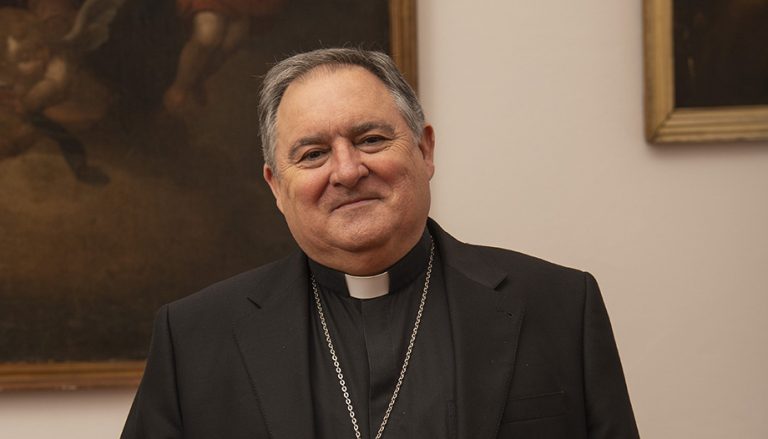
Bishop José Mazuelos Pérez of the Canary Islands has urged Spain’s political leaders to stop “playing politics” with immigration ahead of Pope Leo XIV’s expected visit to the country. The bishop warned against ideological polarisation, criticised the handling of migrant policy and said the Pope would call for unity and “the most humane solutions possible” The Bishop of the Canary Islands has appealed for Spain’s political class to stop using immigration as a weapon of ideological warfare ahead of the forthcoming visit of Pope Leo XIV. In an interview with the Spanish outlet The Objective , given as preparations continue for the Pope’s visit to Spain, Bishop José Mazuelos Pérez insisted that the migration crisis affecting the Canary Islands could not be reduced to electoral calculations or partisan rhetoric. “Immigration cannot be used for political polarisation,” the bishop said. “It’s not a matter of polarising the issue and using it for an ideology to win votes, but rather of finding the most humane solutions possible.” The Canary Islands have become one of the principal entry points into Europe for migrants crossing from West Africa, with local authorities struggling to cope with growing numbers of arrivals, especially unaccompanied minors. At the same time, debate over immigration has intensified sharply within Spanish politics, where both Left and Right accuse one another of exploiting the issue for political advantage. Bishop Mazuelos criticised what he described as attempts by all sides to instrumentalise migration for electoral purposes. “Politicians have to stop playing politics with immigration and find a solution together,” the bishop said. “Enough is enough; it seems the common good has been lost.” Over recent years, bishops, Catholic charities and ecclesiastical organisations have repeatedly backed measures designed to regularise migrants already living in Spain, while pressing for greater humanitarian protections and expanded reception policies. That stance has generated criticism that the Spanish hierarchy has aligned itself too closely with the assumptions of progressive migration policy while failing to address concerns surrounding integration, crime, pressure on housing and public services, and the wider social consequences of large-scale irregular migration. Bishop Mazuelos acknowledged that the Church had supported the regularisation of migrants for more than a year. “The Church has been asking for it for over a year and a half,” he said, arguing that Spain depended heavily upon migrant labour, particularly in caring professions and among workers supporting the country’s ageing population. At the same time, however, he openly criticised the political handling of the issue by the government of Spanish President Pedro Sánchez, suggesting that recent moves towards regularisation had been driven less by humanitarian concerns than by domestic political calculations. Referring to the timing of the proposals, the bishop said: “It was more because of the elections in Aragon than the Pope’s visit, because it suited their purposes.” Bishop Mazuelos repeatedly invoked the need for a return to “the spirit of the Transition”, referring to the broad political consensus that accompanied Spain’s move from Francoist dictatorship to parliamentary democracy in the late 1970s. “A large majority of Spaniards miss that spirit of the Transition,” the bishop said, expressing hope that Pope Leo XIV’s visit to the Spanish parliament might encourage politicians to rediscover a sense of national unity. Pope Leo XIV is expected to visit Madrid, Barcelona and the Canary Islands during what will be his first visit to Spain as Pope and the first papal visit since Benedict XVI attended World Youth Day in 2011. The Canary Islands, now synonymous across Europe with the migration crisis in the Atlantic, make any papal appearance there impossible to separate entirely from politics. Bishop Mazuelos insisted that the visit should not be interpreted as a political intervention. “The Pope’s visit to the Canary Islands is not political; he’s not coming to scold anyone or tell anyone what to do,” he said. Instead, he argued, the Pope wished to highlight “charity” and the wider mission of evangelisation. Still, the bishop also made clear that Leo XIV would likely speak forcefully about the need for unity and human dignity in the face of political division. “Pope Leo XIV is going to make that call for unity,” he said. “Let’s not use immigration for votes.” Bishop Mazuelos also addressed growing concerns over the treatment of unaccompanied migrant minors arriving in the Canary Islands, many of whom face uncertain futures upon reaching adulthood. “When they turn 18, they’re sent out onto the street,” he said, warning that many subsequently become vulnerable to criminal exploitation, prostitution and homelessness. He praised the work of Caritas and Catholic organisations operating in the islands, arguing that Church agencies were frequently stepping in where the state had failed. “Ultimately, it’s Caritas that’s feeding them,” he said. “Helping them so often where the State falls short.” The bishop nevertheless rejected accusations that the Church supported uncontrolled or irregular migration. “The Church is not in favour of irregular immigration,” he said. “But rather the most humane immigration possible.”
May 12, 2026