

Society Of Saint Pius X
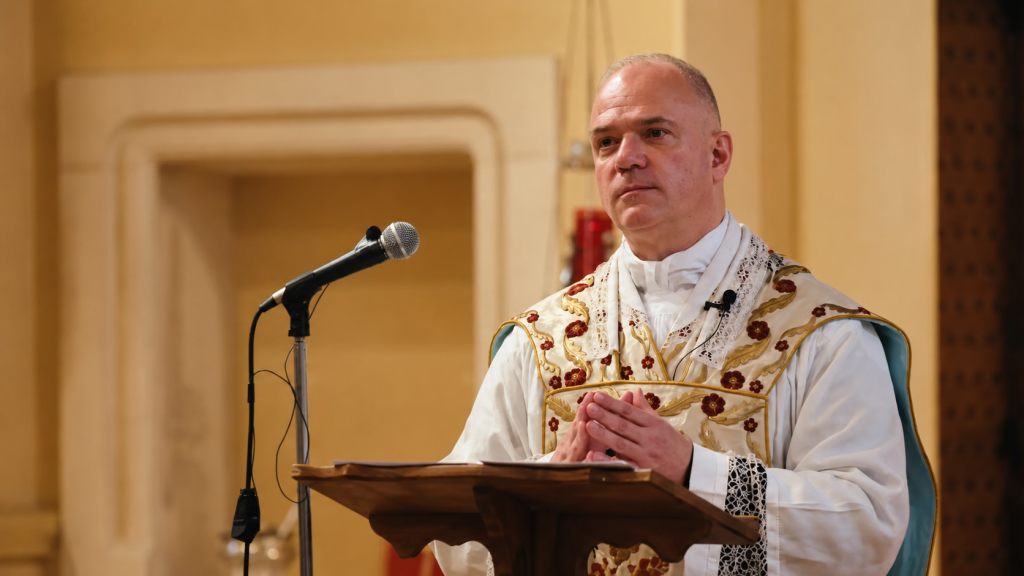
SSPX Superior General urges faithful to stand firm as canonical battle begins
The Superior General of the Society of Saint Pius X has issued his first direct appeal to the laity since the Vatican declared the Society’s bishops excommunicated. In an internal pastoral letter, Fr Davide Pagliarani tells the faithful to remain steadfast as the SSPX prepares for what it expects will be a lengthy canonical dispute with the Holy See The Society of Saint Pius X Superior General has urged the lay faithful attached to the society to remain steadfast as the society prepares for what is expected to be a prolonged canonical battle with the Holy See. In a pastoral letter, Father Davide Pagliarani thanked supporters for their loyalty following the consecration of four bishops at Écône on 1 July. He also portrayed the Vatican’s response as an unjust humiliation borne for the sake of preserving what the Society describes as the Church’s tradition. The letter is the SSPX leadership’s first direct appeal to the laity since the Holy See declared that the bishops involved had incurred automatic excommunication. Addressing the faithful directly, Father Pagliarani recalled the thousands who attended the consecrations at Écône where weather interrupted the liturgy. Quoting Psalm 17, the Superior General described the storm that swept across the ceremony as a moment that deepened rather than diminished his gratitude. “I was the privileged witness to a liturgy of exceptional beauty,” Father Pagliarani wrote, before turning to what he described as an even more moving sight: “a vast crowd of faithful who remained in their places throughout the storm and prayed to Our Lady for the new bishops, for the Church, and for the Pope.” The letter repeatedly returns to the role of the ordinary faithful, presenting them as the principal reason for the consecrations rather than the bishops themselves. “Ultimately, these consecrations were performed for each of you, dear faithful,” Father Pagliarani wrote. “Your souls are the true treasure entrusted to the Society.” Father Pagliarani’s letter leaves little doubt that the Society rejects both the legal and theological basis of the Vatican’s conclusions. “The consecrations have been condemned, and the severity of the sanctions imposed is unprecedented,” he wrote. While acknowledging that the bishops were the principal target of the decree, the Superior General argued that “even the faithful are affected.” Father Pagliarani called the condemnation “utterly unjust”, and said it represented “an immense humiliation for people whose sole aim is to defend the true faith and work for the salvation of souls.” The Superior General also suggested that the sanctions extend beyond individuals to the wider traditionalist cause itself. “Ultimately, it is Tradition itself, which we cherish above all else, that is excommunicated in all those who embody it,” the letter states. “It is obvious that, before God, such a condemnation cannot be valid.” “If Providence allows a crisis such that the teaching of the faith is mysteriously obscured, that same faith must continue to live in souls,” Father Pagliarani wrote. The Superior General added that “the small candle that each of you received on the day of your baptism must remain lit in your heart and mind until the very last day.” “The Fraternity will never abandon you,” Father Pagliarani concluded. “Your souls will never lose their value and worth in the eyes of its priests.” AdVaticanum understands that the message was read to congregations across SSPX chapels on Sunday and had been circulated internally beforehand as part of an embargoed circular letter sent throughout the Society. According to information obtained by the publication, the accompanying internal circular letter by Fr Le Roux, Secretary General, also sought to prepare superiors and members for the next stage of the dispute following the Society’s preliminary canonical recourse against the Vatican decree, outlining the movement’s intentions as it navigates the post-consecration fallout. Following the 1 July consecrations, the Dicastery for the Doctrine of the Faith issued a decree on 2 July declaring that Bishop Alfonso de Galarreta, Bishop Bernard Fellay as co-consecrator, and the four newly consecrated bishops had incurred latae sententiae excommunication under canons 1387 and 1364. The accompanying explanatory note extended well beyond the declaration concerning the bishops. It stated that all sacred ministers of the Society are in schism and subject to the same penalty, described their sacramental ministry as illicit, asserted that confessions heard by SSPX priests and marriages celebrated by them are invalid, and warned clergy and faithful against formal adherence to the movement, citing the criteria established by the Pontifical Council for Legislative Texts in 1996. The publication of the letter follows a series of increasingly detailed SSPX responses to the Vatican decree. In in-house SSPX articles published after the sanctions, including Invalid Punishments, Valid Sacraments , followed by Nuclear Excommunication and Hundreds of Thousands of Catholics Purportedly Excommunicated: How Should We See This? , the Society maintained that the penalties are canonically null because a state of necessity excuses any alleged offence. It further argued that neither bishops, priests nor lay faithful had incurred excommunication and insisted that confessions and marriages remain valid through the Church’s principles governing supplied jurisdiction and matrimonial consent. On 11 July, the SSPX General House lodged a preliminary recourse with the Dicastery for the Doctrine of the Faith. In a communiqué published two days later, the Society stated that the appeal had been submitted under canon 1734 and the following canons, adding that it “has the effect of suspending the execution of the decree, in accordance with canon 1353.” The appeal, the communiqué said, had been presented “in a spirit of respect for ecclesiastical authority and of faithful attachment to justice, truth and the good of the Church.” Whether that legal argument ultimately succeeds appears uncertain. In an interview published by AdVaticanum on 18 July, Archbishop Juan Ignacio Arrieta, the former Secretary of the Dicastery for Legislative Texts, offered a detailed canonical assessment of the Holy See’s position. Archbishop Arrieta described the decree as “an act owed”, arguing that the dicastery merely declared a penalty that had already been incurred automatically under canon 1387. The former Vatican official nevertheless distinguished between the declaration of excommunication and the faculties previously granted by Pope Francis. Regarding confessions, Archbishop Arrieta stated that the faculty had been granted by a pontifical act and therefore “an act of the same nature is required to revoke it.” Revocation, Archbishop Arrieta said, “requires direct authorisation from the Pope himself.” On marriages, however, Archbishop Arrieta concluded that the present circumstances make it improbable that diocesan bishops could lawfully grant the necessary delegation, meaning marriages celebrated by SSPX clergy would be canonically null for lack of canonical form. In the same article, a priest close to the Dicastery for the Doctrine of the Faith told AdVaticanum that the Society’s preliminary recourse was “unlikely to be granted”, arguing that the dicastery had not imposed a penalty but merely declared one already incurred for what was described as a well-known offence. Any lifting of the excommunications, the priest suggested, would require repentance by those involved. With the preliminary recourse now before the Dicastery for the Doctrine of the Faith, and internal correspondence indicating that the Society is preparing for the next phase of the confrontation, the pastoral appeal suggests that the SSPX expects the dispute to continue well beyond the coming months.
Jul. 20, 2026
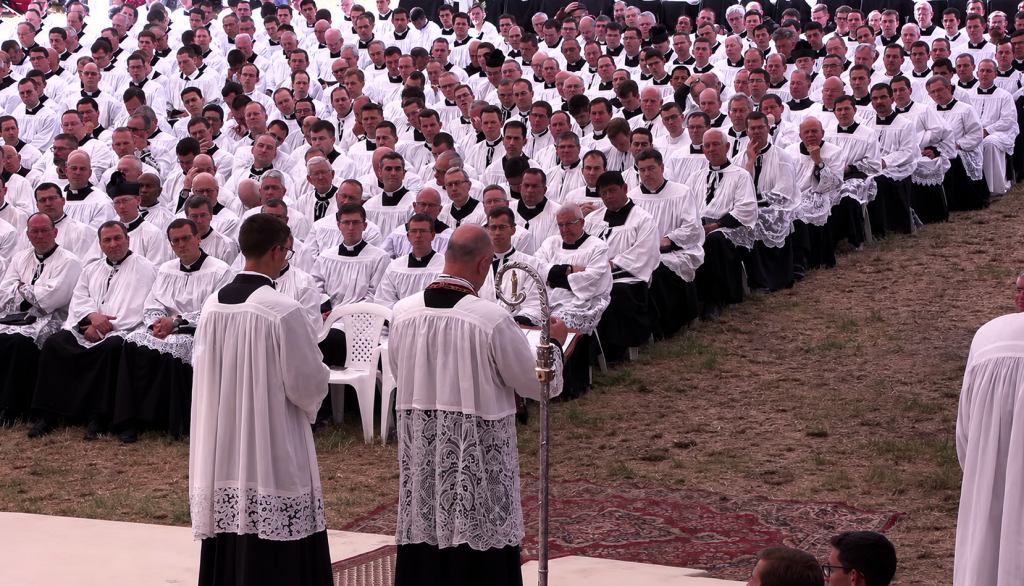
Fr Davide Pagliarani’s sermon for the 2026 episcopal consecrations in Écône
As the more than four-hour ceremony in which the Society of Saint Pius X consecrated four new bishops draws to a close, AdVaticanum is publishing excerpts from the sermon delivered by Fr Davide Pagliarani, Superior General of the Society of Saint Pius X The ceremony in which the Society of Saint Pius X consecrated four new bishops has taken place, lasting more than four hours. AdVaticanum can now release excerpts from the sermon delivered by the Superior General of the Society of Saint Pius X, Fr Davide Pagliarani. Fr Pagliarani presents the consecrations as a necessity rather than a choice, justified by what he described as the need to preserve and transmit the Faith. He also urged the four new bishops to remain steadfast and never to yield to “the spirit of the world” or adapt Catholic teaching to contemporary cultural pressures. At last, this day has arrived. A historic day. Why are we here? How should we understand these episcopal consecrations? This is a divisive event before which it is impossible to remain indifferent. What does it mean for us? This ceremony must be a manifestation of faith. We do not choose what we believe or do not believe. We cannot reinterpret or reconsider it. We simply have the duty to preserve the faith that the Church has always taught. We must love it, live it and hand it on. If we truly love Our Lord, we have the duty to share the treasures that come to us through the faith. Anyone who has no desire to transmit the faith shows that he himself is not living by faith. The more the faith is attacked and disappears, the more urgent this duty becomes. Without faith it is impossible to please God, to live well or to be saved. Today we are taking exceptional measures proportionate to this necessity. Some might therefore think we are facing a dilemma. We choose the fullness of the faith, but separate ourselves from the Church. We are choosing between faith and the Church. In preserving the faith, are we breaking with the Church? This is a false dilemma. We belong to the Church first of all through the faith, just as one belongs to a nation by sharing the same language, identity and culture, or to a family by bearing the same name and living in the same home. We belong to the Church because we profess the same faith. Therefore we cannot choose between faith and the Church. We want the faith of the Church in order to remain in the Church, and we want the Church through the faith and in the faith. It is important to understand this, even if those facing us refuse to do so. This is not an opinion, a preference or an option. It is a necessity. We are accused of not loving the Pope and of not respecting him. But it is precisely because we sincerely love the Pope as the Vicar of Christ and head of the Church that we no longer want to see him humiliated alongside false shepherds representing false religions. We have seen this happen so many times over the years. Because we love the Vicar of Christ, we no longer want this humiliation for the Pope, a humiliation that falls upon the whole Church, treating her as though she were on an equal footing with false religions. We have explained this countless times, almost in every language on earth. Yet why are we still not understood? At heart, we are speaking two different languages. We speak the language of faith. We want it in all its simplicity. It is the language of Tradition. Those on the other side speak another language altogether: the language of inclusion, listening, dialogue and accompaniment. We want the faith, and then within the faith we accompany people. We listen to them in order to lead them to the faith and convert them. But we must stop talking simply for the sake of talking, or accompanying for the sake of accompanying. That is not what souls need. Souls need Our Lord, and we reach Him through the full Catholic faith. There is only one faith. That is why there is this difficulty: two languages that continue to drift further apart over time. We live these consecrations in hope, not in tension, controversy, bitterness or resentment. We live them in joy and hope. In 1988 those who condemned the Society of Saint Pius X predicted its disappearance. God has not abandoned us and He will not do so. All these years have shown it, and these consecrations show it again. Why? Because God has only one will: to save souls. Whoever applies the principles that save souls is acting according to God’s own law. That is why, contrary to all human expectations, God sent His Son and asked Him to sacrifice Himself on the Cross. He will therefore never abandon us and will always provide means proportionate to our needs. The more we suffer, the more we struggle and strive to remain faithful, the more He is with us and makes His presence known. Above all, these consecrations must be understood and lived in a spirit of charity towards souls and especially towards the Church. The more souls are confused and disorientated, the more we must seek them out and support them. The more the Church is insulted, the more we must love and serve her. We must be ready to pay any price to serve the Church. The greatest sacrifice is to be treated as rebels when all we want is to serve and love the Church as a mother: a mother in difficulty, burdened, suffering and sometimes betrayed, a mother who needs and deserves our help in return for everything she has given us. Could we remain indifferent and do nothing? Could the Society? No. That would be to betray the Church. Today’s feast providentially expresses and summarises the meaning of these consecrations. It brings everything back to one point: the Precious Blood of Our Lord, the remedy for every evil of humanity. All evil comes from sin, and above all from one sin that has always remained the same: the exaltation of man. We are saturated with it. We are told that man is marvellous, perfect and possesses infinite dignity. All this feeds pride and, in time, contempt for God and silent apostasy. The more man is encouraged in this obsession with himself, the further he is led from God. Man, full of himself, refuses to turn towards God. He cannot recognise that he is wounded by sin and needs redemption through the Blood of Christ. This plague penetrates deeply, even into the Church. It blinds and paralyses souls. It is not this that brings souls back to God. Through these consecrations we wish to continue preaching the Precious Blood of Our Lord and continue pouring it out upon souls. It is in this Blood that Our Lord founded His Church, the New and Eternal Covenant. There is only one. Whoever believes there are several covenants no longer truly believes in the unique and infinite value of the Blood of Our Lord. Everything revolves around Our Lord because everything revolves around the faith. That is what you, future bishops, must preach. What a responsibility and what an honour. What advice can one give you? Your mission is so delicate, so important and so great that I would rather let Our Lord Himself speak through the Gospel: “Behold, I send you out as lambs among wolves.” To be lambs means perfect docility and submission to the will of God, just as Our Lord was subject to the will of His Father. But never forget that the Lamb of God is also the Lion of Judah. As perfectly obedient as He is to the Father’s will, He never bows before the spirit of the world. To serve God is to come into conflict with that spirit. A bishop must proclaim the rights of Our Lord, not the rights of man. A lion does not retreat, nor does it bow. Never bow before the spirit of the world. Do not move. Do not retreat. These consecrations will give you an irresistible strength. From today, people throughout the world will watch you and listen to you. In thirty or forty years’ time they must be able to say: “They never bowed before the spirit of the world, but only before Our Lord the King.” That is the finest legacy you can leave. Our Lord also said: “Be simple as doves and prudent as serpents.” This is so that you may recognise the duplicity, ambiguity and cunning that exist in the world and among the enemies of the Cross. Your greatest enemies will not confront you openly. They will try to draw you gradually towards a more fashionable understanding of the Christian life and of the Church’s relationship with the world. When you sense that danger, step back, pray and remain still before reacting, like a serpent. Then, when you do act, act decisively—and never go back.
Jul. 1, 2026
Bishop Strickland gives another reflection on the SSPX
In a new reflection on the Society of St. Pius X, Bishop Joseph Strickland examines the legacy of Archbishop Marcel Lefebvre In the wake of the July 1 consecration of new bishops for the Society of Saint Pius X, Bishop Joseph Strickland has given his view on the SSPX at large. Writing on his website, Pillars of Faith , the former Bishop of Tyler encouraged readers to, as discussions continue regarding the Society of St. Pius X, ask themselves: “What has moved these priests and faithful throughout the past fifty years?” The 67-year-old bishop did not wade into the consecrations themselves, but instead took a step back and examined the life of Archbishop Marcel Lefebvre, the Society’s founder, whose desire to preserve what he believed to be the authentic faith of the Church led to conflict with Rome and ultimately to his excommunication, a penalty he carried until his death in 1991. The bishop said that Archbishop Lefebvre “did not embark upon this path because it was easy, nor because it brought him honor or peace”, but because “he believed that precious treasures entrusted by Christ to His Church – the Holy Sacrifice of the Mass, the reverent celebration of the sacred mysteries, the formation of holy priests, and the perennial teachings of the Catholic Faith – were in danger of being diminished.” Bishop Strickland suggested that this had been a consistent theme throughout the Society’s history, stating that “looking honestly at their history, one sees men and women who have sacrificed greatly because they believed they were preserving the treasures entrusted to the Church by Christ Himself.” Acknowledging that many Catholics would disagree with the Society’s decision not to submit to Rome at various points in its history, the bishop wrote that “whether every decision made along the way was prudent is a question that reasonable Catholics may discuss”, but reaffirmed that its motivation was “to remain close to Our Lord and faithful to the deposit of faith.” Reflecting on the present state of the Church, Bishop Strickland said that “across the world, many public challenges to Catholic doctrine and morality have caused great confusion among the faithful” and asked: “Why do those who openly reject settled teachings of the Church often appear to face little correction, while those whose deepest desire is to preserve the Church’s sacred inheritance are viewed with the gravest penalties?” Entrusting the matter to Divine Providence, he further asked that every Catholic “pray – not only for the faithful of the Society of St. Pius X, but also for the Holy Father, for the bishops, and for all those entrusted with the grave responsibility of shepherding Christ’s flock.” The bishop’s reflection follows a similar pattern to that of a number of Church figures in recent years who have been reluctant to criticise the intentions of Archbishop Lefebvre and the Society itself, but have instead sought to heal the divide between the Society and Rome. His reference to those “who openly reject settled teachings of the Church” and “face little correction”, while there has been talk of the wholesale excommunication of members of the Society, is a point that many have commented upon. Bishop Strickland was likely referring to the German Synodal Way and other Catholic groups that have issued proposals seeking changes to Catholic moral teaching. Many have pointed to what they see as an inconsistency in comparison with the Society. While some might legitimately argue that the Society deviates from Catholic doctrine by questioning the Second Vatican Council and aspects of its teaching, the German Synodal Way has openly and repeatedly questioned Catholic teaching on sexuality and the liturgy, in a way that many believe goes considerably further in the opposite direction than the SSPX. Bishop Strickland himself is no stranger to public disagreement with Church authorities. Particularly critical of Pope Francis’ pontificate, the Diocese of Tyler was subjected to an apostolic visitation in 2023 during his leadership. The visitation ultimately led to his removal from office later that year. While he did express concern over Pope Leo’s election in 2025, telling commentator Glenn Beck, “He was involved in naming bishops that I find very troubling”, he has generally been significantly less critical of the current pontificate. Bishop Strickland’s previous commentary on the Society has followed a similar line. Writing in February this year, he said that “when those who openly contradict the Church’s teaching are tolerated, while those who seek continuity are treated as suspect, something has been inverted.”
Jun. 26, 2026
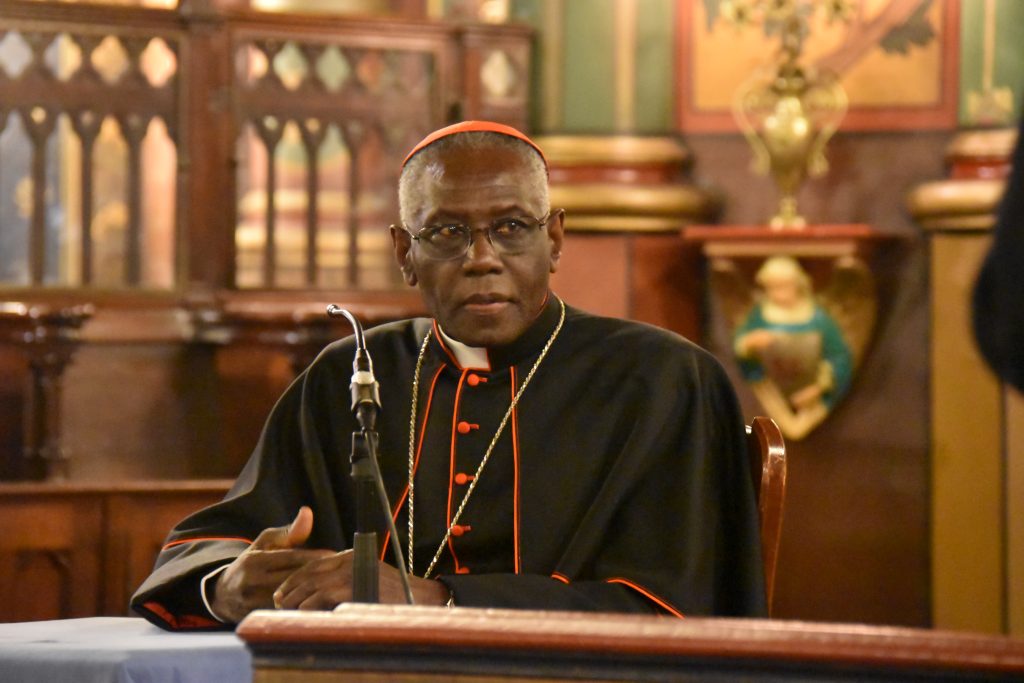
Cardinal Sarah calls SSPX plans a source of “deep grief”
Cardinal Robert Sarah has issued a fresh appeal for unity ahead of the SSPX’s planned episcopal consecrations on 1 July, describing the situation as “objectively serious” and a source of “deep grief” Cardinal Robert Sarah has warned that any episcopal consecrations carried out by the Society of St Pius X (SSPX) without papal approval would further damage the unity of the Church and further separate the traditionalist society from hierarchical communion with Rome. In an interview with the French Catholic publication La Nef , the former prefect of the Congregation for Divine Worship and the Discipline of the Sacraments addressed reports that the SSPX intends to consecrate bishops on 1 July despite objections from the Holy See. Speaking about the prospect of new episcopal consecrations, Cardinal Sarah said the situation remained “objectively serious” and was a source of “deep grief”. “Sources close to the Society have announced new episcopal consecrations for July 1, 2026, and the Holy See has reportedly warned that such an act would constitute a decisive break with ecclesial communion,” Cardinal Sarah said. The Guinean cardinal noted that canon law provides that both a bishop who consecrates another bishop without a papal mandate and the recipient incur automatic excommunication. “Here, the act would be even more serious since it would involve ordaining a bishop against a formal request from the Apostolic See,” he said. The cardinal warned that attachment to Catholic tradition could never be divorced from ecclesial obedience, saying that “fidelity to Tradition cannot be separated from hierarchical communion”. His Eminence stressed that concern for ecclesial unity should not obscure the doctrinal concerns raised by members of the society. “And hierarchical communion, for its part, must never disregard the suffering or the doctrinal questions that have accumulated,” the former prefect said. “Truth and charity must go hand in hand. I believe we need to fast and pray so that the irreparable can be avoided.” Cardinal Sarah has consistently spoken against the SSPX’s planned episcopal consecrations without a papal mandate, scheduled for 1 July 2026. In his public statement, Before It Is Too Late! A Call to Unity , he expressed grave concern over the decision, warning that such disobedience risks an irreversible rupture in the Church. Cardinal Sarah stated: “For this reason, I wish to express my grave concern and my profound sorrow upon learning of the announcement by the Priestly Fraternity of Saint Pius X, founded by Archbishop Lefebvre, of its intention to proceed with episcopal ordinations without pontifical mandate.” His Eminence added: “We are told that this decision to disobey the law of the Church is motivated by the supreme law of the salvation of souls: suprema lex, salus animarum . But salvation is Christ, and He gives Himself only within the Church. How can one claim to lead souls to salvation by paths other than those He Himself has indicated to us?” Beyond the SSPX, Cardinal Sarah made remarks about the state of the Church and Western society, the legacy of Pope Francis, the interpretation of the Second Vatican Council and the challenges facing the pontificate of Pope Leo XIV. Cardinal Sarah also expressed concern about what he described as the return of paganism within the Church. “Paganism is not merely the worship of visible idols; it is also the loss of the meaning of worship itself,” His Eminence said. He warned that when faith is reduced to “sociological language”, liturgy becomes entertainment and morality a matter of perpetual negotiation, meaning that “something of paganism returns”. The cardinal added that the Church must resist adapting herself to the spirit of the age, warning that “permeability to the spirit of the world is the great heresy of our time”. “The world does not expect the Church to repeat its words; it expects it to open Heaven to it,” Cardinal Sarah said. Speaking about the late Pope Francis, Cardinal Sarah said it was legitimate for Church leaders to exercise discernment regarding a previous pontificate, provided it was done with reverence and fidelity. “It is not only permissible, but sometimes necessary, to exercise discernment regarding a period in the life of the Church,” the cardinal said, adding that “a cardinal is not a courtier” but “a servant of truth and a collaborator of the Apostolic See”. “If this pontificate helps the Church to regain more doctrinal clarity, liturgical depth, inner peace and sense of God, then it will render a great service to the faithful,” he said. While rejecting what he described as “worldly assessments” of a papacy, the former prefect acknowledged that pontificates could leave behind “areas of unease or confusion”. The Guinean cardinal argued that “it would be unjust to attribute to a single man a crisis that predates him by a considerable margin”, while also recognising that an era can leave “wounds of confusion”. During the Francis pontificate, Cardinal Sarah emphasised fidelity to the Successor of Peter and rejected any narrative of personal opposition. As prefect of the Congregation for Divine Worship, he met regularly with the Pope as part of his curial responsibilities throughout his seven-year tenure. In a 2021 interview following his resignation as prefect, Cardinal Sarah stated: “Even though some journalists continually repeat the same nonsense, I have never opposed the pope. … Some people insinuate without reason … that we were enemies. It’s not true! Pope Francis likes frankness. We have always worked together with simplicity, despite the fantasies of journalists.” Turning to the Second Vatican Council, Cardinal Sarah argued that some conciliar texts would benefit from greater clarification, while rejecting suggestions that the council itself should be repudiated. “I would speak first of clarifications rather than corrections,” the former prefect said, insisting that “a council must be read within the continuity of the faith as it has always been”. He identified religious liberty, ecumenism, collegiality and the relationship between the Church and the modern world as among the subjects that have generated differing interpretations since the council. “Where certain texts have given rise to divergent, even opposing, interpretations, it is legitimate to call for a deeper examination in order to avoid readings that represent a break with the faith,” Cardinal Sarah said. The cardinal also criticised forms of democracy detached from objective moral truth. While defending democracy as a legitimate political system, he warned that it becomes relativistic when it claims that majorities can determine good and evil. “No procedure can create truth,” Cardinal Sarah said, warning that “a democracy that does not recognize an objective and transcendent limit to its power becomes a dictatorship of relativism”. Despite his concerns about the condition of the Church and wider society, Cardinal Sarah pointed to signs of renewal, including growing interest among young Catholics in Eucharistic adoration, confession and traditional forms of prayer. He also highlighted reports of increasing adult baptisms in parts of Europe as evidence of a renewed search for God amid cultural uncertainty. Looking ahead to the pontificate of Pope Leo XIV, Cardinal Sarah suggested that peace, unity and doctrinal clarity were already emerging as defining priorities. He expressed hope that the new pontificate would help the Church regain “more doctrinal clarity, liturgical depth, inner peace and sense of God”, which would render “a great service to the faithful”.
Jun. 6, 2026
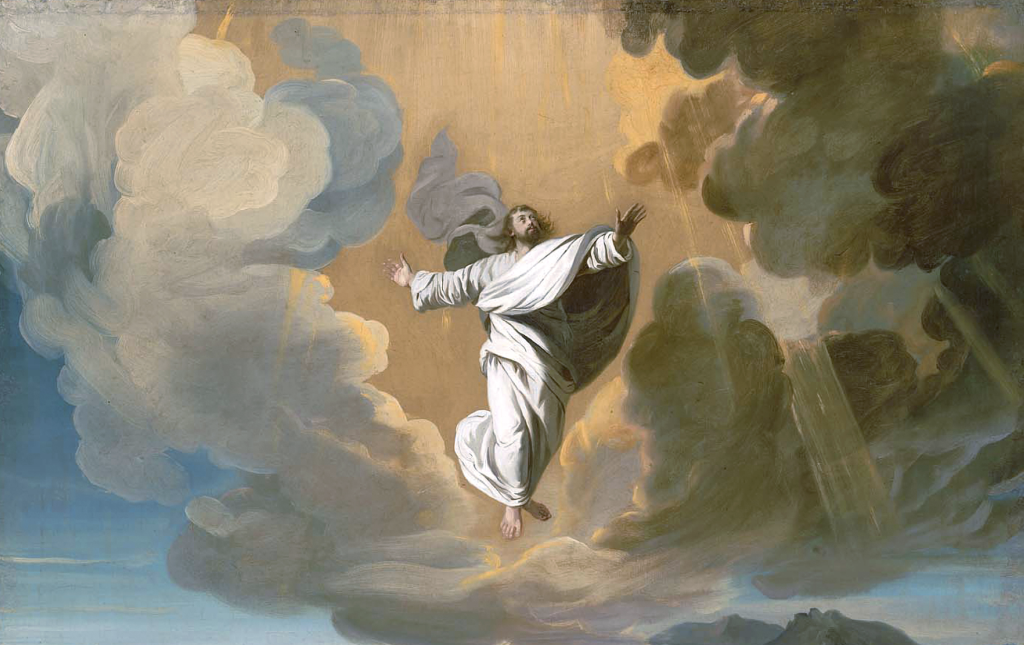
A homily for the Sunday after the Ascension: Dom Alcuin Reid warns against SSPX excommunications
Dom Alcuin Reid warns against possible SSPX excommunications in a homily for the Sunday after the Ascension, saying Catholics attached to the older liturgical rites have faced exclusion and “ecclesiastical displacement” since Traditionis custodes In these days after the Ascension, as the Paschal candle stands extinguished and we wait in expectation and hope for the consoling fire of Pentecost, the Sacred Liturgy of our Holy Mother the Church gives us a somewhat stark warning about living as faithful witnesses to Christ. “They will put you out of the synagogues; indeed, the hour is coming when whoever kills you will think he is offering service to God. And they will do this because they have not known the Father, nor me,” we are informed by the words of Our Lord Himself in this morning’s Gospel. Historically, these words apply to the expulsion of early Christians from the Jewish synagogues as it became clear that Christian faith and life was a substantial development of Jewish belief that the authorities of the time deemed unacceptable. Christianity rightly boasts of and venerates its roots in the Old Covenant, but it remains a fact that the New Covenant fulfils the Old and surpasses it. The Old Covenant no longer suffices. Because of this reality, Christians were expelled from Jewish synagogues and, as we see clearly in the martyrdom of St Stephen (cf. Acts 7), were indeed killed out of a supposedly godly zeal. But what are we to make of this prophecy today? We hear it proclaimed only days after the Holy See has threatened to excommunicate those who plan to consecrate new bishops for the Society of St Pius X, and the new bishops themselves, at the beginning of July. (In spite of much sensational reporting, there is no question of the excommunication of their faithful.) The parallel is not exact: there are many issues involved, and they are complex. But the echo of Our Lord’s prophecy at this time is unnerving, particularly given the zeal with which those who wish to celebrate according to the older liturgical rites of the Church have been excluded from their churches and chapels since the liturgical, historical and pastoral travesty that is the Motu Proprio Traditionis custodes of 2021, which has brought about further disunity and division whilst purportedly seeking unity through the imposition of a ritual uniformity never before known, or required, in the life of the Church. Many are the good and loyal Catholics who have experienced expulsion from their places of worship and the killing off of the sources of grace and pastoral care for themselves and their families at the hands of prelates who, seemingly, “do this because they have not known the Father, nor me.” We ourselves have had to step outside of the system, as it were, in order simply to survive: something no one wishes to do, but which, in extraordinary times, may become truly necessary in conscience. Necessity is the key, as the Society of St Pius X often says. For the older liturgical rites are not a matter of mere aesthetic preference: they are the integral source and summit of our Christian life and mission and guarantee a ritual and doctrinal integrity that is, at best, “watered down” in their successors and which, if we examine the increasingly poisonous fruits of the virus of synodalism that has been unleashed in the Church, is at times utterly compromised, if not downright rejected, by those who would proscribe that which, of its very nature, “remains sacred and great for us too, and it cannot be all of a sudden entirely forbidden or even considered harmful.” (Benedict XVI, Letter, 7 July 2007.) Maintaining the rites of the usus antiquior, including the Divine Office, the sacraments and sacramentals, is not a personal “choice”: it is the conviction that, at this time in the history of the Church, they are necessary to guarantee a continuity of faith and life with the Church founded by Christ on the Apostles, at a time when other means do so less effectively or are at times hijacked for ends utterly inimical to the Deposit of Faith. This is not to malign the good will of many of those in authority, or of clergy, religious and laity who have struggled for decades, and who continue to struggle, to be faithful, often in the face of much opposition and, at times, from bishops and other ecclesiastical superiors. Nor is it to question the validity of the newer rites when celebrated correctly. This is, however, to underline the pastoral necessity, that is, the necessity for the salvation of souls, of free access to the Church’s unadulterated rites and teaching: something that the fruits produced by communities who celebrate them make abundantly evident. Sadly, this is a reality which still seems to be ignored. What, then, can we do when the choice seems to be between disobedience and dissolution? This is no small question, and we do well to consult St Thomas Aquinas and other sound theologians on its implications. In doing so, we find that material disobedience to positive law, as distinct from Divine law, can, extraordinarily, be tolerated for a truly necessary good: a father must feed and protect his family. There is no virtue in allowing them to starve to death or to be destroyed by danger. At certain times we must act outside the norm. And, as the fourth century martyrs of Abitene teach us so eloquently, sacramental starvation is not tolerable: sine dominico, non possumus (without the Sunday Eucharist, without the liturgy and the sacraments, we simply cannot live). But first and foremost, we must pray. In the context in which we find ourselves, the counsel of this morning’s Epistle is particularly pertinent: “Keep sane and sober for your prayers,” St Peter insists. So too he urges us: “Above all hold unfailing your love for one another, since charity covers a multitude of sins. Practice hospitality ungrudgingly to one another. As each has received a gift, employ it for one another, as good stewards of God’s varied grace.” Prayer, charity, hospitality and mutual service are most certainly necessary at all levels of the Church in our times, and persevering in each of them will bring many graces, particularly for those who are persecuted or who, as it were, find themselves “ecclesiastically displaced”. In these days when we await the coming of the Counsellor whom Our Lord promises to send us from the Father, we can, then, each redouble our prayers that the Spirit of Truth shall truly inhabit those in authority and, as we shall sing in the Sequence of Pentecost, flecte quod est rigidum, fove quod est frigidum, rege quod est devium. (Bend what is inflexible, warm what is chilled, correct what has gone astray.) Not only should we beg Almighty God to send the Holy Spirit to melt the hearts that govern the Church, we should also implore Him in particular to fill the Holy Father with His sevenfold gifts of wisdom, understanding, counsel, fortitude, knowledge, piety and fear of the Lord in the exercise of his unenviable but utterly crucial duty to protect the integrity of the Deposit of Faith and the unity of the Church under it, of which the Sacred Liturgy is the living source and sacramental. The Holy Father needs our prayers at this time! Let us begin praying earnestly that, through the inspiration and gifts of God the Holy Spirit, charity and Truth will prevail on all sides and all talk of excommunication shall cease; that true hospitality will be shown; and that those who have been given the gift of the episcopacy and papacy will employ them, as good stewards, in the service of all their flock after the example of the Good Shepherd Himself (cf. Jn 10). With the help of our prayers, through the power of God the Holy Spirit, this can yet come to pass. Dom Alcuin Reid is the Prior of the Monastère Saint-Benoît in Brignoles, France, www.monasterebrignoles.org
May 17, 2026
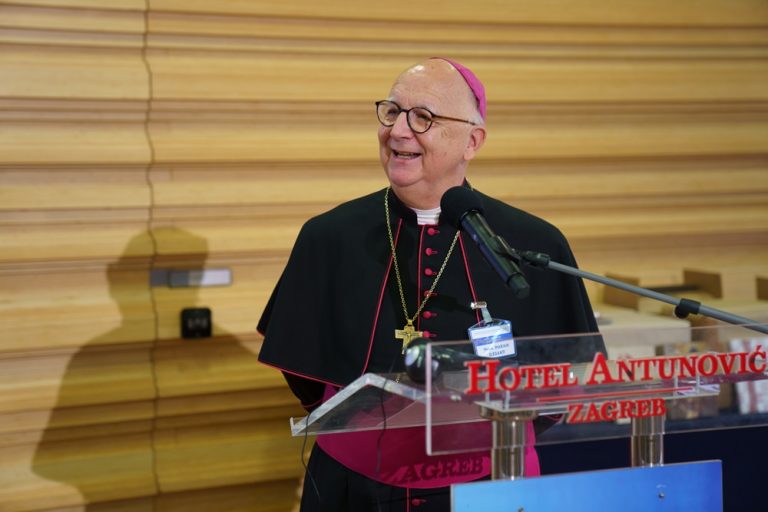
Bishop Eleganti on the old rite, Islam and the future of the Church
Bishop Marian Eleganti speaks to AdVaticanum on the appeal of the traditional liturgy, Islam and the Society of St Pius X. Eleganti addresses the fallout of the Second Vatican Council, the place of the old rite and the pertinent questions facing the Church in the West The Benedictine Bishop Marian Eleganti, former Abbot of St Otmarsberg Abbey and auxiliary bishop of the Diocese of Chur until 2021, is well known for his defence of the truth and beauty of Catholicism in the face of an increasingly hostile West. A principled churchman, he has often paid the price for adhering to his conscience, stepping down as the Swiss bishops’ youth bishop in 2018 due to disagreements with other bishops at the 2018 Youth Synod and offering his resignation in 2021 at the age of 65, a full ten years before the mandatory retirement age for bishops. In this interview, he sits down with AdVaticanum to reflect on his years of priestly ministry and to offer his erudite analysis of the challenges facing the Church in the twenty-first century. He addresses Islam, the Society of St Pius X, the liturgy and the fallout of the Second Vatican Council with the characteristic clarity that has made him a much respected voice within the Church. AV: Your Excellency, you were born in 1955 and have recounted serving as an enthusiastic altar boy in the traditional rite in your childhood before being retrained for the Novus Ordo. You have described the post-conciliar liturgical intervention as “a rather violent, provisional reconstruction of the Holy Mass… associated with great losses that need to be addressed”, noting differences especially in the prayers, postures, and ad orientem orientation. Young Catholics today, who often know little about the texts of Vatican II, are increasingly drawn to the Tridentine rite for its beauty and transcendence. In your view, what specific elements of the ancient liturgy address the spiritual hunger of this generation, and how would you respond to claims that restricting the Traditional Latin Mass is necessary for ecclesial unity? +ME: I believe that the appeal of the Old Liturgy for young people lies primarily in several key aspects. Firstly, its focus, and the centrality, on God or Christ, rather than on the community. The general orientation of everyone (the congregation and the priest) is towards Him. Another is the palpable reverence associated with the encounter with the transcendent God or the present Christ. There is also the stillness and silence, reminiscent of the worship of the Lamb in the Book of Revelation. I believe people are also drawn to the solemnity and dignity of the vestments, liturgical objects, and the altar, as well as the overall design of the sanctuary. Finally, Gregorian chant, which has been a trend for some time, even in secular circles. Reverence, faith, prayer, love, and inner devotion or participation have their roots in the heart. They can be found just as easily in the Novus Ordo. I am the same person in any rite. How I stand before God and celebrate Him is decided within me. It is not the form that makes me devout. Devotion is either present or it is not, regardless of the form. The inner self then also takes on the proper mode of expression; it does not work the other way around. I kneel because I am devout; I am not devout because I kneel. If a form becomes associated with false thinking, it can become a divisive force and a question of “to be or not to be”, which a rite never is. Every form has advantages and disadvantages, and the wise person distinguishes without doing wrong. Why did Jesus call the outwardly righteous Pharisees whitewashed tombs? The discrepancy between what is inside and what is outside can be very great, whatever form it takes. AV: Building on your recent calls (including in early 2026 reflections) for renewed study of the liturgical crisis under a new pontificate, such as the marginalisation of the tabernacle and overemphasis on the “meal character”, do you see a path for restoring wider access to the Tridentine rite beyond the restrictions of Traditionis Custodes? What concrete pastoral measures would you recommend to bishops to allow the old liturgy to flourish again as a living treasure? +ME: We have so many rites in the Catholic Church. We should accept them for what they are: mere rites. We must infuse every rite with love and devotion; otherwise, it misses its mark. The Old and New Rites, as such, have nothing to do with whether we recognise the Council or not, or how we deal with its texts or reforms. These questions are not to be resolved at the level of the rites. Whether the New Mass corresponds to the vision of the Council Fathers who inspired it is a historical question. The answer may vary. Why don’t we simply give hearts the freedom to pray as they wish and to honour God as they like, without disqualifying any person or rite? The Church must set the framework for this. That is not a problem. Rites are not absolute. In a validly administered sacrament, the believer always finds God, regardless of the rite, provided, of course, that the sacraments are celebrated as the Church prescribes and with the inner attitude and dignity I have described above. AV: Your Excellency, you have described the post-Vatican II era as bringing “an indescribable decline in the practice and knowledge of the faith, widespread liturgical formlessness and arbitrariness” instead of the expected “springtime”. Official statistics from the Annuario Pontificio 2026 and Annuarium Statisticum Ecclesiae 2024 confirm a 13-year decline in priestly vocations that has accelerated recently, with major seminarians worldwide falling from 106,495 in 2023 to 103,604 in 2024 (a 2.72% drop), following prior yearly declines, with Europe seeing particularly sharp losses and a net global priest decrease of 734 between 2022 and 2023 despite Catholic population growth. What, in your view, are the specific post-conciliar developments or practices that have contributed to the excesses and loss of the sacred, and how should they now be corrected within the life of the Church? +ME: On the topic of the Old Rite, we must remember the causes of this phenomenon do not lie in the Novus Ordo. The Council Fathers had intended a modest liturgical reform. Excesses, lack of form, trivialisation of the sacred, liturgical disobedience, community-centredness, the absence of priests, or even a hostility towards priests, are phenomena of the post-conciliar era that cannot be attributed to the Council’s texts, any more than post-conciliar heretical tendencies can. The worst of all evils is the practical irrelevance of God in our society and the turning away from Christianity, which has been replaced by ideologies or other forces that have an extremely destructive effect on everything that was once sacred to the so-called Christian West. Nothing better has taken its place. This is becoming increasingly clear. AV: Specifically, focusing on vocations, this multi-year decline has hit Europe and the Americas hardest, with empty seminaries and ageing clergy in many places, while Africa and Asia show some growth. What would you propose to reverse it? +ME: There are many young converts and those seeking baptism. They want to build Christian marriages and families. This is where we need to invest our efforts. We must impart knowledge of the faith to children and young people, provide them with support, and introduce them to the sacraments; we must accompany young families. As a parish priest, I would begin by celebrating Holy Mass as deeply and beautifully as possible, accompanied by brief catechesis. Following the liturgy: fellowship, love, and joy; parents forming friendships, children getting to know one another and playing together. People and charisms gather around every devout priest. With Holy Mass at the centre of life, the Church begins to renew itself. If the priest is a bride in love, the community he gathers around him will soon be the same. This brings an unimaginable momentum. AV: In your October 2025 article “Homosexuality in Society and in the Church: An Elephant in the Room”, you identified the “widespread homosexuality in the clergy and its significance in the abuse crisis” as the ignored “elephant in the room”, calling it a phenomenon sui generis with negative consequences that must be named, while noting that silence renders other prevention efforts incomplete. What pastoral experience or observations led you to this conclusion, and do you think enough is being addressed openly despite earlier calls for psychological screening? +ME: This is not a matter of my own subjective impressions or pastoral experience, but of pure statistics. I wrote to Pope Leo XIV about this. All Church studies on abuse show a disproportionately high number of male victims. It does little good to turn a blind eye to this. There is a factual correlation, without implying that clergy with a homosexual orientation are predestined to commit abuse because of their orientation. The same applies to heterosexuals. There are also many cases of sexual abuse outside the Church, but society primarily focuses on and is scandalised by those within the clergy. To sin means: I could have acted differently, but everyone has their own preferences. AV: As auxiliary bishop emeritus of the Church in Switzerland, you have witnessed the challenges of secularisation in the country. What is your current assessment of the state of the faith in Switzerland, and are there any emerging Swiss “hotspots” of renewal among younger generations rediscovering the faith? +ME: Generally speaking, I give the Swiss very poor marks when it comes to their spiritual life and their connection to the Church. While most of them have been baptised, they have never truly become disciples of Jesus. I say this merely as an observation. It may not necessarily be their own fault. That said, there are genuine hotspots of faith. As the bishop for youth, I was right in the thick of it. Even today, I rejoice in the growth of these hotspots. AV: Your Excellency, you have been clear in your statements that the SSPX’s planned episcopal consecrations on 1 July 2026, without papal mandate, would constitute a “schismatic act” rupturing visible unity with the Pope, citing issues of autonomy, non-incardinated priests, and self-positioning as the true Church. What is the current attitude towards the SSPX within Switzerland? Do you perceive growing support for the SSPX among the faithful? +ME: The Society of St Pius X has gone to great lengths to justify its decision, both internally and externally. Many faithful simply love the traditional liturgy without truly identifying with the Society’s ideology. They are, in fact, often put off by what they sometimes encounter in parishes. I would not say that there is growing support for the Society of St Pius X among the faithful. AV: On the broader European scene, Cardinal Gerhard Müller has recently described mass migration from Islamic countries into Europe as posing significant challenges to integration, warning of risks such as cultural strain, potential social conflict, and growing Muslim influence in public life if not managed carefully. Your Grace, how do you assess the compatibility of large-scale Islamic immigration with preserving Europe’s Christian identity? What role should the Catholic Church play in addressing this, balancing the Gospel’s call to charity and welcome with a realistic consideration of the demographic, religious, and social shifts underway? +ME: Islam, not just so-called Islamism, is, by its very nature, an anti-Christian religion, in theory and in practice. Christianity has never fared well under Islamic rule. This remains true today. Wherever Islam holds sway, Christianity is being decimated to the point of near extinction. I consider Islam incompatible with the Western idea of freedom and the secular state. Ultimately, only the numerical balance will decide which of the two, Christianity or Islam, will disappear and perish or remain in a state of tolerance. Even secular political entities like the European Union exhibit anti-Christian traits today. Due to Islam’s incompatibility with the Christian idea of the separation of state and politics and church and religion (“Render unto Caesar what is Caesar’s, and unto God what is God’s”), I consider Islam to be incompatible with the Judeo-Christian tradition of the West, which still strongly shapes our thinking and political system. The more Muslims are naturalised into our societies, the worse it could become unless Christ converts them and sets them free. AV: And finally, Your Excellency, could you offer your thoughts on the recent scandal in the Diocese of Chur, Switzerland, where three people shared the Eucharist with their pets? +ME: I cannot understand why the Holy Eucharist is celebrated in connection with the blessing of animals. Animals do not belong in a sacred space. They can be blessed outside the church, if one wishes. It is simply terrible that the sacraments, above all the Holy Mass, are no longer understood. The Holy Eucharist is viewed by many as a mere symbol and treated accordingly. But it is the Body of Christ, that is, the living, mysteriously present Person of the Lord. It causes me great pain to hear of such profanations. AV: Thank you, Your Excellency, for your continued dedication to the Church.
Apr. 30, 2026