

Outside the Walls
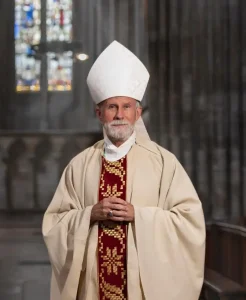
Bishop Strickland gives another reflection on the SSPX
In a new reflection on the Society of St. Pius X, Bishop Joseph Strickland examines the legacy of Archbishop Marcel Lefebvre In the wake of the July 1 consecration of new bishops for the Society of Saint Pius X, Bishop Joseph Strickland has given his view on the SSPX at large. Writing on his website, Pillars of Faith , the former Bishop of Tyler encouraged readers to, as discussions continue regarding the Society of St. Pius X, ask themselves: “What has moved these priests and faithful throughout the past fifty years?” The 67-year-old bishop did not wade into the consecrations themselves, but instead took a step back and examined the life of Archbishop Marcel Lefebvre, the Society’s founder, whose desire to preserve what he believed to be the authentic faith of the Church led to conflict with Rome and ultimately to his excommunication, a penalty he carried until his death in 1991. The bishop said that Archbishop Lefebvre “did not embark upon this path because it was easy, nor because it brought him honor or peace”, but because “he believed that precious treasures entrusted by Christ to His Church – the Holy Sacrifice of the Mass, the reverent celebration of the sacred mysteries, the formation of holy priests, and the perennial teachings of the Catholic Faith – were in danger of being diminished.” Bishop Strickland suggested that this had been a consistent theme throughout the Society’s history, stating that “looking honestly at their history, one sees men and women who have sacrificed greatly because they believed they were preserving the treasures entrusted to the Church by Christ Himself.” Acknowledging that many Catholics would disagree with the Society’s decision not to submit to Rome at various points in its history, the bishop wrote that “whether every decision made along the way was prudent is a question that reasonable Catholics may discuss”, but reaffirmed that its motivation was “to remain close to Our Lord and faithful to the deposit of faith.” Reflecting on the present state of the Church, Bishop Strickland said that “across the world, many public challenges to Catholic doctrine and morality have caused great confusion among the faithful” and asked: “Why do those who openly reject settled teachings of the Church often appear to face little correction, while those whose deepest desire is to preserve the Church’s sacred inheritance are viewed with the gravest penalties?” Entrusting the matter to Divine Providence, he further asked that every Catholic “pray – not only for the faithful of the Society of St. Pius X, but also for the Holy Father, for the bishops, and for all those entrusted with the grave responsibility of shepherding Christ’s flock.” The bishop’s reflection follows a similar pattern to that of a number of Church figures in recent years who have been reluctant to criticise the intentions of Archbishop Lefebvre and the Society itself, but have instead sought to heal the divide between the Society and Rome. His reference to those “who openly reject settled teachings of the Church” and “face little correction”, while there has been talk of the wholesale excommunication of members of the Society, is a point that many have commented upon. Bishop Strickland was likely referring to the German Synodal Way and other Catholic groups that have issued proposals seeking changes to Catholic moral teaching. Many have pointed to what they see as an inconsistency in comparison with the Society. While some might legitimately argue that the Society deviates from Catholic doctrine by questioning the Second Vatican Council and aspects of its teaching, the German Synodal Way has openly and repeatedly questioned Catholic teaching on sexuality and the liturgy, in a way that many believe goes considerably further in the opposite direction than the SSPX. Bishop Strickland himself is no stranger to public disagreement with Church authorities. Particularly critical of Pope Francis’ pontificate, the Diocese of Tyler was subjected to an apostolic visitation in 2023 during his leadership. The visitation ultimately led to his removal from office later that year. While he did express concern over Pope Leo’s election in 2025, telling commentator Glenn Beck, “He was involved in naming bishops that I find very troubling”, he has generally been significantly less critical of the current pontificate. Bishop Strickland’s previous commentary on the Society has followed a similar line. Writing in February this year, he said that “when those who openly contradict the Church’s teaching are tolerated, while those who seek continuity are treated as suspect, something has been inverted.”
Jun. 26, 2026
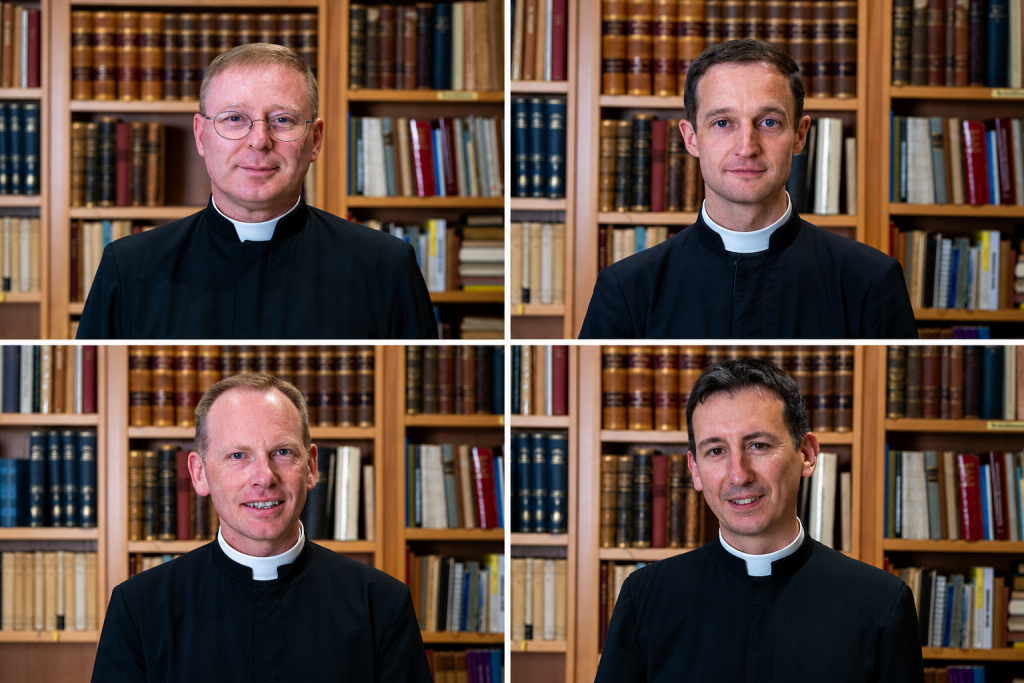
Mottos and Coats of Arms of new SSPX bishops released
The SSPX has released the episcopal mottos and coats of arms of the four priests who will be consecrated bishops at Écône on 1 July Ahead of the 1 July consecrations at Écône, the Society of Saint Pius X has released the coats of arms and episcopal mottos of the four priests who are to be consecrated bishops. With two of the bishops from France, one from Switzerland and one from the United States, the coats of arms incorporate their nationalities and cultural heritage, as well as their spiritual influences and the paths that led them to the priesthood. Tens of thousands are expected to gather at Écône for the consecrations, which will go ahead without a papal mandate, with the Society stating that there is a “grave necessity for the salvation of souls”. At present, only two of the bishops consecrated by Archbishop Marcel Lefebvre in 1988 are still alive: Bishop Bernard Fellay and Bishop Alfonso de Galarreta. The Society has more than 700 priests serving an estimated one million faithful throughout the world. With both remaining bishops now in their late sixties, the Society considers it necessary to provide younger bishops to continue its work and provide for the needs of its priests and faithful. Below are their coats of arms, alongside their official photographs released by the Society. Bishop-elect Schreiber Bishop Pascal Schreiber’s coat of arms is quartered, following a long-standing heraldic tradition in German-speaking countries. The first quarter features the triumphant face of Christ the King as seen in the vision of Saint Nicholas of Flüe, patron saint of Switzerland, whose spirituality the bishop credits with inspiring his vocation to the priesthood. In the saint’s vision, the six rays surrounding Christ’s face symbolise God’s perfect knowledge, wisdom and presence, while also expressing the believer’s journey towards a deeper understanding of the divine through prayer and contemplation. The second and third quarters display the Schreiber family arms: a golden lion holding a quill on a red field. The lion represents courage, strength and kingship, while the quill is a reference to the family name, Schreiber , meaning “scribe” or “writer”, and symbolises literary work. The fourth quarter contains an eight-pointed golden star on a black field. The star recalls both Christ, the “bright morning star”, and the Blessed Virgin Mary under her title Stella Maris (“Star of the Sea”), while also referring to Saint Nicholas of Flüe, who recounted seeing a star that illuminated the world before his birth and later became a recurring feature of his mystical life. The use of black, red and gold throughout the shield also reflects the colours of the German flag, acknowledging the country in which the Society’s seminary at Zaitzkofen is situated. The bishop-elect has chosen the motto Virgo Fidelis (“Virgin Most Faithful”), taken from the Litany of Loreto. The title expresses Mary’s perfect fidelity to God as daughter of the Father, Mother of the Son and Spouse of the Holy Ghost, while asking her intercession that Christians may remain faithful to their own vocation. The motto also holds particular significance within the Society of Saint Pius X. Archbishop Marcel Lefebvre included the invocation Virgo Fidelis in the Society’s statutes, encouraging its members to renew their commitments each year on the Feast of the Immaculate Conception by seeking from the Blessed Virgin “the grace of fidelity”. The bishop-elect also points to the title as a reminder of the virtues of purity and fortitude, concluding with Christ’s words from the Beatitudes: “Blessed are the clean of heart: for they shall see God.” Bishop-elect Michael Goldade Bishop-elect Goldade’s coat of arms is set against a blue field with a decorative border of twelve golden ears of wheat linked by intertwined stalks. At its centre is a golden shield bearing the Vendéen Heart: two intertwined red hearts surmounted by a crown and a cross. The wheat carries both personal and biblical significance. It recalls the bishop’s roots in North Dakota and his upbringing in Kansas, the two leading wheat-producing states in the United States, while the twelve ears also represent the twelve members of his family. The symbolism extends throughout Sacred Scripture. The wheat recalls the patriarch Joseph, one of Jacob’s twelve sons and guardian of Egypt’s grain, who is seen as a foreshadowing of Saint Joseph, foster-father of Christ and protector of the universal Church. It also points to the Blessed Eucharist and the Holy Sacrifice of the Mass, which stand at the heart of the Society of Saint Pius X. The number twelve evokes both the Apostles, the foundations of the Church, and the twelve baskets of fragments gathered after the multiplication of the loaves, symbolising the fullness of God’s providence. The blue background is a tribute to the Blessed Virgin Mary, described as the virginal field from which the Bread of Life came forth, while the gold of the central shield signifies the divinity of Christ and also alludes to the bishop’s family name, Goldade. The crowned intertwined hearts represent the Sacred Hearts of Jesus and Mary, a longstanding devotion of the Goldade family, and also form part of the heraldic tradition of the Society of Saint Pius X. The bishop-elect has chosen the motto *Adeamus Cum Fiducia* (“Let us go therefore with confidence”), taken from the Letter to the Hebrews: “Let us go therefore with confidence to the throne of grace: that we may obtain mercy, and find grace in seasonable aid” (Heb. 4:16). These words also open the Introit of the Mass of the Immaculate Heart of Mary, linking the motto closely to the liturgy. The motto expresses complete confidence in the intercession of the Blessed Virgin Mary as Mediatrix of all graces and “Throne of Grace”, through whom Christ dispenses his gifts. It also recalls the opening prayers of the Mass — “I will go in to the altar of God” — reflected in the ears of wheat surrounding the shield. Through the united Hearts of Jesus and Mary and the graces flowing from the Holy Sacrifice of the Mass, the bishop-elect presents the motto as an expression of hope and trust in God’s providence. Bishop-elect Poinsinet de Sivry Bishop-elect Michel Poinsinet de Sivry’s coat of arms is divided horizontally into two halves. The upper section features a silver sword with a golden hilt crossed by a golden palm branch on a red field, while the lower section depicts a white swan with a golden beak swimming on silver waves against a blue background. Together, the two halves express the themes of combat, victory and fidelity that underpin the bishop’s chosen episcopal motto. The sword represents the spiritual battle waged by the Church to extend the reign of Christ over the world through the fruits of his Redemption. It also symbolises the “sword of the Spirit” described by Saint Paul in the Letter to the Ephesians, identifying the Word of God as the Church’s chief weapon against the errors of the world. Crossing the sword is a palm branch, the traditional emblem of victory and martyrdom, representing the triumph won by the Church through the witness of the saints and martyrs. The lower half of the shield bears a swan taken from the Poinsinet de Sivry family coat of arms. The swan symbolises fidelity through its lifelong pairing with a single mate, while its white plumage represents purity. Together, these qualities are presented as virtues closely associated with the life of faith. The bishop-elect has adopted the motto Fides Vincit Mundum (“Faith Conquers the World”), taken from the First Letter of Saint John: “This is the victory which overcometh the world, our faith” (1 Jn. 5:4). The words recall Christ’s own declaration, “I have overcome the world” (Jn. 16:33), emphasising that Christians share in that victory through faith in him. The motto also reflects the Church’s understanding of the Christian life as a spiritual struggle, echoing both Saint Augustine’s image of the “Two Cities” and Saint Ignatius of Loyola’s meditation on the “Two Standards”. For the bishop-elect, it expresses confidence that, despite the trials facing the Church today, Christ’s victory is certain, while also reflecting the Society of Saint Pius X’s understanding of its own mission and history. Bishop-elect Hanappier Bishop-elect Marc Hanappier’s coat of arms centres on the Paschal Lamb standing on a blue field, surrounded by three silver fleurs-de-lis. The Lamb bears the banner of the Resurrection and pours its blood into a golden chalice at its feet, while a golden halo marked with a red cross identifies it as the victorious Christ. The imagery is drawn from the Book of Revelation, where the Lamb who was slain is worshipped by the saints and angels as worthy of all honour, glory and dominion. The Lamb symbolises Christ’s victory through his sacrifice and points directly to the Holy Sacrifice of the Mass. The blood flowing into the chalice represents the Precious Blood offered for the salvation of the world and given to the faithful in the Eucharist to purify and strengthen them. The image also recalls the Introit of the Mass of Christ the King, which proclaims the triumph of the Lamb who was slain. Surrounding the Lamb are three silver fleurs-de-lis. Traditionally symbols of royalty, they also represent the purity of the Blessed Virgin Mary, recalling the words of the Song of Songs: “As the lily among thorns, so is my love among the daughters.” Set against the blue background, they also evoke France, while their number reflects the arms of the city of Versailles, where the Hanappier family is based. The bishop-elect has chosen the motto Dignus Est Agnus (“Worthy is the Lamb”), taken from the fifth chapter of the Book of Revelation. The phrase recalls Saint John the Baptist’s proclamation, “Behold the Lamb of God”, through which the first disciples were drawn to Christ, and presents the Lamb as the source of priestly vocations. The motto also highlights Christ as both the eternal High Priest and the sacrificial victim whose offering is made present at every Mass. The bishop-elect further links the image of the Lamb receiving the sealed book in Revelation to Christ’s lordship over all of history, affirming that every age and every nation ultimately finds its meaning in his sacrifice. For this reason, the words “Worthy is the Lamb” express both the centrality of the Eucharistic sacrifice and the conviction that salvation is found in Christ alone.
Jun. 26, 2026
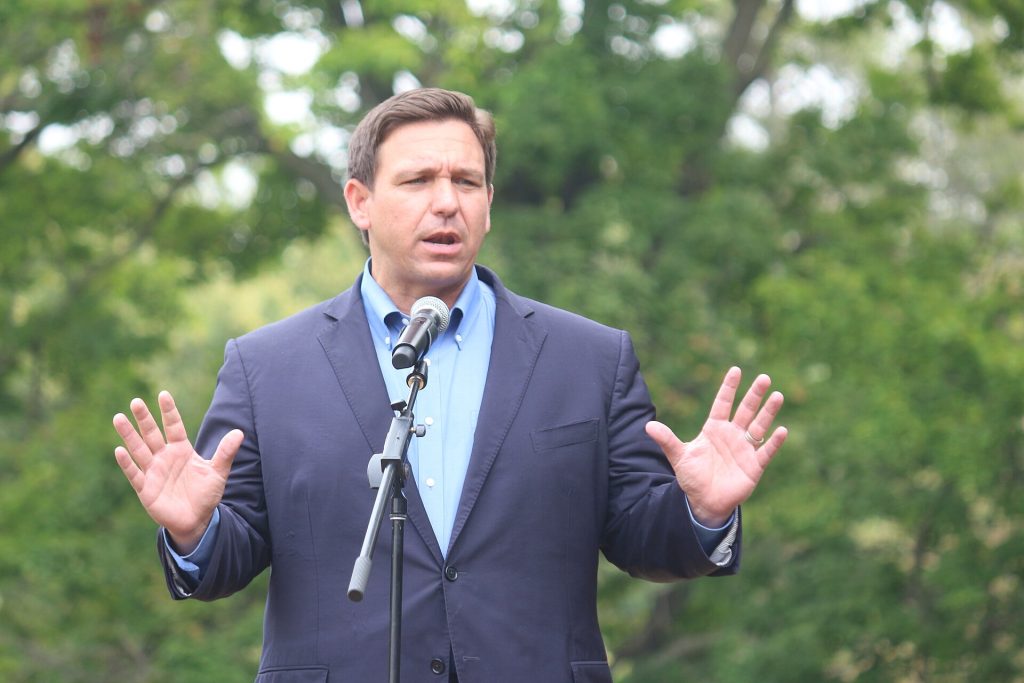
Florida bishops appeal to DeSantis to halt execution of Edward James Spencer
Florida’s Catholic bishops have appealed to Gov. Ron DeSantis to halt the execution of Edward James Spencer Florida’s Catholic bishops have appealed to Gov. Ron DeSantis to halt the execution of a condemned prisoner. In a letter to the governor, Michael Sheedy, executive director of the Florida Conference of Catholic Bishops (FCCB), asked that the sentence of Edward James Spencer be commuted to life imprisonment without the possibility of parole. Spencer is due to be executed at 6 p.m. on 25 June at Florida State Prison in Raiford, between Jacksonville and Gainesville, after DeSantis signed his death warrant on 26 May. Writing on behalf of all the Catholic bishops of Florida, Sheedy acknowledged the gravity of the crime while urging the governor to exercise mercy. “We mourn the tragic and horrific death of Karen Spencer, and we feel sorrow for the terrible suffering her son, other relatives and all who loved her have had to live with ever since,” he wrote. “May they find comfort in God. Indeed, the Church remains available to assist them with pastoral care.” The letter stressed that the Church’s opposition to the death penalty did not diminish the seriousness of the offence. “Mr Spencer’s crime was truly grave and merits a severe punishment by the state,” Sheedy wrote. Nevertheless, the bishops argued that clemency remained appropriate, citing Spencer’s age and the Church’s teaching on the dignity of every human person. “We ask that you exercise mercy and spare the life of Mr Spencer, who is elderly and no longer poses a threat to society,” the letter said. Quoting St John Paul II’s 1995 encyclical Evangelium Vitae , Sheedy added: “Not even a murderer loses his personal dignity.” The bishops further argued that life imprisonment without parole would constitute a severe punishment while avoiding the deliberate taking of life by the state. “To punish with lifelong imprisonment is not to minimise the heinousness of Mr Spencer’s crime,” the letter said. “It is rather to recognise with awe that God is the author of life, and to reserve to him the taking of human life except where it is otherwise impossible to maintain the common good.” Spencer was convicted of the 1992 murder of his wife, Karen. Prosecutors said he killed her in the backyard of her Orange County home using a brick and a knife. Karen’s 17-year-old son witnessed the attack and attempted to intervene. According to court proceedings, the killing took place after Spencer had been released from jail on bail. While defence lawyers argued that the murder was a crime of passion, prosecutors maintained that he had previously threatened to kill his wife and subsequently carried out those threats. Spencer will be 74 years old if the execution proceeds. According to data compiled by the Death Penalty Information Center, he would be among the ten oldest prisoners executed in the United States since 1976. The scheduled execution follows closely behind that of Andrew Lukehart, who was put to death by the State of Florida on 2 June after appeals for clemency were unsuccessful. Lukehart had been convicted of the first-degree murder of five-month-old Gabrielle Hanshaw in 1996. In a separate appeal before that execution, the Florida bishops similarly asked DeSantis to commute his sentence to life imprisonment without parole. In Florida, the bishops have regularly appealed for clemency in individual cases. Sheedy closed the latest letter with prayers for both the victim and those affected by the crime. “We pray for the repose of the soul of Karen Spencer and for the consolation of her loved ones,” he wrote. “We pray for you, too, as you consider this request.”
Jun. 25, 2026
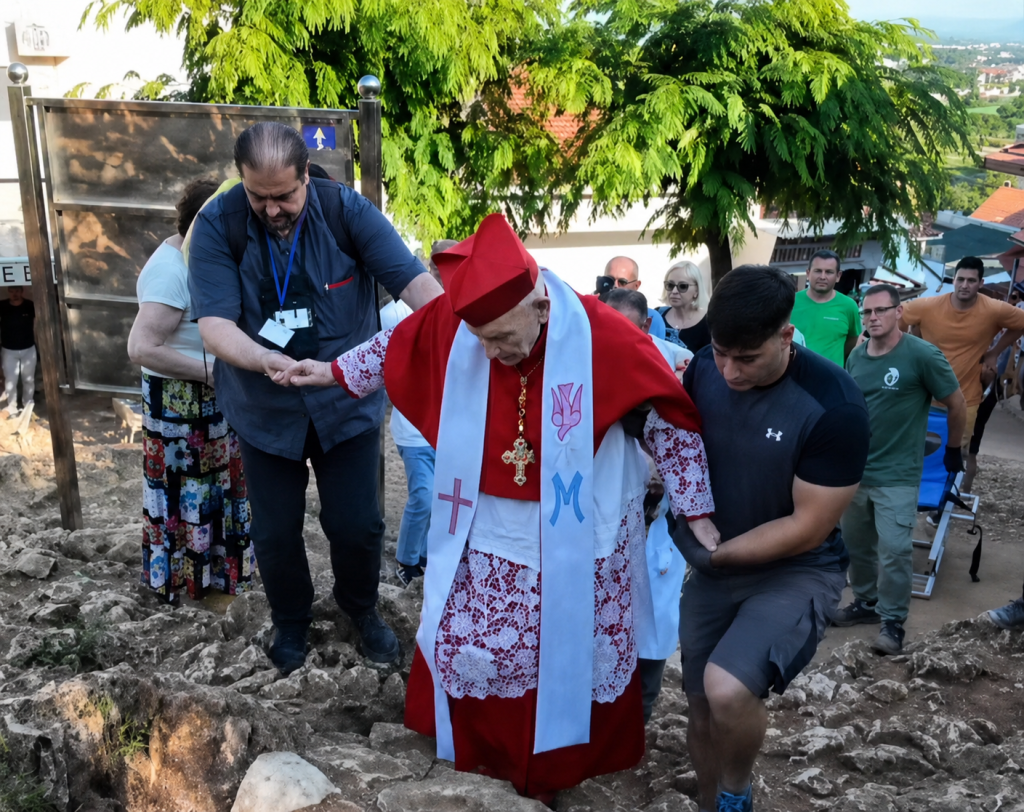
Cardinal Ernest Simoni climbs Medjugorje’s Apparition Hill on eve of 44th anniversary
Cardinal Ernest Simoni climbed Medjugorje’s Apparition Hill while praying the Rosary on the eve of the 44th anniversary of the first reported apparitions. The 97-year-old Albanian cardinal, described by Pope Francis as a “living martyr”, was assisted up the hill as pilgrims gathered at the Bosnian shrine Yesterday, on the eve of the 44th anniversary of the first apparitions of Medjugorje, Cardinal Ernest Simoni climbed Apparition Hill while praying the Rosary. Videos from the event show the cardinal being assisted up Apparition Hill. At points where the ground became too rough, he was carried on a stretcher by the young men accompanying him. This year marks the 97-year-old Albanian prelate’s 70th anniversary of ordination to the priesthood and the 10th anniversary of his creation as a cardinal. Described as a “living martyr” by Pope Francis, Cardinal Simoni endured decades of persecution for his priesthood. Under Albania’s communist regime, the then Fr Simoni was arrested after he celebrated a Mass for the assassinated President John F. Kennedy. He was shown a death warrant and, as he told Reuters in a 2016 interview, “I was to hang because I had told the people we should die for Christ.” His persecutors tried to force him to abandon his faith and even offered him marriage to a “beautiful girl”. He was not executed, but instead sentenced to 18 years of forced labour, 12 of which he spent in a mine, for celebrating the Mass and for agitation against the regime. While in prison, he continued to preach to fellow prisoners. Once released, he worked as a manual labourer and ministered the sacraments in secret. He is the only surviving member of the clergy of Albania’s post-war communist regime to have survived the mass persecution of the authorities. His years in prison spanned the liturgical reforms of the 1960s, so he continued to celebrate the Traditional Latin Mass as best he could from memory during his imprisonment. When he met Pope Francis during the pontiff’s 2014 visit to Albania, Francis was so struck by his story that he made him a cardinal at the 2016 consistory. His appointment required a dispensation, since he was not a bishop. He also appeared alongside Pope Leo on Easter Sunday this year and met the pontiff again during a private audience on 27 April. Despite being 97, Cardinal Simoni has remained active in maintaining links with communities attached to the Traditional Latin Mass. He is a defender of the older liturgical form and has longstanding associations with traditionalist institutes, including regular visits to the International Seminary of the Institute of Christ the King Sovereign Priest at Gricigliano, near Florence. He has been present there for major liturgical celebrations, including the Feast of St Joseph, and has spent periods such as Holy Week with the community in recent years. During a pontifical Latin Mass for the Summorum Pontificum pilgrimage, celebrated by Cardinal Raymond Burke in St Peter’s Basilica on 25 October 2025, Cardinal Simoni recited the prayer to St Michael the Archangel, describing it as a reminder that “the Devil exists, and the Church continues to fight”.
Jun. 25, 2026
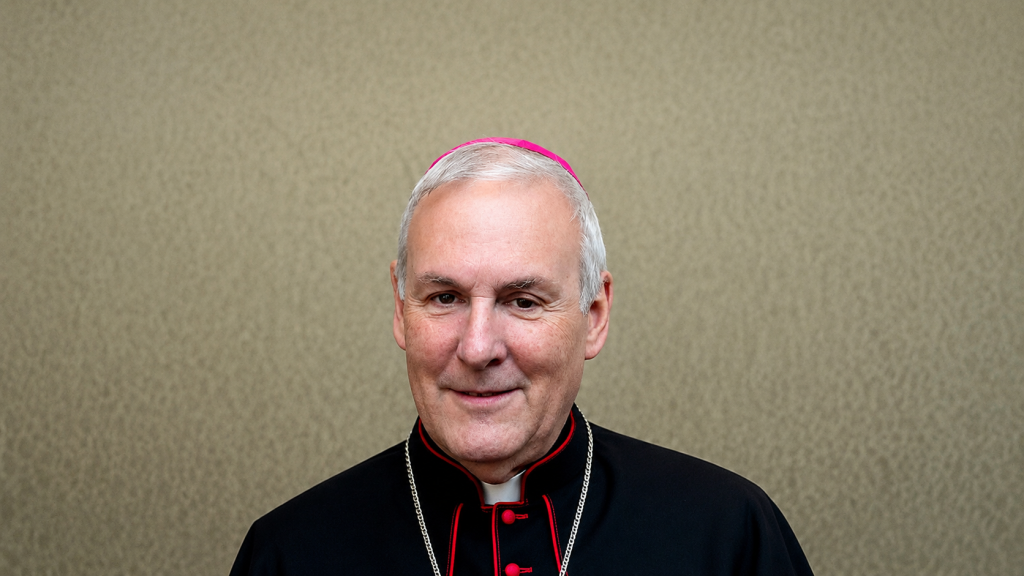
Bishop of Northampton charged with two counts of rape of girl under 16
The Bishop of Northampton, David Oakley, has been charged with two counts of rape of a girl aged under 16. The alleged offences are said to have taken place between 2000 and 2001 in Staffordshire. He is due to appear at Cannock Magistrates’ Court on 14 August Bishop David Oakley has been charged with two counts of rape of a girl aged under 16. Bishop David Oakley, the Bishop of Northampton, has been charged with two counts of rape. In a statement, Staffordshire Police said: “Bishop David James Oakley, 70, who is White British, of Desborough, Kettering, has been charged with two counts of rape of a female under 16. It follows his arrest in September 2025 following an allegation made to police.” The statement added: “Oakley is due to appear at Cannock Magistrates’ Court on 14 August.” The offences are alleged to have taken place in Staffordshire between February 2000 and February 2001, the force said. Following the announcement, the Diocese of Northampton released its own statement, confirming that “Bishop David Oakley has been charged after an investigation into non-recent safeguarding allegations”. The statement continued by acknowledging that “this will be very distressing for all concerned” but said that it “cannot comment further on an active legal process”. Anyone with further safeguarding concerns is encouraged to contact the diocesan safeguarding team or the police directly. The diocese said that, beyond the statement, it would not be releasing any further information at this time. Bishop Oakley was ordained a priest in 1980 for the Archdiocese of Birmingham by Archbishop George Patrick Dwyer, then Archbishop of Birmingham. He served as rector of St Mary’s College, Oscott, the seminary of the Archdiocese of Birmingham and one of England’s two remaining diocesan seminaries, from 2013 to 2020. During his tenure as rector, controversy arose after a former formation tutor at the seminary wrote an open letter to the bishops of England, Wales and Scotland in which he claimed that he had been “fired from the college for striving to uphold the Church’s teaching on homosexuality”. Following the letter, published in 2018, the then Canon David Oakley told the Tablet : “Fr Marsden was asked to step down from the formation team for a number of reasons. As some of these are subject to legal review I am unable to comment at the moment.” The Archdiocese of Birmingham also released a statement saying: “The Archbishop of Birmingham, The Most Reverend Bernard Longley, and the seminary trustees, have full confidence in the Rector and his staff.” Bishop Oakley was appointed Bishop of Northampton on 8 January 2020 by Pope Francis and ordained bishop by Cardinal Vincent Nichols on 19 March that year. He withdrew from public ministry last year after the police investigation began, with Canon Michael Harrison, Vicar General, provisionally leading the governance of the diocese.
Jun. 24, 2026
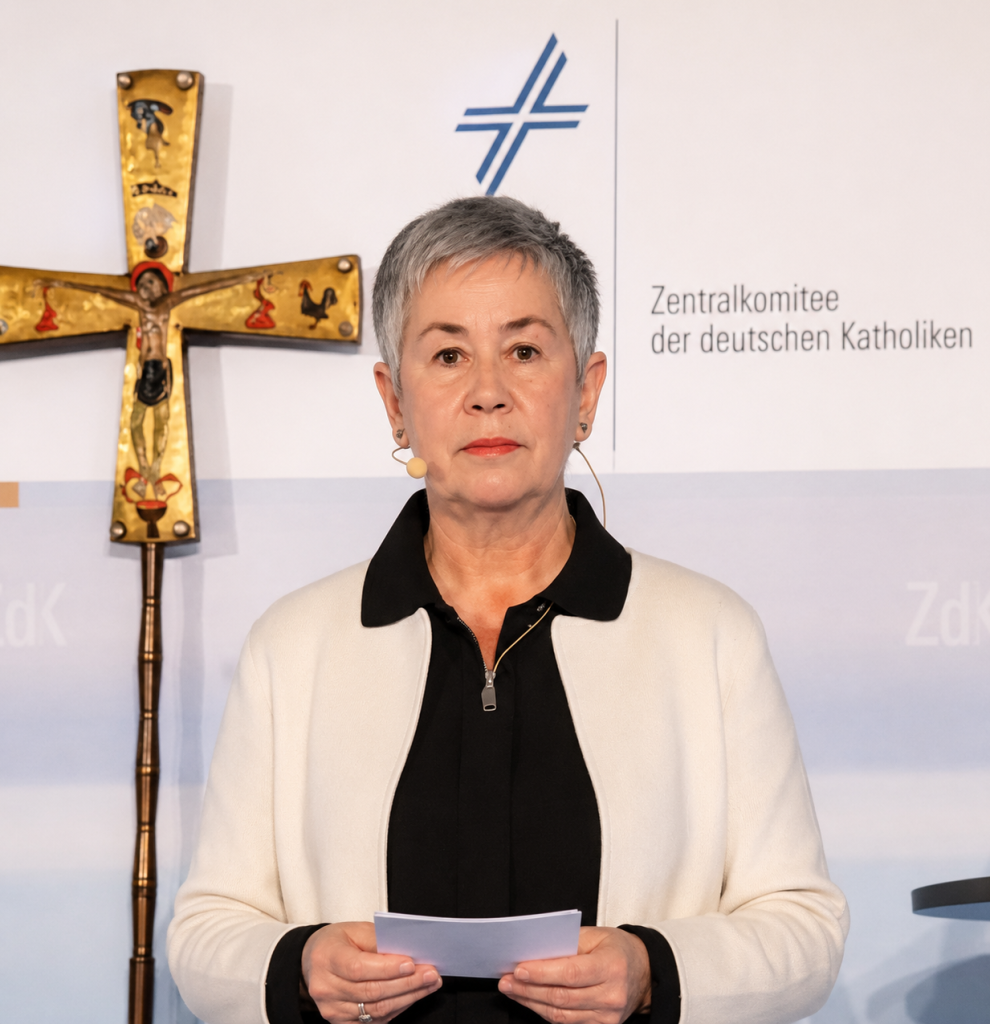
German Synodal Way supporters vow to keep pushing for lay preaching at Mass after Vatican rejection
Supporters of Germany’s Synodal Way have vowed to keep pressing for lay people to preach the homily during Mass after the Vatican again rejected the proposal German supporters of the Synodal Way have vowed to continue pressing for lay people to preach the homily during Mass despite a fresh Vatican rejection of the proposal. The latest refusal marks the second time Rome has formally rejected the initiative since it was first approved by participants in the Synodal Way in 2023, with leading lay organisations now urging the German bishops not to abandon the issue. Among the most outspoken responses came from the Central Committee of German Catholics (ZdK), whose president, Irme Stetter-Karp, said that the latest intervention from Rome should not be viewed as the end of the matter. Although she noted that the ZdK had “not been involved” in the bishops’ most recent motion, she pointed to the broad support received by the Synodal Way text “Proclamation of the Gospel by Lay People in Word and Sacrament”, which was approved in March 2023 with the backing of bishops and lay delegates. “We therefore expect the German bishops to reaffirm their substantive position on this matter to Rome, strengthen their arguments, and under no circumstances interpret Cardinal Roche’s letter as discouraging,” Stetter-Karp said. Her remarks were echoed by other organisations associated with the reform movement in Germany. The Catholic Women’s Association of Germany (kfd), one of the country’s largest Catholic women’s organisations, described the Vatican’s decision as evidence of continuing inequalities within the Church. Ruth Fehlker, spiritual director of the kfd national association, said the response from Rome represented “further evidence of the lack of equality for women in the Catholic Church”. “As long as women remain excluded from key positions despite their competence, their vocation, and their commitment, the Church will continue to lose credibility,” she said. Fehlker argued that the decision exposed what she described as a disconnect between local pastoral realities and directives issued by the Holy See. “This decision once again demonstrates the vast gap between the pastoral realities of many local churches and the directives from Rome,” she said. “The question is no longer whether women are capable of preaching. The real question is why those in charge in Rome continue to ignore the charisms and vocations of both women and men.” The reform group Wir sind Kirche (“We Are Church”) also criticised the decision, describing it as “out of touch with reality” and argued that an ageing clergy and declining vocations were creating difficulties for pastoral ministry across many German parishes. The criticism comes after the publication of a letter from the Dicastery for Divine Worship and the Discipline of the Sacraments rejecting a request from the German Bishops’ Conference to permit lay people to preach the homily during Mass in exceptional circumstances. In the letter, dated 17 June and made public on 23 June, the Vatican department informed Bishop Heiner Wilmer SCJ, president of the German Bishops’ Conference, that it was “not possible to grant the indult requested”. The bishops had sought permission for “a duly commissioned lay member of the faithful to preach in place of the homily during the celebration of the Eucharist”. While acknowledging the pastoral concerns behind the proposal, the dicastery stated that “the current discipline cannot be dispensed from by means of an indult”. It added that “the reservation of the homily to a priest or deacon is not a merely disciplinary norm but derives from the very nature of the liturgy”. The Vatican further explained that the homily “forms an integral part of the Liturgy of the Word”, is “intrinsically linked to the proclamation of the Gospel”, and “constitutes an exercise of the munus docendi entrusted to ordained ministers through the Sacrament of Holy Orders”. According to the dicastery, “the proclamation of the Word within the liturgical celebration is inseparable from the mission received sacramentally and from the unity that binds together Word and Sacrament in the Eucharistic celebration”. The letter also rejected suggestions that practical pastoral circumstances could justify an exception to the Church’s universal discipline. Instead, the Vatican emphasised the importance of improving the quality of preaching through the continuing formation of priests and deacons. It said ongoing formation should help ensure the “pastoral and spiritual effectiveness” of homilies, a responsibility entrusted to diocesan bishops. At the same time, the dicastery stressed that the Church already provides numerous opportunities for lay Catholics to proclaim the Gospel outside the homily and outside the celebration of Mass. “The Church’s current discipline already provides for numerous forms of proclaiming the Word and preaching that may be entrusted to lay members of the faithful outside the homily and outside the celebration of the Eucharist, in accordance with canon law and the proper nature of these different forms of proclaiming the Gospel,” the letter stated. The request submitted by Bishop Wilmer followed discussions during the German Bishops’ Conference plenary assembly in Würzburg earlier this year and represented the latest attempt by the German Church to secure permission for lay preaching during the Eucharistic celebration. The proposal itself has its roots in the Synodal Way, the reform process launched by the Church in Germany that brought together bishops and lay representatives to debate questions relating to authority, ministry, sexual morality and the role of women within the Church. During the final assembly of the Synodal Way in Frankfurt in March 2023, participants approved a text entitled “Proclamation of the Gospel by Lay People in Word and Sacrament”. The document called upon the German bishops to establish a particular norm and seek permission from the Holy See allowing suitably qualified lay faithful, commissioned by the diocesan bishop, to deliver the homily during Sunday and feast-day Masses. The proposal was rejected by Rome shortly afterwards. In a letter dated 29 March 2023, Cardinal Arthur Roche, Prefect of the Dicastery for Divine Worship and the Discipline of the Sacraments, warned that permitting lay people to preach the homily could create “misunderstandings about the figure and identity of the priest”. He also stressed the inseparable connection between the proclamation of the Word and the celebration of the sacraments, arguing that the homily forms part of the ministry entrusted through Holy Orders rather than a role that can be delegated to the non-ordained. Despite that rejection, the German bishops returned to the issue and ultimately submitted a fresh request to Rome following their February 2026 assembly. Canon 767 of the Code of Canon Law states that the homily is pre-eminent among forms of preaching and is reserved to a priest or deacon. The same principle was reaffirmed in the 1997 Vatican instruction Ecclesiae de Mysterio , approved by St John Paul II, which stated that the homily during the Eucharistic celebration “must be reserved to the sacred minister, priest or deacon”.
Jun. 24, 2026