German supporters of the Synodal Way have vowed to continue pressing for lay people to preach the homily during Mass despite a fresh Vatican rejection of the proposal.
The latest refusal marks the second time Rome has formally rejected the initiative since it was first approved by participants in the Synodal Way in 2023, with leading lay organisations now urging the German bishops not to abandon the issue.
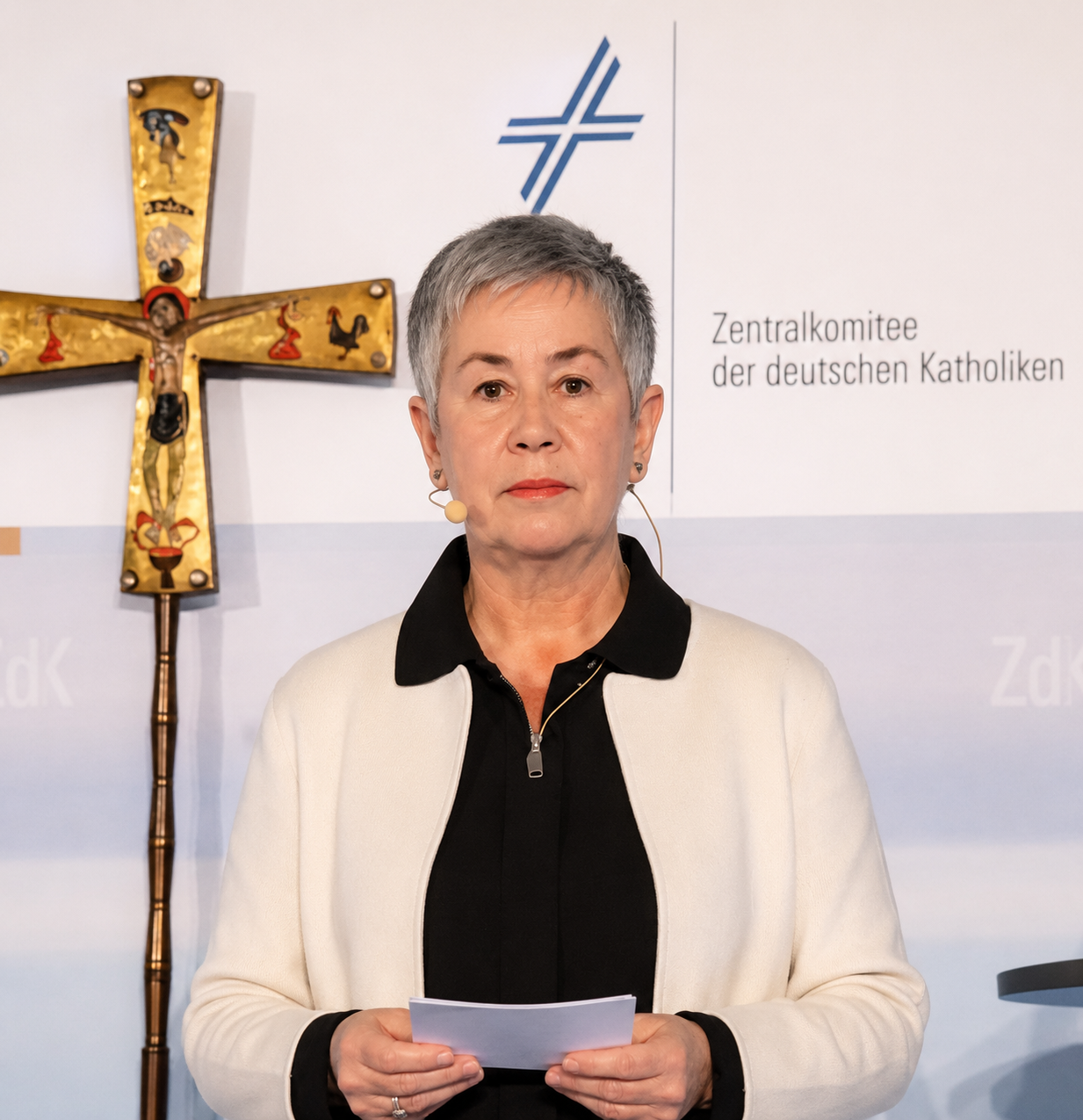
Among the most outspoken responses came from the Central Committee of German Catholics (ZdK), whose president, Irme Stetter-Karp, said that the latest intervention from Rome should not be viewed as the end of the matter. Although she noted that the ZdK had “not been involved” in the bishops’ most recent motion, she pointed to the broad support received by the Synodal Way text “Proclamation of the Gospel by Lay People in Word and Sacrament”, which was approved in March 2023 with the backing of bishops and lay delegates.
“We therefore expect the German bishops to reaffirm their substantive position on this matter to Rome, strengthen their arguments, and under no circumstances interpret Cardinal Roche’s letter as discouraging,” Stetter-Karp said.
Her remarks were echoed by other organisations associated with the reform movement in Germany. The Catholic Women’s Association of Germany (kfd), one of the country’s largest Catholic women’s organisations, described the Vatican’s decision as evidence of continuing inequalities within the Church. Ruth Fehlker, spiritual director of the kfd national association, said the response from Rome represented “further evidence of the lack of equality for women in the Catholic Church”.
“As long as women remain excluded from key positions despite their competence, their vocation, and their commitment, the Church will continue to lose credibility,” she said. Fehlker argued that the decision exposed what she described as a disconnect between local pastoral realities and directives issued by the Holy See. “This decision once again demonstrates the vast gap between the pastoral realities of many local churches and the directives from Rome,” she said. “The question is no longer whether women are capable of preaching. The real question is why those in charge in Rome continue to ignore the charisms and vocations of both women and men.”
The reform group Wir sind Kirche (“We Are Church”) also criticised the decision, describing it as “out of touch with reality” and argued that an ageing clergy and declining vocations were creating difficulties for pastoral ministry across many German parishes.
The criticism comes after the publication of a letter from the Dicastery for Divine Worship and the Discipline of the Sacraments rejecting a request from the German Bishops’ Conference to permit lay people to preach the homily during Mass in exceptional circumstances.
In the letter, dated 17 June and made public on 23 June, the Vatican department informed Bishop Heiner Wilmer SCJ, president of the German Bishops’ Conference, that it was “not possible to grant the indult requested”.
The bishops had sought permission for “a duly commissioned lay member of the faithful to preach in place of the homily during the celebration of the Eucharist”.
While acknowledging the pastoral concerns behind the proposal, the dicastery stated that “the current discipline cannot be dispensed from by means of an indult”. It added that “the reservation of the homily to a priest or deacon is not a merely disciplinary norm but derives from the very nature of the liturgy”.
The Vatican further explained that the homily “forms an integral part of the Liturgy of the Word”, is “intrinsically linked to the proclamation of the Gospel”, and “constitutes an exercise of the munus docendi entrusted to ordained ministers through the Sacrament of Holy Orders”.
According to the dicastery, “the proclamation of the Word within the liturgical celebration is inseparable from the mission received sacramentally and from the unity that binds together Word and Sacrament in the Eucharistic celebration”.
The letter also rejected suggestions that practical pastoral circumstances could justify an exception to the Church’s universal discipline.
Instead, the Vatican emphasised the importance of improving the quality of preaching through the continuing formation of priests and deacons. It said ongoing formation should help ensure the “pastoral and spiritual effectiveness” of homilies, a responsibility entrusted to diocesan bishops.
At the same time, the dicastery stressed that the Church already provides numerous opportunities for lay Catholics to proclaim the Gospel outside the homily and outside the celebration of Mass.
“The Church’s current discipline already provides for numerous forms of proclaiming the Word and preaching that may be entrusted to lay members of the faithful outside the homily and outside the celebration of the Eucharist, in accordance with canon law and the proper nature of these different forms of proclaiming the Gospel,” the letter stated.
The request submitted by Bishop Wilmer followed discussions during the German Bishops’ Conference plenary assembly in Würzburg earlier this year and represented the latest attempt by the German Church to secure permission for lay preaching during the Eucharistic celebration.
The proposal itself has its roots in the Synodal Way, the reform process launched by the Church in Germany that brought together bishops and lay representatives to debate questions relating to authority, ministry, sexual morality and the role of women within the Church.
During the final assembly of the Synodal Way in Frankfurt in March 2023, participants approved a text entitled “Proclamation of the Gospel by Lay People in Word and Sacrament”.
The document called upon the German bishops to establish a particular norm and seek permission from the Holy See allowing suitably qualified lay faithful, commissioned by the diocesan bishop, to deliver the homily during Sunday and feast-day Masses. The proposal was rejected by Rome shortly afterwards.
In a letter dated 29 March 2023, Cardinal Arthur Roche, Prefect of the Dicastery for Divine Worship and the Discipline of the Sacraments, warned that permitting lay people to preach the homily could create “misunderstandings about the figure and identity of the priest”.
He also stressed the inseparable connection between the proclamation of the Word and the celebration of the sacraments, arguing that the homily forms part of the ministry entrusted through Holy Orders rather than a role that can be delegated to the non-ordained.
Despite that rejection, the German bishops returned to the issue and ultimately submitted a fresh request to Rome following their February 2026 assembly.
Canon 767 of the Code of Canon Law states that the homily is pre-eminent among forms of preaching and is reserved to a priest or deacon. The same principle was reaffirmed in the 1997 Vatican instruction Ecclesiae de Mysterio, approved by St John Paul II, which stated that the homily during the Eucharistic celebration “must be reserved to the sacred minister, priest or deacon”.