

Outside the Walls
Pope Leo expected to visit France in September
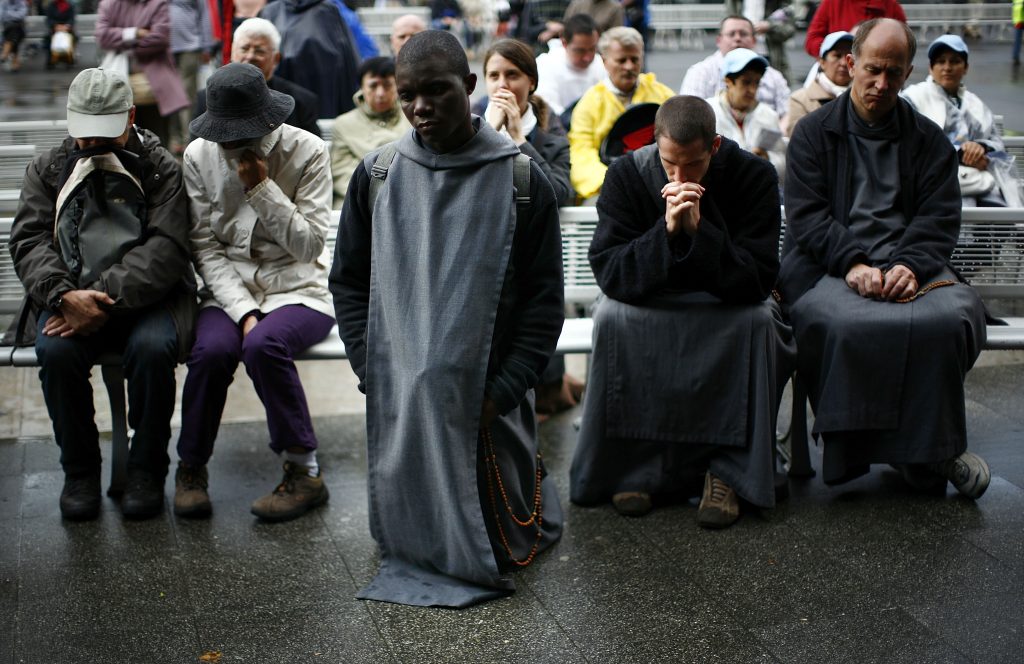
Pope Leo XIV is expected to visit France at the end of September, with Paris and Lourdes among the proposed destinations. The Vatican has yet to formally confirm the journey, which would follow the Pope’s June visit to Spain Pope Leo XIV is expected to visit France at the end of September in what would be his second visit to a European Union country outside Italy since his election last year. The proposed journey was announced by the French Bishops’ Conference on May 6, which said the Pope could travel to Paris and Lourdes, although the Vatican has yet to formally confirm the visit. The invitation was extended by Cardinal Jean-Marc Aveline, president of the bishops’ conference, in coordination with the Apostolic Nuncio, Archbishop Celestino Migliore, and was also supported by President Emmanuel Macron during a meeting with the Pope in Rome on April 10. In a statement issued by the conference, the bishops said: “The Catholic Church in France is preparing to welcome Leo XIV.” They added that, since his election one year ago, “several bishops” had invited the Pope to visit the country before Cardinal Aveline formally renewed the invitation on behalf of the episcopate. The statement said the proposed journey “could take place at the end of September” and noted that “on various occasions, Leo XIV has expressed the great esteem he holds for our country and its spiritual history”. Cardinal Aveline said he had held “several working sessions” with the Pope, including one last week, during which a draft programme was prepared. “His visit would be an opportunity to share with the Pope what our Church in France is experiencing and to let ourselves be encouraged by his words,” the cardinal said. The bishops added that the faithful were being asked “to support the preparation of this event through prayer” while awaiting the official announcement from the Holy See. The expected visit follows the publication of the programme for Pope Leo’s apostolic journey to Spain from June 6 to June 12, his first visit to the country as pontiff. During the six-day trip, he is scheduled to visit Madrid, Barcelona, Montserrat, Las Palmas de Gran Canaria and Santa Cruz de Tenerife. The itinerary includes meetings with King Felipe VI and Queen Letizia, Spain’s political authorities and the country’s bishops, along with Masses in Madrid, Barcelona and the Canary Islands. The Pope is also expected to visit migrants, prisoners, charity workers and young people during the journey. Among the principal events of the Spanish visit will be a Corpus Christi procession in Madrid, a gathering with the diocesan community at the Santiago Bernabéu Stadium and the inauguration of the Tower of Jesus Christ at Barcelona’s Basilica of the Holy Family. The Pope is also due to visit the Benedictine Abbey of Montserrat, which recently marked the millennium of the monastery’s foundation. The abbey remains closely associated with the history of Catalonia and the suffering of the Church during the Spanish Civil War, when a number of its monks were killed. France has received several papal visits in recent decades, including journeys by Pope John Paul II and Pope Benedict XVI. Pope Francis travelled to Marseille in 2023 and to Corsica in 2024, though neither was considered a full state visit to France.
May 7, 2026
Pope Leo’s Spain itinerary released ahead of June visit
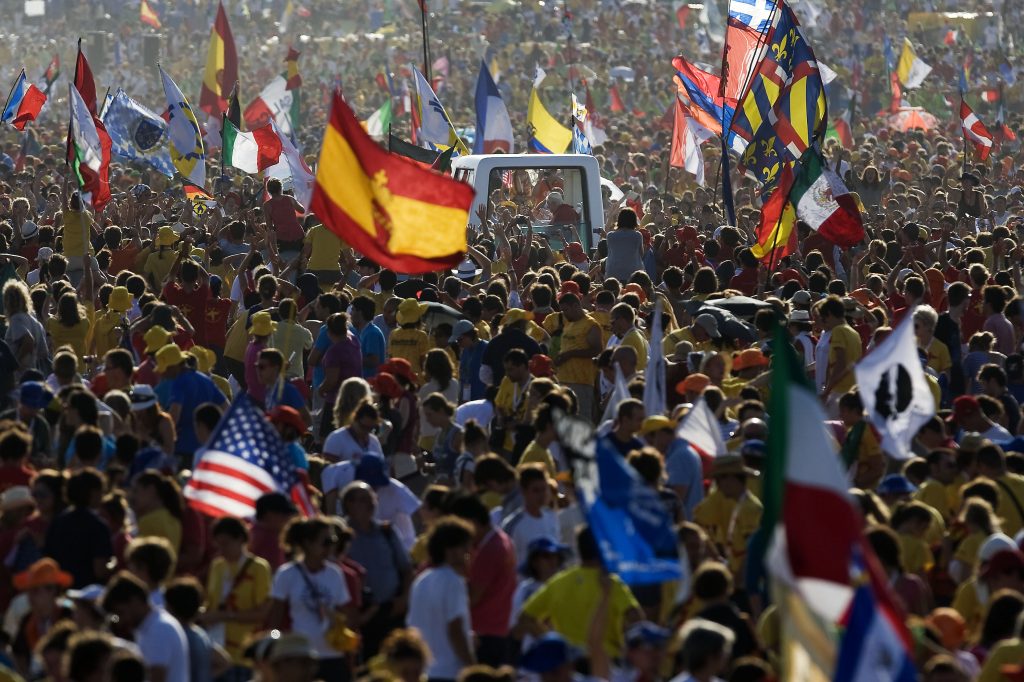
The Vatican has released the full itinerary for Pope Leo XIV’s apostolic journey to Spain from June 6 to June 12. The visit will include stops in Madrid, Barcelona, Gran Canaria and Tenerife The Holy See Press Office has released the itinerary for the anticipated apostolic journey of Pope Leo XIV to Spain, scheduled to take place from June 6 to June 12. According to the programme, the Pope will depart Rome on the morning of June 6 and arrive in Madrid at 10.30 local time, where he will be received at Adolfo Suárez Madrid-Barajas Airport before attending a welcome ceremony at the Royal Palace. He will then make a “courtesy visit to Their Majesties the King and Queen of Spain” and take part in a “meeting with authorities, civil society and the diplomatic corps”, during which he is due to deliver an address. In the evening, he is scheduled to visit the operators and those assisted by the social project “CEDIA 24 hours” before presiding at a “prayer vigil with young people in Plaza de Lima”. On June 7, the Pope will celebrate Mass in Plaza de Cibeles, followed by a Corpus Christi procession. Later that afternoon, he will meet privately with members of the Order of Saint Augustine at the Apostolic Nunciature. The day will continue with a gathering titled “Building Networks with the World of Culture, Art, Economy and Sport” at the Movistar Arena, where he is expected to speak, before concluding with a private dinner at the residence of the cardinal archbishop of Madrid. The programme for June 8 centres on meetings with political and ecclesial authorities. The Pope will meet the Prime Minister at the Apostolic Nunciature before travelling to the Congress of Deputies for a “meeting with members of the Spanish Parliament”, at which he will give an address. He will then meet the bishops of Spain at the headquarters of the Episcopal Conference. In the evening, he will take part in a “prayer and homage to the Virgin of Almudena in the Cathedral of Santa María de la Almudena”, before attending a “meeting with the diocesan community at Real Madrid FC’s Santiago Bernabéu Stadium”. On June 9, the Pope will meet the volunteers who have made the trip possible at IFEMA Madrid before departing for Barcelona. Upon arrival, he will pray the midday office at the Cathedral of the Holy Cross and Saint Eulalia and later preside at a prayer vigil at the Lluís Companys Olympic Stadium. The following day includes a visit to the “Brians 1” penitentiary centre, which, when combined with “Brians 2” on the same site, is the largest prison in Catalonia, where he will greet inmates and staff. He will then travel to Montserrat for the “prayer of the Holy Rosary at the Abbey of Our Lady of Montserrat”, an abbey which saw many of its monks murdered in the Spanish Civil War and subsequently became a symbol of Catalan nationalism. The Holy Father will have a meal with the 70 or so Benedictine monks of the abbey, who have recently celebrated 1,000 years of the monastery. Returning to Barcelona, he will meet representatives of diocesan charity and assistance organisations before celebrating Mass at the Basilica of the Holy Family, which will include the inauguration of the Tower of Jesus Christ. On June 11, the Pope will travel to Las Palmas de Gran Canaria, where he will meet organisations involved in receiving migrants at the port of Arguineguín. The Canary Islands are one of the main entry points for migrants trying to enter the EU, as the Spanish archipelago sits just off the coast of northwestern Africa and is considerably easier to access for African migrants than other parts of Europe. Later on the 11th day, the Pope will address bishops, priests, deacons, Religious and pastoral workers at the Cathedral of Saint Anne before celebrating Mass at the Gran Canaria Stadium. The final day of the visit, June 12, will see the Pope travel to Santa Cruz de Tenerife. He is scheduled to meet migrants at the “Las Raíces” centre and take part in a gathering focused on “the realities of migrant integration in the Plaza del Cristo de La Laguna”. The visit will conclude with Mass in the port of Santa Cruz de Tenerife, followed by a farewell ceremony and departure for Rome in the afternoon, with arrival at Fiumicino expected at 20.10 local time. The six-day visit is the first papal trip to the country in almost a decade and a half. Pope Emeritus Benedict XVI visited in 2011 as part of the country’s World Youth Day celebrations. However, Pope Francis did not travel to Spain during his 13-year pontificate, creating a general sense that the Catholic country is overdue a papal presence. The Spanish Episcopal Conference is organising the visit, with financing partially sourced from private donations and a 10,000-person volunteer team coordinated by the Archdiocese of Madrid.
May 6, 2026
Benedictine Abbot Primate says the Latin Mass has a ‘lasting place’ in the Church
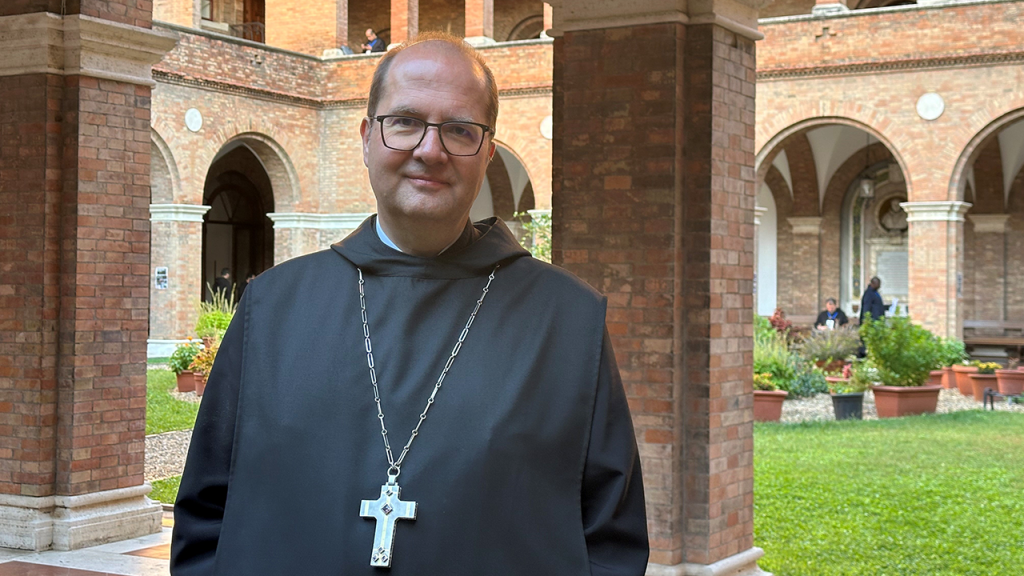
The Abbot Primate of the Benedictines has said the Traditional Latin Mass has secured a lasting place in the Church and should be permitted in some areas The Abbot Primate of the Benedictines has said that the TLM has acquired a lasting place within the Church and “should be permitted, at least in some areas”. Fr Abbot Jeremias Schröder, who has held the office since September 2024, made the remarks while reflecting on developments in monastic life at Rome’s Sant’Anselmo. He pointed to the lived experience of Benedictine communities, where the older and newer forms of the liturgy continue to exist side by side. “Among us Benedictines, traditional liturgy and modern liturgy coexist in a very harmonious way,” Abbot Schröder said. Abbot Schröder added that within the Confederation there are “about ten abbeys that celebrate according to the old rite, most of them in France”, many belonging to the Solesmes Congregation, where the majority nevertheless use the post-conciliar missal. He also referred to the group of monasteries associated with the Abbey of Fontgombault, as well as Le Barroux and its daughter houses, noting their full integration within the wider Benedictine family. Reflecting on the broader question, he said: “After Pope Benedict opened doors here, it will no longer be possible to completely eradicate the old form. We have brothers and sisters who have built their religious lives on this form of prayer and Mass. This has now also gained a place in the Church and should be permitted, at least in some areas.” His remarks came as he described monastic life as marked by contrasting trends across different regions. Some communities, he said, are in visible decline, while others have experienced unexpected renewal. “We’re dealing with two opposing movements,” he said. “On the one hand, there are indeed communities that are slowly dying out, and managing this transition well is a major challenge. And then there are others that had already been written off but are managing to recover.” He cited the case of Georgenberg Monastery in Tyrol, where a planned winding down did not take place after new members joined the community. “I was actually supposed to wind it down, so to speak, but then a few new members joined, and the community is now vibrant again,” he said. Asked whether stricter observance plays a decisive role in the survival of religious houses, he rejected a simple distinction. “I don’t know if strictness is the right distinguishing criterion,” he said, instead pointing to continuity and the internal life of communities as more significant factors. “If there are no new members for a long time, something breaks down. The quality of community life is very important. You can sense whether there are shared goals and a good sense of togetherness. Such monasteries always attract people,” he said, adding: “I am confident that this way of life will not die out.” On practical questions affecting contemporary monastic life, he said that the use of smartphones and social media is handled at the level of individual monasteries. “Each monastery decides that for itself,” he said, though he stressed that the issue must be addressed during formation. “It absolutely has to be a topic in novitiate training, and renunciation has to be practised,” Abbot Schröder said, noting that in some cases this includes handing in mobile phones during the novitiate. The extent of restrictions, he added, varies according to the character of each community, with more contemplative houses likely to adopt stricter approaches than those engaged in pastoral or educational work. He also referred to the growing use of artificial intelligence within ecclesiastical settings, particularly in multilingual contexts. “This applies especially to simultaneous interpretation at synods and assemblies,” Abbot Schröder said. “And I must say, simultaneous interpretation via AI works really well.” Abbot Jeremias Schröder joined St Ottilien Archabbey in Germany as a novice in 1984. In October 2000 he was elected archabot. In 2015, he was selected to take part at the Fourteenth Ordinary General Assembly of the Synod of Bishops as one of the elected representatives of the International Union of Superiors General. In 2024 he was elected as Abbot Primate of the Benedictine Confederation.
May 5, 2026
Bishop-designate of Tagbilaran withdraws weeks before ordination
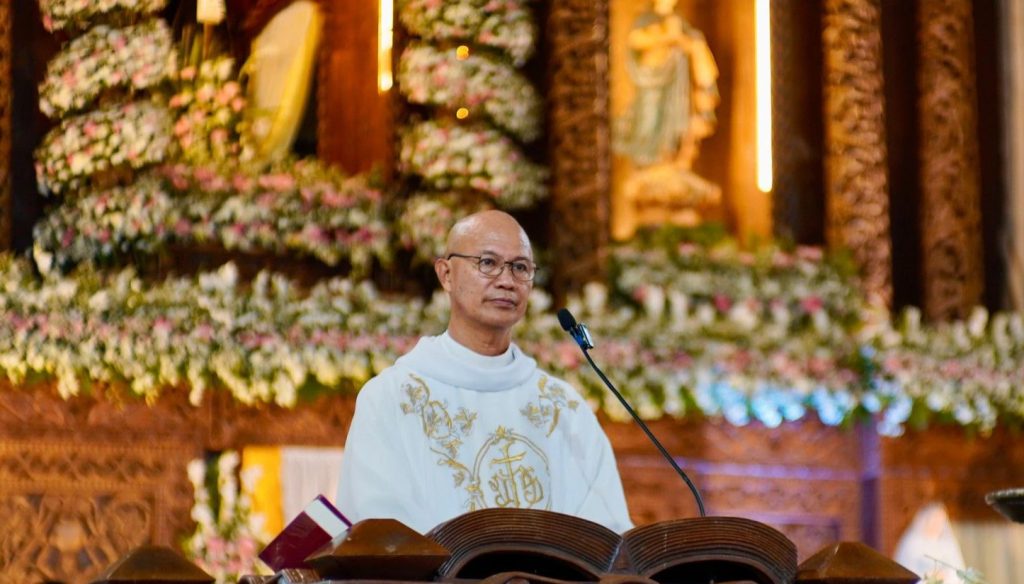
In the Philippines, Father Gerardo Fortich Saco Jr. has withdrawn from his appointment as Bishop of Tagbilaran less than two months after his nomination, halting his scheduled ordination and leaving the diocese without a bishop Father Gerardo Fortich Saco Jr. has withdrawn from his appointment as Bishop of Tagbilaran, a regional diocese in the Philippines, less than two months after his nomination by the Holy See. The priest announced that he would not proceed with his episcopal ordination, which had been scheduled for May 26 at the Cathedral of Saint Joseph the Worker, bringing an abrupt halt to his succession to the see. In a statement addressed to the faithful of the diocese, Father Saco said his decision followed a period of discernment and reflection. “It comes from a deep awareness of my own human limitations and inadequacies,” he said, confirming what he described as a “change of heart” after initially accepting the appointment. He asked for understanding from clergy and laity alike, while making clear that he would continue in priestly ministry. “Please be assured of my continued commitment as a priest to journey with you in faith in the Risen Lord, who never abandons us in moments of trial and need,” he said. The Holy See announced his appointment on March 25. At the time, Father Saco was serving as diocesan administrator of Tagbilaran, a role he had held since 2025 following the transfer of the previous bishop to the Archdiocese of Cebu, the countries largest. His withdrawal leaves the diocese without a bishop, with no immediate indication of when a new appointment may be made. Father Saco, a native of Tagbilaran, was ordained to the priesthood on April 26, 1993. His priestly ministry began with parish assignments and also included time abroad. He served on missions in Libya between 2001 and 2003 and later worked as a visiting priest in a parish in New York. He later assumed wider diocesan roles, serving as episcopal vicar for the laity from 2015 to 2021 and subsequently taking on senior administrative responsibilities. He was appointed vicar general in 2023 before becoming diocesan administrator. Withdrawals from episcopal appointments after their announcement remain uncommon, particularly so close to the date set for ordination. In such cases, the reasons are not always made public, and the process returns to the Holy See for consideration of a new candidate.
May 5, 2026
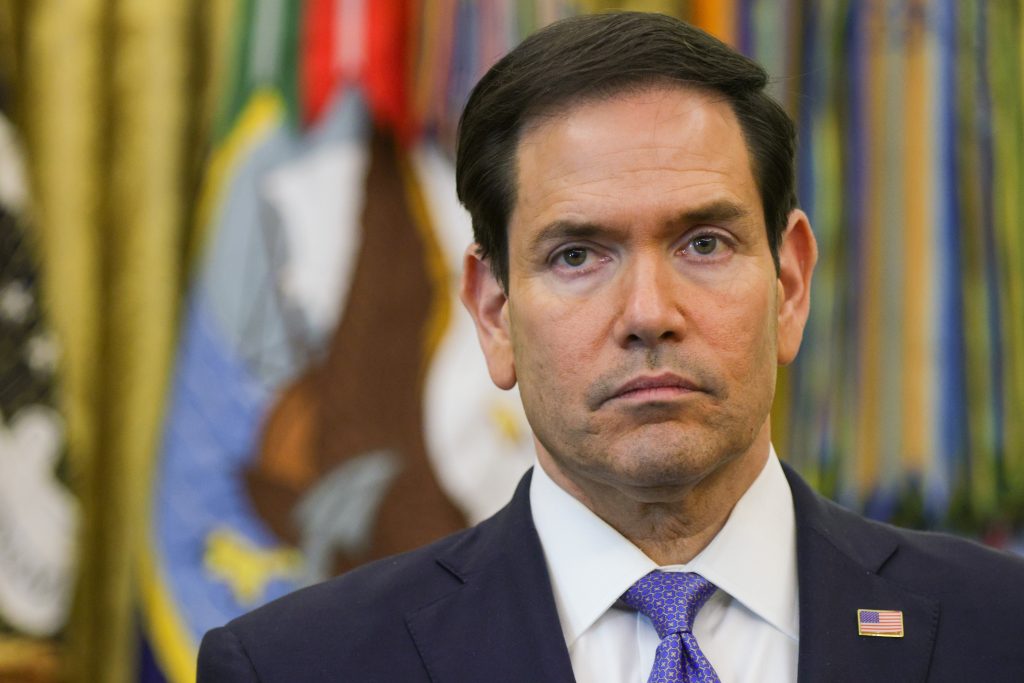
US seeks to reset Vatican ties as Rubio heads to Rome
Marco Rubio is set to meet Pope Leo XIV and Cardinal Parolin in Rome, as Washington moves to ease tensions with the Vatican after recent clashes over Iran and criticism from President Trump The United States Secretary of State, Marco Rubio, is expected to arrive in Rome on 7 May for meetings with Vatican and Italian officials, in what is understood to be an effort by Washington to stabilise relations. The visit, confirmed by the Holy See Press Office, will include a meeting with the Pope and talks with Pietro Parolin, as well as senior figures within the Italian government. It comes almost a year to the day since the election of Pope Leo XIV, and marks the first senior-level engagement between the current US administration and the Vatican since the deterioration in relations prompted by the President’s remarks about the pontiff. Over the past month, President Donald Trump has publicly criticised Pope Leo in recent weeks over the Holy See’s opposition to the United States’ military action against Iran. In one post circulated on social media, the President described the Pope as “WEAK on Crime, and terrible for Foreign Policy”. The Vatican has not issued an official response to Rubio’s visit, but the Holy See has continued to articulate its position on the conflict. Speaking to journalists last month while travelling to Africa, Pope Leo said he had “no fear of the Trump administration, or speaking out loudly of the message of the Gospel”. The Pope has repeatedly criticised the use of military force, warning against what he described in a separate address as the actions of “tyrants” who expend vast resources on warfare. Rubio’s presence in Rome is also expected to include discussions with Italian officials, amid signs of strain between Washington and Rome. Italy’s Prime Minister, Giorgia Meloni, had been regarded as a close ally of the Trump administration, but relations have cooled following her criticism of the US position on Iran and her public disapproval of the President’s remarks about the Pope. She described the attacks as “unacceptable”, placing her government at odds with Washington on both diplomatic tone and policy substance. According to Italian press reports, Rubio’s visit was communicated to the government in Rome through diplomatic channels, with indications that efforts have been underway to “rebuild the bridge” between the two countries. Meetings are expected to include Foreign Minister Antonio Tajani, with further contacts under discussion. It remains unclear whether a meeting with Meloni herself will take place. The wider diplomatic context has been further complicated by tensions between the United States and other European allies. Recent statements from Washington have included threats to reassess troop deployments in Europe, including in Italy, Germany and Spain, following criticism from European leaders over the Iran campaign. Italian Defence Minister Guido Crosetto has rejected suggestions that Rome has failed to support US operations, particularly in relation to maritime security. Rubio’s role as a senior Catholic within the administration has been noted. The timing of the visit, with the United States approaching midterm elections later this year, has also attracted attention. Catholic voters remain a significant voting bloc in American politics, having come out in support for all presidential victories in recent history. Trump himself received an estimated 57 per cent of the Catholic vote in 2024. Whether Rubio’s meetings in Rome will succeed in easing tensions remains to be seen, but the decision to send the Secretary of State signals an acknowledgement within Washington that the President is seeking to ease relations with the Vatican.
May 4, 2026
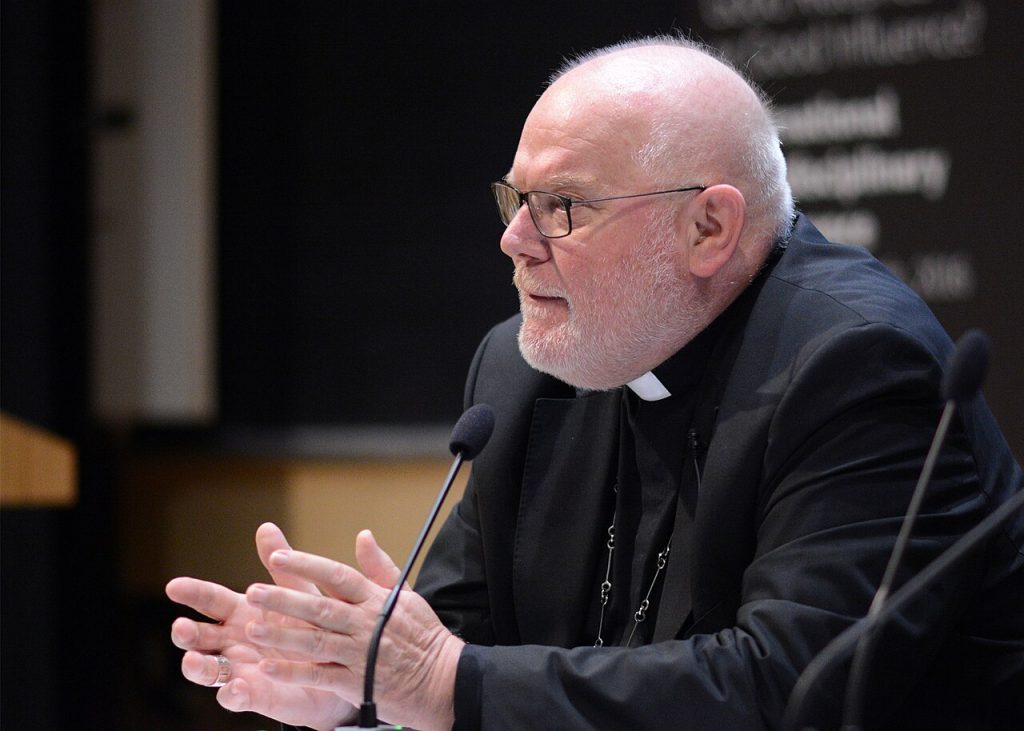
Cardinal Marx denounces “reactionary propaganda” over German Synodal Path
Cardinal Reinhard Marx has criticised what he called “reactionary propaganda” surrounding Germany’s Synodal Path, rejecting claims of a rupture with Rome and defending the direction of the German Church Cardinal Reinhard Marx has criticised what he described as “reactionary propaganda” directed against Germany’s Synodal Path. In an interview with Herder Korrespondenz , the Archbishop of Munich and Freising said that narratives portraying the German Church as moving towards rupture were being driven in a coordinated way, especially in the United States. “This is a social media phenomenon, and it applies to both politics and the Church,” he said, adding that he had raised the issue directly with Pope Francis and Pope Leo XIV. Cardinal Marx rejected suggestions that the Synodal Path risks breaking communion with Rome and defended the particular character of Catholic life in Germany. Referring to earlier concerns expressed in Rome about possible Protestant influence, he said: “I didn’t think that was fair,” insisting that the German Church’s development must be understood in light of its own historical experience. He acknowledged, however, that communication with the Vatican could have been handled differently as tensions emerged. “Perhaps we should have talked more amongst ourselves,” he said, suggesting that earlier and broader dialogue might have prevented misunderstandings from taking hold. The cardinal also pointed to the approach of Pope Leo XIV, saying the Pope had shown a willingness to listen to differing voices within the Church rather than act unilaterally. “He doesn’t simply want to decide something spontaneously, but is interested in the opinions of many different people,” Marx said, noting that the Pope has already received a number of German bishops in audience. Alongside his comments on the Synodal Path, Marx addressed the financial position of the Holy See, describing current difficulties as manageable. Writing in the same publication, he said that the situation does not amount to a structural crisis, but requires more effective coordination and oversight. He pointed to the complexity of Vatican finances, where multiple entities operate with separate reporting systems, and suggested that greater unity in administration would improve transparency. He noted that the central structures of the Church rely heavily on income from the Institute for the Works of Religion and the resources of Vatican City State, including the museums, while traditional sources such as Peter’s Pence are no longer sufficient on their own. Without such support, he indicated, it would be difficult to sustain the costs of the Roman Curia, the diplomatic service and the Church’s global communications. Marx confirmed that proposals are under consideration to strengthen fundraising and rationalise financial management, including the possible creation of a dedicated office for this purpose. He also referred to ongoing concerns over pension liabilities, noting that these issues reflect wider pressures faced by institutions internationally rather than a uniquely Vatican problem. The Synodal Path, launched in 2019 by the German bishops and lay representatives, has been the focus of sustained scrutiny from Rome, particularly over its discussions on authority, morality and Church governance. While the Vatican has repeatedly stressed the limits of national initiatives, German bishops have maintained that the process is intended as a contribution to the wider life of the universal Church rather than a departure from it. Image credit: By Dermot Roantree – Own work, CC BY-SA 4.0, https://commons.wikimedia.org/w/index.php?curid=115697769
May 4, 2026