

Outside the Walls
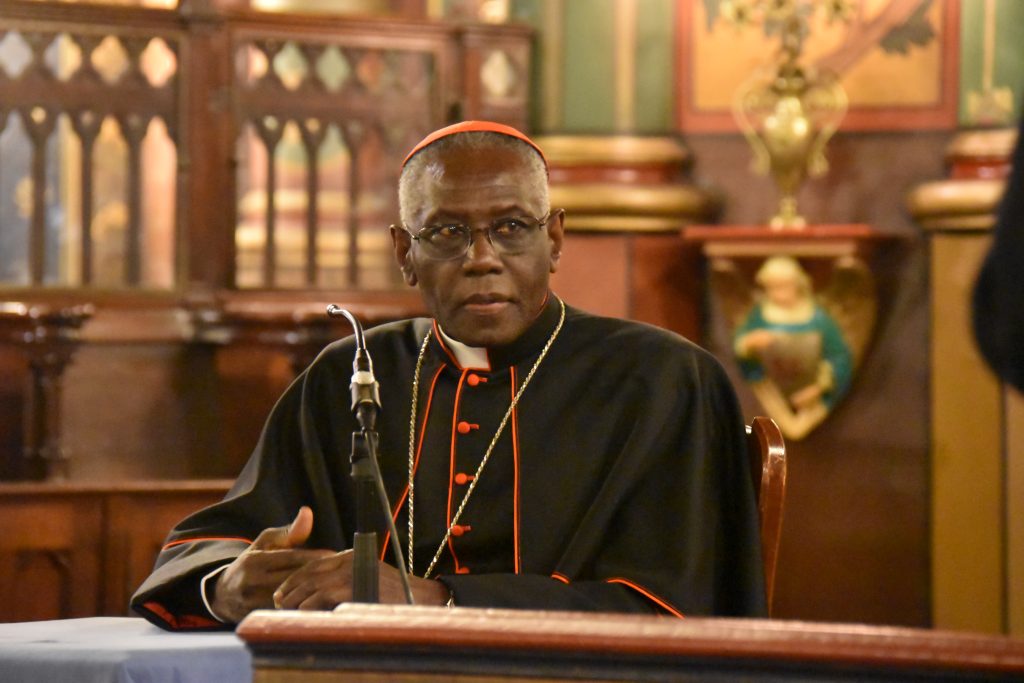
Cardinal Sarah says liturgy has been reduced to ‘mere entertainment’
Cardinal Robert Sarah has called for “clarifications” to parts of the interpretation of Vatican II in order to prevent readings that represent “a break with the faith”. The former prefect of the Congregation for Divine Worship and the Discipline of the Sacraments also warned against liturgy becoming “mere entertainment” and said the Church must resist pressure to conform to the modern world Cardinal Robert Sarah has said that parts of the interpretation of the Second Vatican Council require “clarifications” in order to prevent readings that represent “a break with the faith”. In a lengthy interview published by the French Catholic magazine La Nef on May 4, the former prefect of the Congregation for Divine Worship and the Discipline of the Sacraments said certain conciliar texts had produced “divergent, even opposing, interpretations”, particularly concerning religious freedom, ecumenism, collegiality and the relationship between the Church and the modern world. “A council must be read within the continuity of the faith as it has always been,” Cardinal Sarah said. “Where certain texts have given rise to divergent, even opposing, interpretations, it is legitimate to call for a deeper examination in order to avoid readings that represent a break with the faith.” His Eminence added: “The Church has nothing to fear from clarity.” The Guinean cardinal said he favoured “clarifications rather than corrections”, arguing that the interpretation of the Council belonged to the Magisterium and had already been “largely initiated” by Pope St John Paul II and Pope Benedict XVI. He also warned against treating the Council “as one judges a political programme”. Speaking about Pope Francis, Cardinal Sarah said it was “sometimes necessary” for cardinals to exercise “discernment regarding a period in the life of the Church”, while insisting that criticism of a pontificate must always be carried out “with fear of God, with love for the Church, and without ever falling into irreverence”. “A cardinal is not a courtier,” His Eminence said. “Before God, he is a servant of truth and a collaborator of the Apostolic See.” Without directly criticising Francis personally, Cardinal Sarah suggested that aspects of the previous pontificate had generated uncertainty among Catholics. “A pontificate always leaves a mixed legacy: pastoral insights, spiritual emphases, but also sometimes areas of unease or confusion,” he said, adding that he had spoken privately to Francis to express concerns “that practical ambiguity might obscure doctrinal clarity”. The cardinal said that “an era can leave wounds of confusion” and argued that the duty of pastors was “to help restore to the Church a clearer, more peaceful and more theological message”. Cardinal Sarah repeatedly returned to the theme of secularisation within the Church itself, describing the spread of what he called a “modern form of paganism”. “When faith is reduced to sociological language, liturgy to mere entertainment, morality to perpetual negotiation, and the Church to an institution that must adapt to the desires of the times, then something of paganism returns,” His Eminence said. Cardinal Sarah identified “the effacement of the sense of sin”, “discomfort with the affirmation of revealed truth” and “the trivialisation of the liturgy” as signs of an internal spiritual crisis. “When God is no longer primary, even in the Church, everything else is corrupted,” he said. Cardinal Sarah also warned against what he described as the Church’s growing “fear of displeasing the world”, saying that ambiguity was increasingly preferred “to clarity” and “communication to contemplation”. He added: “The world does not expect the Church to repeat its words; it expects it to open Heaven to it.” On the question of the liturgy, Cardinal Sarah rejected what he described as a “war of sensibilities”, insisting that the issue could not be reduced to factions competing for victory within the Church. “The liturgy belongs to the Church, not to political parties,” he said. “The real question is: how can we restore to the entire Catholic liturgy its sacred dignity, its continuity, its orientation towards God?” The 80 year old cardinal has long been associated with the traditional wing of the Church, so his comments should be read in the light of the restrictions imposed on the Traditional Latin Mass and the impending episcopal consecrations of the Society of Saint Pius X. He described the Society’s planned July 1 episcopal consecrations as “objectively serious”, warning that they would further damage ecclesial unity. “Fidelity to Tradition cannot be separated from hierarchical communion,” he said. However, the cardinal has acknowledged that “doctrinal questions” and tensions had accumulated over decades, adding that “truth and charity must go hand in hand”. Cardinal Sarah also reflected on the wider crisis facing western civilisation, describing Europe as “deeply wounded” and increasingly detached from Christianity and even “the most fundamental anthropological truths”. Yet he argued that the collapse of cultural certainties was leading some people back towards religion. “In Europe, we are seeing an increase in adult baptisms and returns to the faith,” the cardinal said. “When cultural securities crumble, some souls rediscover that God alone remains.” Asked about the priorities of Leo XIV, Cardinal Sarah declined to speak directly for the Pope, but said the new pontificate appeared focused on “peace, unity, mission” and “the Church’s doctrinal responsibility”. Having turned 80 shortly after the 2025 conclave, Cardinal Sarah is no longer a cardinal elector and it is now extremely unlikely that he could ever become Pope. However, as has perhaps been seen most clearly in recent years through Hong Kong’s Cardinal Zen, who is 94, cardinals can continue to exert influence long after the age of 80. Cardinal Zen flew to Rome before the conclave that elected Pope Leo to participate in the General Congregations, the pre-conclave meetings of cardinals in which views on the direction of the Church are expressed, where he warned against reforms he considered damaging. If Cardinal Sarah remains in good health, he is likely to continue using his voice to advocate for the traditionalist wing of the Church for years to come.
May 10, 2026
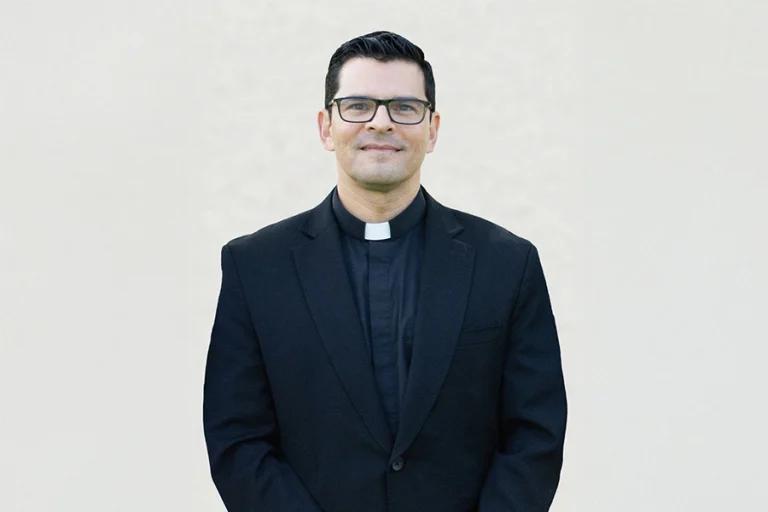
New general director of Legionaries of Christ says the congregation has “much to contribute”
The new general director of the Legionaries of Christ has said the congregation still has “much to contribute and give” to the Church as it continues its process of renewal The new general director of the Legionaries of Christ has said the congregation still has “much to contribute and give” to the Church as it continues a long process of renewal after the crimes of its late founder. Fr Carlos Gutiérrez López, who was elected general director in February, said the congregation had spent recent years strengthening safeguarding standards, working with civil and canonical authorities and responding to victims of abuse. Interviewed by ACI Prensa, he said the painful reckoning over Fr Marcial Maciel’s crimes had forced the Legionaries to confront deep failures within the institute. “Since we began facing this reality, although it was very painful, it also opened our eyes: there was a lot of work to do,” Fr Carlos said. “In recent years we have been working hard to meet standards, following the documents issued by the Church, collaborating with canonical and civil authorities.” The Legionaries of Christ was founded in Mexico in 1941 by and today has more than 1,300 members worldwide, including just over 1,000 priests, according to figures published in the Annuario Pontificio . That growth was overshadowed by revelations concerning Maciel, who died in 2008. In 2006, the Congregation for the Doctrine of the Faith ordered him to withdraw from public ministry and live a life of prayer and penance following allegations of sexual abuse. Subsequent Vatican investigations found that he had abused seminarians and minors over decades while leading what the Holy See later described as “a life devoid of scruples and genuine religious sentiment”. Fr Gutiérrez, 51, said the revelations surrounding the founder had profoundly affected his own vocation. Ordained a priest in 2009, he entered ministry as the scale of Maciel’s misconduct was emerging publicly. “It was definitely something very strong, something that left all of us very perplexed, frightened, and also disillusioned,” he said. “That meant for me a very deep process of reflection in which I had to ask why I was giving my life to God and also the question: why remain here?” He said the congregation no longer regarded Maciel as a spiritual or moral reference point. “Definitely, the founder is no longer a spiritual reference point, a moral reference point for us,” he said. “That reference point, I saw, had always been Our Lord Jesus Christ.” The Legionaries embarked on an extensive Vatican-supervised reform process after Maciel’s downfall. In 2010, following an apostolic visitation ordered by Pope Benedict XVI, the Holy See directed the congregation to revise its constitutions, review the exercise of authority and improve the formation of seminarians and priests. Particular attention was given to abuses of power and conscience, which had enabled Maciel to conceal his conduct for years. Fr Gutiérrez said the process had transformed the institute’s internal structures and culture. “The Church accompanied us throughout a whole process of renewal,” he said. “We reviewed constitutions, we reviewed many of the norms we had been living in within the congregation, the style of apostolate we carried out. In short, it was an entire review that lasted many years.” The congregation has also attempted to present itself as a model of transparency in safeguarding. In 2019, it published a global report detailing abuse cases within the Legionaries from its foundation until that year, including accusations against Maciel and other priests. Annual “Truth, Justice and Healing” reports have since updated the figures and outlined safeguarding measures. Fr Gutiérrez said the Legionaries had worked to establish professional safeguarding teams in the countries where they operate. “These are things that we priests cannot do alone,” he said. “We need specialists — psychologists, lawyers, and so on — to help us truly be very serious in complying with these standards.” He also referred to an audience with Pope Leo XIV earlier this year in which the Pope reportedly stressed that authority in the Church must be exercised as service rather than domination. Fr Gutiérrez said he had been struck by the Pope’s call to approach people “with a respectful and compassionate gaze”. “What they share with me is something sacred, and I have to respect that sacredness,” he said, reflecting on his experience in leadership roles within the congregation. Questions remain, however, over whether the Legionaries can separate their present identity from the legacy of their founder. Fr Gutiérrez acknowledged the issue directly, describing it as “a valid question”. He said the congregation had spent years discerning its authentic charism after the Vatican instructed it to re-examine the basis of its mission. “The charism, I believe, is something we have been discovering,” he said. “It is nothing other than forming apostles to transmit the love of Christ, to form apostles and also send them to evangelise the world and help the Church in this evangelisation.” The Legionaries continue to oversee a substantial international network through Regnum Christi. According to statistics released by the congregation, the movement includes more than 21,000 adult and youth lay members, alongside consecrated women and lay consecrated men. Its educational institutions include 139 schools and 14 universities educating more than 150,000 students. Despite the continuing shadow of the Maciel scandal, the Legionaries have continued to attract vocations. The congregation says more than 250 minor seminarians are currently in formation worldwide. Fr Gutiérrez said he hoped the congregation could continue to serve the Church while remaining conscious of the failures of its past. “Seeing how the Legion was responding, I said: ‘Well, I also want to help the Church with my priesthood to move this congregation forward,’” Fr Carlos Gutiérrez said. Photo credit: Legionaries of Christ website
May 9, 2026
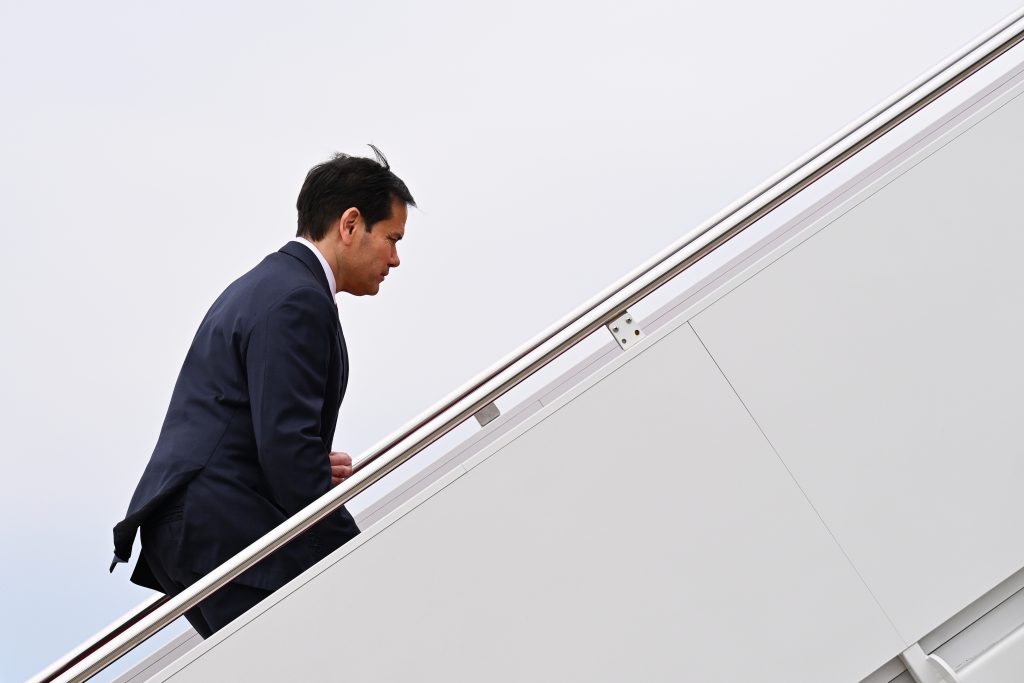
Rubio in Rome after month of tension between Washington and Vatican
US Secretary of State Marco Rubio met Pope Leo XIV and senior Vatican officials on Thursday after weeks of tensions between Washington and the Holy See. The Vatican said the talks were “cordial” and focused on conflicts, humanitarian crises and peace efforts US Secretary of State Marco Rubio met Pope Leo XIV at the Vatican on Thursday amid growing tensions between Washington and the Holy See. Secretary Rubio was received by the Pope in the Apostolic Palace during a visit to Rome that also included meetings with Cardinal Pietro Parolin and Archbishop Paul Richard Gallagher. A statement issued afterwards by the Holy See Press Office said the talks had been “cordial” and that both sides had reaffirmed their “shared commitment to fostering sound bilateral relations between the Holy See and the United States of America”. The Vatican said views had been exchanged “regarding situations on the regional and international levels, with particular attention given to countries experiencing war, political tensions and difficult humanitarian situations, as well as the need to work tirelessly for peace”. Holy See officials later indicated that discussions included conflicts and instability affecting parts of the Middle East and Africa, with particular reference to Lebanon and Iran. The situation in Cuba was also raised during the meetings. Ahead of the visit, Cardinal Parolin, the Vatican Secretary of State, had signalled that difficult issues would be discussed openly during Mr Rubio’s time in the Vatican. Speaking to journalists on May 6, the Cardinal Secretary of State said: “We will listen to him, the initiative came from them. We will speak about everything that has happened in these days. We could not fail to touch on these topics.” He said the discussions would concern “international politics and above all conflicts”, including Latin America and “probably also the question of Cuba … all those that are the most pressing issues”. Cardinal Parolin also stressed the importance of maintaining dialogue with Washington despite recent disagreements between senior figures in the United States and the Holy See. “One cannot do without the United States,” His Eminence said. “Despite some difficulties occurring, they certainly remain an interlocutor for the Holy See. Also because they have a role in almost all the situations we are experiencing today.” The cardinal was also asked about criticism directed at Pope Leo XIV by allies of President Trump in recent weeks following papal comments on international diplomacy and war. “To attack him in this way or to reproach what he does seems a bit strange to me,” Cardinal Parolin said, before adding: “The Pope does what he must do: the Pope is the Pope.” Asked whether he relied more upon Mr Rubio or President Trump, the cardinal replied: “Me? I do not rely on anyone. I rely only on Our Lord Jesus Christ.” The Vatican Secretary of State also reiterated the Holy See’s longstanding position on diplomacy and nuclear disarmament, saying the Church continued to favour the resolution of conflicts “through negotiation … of good will, sincere, so that all parties can express their point of view and find points of convergence”. He added that the Pope remained “open to all options” for dialogue, including with President Trump himself. After the meeting, the United States also issued its own account of the discussions through the State Department and the American embassy to the Holy See. According to a statement attributed to State Department spokesman Tommy Pigott, Mr Rubio and Cardinal Parolin discussed “mutual cooperation and pressing international issues”. The statement said the Secretary of State welcomed the recent arrival of Archbishop Christophe Pierre Caccia as the new Apostolic Nuncio to the United States and that both sides reviewed “ongoing humanitarian efforts in the Western Hemisphere and efforts to achieve a durable peace in the Middle East”. It added that the discussions reflected “the enduring partnership between the United States and the Holy See in advancing religious freedom”. A separate message posted by the United States embassy to the Holy See said Mr Rubio had met Pope Leo XIV “to discuss the situation in the Middle East and topics of mutual interest in the Western Hemisphere”. Another embassy statement issued before the visit said Washington was looking forward to “further strengthen[ing] the relationship between the United States and the Holy See”.
May 8, 2026
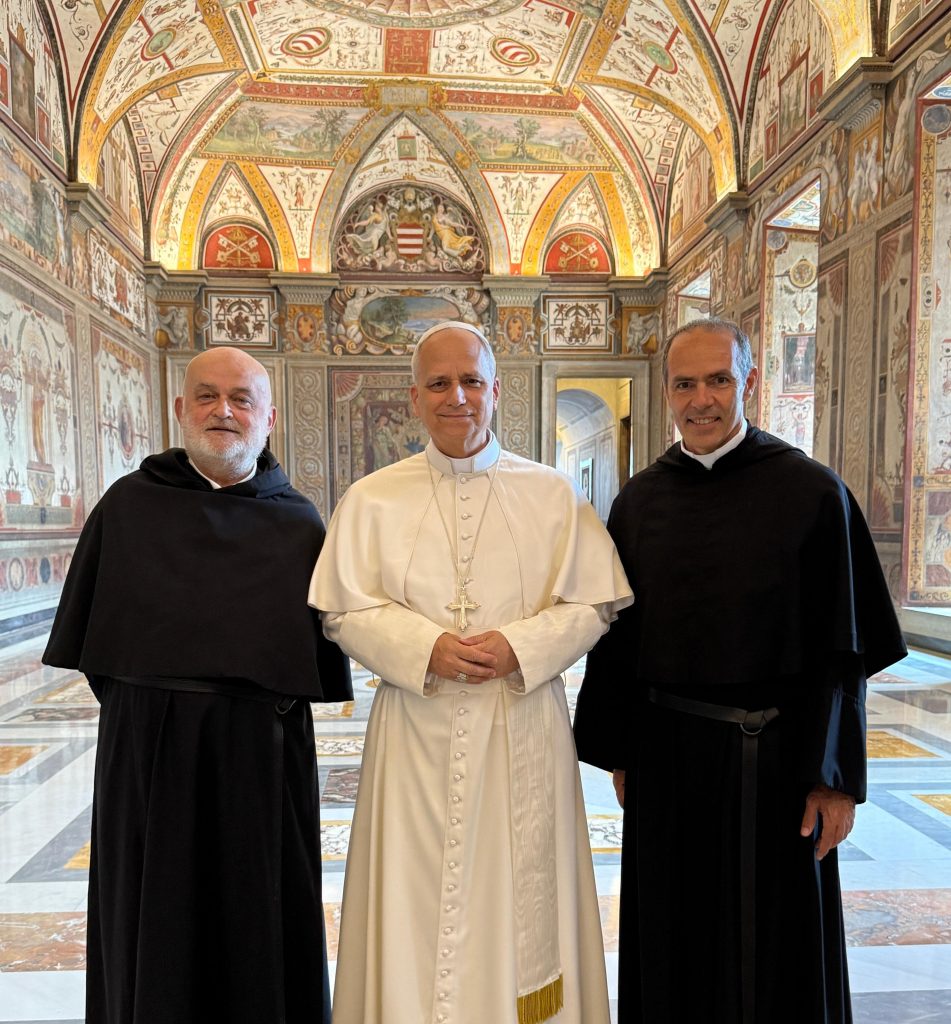
“He has made very reasoned and thoughtful choices” — a friend of Pope Leo XIV reflects on his first year
Father Francesco Maria Giuliani OSA has known Pope Leo XIV since 2001, when the future Pope was elected Prior General of the Augustinians. In this rare and personal interview, he reflects on Leo’s first year as pope, his character, his leadership style, his approach to bishops and the Traditional Latin Mass, and their friendship Father Francesco Maria Giuliani OSA is a friend, confrere and brother in the Augustinian family of Pope Leo XIV. A Roman priest and member of the Order of Saint Augustine since his religious profession in 1995, Father Giuliani has served in various roles within the Order. He has long been based at the Augustinian Basilica of Santa Maria del Popolo in Rome and, since 2024, has served as parish priest of Santa Rita in Tor Bella Monaca. He first met Fr Robert Francis Prevost when the future Pope was elected Prior General in 2001, and their relationship has remained one of deep and respectful friendship ever since. In this candid and affectionate conversation, Father Giuliani shares rare personal insights into the Pope he has known as a fellow friar. He reflects on how the pontificate has both confirmed and deepened the qualities he already admired. He offers thoughtful observations on Pope Leo’s selection of bishops, which he describes as more measured and merit-based than some expected, as well as his approach to the Traditional Latin Mass and the nature of their friendship, which has necessarily changed since the election yet remains rooted in the Augustinian ideal of fraternal equality and mutual support. AV: First of all, Father, tell us, who are you? FG: In the photo below, I was meeting Pope Francis. It was 2013. Father Prevost was the Prior General who introduced me as Fr Francesco Maria Giuliani from Rome. The Pope said to me, “From Rome itself? Roman priests from Rome itself are rare!” and I felt privileged. Pope Francis had the ability to make you feel important. He added, “Pray for me.” I have been an Augustinian since 1995. I am currently the parish priest of Santa Rita, in a difficult neighbourhood on the outskirts of Rome. It is a demanding but very beautiful task. I chose the Order of Saint Augustine because I was fascinated — and called — by the charism of living the faith and the search for God in communion with the brothers whom the Holy Spirit chooses to unite in Him who is one, Christ. Father Francesco Maria Giuliani OSA meets Pope Francis in 2013 after being introduced by the then Prior General of the Augustinians, Fr Robert Francis Prevost, the future Pope Leo XIV. AV: As we celebrate the first anniversary of Pope Leo’s election to the See of Peter, how would you describe the man you have known for years, in light of the extraordinary burden he now carries on his shoulders? “He perfectly reconciles seriousness and friendliness, professionalism and warmth.” FG: I can confess that I never thought he would become pope — not because I didn’t consider him suitable, but because the figure of the Pope had always seemed distant to me. I saw him as someone completely different from my small world. Perhaps a bit irreverently, I even said it to him when we met after his election: “You know, before this it seemed to me that the Pope came down from a distant planet — I still can’t believe it’s really you!” I have known him since he became our Prior General in 2001. He is a man who perfectly reconciles seriousness and friendliness, professionalism and warmth. He is very diligent but never distant. He is naturally somewhat shy and reserved, yet he has never withdrawn when there was an opportunity to be together, to joke, to share stories and experiences. He is very cordial and very reliable. I have always seen in him this extraordinary ability to combine two aspects that seem opposed. AV: Looking back over this past year, which moments or decisions of Pope Leo’s pontificate have most reminded you of the friend you knew before his election, and which have surprised you the most? FG: Even as Prior General, Father Prevost stood out for his attention to unity and peaceful concord, his strong call to help the poorest and victims of injustice, and the value he placed on study and the common search for God as the one treasure that can unite everyone. I certainly expected his insistence on unity, dialogue and openness to encounter with all. He does not present himself as the holder of a truth to be imposed, but as a seeker of the mystery that we can only help one another to unveil and savour together. I also find that his attention to the poor is in continuity with Pope Francis, but has its own distinctive features. Father Prevost, following Augustine, has always spoken of solidarity with the least in terms of justice rather than mere assistance. He has often reminded us not only to do something for the poor, but to commit ourselves fully so that the dynamics of power and injustice that condemn so many to poverty are broken. His approach seems more systemic and “political” in the sense of wanting to address the social and global issues that cause poverty. What has surprised me is not something new in him, but rather the depth of something I already knew. I see him as very stable and confident in his thinking and deliberate action, capable of managing the situations he faces, tireless in the endless series of commitments he carries out without showing fatigue or inadequacy. Yet he is not lacking in emotion; on the contrary, he has not lost any of his cordiality. AV: You shared a deep friendship with Cardinal Robert Francis Prevost before he became Pope Leo. Could you share a personal memory from the years of your friendship that, in your opinion, best illustrates the kind of Pope he would become? FG: Some journalists began mentioning his name shortly before the conclave, but I couldn’t believe it was possible — I couldn’t see him as pope. For me, it is difficult to separate Father Prevost from Pope Leo. I remember when I had a difficult assignment with the Augustinians and he was very understanding and fatherly towards me. He said, “In anything I can do to help you, remember that I am here and you can turn to me.” Those words were very reassuring and made me feel safe, in good hands. And now I have the same perception: that the Church is in good hands. Fr Francesco Maria Giuliani OSA with the then Fr Robert Francis Prevost, future Pope Leo XIV, during an Augustinian gathering in the early 2000s. “He has surprised expectations by using prudence and foresight.” AV: As someone who perhaps knows the heart of Pope Leo better than anyone else, how do you evaluate his choice of bishops in this first year? Has he chosen men in the way you expected, or has the reality of the Petrine office shaped his choices differently from when he was still Father Robert Prevost? FG: I find that he has made very reasoned and thoughtful choices. Frankly — perhaps naively — I would have expected more “turnover” with people closer to him in thought and vision of the Church and the world. He has not given in to the spoils of the system and has chosen the right people for the right roles. Perhaps some expected faster intervention from him in certain situations, but he has surprised expectations by using prudence and foresight. AV: Many Catholics want to understand Pope Leo’s thinking regarding the Traditional Latin Mass. From your long relationship, can you give us any insight into how he views the Traditional Latin Mass, its place in the life of the Church, and whether his thinking on this topic has evolved since becoming Pope? FG: Frankly, on this specific point I wouldn’t know what to say — we have never spoken about it. As an Augustinian, he is certainly attentive to safeguarding the substance while remaining open to diversity of forms. He is a man of reconciliation and dialogue, which is very different from compromise. I don’t know if he will be forced to make some decision on the matter, but I am sure his first reaction would be to say that there are far more urgent problems. AV: Friendship with a Pope is a rare and precious thing. In what way has your relationship changed since the day of his election? Are there aspects that have remained exactly the same and aspects that have necessarily become different? FG: I would say it has completely changed. Already when he was a cardinal, I felt awkward about contacting him, but now I behave exactly like any other faithful person, with no preferential channel. If we see each other at some audience — him as Pope and me in the crowd — he gives a warm and personal nod of greeting, but I am fully aware that he is now the Pope and the father and brother of all. I cannot and do not want to be different from any other faithful. I know he is close to me as to everyone else, but now the Pope comes before the confrere. AB: Is there a particular quality or virtue in Pope Leo that, in your opinion, the wider Church has not yet fully discovered, but which you have known and cherished throughout your friendship? FG: Precisely his capacity for friendship, his cordiality, his closeness. He is a person of relationship; I think this can be appreciated even more by those who have the grace of being close to him. AB: On this first anniversary, if you could speak privately to the Pope as his old friend, what would you especially like to tell him about the year that has passed and the years that lie ahead? FG: I would like to support and encourage him, to be able to say to him what he once said to me: “In whatever way I can help you, I am here” — but obviously I would not be able to help him carry the burdens that the papacy has placed upon him. When I have had the opportunity to speak with him, I have tried to lighten the moment, to talk about memories and anecdotes, to smile together and enjoy a little lightness. Although I would like to be able to share opinions on the issues that worry him most, I have assured him that I pray for his intentions. AV: Finally, Father Francesco, in what way has knowing and loving Pope Leo as a brother in Christ deepened your own faith and your prayer for the Church during this first year of his pontificate? FG: This is a very profound question. At first, the election of Pope Leo somewhat put me in crisis, as if something I lived as sacred and unattainable suddenly became close and familiar. I feel much more called to deepen and witness my faith, now that — indirectly and unintentionally — an interest has grown around me and my Augustinian family that has increased in me the sense of responsibility and seriousness in bearing witness to the faith in the style of Saint Augustine. AV: Thank you very much for your time Father Francesco, and your priestly ministry.
May 8, 2026
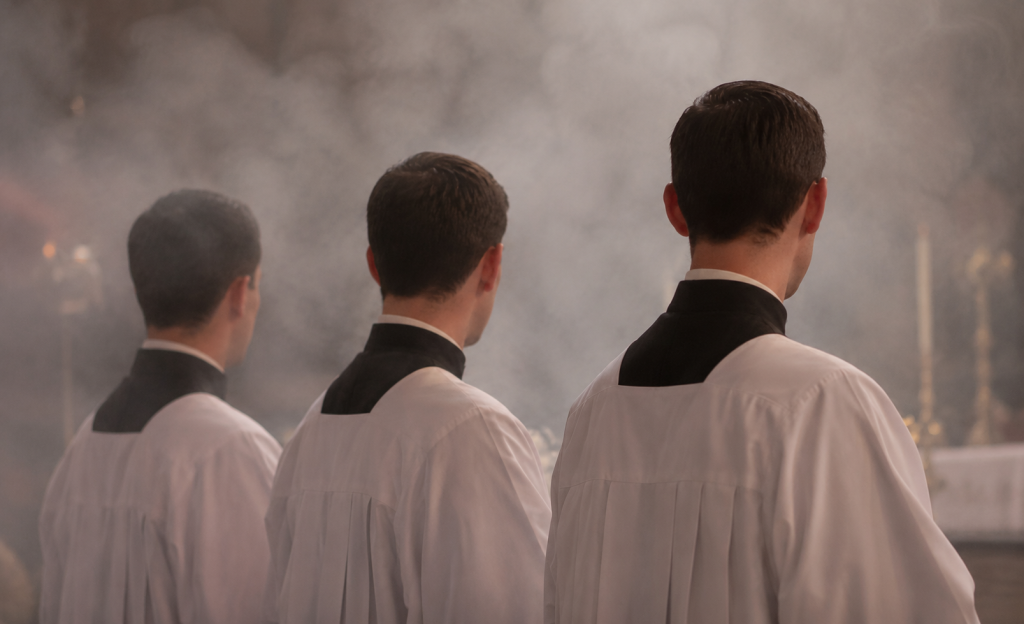
Three priests sent from Fréjus-Toulon to leave Diocese of Amiens
Three priests from the Diocese of Fréjus-Toulon will leave parishes in Amiens after disputes over cassocks, Latin liturgy and preaching led to divisions within local communities. Bishop Gérard Le Stang insisted the decision was not based on doctrinal or liturgical positions, but on the need to restore peace and communion The Diocese of Amiens has confirmed that three priests from the Diocese of Fréjus-Toulon will leave their parishes at the end of the current pastoral year after months of tensions within parish communities in northern France. In a communiqué issued at the end of last month, Bishop Gérard Le Stang of Amiens said Fathers François-Régis Favre, Éloi Legrand and Pierre-Marie Brochery would not remain beyond the one-year experimental agreement between the two dioceses. The priests arrived in September 2025 to serve the parishes of Notre-Dame de Brebières in Albert, Notre-Dame de l’Espérance in Bray-sur-Somme, Notre-Dame des Hauts de l’Ancre in Mailly-Maillet and Notre-Dame des Champs in Acheux. The bishop said the decision followed “a long period of reflection”, during which he consulted priests of the diocese, members of the episcopal council and parishioners holding “diverse opinions”. “I personally received these three priests throughout this year,” Bishop Le Stang said. “I was able to tell each one the objective reasons that lead me to end their ministry among us.” He thanked the priests for “their desire to serve the mission of the Church in our diocese” and praised “their concern for evangelisation, prayer, liturgy and formation”. The three priests became the focus of disputes within the parishes after introducing practices associated with more traditional expressions of Catholic life. Some parishioners objected to the wearing of cassocks, the use of Latin within the Novus Ordo Mass and preaching that emphasised doctrinal and moral teaching. One controversy centred on a refusal to permit a secular concert inside a church because of concerns about preserving the sacred character of the building. Complaints were also reportedly made about sermons addressing sin and moral decline in society. Bishop Le Stang insisted that the decision had not been taken because of the priests’ liturgical or doctrinal positions. “The decision I have made not to extend their welcome is in no way based on a certain number of criticisms directed against them,” he said, listing “wearing the cassock, Roman liturgy, concern for doctrinal and liturgical fidelity, exhortation to coherence in moral life, distinction between the cultic and the cultural”. Instead, he said it had become necessary “to acknowledge the conflict that had become established between them and a certain number of people, which was causing deep and lasting trouble in the communities, and dismay among many”. Bertrand Lejeune, communications officer for the Diocese of Amiens, told French Catholic media that the issue concerned parish relations rather than theology or liturgy. “It was a situation that seemed to have no resolution between some of the parishioners and priests, so the bishop chose not to renew their contracts in order to restore a sense of calm and peace,” he said. He added that reactions to the priests had been divided, with some parishioners welcoming their arrival enthusiastically while others regarded it as burdensome. From 1 September, the four parishes and the sanctuary of Notre-Dame de Brebières will be entrusted to Fr Louis-Pasteur Faye, vicar-general of the Diocese of Amiens and currently parish priest of Saint Simon du Molliennois. His appointment was made with the agreement of the diocesan administrator of Thiès in Senegal. In his communiqué, Bishop Le Stang instructed Fr Faye to work towards “renewed communion and fraternity among all”, encourage “the integration of all sensibilities and generations” and develop missionary initiatives connected to the Sainte Colette missionary field. He was also directed to strengthen youth and vocations ministry, continue Christian formation and ensure “the quality of liturgical and sacramental celebrations”. The bishop acknowledged that the dispute had caused pain throughout the local Church. “This pastoral situation has been painful for everyone – priests, deacon, Religious and laity,” he wrote. “I am also aware of how much it gives the feeling of a failure.” He called on parishioners to respond with “reflection, humility and prayer” and said he intended to visit the affected parishes in the coming months. The episode is likely to attract attention beyond Amiens because of the continuing scrutiny surrounding the Diocese of Fréjus-Toulon, long regarded as one of the most traditionally minded dioceses in France. Under Bishop Dominique Rey, who led the diocese from 2000 until 2025, Fréjus-Toulon became known for welcoming priests and religious communities attached to traditional liturgy, evangelisation and conservative theology at a time when many French dioceses were experiencing declining clergy numbers and falling Mass attendance. The diocese also drew concern from Rome over questions of governance, priestly formation and the rapid influx of different ecclesial communities. In 2022, the Vatican took the rare step of suspending ordinations planned for the diocese while an apostolic visitation was carried out. Bishop François Touvet was later appointed coadjutor bishop before succeeding Bishop Rey. Against that background, the arrival of the three priests in Amiens last year had been viewed by some Catholics as part of a broader effort to integrate clergy formed within more traditional pastoral environments into dioceses facing priest shortages. For now, the three priests are expected to return to Fréjus-Toulon, where Bishop Touvet will assign them to new ministries within the diocese.
May 7, 2026
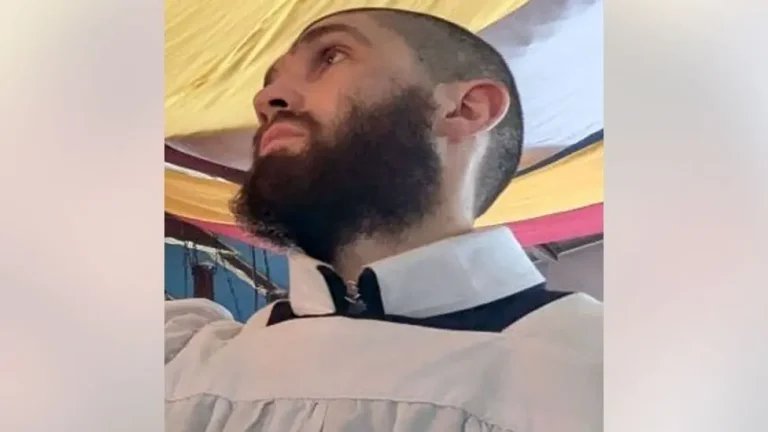
Body of missing Papa Stronsay monk found
A body has been recovered from the sea near Orkney in the search for Brother Ignatius, the 24-year-old monk who disappeared from the Sons of the Most Holy Redeemer on Papa Stronsay in April. Police Scotland said formal identification has yet to take place, but his family has been informed The body of a young monk missing from Papa Stronsay’s Sons of the Most Holy Redeemer since April has been recovered from the sea near Orkney. Police Scotland said a man’s body was discovered in the water off the neighbouring island of Stronsay shortly after 7.30am on May 7. Formal identification has yet to take place, but the family of Justin Evans, 24, known in religion as Brother Ignatius, has been informed. In a statement, Police Scotland said: “The death is being treated as unexplained. Inquiries are ongoing. A report will be submitted to the procurator fiscal in due course.” Brother Ignatius, originally from New Zealand, disappeared from Golgotha Monastery on Papa Stronsay shortly before midnight on April 11. He had been living with the Sons of the Most Holy Redeemer, a traditionalist Redemptorist community based on the isolated Orkney island. The disappearance prompted a major multi-agency search operation involving Police Scotland, HM Coastguard, an RNLI lifeboat and rescue helicopter crews. The search focused on the coastline and surrounding waters amid fears that the monk had entered the sea during harsh weather conditions. Last month, the Bishop of Aberdeen, Hugh Gilbert OSB, confirmed that authorities believed the monk had “come to harm in conditions involving the sea” and announced that official search efforts had been suspended. In a statement released through the diocese regarding today’s news, Bishop Gilbert said: “The Diocese has learned with deep sadness of the disappearance and presumed death of Justin Evans, also known as Brother Ignatius, aged 24, a member of the Redemptorist Community on the island of Papa Stronsay. “It is believed that he came to harm in conditions involving the sea. The local police and coastguard services have now called off their searches. “Brother Ignatius was known for his humility and charity, and our prayers are with his community and family at this difficult time.” The monk had been with the community for around two years. Members of the monastery described his disappearance as the greatest tragedy to affect the order since its arrival on Papa Stronsay in 1999. Speaking previously to local media in Scotland, Fr Michael Mary, the superior of the community, said: “The situation is utterly tragic. We are a close community and this has hit us all very hard and is deeply hurting.” He added that Brother Ignatius came from a deeply religious family and that three of his brothers had also entered monastic life. “Two brothers lived here with him so we are living both a deep family tragedy and a huge community loss,” he said. The Sons of the Most Holy Redeemer, also known as the Transalpine Redemptorists, settled on the island after purchasing it for £200,000 more than 25 years ago. The community had previously been based on the Isle of Sheppey in Kent before relocating to Orkney in search of a more secluded monastic life centred on prayer, penance and the traditional liturgy. The community originated within the orbit of the Society of St Pius X before distancing itself from the Society in the early 2000s amid internal disputes over authority and relations with Rome. After a prolonged period in an irregular canonical position, the monks and priests were reconciled with the Holy See under Pope Emeritus Benedict XVI in 2008 and recognised as a religious institute of diocesan right under the Diocese of Aberdeen. Their return to communion was at the time viewed as a notable success in Benedict XVI’s efforts to restore unity with traditionalist groups attached to the pre-conciliar liturgy. That reconciliation has now effectively collapsed following the publication of “ The Dogma to Steer By” . The language of the community’s latest statement places it firmly within the sedevacantist milieu, going considerably further than the Society of St Pius X, which continues to recognise the legitimacy of the Roman Pontiff despite its opposition to aspects of the Second Vatican Council and subsequent reforms. The Papa Stronsay monks now openly reject the authority of “Leo XIV and his bishops” while advocating an “Imperfect General Council” to restore the Church, a position associated with more radical traditionalist currents.
May 7, 2026