

Outside the Walls
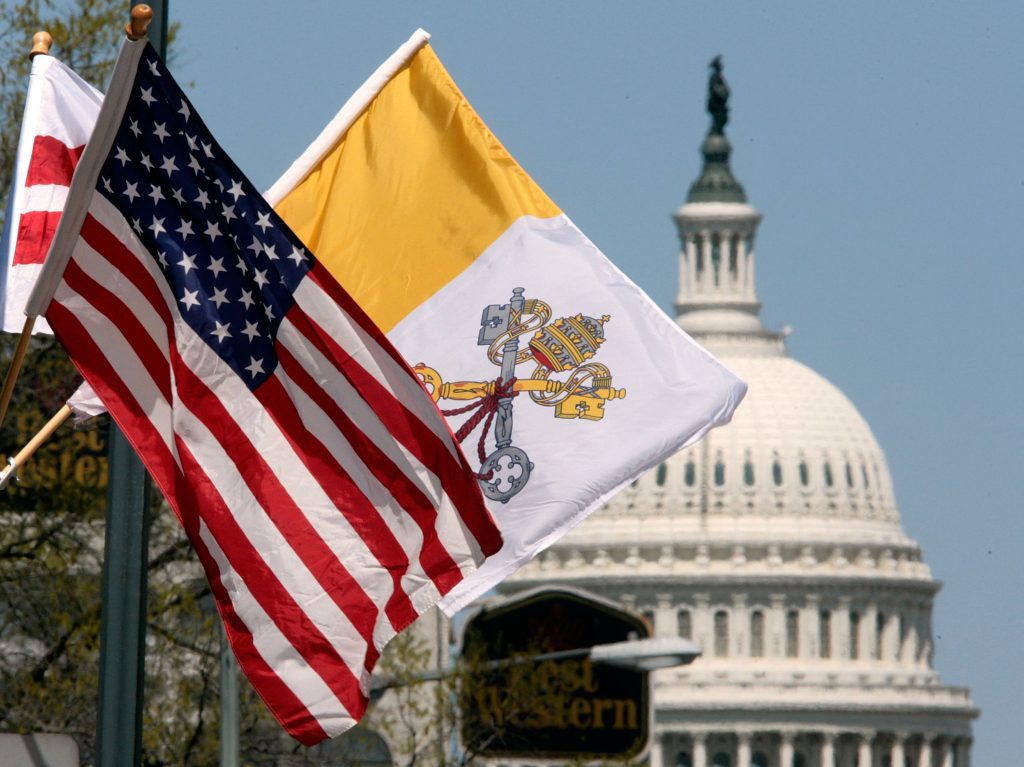
Papal Foundation approves record $15 million in grants for 2026
The Papal Foundation has approved more than $15 million in grants for 2026, its largest total to date, funding over 140 projects worldwide The Papal Foundation has approved more than $15 million in grants for 2026, marking the largest total in its 38-year history. The announcement came as Pope Leo XIV received members, trustees and stewards of the foundation at the Apostolic Palace at the conclusion of their annual pilgrimage. The Chicago-born pontiff thanked donors for their sustained financial backing of projects ranging from humanitarian aid to clerical education, telling them their generosity had enabled “countless people to experience in a concrete fashion the goodness and kindness of God in their own communities”. According to figures released by the foundation, the 2026 grants will support more than 140 projects across approximately 75 countries, continuing a steady increase in annual distributions in recent years. In 2023, the foundation allocated around $9.5 million to 114 projects in 57 countries, rising to roughly $14 million in 2025 for 116 projects in more than 60 countries. The latest total represents a further expansion rather than an isolated increase, with consistent growth in the foundation’s grant-making capacity. The foundation also reported a notable rise in new membership, with 25 families joining in the year since the election of Pope Leo XIV. Membership as a steward requires a contribution of at least $1 million, forming part of an endowment used to fund papal projects. The increase is viewed as a sign of renewed engagement among wealthy American Catholics following the election of the first pope born in the United States. During the audience, the Pope referred to his own experience of the foundation’s work during his time as Bishop of Chiclayo, stating: “I have already been aware of your work, especially during my years of service as Bishop of Chiclayo, where I saw first-hand the positive impact of the Foundation’s grants, as both the Diocese and a religious community were blessed to receive assistance on various projects, thanks to your generosity.” He continued by expressing gratitude for the organisation’s role in supporting the universal Church, saying: “I am, therefore, deeply grateful for your ongoing commitment to assist the Successor of Peter in his mission to care for the needs of the universal Church.” The Pope pointed in particular the role of the foundation in funding scholarships for priests and Religious from developing countries to study at pontifical universities in Rome. “Many priests and consecrated men and women have likewise been able to receive an advanced education from the Pontifical Universities in Rome that would otherwise not have been possible, forming them to be future leaders in the Church,” he said. The Pope also emphasised the wider spiritual dimension of charitable giving, stating: “All members of the Church, by virtue of our Baptism, share the responsibility to proclaim the Gospel today with words as well as with charitable deeds.” He added that “by funding projects, humanitarian aid and scholarships for people from around the world, the Papal Foundation participates in the Church’s ongoing evangelical mission”. Referring to the liturgical season, the Pope described Easter as a “time focusing on mission as well as peace” and recalled Christ’s words to the Apostles, “Peace be with you!” He told members that their work contributes not only to the Church’s mission but also to peace at local and regional levels. Concluding his remarks, the Pope asked for continued support and prayers, saying: “I ask for your continued prayers for my ministry as the Successor of Saint Peter and for the needs of the Church.” He added: “You will probably never meet everyone who has benefitted from your kindness, so in their name I express heartfelt appreciation.” The Papal Foundation, established in 1988 by Cardinal John Krol of Philadelphia, was created to provide direct financial support for the charitable priorities of the Pope. Based in Pennsylvania, it includes all United States cardinals as ex officio members and is governed by a board of lay trustees and bishops. Since its inception, it has distributed more than $250 million to projects around the world. Speculation that financial concerns may have influenced the election of Pope Leo XIV has been rejected by senior Church figures. Speaking in Rome at the presentation of a book examining relations between the United States and the Holy See, Cardinal Gerhard Ludwig Müller said: “Although Cardinal Reinhard Marx dedicated a full day to discussing the Holy See’s finances in the pre-conclave, this did not influence the final decision.” He added that the election of a pope “is based on different criteria”, stressing the spiritual nature of the process. During the pontificate of Pope Francis, contributions linked to Vatican causes experienced a noticeable decline, particularly in the years following the global financial crisis and during the Covid-19 pandemic. Reports of financial corruption within Vatican structures further weakened donor confidence, especially among American benefactors, while Pope Francis’s criticism of aspects of free market capitalism was also seen to have cooled enthusiasm in some quarters.
May 4, 2026
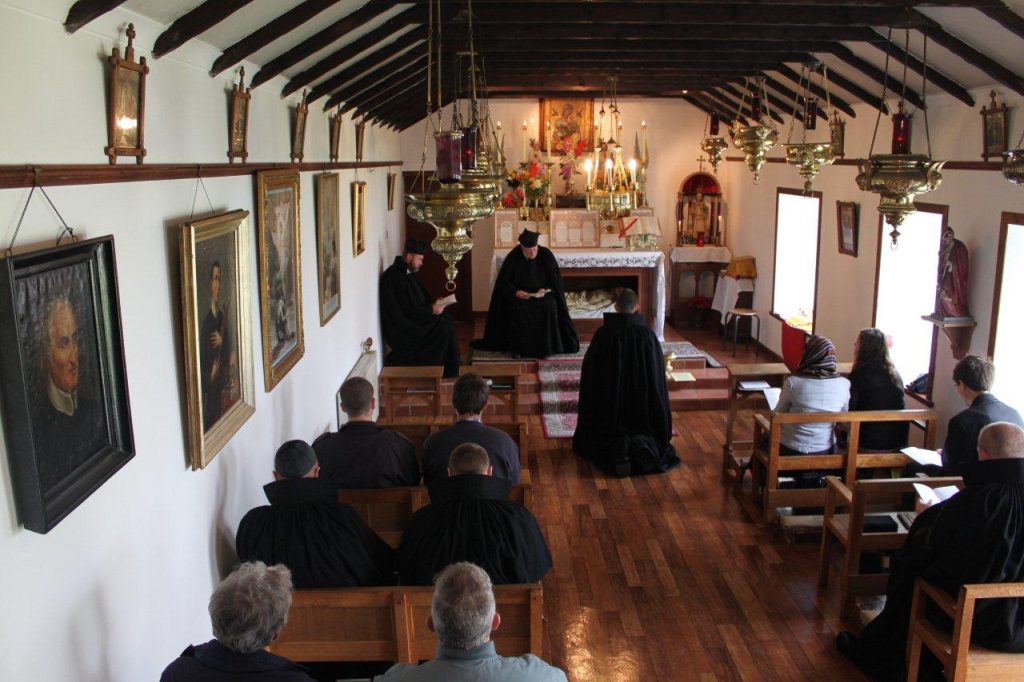
Sons of the Most Holy Redeemer declare new position on the papacy
The Sons of the Most Holy Redeemer, a traditionalist community previously associated with the SSPX and later reconciled with Rome, has formally rejected the current papacy and called for an “imperfect general council” The Sons of the Most Holy Redeemer (FSSR) have publicly rejected the validity of the current papacy in a 21-page letter which describes a “spiritual catastrophe” in the Church since the Second Vatican Council. The community issued the document on 2 May, setting out a sustained critique of developments in doctrine, liturgy and governance in the Catholic Church over recent decades. In the letter, addressed to the faithful, the priests and brothers claim that the crisis stems from a long-term infiltration within the Church’s structures. “The problem is, as St Pius X warned, that the structures of the Catholic Church have been infiltrated by men of a different non-Catholic religion,” they wrote. “They use the Catholic name, they occupy the Catholic buildings, they know the Catholic culture. From the outside they look to be Catholics, but they do not profess the Catholic Faith as taught through the centuries.” The statement continues: “In reality, they have been formed as revolutionaries committed to the condemned Freemasonic heresies of Religious Liberty, Religious Indifference and False Ecumenism. Their infiltration has struck a lethal wound to the Catholic religion; they have brought about a major schism from the Mystical Body. We must stand firmly with the Catholic Church and move well away from the camouflage of its counterfeit.” The community argues that the effects of this alleged infiltration became fully visible in the period following the Second Vatican Council, held between 1962 and 1965. “Since the Second Vatican Council, the apparent Popes have caused a spiritual catastrophe of the greatest imaginable proportions,” the letter states. It adds that “new doctrinal, moral, liturgical, and disciplinary decisions since Vatican II cannot be accepted because they contradict what came before.” Despite the severity of its criticisms, the community insists that it does not consider itself to be separating from the Church. “Our Faith has not changed. Holding the True Faith of our Fathers, we will continue to offer the True Mass. We will worship the True God. And we will work for an Imperfect General Council to bring about the triumph of Christ’s One, Holy, Catholic and Apostolic Church,” the letter states. The monks further emphasise this point, writing: “We are not saying that we should leave the Catholic Church. The Catholic Church is the Ark of Salvation, the Mystical Body of Christ, the Bride without spot or wrinkle. We cling to her with all our strength. But we must recognise that the institutional structures that claim to be the Catholic Church have been infiltrated.” The declaration goes on to set out practical conclusions drawn from these claims, including a refusal to recognise the authority of the current pontiff. “We must do what Catholics have always done in times of crisis: we must hold fast to the Faith as it has always been taught. We must give no juridical recognition to those who have departed from it, including Leo XIV and his bishops,” the text states. Since 1999, the FSSR community has been based on Papa Stronsay, a small island in the Orkney archipelago off the north coast of Scotland. They also have one house in the United States and previously had another in New Zealand. The group traces its origins to the Society of St Pius X, itself founded in 1970 by Archbishop Marcel Lefebvre amid disputes over the interpretation and implementation of the Second Vatican Council. In 2008, the community sought reconciliation with Rome and was received into full communion during the pontificate of Pope Emeritus Benedict XVI. The declaration issued by the Sons of the Most Holy Redeemer on Papa Stronsay is the culmination of a trajectory that has been evident for some time. On 16 October last year, the group published “An Open Letter to the Catholic Bishops, Priests, Religious and Faithful” which took issue with various actions taken by Rome under Pope Francis, including Amoris Laetitia , Traditionis Custodes and Fiducia Supplicans . The recent letter marks a decisive break and makes the prospect of reconciliation considerably more difficult. Leaving little ambiguity, it states: “Since the Second Vatican Council, the apparent Popes have caused a spiritual catastrophe of the greatest imaginable proportions,” the priests and brothers write, adding that “new doctrinal, moral, liturgical, and disciplinary decisions since Vatican II cannot be accepted because they contradict what came before.” They conclude by saying: “We must give no juridical recognition to those who have departed from it, including Leo XIV and his bishops.” What has now emerged publicly confirms what some had already suspected. The community’s current position goes beyond that of the Society of St Pius X, which, despite its longstanding criticisms of Vatican II, has consistently stopped short of denying the legitimacy of the Pope. The Papa Stronsay declaration represents a further step, one that places the group closer to sedevacantist or quasi-sedevacantist currents. This shift had been anticipated in reporting from within traditionalist circles. It was unlikely that the Transalpine Redemptorists would rejoin the Society of St Pius X. Instead, sources within the Society suggested that the community was moving towards a more radical alignment, potentially situating itself within what has sometimes been described as the “sedevacantist” orbit. It is also believed that the group has received conditional ordinations from Bishop Pierre Roy, a former priest of the Society of St Pius X who is now a sedevacantist bishop. Bishop Roy himself has advocated the convocation of an ‘Imperfect General Council’ to resolve what he perceives to be a crisis in the Church. The community has explicitly called for an ‘Imperfect General Council’, a gathering of bishops who, in their view, have preserved the true faith. The idea has been referenced in external interviews. In remarks to a New Zealand outlet, Father Michael Mary indicated support for such a proposal, suggesting that the community sees this as a practical path forward in the absence of recognised ecclesial authority.
May 3, 2026
Minnesota diocese plans ‘drastic reduction’ of parishes in response to clergy shortage
The Diocese of St Cloud plans to cut its parishes from 131 to 48, with many losing Sunday Mass, as clergy shortages and falling practice force a major restructuring across central Minnesota The Diocese of St Cloud in Minnesota is preparing to implement what has been described as one of the most sweeping restructurings of parishes in the region, with plans to reduce its 131 parishes to 48 amid a shortage of clergy and a long-term decline in Catholic practice. The proposals, reported by the Minnesota Star Tribune on 30 April, will affect the vast majority of the diocese’s estimated 110,000 faithful and will mark a decisive shift in how Catholic life is organised across central Minnesota. Even parishes that remain open are expected to lose regular Sunday Mass provision under the plans. Brenda Kresky, the diocesan director of pastoral planning, told the Minnesota Star Tribune that the changes were unavoidable given present circumstances. “Right now, all of our 131 parishes have Mass every weekend,” she said. “We’re reducing that by [about] a third and saying, even if you remain open, you won’t have Mass at the weekend.” The scale of the restructuring reflects an imbalance between the number of parishes and the clergy available to serve them. According to the 2025 edition of The Official Catholic Directory, the diocese has 49 active diocesan priests, alongside a wider total of 87 diocesan clergy and 73 religious priests. The ratio has left many priests responsible for multiple communities, often travelling between several churches each weekend. Kresky acknowledged the strain this places on clergy and the diminishing congregations they serve. “Many of our churches are four miles apart, five miles apart,” she said, describing a landscape shaped by immigrant settlement patterns in which churches were built in close proximity to sustain local communities. In practice, this has meant priests celebrating several sparsely attended Masses across a wide area rather than serving a single, larger congregation. The restructuring process is being led by Bishop Patrick Neary, who is expected to begin issuing formal decrees in the coming weeks. The proposals themselves have been developed over the past year through consultation with regional committees comprising clergy and lay representatives, though this has not prevented opposition at parish level. The prospect of closures represents not simply administrative change but the loss of longstanding communal identities. John Wicker, a parish trustee at Holy Cross Church near Pearl Lake, told the newspaper that the impact would be deeply felt. “It’s going to split up the community,” he said. “What’s going to hurt the most is losing those connections over time.” Similar concerns have been voiced elsewhere in the diocese. Carly Serbus, a member of St Anne’s in Kimball, described the proposals in stark terms. “This is just devastating for us,” she said. “It’s ripping the heart out of our community.” The emotional response reflects the historic role played by Catholic parishes in the region. Many were established more than a century ago by German and Polish immigrants, serving not only as places of worship but as centres of social and cultural life. In rural areas especially, the parish church has often functioned as the focal point of the community across generations. Yet the demographic realities facing the Church in Minnesota mirror broader trends across the United States. Data from the Pew Research Center indicates that the proportion of adults in Minnesota identifying as Catholic has fallen from 28 per cent in 2007 to 18 per cent in 2024, while the number of those claiming no religious affiliation has more than doubled over the same period. At the same time, the number of men entering the priesthood across the United States has not kept pace with pastoral needs. The result is a growing structural strain that dioceses across the region have already begun to address. The Archdiocese of St Paul and Minneapolis reduced its number of parishes from 213 to 192 beginning in 2010, while the dioceses of Duluth and New Ulm have also implemented mergers and closures over the past decade. St Cloud has until now delayed similar measures. Kresky suggested that earlier inaction was influenced by exceptional circumstances, including episcopal illness and the demands placed on diocesan leadership during the clerical abuse crisis and subsequent bankruptcy proceedings. “Everybody’s done something – and we didn’t,” she said. “What we are looking at now is how do we best serve our people right now with the resources that we have?” The practical consequences of the restructuring will extend beyond the immediate question of parish closures. While some church buildings may remain in use for occasional services or other purposes, decisions regarding their long-term future have yet to be finalised. This uncertainty has added to the anxiety among parishioners concerned about the fate of historic buildings, religious artefacts and local traditions. There remains, however, a formal process through which parishioners may challenge closure decisions. Should a parish be suppressed, the faithful have the right to petition the diocesan bishop and, ultimately, to appeal to the Holy See. Though relatively uncommon, such appeals have on occasion succeeded, as in the case of a church in the Diocese of Duluth, which was reopened in 2021 after a period of closure.
May 1, 2026
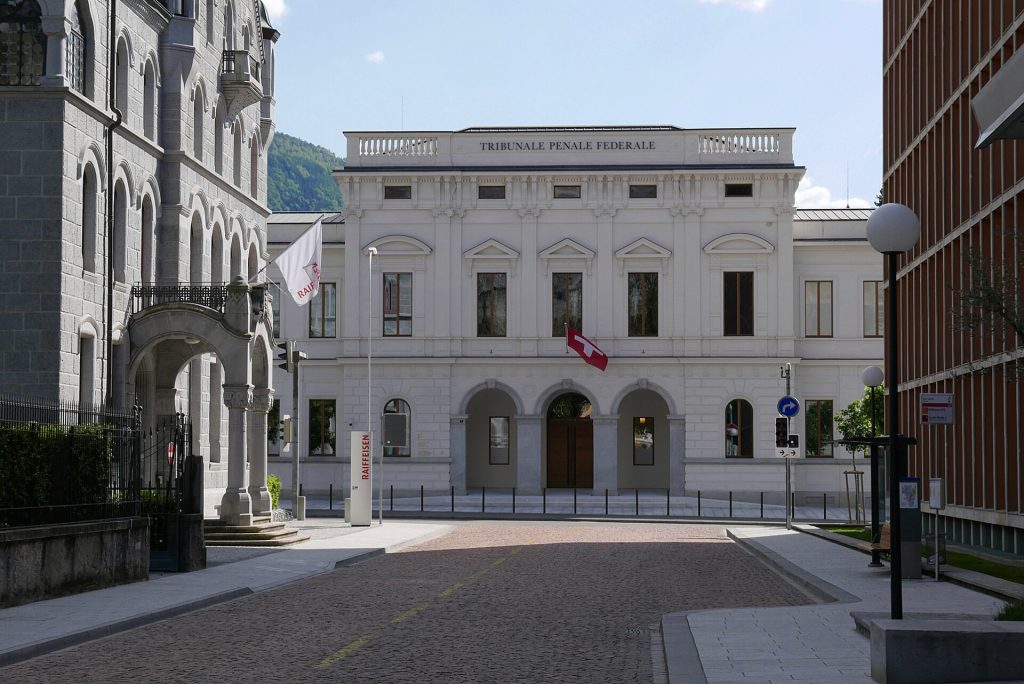
Switzerland drops case against Crasso in setback for Vatican ‘trial of the century’
Swiss prosecutors have dismissed proceedings against Enrico Crasso, rejecting Vatican claims over fund mismanagement and criticising the Secretariat of State’s lack of cooperation Switzerland has dismissed criminal proceedings against Enrico Crasso, the former financial adviser to the Secretariat of State, concluding that no offences were committed in relation to the management of Vatican funds, delivering a further blow to the Holy See’s “Trial of the Century”. First reported by Nico Spuntoni, Vatican correspondent of Il Giornale , the decision was issued by Federal Prosecutor Annina Scherrer in Lugano following an investigation opened in June 2020 after a complaint by the Secretariat of State. The Vatican Secretariat of State had alleged criminal mismanagement in connection with investments made through the Centurion Global Fund, as well as raising accusations of fraud and corruption. The Swiss authorities found no evidence to support those claims. In her decree, Federal Prosecutor Scherrer determined that there had been no mismanagement or embezzlement on the part of Crasso in his role as a financial consultant. The ruling explicitly states that the Secretariat of State “must be considered an experienced investor, fully aware of the provisions to which it adhered”, rejecting the suggestion that it had been misled in its dealings. The case centred on investments managed by Crasso through his company, Sogenel Capital Investment, under a mandate from the Secretariat of State. These financial arrangements had already formed part of the broader Vatican investigation into the purchase of a London property in Sloane Avenue, a transaction that triggered one of the most significant financial trials in the history of the Holy See. The Swiss proceedings ran in parallel to the Vatican’s own judicial process. In the first-instance Vatican trial, Crasso had been sentenced to seven years’ imprisonment for embezzlement and self-laundering. However, he had been acquitted of charges specifically related to the management of the Centurion Fund. That distinction was noted in the Swiss prosecutor’s findings. The credibility of the Vatican trial has already been called into question after the Court of Appeal declared parts of the proceedings null. The Swiss ruling adds to the difficulties facing the prosecution’s case. However, the decree from Lugano contains direct criticism of the Vatican’s conduct during the investigation. Despite being the complainant, the Secretariat of State did not comply with requests from Swiss authorities to facilitate interviews with key figures connected to the case. According to the decree, Swiss investigators sought to question several individuals, including Monsignor Alberto Perlasca and Archbishop Edgar Peña Parra, through formal letters rogatory. These requests were not executed. In a note dated November 30, 2023, the Secretariat of State responded: “These are jurisdictional acts that cannot be performed by state authorities in the territory of another state,” adding that it would consider “the appropriateness of Swiss magistrates sending the tribunal the questions to be asked or the facts requested for examination.” Scherrer highlighted this refusal in her findings, describing the situation as paradoxical given that the Vatican itself had initiated the complaint. The decree records that the Swiss authorities received the response “not without surprise” and concluded that the lack of cooperation hindered the investigation. The prosecutor further observed that “interrogating the persons informed of the facts (…) would have been of fundamental importance to verifying the veracity” of the allegations. In light of the Vatican’s position, the Swiss authorities declined to proceed by submitting questions through the Vatican tribunal, citing concerns over the integrity of the process. The decree also points to what Scherrer described as “the influence of the private accuser and whistleblower within the Vatican State”, suggesting that internal dynamics may have affected the handling of the case. The refusal to allow direct questioning of witnesses was regarded as a significant obstacle to establishing the facts. The outcome leaves the Secretariat of State without recourse in the Swiss jurisdiction and raises further questions about the coherence of the wider legal strategy pursued by the Holy See. It follows earlier setbacks in other jurisdictions, including proceedings in England related to the London property deal. The Secretariat of State has not publicly responded in detail to the Swiss decision. The case nevertheless marks another stage in a protracted process that has tested the Holy See’s judicial structures and its approach to financial governance.
Apr. 30, 2026
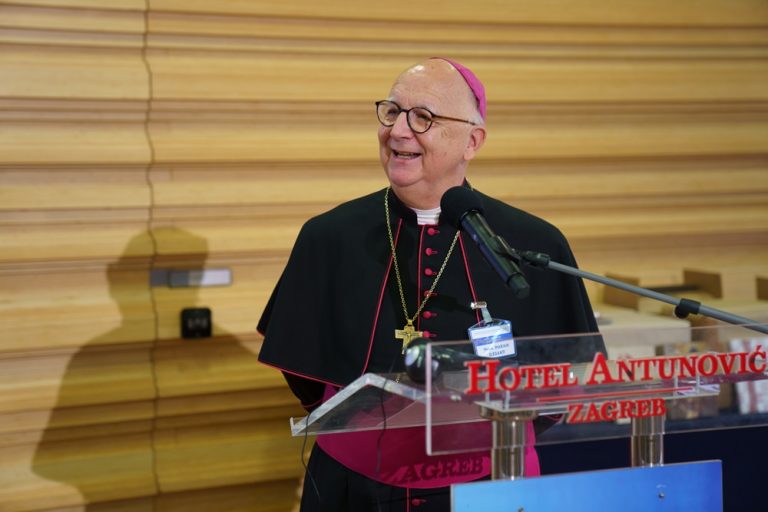
Bishop Eleganti on the old rite, Islam and the future of the Church
Bishop Marian Eleganti speaks to AdVaticanum on the appeal of the traditional liturgy, Islam and the Society of St Pius X. Eleganti addresses the fallout of the Second Vatican Council, the place of the old rite and the pertinent questions facing the Church in the West The Benedictine Bishop Marian Eleganti, former Abbot of St Otmarsberg Abbey and auxiliary bishop of the Diocese of Chur until 2021, is well known for his defence of the truth and beauty of Catholicism in the face of an increasingly hostile West. A principled churchman, he has often paid the price for adhering to his conscience, stepping down as the Swiss bishops’ youth bishop in 2018 due to disagreements with other bishops at the 2018 Youth Synod and offering his resignation in 2021 at the age of 65, a full ten years before the mandatory retirement age for bishops. In this interview, he sits down with AdVaticanum to reflect on his years of priestly ministry and to offer his erudite analysis of the challenges facing the Church in the twenty-first century. He addresses Islam, the Society of St Pius X, the liturgy and the fallout of the Second Vatican Council with the characteristic clarity that has made him a much respected voice within the Church. AV: Your Excellency, you were born in 1955 and have recounted serving as an enthusiastic altar boy in the traditional rite in your childhood before being retrained for the Novus Ordo. You have described the post-conciliar liturgical intervention as “a rather violent, provisional reconstruction of the Holy Mass… associated with great losses that need to be addressed”, noting differences especially in the prayers, postures, and ad orientem orientation. Young Catholics today, who often know little about the texts of Vatican II, are increasingly drawn to the Tridentine rite for its beauty and transcendence. In your view, what specific elements of the ancient liturgy address the spiritual hunger of this generation, and how would you respond to claims that restricting the Traditional Latin Mass is necessary for ecclesial unity? +ME: I believe that the appeal of the Old Liturgy for young people lies primarily in several key aspects. Firstly, its focus, and the centrality, on God or Christ, rather than on the community. The general orientation of everyone (the congregation and the priest) is towards Him. Another is the palpable reverence associated with the encounter with the transcendent God or the present Christ. There is also the stillness and silence, reminiscent of the worship of the Lamb in the Book of Revelation. I believe people are also drawn to the solemnity and dignity of the vestments, liturgical objects, and the altar, as well as the overall design of the sanctuary. Finally, Gregorian chant, which has been a trend for some time, even in secular circles. Reverence, faith, prayer, love, and inner devotion or participation have their roots in the heart. They can be found just as easily in the Novus Ordo. I am the same person in any rite. How I stand before God and celebrate Him is decided within me. It is not the form that makes me devout. Devotion is either present or it is not, regardless of the form. The inner self then also takes on the proper mode of expression; it does not work the other way around. I kneel because I am devout; I am not devout because I kneel. If a form becomes associated with false thinking, it can become a divisive force and a question of “to be or not to be”, which a rite never is. Every form has advantages and disadvantages, and the wise person distinguishes without doing wrong. Why did Jesus call the outwardly righteous Pharisees whitewashed tombs? The discrepancy between what is inside and what is outside can be very great, whatever form it takes. AV: Building on your recent calls (including in early 2026 reflections) for renewed study of the liturgical crisis under a new pontificate, such as the marginalisation of the tabernacle and overemphasis on the “meal character”, do you see a path for restoring wider access to the Tridentine rite beyond the restrictions of Traditionis Custodes? What concrete pastoral measures would you recommend to bishops to allow the old liturgy to flourish again as a living treasure? +ME: We have so many rites in the Catholic Church. We should accept them for what they are: mere rites. We must infuse every rite with love and devotion; otherwise, it misses its mark. The Old and New Rites, as such, have nothing to do with whether we recognise the Council or not, or how we deal with its texts or reforms. These questions are not to be resolved at the level of the rites. Whether the New Mass corresponds to the vision of the Council Fathers who inspired it is a historical question. The answer may vary. Why don’t we simply give hearts the freedom to pray as they wish and to honour God as they like, without disqualifying any person or rite? The Church must set the framework for this. That is not a problem. Rites are not absolute. In a validly administered sacrament, the believer always finds God, regardless of the rite, provided, of course, that the sacraments are celebrated as the Church prescribes and with the inner attitude and dignity I have described above. AV: Your Excellency, you have described the post-Vatican II era as bringing “an indescribable decline in the practice and knowledge of the faith, widespread liturgical formlessness and arbitrariness” instead of the expected “springtime”. Official statistics from the Annuario Pontificio 2026 and Annuarium Statisticum Ecclesiae 2024 confirm a 13-year decline in priestly vocations that has accelerated recently, with major seminarians worldwide falling from 106,495 in 2023 to 103,604 in 2024 (a 2.72% drop), following prior yearly declines, with Europe seeing particularly sharp losses and a net global priest decrease of 734 between 2022 and 2023 despite Catholic population growth. What, in your view, are the specific post-conciliar developments or practices that have contributed to the excesses and loss of the sacred, and how should they now be corrected within the life of the Church? +ME: On the topic of the Old Rite, we must remember the causes of this phenomenon do not lie in the Novus Ordo. The Council Fathers had intended a modest liturgical reform. Excesses, lack of form, trivialisation of the sacred, liturgical disobedience, community-centredness, the absence of priests, or even a hostility towards priests, are phenomena of the post-conciliar era that cannot be attributed to the Council’s texts, any more than post-conciliar heretical tendencies can. The worst of all evils is the practical irrelevance of God in our society and the turning away from Christianity, which has been replaced by ideologies or other forces that have an extremely destructive effect on everything that was once sacred to the so-called Christian West. Nothing better has taken its place. This is becoming increasingly clear. AV: Specifically, focusing on vocations, this multi-year decline has hit Europe and the Americas hardest, with empty seminaries and ageing clergy in many places, while Africa and Asia show some growth. What would you propose to reverse it? +ME: There are many young converts and those seeking baptism. They want to build Christian marriages and families. This is where we need to invest our efforts. We must impart knowledge of the faith to children and young people, provide them with support, and introduce them to the sacraments; we must accompany young families. As a parish priest, I would begin by celebrating Holy Mass as deeply and beautifully as possible, accompanied by brief catechesis. Following the liturgy: fellowship, love, and joy; parents forming friendships, children getting to know one another and playing together. People and charisms gather around every devout priest. With Holy Mass at the centre of life, the Church begins to renew itself. If the priest is a bride in love, the community he gathers around him will soon be the same. This brings an unimaginable momentum. AV: In your October 2025 article “Homosexuality in Society and in the Church: An Elephant in the Room”, you identified the “widespread homosexuality in the clergy and its significance in the abuse crisis” as the ignored “elephant in the room”, calling it a phenomenon sui generis with negative consequences that must be named, while noting that silence renders other prevention efforts incomplete. What pastoral experience or observations led you to this conclusion, and do you think enough is being addressed openly despite earlier calls for psychological screening? +ME: This is not a matter of my own subjective impressions or pastoral experience, but of pure statistics. I wrote to Pope Leo XIV about this. All Church studies on abuse show a disproportionately high number of male victims. It does little good to turn a blind eye to this. There is a factual correlation, without implying that clergy with a homosexual orientation are predestined to commit abuse because of their orientation. The same applies to heterosexuals. There are also many cases of sexual abuse outside the Church, but society primarily focuses on and is scandalised by those within the clergy. To sin means: I could have acted differently, but everyone has their own preferences. AV: As auxiliary bishop emeritus of the Church in Switzerland, you have witnessed the challenges of secularisation in the country. What is your current assessment of the state of the faith in Switzerland, and are there any emerging Swiss “hotspots” of renewal among younger generations rediscovering the faith? +ME: Generally speaking, I give the Swiss very poor marks when it comes to their spiritual life and their connection to the Church. While most of them have been baptised, they have never truly become disciples of Jesus. I say this merely as an observation. It may not necessarily be their own fault. That said, there are genuine hotspots of faith. As the bishop for youth, I was right in the thick of it. Even today, I rejoice in the growth of these hotspots. AV: Your Excellency, you have been clear in your statements that the SSPX’s planned episcopal consecrations on 1 July 2026, without papal mandate, would constitute a “schismatic act” rupturing visible unity with the Pope, citing issues of autonomy, non-incardinated priests, and self-positioning as the true Church. What is the current attitude towards the SSPX within Switzerland? Do you perceive growing support for the SSPX among the faithful? +ME: The Society of St Pius X has gone to great lengths to justify its decision, both internally and externally. Many faithful simply love the traditional liturgy without truly identifying with the Society’s ideology. They are, in fact, often put off by what they sometimes encounter in parishes. I would not say that there is growing support for the Society of St Pius X among the faithful. AV: On the broader European scene, Cardinal Gerhard Müller has recently described mass migration from Islamic countries into Europe as posing significant challenges to integration, warning of risks such as cultural strain, potential social conflict, and growing Muslim influence in public life if not managed carefully. Your Grace, how do you assess the compatibility of large-scale Islamic immigration with preserving Europe’s Christian identity? What role should the Catholic Church play in addressing this, balancing the Gospel’s call to charity and welcome with a realistic consideration of the demographic, religious, and social shifts underway? +ME: Islam, not just so-called Islamism, is, by its very nature, an anti-Christian religion, in theory and in practice. Christianity has never fared well under Islamic rule. This remains true today. Wherever Islam holds sway, Christianity is being decimated to the point of near extinction. I consider Islam incompatible with the Western idea of freedom and the secular state. Ultimately, only the numerical balance will decide which of the two, Christianity or Islam, will disappear and perish or remain in a state of tolerance. Even secular political entities like the European Union exhibit anti-Christian traits today. Due to Islam’s incompatibility with the Christian idea of the separation of state and politics and church and religion (“Render unto Caesar what is Caesar’s, and unto God what is God’s”), I consider Islam to be incompatible with the Judeo-Christian tradition of the West, which still strongly shapes our thinking and political system. The more Muslims are naturalised into our societies, the worse it could become unless Christ converts them and sets them free. AV: And finally, Your Excellency, could you offer your thoughts on the recent scandal in the Diocese of Chur, Switzerland, where three people shared the Eucharist with their pets? +ME: I cannot understand why the Holy Eucharist is celebrated in connection with the blessing of animals. Animals do not belong in a sacred space. They can be blessed outside the church, if one wishes. It is simply terrible that the sacraments, above all the Holy Mass, are no longer understood. The Holy Eucharist is viewed by many as a mere symbol and treated accordingly. But it is the Body of Christ, that is, the living, mysteriously present Person of the Lord. It causes me great pain to hear of such profanations. AV: Thank you, Your Excellency, for your continued dedication to the Church.
Apr. 30, 2026
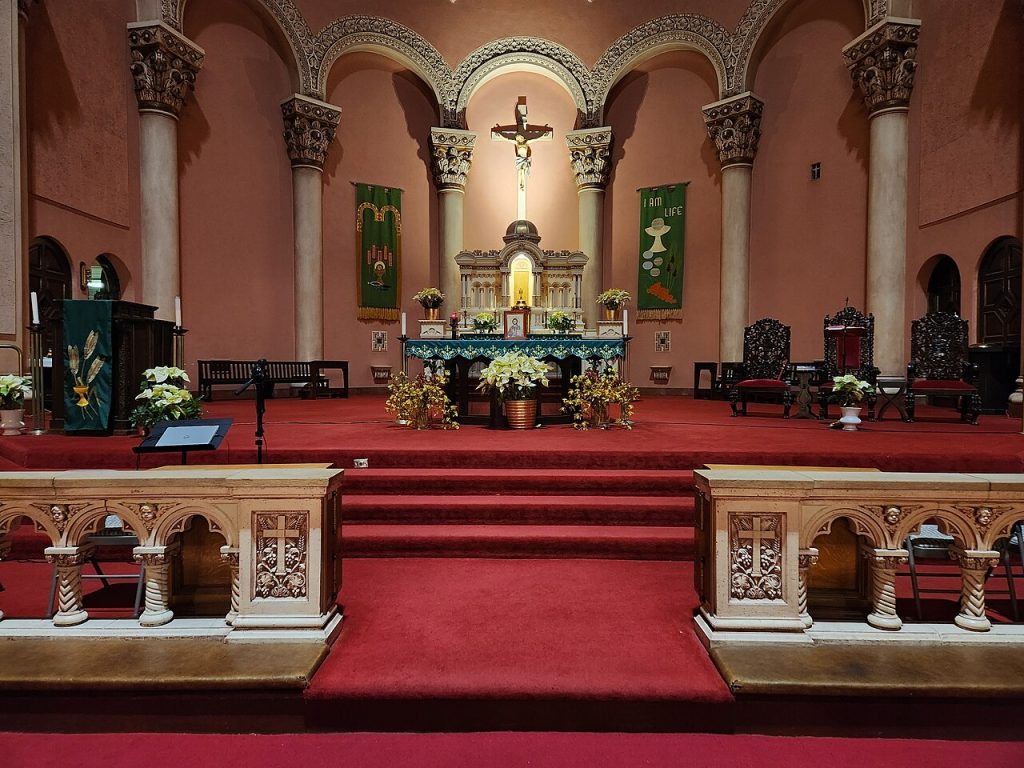
Bishop of the Diocese of Charlotte refuses communion to family at altar rail
A Catholic family in North Carolina claims they were refused Holy Communion after approaching the altar rail during a Confirmation Mass, according to a report from the Diocese Bishop Michael Martin of Charlotte has refused Holy Communion to a Catholic family who approached the altar rail during a Confirmation Mass. The incident took place on April 29 at Our Lady of Grace parish in Greensboro, North Carolina. While the Confirmation ceremony took place as usual, during Communion only two or three families approached the altar rail to receive the Eucharist. One father who brought his family said to AdVaticanum: “He was sitting in front of us when we went to the rail and he simply ignored us. All the priests turned their backs on us,” he said. “Everyone else communicated and we were denied. To be frank, it was very humiliating.” The same witness said that while the wider congregation received Communion, those kneeling at the rail were passed over. Attempts were made to speak to Bishop Martin about incident after the Confirmation Mass, but he did not respond in detail. Photo taken from the confirmation Mass. Submitted anonymously. The claim comes amid the current liturgical dispute in the Diocese of Charlotte. Bishop Martin has introduced norms governing the reception of Holy Communion, emphasising that the “normative posture” in the United States is to receive standing, following a bow of the head. The controversy unfolds alongside involvement from the Dicastery for Divine Worship and the Discipline of the Sacraments, which has acknowledged receipt of a formal “hierarchical recourse” concerning Bishop Michael Martin’s handling of liturgical matters in the Diocese of Charlotte. In a letter dated February 16 and signed by Fr Pierre Paul, the dicastery confirmed that the case had been registered under protocol number 369/25 and would be examined in accordance with canonical procedures. The acknowledgement signifies that the Holy See has formally taken cognisance of the complaint, although such steps are procedural and do not in themselves indicate that any corrective action will follow. Previously, in a pastoral letter issued on December 17, he wrote, “The liturgy of the Church is the work of God and the work on behalf of God in the life of the Church. These norms for our diocese move us together towards the Church’s vision for the fuller and more active participation of the faithful.” In this pastoral letter of December 17, Bishop Michael Martin set out specific norms concerning the manner of receiving Holy Communion in the Diocese of Charlotte, including explicit reference to altar rails. He added that “our unity as believers in Holy Communion is expressed through our postures and gestures that reflect our mystical communion and unity as fellow believers,” stressing that the Eucharist is “a communal act of worship, not only an individual act of piety.” The same directive instructed parishes that had reintroduced altar rails or kneelers for the distribution of Communion to discontinue the practice and remove any such furnishings, describing them as “a visible contradiction” of the prescribed norm. It stated that Holy Communion should be received as the faithful “go in procession, witnessing that the Church journeys forward and receives Holy Communion as a pilgrim people on their way.” At the same time, the bishop’s letter reiterated that individuals are not to be denied Holy Communion on the basis of posture, even if they choose to kneel. “Clergy and catechists,” he wrote, “are to instruct communicants according to the normative posture in the United States” and “are not to teach that some other manner is better, preferred, more efficacious, etc.” AdVaticanum asked the diocese for comment, but at the time of publication it has not responded.
Apr. 29, 2026