

Outside the Walls
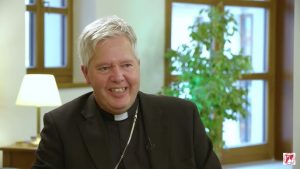
Dutch Bishop Rob Mutsaerts seriously injured in car crash
Auxiliary Bishop Rob Mutsaerts of ’s-Hertogenbosch has been seriously injured in a car crash while returning home after hearing confessions. The conservative Dutch bishop reportedly suffered a dislocated hip, fractured pelvis and broken elbow in the accident on 10 May Auxiliary Bishop Rob Mutsaerts of ’s-Hertogenbosch has been seriously injured in a car crash while returning home after hearing confessions. Reports emerging from The Remnant said the 67-year-old bishop suffered a dislocated hip, a fractured pelvis and a broken elbow in the accident, which took place on 10 May. No further details about the collision have yet been released publicly. Bishop Mutsaerts has served as auxiliary bishop of the Dutch diocese since 2010 following his appointment by Pope Benedict XVI. He was ordained to the priesthood in 1993 by Bishop Johannes ter Schure after training at the Sint-Janscentrum seminary in Den Bosch, where he later also served as deputy headmaster. Before entering the priesthood, he studied law at Tilburg University. He subsequently worked in parishes including Millingen aan de Rijn and Heeze before being named titular bishop of Uccula and auxiliary bishop of ’s-Hertogenbosch. For much of the last decade Bishop Mutsaerts has become one of the best-known conservative bishops in Europe through his outspoken interventions on synodality, Church reform and secularisation in the West. In 2018 Bishop Mutsaerts withdrew from the Synod on Young People in Rome amid the clerical abuse crisis, saying the timing of the gathering was inappropriate. He later emerged as a strong critic of the Synod on the Amazon in 2019, warning that proposals discussed there had opened “a Pandora’s box”. The bishop became particularly critical of the Synodal Process initiated under Pope Francis. Writing about diocesan consultations, he said they risked giving “a megaphone to non-ecclesial views”. The bishop wrote: “Because of the statements of those who disagree with the teachings of the Catholic Church, which the bishops were supposed to document and forward to Rome, the result at the Synod would be a lottery of opinions; this was a recipe for disaster.” In another intervention he stated: “God is not involved in this accursed Synodal Process. The Holy Spirit has absolutely nothing to do with it.” During the Covid-19 pandemic Bishop Mutsaerts was also among the signatories of an appeal promoted by former Vatican nuncio, now excommunicated, Archbishop Carlo Maria Viganò entitled Veritas liberabit vos! , which criticised restrictions imposed during the coronavirus outbreak. The statement complained that, under the pretext of the pandemic, “the rights and fundamental freedoms of many citizens are being disproportionately and unjustifiably restricted”. It also warned against “foreign powers” exploiting the crisis and referred to “forces interested in creating panic among the population”. Bishop Mutsaerts again attracted international attention in 2025 when he joined Bishops Joseph Strickland, Athanasius Schneider and Marian Eleganti at a “Prayer of Reparation” held in Pittsburgh following an LGBTQ pilgrimage connected to the Holy Year in Rome. At the event the bishops denounced “fornication” and “sodomy” and condemned what they described as the legitimisation of sins against the sixth commandment. The gathering was criticised by progressive Church figures in Germany. Auxiliary Bishop Ludger Schepers of Essen described the prayer event as “shameful” and “a scandalous sign of ecclesiastical narrow-mindedness”. No indication has yet been given about how long Bishop Mutsaerts will remain away from public ministry while recovering from his injuries.
May 12, 2026
British ambassador-designate to the Holy See faces scrutiny over activism and Mandelson links
Britain’s newly appointed ambassador to the Holy See has voiced strong support for LGBT Pride activism during her time as British Consul General in San Francisco and has retained social media posts featuring the disgraced politician Peter Mandelson The appointment of Tarandip “Tammy” Kaur Sandhu as the next British ambassador to the Holy See has prompted scrutiny over the Foreign, Commonwealth and Development Office’s increasingly prominent promotion of LGBT causes through its diplomatic missions. The Foreign, Commonwealth and Development Office announced on May 11 that Ms Sandhu would succeed Christopher Trott as His Majesty’s Ambassador to the Holy See later this summer. The Leicester-born diplomat, who studied at University College London before joining the Foreign Office in 2005, most recently served as British Consul General in San Francisco. Her career has combined commercial diplomacy with internal diversity work inside the Foreign Office. In Chennai she worked as deputy head of mission and head of international trade, while in 2020 she chaired the FCDO’s Race and Ethnicity Network during a period in which the department expanded its public focus on diversity and inclusion initiatives as well as navigating the unrest after the murder of George Floyd. In San Francisco, Ms Sandhu developed close ties with the city’s political and business establishment, regularly appearing at technology, cultural and civic events linked to Britain’s commercial presence in Silicon Valley and the wider Bay Area. She also became a visible public supporter of LGBT Pride events in the city, where British diplomatic involvement has steadily expanded in recent years. During her tenure in California, the British consulate became heavily involved in San Francisco Pride events and related LGBT campaigns, with the mission publishing repeated statements backing Pride activism and describing itself as a “proudly inclusive mission”. That record is now attracting attention following her appointment to the Holy See. AdVaticanum, which contacted the FCDO for comment after the appointment was announced, compiled a series of social media posts published during Sandhu’s tenure in California documenting the British consulate’s participation in San Francisco Pride celebrations and associated LGBT campaigns. One post published by the British consulate after the city’s 2025 Pride parade stated: “Consul General @TammySandhu was proud to join our amazing team marching in this year’s @sanfranciscopride Parade — a vibrant celebration of love, equality, and the power of community.” The post continued: “As a proudly inclusive mission, we’re committed to standing with the LGBTQ+ community in the Bay Area, the UK, and around the world.” In another message published during Pride month, Sandhu wrote: “Wrapped in rainbows and filled with love … what a joy to celebrate Pride in San Francisco once again!” “This city has been my home for five years, and I continue to be in awe of how it leads — with love, with courage, and with glitter.” The same post said: “I am so proud to represent a country that shows up for LGBT rights — at home and around the world. Because visibility matters. Safety matters. Love matters.” Referring to Britain’s longstanding involvement in San Francisco Pride, she added: “The UK was the first foreign government to march in San Francisco Pride — and we’ve never stopped dancing since.” Other posts highlighted by critics included Sandhu appearing alongside San Francisco Mayor Daniel Lurie, State Senator Scott Wiener and San Francisco Pride executive director Suzanne Ford during the installation of the city’s annual “Pink Triangle” display. A further statement issued by the consulate said Sandhu had addressed “leaders, dignitaries and allies” at San Francisco City Hall and spoken about “the UK’s deep commitment to LGBTQ+ rights and inclusion, at home and around the world”. The message added: “From the steps of City Hall, where history has so often been made, the Consul General shared the UK’s unwavering belief that everyone deserves to live freely, openly, and with pride.” Another Instagram collaboration post shared by a former San Francisco Pride president used the phrase “GOD SAVE THE K̶I̶N̶G̶ KWEEN” while thanking Sandhu for hosting a Christmas luncheon. Under the Civil Service Code, diplomats are required to uphold the principles of “integrity, honesty, objectivity and impartiality”, with impartiality defined as “acting solely according to the merits of the case and serving equally well governments of different political persuasions”. In practice, senior diplomats will inevitably engage with politicians across the spectrum, particularly in a state such as California where Democratic officeholders dominate public life. Yet the cumulative picture created by the public messaging surrounding Sandhu’s tenure in San Francisco has created an appearance of political and ideological alignment that sits uneasily with both the spirit of civil service neutrality and the sensitivities of the Vatican posting. While British ambassadors to the Holy See are not expected to be Catholic, the scale and tone of some interventions risk bringing unnecessary controversy to one of Britain’s most delicate diplomatic appointments. While a degree of political engagement is inevitable for any senior diplomat operating in California, particularly one whose role required regular contact with figures such as Governor Gavin Newsom and the state’s Democratic leadership, some of Ambassador-designate Sandhu’s public interventions have nevertheless raised eyebrows. Appearances alongside elected officials are broadly understandable. However, a lengthy tribute posted following the death of Senator Dianne Feinstein, one of America’s most prominent pro-abortion politicians, is more difficult to reconcile given the sensitivities of the Vatican posting. In the post, Sandhu described Feinstein as “a trailblazer who improved the lives of so many San Franciscans”, praised her for ensuring “young women grew up in a world that was fairer, more just”, and concluded by saying: “Senator Feinstein was a great friend of the UK and a political force on the international stage.” Sandhu also has Instagram posts featuring and alongside Peter Mandelson, the former British Ambassador to the United States who maintained a close friendship with the convicted sex offender Jeffrey Epstein. Mandelson reportedly received cash payments from Epstein and was accused of attempting to influence British government policy at Epstein’s request. He is currently under investigation over allegations that he shared confidential UK government information with Epstein while serving as Business Secretary between 2009 and 2010. Sandhu’s association with Mandelson during her time as British Consul General in San Francisco, while he was serving as ambassador in Washington, is unsurprising. However, the decision to retain multiple photographs of the disgraced politician on her public social media accounts is more difficult to reconcile with her new diplomatic posting. The FCDO did not immediately comment on the social media posts highlighted following the announcement. Photo: Foreign, Commonwealth and Development Office / OGL v3.0
May 11, 2026
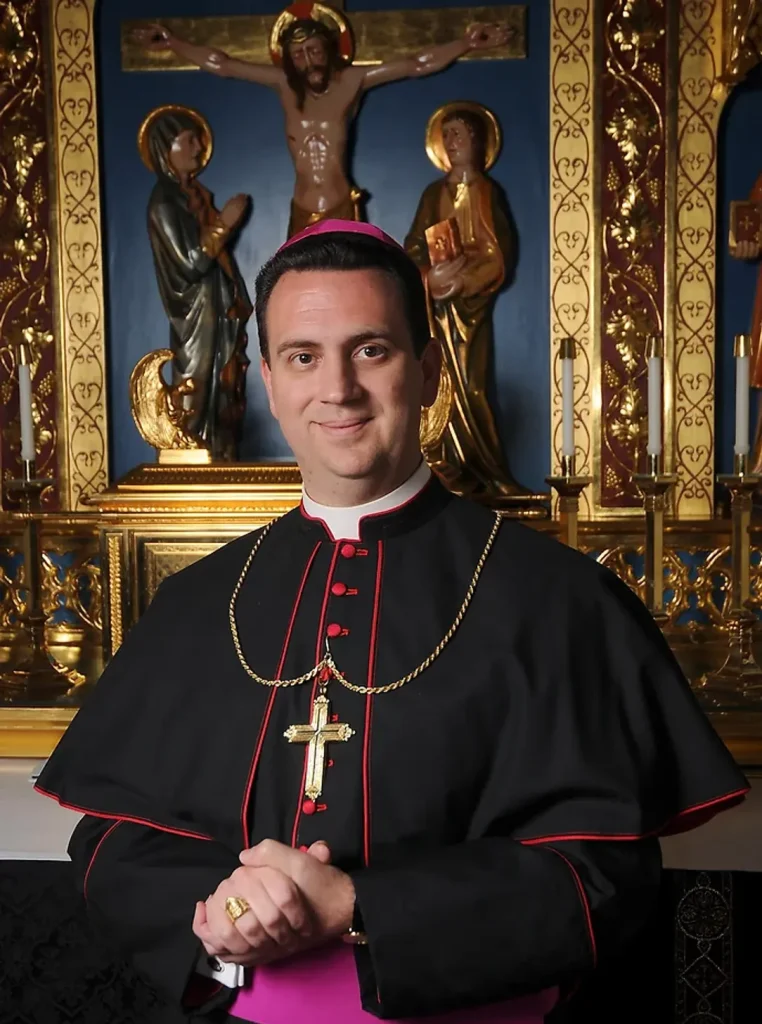
Pope Leo XIV appoints US Ordinariate Ordinary as temporary head of Australia’s ordinariate
Pope Leo XIV has appointed Bishop Steven Joseph Lopes, Ordinary of the Personal Ordinariate of the Chair of Saint Peter in North America, as temporary head of Australia’s Personal Ordinariate of Our Lady of the Southern Cross following the appointment of Archbishop Anthony Randazzo to the Dicastery for Legislative Texts Pope Leo XIV has appointed Bishop Steven Joseph Lopes, Ordinary of the Personal Ordinariate of the Chair of Saint Peter, to temporarily run the Personal Ordinariate of Our Lady of the Southern Cross in Australia. On May 11, the Holy See moved to conclude the mandate of Archbishop Anthony Randazzo as Apostolic Administrator ad nutum Sanctae Sedis of the Personal Ordinariate of Our Lady of the Southern Cross, following his appointment as Prefect of the Dicastery for Legislative Texts. In the same communication, Pope Leo XIV appointed Bishop Steven Joseph Lopes as Apostolic Administrator sede vacante et ad nutum Sanctae Sedis of the Australian ordinariate, adding another layer of responsibility to a prelate already central to the governance of the worldwide Anglican ordinariate structures. Bishop Lopes, who continues as Ordinary of the Personal Ordinariate of the Chair of Saint Peter in the United States and Canada, thus assumes temporary oversight of the Australian jurisdiction during its vacancy. The announcement comes amid a period of ongoing administrative consolidation within the Curia. Archbishop Randazzo’s departure from the Australian ordinariate role follows his elevation to the Dicastery for Legislative Texts, a body responsible for interpreting and safeguarding the Church’s canonical order. His earlier appointment to the Australian ordinariate in 2023 had itself been framed as a stabilising measure during a transitional phase in its governance. In February 2023, Pope Francis appointed Archbishop Randazzo president of the Federation of Catholic Bishops’ Conferences of Oceania, extending his influence across the wider Pacific region. Bishop Lopes, consecrated in 2016 as the first bishop of any ordinariate, has long been regarded as a central figure in the post-Anglican provision. His consecration in Houston was led by Cardinal Gerhard Ludwig Müller, with Cardinal William Levada and Cardinal Donald Wuerl serving as co-consecrators, marking the formal establishment of episcopal leadership within the ordinariate system. Since then, he has overseen the development of liturgical and pastoral structures for former Anglicans in full communion with Rome across North America. His broader responsibilities have expanded steadily in recent years and in 2021, he was elected chairman of the United States Conference of Catholic Bishops’ Committee on Divine Worship. . The ordinariate structure itself, established under Pope Benedict XVI’s apostolic constitution Anglicanorum coetibus , was designed to provide a stable canonical home for groups of former Anglicans entering full communion with the Catholic Church while retaining elements of their liturgical and spiritual patrimony. Each ordinariate functions similarly to a diocese, though without strict territorial boundaries, and is governed by an ordinary appointed by the Pope. In canonical terms, an apostolic administrator sede vacante assumes full governing authority when a see is vacant, though with certain limitations typical of temporary governance. As outlined in canon law, such administrators are restricted from making major structural decisions, particularly those involving the alienation of property or long-term commitments, unless explicitly authorised by the Holy See.
May 11, 2026
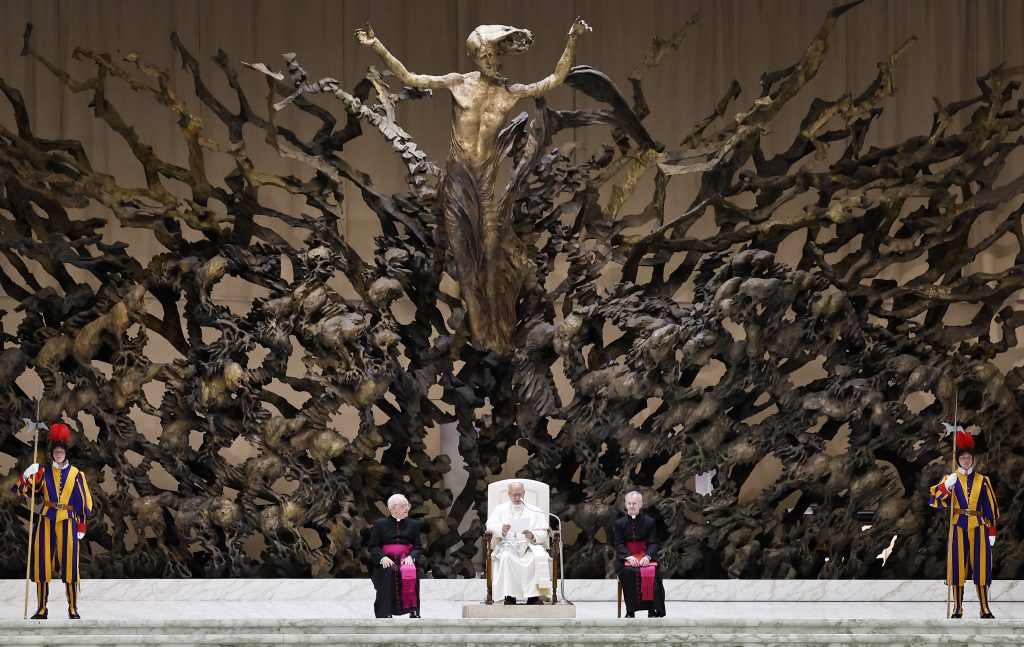
Pope Leo XIV appoints outspoken immigration bishop to conservative West Virginia diocese
Pope Leo XIV has appointed Bishop-Designate Evelio Menjivar-Ayala to lead the Diocese of Wheeling-Charleston in West Virginia. The Salvadoran-born bishop, who entered the United States illegally as a teenager after fleeing civil war, has become one of the most prominent episcopal voices on immigration in America Bishop-Designate Evelio Menjivar-Ayala has drawn fresh attention to the increasingly vocal role being played by senior Catholic clergy in the United States over immigration policy. The Salvadoran-born bishop-designate of Wheeling-Charleston, who arrived in the United States illegally as a teenager after fleeing civil war in El Salvador, said in an interview with The Guardian following his appointment by Pope Leo XIV that he would continue defending migrants and speaking publicly about immigration despite the political hostility towards undocumented immigrants in America. Speaking to The Guardian shortly after the announcement of his appointment, Bishop Menjivar-Ayala said: “I will keep talking about people’s reality, defending immigrants and fighting for fair treatment for them.” Bishop Menjivar-Ayala explained the Church’s involvement in the immigration debate in explicitly moral and religious terms. “We are not approaching this from a partisan political standpoint, but from a moral one,” the bishop said. “Morality is not something that pertains solely to one’s private life, but also to how I treat others, how I conduct my public life, how I perform my work, and how I engage with society.” Bishop Menjivar-Ayala added that the Church’s teaching on immigration was rooted directly in scripture, saying that “the prophets denounce the mistreatment of the poor, foreigners, widows, and orphans”, before referring to Christ’s identification with the vulnerable in the Gospel of St Matthew. The bishop-designate has become one of the more prominent episcopal voices criticising the administration’s deportation agenda. Earlier this year he condemned immigration raids and what he described as “highly visible operations of questionable legality that go far beyond mere immigration enforcement”. Born in El Salvador during the country’s brutal civil war, the bishop-designate has recalled witnessing violence near the Sumpul River massacre in Chalatenango while still a child. His family later fled the region before he eventually attempted to migrate to the United States to join relatives already living there. According to his interview, he was turned back during earlier attempts before finally crossing the border near San Ysidro hidden in the boot of a smuggler’s car. Reflecting on the experience, the bishop said: “I don’t recommend it. You risk your own life.” After arriving in California, he worked a series of manual and low-paid jobs while studying English and continuing his education. He later moved to Maryland, where he began working within the Church before entering seminary formation. Speaking more broadly about civic participation and political life, the bishop-designate encouraged Catholics not to withdraw from public engagement despite growing social divisions in the United States. “We can all do something,” Bishop Menjivar-Ayala said. “We need to use the opportunities we have to take action.” The bishop added that people should “not be afraid” to defend their rights, show solidarity and participate in public life, insisting that “participation in political and social life is important for change to happen”. Ordained a priest for the Archdiocese of Washington in 2004, he became an American citizen two years later. In 2022, Pope Francis appointed him an auxiliary bishop in Washington. Speaking about his own experiences as an immigrant, Bishop Menjivar-Ayala said: “I’ve lived through that story. I am part of the history of migration in the United States, and at the same time, it’s very hopeful to know that I’m also part of the story of overcoming adversity.” Bishop Menjivar-Ayala succeeds Bishop Mark Brennan, who has led the Diocese of Wheeling-Charleston through a prolonged period of recovery after the scandal surrounding former Bishop Michael Bransfield. Bishop Bransfield was accused of financial and sexual misconduct and was later ordered to repay substantial sums to the diocese following a Vatican investigation. The appointment of Bishop Evelio Menjivar-Ayala is an eyebrow-raising decision by Pope Leo XIV because auxiliary bishops in Washington have traditionally emerged from one of the most politically engaged and ideologically progressive episcopal environments in the United States. Bishop Menjivar-Ayala himself became known nationally for his outspoken criticism of immigration enforcement operations and his defence of undocumented migrants while serving as an auxiliary bishop in the capital. His transfer to the Diocese of Wheeling-Charleston is a sharp contrast, as West Virginia remains one of the whitest states in America, with one of the country’s lowest percentages of foreign-born residents and a comparatively small Hispanic Catholic population. The decision to appoint a Salvadoran-born bishop so publicly associated with immigration advocacy has therefore inevitably led to questions about the message Rome intends to send through the appointment. Bishop Menjivar-Ayala himself appeared to acknowledge the symbolic dimension of the move when he said: “The fact that they are sending me to a state where there aren’t many immigrants means a lot because it shows that immigrants have the ability to adapt, to embrace a new way of life, to adjust to a new environment.”
May 11, 2026
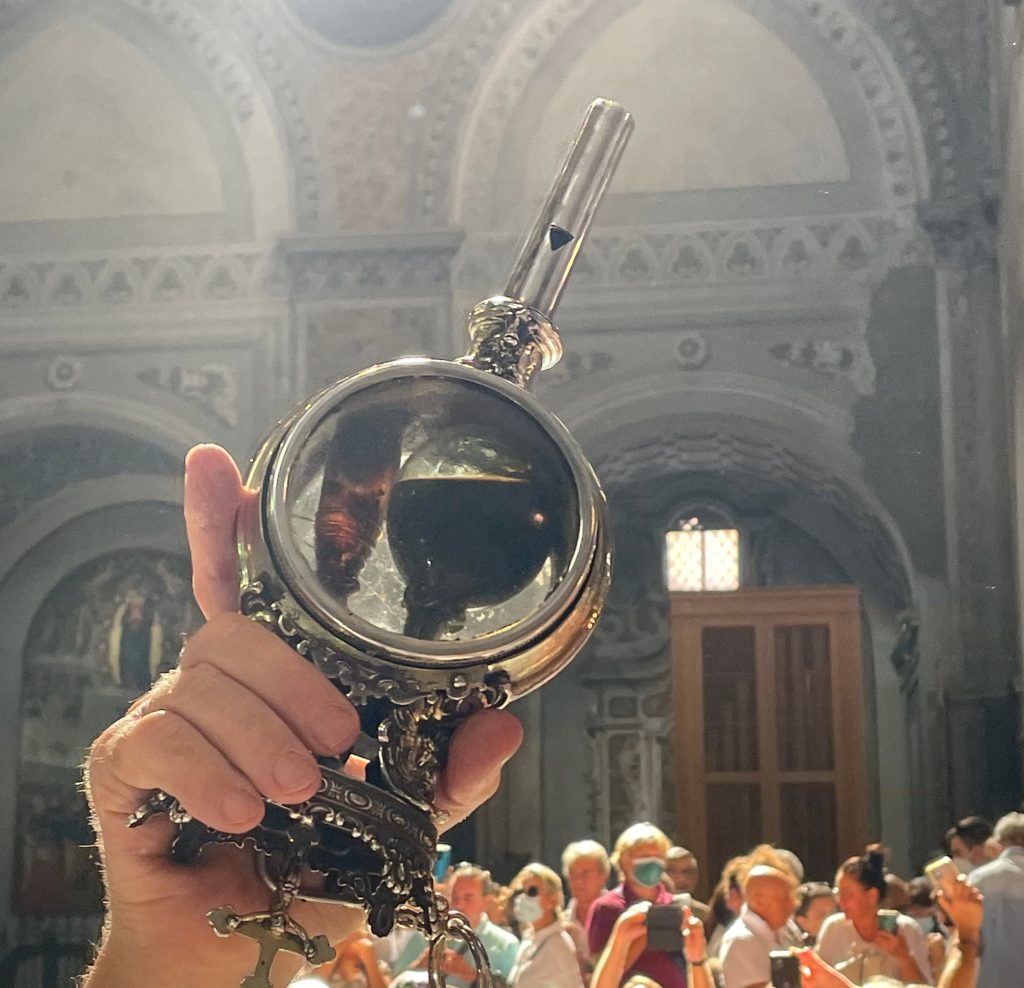
Blood of Saint Januarius liquefies during Pope Leo XIV’s visit to Naples
The blood of Saint Januarius reportedly liquefied at Naples Cathedral during the visit of Pope Leo XIV, outside the three traditional dates on which the phenomenon is normally expected to occur The liquefaction of the blood of Saint Januarius was reported in Naples on Friday shortly before the arrival of Pope Leo XIV. The miracle took place at Naples Cathedral, where the relics of the city’s patron saint, known locally as San Gennaro, are preserved. The substance contained in the larger of two sealed ampoules appeared to liquefy on the Pope’s arrival and while the Holy Father was holding it, despite the event falling outside the three dates each year on which the phenomenon is traditionally expected. The liquefaction was witnessed as Naples welcomed Leo XIV during a pastoral visit marking the first anniversary of his pontificate. The Pope later travelled through the city before addressing crowds gathered in Piazza del Plebiscito, where he urged Naples to become a “workshop of peace”. “There is no peace without justice,” the Pope said. “And justice is not complete without charity.” He warned against allowing entire neighbourhoods to fall into neglect and exclusion, describing what he called a modern “geography of inequality” stretching across both the historic centre and the outskirts of the city. He stressed the importance of strong public institutions capable of restoring trust and opportunity, particularly for young people. Pope Leo also praised those he described as the “everyday heroes” of Naples, the priests, volunteers, teachers and families who continue quietly working for the common good despite difficult social conditions. Their efforts, he said, should not remain isolated acts but become part of a wider “network of good” capable of strengthening the social fabric of the city. The Pope repeatedly returned to the role of the Church in helping rebuild civic life, praising cooperation between parishes, schools and charitable organisations. He said Naples should not become merely a “postcard city” shaped only by tourism, but a place where solidarity, education and human dignity are defended in practical ways. He also commended the city’s longstanding openness towards migrants and refugees, describing hospitality not as an emergency response but as “an opportunity for encounter and mutual enrichment”. According to long-standing tradition, a woman named Eusebia collected the saint’s blood after his execution. It is today preserved in two hermetically sealed glass ampoules held within a silver reliquary in Naples Cathedral. The phenomenon normally occurs three times a year: on September 19, the feast of Saint Januarius; on the Saturday before the first Sunday in May, commemorating the reunification of his relics; and on December 16, marking his patronage of Naples. Thousands of pilgrims routinely gather in the cathedral on those dates to witness the ceremony, during which the reliquary is brought from the cathedral treasury and presented for veneration. The dark red substance inside the larger ampoule is initially shown in solid form before, in most cases, appearing gradually to liquefy during prayers offered by the faithful. The ritual surrounding the relics has remained largely unchanged for centuries. The ampoules are stored in a secure vault, while bone fragments of the saint are kept beneath the cathedral altar. During the ceremony, the reliquary is repeatedly tilted to demonstrate whether liquefaction has taken place. The miracle did not occur during the visit of Pope St John Paul II in 1979 or during the visit of Pope Emeritus Benedict XVI in 2007. During Pope Francis’s visit to Naples in 2015, the blood was said to have partially liquefied. Cardinal Crescenzio Sepe remarked at the time: “The blood has half liquefied, which shows that Saint Januarius loves our Pope and Naples.” The phenomenon was also reported during the visit of Blessed Pius IX in 1848. The blood failed to liquefy in September 1939 and September 1940 during the Second World War, in September 1943 during the Nazi occupation of Naples, and in December 2020 amid the coronavirus pandemic.
May 11, 2026
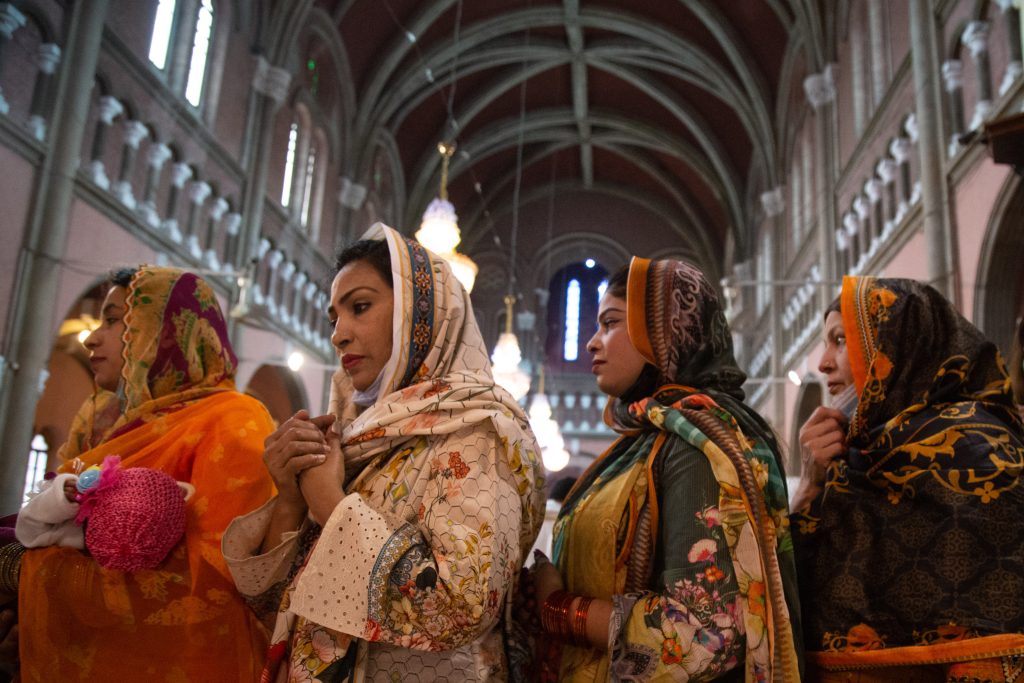
Pakistan Court upholds marriage of a 13-year-old abducted Christian girl
Pakistan’s Catholic bishops have expressed scepticism after the government announced a review of a court ruling which upheld the marriage of a 13 year old Christian girl to the Muslim man accused of abducting and forcibly converting her The Catholic Church in Pakistan has expressed scepticism over government attempts to review a court ruling which upheld the marriage of a 13-year-old Christian girl to the Muslim man accused of abducting and converting her. Maria Shahbaz, from Lahore, was reportedly abducted in July 2025 after leaving her home to visit a nearby shop. According to her family, she was forcibly converted to Islam and married to Shaheryar Ahmad, a 30-year-old Muslim man. On 25 March, Pakistan’s Federal Constitutional Court ruled that the marriage was valid under Sharia law and that Ahmad was the girl’s lawful guardian, rejecting a petition filed by her father, Shehbaz Masih. The judgment prompted protests, press conferences and demonstrations by Christian groups across Pakistan, while the country’s Catholic bishops asked the authorities to intervene. Attaullah Tarar, Pakistan’s federal minister for information and broadcasting, announced on Easter Sunday that the government had established a committee to examine the ruling and submit recommendations to the Ministry of Law and Justice. Bishop Samson Shukardin of Hyderabad, president of the Pakistan Catholic Bishops’ Conference, questioned whether the initiative would lead to any meaningful action. “These issues often subside by the time such committees make their reports public. The process is deliberately delayed so that people forget,” he told EWTN News. “This is fundamentally a religious freedom issue. Consent is often coerced from minors. We await a genuine response from the government. Many Muslim clerics support us but have avoided joining public protests,” the bishop said. Documents submitted by the family, including a certificate issued by Pakistan’s National Database and Registration Authority, stated that Maria was 13 at the time of the marriage, below the legal minimum age of 18 in Punjab province. According to the Centre for Social Justice, at least 515 cases involving the abduction and forced conversion of minority girls and women were reported between 2021 and 2025. Hindu girls accounted for 69 per cent of the cases, while Christians represented 31 per cent. Most victims were under the age of 18. Anthony Naveed, deputy speaker of the Sindh Assembly, wrote to the Ministry of Law and Justice on 6 April calling for amendments to provincial laws dealing with child marriage. He urged the federal government to address what he described as “serious legal gaps” exposed by the ruling and called for legislation in line with the law in Balochistan province, where child marriages are explicitly invalidated.
May 10, 2026