

Outside the Walls

Italian bishop urges Catholics to evangelise Muslims living in Europe
An Italian bishop has called on Catholics to share the Gospel with Muslim migrants and said that failing to proclaim Jesus Christ would amount to a betrayal of the Church’s mission An Italian bishop has urged Catholics to evangelise Muslims living in their communities, warning that failing to proclaim Jesus Christ would be a betrayal of the Church’s mission. In a pastoral letter issued for the Diocese of Ventimiglia-Sanremo, Bishop Antonio Suetta said Christians should welcome Muslim migrants with charity and respect while remaining committed to sharing the Gospel. “To neglect the proclamation of Jesus Christ would be to disregard His saving Cross and His universal mediation. Ultimately, it would be to betray our mission as the baptised,” the bishop wrote in a new diocesan pastoral letter, There Is No Greater Love Than This . The letter, published ahead of a diocesan initiative aimed at strengthening engagement with local Muslim communities, comes as parts of Italy continue to experience significant migration from North Africa and the Middle East. Drawing on the example of St Francis of Assisi’s encounter with Sultan al-Malik al-Kamil in Egypt during the Fifth Crusade in 1219, Bishop Suetta argued that Christians should neither conceal their faith nor approach Muslims with hostility. Instead, he pointed to the saint’s instructions in the Regula non bullata of 1221, which encouraged friars living among non-Christians to bear witness through the example of their lives while also proclaiming the Christian faith. The bishop said many Muslims arriving in Europe encounter a secularised society and often mistake moral decline for Christianity itself. “Muslims arriving in Western countries are often bewildered by the secularisation of society, as they tend, mistakenly, to be sure, yet understandably, to equate public immorality with the Christian faith,” he wrote. “Only when they come into contact with Christians who live consistently with their faith do they realise that secularisation is a corruption of Christianity; thus, they begin to discover the true face of Jesus.” While emphasising the importance of dialogue and collaboration, Bishop Suetta insisted that Christian witness could not stop at hospitality alone. “Hospitality and collaboration are, in themselves, two ways of bearing practical witness to true faith in Jesus,” the bishop said. “Such acts must always be accompanied by our spiritual identity, speaking of Jesus Christ not through imposition, but with love.” The bishop devoted a significant section of the letter to the Church’s missionary mandate, citing both St John Paul II and Pope Francis. He argued that the changing religious landscape of Europe meant that the traditional missionary territories of previous centuries were now present within Western societies themselves. “If in the past the mission ad gentes to non-Christians had as its privileged setting countries with a non-Christian majority, the time has now come to take up this responsibility here at home, particularly towards Muslim immigrants,” Bishop Suetta wrote. Among the most striking passages of the document is a comparison between evangelisation and rescuing a drowning person. “If we see someone struggling to climb out of a river, yet being swept away by the current, and we happen to have a rope to assist them, it would be an act of grave negligence not to throw that rope,” the bishop wrote. “How many Muslims living among Christians will turn to them on the Day of Judgment and ask: ‘Why did you not throw me the rope? Why did you not make the truth known to me?'” The pastoral letter was issued as the Church prepares to mark the 800th anniversary of the death of St Francis of Assisi and follows Pope Leo XIV’s decision to designate a special Year of St Francis from January 2026 to January 2027. The document also coincides with the 60th anniversary celebrations of Nostra Aetate , the Second Vatican Council declaration on relations between the Church and non-Christian religions..
Jun. 1, 2026
Inside the dissolution of the Marian Franciscans
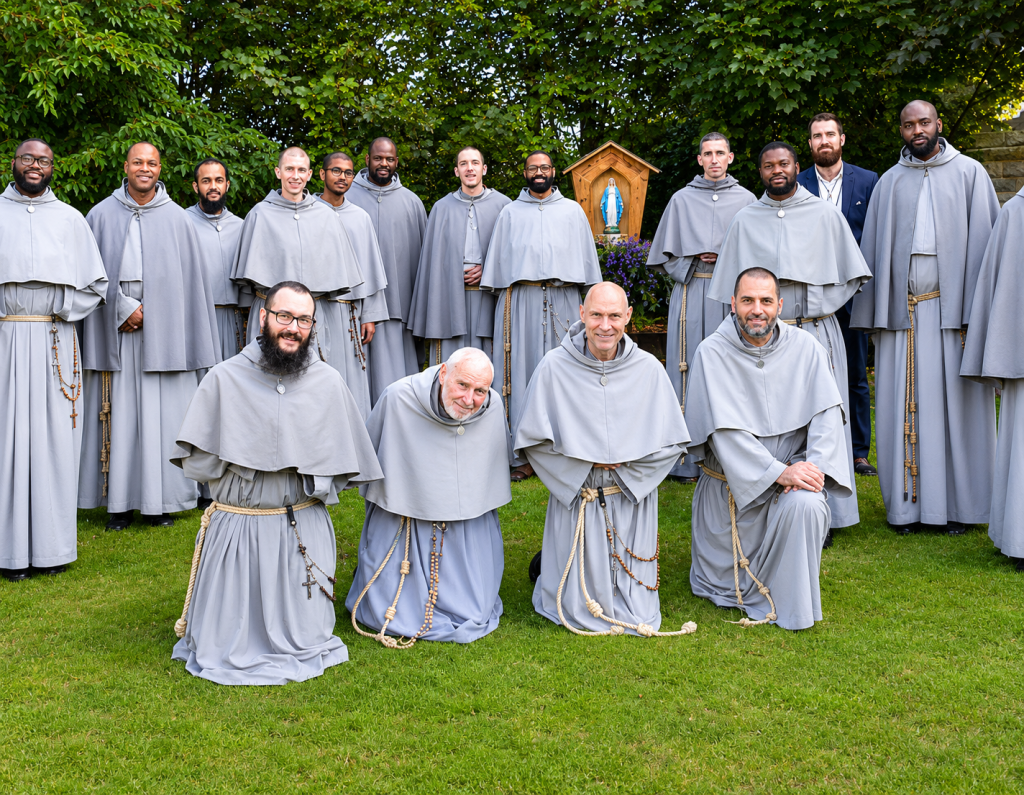
What led to the dissolution of the Marian Franciscans? As the community ceases to exist as a canonical entity, sources close to the friars point to events in Scotland The Marian Franciscans have been dissolved after Bishop Philip Egan of Portsmouth approved a request by the friars to suppress the community. The decision follows a vote by members of the Family of Mary Immaculate and St Francis on 27 April to seek dissolution after what they described as a period of discernment about their future in the United Kingdom. In a statement issued on 27 May, the friars said: “Despite growth in numbers and apostolic activity, it was not possible to secure the practical and canonical support needed for formation, sponsorship, and future priestly ordinations.” They added that “a range of options was explored” but none provided “a workable path” for the community to continue “in its present form”. The friars said the decision “is not the result of, or a reaction to, any single incident or series of incidents”, but arose from “broader questions about the future viability of the community and its mission in the UK”. Bishop Egan confirmed in a statement that he had accepted the request “after serious and careful consideration”. “The appropriate canonical and practical steps are now being taken,” he said. The bishop added that the friars intend “to join another association with a similar charism and in the coming months to relocate”. The Family of Mary Immaculate and St Francis was established in the Diocese of Portsmouth after Bishop Egan welcomed the friars in November 2014. The community assumed responsibility for St Mary’s Parish in Gosport and, in 2018, Bishop Egan formally erected the association. The friars subsequently established a second house in the diocese and developed apostolates that included parish ministry, retreats, preaching, publishing and online evangelisation. The community also ministered in London, including at Tyburn Convent. In 2022, members of the community relocated to the Diocese of Dunkeld after receiving the support of Bishop Stephen Robson. The move included Marian Franciscan sisters, and plans were explored for the acquisition of a friary, convent and chapel. Those plans came to an end in February this year when Bishop Andrew McKenzie informed the community that the proposed property purchase would not be ratified and that they would have to leave the diocese. The friars said supporters had credited the community with encouraging conversions, vocations, Marian devotion and greater participation in the sacramental life of the Church. Last year Fr Serafino Lanzetta, one of the community’s leading members, criticised the Vatican document Mater Populi Fidelis . He said the text represented “a significant downgrade” in the presentation of Mary’s role in salvation history and organised a filial appeal asking Pope Leo XIV to reconsider the document. Following the dissolution, the friars said priests incardinated in the Diocese of Portsmouth would be permitted to continue their apostolate at three existing locations within the diocese, including an Ordinariate church. Elsewhere, the community’s apostolates and activities will come to an end when the Marian Franciscans cease to exist as a canonical entity on 1 June. The friars and sisters will no longer remain members of the community, and transitional arrangements are being made through the Friends of the Marian Franciscans charitable trust. Bishop Egan acknowledged that the decision would be “a cause of sadness and concern for many people who have valued the ministry, prayer and pastoral presence of the friars”. He said the Diocese of Portsmouth “recognises with gratitude the ministry of the Marian Franciscans, and the prayer, generosity and friendship offered to them by the lay faithful and others who have supported the community over the years”. The bishop asked Catholics to “pray for the members of the community as they discern the next steps, and for all those who have been supported by their ministry”. The friars said the dissolution “marks the end of a distinctive chapter in contemporary Catholic life in the United Kingdom”, while expressing hope that “the spiritual fruits associated with it will endure and may one day return to Britain in a new form”. Neither the Marian Franciscans nor the Diocese of Portsmouth wished to comment further beyond their public statements. However, sources familiar with the situation suggested that the tensions which ultimately led to the community’s dissolution cannot be understood solely through the brief statements issued by the friars and the diocese. One source close to the community told Advaticanum that readers should be “reading between the lines” of the friars’ announcement. From this publication’s understanding, the issues stemmed from Scotland rather than Portsmouth. Several people familiar with events in Scotland pointed to difficulties that emerged after the arrival of Bishop Andrew McKenzie in the Diocese of Dunkeld. When the Marian Franciscans relocated part of their apostolate to Dundee in 2022 they had the support of Bishop Stephen Robson, who welcomed the friars and sisters and explored plans for a permanent home for the community. Those plans came to an abrupt halt in February 2025 when Bishop McKenzie informed the community that a previously discussed property acquisition would not proceed and that they would eventually have to leave the diocese, although the deadline was later extended until October 2026. From this publication’s understanding, Bishop McKenzie wanted an excuse to remove the community. Advaticanum has learned that concerns raised with diocesan authorities in Scotland included allegations of overly rigid attitudes among some members and questions surrounding the ages of certain novices and sisters entering religious life. The Diocese of Dunkeld has not publicly commented on such claims and has never publicly detailed the reasons behind its decision regarding the property purchase or the community’s future in the diocese. The developments followed years of uncertainty for communities attached to the traditional Latin Mass after Pope Francis issued Traditionis Custodes in 2021, placing new restrictions on celebrations of the older form of the Roman Rite. The Marian Franciscans later said that diocesan authorisation for celebrations of the traditional liturgy had become more restricted. While there were growing congregations, baptisms, Marian devotions and increasing numbers of young families at the community’s apostolates, the future of the institute remained unresolved. On 27 April this year, the friars voted to petition for dissolution, and on 24 May Bishop Egan issued the decree approving the suppression of the association.
Jun. 1, 2026
Proposed law could force French priests to break seal of confession
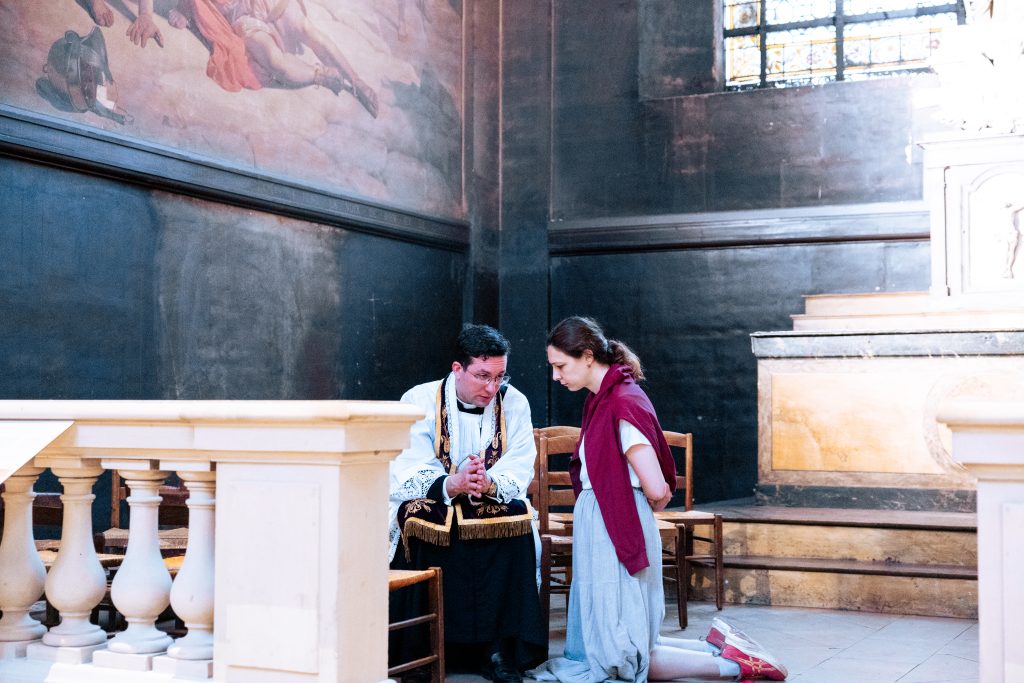
France’s Catholic bishops have urged lawmakers to reject legislation that would require priests to break the seal of confession, stating that “the secrecy of confession is not a privilege for priests, but a right for the faithful” France’s Catholic bishops have urged lawmakers to reject a proposed law that would require priests to report abuse disclosed in confession. The intervention comes ahead of a debate in the National Assembly on 1 June on a bill intended to strengthen the protection of children and combat violence in schools following the Bétharram abuse scandal, which saw hundreds of complaints emerge against the Priests of the Sacred Heart of Jesus of Bétharram in relation to their school in Lestelle-Bétharram and led to allegations that former French Prime Minister François Bayrou had participated in a cover-up. The legislation, introduced by Renaissance deputy Violette Spillebout and supported by Paul Vannier of La France Insoumise, would significantly expand mandatory reporting obligations relating to violence against minors. A key provision states that ministers of religion would no longer be exempt from reporting information obtained in the exercise of their ministry. Paragraph 9 of the proposed legislation states: “Ministers of religion are not exempt with regard to information which they have become aware of in the exercise of their ministry.” The explanatory memorandum accompanying the bill goes further, stating that ministers of religion are subject to reporting obligations “even if they became aware of them in the course of their duties: no ‘seal of confession’ can prevent them from doing so”. In a statement issued before Monday’s debate, the Conference of Bishops of France said it shared the determination of public authorities to combat violence against children but expressed “great concern” about elements of the proposed legislation. The bishops said the text called into question “several fundamental freedoms” and appealed directly to parliamentarians to reconsider the measures before they come before the Assembly. According to the bishops, the proposal raises questions concerning “freedom of conscience, freedom of worship and respect for private life”, while also challenging long-established protections surrounding professional confidentiality and religious ministry. Bishop Jean-Marc Eychenne of Grenoble has emerged as one of the most outspoken critics of the proposal. “The secrecy of confession is not a privilege for priests, but a right for the faithful,” he said. Under the Code of Canon Law, a priest is absolutely forbidden from revealing anything heard during confession, regardless of the circumstances. Priests who directly violate the seal face the Church’s most severe penalties. The inviolability of confession has been recognised in Catholic practice since the early centuries of Christianity and was given formal expression by the Fourth Lateran Council in 1215, which ordered priests to maintain absolute secrecy regarding sins disclosed during confession. The principle has remained unchanged ever since. Under the Ancien Régime, French legal authorities generally recognised the special status of confessional secrecy and treated it as a protected professional confidence. Although tensions periodically arose between civil authorities and ecclesiastical institutions, the seal remained embedded in both legal and religious culture. The French Revolution transformed relations between Church and state. The Civil Constitution of the Clergy subordinated the Church to the revolutionary government and subjected priests to unprecedented state control. While revolutionary legislation did not directly abolish the seal of confession, the wider campaign against the Church created profound pressures on sacramental life and religious practice. During the nineteenth century and under the Napoleonic legal order, French law continued to recognise protections surrounding professional secrecy. The relationship between religious confidentiality and state authority remained the subject of debate, particularly as republican governments expanded their influence over public life. Those tensions resurfaced during the anti-clerical campaigns of the Third Republic, which introduced aggressive secularising measures and sought to reduce the influence of the Church in French society. Yet even during periods of intense conflict between Church and state, the confessional seal itself remained intact. More recently, the issue returned to national prominence following the publication of the Sauvé Report into clerical sexual abuse in 2021. The report recommended that the Church clarify that the secrecy of confession should not prevent the reporting of abuse against minors and vulnerable persons. The recommendation sparked a public confrontation between Church leaders and the French government after Archbishop Éric de Moulins-Beaufort, then president of the bishops’ conference, defended the inviolability of confession. Interior Minister Gérald Darmanin subsequently summoned the archbishop for discussions amid a national debate over the relationship between French law and canon law. Five years later, the dispute has returned to the National Assembly in an even more direct form. As deputies prepare to debate the bill, French bishops are warning that a measure introduced in response to abuse scandals could fundamentally alter the relationship between the state and one of the Catholic Church’s most closely guarded sacraments.
May 30, 2026
Cardinal Pizzaballa intervenes after alleged IDF attempt to halt Marian festival in West Bank
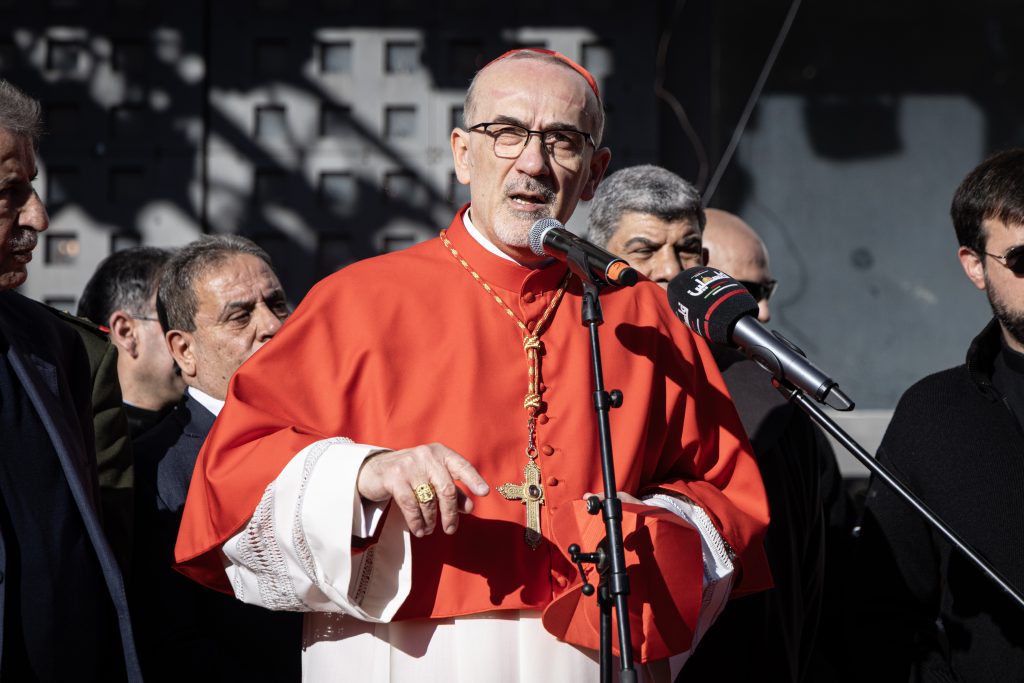
Cardinal Pierbattista Pizzaballa has reportedly intervened with Israeli authorities after military personnel allegedly attempted to halt a Marian festival in Taybeh, the last entirely Christian Palestinian town in the West Bank Cardinal Pierbattista Pizzaballa has intervened after the Israeli Defence Force personnel allegedly attempted to halt a Catholic Marian festival in the Christian West Bank village of Taybeh on Friday. Representatives of the Vulnerable People Project (VPP), an organisation that seeks to protect vulnerable people around the world from violence, said they were present in the village when Israeli military vehicles entered Taybeh early in the morning and ordered organisers preparing for the annual celebration in honour of the Blessed Virgin Mary to leave the area. The parish priest overseeing the festival immediately contacted Church authorities, and the matter was escalated to Cardinal Pizzaballa, the Latin Patriarch of Jerusalem. According to VPP, the cardinal subsequently spoke with Israeli authorities and secured permission for the event to proceed. The incident took place in Taybeh, regarded as the last entirely Christian Palestinian town in the West Bank. Jason Jones, founder and president of the Vulnerable People Project, told this publication that the events highlighted the precarious position of Christian communities throughout the region. “Christians with influence and power in the United States may be the last line of defence between vulnerable Christian communities and the forces driving them from their ancestral homelands,” he said. “From Gaza to the West Bank and Lebanon, ancient Christian communities are under immense pressure. If they are erased and we remained silent, we will share responsibility for that loss.” The president of VPP added: “The disruption of a Marian festival by the IDF is not just an attack on a celebration; it is another warning sign that the Christian presence in the Holy Land is in peril. “At the Vulnerable People Project, we launched Save West Bank Christians because we believe the descendants of the first Christians have the right to remain where Christianity was born. The time for solidarity is now.” A spokesman for the Latin Patriarchate of Jerusalem declined to comment. Lex Pouliot, manager of Middle East projects for the Vulnerable People Project, who witnessed the events, told AdVaticanum that organisers had initially feared disruption from Israeli settlers. “Our fear this morning was that radical settlers would disrupt preparations for the Marian Festival,” she said. “Instead, it was far more disturbing to watch the Israeli military intervene. Hearing a stun grenade explode as Christians prepared for a permitted religious celebration brought into sharp focus the countless stories I have heard throughout my time in the West Bank. “What we witnessed today should concern Christians around the world.” The allegations follow months of complaints from Church leaders and residents over increasing pressure on the Christian community in Taybeh. In March, Fr Bashar Fawadleh appealed for international attention after reporting that settlers had taken over privately owned land belonging to village residents. In April, Cardinal Pizzaballa and other heads of Churches in Jerusalem lodged a formal complaint with the authorities over alleged encroachments on Church-owned property in the area. During Holy Week, Cardinal Pizzaballa and Father Francesco Ielpo OFM, Custos of the Holy Land, were blocked from entering the Church of the Holy Sepulchre to celebrate Holy Mass, marking the first time in centuries that Mass had not been celebrated inside the church on Palm Sunday. The clerics later issued a joint statement describing the incident as a “grave precedent” that disregarded “the sensibilities of billions of people around the world who, during this week, look to Jerusalem”. The latest incident also follows reports that Israeli soldiers entered a brewery compound in Taybeh on Thursday. According to VPP, troops prevented the owner from accessing parts of the property while members of the organisation were interviewing local workers. Taybeh, identified with the biblical Ephraim, is the last remaining entirely Christian Palestinian town in the West Bank. Home to about 1,000 residents, the village has become increasingly vocal about pressure from nearby settler activity in recent years. Neither the Israel Defense Forces nor Israeli authorities had publicly responded to the allegations at the time of publication.
May 30, 2026
Pope Leo XIV grants bishops new powers to dismiss monastery superiors
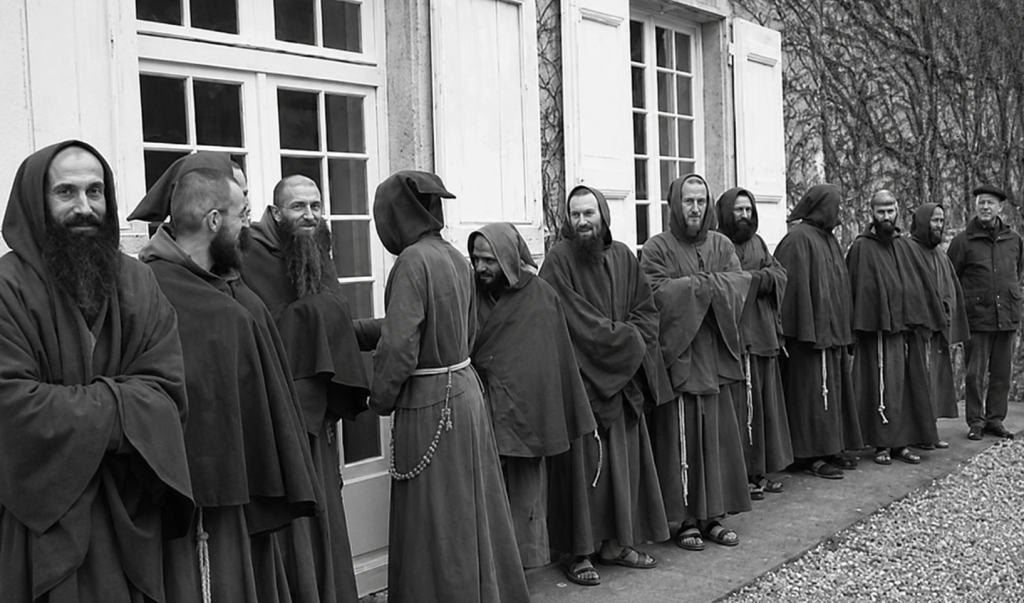
Pope Leo XIV has granted the Vatican’s Dicastery for Religious the power to authorise diocesan bishops to dismiss monastery superiors in serious disciplinary cases Pope Leo has granted the Vatican’s Dicastery for Institutes of Consecrated Life and Societies of Apostolic Life new powers allowing it to authorise diocesan bishops to dismiss the superiors of monasteries under canon law in cases involving serious disciplinary matters. The new faculty was confirmed in a Rescriptum ex Audientia Sanctissimi approved by the Pope on 25 March and published on 28 May. The decree, signed by Cardinal Pietro Parolin, Vatican Secretary of State, stated that the measure had also enjoyed the favour of Pope Francis before his death. The rescript concerns cases under canon 699 §2 of the Code of Canon Law, which governs the dismissal of professed religious from institutes of consecrated life for grave causes. Under the new arrangement, the Dicastery for Religious may now permit the competent diocesan bishop to issue a decree dismissing a professed religious who is himself the major superior of a monastery. The text stated: “The Supreme Pontiff Leo XIV… granted the Dicastery for Institutes of Consecrated Life and Societies of Apostolic Life the faculty to authorise the competent diocesan Bishop to issue the decree of dismissal referred to in canon 699 §2 of the Code of Canon Law, in the case in which the professed member to be dismissed is the Major Superior of the monastery.” The measure came into force immediately upon publication and will later appear in the official Acta Apostolicae Sedis following publication in L’Osservatore Romano . The Dicastery for Religious, headed by Sister Simona Brambilla as prefect and Sister Tiziana Merletti as secretary, oversees religious orders and institutes throughout the Catholic Church. The rescript is likely to be viewed as part of a broader Vatican effort to streamline disciplinary procedures involving religious communities, particularly in cases where governance disputes or allegations against superiors have created institutional paralysis. Canon 699 allows for the dismissal of religious who are judged guilty of “grave external violations” of ecclesiastical law or religious obligations. In ordinary cases, dismissal procedures are handled internally by the institute itself, with decrees requiring confirmation from the Holy See. Cases involving the superior of a monastery, however, have often proved more legally complex because of the superior’s authority within the community and the lack of a higher internal authority capable of executing disciplinary measures directly. The rescript also appeared to clarify procedures connected to the laicisation of religious through petition, an issue that has become increasingly prominent in recent years as the Vatican has sought clearer canonical mechanisms for handling disciplinary and governance crises within religious institutes. The publication of the decree follows several years of Vatican intervention in monasteries and religious communities across Europe and the Americas amid allegations ranging from financial mismanagement to spiritual abuse and failures of governance. Under Pope Francis, the Holy See increasingly relied on apostolic visitations, commissaries and direct intervention by Vatican dicasteries to address internal disputes within contemplative and religious communities.
May 29, 2026
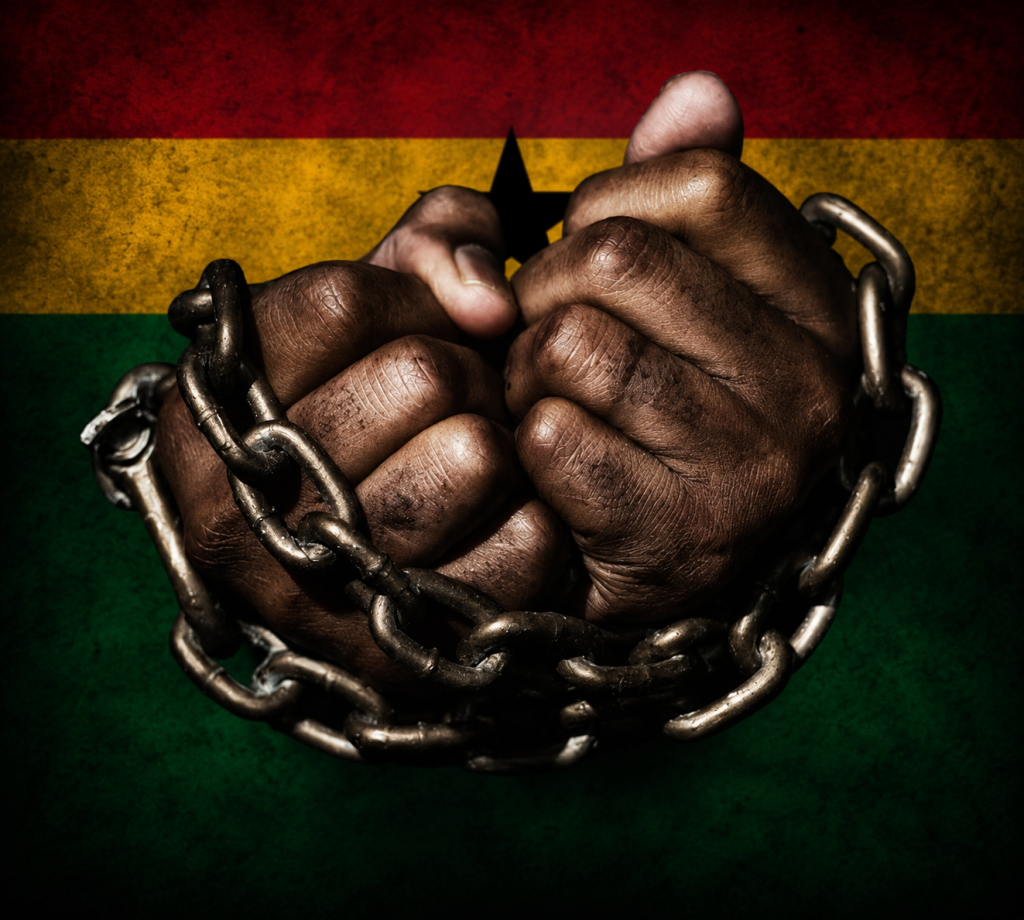
Ghana responds to Magnifica Humanitas
Ghana has praised Pope Leo XIV’s apology for the Catholic Church’s historical role in slavery, calling it an “act of moral courage”. In Magnifica Humanitas, the Pope acknowledged that Church authorities and institutions had at times legitimised enslavement and asked forgiveness “in the name of the Church” Ghana has welcomed Pope Leo XIV’s apology for the Catholic Church’s historical role in slavery. The apology was made in the Pope’s first encyclical, Magnifica Humanitas , published on 25 May, in which Leo addressed artificial intelligence, modern exploitation and the legacy of slavery. In one of the most closely watched passages of the document, the Pope admitted that Church authorities had, at times, “regulated and legitimised forms of subjugation and, in certain cases, the enslavement of ‘infidels’”. He also acknowledged that “in antiquity and the Middle Ages many individuals and even ecclesiastical institutions had slaves”. “This constitutes a wound in Christian memory,” the Pope wrote. “It is impossible not to feel deep sorrow when contemplating the immense suffering and humiliation endured by so many.” “For this, in the name of the Church, I sincerely ask for pardon.” The Ghanaian government responded by describing the apology as “an act of moral courage” and an important contribution to the pursuit of “truth, human dignity and justice”. In a statement issued by its Ministry of Foreign Affairs on Tuesday, the government said the Pope’s remarks represented “an important contribution to the ongoing global pursuit of historical truth, human dignity and justice”. “The statement represents an act of moral courage on the part of the Pope,” the ministry said. Ghana added that the apology “reinforces the growing global understanding that confronting historical injustices demands truth-telling and moral responsibility as essential foundations for justice and reconciliation”. The intervention is the clearest papal apology for the Catholic Church’s involvement in slavery. Previous pontiffs, including Pope John Paul II and Pope Francis, condemned slavery and apologised for the actions of Christians involved in the slave trade. Pope Leo, however, went further by directly acknowledging the role of Church institutions and past papal actions in legitimising forms of enslavement. Millions of Africans passed through forts along the Gold Coast before being transported to the Americas between the sixteenth and nineteenth centuries. Cape Coast Castle and Elmina Castle remain among the most prominent reminders of the trade, where captives were held in dungeons before being loaded on to slave ships bound for the Caribbean and the Americas. Historians estimate that between 12 million and 15 million Africans were transported across the Atlantic during the slave trade, with millions dying during the journey or in captivity. Ghana has become one of the leading African voices calling for reparations and formal international recognition of slavery as a crime against humanity. Earlier this year, the United Nations adopted a Ghana-backed declaration recognising the enslavement of Africans as “the gravest crime against humanity”. The resolution was backed by John Mahama and the African Union and called for further international dialogue on reparative justice and the effects of slavery and colonialism. The Holy See had previously expressed reservations about aspects of the declaration. Archbishop Gabriele Caccia, the Vatican’s former representative to the United Nations, warned against what he described as “a partial narrative, which, regrettably, does not serve the cause of truth”. He pointed to earlier papal condemnations of slavery, including those of Pope Eugene IV in 1435 regarding the enslavement of indigenous peoples in the Canary Islands. Pope Leo’s encyclical addressed that historical tension directly. “In the development of her doctrine, the Church has gradually come to a deeper awareness of the gravity of these issues,” the Pope wrote. “It was only in the nineteenth century that a formal, absolute and universal condemnation of slavery was clearly articulated.” The Pope said the Church’s delayed response to slavery demonstrated the need for continual moral reflection when confronting modern forms of exploitation. Pope Leo also warned against what he described as “new forms of slavery” linked to technological and economic systems that reduce human beings to “data, productivity, or technological utility”. Presenting the document at the Vatican, the Pope said: “We must seek to build a civilisation of love rather than a culture of power.” The encyclical was released only weeks after Leo completed his first papal visit to Africa, during which he criticised the exploitation of the continent’s natural resources and warned against “new forms of colonial dependence”. The Vatican has previously been under pressure from historians and campaigners to formally repudiate fifteenth-century papal bulls, including Dum Diversas and Romanus Pontifex, which granted Christian rulers authority to conquer and subjugate non-Christian peoples. In 2023, the Vatican formally rejected the so-called “Doctrine of Discovery”, which had historically been used to justify colonial expansion and dispossession. Leo’s encyclical, however, marks the first time a pope has explicitly acknowledged the role played by Church institutions themselves in legitimising slavery and directly asked forgiveness for it.
May 29, 2026