

Outside the Walls
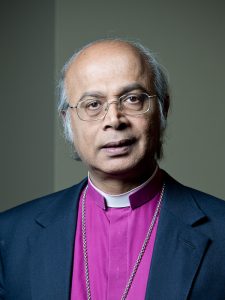
Monsignor Nazir-Ali: Henry Nowak case shows Britain has lost its moral compass
Monsignor Michael Nazir-Ali has told AdVaticanum that the murder of Henry Nowak and the police response point to a wider “loss of a moral compass in society”, warning against political correctness, rule-book policing and the abandonment of conscience Monsignor Michael Nazir-Ali has described the murder of Henry Nowak and the police’s failure to attend to the victim as a result of a “loss of a moral compass in society”. Speaking to AdVaticanum , the Pakistani-born British Catholic priest and former Anglican bishop said that this loss had imposed a “necessity, therefore, of going by the rule book rather than using one’s conscience”. He also lamented “political correctness”, which has caused an “inability to use our common sense” and a reliance on “‘woke’ nostrums”. The murder of Henry Nowak has sent shock waves through Britain and beyond, particularly because of the police’s treatment of the 18-year-old in the final moments of his life. Nowak was stabbed by Vickrum Digwa five times on his return from a night out in Southampton at the end of last year. Digwa’s brother, Gurpreet Digwa, called the emergency services, where he lied to the police and repeatedly told them that Digwa had been the victim of a racial attack. Digwa then contacted his parents and hid the knife used to kill Nowak with his mother. When police arrived, they spoke with Digwa before attending to Nowak. They then arrested Nowak and handcuffed him. Nowak repeatedly told the officers, “I can’t breathe”, and said nine times that he had been stabbed. One of the arresting officers responded by saying, “I don’t think you have, mate.” Nowak stopped responding before officers called emergency services, a call made two minutes and 48 seconds into the body-camera recording depicting the events. While many have called for calm in the wake of the murder, questions have been raised about what led to Nowak’s death, particularly police guidance on responding to issues relating to race relations. Under particular scrutiny is a document produced by the National Police Chiefs’ Council which says that “producing equality of policing outcomes… does not mean treating everyone ‘the same’”. Hampshire Police, responsible for policing Southampton, has also come under scrutiny. In 2020, the force spent nearly £1 million ($1.34 million) on compulsory race training. Hampshire Police also published its own Race Action Plan covering 2024 to 2026. The criticism centres on the idea that police may have been quicker to appear “anti-racist” than to assess the realities of the crime, and that they may have taken Digwa and his family’s allegations of racism more seriously than Nowak’s fatal injuries. The Prime Minister, Sir Keir Starmer, has refuted the idea that “two-tier policing”, where police give preferential treatment to ethnic minorities, exists. He has also called for the words of Henry’s father, Mark Nowak, to be respected. After the sentencing of Digwa, Mark Nowak stated that “we do not want his death to be used to create further division, hatred or tension. We want his story to make our streets safer for everyone.” Another controversy surrounding the case is Digwa being in possession of a kirpan, a Sikh ceremonial knife that is one of the five articles of faith for practising Sikhs. Digwa was carrying two knives: a small one, which most would reasonably describe as a kirpan, and a 21-centimetre dagger, which was used to kill Nowak. Digwa described both as kirpans, but leaders of the Sikh community, who have unanimously condemned the murder, said the second blade was not a kirpan. Under UK law, a kirpan may be carried for religious, ceremonial, sporting or historical reasons. However, a kirpan can become an offensive weapon if it is used unlawfully, with the decision over appropriateness resting with the courts. Responding to the controversy surrounding the possession of a kirpan , Monsignor Nazir-Ali said: “The Sikh community is rightly appalled by what this person may have brought down upon them.” He continued: “They have disowned his actions, but they now need to make sure that their religious obligation to wear a kirpan is carried out in such a way as to render the religious object harmless to others.” Monsignor Nazir-Ali is well known for his ability to address contentious issues with finesse and common sense. He has worked to promote positive relations between Islam and Christianity, while also warning that some extremist Muslims seek both “victimhood and domination”. He has also described multiculturalism as “newfangled and insecurely founded”. Much of his ability to address controversial issues centres on his deep understanding of different cultures. Born in Pakistan, just two years after the Partition of India, he was raised in both Christian and Muslim contexts. At 15, he began to identify as a Christian and was received into the Anglican Church of Pakistan at the age of 20. He studied for Anglican ministry at Cambridge and married a Scottish woman, Valerie Cree, in 1970. He is a hyperpolyglot, with knowledge of English, Arabic, Persian, Punjabi, Urdu, Hindi, Greek, Hebrew, Aramaic, Syriac and Latin. Monsignor Nazir-Ali was received into the Catholic Church by the then Ordinary of the Personal Ordinariate of Our Lady of Walsingham, Monsignor Keith Newton, on 29 September 2021. He was ordained priest by Cardinal Vincent Nichols on 30 October 2021 at Our Lady of the Assumption and St Gregory Catholic Church in London. He was made a Monsignor in 2022 by Pope Francis. Image credit: Oxtrad – Own work, CC BY-SA 4.0, https://commons.wikimedia.org/w/index.php?curid=79306197
Jun. 4, 2026
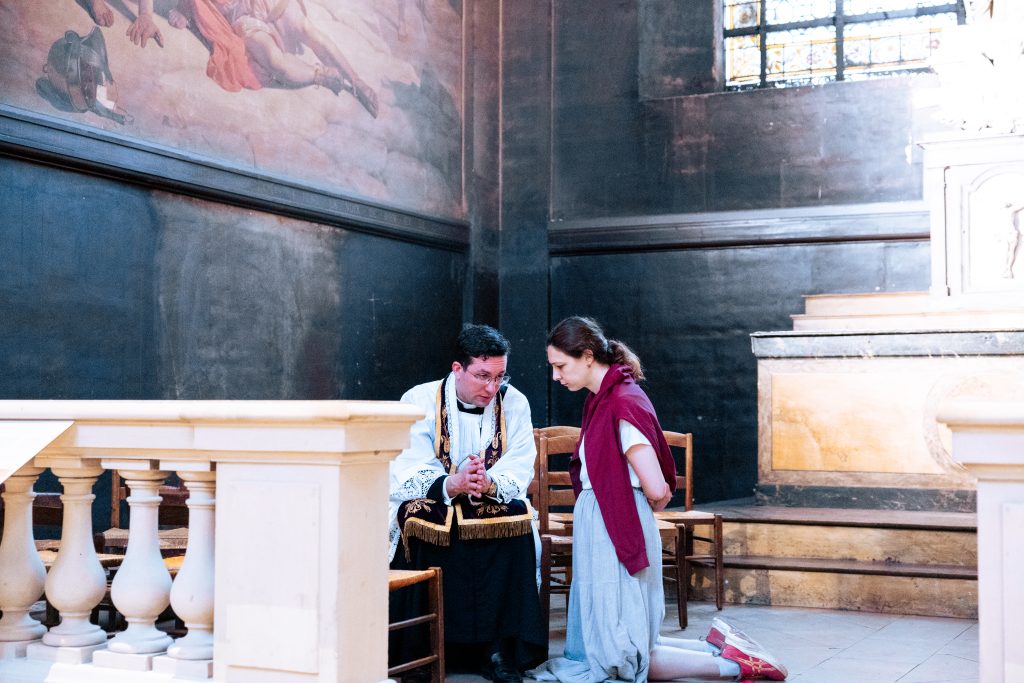
France drops plan to force priests to break seal of confession
France’s parliament has abandoned plans that would have required Catholic priests to report information heard in confession. The controversial proposal was removed from a child protection bill after opposition from bishops and concerns over religious freedom France’s parliament has abandoned controversial plans that would have forced Catholic priests to reveal information heard in the confessional. The National Assembly unanimously adopted the legislation on 1 June following weeks of debate over proposals to strengthen safeguarding measures in schools and extracurricular activities in the wake of the Bétharram abuse scandal. The affair, centred on the Notre-Dame de Bétharram school in south-west France, led to hundreds of allegations of physical, sexual and psychological abuse and intensified demands for stronger protections for children. While the bill ultimately passed with cross-party support, lawmakers removed a provision that had provoked strong opposition from the Catholic Church and concerns among legal experts over religious freedom. The original text would have required ministers of religion to report abuse against minors even when the information was obtained during sacramental confession. It stated that ministers of religion were subject to reporting obligations for information acquired “in the exercise of their ministry” and that no appeal to the seal of confession could exempt them from that duty. The French bishops mounted a public campaign against the proposal before it reached the Assembly chamber, warning that it threatened fundamental liberties protected by French law. In a statement issued ahead of the debate, the Conference of Bishops of France said it shared the determination of public authorities to combat violence against children but expressed “great concern” about elements of the legislation. The bishops said the text called into question “several fundamental freedoms”, including “freedom of conscience, professional secrecy, freedom of education or freedom of religion”. Bishop Jean-Marc Eychenne of Grenoble emerged as one of the leading critics of the measure. “The secrecy of confession is not a privilege for priests, but a right for the faithful,” the bishop said. After intense parliamentary discussions, deputies withdrew the clause before the final vote, allowing the wider legislation to proceed without the measure targeting the seal of confession. Lawmakers also removed a separate proposal that would have tightened state oversight of private schools operating under contract with the government, including many Catholic institutions. The outcome was welcomed by Church leaders, who stressed that their opposition was directed at the confessional provision rather than efforts to improve safeguarding. Bishop Matthieu Rougé of Nanterre said he was “very happy” that parliament had focused on what he described as the “real objectives” of protecting minors and combating violence in educational settings. Referring to the confession controversy, he suggested the issue had entered the debate in a “somewhat parasitic” way. The dispute nevertheless reopened a long-running argument in France over the relationship between Church teaching and state authority. Under Catholic canon law, the seal of confession is absolute. Canon 983 states that “the sacramental seal is inviolable”, and any priest who directly violates it incurs automatic excommunication. The Church teaches that a confessor can never reveal what has been disclosed during the sacrament, regardless of the circumstances. The principle has been formally protected since the Fourth Lateran Council in 1215 and has survived centuries of political upheaval, including the French Revolution and later anti-clerical campaigns that sought to remove the influence of the Church. Photo credit: Notre-Dame de Chrétienté
Jun. 3, 2026
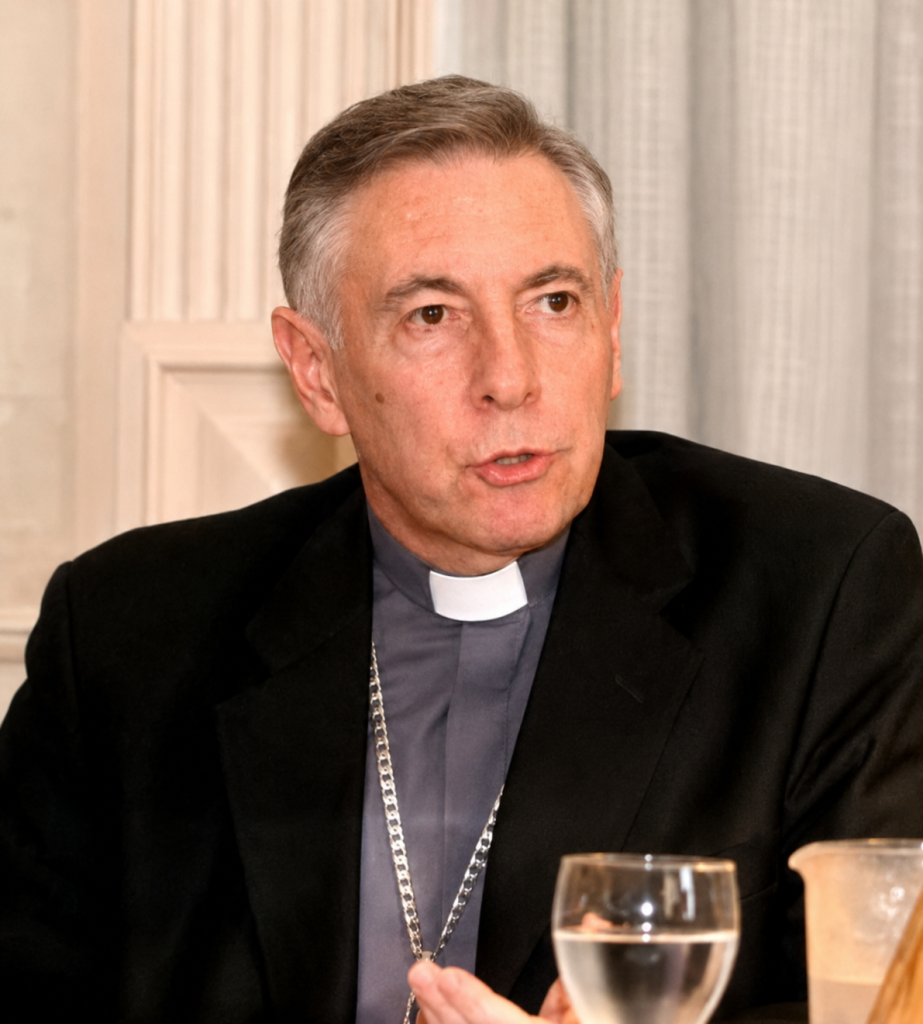
Archbishop Agüer praises Chartres pilgrimage and revives Bugnini Freemason allegations
Retired Argentine Archbishop Héctor Agüer has praised the growing popularity of the Paris-Chartres pilgrimage among young Catholics. In the same essay, he renewed longstanding allegations that Archbishop Annibale Bugnini, a central figure in the post-Vatican II liturgical reforms, was a Freemason Retired Argentine Archbishop Héctor Agüer has praised the growing popularity of the Traditional Latin Mass among young Catholics. The former Archbishop of La Plata said the revival of traditional pilgrimages and devotional practices demonstrates that “orthodoxy and Tradition are in good health and are a guarantee for the future”. The comments were made in an essay published on 1 June by Rorate Caeli, in which he reflected on the Traditional Latin Mass, the liturgical reforms introduced after the Second Vatican Council and the renewed interest in traditional Catholic worship, particularly among younger generations. “The media and, especially, social networks point out that in several European countries, particularly among young people, the ‘Traditional Mass’ is being lived with fervour, accompanied by numerous processions and pilgrimages. “The youthful crowds that revived the traditional Paris-Chartres pilgrimage have drawn widespread attention, with an average age of 22. It is a recovery of Catholic tradition, which had been suffocated in those countries by liberalism, progressivism and atheism,” Archbishop Agüer wrote. The archbishop emeritus pointed to several traditional pilgrimages that have attracted growing numbers of participants in recent years, including the annual Paris-Chartres pilgrimage in France, the Oviedo-Covadonga pilgrimage in Spain, the Rome-Subiaco pilgrimage in Italy and the Rawson-Luján pilgrimage in Argentina. “Pilgrimages like Paris-Chartres, and those of Rawson-Luján (Argentina), Oviedo-Covadonga (Spain), Rome-Subiaco (Italy), and others that are emerging here and there, speak to us of something undeniable: orthodoxy and Tradition are in good health and are a guarantee for the future.” Archbishop Agüer said the traditional liturgy remained closely connected to the Church’s historic understanding of the Mass as the sacramental representation of Christ’s sacrifice on Calvary. “The ‘Traditional Mass’ can be called that because it dates back to the seventh and eighth centuries and remained in effect for centuries until at least the Council of Trent, which revised and reissued it so that it would reach our days. Essential to it is its identification with the Sacrifice of the Cross, established as the Sacrament of the Sacrifice at the Last Supper of Jesus with His Apostles. “This Sacrament is the mystery of the Passion and Resurrection, consecrated by the Holy Spirit. The Mass is directed to the glory of the Triune God, to whom it offers the Sacrifice of Jesus,” the retired archbishop wrote. Archbishop Agüer contrasted the older liturgy with the Mass promulgated by Pope Paul VI following the Second Vatican Council, saying: “The Mass defined Catholicism from the Council of Trent to Vatican II. During the pontificate of Paul VI (Giovanni Battista Montini), who succeeded the brief pontificate of John XXIII, a new Mass was invented.” However, he added: “A few modifications here and there could have been introduced to the ‘Traditional Mass’, as had been done during its multi-century existence. But no; Vatican II sought to retouch everything, and a new Mass was meant to spring from its spirit.” Archbishop Agüer also repeated claims concerning Archbishop Annibale Bugnini, the principal architect of the post-conciliar liturgical reforms. “The author of the new Mass was Archbishop Annibale Bugnini, recognised as a Freemason according to undeniable documents, though secret in accordance with the nature of Freemasonry,” he wrote. Archbishop Bugnini, who served as secretary of the Consilium responsible for implementing the Constitution on the Sacred Liturgy, played a central role in the reform of the Roman Rite after the council. Allegations that he was a Freemason have circulated for decades. The former Archbishop of La Plata also highlighted several differences between the traditional liturgy and the reformed rite, including celebration facing the people, the expanded cycle of Scripture readings and the introduction of additional Eucharistic Prayers. “In it, the priest stands facing the people; biblical readings are multiplied, and over time several Eucharistic Prayers were authorised, which recreate the single Canon of the ‘Traditional Mass’.” The archbishop added: “It would seem that in the Mass of Paul VI and Bugnini, the priest offering the rite must strive to direct himself to God and ensure that the faithful do not become confused.” The archbishop emeritus noted that he celebrates the post-conciliar liturgy and was ordained according to the liturgical books that preceded the reforms. He said: “This Mass is the one I celebrate, in which I was ordained nearly 54 years ago; I do so with the greatest devotion I can. But I remember that in my childhood, as an altar boy, I regularly attended the ‘Traditional Mass’, a rite that was never invalidated and has accompanied that of Paul VI until today, and which, as I said at the beginning, is being rediscovered with enthusiasm by youth.” Turning to liturgical abuses, Archbishop Agüer wrote: “Note should be taken, for example, of a certain bishop who entered Mass on a skateboard, or some priests who dress up as clowns when celebrating. Such outrages can only trigger a stampede effect.” Ordained a priest for the Archdiocese of Buenos Aires in November 1972 by Cardinal Juan Carlos Aramburu, Archbishop Agüer served in parish ministry and theological education before being appointed auxiliary bishop of Buenos Aires by Pope John Paul II in 1992. He later became coadjutor bishop of La Plata and succeeded Archbishop Carlos Galán as archbishop in 2000, leading one of Argentina’s most important dioceses until his retirement in 2018. During his episcopal ministry, he became known a prominent conservative voice in the Argentine Church, frequently speaking on liturgical matters, Catholic education, abortion, marriage and secularisation. He also served on several Vatican bodies, including the Pontifical Council for Justice and Peace and the Pontifical Council for Culture, and was a consultant to the Pontifical Commission for Latin America.
Jun. 3, 2026
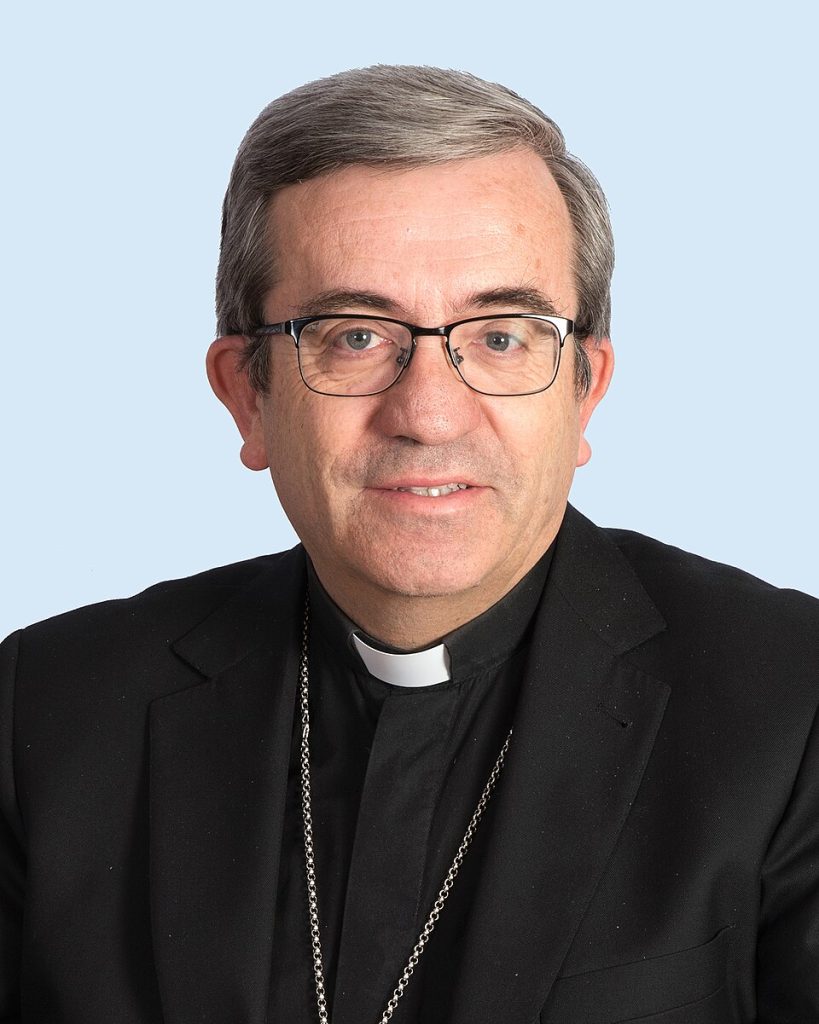
Archbishop Argüello issues Corpus Christi reminder on who may receive Communion
Archbishop Luis Argüello, president of the Spanish Bishops’ Conference, has reiterated that Catholics living in a new conjugal relationship following the breakdown of a valid sacramental marriage cannot receive Holy Communion The president of the Spanish Bishops’ Conference has reminded Catholics that those living in a new conjugal relationship following the breakdown of a valid marriage cannot receive Holy Communion. Archbishop Luis Argüello of Valladolid made the remarks in a pastoral message for Corpus Christi in which he reflected on the Eucharist and the dispositions required to receive it worthily. “When a marital relationship has broken down and those who were part of that marriage are living a new conjugal relationship,” Communion cannot be received, the archbishop said. Archbishop Argüello said those in such circumstances remained members of the Church, but that “this breaking of the Sacrament of the Covenant prevents Eucharistic communion”. “They may participate in the celebration, as well as in the life of the Church in many ways, but receiving Holy Communion is not possible,” the president of the Bishops’ Conference said. The Archbishop of Valladolid issued the message as Catholics in Spain prepare to celebrate Corpus Christi later this month. In the reflection, published as part of his diocesan pastoral programme for the first half of June, Argüello also referred to other situations which he said were incompatible with receiving Communion. These included “participating in a sinful relationship”, as well as abuses committed against others “whether in the economic or labour sphere, or in the psychological or emotional sphere”. He also referred to those publicly defending positions contrary to Christian morality. “In those cases, we cannot approach Communion without a firm decision to change our lives, making reparation for the damage caused by our situation of sin,” the archbishop said. Archbishop Argüello said the inability to receive Communion should encourage Catholics to seek a resolution consistent with the Church’s teaching on both marriage and the Eucharist. “The pain of not receiving Communion should awaken the desire to seek a solution that respects the meaning of the two sacraments at stake: Matrimony and the Eucharist,” Archbishop Argüello said. The intervention comes as Archbishop Luis Argüello prepares to accompany Pope Leo XIV during the pontiff’s apostolic visit to Spain from 6 to 12 June. Archbishop Argüello, who was elected president of the Spanish Bishops’ Conference in 2024, has become one of the most prominent voices in the Spanish Church. His election was widely viewed as signalling a more doctrinally direct approach from the episcopal conference following the presidency of Cardinal Juan José Omella. Catholic teaching holds that a valid sacramental marriage is indissoluble. For that reason, those who enter a new conjugal relationship while a previous sacramental marriage remains valid are ordinarily unable to receive the Eucharist. The issue received renewed attention during and after the Synods on the Family convened by Pope Francis and following the publication of the apostolic exhortation Amoris Laetitia in 2016. Archbishop Argüello’s latest remarks, however, amounted to a straightforward restatement of the Church’s doctrine.
Jun. 2, 2026
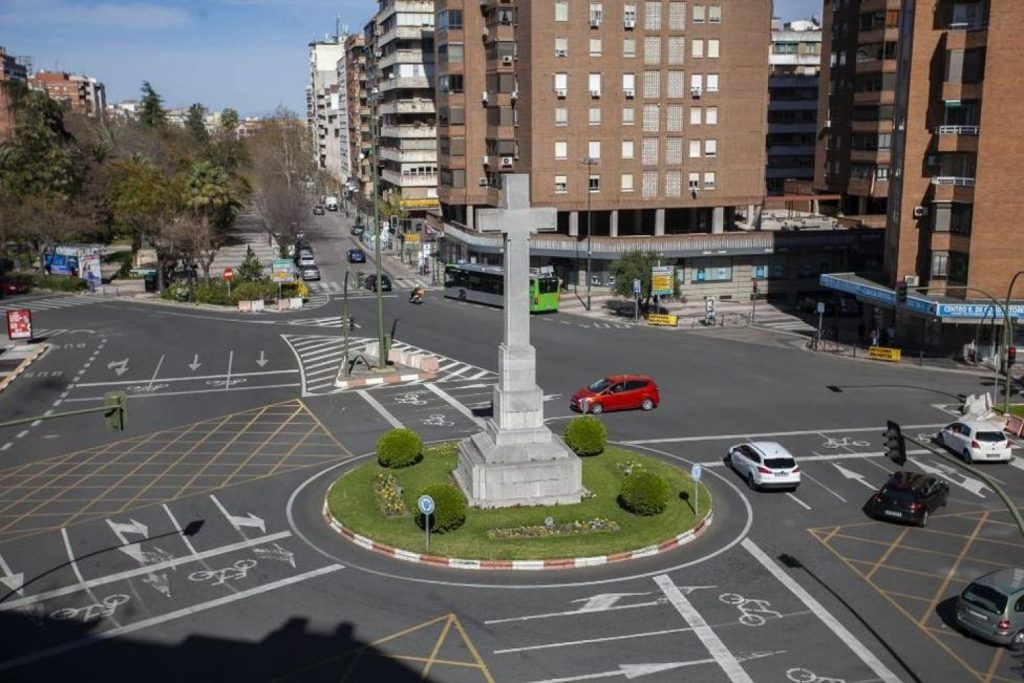
Spanish government orders removal of Cáceres Civil War cross amid heritage battle
The Spanish government has given Cáceres three months to remove the Cross of the Fallen, arguing it is a Francoist symbol incompatible with Spain’s Democratic Memory Law. Local and regional authorities are challenging the order in court and seeking heritage protection for the monument The Spanish government has given the city of Cáceres three months to remove a prominent Civil War-era cross after formally designating the monument as a symbol contrary to Spain’s democratic memory laws. The Cross of the Fallen, which stands in Plaza de América in the western city of Cáceres, was added in April to the national catalogue of symbols and elements considered incompatible with the principles of Spain’s 2022 Democratic Memory Law. The measure was accompanied by an order requiring its removal from public space, with the government arguing that the monument constitutes a Francoist symbol and lacks the artistic or historical significance necessary to justify an exemption. The decision has been fiercely opposed by local and regional authorities, who insist the cross is primarily a religious monument and forms part of the city’s historic landscape rather than a political statement. Rafael Mateos, the Popular Party mayor of Cáceres, has pledged to challenge the order through the courts. The city council argues that the monument has long since ceased to function as an instrument of political exaltation and that its presence in the city centre is now understood in a broader historical and cultural context. Municipal officials have also raised procedural objections. According to the council, the original removal order issued in April was signed by an authority that lacked the legal competence to do so. Although the government later issued a fresh resolution in May, the city intends to contest that decision as well and seek a suspension of the deadline while legal proceedings are underway. The dispute has drawn in the regional government of Extremadura, which has begun proceedings to grant the monument Bien de Interés Cultural status, Spain’s highest form of heritage protection. Such a designation would strengthen the case for preserving the cross and could complicate attempts to remove it. Laureano León, Extremadura’s regional minister for culture, tourism and sport, has indicated that he believes the monument fulfils the criteria required for heritage protection. Speaking to journalists before appearing before the regional parliament’s culture committee, León said the designation process was already under way and would continue through the normal administrative channels. “Certainly, my opinion is that it meets the conditions,” he said, while adding that the final determination would depend on technical reports produced during the process. The controversy has also become a flashpoint in wider political tensions between Madrid and Extremadura. The regional administration is governed by the Popular Party with the support of Vox, and both parties have defended the monument’s continued presence. Álvaro Sánchez-Ocaña Vara, Vox’s deputy spokesman in the Extremadura Assembly, accused the central government of targeting the cross for political reasons and linked the dispute to the governing arrangement between Vox and regional president María Guardiola. “The Cross is not to be touched,” Sánchez-Ocaña told reporters in Mérida. He described the government’s resolution as “an outrage” and “political persecution”, arguing that the monument is “inherently religious, but above all historical and devoid of any political exaltation”. Sánchez-Ocaña further maintained that the legal justification for removing the cross was flawed because the monument no longer serves any ideological purpose. He called on the government to allow the structure to remain in place while appeals are considered. “We demand that the central government, until the appeal is resolved, leave the Cross where it is,” he said. “The Cross is the heritage of the people of Cáceres and it must remain so.” The dispute centres on competing interpretations of the monument’s meaning nearly nine decades after it was erected. The cross was built in 1938 during the Spanish Civil War, a conflict that claimed hundreds of thousands of lives and culminated in the victory of General Francisco Franco’s Nationalist forces. Throughout Spain, monuments dedicated to the “fallen” were erected during and after the war, often commemorating those who died fighting for the Nationalist cause. Many of these memorials incorporated overt political symbolism linked to Franco’s regime, while others took the form of large Christian crosses that remained in public spaces long after Spain’s transition to democracy. Since the end of the Franco dictatorship, Spanish governments have grappled with how to address such monuments. Efforts to remove Francoist symbols accelerated under the Historical Memory Law of 2007 and were expanded significantly through the Democratic Memory Law adopted in 2022. The legal challenge now being prepared by the city council is likely to determine whether the monument remains in Plaza de América or becomes the latest casualty of Spain’s long-running reckoning with the legacy of the Civil War and the Franco era.
Jun. 1, 2026
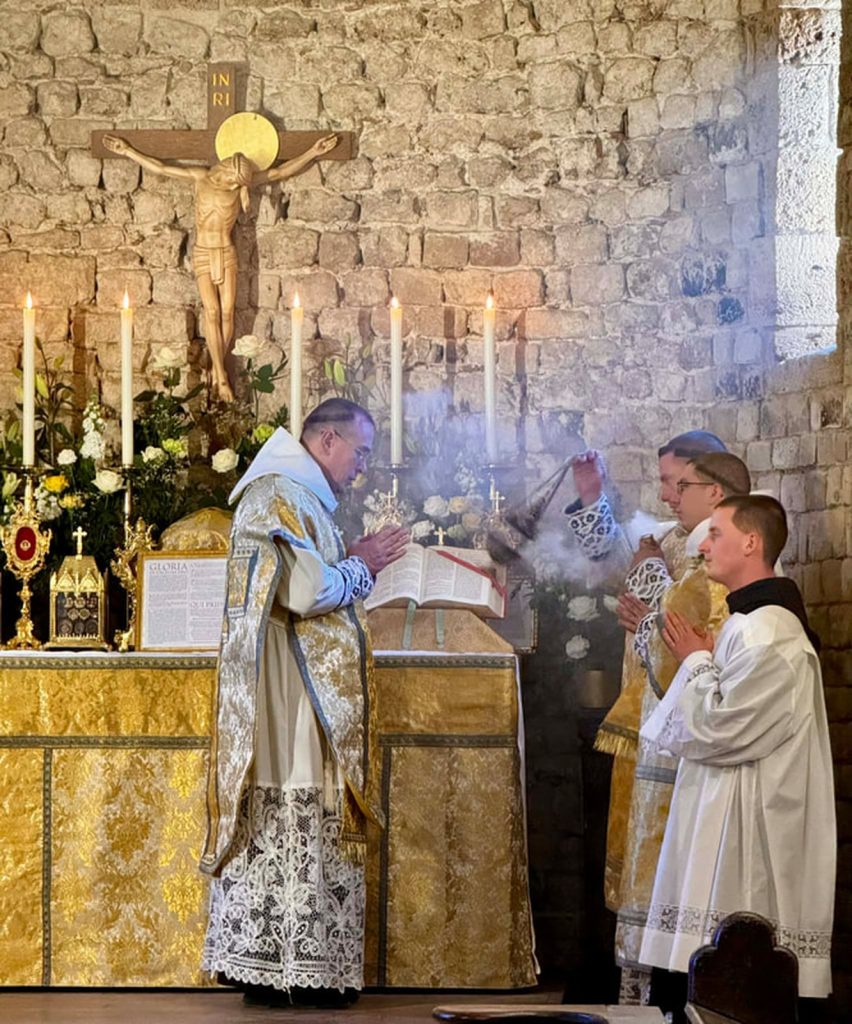
Dom Alcuin Reid calls for month of prayer for the unity of the Church as SSPX consecrations approach
Dom Alcuin Reid, prior of the Monastère Saint-Benoît in France, has called on Catholics to make June a month of prayer and fasting for the unity of the Church ahead of the SSPX’s planned episcopal consecrations on 1 July. He has urged prayers for Pope Leo XIV, his advisers and the Society of St Pius X Monastère Saint-Benoît, an international English-speaking traditional Benedictine monastery in the Diocese of Fréjus-Toulon, France, has called on Catholics to make June a month of prayer for the unity of the Church. The monastery’s prior, Dom Alcuin Reid, explained that “the Church faces the possibility of the hardening of divisions through the positions held by various parties in respect of the episcopal consecrations announced for 1 July by the Society of St Pius X.” The monk also drew on reflections made by Pope Benedict XVI in 2007, in which he stated that, “looking back over the past, to the divisions which in the course of the centuries have rent the Body of Christ, one continually has the impression that, at critical moments when divisions were coming about, not enough was done by the Church’s leaders to maintain or regain reconciliation and unity.” With this in mind, he appealed to Catholics to “make the month of June a time of earnest prayer and fasting for the unity of the Church, praying in particular for the Holy Father and his advisers as well as the leaders of the Society of St Pius X.” For its part, the monastery will offer up one day a week in particular for the intention. Dom Reid stated: “The monastery will observe one day each week as a day of particular prayer and fasting: Wednesdays, June 3, 10 and 17, and Friday, June 26 (respecting the feasts of the Sacred Heart and St John the Baptist). On these days the Conventual Mass will be a votive Mass Pro unitate Ecclesiae, and a Holy Hour of adoration will be offered before the Most Blessed Sacrament from the Office of Sext, concluding with Benediction of the Most Blessed Sacrament.” Dom Alcuin Reid is a renowned liturgical scholar whose 2004 book, The Organic Development of the Liturgy , featured a foreword by the then Cardinal Joseph Ratzinger. In 2011, he went on to found the Monastère Saint-Benoît at the invitation of the then Bishop of Fréjus-Toulon, Bishop Dominique Rey. The monastery seeks to live a classical Benedictine life, celebrating the sacred liturgy in all its fullness according to the older traditional Latin forms of the Roman and monastic rites.
Jun. 1, 2026