

Outside the Walls
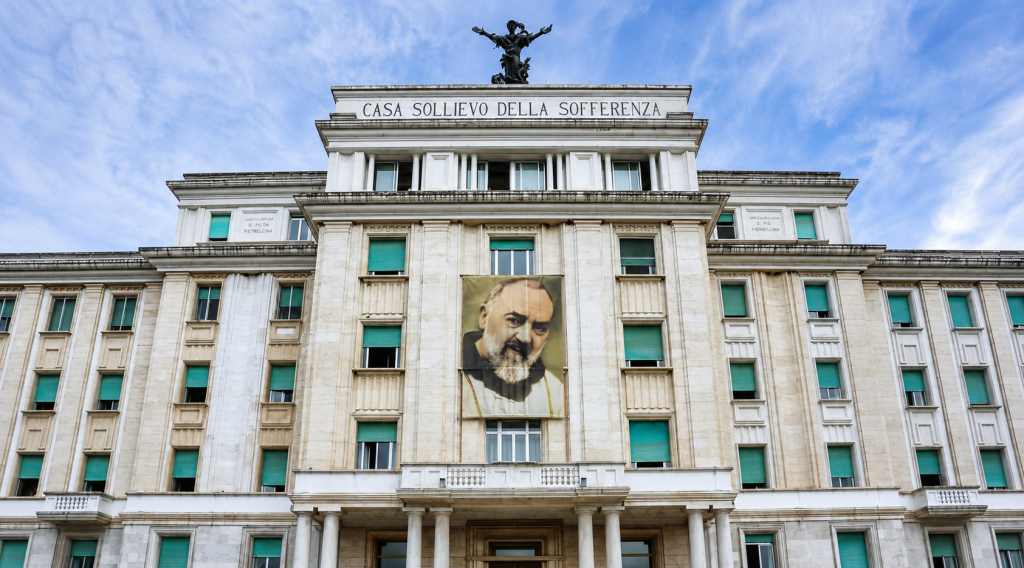
Pope Leo XIV takes direct control of Padre Pio’s hospital after financial crisis
Pope Leo XIV has placed the hospital founded by Padre Pio under direct Vatican control following years of financial turmoil and mounting debt at the Casa Sollievo della Sofferenza in southern Italy. Pope Leo XIV has moved to take direct control of the hospital founded by Padre Pio after years of financial turmoil at the Casa Sollievo della Sofferenza in San Giovanni Rotondo. In a chirograph issued on 28 May, the Pope established a new Steering and Supervisory Commission with extensive powers over the foundation governing the hospital, one of the largest Catholic medical institutions in Europe. The document grants the commission authority to act “in derogation of current legislation and without requiring any authorisation” and, where necessary, “even in place of the Foundation’s statutory bodies”. The commission will be chaired by Maximino Caballero Ledo, prefect of the Secretariat for the Economy, while Fabio Gasperini, secretary of the same dicastery, will serve as coordinator. Other members include Archbishop Paolo Rudelli, Archbishop Giordano Piccinotti and Archbishop Giorgio Ferretti. A technical committee attached to the body will include Benjamin Estévez de Cominges, currently secretary-general of the Vatican’s Secretariat for the Economy, the hospital’s current director general, Gino Gumirato, and the lawyer Alessandro Ela Oyana. The decree effectively places the Vatican directly in charge of the institution founded by St Pio of Pietrelcina in 1956. The hospital receives tens of thousands of patients every year and employs around 2,700 staff. The foundation’s finances has been under scrutiny after reports of increasing debt and internal disputes over staffing and management. The Italian television programme Far West reported earlier this year on what it described as “a story of multimillion-euro debts, €250 million in total, inflated paycheques and cronyism. A story of money disappearing from the saint’s hospital.” Gumirato later disputed the figure broadcast by the programme, saying: “Talking about a €250 million deficit is incorrect. The Foundation’s actual debts to suppliers are approximately €108 million.” He added that the debts had to be considered alongside receivables owed to the hospital by the Puglia regional government, estimated at around €32 million. The Vatican intervention comes after years of concern inside the Holy See over the management of the institution. In 2019, Domenico Crupi resigned as director general after serving in the role since 2007. He was replaced by Michele Giuliani following pressure from the Secretariat of State. According to reports, concerns had emerged that the true financial position of the foundation had not been fully represented to the Holy See. Crupi rejected accusations of financial irregularities at the time and referred to “the financial equilibrium certified by an international auditing firm”. The latest crisis intensified in late 2025 after management announced changes to employment contracts for doctors and staff as part of restructuring measures. Trade unions responded by declaring a state of unrest and planning strike action. Demonstrations were later held outside the hospital. Italian media reported that during a Christmas gathering attended by Archbishop Franco Moscone of Manfredonia-Vieste-San Giovanni Rotondo, employees confronted members of the management team and demanded resignations. Moscone subsequently acknowledged the seriousness of the situation and said: “The Holy See is aware of the situation; it is up to them to make the most important decisions. The foundation can’t do much more than that. Perhaps the Holy See itself doesn’t know what to do.” The decree also gives Caballero Ledo authority to represent the foundation before Italian public authorities, allowing the Vatican-appointed body to intervene directly in civil and administrative matters linked to the hospital’s operations. Although the existing board formally remains in place, practical authority over the institution now rests with the Vatican commission. Padre Pio conceived the hospital as a “home for the relief of suffering” and oversaw its creation in the impoverished Gargano region of southern Italy after the Second World War. The Capuchin friar personally appealed for international donations to finance the project, which became one of the most significant charitable works associated with a modern saint. In 1957, Padre Pio asked Pope Pius XII to ensure that ownership of the hospital would pass directly to the Holy See after his death. The request was accepted and, following the friar’s death in 1968, the institution came under Vatican ownership.
May 28, 2026
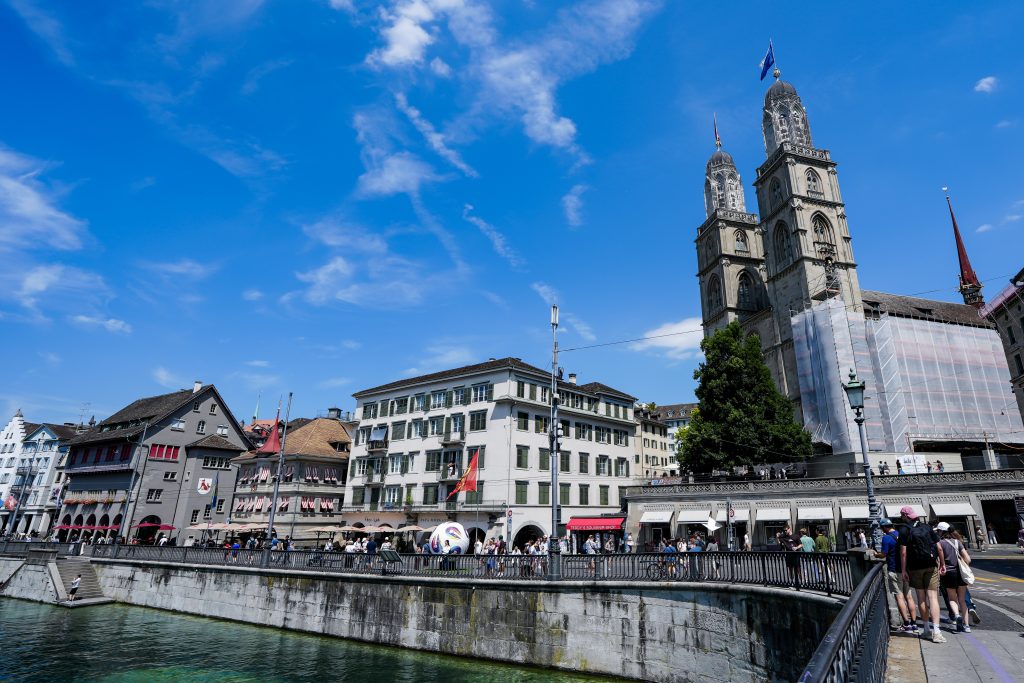
Swiss bishops back nationwide ban on conversion therapy
The Swiss Bishops’ Conference has backed plans for a nationwide ban on conversion therapy, warning that attempts to suppress or alter a person’s sexual orientation or gender identity can amount to “spiritual abuse” The Swiss Bishops’ Conference has endorsed plans for a nationwide ban on conversion therapy. In a statement released on 26 May, the bishops said they supported a federal prohibition on what they described as “conversion measures”, as the Swiss parliament continues to debate legislation aimed at outlawing the practice across the country. The conference also said practices intended to alter or suppress a person’s sexual orientation or gender identity are incompatible with Catholic pastoral care and can amount to “spiritual abuse”. “The Swiss Bishops’ Conference firmly rejects conversion measures,” the statement said. “They are incompatible with a pastoral mission based on acceptance, truthfulness, and the protection of the individual.” The bishops said such practices could involve “pressure, blame, threats, isolation, denigration, or religious fear” in an effort to induce a person “to change or suppress their sexual orientation or gender identity”. “In a religious context, such practices can constitute spiritual abuse when people are shamed, threatened, or manipulated in the name of God,” the statement added. The Swiss bishops insisted, however, that any ban should clearly distinguish between coercive practices and legitimate pastoral accompaniment. They said “open-ended, respectful conversations and support” must not be criminalised where individuals freely seek advice or spiritual guidance. “Pastoral care is legitimate when it upholds the dignity and freedom of the individual, protects personal integrity, and does not exert undue influence,” the statement said. The bishops also backed legal safeguards intended to protect “minors and vulnerable persons” and said those affected by conversion practices should have “easy access to support, counselling, and complaint procedures”. Switzerland is moving closer towards a federal ban on conversion therapy following a series of measures at cantonal level. Several Swiss cantons have already prohibited conversion therapy, with Neuchâtel becoming the first to legislate against the practice in 2023. Valais, Vaud, Bern, St Gallen and Schaffhausen have since taken similar steps. The Federal Council earlier this year adopted its first national action plan against hate crimes targeting LGBT people, while parliament has continued discussions over a uniform national framework regulating conversion therapy. The bishops rooted their position in Catholic teaching on human dignity, saying every person must be protected from “violence, coercion, and abuse”. “According to the Christian understanding of humanity, respect for personal integrity as being created in the image of God is a fundamental right,” the statement said. The conference also cited Pope Leo XIV, referring to remarks he made shortly after his inauguration last year in which he said the Church must “bring the love of God to all people” and promote a unity that “does not eliminate differences but respects the history of each individual”. The Swiss bishops sought to draw that distinction directly in their own statement, arguing that legislation must be “clearly defined” so that ordinary pastoral care and professional psychotherapy remain protected while coercive or manipulative practices are outlawed. “A ban must be designed in such a way that it does not cover open-ended, respectful counselling and pastoral care, as well as professional psychotherapeutic support,” the bishops said. “Pastoral care must never exert pressure or shame people.”
May 28, 2026
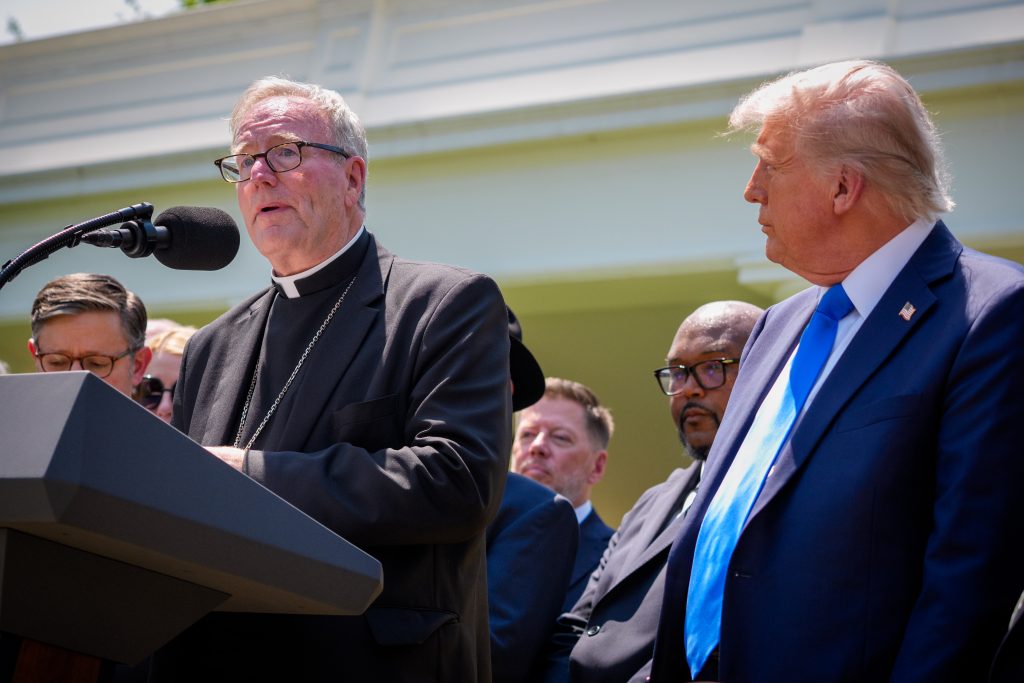
Bishop Barron warns against ‘demonisation’ of Trump over immigration
Bishop Robert Barron has warned Catholics against the “demonisation” of Donald Trump’s administration over immigration policy and said that support for border enforcement can arise from “very good moral reasons” Bishop Robert Barron has called on Catholics to resist the “demonisation” of President Donald Trump’s administration over immigration policy. The Bishop of Winona-Rochester made the remarks during an interview with Fox News Digital in which he urged greater dialogue between Catholics of differing political convictions and warned against reducing the immigration debate to partisan caricatures. Bishop Barron, perhaps the most recognisable Catholic from the United States after the Pope, said that conservatives who support tighter immigration controls should not automatically be dismissed as lacking compassion. “I don’t think it’s fair to say to a conservative, to a Republican, you’re just being difficult and anti-humanitarian,” Bishop Barron said, while arguing that the Church should instead encourage “bridges of conversation”. His Grace suggested that some Catholics on the political left had failed to extend to conservatives the same spirit of dialogue they often advocate elsewhere in public life. “At times, the Catholic left is great for calling for dialogue and bridge-building, until it comes to conservatives,” Bishop Barron said. “When it comes to conservatives, just tell them what they should be doing and saying.” The bishop continued: “No, no, let’s build bridges of conversation. That’s a role the Church can play. What I don’t want from the Church is a kind of demonisation of the Trump administration.” Bishop Barron said disagreements over immigration policy, or other contentious issues such as the recent conflict involving Iran, should be approached through serious discussion rather than ideological condemnation. “If there are points of disagreement, whether it’s immigration or it’s the [Iran] war or whatever, let’s talk about it, let’s talk,” His Grace said, while acknowledging that efforts to foster those conversations within ecclesial circles had “not always met with success”. The bishop also revealed that he had recently been moved by comments from Tom Homan, the former acting director of US Immigration and Customs Enforcement and President Trump’s so-called “border czar”, during a White House call connected to the president’s Religious Liberty Commission, on which Bishop Barron serves. According to Bishop Barron, Homan spoke emotionally about the human consequences of weak border enforcement and particularly about trafficking networks exploiting children. “He said that because he’s seen the terrible destruction caused by an open border,” Bishop Barron explained. “He was talking especially about human trafficking, the human trafficking of children, the disappearance of children we’ve lost track of completely in this process.” The bishop said Homan had rejected what he described as “the simplistic view that an open border is humanitarian”. “An open border also produces enormous moral problems,” Bishop Barron said, adding that Homan’s concern appeared deeply personal and sincere. “You could tell that it was affecting him very deeply, very personally. I found that very moving.” His Grace argued that support for immigration enforcement should not simply be interpreted through a partisan lens, but could arise from genuine moral concern. “It’s not just, well, the bad guy, Republicans, who want to enforce immigration laws,” Bishop Barron said. “It’s Republicans for very good moral reasons who want to enforce immigration law.” At the same time, the bishop stressed that the immigration debate contains “values on both sides” and suggested that the Church could help facilitate a more serious exchange between political leaders and Catholic moral teaching. Bishop Barron referred to tensions between President Trump and Pope Leo XIV, saying that part of the difficulty stemmed from attempts to treat the Holy Father as though he were merely another political figure. “Popes, I think, are supposed to use the moral structure of the Church’s teaching to move prudential judgement in the right direction,” Bishop Barron said. “Now what’s a president’s responsibility? His responsibility is to make those prudential judgements.” The bishop suggested that prominent Catholics within the Trump administration, including Vice President JD Vance, Secretary of State Marco Rubio and the US ambassador to the Holy See, Brian Burch, should engage directly with Vatican officials in order to foster more constructive discussion. “The Church provides a moral framework. Terrific,” Bishop Barron said. “Now, let’s have a real conversation with those whose job it is to make that decision, but have it conditioned by this moral framework. That would be more fruitful.” The remarks come amid continuing divisions among American Catholics over immigration policy and the proper balance between national sovereignty and humanitarian obligations towards migrants and refugees. The US bishops’ conference has frequently criticised aspects of the Trump administration’s immigration policies in recent years, particularly mass deportation proposals and restrictions on asylum claims, while conservative Catholics have increasingly argued that border enforcement and opposition to human trafficking are themselves matters of Catholic social concern. The debate has become one of the defining fault lines in American Catholic life, particularly following the rise of populist politics in the United States and Europe, with bishops and theologians often divided over how Catholic teaching on solidarity, the dignity of migrants and the responsibilities of the state should be applied in practice. Bishop Barron’s comments suggest he believes the Church’s role is not to align itself unquestioningly with either political camp, but to insist upon serious moral engagement between them.
May 27, 2026
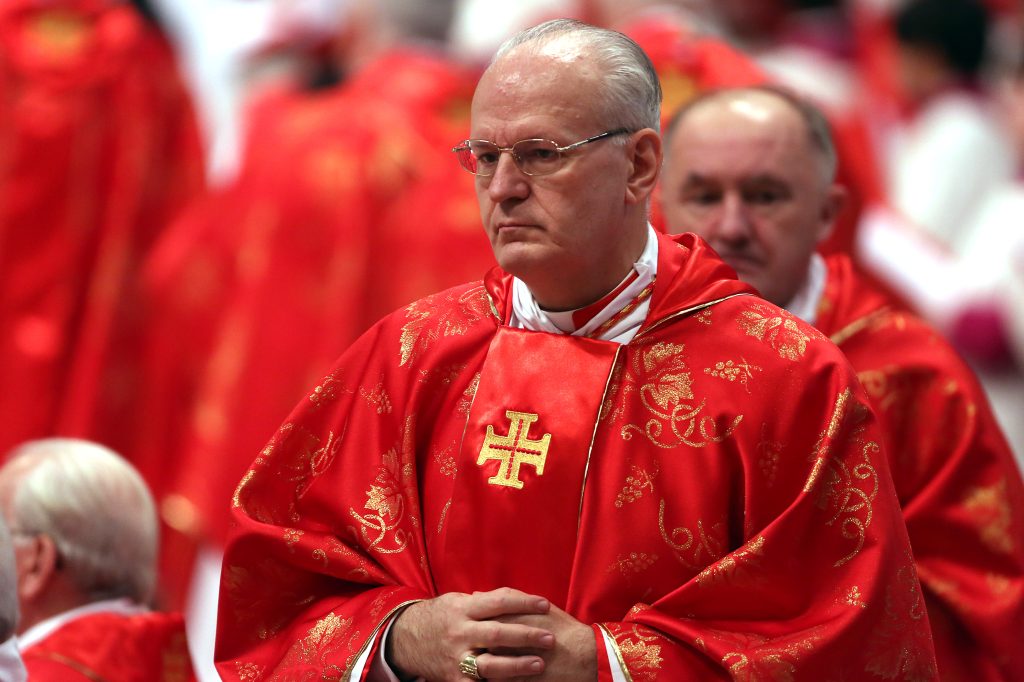
Cardinal Erdő returns to public life
Cardinal Péter Erdő attended Pentecost Mass in Hungary on Sunday, where he was greeted with prolonged applause after months of uncertainty over his condition Cardinal Péter Erdő has made his first public appearance in more than three months on Pentecost Sunday after suffering serious health complications, including multiple surgeries and a stroke. The Archbishop of Esztergom-Budapest, 73, attended the Pentecost Mass at the Basilica of the Assumption and Saint Adalbert in Esztergom, Hungary, where he was greeted with prolonged applause from the congregation. Although too weak to celebrate the liturgy himself, the cardinal’s presence at the packed basilica was received by many of the faithful as a sign of encouragement after months of uncertainty over his health. Cardinal Erdő had not appeared publicly since February 2, when he last celebrated Mass in the basilica on the feast of the Presentation of the Lord. The Pentecost Mass was celebrated by Bishop Levente Balázs Martos, auxiliary bishop of the Archdiocese of Esztergom-Budapest, during which 81 young people received the sacrament of Confirmation. At the beginning of the liturgy, parish priest Fr Csaba Török welcomed the cardinal warmly, with applause from worshippers gathered inside the cathedral. In his homily, Bishop Martos reflected on the Jewish origins of Pentecost and the covenant made between God and His people on Mount Sinai. “Pentecost was originally the feast of the giving of the law and the making of the covenant,” the auxiliary bishop said, adding that “the Jewish people made a covenant with God through Moses at Mount Sinai”. He described the covenant as taking place “under terrifying circumstances”, recalling how “the chosen people did not dare to go near the mountain, which God surrounded with fire, lightning and thunder”. The bishop contrasted this with the relationship between God and man established through Christ and the coming of the Holy Spirit. Quoting the Letter to the Hebrews, Bishop Levente said: “You have come to Mount Zion, to the festive gathering of the firstborn who are numbered in heaven.” “I could put this in freer words: it is not terror that keeps me close to God,” he added. Bishop Martos told the confirmands that the promise of the Old Testament is fulfilled through the Church because “the law is not written on stone tablets”. Instead, the words of Scripture are realised when God declares: “I will put my law into their hearts, and write it on their minds.” The bishop also spoke of how Christianity transformed the relationship between God and humanity from one founded principally on fear to one rooted in love. “Yes, the Bible says God is a jealous God, but in this it actually presents his condemning, burning, irrevocable love to us,” Bishop Levente said. “The New Testament celebrates that we can respond to this love through the law of the Holy Spirit.” Addressing those preparing to receive Confirmation, Bishop Martos emphasised the communal nature of the Church and the diversity of spiritual gifts within it. “The Church is a mysterious body in which the gifts of the Spirit can be experienced in different ways, and which lives its life precisely in the diversity of these gifts,” he said. He compared the life of the Church to a pilgrimage from Sinai to the heavenly Jerusalem. “We come from Sinai, we are heading to the heavenly Zion, to Jerusalem, but at the same time we really need this community, in which so many different gifts, so many different charisms, so many different opportunities and capacities complement each other,” the bishop said. In one of the most personal moments of the homily, Bishop Martos recalled teaching catechism to children and explaining the Christian covenant in simple terms. “Christ is counting on you,” he said he would tell them. “The answer was: ‘I am counting on you too.’” He said this reflected one of the deepest realities of Christian life. “We all experience situations in life where we feel like we need help. We need to have someone to count on,” he said. At the end of the Mass, Bishop Martos invited the congregation to renew their own faith and pray for the newly confirmed. “Let us all revive in our hearts the grace of the profession of faith. Let us all revive in our hearts the power of the Spirit, the faith placed in us,” the auxiliary bishop said. According to the Vatican journalist Diane Montagna, Cardinal Péter Erdő had been making a slow recovery from a serious health condition earlier this month. A prominent defender of traditional Catholicism, his public appearance will likely provide reassurance to the conservative wing of the Church.
May 27, 2026
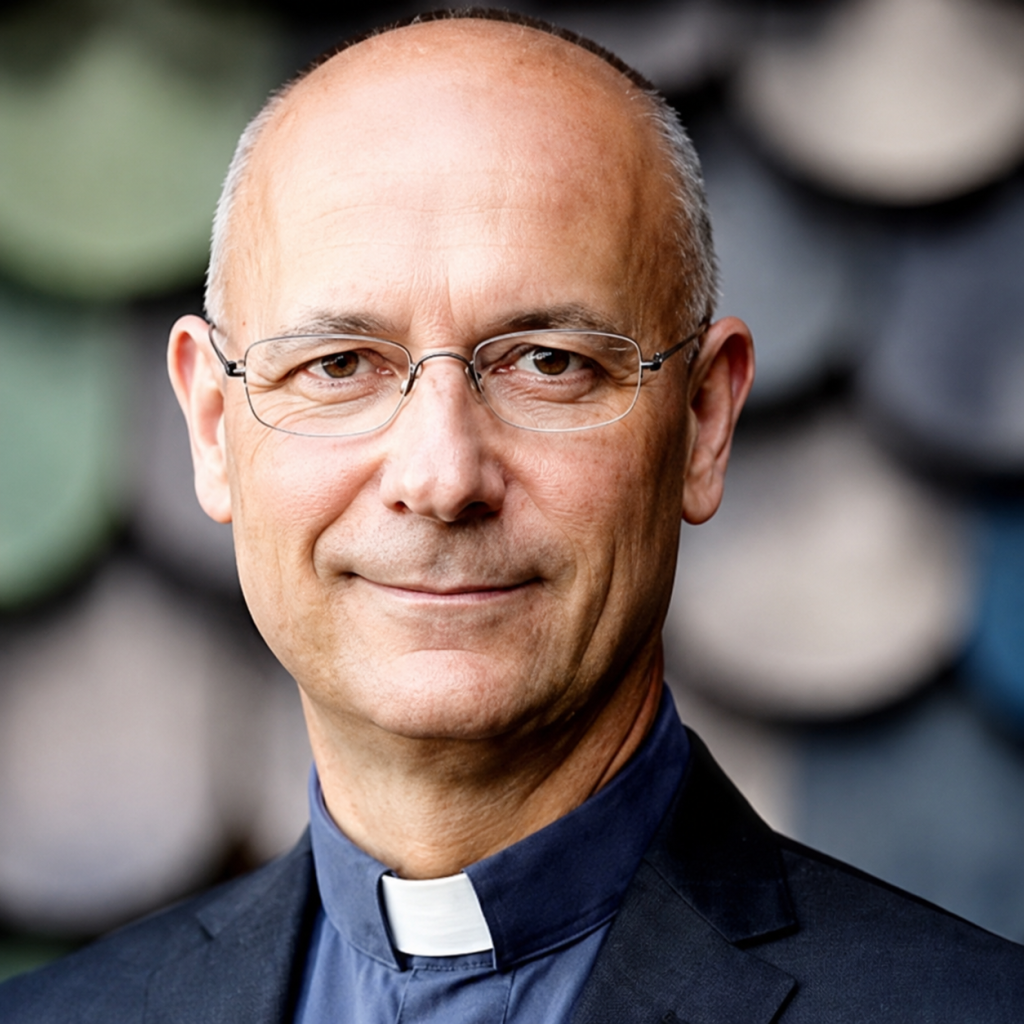
Vienna’s controversial cathedral rector to step down after 30 years
The Archdiocese of Vienna has confirmed that Fr Toni Faber will step down as rector of St Stephen’s Cathedral in 2027. The priest has long attracted attention for his media profile, comments on celibacy and support for blessings for same-sex couples The Archdiocese of Vienna has confirmed that the controversial priest Fr Toni Faber will step down as rector of St Stephen’s Cathedral in 2027, bringing to an end almost three decades in one of the most prominent clerical posts in the Austrian Church. The announcement was made by Archbishop Josef Grünwidl, who said that new leadership would be appointed for the cathedral in the summer of 2027. Speaking to the Austrian broadcaster ORF, the archbishop insisted that the decision was principally linked to the unusually long duration of Fr Faber’s tenure rather than any disciplinary measure. “No one has held this office for 30 years,” Archbishop Grünwidl said, describing the priest’s period in office as “a record”. The archbishop also stressed that the 64-year-old priest would not disappear from public ministry and would continue to exercise a pastoral role connected to the cathedral and the centre of Vienna. “We were ordained priests on the same day here in St Stephen’s Cathedral,” Archbishop Grünwidl said, underlining the personal bond between the two men as he praised Fr Faber’s decades of service. Fr Faber has long occupied an unusually prominent media profile for a diocesan priest and has frequently attracted controversy for remarks and public positions which drew criticism from more conservative Catholics. Recent media reports in Austria further intensified scrutiny of the priest after renewed attention was given to his appearances at public dance events accompanied by a woman. Although no formal accusation of misconduct emerged, the reports added to longstanding criticism surrounding his lifestyle and pastoral approach. Over the years he publicly questioned mandatory priestly celibacy and voiced support for blessings for same-sex couples. His regular appearances in Austrian public life, including events linked to politics, culture and entertainment, also distinguished him from the more restrained public image usually associated with cathedral clergy. Despite the controversy, the Archdiocese of Vienna has given no indication that Fr Faber’s departure from the rectorship represents any form of sanction. Archbishop Grünwidl instead repeatedly stressed that the priest would remain active within pastoral life in Vienna and continue to be associated with St Stephen’s Cathedral. Fr Faber himself indicated that he has no intention of withdrawing quietly from ecclesiastical life. Speaking about his future after the announcement, he said: “Being a priest and pastor is written in my DNA.” He added that he hoped to continue serving as a “bridge” between the Church and wider society, mentioning politics, business and culture among the fields in which he wished to remain active. He also referred to possible work connected with urban pastoral ministry in central Vienna. Fr Faber was appointed rector in 1997 and became closely associated with the public life of the cathedral through televised liturgies, high-profile funerals and appearances alongside leading figures from Austrian political and cultural life. His departure in 2027 will end one of the longest tenures in the cathedral’s history, with the archdiocese expected to announce his successor closer to the date of the transition.
May 27, 2026
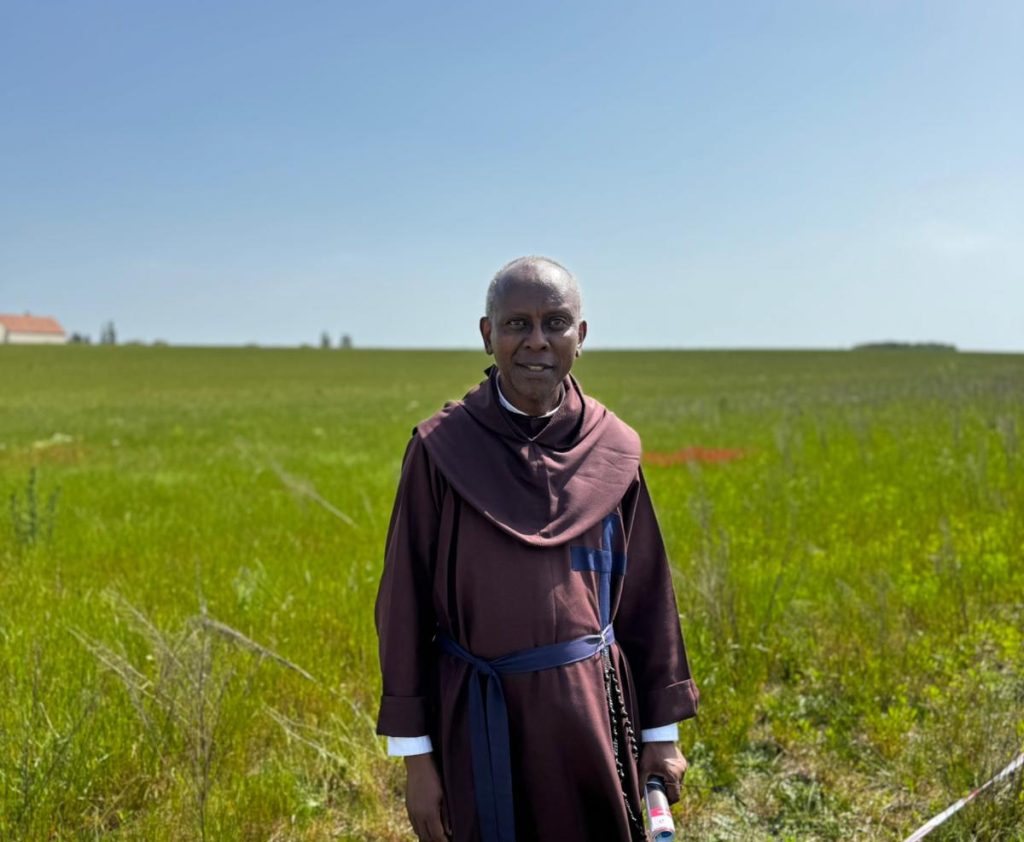
‘Chartres is the hope of Europe’: interview with Father Antonius Maria Mamsery
In an exclusive interview with AdVaticanum, Father Antonius Maria Mamsery, Superior General of the Missionaries of the Holy Cross, describes the Chartres pilgrimage as the “hope of Europe” and speaks about the revival of the Traditional Latin Mass, Africa’s growing vocations, and the future of the Church in Europe This year’s annual Pèlerinage de Chrétienté saw more than 20,000 people walk from Paris to the medieval cathedral city of Chartres. On Sunday, the pilgrims arrived in a field just outside Rambouillet, Yvelines, for Pentecost Sunday Solemn High Mass. The celebrant was Father Antonius Maria Mamsery, a Tanzanian priest and Superior General of the Missionaries of the Holy Cross (MSC). Chief celebrant of the 2023 Summorum Pontificum pilgrimage, Fr Antonius is well known for his attachment to the Tridentine Mass. Indeed, his community’s charism is to offer the traditional Mass, particularly in parts of the world where it is not readily available. After Holy Mass, Fr Antonius was kind enough to sit down with AdVaticanum and share his thoughts on the Church in Africa and Europe, the Traditional Latin Mass, and his impressions of the Pèlerinage de Chrétienté, which he was attending for the first time. AV: Father Antonio, could you share the story of your vocation to the priesthood and how you came to be superior of your community? AM: My vocation began when I was very young. My parents used to tell me that when I was around eight years old I was already teaching my brothers how to say Dominus Vobiscum , and sometimes I would cut up apples and distribute them to them like Communion. Later, I entered a minor seminary in the Kilimanjaro region of Tanzania. Then I discovered the beginnings of my congregation and moved from the seminary into the congregation in 1985. I joined this congregation then and have remained in it until now. My community was received by Saint John Paul II as one of the Ecclesia Dei communities from the beginning of the department’s establishment in 1988. We are one of those groups that preserved tradition without any negativity towards the Church. AV: As a native Tanzanian priest, what have you observed about the growth of the Traditional Latin Mass and the future of the Church in Africa? AM: When the liturgical changes were introduced, the natives were very obedient. They obeyed the hierarchy, but they still had this nostalgia. They were still searching for something. So, when we present to them the traditional liturgy, they sometimes have this very touching expression: “Oh, the Mass returned!” It is wonderful. They knew something was lost because they were faithful to the tradition. In Africa, devotion to the traditional Mass is growing. People are searching for it in countries like Uganda, Tanzania and parts of North Africa. Now I receive calls from young people from Mozambique, Angola and South Africa who want to know the traditional Mass. I have visited some of these groups and they are very enthusiastic. They want to know more about it. AV: The media has often reported that the Church in Africa is experiencing significant growth, while the Church in Europe is in a state of decline. Do you think this accurately represents the state of the Church? AM: I think that is quite accurate. But for me, Chartres has been very impressive. There are so many children here and I had never seen such a large group of children and young people in Europe. When you go to church, normally there are people from everywhere, in Germany, in Italy, in England, where I have visited, but in the traditional communities there are many young people. Traditional families are numerous, so they can be the future of the countries in Europe. AV: Do you think there will be a future when Africa, especially in the form of priests, will be the continent to re-evangelise Europe? AM: Yes. There are many vocations in Africa and there are many major seminaries. In my country, we had three major seminaries, but now there are at least seven and they are completely full. The numbers range from 300 to 400 in the major seminaries. If many of them are ordained, they can be sent to re-evangelise or help bishops who do not have vocations in their dioceses. In some parts of Europe there are dioceses that have only one seminarian or two, and they will need priests. There are men in Africa and Asia who are being formed for the priesthood and will be able to help others. Yesterday evening I was speaking with someone who told me that here in France a large number of diocesan priests are from Africa because the lack of priests in Europe is now very great. AV: In your homeland, there are a large number of communities where Catholics and Muslims live alongside one another. How does the Church interact with followers of Islam living amongst them? AM: Many Muslims are converting to Christianity. For example, during this Easter season many have been baptised. They come for catechism, they bring their children and they come to our schools. In Zanzibar, which is predominantly Muslim, we have various schools and many of those who register are Muslim families who learn about the Christian religion peacefully. There are not the fanatics that can sometimes be found in North Africa, where there are conflicts. In Tanzania there is peace between the two religions. We are friendly, we share our cultures and many other things. AV: What is your impression of this Pentecost pilgrimage to Chartres and the movement around it? AM: Well, this is my first time in Chartres. It is the hope of Europe, the hope of Christian culture, the hope of the revival of the faith and of Catholicism as it once was. The people are making sacrifices, walking in peace, praying and singing. The priests are hearing confessions, blessing people and offering guidance. You would not expect this in our time. You would expect people to be busy with their phones or television. But now they have left their homes to walk this hundred-kilometre pilgrimage. This is a revival of the faith. That is wonderful. AV: One of the characteristics of Chartres is the respect and devotion shown to priests. Why do you think this is? AM: Catholics and society itself respect priests when they live as priests. If priests in some way abandon themselves, so will be the response. But these priests of the traditional groups are trying their best to live their priesthood well. That is why people are so open to them. Young people see them and discover they have a vocation as well. They see the priest and think: “I want to be like that.” Young families will look and say: “How can my son become like that priest?” They often come from large Catholic families and their parents want them to be open to becoming a priest. AV: And finally, Father, how can people support your mission? AM: My community is growing rapidly. We have a great need for more space. I have started a minor seminary for early vocations. Initially we only had 17 young people, so I thought perhaps I had to offer a structure that could support up to 50, and suddenly we had 300. We need support so that we can provide the boys with board, classes and more. When they finish high school, we now have to offer them the opportunity to continue their philosophy and theology studies at a major seminary. So, if there are good people who want to help so that we have the possibility to grow, we will be very grateful. One of our men was recently ordained a priest in the Philippines and we had many young men saying: “Can I come? Can I come?” So we need the means to expand.
May 26, 2026