

Outside the Walls
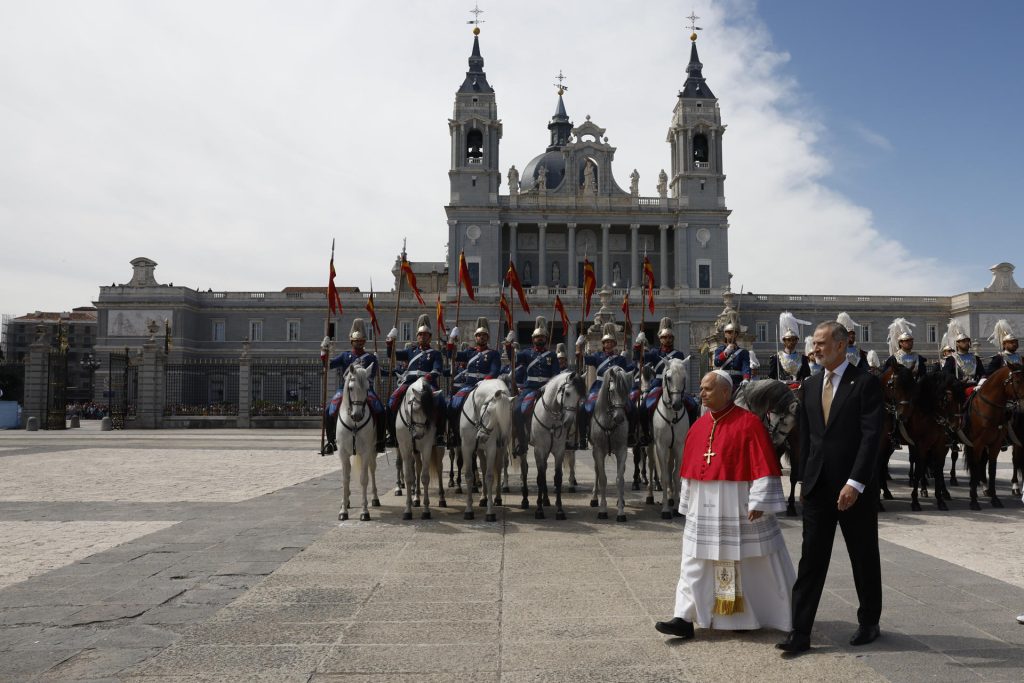
Pope Leo XIV’s first day in Spain in pictures
Pope Leo XIV has arrived in Spain for his first apostolic to the country. Our photo gallery captures the Holy Father’s arrival in Madrid, his meeting with King Felipe VI and Queen Letizia, the official welcome at the Royal Palace, and the opening moments of a visit focused on evangelisation, youth and the Church’s charitable mission Pope Leo XIV arrived in Madrid on Saturday to begin his first apostolic journey to Spain, a visit centred on evangelisation, youth and the Church’s charitable mission. During a packed opening day, the Pope met King Felipe VI and Queen Letizia at the Royal Palace, addressed political leaders and diplomats, visited a Cáritas centre serving people experiencing homelessness, and concluded the day before a crowd of hundreds of thousands of young people gathered for a prayer vigil in Plaza de Lima. Pope Leo XIV arrives at Adolfo Suárez Madrid–Barajas Airport to begin his first apostolic journey to Spain, which will last until 12 June. The Holy Father is greeted by Their Majesties King Felipe VI and Queen Letizia of Spain at Adolfo Suárez Madrid–Barajas Airport. At Madrid airport, the Pope is also greeted by the Prime Minister of Spain, Pedro Sánchez. Sánchez’s government has been responsible for some of the most aggressively secular and anti-Catholic laws the country has ever experienced, notably limiting religious education in Catholic schools and introducing assisted suicide. Pope Leo XIV arrives for a welcome ceremony at the Royal Palace of Madrid, where both the Spanish national anthem and the Pontifical Hymn are performed .(Photo credit: EFE/J.J. Guillén POOL) The Holy Father meets His Majesty King Felipe VI, Her Majesty Queen Letizia, Her Royal Highness the Princess of Asturias, and Her Royal Highness Infanta Sofía in the Gasparini Room of the Royal Palace of Madrid. Queen Letizia exercises the traditional privilège du blanc by wearing white in the Pope’s presence .(Photo credit: EFE/Ballesteros POOL) In the Hall of Columns, both the King and the Holy Father address the Diplomatic Corps. Pope Leo tells those gathered: “I come among you to confirm, encourage and inspire a renewed fidelity of believers to the Gospel, as well as a deeper reconciliation and cooperation between the various forces of this nation” Pope Leo arrives at the CEDIA 24-Hour Centre of Caritas Madrid, a project providing comprehensive care for people experiencing homelessness and social exclusion. (Photo credit: J.J. Guillén/EFE) Pope Leo, accompanied by his personal secretary, Monsignor Edgard Iván Rimaycuna Inga, listens to music performed by Niña Pastori, one of Spain’s most famous flamenco singers. (Photo credit: J.J. Guillén/EFE) Pope Leo shares a private word with His Eminence Cardinal José Cobo Cano, Cardinal Archbishop of Madrid. (Photo credit: J.J. Guillén/EFE) The Holy Father speaks to service users of Cáritas Madrid’s 24-Hour Emergency and Comprehensive Care Centre. The centre specialises in assisting people experiencing homelessness. On average, 82 people visit the day centre each day. In 2025, the centre assisted 2,562 people. (Photo credit: J.J. Guillén/EFE) Young people gather for a prayer vigil in Lima Square. Described as a “festival of faith”, the vigil includes music, the Rosary and Eucharistic Adoration. (Photo credit: Gabriel Gonzalez-Andrío) Spanish bishops wait for the Pope to arrive in Lima square. (Photo credit: Marcos Nogales) Pope Leo is welcomed at the vigil by some 600,000 young people. A recent survey found that 45 per cent of Spaniards aged 15 to 29 identify as Catholic today, compared with 31.6 per cent in 2020. (Photo credit: Luismagan) Pope Leo is welcomed at the vigil by some 600,000 young people. A recent survey found that 45 per cent of Spaniards aged 15 to 29 identify as Catholic today, compared with 31.6 per cent in 2020. (Photo credit: Luismagan) The Holy Father leads the crowd in Eucharistic Adoration, bringing the first day of his apostolic journey to Spain to a close. On Sunday, he will celebrate the Solemnity of Corpus Christi in Cibeles Square in central Madrid. (Photo credit: J.J. Guillén/EFE)
Jun. 6, 2026
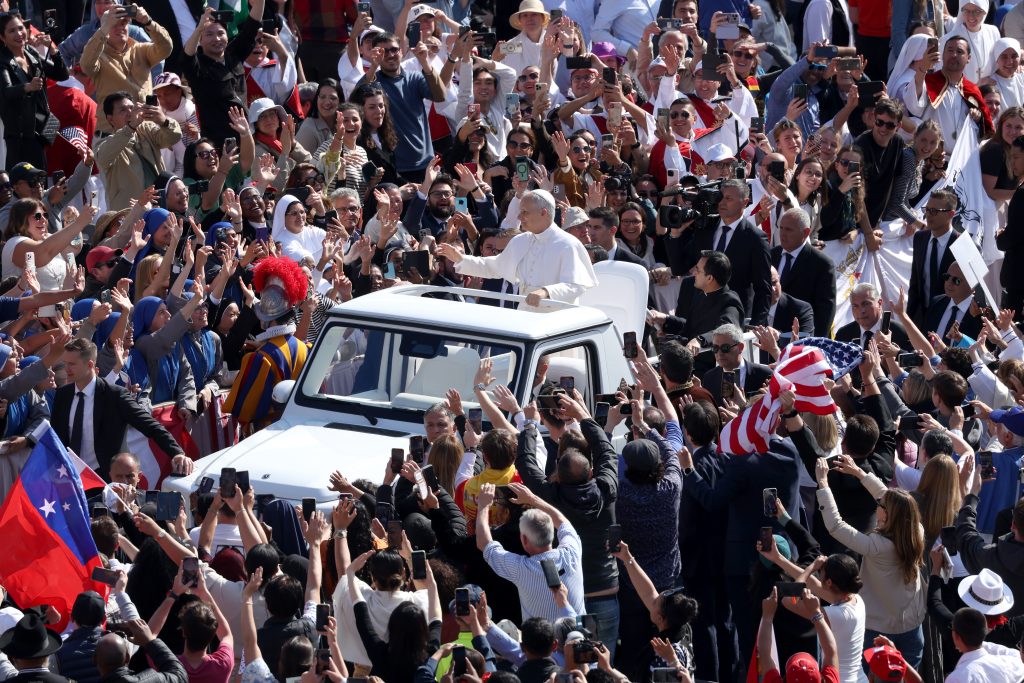
Inside the popemobiles for Pope Leo XIV’s apostolic journey to Spain
As Pope Leo XIV begins his apostolic journey to Spain, AdVaticanum can reveal details of the vehicles that will accompany him across Madrid, Barcelona and the Canary Islands during the six-day visit. The Pope will travel in two popemobiles brought from Rome and three specially adapted electric vehicles designed to allow closer contact with the […] As Pope Leo XIV begins his apostolic journey to Spain, AdVaticanum can reveal details of the vehicles that will accompany him across Madrid, Barcelona and the Canary Islands during the six-day visit. The Pope will travel in two popemobiles brought from Rome and three specially adapted electric vehicles designed to allow closer contact with the faithful during a packed programme of public events. The arrangements form part of a major logistical operation involving the Vatican, Spanish Church authorities and the Spanish Armed Forces. The two popemobiles arrived in Spain aboard Spanish Air Force transport aircraft, first stopping to deposit one of the cars in Barcelona before the other was taken to Madrid. Both carry the Vatican registration SCV 1. The first vehicle, a Mercedes-Benz 500, will serve during the Madrid portion of the journey before being flown to Gran Canaria. Iconic in design, Mercedes-Benz popemobiles have been the backbone of the Vatican’s fleet for decades. The Mercedes-Benz 500 which will be used during the Madrid and Gran Canaria legs of the journey The Barcelona popemobile has been made by the Japanese automobile maker Isuzu and is labelled as the D-MAX. Isuzu popemobiles came to prominence during the 2015 papal trip to the Philippines, and during this papal trip the vehicle will be used for the Pope’s engagements in the Catalan capital before it is transferred to Tenerife to meet the Pope upon his arrival on the largest of Spain’s Canary Islands. The Isuzu D-MAX which will be used for Barcelona and Tenerife Alongside the popemobiles, Leo XIV will also use three electric buggy-style vehicles specially designed for indoor settings and to facilitate close encounters with pilgrims. Two of the electric vehicles are being prepared in Spain, with one built in Madrid and another adapted in the Canary Islands, while a third has been transported from Rome. The papal visit, which runs from 6 to 12 June, will take Leo XIV to Madrid, Barcelona, Gran Canaria and Tenerife. It is the first papal visit to Spain since Pope Benedict XVI travelled to Madrid for World Youth Day in 2011. Pope Francis never visited the country, and Pope Leo’s decision to visit the historically Catholic country so early in his pontificate is generally seen as an acknowledgement that Spain is due a papal appearance. Historically, popes moved amongst crowds using the sedia gestatoria , a portable ceremonial throne consisting of an armchair upholstered in fine silk, mounted on a raised platform and carried on the shoulders of twelve attendants in uniform. It was last used during the very brief 1978 pontificate of John Paul I. Pius XII using the sedia gestatoria The first instance of a pope owning a car came when Pius X was given a 20/30 Itala by the Archbishop of New York, John Farley, in 1909. Pius reportedly refused to use the car, preferring his horse-drawn carriage. Pope Pius XI is known to have used a car, though his car use would have been limited to short trips in the Rome area. Having adopted the title “prisoner of the Vatican”, his movements were restricted. Even after the 1929 Lateran Treaty went a significant way towards regularising relations between the Italian state and the papacy, Pius XI’s travel did not extend much beyond the short drive to Castel Gandolfo, the papal summer residence. In 1930, Mercedes-Benz gave Pius XI a Nürburg 460, which is often described as the first popemobile, though the term had not yet been coined. It was not until Paul VI that the papacy began significant international travel, with Paul visiting 20 countries across six continents during his reign. Paul VI used specially adapted vehicles during these journeys, but the famous popemobiles seen today, with their raised papal seat, became common during the pontificate of John Paul II, who visited 129 countries during his 26-year pontificate. For John Paul II’s 1979 papal trip to the United States, Ford specially designed a 1979 Bronco for the visit, which is believed to be the first vehicle commonly called a “popemobile”. Since then, the name has stuck with each pontificate. There have been variants of the car to match the wishes of each pope, but they have retained their iconic design and become a feature of the papacy.
Jun. 5, 2026
German diocese investigates visions of Virgin Mary and Pius XII
The Catholic Church in Germany has opened a formal investigation into alleged Marian apparitions in a village that has attracted pilgrims for more than two decades. The Diocese of Aachen announced that Bishop Helmut Dieser has appointed a four-member commission to examine claims of supernatural phenomena reported in Sievernich, a village in North Rhine-Westphalia that […] The Catholic Church in Germany has opened a formal investigation into alleged Marian apparitions in a village that has attracted pilgrims for more than two decades. The Diocese of Aachen announced that Bishop Helmut Dieser has appointed a four-member commission to examine claims of supernatural phenomena reported in Sievernich, a village in North Rhine-Westphalia that became known among devotees of private revelations after a local woman said she had seen the Virgin Mary there. The commission will work under new norms issued by the Vatican’s Dicastery for the Doctrine of the Faith for evaluating alleged supernatural phenomena. It is chaired by Stefan Mückl, a canon lawyer based in Rome. The inquiry will focus on claims made by Manuela Strack, a mother from nearby Düren, who reported seeing the Virgin Mary in St John the Baptist Church in Sievernich from 2000 onwards. According to accounts published by supporters of the apparitions, Strack said the Virgin appeared dressed in white with a long veil and delivered messages calling for conversion, prayer and penance. Among the themes repeatedly attributed to the alleged apparitions was a call for Catholics “to repent, to make sacrifices and to do penance”. The messages also urged the faithful to “have frequent recourse to the sacrament of penance and to receive Our Lord worthily in the Eucharist”. Other messages encouraged perpetual prayer, humility and fidelity to the Church. One account states that the Virgin wished Catholics “to adore Him in fervent prayer” and that “we are to pray unceasingly”. The reported apparitions soon drew growing numbers of pilgrims to the village, situated between Cologne and Aachen. Several hundred people travelled to Sievernich in October 2002 when Strack announced what was described at the time as the final scheduled apparition. Although the monthly apparitions subsequently ended, Strack later claimed that further encounters with the Virgin continued until October 2005. Supporters of the alleged revelations say messages were also received from Jesus, St Michael the Archangel, St Teresa of Ávila, Padre Pio, Pope Pius XII and other figures. One of the more unusual claims associated with the site concerns a message reportedly received on 7 October 2002 in which the Virgin is said to have told Strack: “I herewith hand over to you the keys of my beloved divine Son Jesus Christ.” According to published accounts, the visionary was instructed to remain silent because “you will not be believed, yet everything will come to pass in this way”. Supporters later claimed that the contents of the alleged revelation were passed to Rome. The apparitions were also accompanied by calls for the construction of a spiritual centre in Sievernich. In a message attributed to Jesus on 19 May 2003, He is reported to have said: “This place is set aside for Me and My Mother. I want people to construct a centre here, which will serve the Church, My Body, and thus Me.” Another message attributed to the Virgin states: “I desire the construction of a faith centre in this place. This is my wish and the wish of my Son Jesus.” The original series of apparitions appeared to conclude in 2005, but the claims resumed in November 2018 when Strack reported an apparition of the Infant Jesus of Prague. Since then, she has continued to report alleged visions and locutions involving Jesus, the Child Jesus, St Michael the Archangel, St Charbel, St Joan of Arc and other saints. Messages attributed to those figures have continued to be published during 2025 and 2026. The Diocese of Aachen said the newly established commission will examine the reported events and messages and assess their significance. The decision marks the first formal diocesan investigation into the Sievernich claims under the Vatican’s revised norms, which were introduced to provide bishops with clearer procedures for evaluating alleged apparitions and other extraordinary religious phenomena.
Jun. 5, 2026
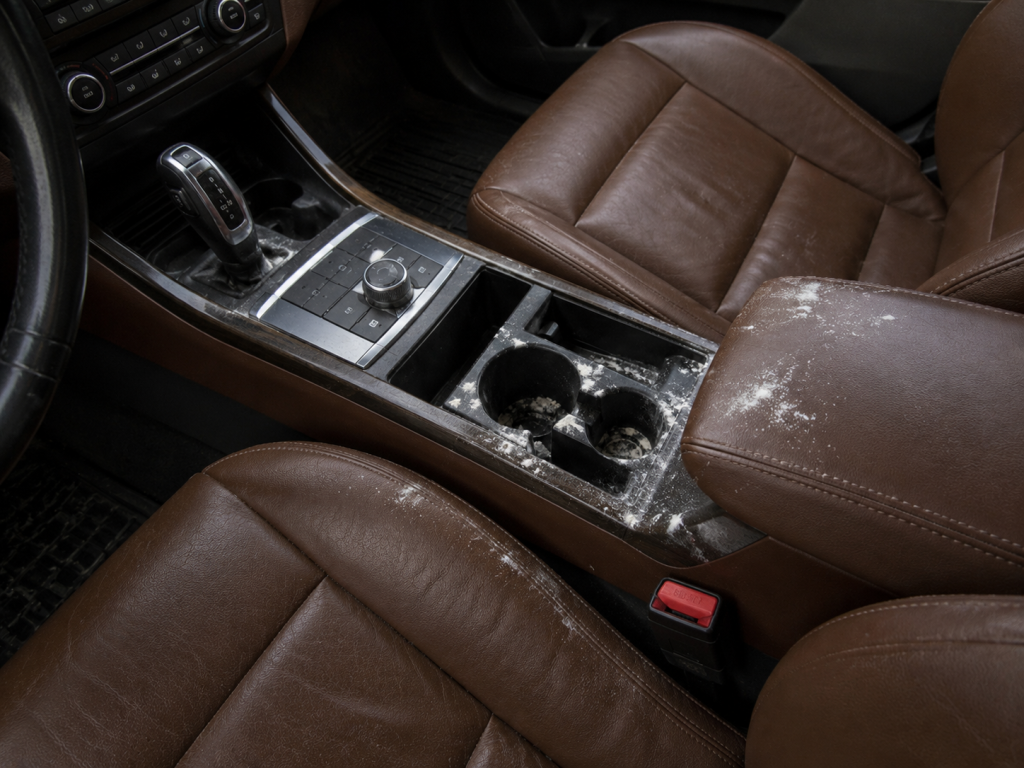
Patriarch Kirill transfers Metropolitan Hilarion after illegal substance bust
Patriarch Kirill has transferred Metropolitan Hilarion to South America after a search of a vehicle in which he was travelling led to a criminal investigation in the Czech Republic Russian Patriarch Kirill has transferred Metropolitan Hilarion (Alfeyev) to South America after Czech police confirmed that a white powder discovered in a vehicle in which he was travelling was cocaine. The decree, published by the Moscow Patriarchate on 3 June, assigns the former head of the Church’s Department for External Church Relations to the Russian Orthodox Eparchy of Argentina and South America. According to the decree, Metropolitan Hilarion will serve at the Church of the Holy Apostles Peter and Paul in Santa Rosa and the Church of the Holy Apostle and Evangelist John the Theologian in Campina das Missões, both in the Brazilian state of Rio Grande do Sul. The document states that the move was made because it was no longer possible to implement a Holy Synod decision of 27 December 2024 that had assigned the metropolitan to the Church of Saints Peter and Paul in Karlovy Vary in the Czech Republic. The transfer follows an investigation by Czech authorities after police stopped a vehicle carrying Metropolitan Hilarion on 24 May while he was travelling from Karlovy Vary to Budapest. During a search of the vehicle, officers discovered several containers containing a white powder. The substance was sent for forensic examination, and Metropolitan Hilarion was detained for two days before being released without charge, bail conditions or travel restrictions. On 3 June, the Czech newspaper Deník N reported that forensic testing had confirmed the substance was cocaine. Metropolitan Hilarion has denied any connection to the drugs and said the substance was planted in the vehicle. In a message published on his Telegram channel after his release, he wrote: “To slip substances like these into someone’s pocket, or bag, or suitcase, or car, or apartment, and then call and say where they are, in general, it doesn’t cost anything. This could happen to anyone.” He added: “Sometimes it is important simply for us to appreciate our situation, to appreciate what is happening around us, and to thank God for how He takes care of us and brings us out of the most difficult situations.” According to a statement published by the Moscow Patriarchate, the circumstances surrounding the detention raised questions concerning “legality and observance of procedural norms”. Metropolitan Hilarion’s lawyer, Michal Pacovský, reportedly expressed concern that his client had not been permitted to observe part of the vehicle search after being taken away from the scene. Russia’s Foreign Ministry also criticised the detention and called for what it described as the persecution of Russian Orthodox clergy in the Czech Republic to cease. After his release on 26 May, Metropolitan Hilarion returned to Russia. Photographs published on his Telegram channel later showed him assisting at a Divine Liturgy celebrated by Patriarch Kirill at the Trinity Lavra of St Sergius outside Moscow. The latest transfer comes less than two years after the metropolitan was moved from Hungary to the Czech Republic following another controversy that attracted international attention. In June 2024, a former aide, George Suzuki, a Japanese citizen, accused Metropolitan Hilarion of sexual misconduct and alleged links to Russian intelligence services. The metropolitan denied the allegations and said he was the victim of an extortion attempt. The dispute developed after Metropolitan Hilarion reported the disappearance of watches and cash worth around €90,000 from his residence. Hungarian authorities later concluded that an intention to misappropriate the property could not be proven. Following a Church investigation, Metropolitan Hilarion was reassigned from Hungary to Karlovy Vary at the end of 2024. For much of the previous decade, however, he had been one of the most prominent figures in the Russian Orthodox Church. In 2009, Patriarch Kirill appointed him chairman of the Moscow Patriarchate’s Department for External Church Relations, the body responsible for relations with other Christian churches, governments and international organisations. The post had previously been held by Patriarch Kirill before his election as Patriarch of Moscow, and Metropolitan Hilarion was seen as one of the Church’s leading representatives abroad. During his tenure, he met both Pope Benedict XVI and Pope Francis and took part in the historic meeting between Pope Francis and Patriarch Kirill at Havana Airport in Cuba in February 2016, the first meeting between a Pope and a Russian Orthodox Patriarch. His removal from the department in 2022 followed Russia’s full-scale invasion of Ukraine. Weeks before the invasion, Metropolitan Hilarion had said that war was “not a method to solve accumulated political problems” and that every armed conflict brought “untold calamities”.
Jun. 5, 2026
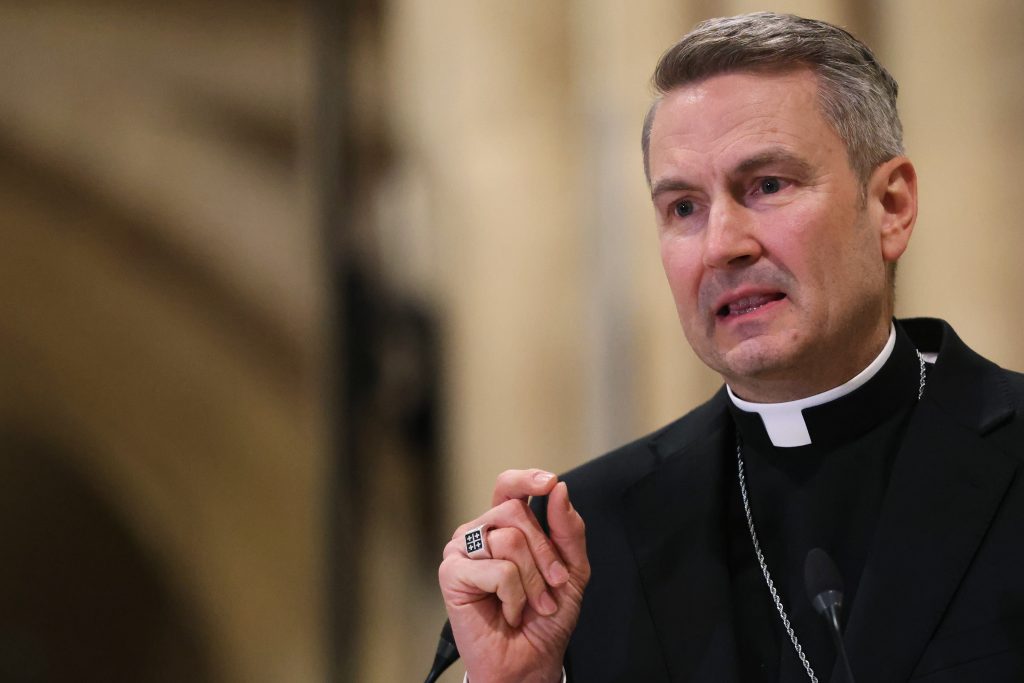
Archbishop Hicks warns New York assisted suicide law begins a “frightening era”
New York’s assisted suicide law will come into force on 5 August. Archbishop Ronald Hicks has warned it marks the beginning of a “new and frightening era” and questioned whether safeguards will remain in place over time The Archbishop of New York has warned that a “new and frightening era” will begin when the state’s assisted suicide law comes into force in August. Archbishop Ronald Hicks issued the warning as New York prepares to implement the Medical Aid in Dying Act on 5 August, allowing terminally ill adults who have been given six months or less to live to obtain life-ending drugs from a physician. Writing in First Things , Archbishop Hicks described the legislation as “the latest assault on human life” and questioned whether the measure would remain limited to the terminally ill. “When this law becomes effective, a new and frightening era begins in New York,” the archbishop wrote. “How long before this so-called ‘compassion’ for the terminally ill evolves from a ‘choice’ into an expectation to kill oneself for all sorts of vulnerable individuals, including those with disabilities, the elderly, and those in impoverished and medically underserved communities?” The law was passed by the New York legislature last year and signed by Governor Kathy Hochul in February. New York will become the latest American state to permit physician-assisted suicide, joining 11 states that have made provision for assisted suicide. The final version of the law includes a series of safeguards, including requirements that patients be assessed by two doctors, undergo a mental health evaluation, and observe a waiting period before receiving a prescription. However, these safeguards rarely work and are often later liberalised, with Vermont`s 2023 removal of in person consultations being a clear example. Opposition to New York’s legislation has been led by Catholic leaders and pro-life groups, who argue that legalising assisted suicide places pressure on vulnerable people and undermines respect for human life. Archbishop Hicks pointed to Canada as a warning of how such laws can expand beyond their original purpose. “In Canada, legislation that was allegedly intended only for the dying was quickly broadened to cover those with ‘chronic’ but not life-threatening illnesses, such as arthritis, who wish to seek a doctor’s help in killing themselves,” he wrote. The archbishop also criticised what he described as a contradiction between efforts to prevent suicide and the legalisation of physician-assisted death. “Admirably, New York State devotes tremendous resources to suicide prevention among our young people,” he wrote. “So too, many of our bridges and train crossings have signs reminding people that ‘life is worth living’, along with numbers to call for help. How at odds this is with the rush to help others end their lives.” Archbishop Hicks said there was a danger that assisted suicide could become influenced by outside pressures. “What begins as a personal choice could lead to situations where external forces, such as government agencies or insurance companies, begin to influence or even dictate end-of-life decisions,” he wrote. “This shift could undermine the respect and protection due to every human life.” The archbishop instead highlighted the role of palliative care and hospice services for those approaching death. He cited the example of Calvary Hospital and the Dominican Sisters of Hawthorne, which provide care for the terminally ill, and drew attention to guidance published by the New York State Catholic Conference on end-of-life decisions. Archbishop Hicks concluded by reaffirming Catholic teaching on the sanctity of life. “Our lives belong to God, and it is incumbent upon us to respect and protect our own lives, just as we rightly demand respect and protection for all human life, from conception until natural death,” he wrote. The Catholic Church has consistently opposed assisted suicide, teaching that the deliberate ending of human life is morally unacceptable and that the sick and dying should instead be accompanied through compassionate care.
Jun. 4, 2026
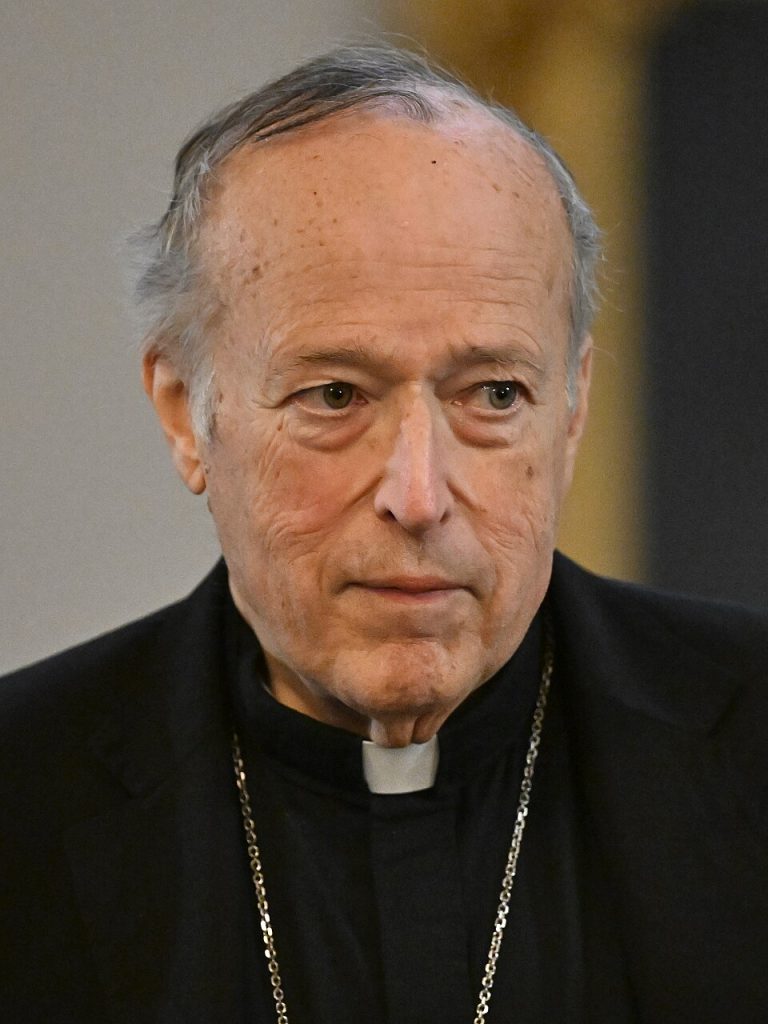
Cardinal McElroy removes Monsignor Rossetti as exorcist after UFO comments
Cardinal Robert McElroy has removed Monsignor Stephen Rossetti as an exorcist for the Archdiocese of Washington after the priest suggested that many reported UFO sightings could be demonic manifestations. The archdiocese also ended its affiliation with the Saint Michael Center for Spiritual Renewal Cardinal Robert McElroy has removed Monsignor Stephen Rossetti as an exorcist for the Archdiocese of Washington after the priest publicly suggested that many reported UFO sightings could be demonic manifestations. The Archdiocese of Washington announced that Cardinal McElroy had also ended all affiliation between the archdiocese and the Saint Michael Center for Spiritual Renewal in Washington, D.C., which is directed by Monsignor Rossetti. In a statement released by the archdiocese, Cardinal McElroy said that comments made by the priest linking unidentified flying objects to demonic activity, together with the centre’s recent use of social media, “gravely undermine the Church’s very precise teaching on the devil, demons and exorcism”. The move follows remarks made by Monsignor Rossetti during a YouTube video published on 29 May in which he discussed reports of unidentified aerial phenomena. “Probably many, if not most, UFO sightings are in fact demons,” Monsignor Rossetti said. The priest, who has long been associated with exorcism ministry in the United States, added that he personally does not believe intelligent life exists on other planets and argued that some reported UFO encounters resembled experiences he had witnessed during exorcisms. According to Monsignor Rossetti, demons ordinarily remain hidden but can sometimes manifest themselves in unusual ways. He pointed to reports of shadowy figures, unexplained lights and mysterious orbs, claiming that such phenomena often mirrored accounts heard during deliverance ministry. He also recounted a case involving a woman who identified a photograph of a UFO as depicting a demonic presence. Monsignor Rossetti, 74, is a priest of the Diocese of Syracuse in New York and has spent much of his ministry working in the fields of psychology, priestly formation and spiritual renewal. A graduate of the United States Air Force Academy, he served in Air Force intelligence before entering seminary and being ordained a priest in 1984. He later earned a doctorate in counselling psychology from Boston College and became one of the best-known American priests working at the intersection of psychology and Catholic pastoral ministry. From 1996 until 2009, he served as president and chief executive of Saint Luke Institute in Maryland, a treatment and education centre specialising in the psychological and spiritual wellbeing of clergy and religious. He subsequently joined the faculty of The Catholic University of America in Washington. The Archdiocese of Washington has not indicated whether a successor will be appointed to fulfil the role previously held by Monsignor Rossetti. The statement issued by Cardinal McElroy did not elaborate further on the decision beyond citing the priest’s remarks on UFOs and concerns about the centre’s social media activity. While Catholic teaching affirms the existence of the devil and permits the practice of exorcism under strict ecclesiastical regulation, the Church has generally urged caution regarding alleged supernatural phenomena and has not endorsed theories linking reports of UFOs to demonic manifestations.
Jun. 4, 2026