

Latest
Vatican examines appeal over Charlotte liturgical restrictions
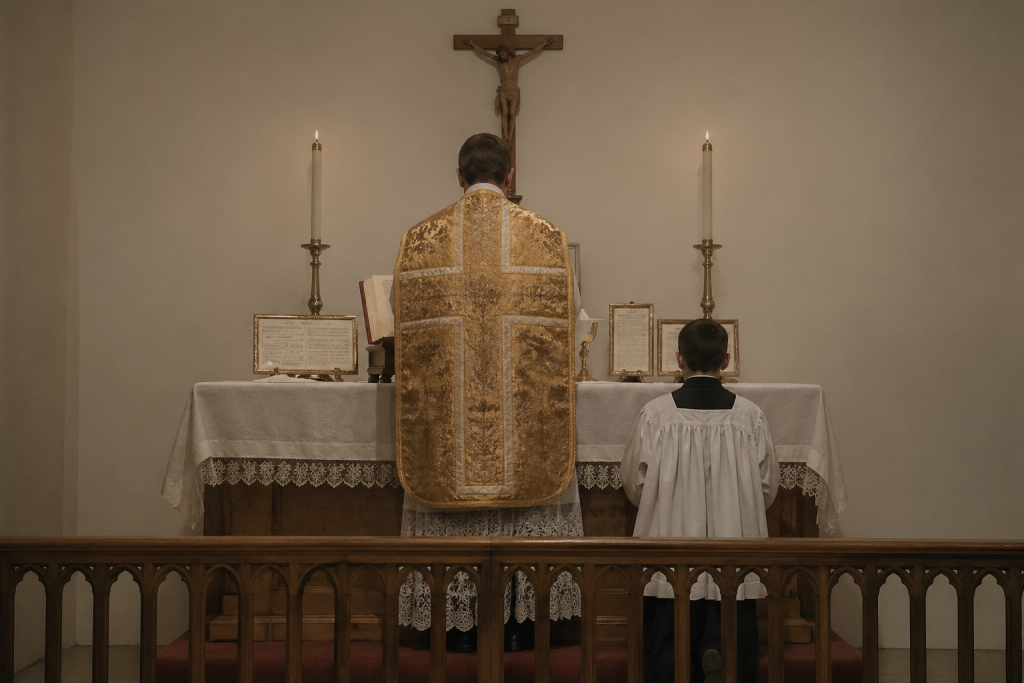
The Vatican has confirmed it is reviewing a formal appeal over liturgical decisions in the Diocese of Charlotte, including restrictions placed on the Traditional Latin Mass The Vatican has confirmed that it is reviewing a formal appeal concerning liturgical decisions taken by Bishop Michael Martin in the Diocese of Charlotte, according to a letter issued by the Dicastery for Divine Worship and the Discipline of the Sacraments. The letter, dated 16 February, states that the dicastery has “received a hierarchical recourse” regarding the bishop’s “apparent refusal” to respond to “requests concerning liturgical matters”. It adds: “The Dicastery will proceed to examine the Acta, which have been assigned protocol number 369/25.” The appeal itself was filed on 9 February. The acknowledgement confirms that the case has formally entered the Vatican’s administrative process, though no indication has been given as to how long the review may take or what outcome may follow. The appeal arises after a series of liturgical measures introduced in Charlotte over the past year. Most notably, Bishop Martin ordered that the Traditional Latin Mass be discontinued at parish churches in the diocese and restricted to a single location outside the city. Changes have also been implemented at parish level. Directives issued within the diocese have included the removal of altar rails and kneelers used for the reception of Holy Communion. These measures prompted concern among clergy, and in January a group of diocesan priests submitted a dubia to the Dicastery for Legislative Texts, questioning the legal basis of the restrictions. Additional controversy followed the circulation of draft liturgical norms, which proposed limits on the use of Latin, the celebration of Mass ad orientem, and certain traditional vestments and practices. The Diocese of Charlotte later stated that the text was a draft and had been revised after feedback. The Vatican body now examining the recourse is headed by Cardinal Arthur Roche, who has overseen the implementation of liturgical policy following Traditionis Custodes. The dicastery’s role includes adjudicating disputes concerning the application of liturgical law and responding to appeals submitted through hierarchical recourse. Such recourse allows clergy or lay faithful to challenge administrative acts they believe have been improperly handled or insufficiently addressed at diocesan level. The procedure involves the submission of documentation, which is then reviewed by the competent dicastery in Rome. No further details about the substance of the appeal have been released beyond the brief description contained in the Vatican letter. The document has, however, circulated widely in recent days. The Diocese of Charlotte has not issued a further statement in response to the Vatican’s acknowledgement of the case.
Apr. 29, 2026
Channel 4 drama Falling turns celibacy into a hollow spectacle
A new Channel 4 drama will depict a nun and a priest in a romantic relationship, placing Catholic vows at the centre of a storyline that treats celibacy as something to be tested and overcome A new Channel 4 drama centred on a romantic relationship between a nun and a Catholic priest has been announced. Falling , a six-part series written by Jack Thorne, will depict the story of a nun in religious life who develops feelings for a priest, whose response to her advances becomes a central tension of the narrative. The programme forms part of a wider slate of new productions commissioned by Channel 4, alongside Pierre , a separate drama by Roy Williams starring David Harewood. The broadcaster first confirmed the project in February 2025, with production beginning two months later. The series is being produced by The Forge Entertainment, a subsidiary of Banijay UK, whose previous credits include National Treasure and The Buccaneers . Casting details announced in April 2025 confirmed Keeley Hawes in the role of Anna, described as a “devoted nun”, and Paapa Essiedu as David, a Catholic priest. The supporting cast includes Rakie Ayola, Jason Watkins, Niamh Cusack, Adrian Scarborough, David Dawson, Susan Brown and Sandra Voe, alongside newcomers Holly Rhys and Shayde Sinclair. According to production material released by Channel 4, the series will follow two individuals “deeply committed to their work in the Church and in their community”, whose relationship develops in unexpected ways. “Neither is expected to fall in love. But when they do, both are forced to wrestle with what it means for them, their vows and their relationship with God,” the synopsis states, describing the programme as a “contemporary romantic drama”. The involvement of Thorne, a BAFTA award-winning writer whose previous work includes Adolescence and Help , has been highlighted by the broadcaster as a significant element of the project. Speaking at the time of the announcement, he said: “I never thought I’d write a love story, but I am very excited to be making one with the brilliant Peter Hoar.” Hawes, who will play the central role of Anna, said: “I’m thrilled to be taking on the role of Anna and so looking forward to working alongside the brilliant Paapa Essiedu to bring Jack Thorne’s beautiful scripts to life.” Essiedu added: “Falling is a story that has Jack Thorne’s singular talent of mining the sublime out of the ordinary running all the way through.” The series is directed by Peter Hoar, whose recent work includes It’s A Sin and episodes of The Last of Us . Executive producers include George Faber and George Ormond, with Joe Donaldson serving as producer. The drama has been commissioned by Ollie Madden, Director of Film4 and Channel 4 Drama, and Gwawr Lloyd. Lloyd said: “The combination of Keeley Hawes and Paapa Essiedu, alongside Jack Thorne’s incredible scripts and Peter Hoar’s direction, means this will be the most extraordinary show. We are so excited to bring this unique and compelling love story to Channel 4.” While Falling is presented as a fictional drama, its premise touches directly on Catholic teaching concerning celibacy and religious vows. Both priests and women in consecrated life in the Latin Church undertake commitments that preclude marriage, a discipline that has long been regarded as integral to their vocation. The announcement of Falling is a deliberate attempt to treat the Roman Catholic Church and the Latin tradition of sacred celibacy as material for dramatic transgression. The premise is framed as a “contemporary romantic drama” in which vows are placed under emotional strain. This is a sign of well-established, society-wide anti-Catholic sentiment and, in particular, a challenge to consecrated life, not as a sign of spiritual transcendence, but as a psychological tendency waiting to be resolved through desire and lust. This becomes more explicit as the nun in Falling is not presented first as a bride of Christ, but as a woman defined by an inner conflict that must culminate in romantic expression. The priest, likewise, is drawn into a narrative in which celibacy appears as an obstacle rather than a vocation. This is a product of a wider cultural movement in which the sacred is frequently recast as repression and denial. Since the upheavals of the Enlightenment, Catholic institutions have often been treated in British culture as relics of a restrictive order. In earlier centuries, anti-Catholicism was overt and political; in the modern era, it has become more aesthetic and psychological, making it more accessible to the average person. The confessional, the cloister and the priesthood are no longer attacked directly, but reinterpreted as symbols of conflict against the “secular” West. The shift is subtle but significant, as it allows Western secular culture to maintain a posture of tolerance while continuing to single out Catholicism as uniquely available for ridicule. Moreover, such narratives are rarely extended to other religious traditions. There is an instinctive hesitation to depict a rabbi or an imam in similar terms. It is an unspoken hierarchy of sensitivities, in which Catholicism is perceived as both safe and familiar enough to be handled without restraint. It is often Catholics who are singled out for ridicule. Furthermore, this recalls how the secular celebration of Halloween in the West has increasingly included costumes that trade on religious imagery in ways many Catholics find irreverent, particularly the recurring trope of the sexualised nun. What might once have been regarded as harmless fancy dress now reflects a cultural tendency to strip sacred symbols of their meaning and repurpose them for amusement or provocation. This is a sign, in the modern West, of how easily the sacred can be trivialised when its underlying meaning is no longer grasped. This was perhaps most apparent in the recent controversy surrounding the radio station Studio Brussel. Earlier this year, presenters Eva De Roo and Dries Lenaerts apologised for a sketch in which Catholic statues, including those of Christ and the Virgin Mary, were smashed as part of a comedic segment. Interviewed by Colm Flynn of EWTN News, the presenters explained their actions, saying: “I think it might offend people, but I think in Belgium not really, we are not a very religious country… I would have been more careful in another country, but in Belgium it is not a big issue.” Flynn then asked the presenters whether they would smash an image of Muhammad, which prompted a much more sober reaction. “That is a very dangerous question,” one said, while another added: “No, no, that would be inappropriate.” They also unanimously agreed they would not do the same to a Jewish symbol. The implication was clear: Catholic symbols were perceived as uniquely permissible targets within this hierarchy of “sensitivities”. Falling , it seems, is another example of modern writers struggling to imagine religious commitment except as a prelude to its own violation. Religious life cannot be appreciated for its intrinsic beauty, but must rather be desecrated to earn viewers’ apparent interest. The irony is that, whilst a quickly fading generation of writers attempts to entice its audience through sacrilege, there is a growing interest in traditional expressions of religious life, with a generation exhausted by media cycles and instant communication finding refuge in contemplation and the rhythm of prayer. Indeed, last summer was branded online as “Convent Summer”, with an explosion of interest in going on retreat. Similarly, there has been a worldwide surge in people going on pilgrimage, with the number of people walking the Camino de Santiago de Compostela increasing almost tenfold since 2000. This thirst for authentic religious life makes the richness of vocation being reduced to a single preoccupation of the writer even sadder. However, as a results-driven economy makes apparent its shallowness, and viewers’ preference for the Church’s truths becomes known, we might expect less Falling -style degradation and more of what has shaped Christian culture for hundreds of years: the adventure of religious life.
Apr. 28, 2026
Pope Leo receives Cardinal Simoni in private Vatican audience after Easter appearance
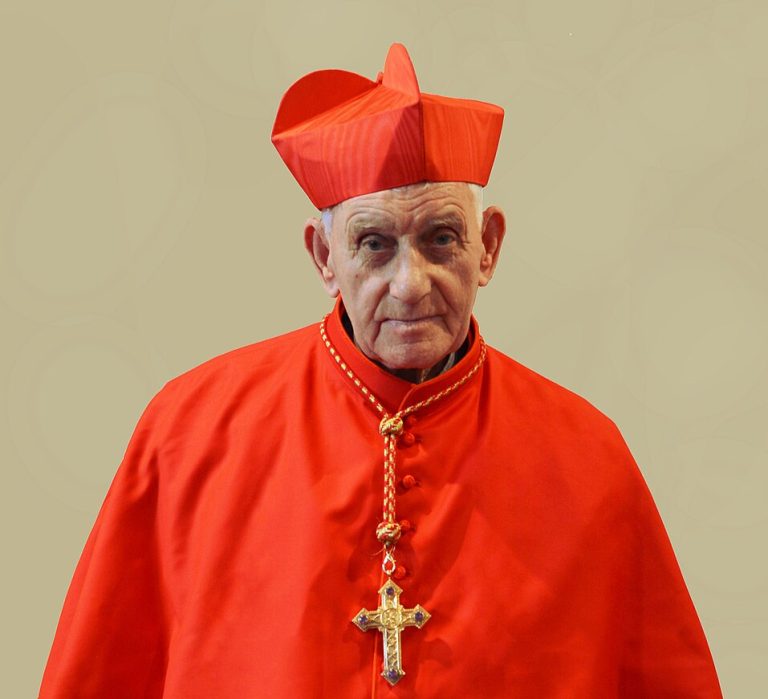
Pope Leo received Cardinal Ernest Simoni in a private Vatican audience on April 27, marking their second meeting since Easter Sunday. The Albanian cardinal, once sentenced to death under communism, presented a relic the Albanian martyrs Pope Leo received Cardinal Ernest Simoni in a private audience at the Vatican on April 27, less than a month after their appearance together on Easter Sunday. The audience took place in the Hall of Popes and included around 40 members of the cardinal’s family. It marked the second notable encounter between the two men in recent weeks, following the Easter Sunday Urbi et Orbi blessing on April 5, when Cardinal Simoni stood alongside the cardinal protodeacon during the papal appearance from the central loggia of St Peter’s Basilica. Speaking afterwards to Vatican Media, Cardinal Simoni described the meeting in direct and emphatic terms. “All joy, all hope,” he said, describing the atmosphere of the encounter. He added: “It was an atmosphere of all joy, all hope, gazing upon the face of the Holy Father, which represents the face of Jesus, to proclaim to all men the news of Heaven, of peace, of brotherhood and of love for all the peoples of the world.” “Let us proclaim together for all the peoples of the world the peace that comes from Heaven,” Cardinal Simoni said. At the conclusion of the audience, Cardinal Simoni presented Pope Leo with a gift connected to the history of Catholic persecution in Albania. “Coming to Italy from Albania, my thoughts are with the martyrs,” he said, before offering “the cross and a relic of the Albanian martyrs who gave their lives for fidelity, for the love of Jesus, for the salvation of the Albanian people, to see all men smile upon Heaven”. A priest of the Archdiocese of Shkodra-Pult, he marked the 70th anniversary of his ordination earlier this month, on April 7, a milestone reached after a lifetime marked by persecution under Albania’s communist regime. Arrested on Christmas Eve 1963 for celebrating a Mass deemed illegal by the authorities, he was initially sentenced to death before the penalty was commuted to 25 years of forced labour. Released in 1981, he remained under suspicion and was still regarded by the regime as an “enemy of the people” until the collapse of communism in 1990 allowed him to resume public ministry. His testimony later came to wider attention during the papal visit to Albania in 2014, when Pope Francis listened to his account and referred to him as a “living martyr”. Two years later, he was created a cardinal in recognition of that witness. Despite his age, Cardinal Simoni has remained active in maintaining links with communities attached to the Traditional Latin Mass. He is a defender of the older liturgical form and has longstanding associations with traditionalist institutes, including regular visits to the International Seminary of the Institute of Christ the King Sovereign Priest at Gricigliano, near Florence. He has been present there for major liturgical celebrations, including the Feast of St Joseph, and has spent periods such as Holy Week with the community in recent years. During a Pontifical Latin Mass for the Summorum Pontificum Pilgrimage celebrated by Cardinal Raymond Burke in St Peter’s Basilica on October 25, 2025, Cardinal Simoni recited the prayer to St Michael the Archangel, describing it as a reminder that “the Devil exists, and the Church continues to fight”. The 2025 gathering represented a significant relaxation of restrictions placed on the Summorum Pontificum Pilgrimage. Following Traditionis Custodes , it was commonly understood that no prelates were permitted to celebrate Holy Mass in the Traditional rite for the 2021 and 2022 pilgrimages. In 2023 and 2024, the Traditional Latin Mass was prohibited entirely in St Peter’s Basilica for the pilgrimage. Instead, pilgrims had to content themselves with Eucharistic Benediction and the office of Sext at St Peter’s.
Apr. 28, 2026
Pope Leo prays with Anglican leader Sarah Mullally at Vatican audience
Pope Leo has received Anglican leader Sarah Mullally at the Apostolic Palace, where the two prayed together and renewed calls for Christian unity despite continuing doctrinal divisions between the Catholic Church and the Anglican Communion Pope Leo received the head of the Anglican Communion, Sarah Mullally, in an audience on Monday at the Apostolic Palace, where the two prayed together in the Urban VIII Chapel during the Easter season. Welcoming the head of the Anglican Communion and her delegation, the Pope recalled the meeting between Pope Paul VI and Michael Ramsey sixty years ago, describing it as a moment that continues to shape relations between the two communions. His Holiness noted that the Archbishops of Canterbury and the Bishops of Rome have continued to meet and pray together since that encounter, adding: “I am pleased that today we continue this tradition.” The Pope also referred to the work of the Anglican Centre in Rome, established in the same period, and greeted its director, Bishop Anthony Ball, who represents the Archbishop of Canterbury to the Holy See. Speaking during Eastertide, Pope Leo repeated the greeting of the risen Christ, saying: “Peace be with you.” He told those present that this greeting “invites us not only to accept the Lord’s gift of peace, but also to be messengers of his peace,” adding: “I have often said that the peace of the risen Lord is ‘unarmed’. This is because he has always responded to violence and aggression unarmed, inviting us to do the same.” The Pope said that divisions between Christians affect their witness, stating: “While our suffering world is in deep need of Christ’s peace, divisions among Christians weaken our ability to be effective bearers of that peace.” His Holiness continued: “If we want the world to take our preaching to heart, therefore, we must be constant in our prayers and in our efforts to remove any stumbling blocks that hinder the proclamation of the Gospel.” Referring to the theological dialogue established following the 1966 meeting between Paul VI and Ramsey, the Pope recalled that both sides had committed themselves to seeking “the restoration of full communion in faith and sacramental life”. His Holiness said: “Certainly, this ecumenical journey has been complex. While much progress has been made on historically divisive issues, new problems have arisen in recent decades, making the path to full communion more difficult to discern.” The Pope added that the Anglican Communion is currently facing similar questions, saying: “I know that the Anglican Communion is also grappling with many of the same issues at present.” He added: “We must not allow these constant challenges to prevent us from seising every opportunity we can to proclaim Christ together to the world.” The Pope cited remarks made by Pope Francis to Anglican leaders in 2024, quoting: “It would be a scandal if, because of divisions, we failed to fulfil our common vocation to make Christ known.” His Holiness added: “For my part, I would add that it would also be a scandal if we did not continue to work to overcome our differences, however insurmountable they may seem.” Concluding the audience, Pope Leo thanked Mullally for her visit and said: “As we continue to walk together in friendship and dialogue, let us pray that the Holy Spirit … will guide our steps as, in prayer and humility, we seek that unity which is God’s will for all his disciples.” He added: “God bless you and your family.” The audience granted by Pope Leo to the head of the Anglican Communion, Sarah Mullally, is a tableau in contemporary ecumenical relations of courteous language, shared prayer and an appeal to unity set against unresolved doctrinal divisions. However, what it shows is the enduring byproduct of post-conciliar ecumenical practice and the Catholic Church’s dogmatic teaching on Holy Orders, authority and the nature of unity itself. While the meeting illustrates the continuation of a diplomatic and theological framework established in the wake of the Second Vatican Council, one which seeks visible fraternity with other Christian communities, it stops short of resolving the fundamental questions that divide them. It is a pattern that has endured for decades and which remains largely unchanged under the present pontificate. The language employed by Pope Leo, emphasising “unarmed” peace, shared witness and perseverance despite difficulty, fits squarely within what he has inherited. The optimism since 1966 for Anglicans was always constrained by the judgement articulated in Apostolicae Curae (1896), in which Pope Leo XIII declared Anglican orders “absolutely null and utterly void”. That teaching has never been rescinded, and it remains a decisive factor in any assessment of such encounters. Thus, the main question is what these meetings are intended to achieve. If full sacramental unity is not presently attainable, and if the doctrinal obstacles are, in some respects, widening rather than narrowing, then the purpose of continued high-level engagement requires clarification. Pope Leo’s own remarks acknowledged that “new problems have arisen in recent decades, making the path to full communion more difficult to discern”. This is a measured formulation; it points to developments within the Anglican Communion, above all the ordination of women and disputes over marriage and moral teaching, which have complicated, and in the eyes of some rendered obsolete, the earlier trajectory of dialogue. The Pope nevertheless insisted that such challenges should not prevent common witness. “We must not allow these constant challenges to prevent us from seising every opportunity we can to proclaim Christ together to the world,” he said. Yet it is precisely here that unease is expressed, as the use of the Urban VIII Chapel for joint prayer, while consistent with contemporary practice, would once have been approached with far greater caution, lest it give rise to confusion about the nature of ecclesial unity. Earlier magisterial teaching, notably that of Pope Pius XI in Mortalium Animos (1928), warned against forms of “pan-Christian” activity that might obscure the claim of the Catholic Church to be the one true Church. There is a risk that gestures intended as signs of fraternity may be interpreted as implying a unity that does not in fact exist. There are also more practical implications. The existence of the Personal Ordinariates, established to receive former Anglicans into full communion while preserving elements of their patrimony, rests on the premise that unity ultimately requires incorporation into the Catholic Church. Encounters such as this do not alter that structure, but they do raise questions about how it is to be understood within a broader ecumenical strategy that prioritises ongoing relationship over definitive resolution.
Apr. 28, 2026
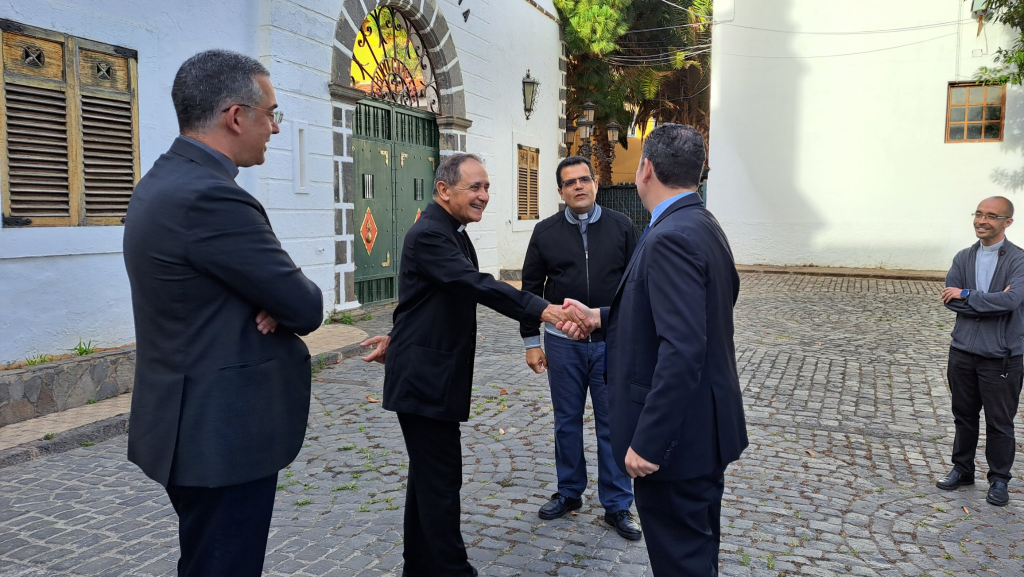
Interview: Archbishop Arrieta on retirement, Pope Leo and Order of Malta reforms
Archbishop Arrieta speaks to AdVaticanum on his retirement, his first impressions of Pope Leo XIV, the Order of Malta, and the ongoing canonical tensions surrounding the SSPX Archbishop Juan Ignacio Arrieta Ochoa de Chinchetru, Secretary of the Dicastery for Legislative Texts, has reached the age of 75, the mandatory retirement age for a bishop, on April 10. To mark the milestone, the Spanish canonist sat down with AdVaticanum to reflect on nearly two decades of service as secretary across three pontificates, his plans for retirement, and the evolving work of the dicastery. He shared his impressions of Pope Leo XIV as he approaches the anniversary of his election, offered a candid assessment of the irregular situation of the Society of St Pius X, and evaluated the 2021 reform of Book VI of the Code of Canon Law, as well as addressing current canonical questions regarding the Sovereign Military Order of Malta, liturgical unity under Traditionis Custodes, and the dubia from priests of the Diocese of Charlotte. Born on April 10, 1951 in Vitoria, Spain, Archbishop Arrieta was ordained a priest of Opus Dei in 1977. A distinguished academic and jurist, he helped establish the faculty of canon law at the Pontifical University of the Holy Cross in Rome, where he has taught for many years. Appointed Secretary of the then Pontifical Council for Legislative Texts by Pope Benedict XVI in 2007, he was ordained a titular bishop in 2008. AdVaticanum: Your Excellency, having just turned 75 and therefore being at the point of submitting your resignation in accordance with canon 401 §1, many in the Church are curious about the next chapter for a canonist of your stature who has served the Dicastery for nearly two decades. After such an intense period of service in the Roman Curia, what would you most like to do in retirement? Archbishop Juan Ignacio Arrieta Ochoa de Chinchetru: We will have to take things one step at a time, always trusting in divine providence. As for me, I have always been involved in the field of canon law, both in the Roman Curia and at the university. I plan to continue living in Rome, also because I am a member of various commissions and working groups within the Roman Curia. Furthermore, if possible, I intend to spend more time in the academic environment, continuing my studies and publications on canon law. I am still teaching courses on canon law and Vatican law, both at the Faculty of Canon Law of the Pontifical University of the Holy Cross and at the Faculty of St Pius X in Venice: two institutions I have seen come into being and to which I feel particularly attached. God willing, in the near future I will be able to carry out these teaching duties with greater peace of mind and collaborate with both faculties. Furthermore, I hope to be able to devote myself a little more to pastoral work, which I have missed for many years. AV: As Secretary since your appointment in 2007, spanning the final years of St John Paul II’s pontificate, the entire Benedict XVI era, the full Francis pontificate, and now the early months under Pope Leo XIV, you have had a uniquely continuous vantage point on the work of what was then the Pontifical Council and is now the Dicastery for Legislative Texts. In your view, what are the most significant shifts you have witnessed in the dicastery’s day to day functioning? +JA: In a way, the major changes the dicastery has undergone in recent years are also reflected in the changes to its name over the years. At the beginning of John Paul II’s pontificate, the dicastery was called the “Pontifical Council for the Interpretation of the Code of Canon Law”; it was later renamed the “Pontifical Council for the Interpretation of Legislative Texts”, because, starting in 1990, it also had to deal with the Eastern Code of Canon Law in addition to that of the Latin Church. Subsequently, it was renamed more generally the “Pontifical Council for Legislative Texts”, since the role of “interpreting” universal laws had become rather secondary, and the dicastery devoted itself more to revising the universal norms of the Church or to offering consultative opinions on normative documents of the Holy See or of the Episcopal Conferences. Now, however, the name is “Dicastery for Legislative Texts”, and while retaining all the other functions it had in the past, most of its time is devoted to assisting bishops and superiors in the application of canon law in light of new circumstances arising throughout the world. This is very interesting work, because canon law is a body of law in force throughout the world and is confronted with the legal systems of every country in the world, as well as with vastly different cultures and sensibilities. AV: Having served under several Popes, what are your first impressions of working with Pope Leo XIV? +JA: In addition to his personal qualities, his profound spirituality, practical mind and missionary heart, the Pope has a particular fondness for institutional and orderly governance. I believe this stems from his experience leading a religious institute with a long standing tradition within the Church and a widespread presence throughout the world. Furthermore, I believe that, with regard to his style of governance and, in particular, his attitude towards justice and the law, we must appreciate the fact that the Pope received a university education as a canonist and, above all, that he did not limit himself to studying canon law, but had to teach it as a professor of canon law in Peru and, for some time, also practised it as an ecclesiastical judge in the courts. He therefore possesses a very concrete and comprehensive experience of the law that not everyone has, ranging from the purely theoretical to the didactic, and to the practical exercise and application of the law in the service of justice. AV: The SSPX continues to occupy a unique and, for many, pastorally sensitive place in the Church, with the announcement of the July 1 episcopal consecrations. With the recent proposal from the Dicastery for the Doctrine of the Faith for a structured theological dialogue aimed at identifying “minimum requirements” for full communion and a possible canonical status, contingent on suspending the announced July 2026 episcopal ordinations without papal mandate, what is your canonical assessment of the current irregular situation of the Society? +JA: For me, this is a very painful matter, especially because during Pope Benedict’s time I had the opportunity to familiarise myself with their situation and to meet with some of their superiors on several occasions. They feel the need for ministers to celebrate certain sacraments, but I believe it was a grave mistake to have presented this matter as an imposition on the Holy See, announcing directly, as if it were a fait accompli, that they intended to carry out episcopal ordinations. This is the attitude of those who, from the outset, consider themselves outside the Church, a stance that contradicts their own awareness that they do not possess ecclesiastical jurisdiction. In fact, when they had to impose disciplinary sanctions for certain conduct by some of their priests, they turned to the Congregation for the Doctrine of the Faith, which granted them the authority to do so. Moreover, Pope Francis had directly granted their priests the authority to hear confessions worldwide and issued instructions so that diocesan bishops could grant them the authority to assist at weddings, thereby ensuring that the marriages would not be invalid for the Catholic Church due to a lack of canonical form. Now all of this risks being compromised, which is a heavy responsibility for those who decide not to obey the Pope’s instructions. AV: Your Excellency, you personally spearheaded much of the work on the 2021 revision of Book VI of the Code (Pascite gregem Dei), which updated sanctions to better address contemporary situations such as clerical abuse, the attempted ordination of women, and offences against the sacraments. With several years of application now behind us, how do you evaluate the effectiveness of these changes in practice? +JA: The dicastery’s reform of Book VI of the Code has been one of the primary tasks since the pontificate of Pope Benedict, who, drawing on his many years of experience as Prefect of the Congregation for the Doctrine of the Faith, was well aware of the practical limitations of the 1983 Code of Canon Law, which, in fact, was rarely enforced. It was the future Pope Benedict who laid the groundwork for effectively combating child abuse beginning with the promulgation of the Curia’s 1988 law, the apostolic constitution Pastor Bonus. He was the one who promoted, in the final years of John Paul II’s pontificate, the new penal regulations against abuse, assuming jurisdiction over the matter within the Congregation for the Doctrine of the Faith, which he himself presided over, because the local episcopate was not managing it effectively. However, the reform of canon penal law required more in depth work, because it was necessary to overcome the prejudices and naivety of the immediate post conciliar period, which had in fact influenced the drafting of the penal norms promulgated in the 1983 Code. Now the principle of criminal legality has been explicitly restored, along with the duty of the ecclesiastical authority to act, without thereby losing the necessary humanity that the penal law of the Catholic Church necessarily entails. VA: The reforms of the Sovereign Military Order of Malta initiated under Pope Francis, particularly the appointment of a special delegate, the drafting of a new constitutional charter, and the emphasis on the Order’s religious character, have raised interesting canonical questions about the relationship between a sovereign subject of international law and the Holy See. Some observers have described it as the Vatican effectively “regulating another country”. Canonically speaking, how do you understand the Holy See’s authority over the Order in light of its dual nature as both a lay religious institute and a sovereign entity? +JA: I have little information on this subject, apart from some theoretical reading and study: I am unfamiliar with the practical realities and concrete needs, so I cannot offer an opinion. I have always believed that, in Church law, concrete situations cannot be resolved with “off the shelf” solutions, but must be tailored to fit, like a suit. Since the Church is a spiritual reality, in which it is the Holy Spirit who moves the initiatives of Christians, “copy and paste” or cookie cutter solutions are of little use; therefore, it is necessary to go through an evaluation by the authority that gives the appropriate legal form in accordance with the flexibility inherent in Church law. With that in mind, it has always seemed to me that, from a legal standpoint, the solution under canon law regarding the institution you mention should have begun with the recognition of its international legal personality and, within the framework of that formal recognition, resolved the religious issues and the remaining matters of various kinds. More specifically, since this is an entity that many countries recognise as sovereign, I believe greater consideration should have been given to the instrument of a concordat: a concordat between the Holy See and the Order, similar to those signed with many countries, would have provided a formal framework consistent with how it is actually perceived in the international arena, and within that framework, the various spiritual and charitable issues raised by this important entity could have been resolved with realism and practicality, etc. AV: A question frequently raised by faithful Catholics attached to the Vetus Ordo concerns how recent liturgical norms, such as those in Traditionis Custodes and its dubia, are to be reconciled with the broader canonical framework for divine worship and the rights of the faithful. From your perspective, how does one provide a clear and authoritative interpretation that safeguards both the unity of the Roman Rite and the legitimate spiritual needs of the faithful who find deeper nourishment in the earlier form? +JA: It seems to me that the Holy Father is fully aware of all these experiences and that he seeks to address them in the best possible way by appealing to everyone’s sense of unity and sensitivity, so that we may coexist with expressions of diversity that do not undermine unity and respect for authority. I believe that promoting unity is one of the central themes we find in the Pope’s words throughout these months of his pontificate. It is not permissible, however, to use the banner of the liturgy to shatter unity or the reverence due to legitimate ecclesiastical authority. Balance is needed. It is important to move forward while respecting the rights of the Christian faithful, and at the same time, we must obey and share in the spirit of unity. AV: Your Excellency, on January 5, 2026, thirty one priests of the Diocese of Charlotte, roughly one quarter of the active clergy and two thirds of them pastors, submitted a formal dubia to this dicastery seeking clarification on whether Bishop Martin’s practices, which explicitly permitted or even favoured by universal liturgical law, such as the use of altar rails, kneelers and prie dieux for the reception of Holy Communion, as announced in the bishop’s pastoral letter of December 17, 2025. The dubia raise fundamental questions about the limits of a diocesan bishop’s liturgical authority in relation to the rights of the faithful and the stability of universal norms. As the dicastery’s Secretary responsible for the authentic interpretation of ecclesiastical law, what is your canonical assessment of the core issues presented in this dubia? +JA: For several years now, our dicastery has been publishing on its website the various opinions and consultations we are asked to provide, omitting, of course, any personal references, whenever we believe they may be of general use to the Church. For us, it is also a way to engage with the legal world and with new situations arising in various parts of the world, seeking to stimulate studies and in depth analysis of specific aspects of canon law. Regarding individual cases, however, as is logical, we are bound to maintain absolute confidentiality, also out of respect for the individuals involved. AV: Thank you very much for your time, Your Excellency, and for your many years of service to the Church.
Apr. 27, 2026
Vatican accepts monks’ appeal over Valle de Cuelgamuros plans
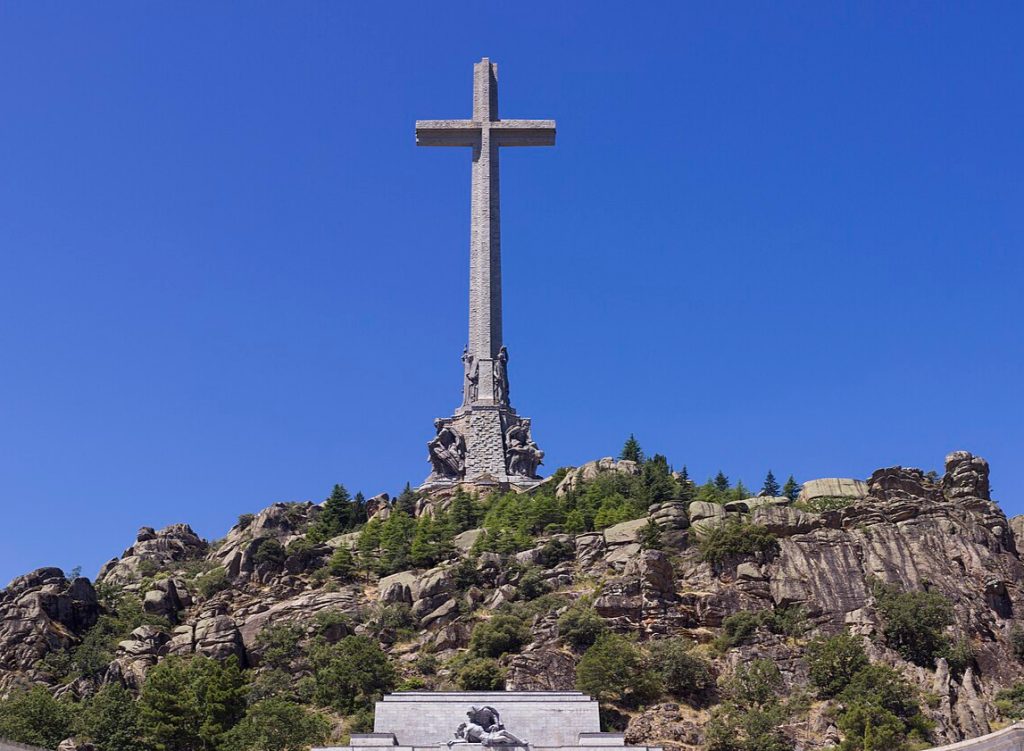
The Vatican has accepted an appeal from Benedictine monks at Valle de Cuelgamuros against government plans, with ministers claiming an agreement with Cardinal José Cobo and the Vatican, while bishops deny any sign-off The Vatican has formally accepted an appeal lodged by the Benedictine monks of the Valle de Cuelgamuros against plans to “re-signify” the historic and religious monument. Pedro Sánchez administration’s initiative, officially titled “La base y la cruz” (The Base and the Cross), emerged as the winner of an international architectural competition. The winning proposal envisions transforming parts of the complex, including the entrance atrium, the side chapels dedicated to Marian devotions along the nave, and the Chapel of the Blessed Sacrament near the main altar. The formal presentation of the project is scheduled for June 2026, deliberately timed to coincide with the anticipated apostolic visit of Pope Leo XIV to Spain. However, Minister Félix Bolaños has claimed that an accord was reached with Cardinal José Cobo of Madrid and the Vatican, declaring: “we reached the agreement with Cardinal Cobo and with the Vatican.” The Spanish Episcopal Conference has, however, pushed back strongly. Monsignor Francisco César García Magán, secretary general and auxiliary bishop of Toledo, stated after the bishops’ 129th plenary assembly that “the Vatican has not been a signatory, there has been no signatory from the Vatican”, and he repeated on several occasions that “no representative of the Vatican has signed”. This is similar to the Archdiocese of Madrid’s statement from March 2025, which clarified that Cardinal Cobo had acted only as a designated interlocutor within an ecclesial commission, without a formal mandate from Rome over the pontifical basilica. Cardinal Cobo has consistently maintained that neither he nor the Archdiocese of Madrid holds canonical authority over the Basilica of the Holy Cross or the Benedictine community. He has insisted that ultimate responsibility rests solely with the Holy See. The Benedictine monks argue that the alleged agreement lacks proper ecclesiastical authority because it was advanced by Cardinal Cobo without the direct involvement of the monastery’s prior or the Holy See, which retains direct jurisdiction over this pontifical basilica, elevated by Pope John XXIII in 1960. The monks have raised particular objections to changes planned for the entrance atrium, a space integral to their liturgical life that has hosted major ceremonies, including priestly ordinations. One such ordination took place there in October of last year, with Cardinal Cobo himself in attendance. Church officials emphasise that canonical norms protecting consecrated spaces remain fully in force, prohibiting any uses unrelated to worship until authorised works can legitimately begin. Further complications surround the status of the Benedictine community. Former prior Santiago Cantera was removed from his post last year amid reported government pressure and internal ecclesiastical decisions. Parallel legal challenges have also emerged. Appeals have been lodged citing procedural deficiencies, including the absence of required licences from the San Lorenzo de El Escorial town hall and the Community of Madrid. Monsignor Luis Argüello, president of the Spanish Episcopal Conference, has called for renewed dialogue. He urged both the government and the Benedictine community to reach “a reasonable and satisfactory agreement for both parties.” His intervention notably made no reference to any prior agreement involving Cardinal Cobo. As of April, the Vatican’s acceptance of the monks’ appeal has moved the entire dispute into a structured canonical process that runs alongside ongoing proceedings in the Spanish courts. The government continues to insist it will begin work on the surroundings and parts of the basilica in June. The Valle de Cuelgamuros, with its massive underground Basilica of the Holy Cross and the world’s tallest Christian cross, remains one of Spain’s most symbolically charged locations. It combines profound religious significance as a consecrated pontifical basilica with its complex historical and political role as a burial site for tens of thousands from both sides of the Spanish Civil War. Pedro Sánchez has taken an interest in the memorial site since the beginning of his time in office, commenting in August 2018, just months after his election, that it should be a “resting place” for those buried there and “a civil cemetery.” In 2022, under the Democratic Memory Law (Ley de Memoria Democrática), Sánchez’s government changed the name from “Valle de los Caídos” (Valley of the Fallen) to “Valle de Cuelgamuros” (the geographical area in which it is located). However, Sánchez’s minority government is coming under increasing pressure from a growing conservative bloc. Among those voters, typically characterised by Vox and People’s Party supporters, there is strong opposition to government intervention at the site and significant criticism of what is seen as his attempts to politicise a religious and historical monument.
Apr. 27, 2026