

Latest
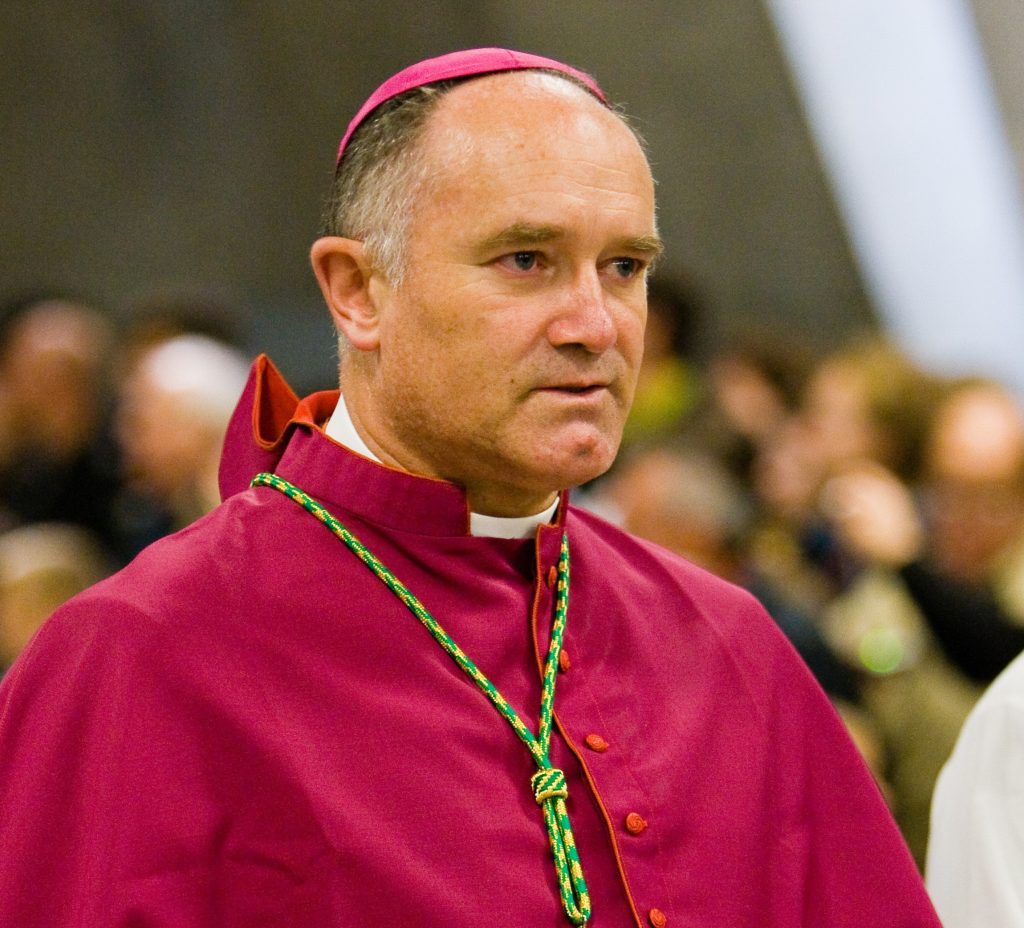
Fellay warns of SSPX faithful excommunication as Rome prepares its response to episcopal consecrations
Bishop Bernard Fellay has warned that the faithful may face excommunication, as indications from Rome suggest a response is being prepared to possible episcopal consecrations without papal mandate In a surprise turn, the former superior general of the Society of Saint Pius X has warned that the faithful may face excommunication, as indications emerge that Rome has prepared a response to possible episcopal consecrations without a papal mandate. In an exclusive sermon transcript obtained by Advaticanum , Bishop Bernard Fellay told those present at confirmations on Good Shepherd Sunday at the Immaculata in St Mary’s, Kansas, that such a development was increasingly likely. “I prefer not to be a prophet here, but I’m pretty sure that there is an enormous probability that all of you, we included, may be excommunicated, declared schismatic, there is a very high probability because they already said it in public. So, they are so to say forcing themselves to do it. But whatever, God can do miracles. It’s not the end.” He continued by framing the homily in spiritual terms, telling the congregation that “our history shows that God wants us to be a sign of contradiction, a sign that reveals hearts. And a sign of contradiction means the Cross. We must be ready to carry it.” Beyond his warning on possible excommunication, Bishop Fellay used the homily to deliver an extended meditation on the nature of the Church, drawing repeatedly on the theme of Good Shepherd Sunday and the Gospel’s declaration that there shall be “one shepherd and one fold”. He began by stressing that the Church, like the human person, possesses both a visible and an invisible dimension, cautioning against what he described as a tendency to remain at the surface. “God has created us with both body and soul,” he said. “There is a visible part and an invisible part, and both are absolutely real. Indeed, the invisible part, the soul, is far more important. Yet we must not set them in opposition. To separate body and soul is to have death, nothing more.” Developing the point, he compared the Faith to a lake whose depths are often ignored. “Many people are content to admire its beautiful surface and believe they know everything about it. But if you truly wish to understand the lake, you must look beneath the surface.” The same, he said, applies to the Church, which cannot be reduced to outward appearances alone. He referred to the longstanding principle Ecclesia de internis non judicat , that the Church does not judge interior dispositions, and linked this to the sacraments, explaining that while matter and form are visible, intention remains hidden and is presumed when the rites are followed. Faith itself, he continued, is likewise interior, but must be outwardly professed. Citing Scripture, he warned: “These people honour me with their lips, but their hearts are far from me.” Turning to the liturgy, Bishop Fellay urged the faithful to deepen their engagement with the prayers of the Holy Mass, recommending that they be read in advance so that participation would not remain merely external. He drew on Archbishop Marcel Lefebvre’s Spiritual Journey, describing the liturgy as “the breathing of the soul” when properly united to interior prayer. He contrasted two approaches to worship, saying that one could remain at “the beautiful surface” or “dive deeper”, and insisted that this distinction applied to all aspects of Christian life. Even ordinary daily actions, he said, could be transformed if consciously offered to God: “If, every morning, we offer our entire day to God, all our actions, joys, and sufferings, then everything becomes an act of charity, praise, and glory to God.” The bishop also employed a more pointed comparison when speaking about the liturgy, likening it to a vessel containing grace. “The surface is important. Consider a glass: the liquid inside is more valuable, but without the glass the liquid is lost,” he said, before adding: “This is precisely what has happened with the new liturgy. They have made holes in the vessel of grace. The Traditional Mass is like a full-flowing river of graces, while the new rite often yields only a few drops.” He went on to describe what he called three pillars of the Church’s visible unity: unity of faith, unity of liturgy and unity of government. Each, he argued, had been “severely struck”. On the unity of faith, he claimed that belief had diminished significantly in various parts of the Church, asserting that outward profession did not always correspond to interior conviction. “They may still recite the Creed outwardly, but interiorly the faith is dead. Whoever denies even one truth of the faith has lost the faith entirely.” The homily was delivered in relation to the question of episcopal consecrations and possible sanctions. According to this publication’s Vatican correspondent, Niwa Limbu, officials within the Dicastery for the Doctrine of the Faith are preparing for the possibility of a formal declaration of excommunication not only of bishops but also of priests belonging to the Society. Vatican correspondent Nico Spuntoni, writing for Il Giornale, relayed that “as far as I know, the Dicastero for the Doctrine of the Faith is already prepared for the possibility of excommunicating the SSPX following the ordinations.” The Holy See has already set out its position in clear terms. In a statement issued following a meeting between the prefect of the Dicastery for the Doctrine of the Faith and the superior general of the Society, it reiterated that episcopal ordinations carried out without pontifical mandate would have grave consequences. The statement said that “the ordination of Bishops without a mandate from the Holy Father, who possesses supreme, full, universal, immediate and direct ordinary power (cf. CIC, can. 331; Dogmatic Constitution Pastor aeternus, chapters I and III), would imply a decisive rupture of ecclesial communion (schism) with grave consequences for the Fraternity as a whole.” Other less official reporting suggests that a similar course may now be under consideration. The blog Rorate Caeli, citing anonymous Roman sources, reported on April 25 that Pope Leo XIV has “decided to follow the ‘1988 jurisprudence’” in relation to any forthcoming consecrations by the Society. According to the report, a decree has already been prepared “similar in tone and content to the one promulgated by Pope John Paul II through Cardinal Bernardin Gantin … on 1 July 1988.” For now, both the warnings from the Holy See and the words of the Society’s leadership indicate that a decisive point may be approaching.
Apr. 26, 2026
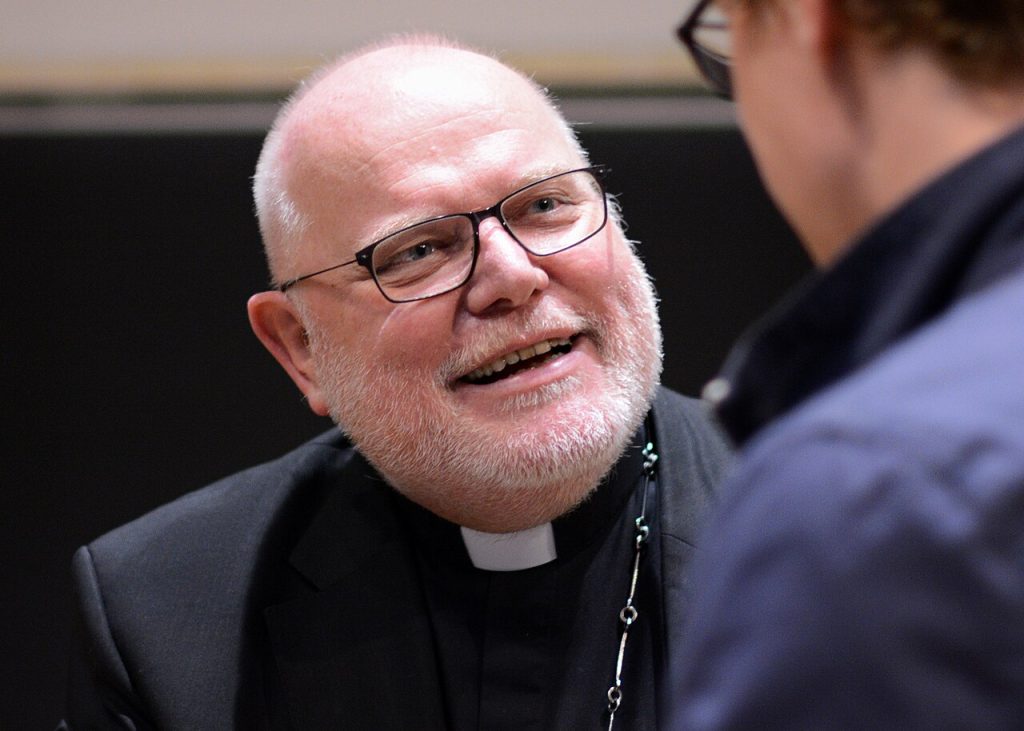
Pope Leo reaffirms opposition to blessing of same sex couples in face of Cardinal Marx’s directive
Pope Leo has reaffirmed that the Holy See does not approve the blessing of same sex couples, as Cardinal Marx advances new pastoral provisions in Munich. Pope Leo has reaffirmed that the Holy See does not approve the blessing of same sex couples, in remarks delivered to journalists on the return flight to Rome on April 23 following his recent apostolic journey to Africa. The Pope addressed the issue directly when asked about the divergence with developments in Germany after Cardinal Reinhard Marx confirmed new pastoral provisions permitting such blessings in his archdiocese. He cautioned against reducing ecclesial doctrinal questions to a single moral issue, stating: “First of all, I think it’s very important to understand that the unity or division of the Church should not revolve around sexual matters.” He added that “there are much greater, more important issues, such as justice, equality, freedom of men and women, freedom of religion”. Turning to the specific question, the Pope said: “The Holy See has made it clear that we do not agree with the formalised blessing of couples, in this case, homosexual couples … or couples in irregular situations, beyond what was specifically … allowed for by Pope Francis in saying all people receive blessings.” His Holiness emphasised that blessings given at the end of Mass or major liturgical celebrations are “for all people”, adding that Pope Francis’s phrase “Tutti, tutti, tutti” reflects that universal invitation. He warned that “to go beyond that today … can cause more disunity than unity”. The intervention follows confirmation earlier in the week, reported by AdVaticanum, that the Archdiocese of Munich and Freising will implement the guidelines Segen gibt der Liebe Kraft (“Blessing Gives Love Strength”) as a foundation for pastoral practice. The text, adopted by the German Bishops’ Conference and the Central Committee of German Catholics, is now to be applied across the archdiocese. In a letter to clergy and pastoral staff, Cardinal Marx wrote: “To all couples who love each other and seek a blessing from the Church for their partnership, I wish that they may feel God’s grace in this blessing.” The directive states that “no couple should be turned away” if they request such a blessing, and establishes that access is not to depend on the personal position of individual priests. The archdiocese has also announced that training sessions will begin in June to prepare clergy and lay pastoral workers to carry out the ceremonies. Those unwilling to perform the blessings themselves are expected to refer couples to another minister. Cardinal Marx acknowledged likely resistance, asking that the “theological meaning” of the practice be explained to those who “still struggle with this blessing”. The guidelines insist that such blessings are not equivalent to marriage, while stating that this distinction should not result in exclusion. “This does not mean that the blessing of a non sacramental union … pushes the couple to the margins of the community and the Church,” the text says, adding: “Couples should be welcomed in the heart of the community. Therefore, the Church asks God to bless and grant good things to these couples.” The developments in Munich come within the increasingly differing trajectory of the German synodal way. The Holy See has intervened on several occasions, including a 2021 declaration from the Congregation for the Doctrine of the Faith stating that the Church “does not have, and cannot have, the power to bless unions of persons of the same sex”.
Apr. 24, 2026
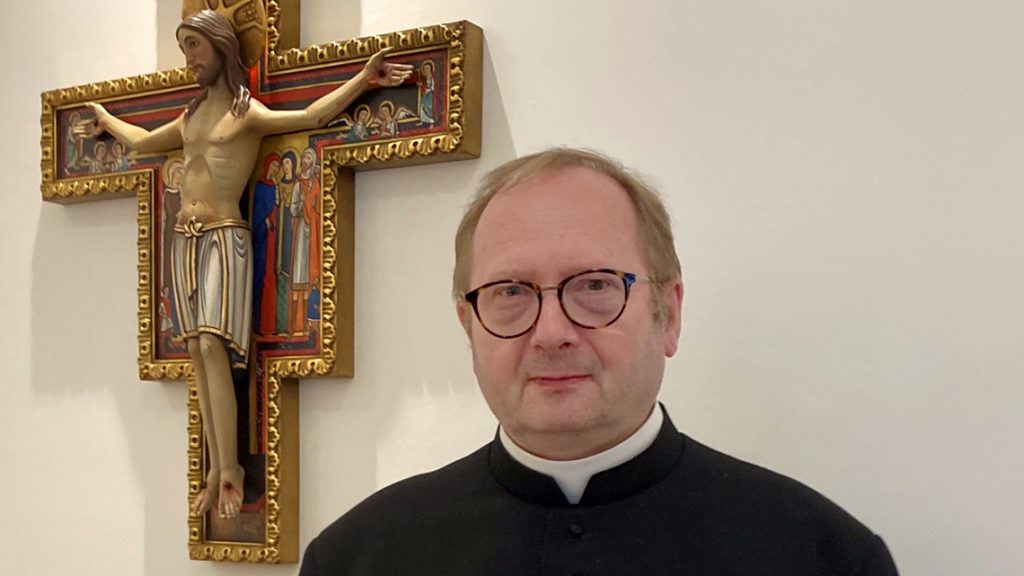
Ordinariate bishop rejects claims priests ordered to concelebrate
Bishop David Waller has dismissed reports that Ordinariate clergy were instructed by Rome to concelebrate Holy Mass, calling the claim a “mischievous lie” The Bishop of the Personal Ordinariate of Our Lady of Walsingham has rejected claims that priests of the ordinariates have been instructed to concelebrate Mass, insisting that no such directive has been issued by Rome and describing the reports as false. The story first circulated on April 23 on the website Rorate Caeli, which claimed that the Prefect of the Dicastery for Divine Worship and the Discipline of the Sacraments, Cardinal Arthur Roche, had “ordered” ordinariate clergy to concelebrate and had further prohibited priests from functioning as deacons or subdeacons within ordinariate liturgies. The claims were penned by the liturgist Peter Kwasniewski, who suggested that the measures followed a meeting in Rome and reflected concerns about liturgical practice within the ordinariates. However, Bishop David Waller told Niwa Limbu, AdVaticanum Vatican correspondent, that the reports were unfounded. “It is totally untrue,” he said. “It is a mischievous lie!” He said that no new instructions had been issued and that recent discussions among the three ordinaries had been limited to reiterating existing norms. “What is true is that the three Ordinariate bishops had a conversation about liturgy and have reminded our priests that Divine Worship: The Missal is governed by the rubrics printed in the rite, its rubrical directory and the General Instruction of the Roman Missal. Nothing new there, it’s all printed in the missal. It is not permissible to introduce different rubrics from different rites – never was.” He added: “The three bishops have simply reminded people what the rubrics of our rite require. Any rite is both words and rubrics and must be followed.” Subsequently, Peter Kwasniewski acknowledged that Bishop David Waller had denied that a meeting with Cardinal Arthur Roche had taken place. He wrote that this “may be technically correct”, adding that his source had clarified that the meeting in question involved Bishop Steven Lopes rather than the three ordinaries together, although originally it was noted that it was the “Bishops of the Ordinariate”. “This may be technically correct; when queried, my source specified that it was a meeting of Bishop Steven Lopes with Cardinal Roche, which makes sense if Roche perceived a problem specifically with the more traditionally minded members of the Anglican Ordinariate in the United States,” he wrote. In a separate communication with The Pillar, Bishop David Waller reiterated that no priest would be compelled to concelebrate. The bishop said that concelebration was “permitted and encouraged” but added: “Any priest has the right to celebrate individually. That’s law, not just for the ordinariate.” He also denied that any meeting with Cardinal Arthur Roche had taken place during a visit to Rome in March. The visit, he said, included an audience with Pope Leo and meetings with officials of the Dicastery for the Doctrine of the Faith, which has oversight of the ordinariates. In the email cited by The Pillar, he explained that he had discussed liturgical matters with Bishop Steven Lopes and Archbishop Anthony Randazzo. “The three bishops did discuss some liturgical matters and note, as a matter of fact, that, as is the case with any rite, ‘Divine Worship’ must be celebrated according to its rubrics,” he said. “The rubrics are: those in the text of the rite itself, the rubrical directory printed in the missal, the General Instruction of the Roman Missal, and the Ceremonial of Bishops.” He added: “In some places, very few in the UK, there has been a tendency to draw on rubrics from other rites, and that is not permissible.” As an example, he said that a priest might use the text of the ordinariate missal while adopting the manual actions of the older Roman Rite. “Any rite is words and rubrics, and it is a liturgical abuse to mix and match,” he said. Rorate Caeli later amended its report, removing the reference to a meeting between the three bishops and Cardinal Arthur Roche. In a note appended to the article, it said that Bishop David Waller had denied such a meeting, while maintaining that a separate encounter involving Bishop Steven Lopes may have taken place. A source close to Bishop Steven Lopes told AdVaticanum that a message had circulated internally within Ordinariate priestly circles in America but indicated that it was unlikely that he had met Cardinal Arthur Roche, noting that all three bishops had followed similar itineraries in Rome. The Personal Ordinariate of Our Lady of Walsingham was established in 2011 following the promulgation of Anglicanorum coetibus by Pope Benedict XVI, providing a structure for groups of former Anglicans to enter into full communion with the Catholic Church while retaining elements of their liturgical and spiritual patrimony. It was followed by the establishment of the Personal Ordinariate of the Chair of St Peter in 2012 for North America and the Personal Ordinariate of Our Lady of the Southern Cross for Australia and parts of Asia.
Apr. 24, 2026
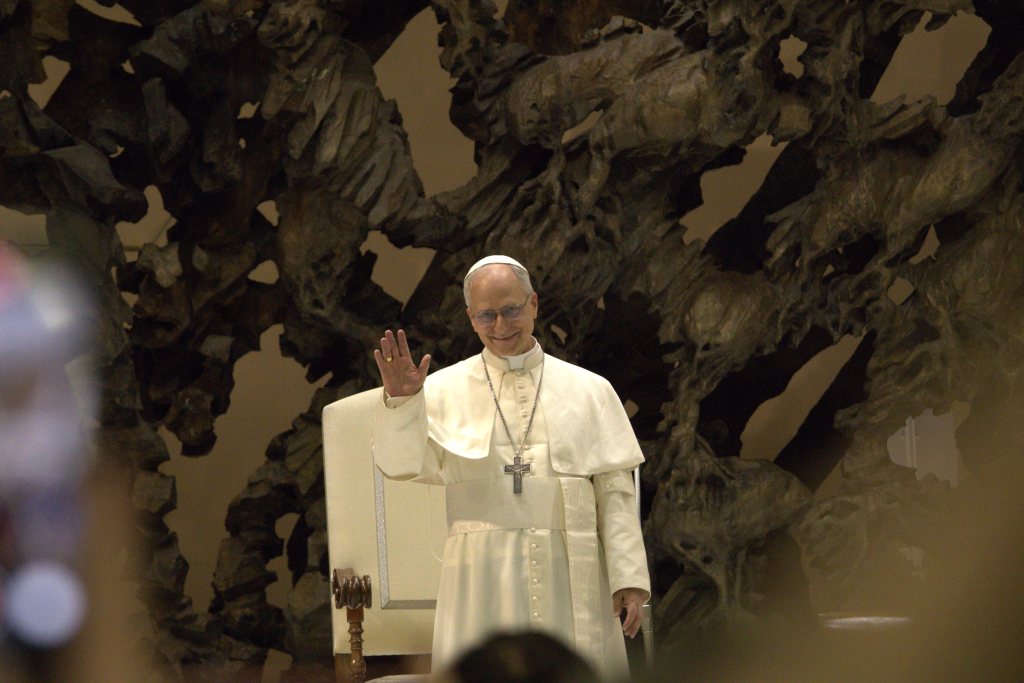
Pope Leo concludes 11 day Africa visit with Holy Mass in Malabo
Pope Leo has brought his first African journey to a close with a final Mass in Malabo, ending an 11 day visit across Algeria, Cameroon, Angola and Equatorial Guinea The final Mass in Malabo, Equatorial Guinea, has brought to a close the first African journey of Pope Leo XIV, ending an 11 day visit that has taken him across four countries. Speaking at the end of the Mass, the Pope told the faithful plainly: “The time has come” to depart, thanking “the Archbishop, the bishops, the clergy and all the people of God journeying in this land”, and marking the conclusion of a visit that has combined large public gatherings with pointed addresses to political authorities. The journey, which ran from April 13 to 23, brought the Pontiff to Algeria, Cameroon, Angola and Equatorial Guinea, covering more than 11,000 miles and including 18 flights, alongside a programme of Masses, formal addresses and meetings with civil and religious leaders. It is the first apostolic journey of his pontificate to Africa, a continent now home to almost 300 million Catholics. In Malabo, closing the visit, the Pope spoke of what he described as “an immeasurable treasure of faith, hope and charity”, adding that “this treasure consists of stories, faces and testimonies, both joyful and sorrowful, which will greatly enrich my life and ministry as the Successor of Peter”. He thanked the country’s civil authorities for their welcome and entrusted the people of Equatorial Guinea and the wider continent to the care of the Virgin Mary. The Pope made several brief greetings to journalists aboard the papal plane on key legs of the journey. These were not full press conferences with questions and answers but short, unprompted or lightly interactive addresses. During the outbound flight from Rome to Algiers, Pope Leo addressed early comments from the US President Donald Trump criticising his stance on geopolitical issues. His Holiness said: “I have no fear of neither the Trump administration nor of speaking out loudly about the message of the Gospel. And that’s what I believe I am called to do and what the Church is called to do. We’re not politicians. We’re not looking to make foreign policy, as he calls it, with the same perspective that he might understand it. But I do believe that the message of the Gospel, ‘Blessed are the peacemakers’, is a message that the world needs to hear today.” The visit began in Algiers on April 13, where the Pope was received with official honours and met President Abdelmadjid Tebboune. Addressing civil authorities and the diplomatic corps, he spoke of the importance of coexistence before visiting the Great Mosque of Algiers. There, His Holiness said: “To seek God is also to recognise the image of God in every creature … it is very important to learn to live together with respect for the dignity of every human person.” He added that such encounters show that “we can learn to respect one another, live in harmony and build a world of peace”. Later the same day, the Pope met the small Catholic community at the Basilica of Our Lady of Africa, describing them as a “humble and faithful sign of Christ’s love”. The following day, Leo travelled to Annaba, the ancient Hippo Regius associated with St Augustine of Hippo. Visiting the ruins and celebrating Holy Mass, Pope Leo said: “God’s heart is torn apart by wars, violence, injustice and lies … God’s heart is with the little ones, with the humble, and with them he builds up his Kingdom of love and peace day by day.” Speaking to journalists aboard the flight from Algeria to Cameroon on April 15, Pope Leo XIV offered a brief but reflective account of the opening stage of his journey, describing it as “a very blessed trip” and “a special blessing for me personally”. He did not take questions, instead delivering a short prepared reflection in a notably relaxed tone. He expressed gratitude to the Algerian authorities for their welcome, including the military escort for the papal plane, stating: “It is a sign of the goodness, of the generosity, of the respect that the Algerian people and the Algerian government have wished to show to the Holy See, to myself.” Turning to the visit to the Great Mosque of Algiers, he underlined its significance, saying: “I think the visit to the mosque was significant and to say that although we have different beliefs, we have different ways of worshipping, we have different ways of living, we can live together in peace.” Reflecting on the Catholic presence in Algeria, he described the local community as “very small, but very significant”, before returning to the previous day’s visit to Annaba, associated with St Augustine of Hippo: “It was a special honor for me to return to Annaba yesterday also to offer the Church and the world the vision that St Augustine offers us in terms of that search for God and the struggle to build community, to seek for unity among all people, and respect for all peoples in spite of the differences.” From Algeria, the Pope travelled to Cameroon on April 15, where His Holiness met President Paul Biya in Yaoundé and addressed authorities, civil society and diplomats. In one of the most direct passages of the journey, Leo said: “In order for peace and justice to prevail, the chains of corruption must be broken. Hearts must be set free from an idolatrous thirst for profit.” The Pope added that “authentic peace arises when … the law serves as a secure safeguard against the whims of the rich and powerful”. The following day, he travelled to Bamenda, the centre of the country’s Anglophone crisis, where he met Christian and Muslim leaders. Speaking at a peace gathering, he said: “The world is being ravaged by a handful of tyrants, yet it is held together by a multitude of supportive brothers and sisters.” He warned against those who “manipulate religion and the very name of God for their own military, economic or political gain”, adding: “Peace is not something we must invent: it is something we must embrace.” Large public gatherings followed, including Holy Mass in Douala attended by tens of thousands, where he urged young people to resist corruption and remain rooted in faith and family life. During the subsequent flight from Yaoundé to Angola on April 18, the Pope delivered a more extended in-flight address in which he both reviewed the Cameroon leg and addressed media interpretations of his remarks. Opening with a multilingual greeting, “Buongiorno. Bonjour. Good morning everyone. Good afternoon already. I hope you had a good time in Cameroon. And, as you know of course, we are on our way now to Angola”. He referred to a monument at the Catholic University depicting St Augustine of Hippo at the centre of the continent, before restating his purpose: “I primarily come to Africa as a pastor, as the head of the Catholic Church to be with and to celebrate with, to encourage and accompany all of the Catholics throughout Africa.” Addressing reports that his peace remarks in Bamenda had been directed at US President Donald Trump, he rejected that interpretation, saying: “At the same time, there has been a certain narrative that has not been accurate in all of its aspects … Much of what has been written since then has been more commentary on commentary trying to interpret what has been said.” His Holiness added a specific clarification: “Just one little example: the talk that I gave at the prayer meeting for peace a couple of days ago was prepared two weeks ago, well before the President ever commented on myself and on the message of peace that I am promoting.” Concluding, he reiterated the continuity of the journey’s message: “So we go on the journey, we continue proclaiming the Gospel message … promote fraternity, brotherhood, trusting in the Lord, but also looking for ways to promote justice in our world, promote peace in our world.” The visit continued in Angola from April 18, where the Pope met President João Lourenço in Luanda. Addressing authorities, the Pope criticised what he called the “logic of extractivism” and the “cycle of interests” that has long shaped the exploitation of resources. At the Marian shrine of Muxima, he led the Rosary and told pilgrims: “It is love that must triumph, not war”, calling on the faithful to become “messengers of life”. In Saurimo, addressing a large crowd, His Holiness said: “We can see today how the hope of many people is frustrated by violence, exploited by the powerful and defrauded by the rich … when injustice corrupts hearts, the bread of all becomes the possession of a few.” The final leg of the journey brought him to Equatorial Guinea on April 21, where His Holiness was received by President Teodoro Obiang Nguema Mbasogo. Addressing authorities, he drew on the City of God to frame a contrast between political choices, asking leaders to consider whether they wished to serve “the city of God” or “the earthly city”. He said that governance must be rooted in “authentic liberty, justice, respect and promotion of the rights of every person”. During the visit, he met young people, cultural representatives and the country’s bishops, and visited a psychiatric hospital, where he told patients: “God loves us just as we are.” In Bata, he visited a prison, telling inmates: “You are not alone. Your families love you and are waiting for you … If any of you fear being abandoned by everyone, know that God will never abandon you, and that the Church will stand by your side.” He added: “No one is excluded from God’s love.” He also prayed at a memorial to victims of the March 7, 2021 explosions, before meeting families and young people, urging them to form “free and responsible consciences” and to work for the common good. The journey concluded on April 23 with the final Mass in Malabo Stadium, attended by large crowds. In his closing words, the Pope returned to the themes that have marked the visit, thanking those he had encountered and pointing to the enduring presence of the Church.
Apr. 24, 2026
Vatican sets out next phase of Synod on Synodality
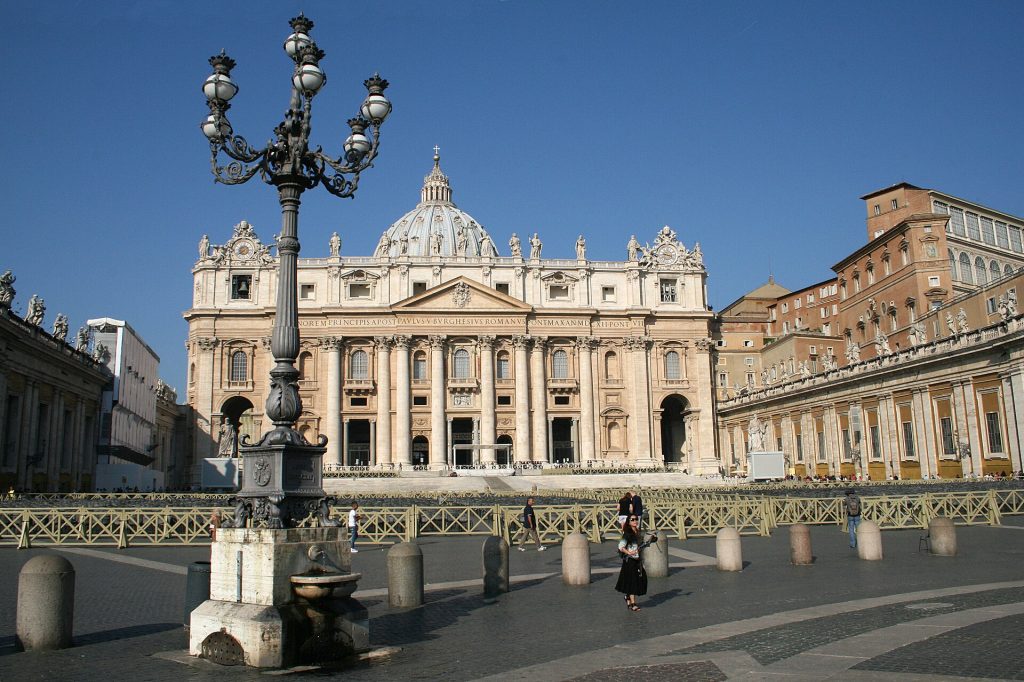
The Vatican has confirmed the next stage of the Synod on Synodality, with a series of international meetings planned through to 2028 The Vatican has outlined the next stage of the Synod on Synodality, confirming that a series of international meetings will take place over the coming two years. In a statement issued on April 17, the General Secretariat of the Synod said it had convened the XVI Ordinary Council in an online session chaired by Cardinal Mario Grech. The meeting opened “with a moment of prayer led by Sr Nathalie Becquart”, before turning to what the Secretariat described as “the current phase of implementation of the Final Document of the XVI Assembly”. It forms part of what it describes as the “implementation phase” of the 2024 assembly. The statement said that the Secretary General “opened the session with several communications concerning the current phase of implementation of the Final Document of the XVI Assembly, the work of the Study Groups, whose final reports are in the process of being published, and the forthcoming organisation of two meetings”. Among the key developments is the convocation of a preparatory gathering at the Vatican from June 23 to 25. According to the Secretariat, this meeting will serve to prepare the continental evaluation assemblies scheduled for the first months of 2028. Those invited include “one representative of the Patriarchs of the Council of the Patriarchs of the Eastern Churches, the Presidents of the International Meetings of Episcopal Conferences, as well as the Presidents of the Episcopal Conferences of the United States and Canada, each accompanied by the Coordinator of the Synodal Team of the respective body”. The statement added: “The Holy Father Leo XIV will take part in a specific working session.” The June meeting forms part of a wider timetable which will see the synodal process continue through to 2028, when continental assemblies will assess the reception and application of the Synod’s conclusions. A global assembly in Rome is expected to follow later that year. The Secretariat also confirmed that a further document to guide this phase is in preparation. During the April 17 session, Fr Giacomo Costa presented “a proposal for a document for the implementation phase of the Synod, particularly concerning the organisation of the evaluation assemblies”. The Council, it said, “discussed the document at length and approved its general structure”. It added that the final version, intended as a complement to the “Pathways for the Implementation Phase” published in June 2025, “will be revised by the Ordinary Council and published by the beginning of summer”. In a separate development, the Vatican provided new details of a meeting of bishops’ conference presidents to be held in Rome from October 7 to 14, focusing on Amoris laetitia. The gathering had previously been announced by Pope Leo XIV in a message marking the tenth anniversary of the document’s publication. According to the Secretariat, the October meeting “will be organised by the Dicastery for the Laity, the Family and Life”, with the General Secretariat of the Synod providing “organisational and methodological support”. It stressed that “this is not a synodal assembly, but a consultative meeting of the Holy Father with the Presidents of the Episcopal Conferences and of the Synods of the Eastern Catholic Churches sui iuris”. In his March 19 message, Pope Leo XIV said the purpose of the gathering would be “to proceed, in mutual listening, to a synodal discernment on the steps to be taken in order to proclaim the Gospel to families today […] and taking into account what is currently being done in the local Churches”. The April 17 statement concluded with a note of thanks to Bishop Luis Marín de San Martín for his service to the Secretariat, stating that members had asked Cardinal Grech “to convey to H.E. Msgr Luis Marín de San Martín their gratitude for his years of service”, and assuring him of their prayers following his appointment as Almoner of His Holiness and Prefect of the Dicastery for the Service of Charity. The Vatican’s latest moves on the Synod on Synodality indicate that the process has been established as a continuing feature of Church governance and, under Pope Leo XIV, it is acquiring a firmer institutional shape. What is now emerging is a phase of consolidation, with the Holy See proceeding in a measured manner. There has been no pause or quiet shelving of a process associated with Pope Francis. On the contrary, it is moving forward with precision, as the promised roadmap, due in early summer, will formalise a multi-year implementation phase running through to 2028. This continuity indicates that synodality is now treated as a structural principle. The Synod of Bishops, established by Pope Paul VI in 1965, was conceived as a consultative body assisting the Roman Pontiff. What has since developed is an expansion of its process, including a prolonged phase of reception and evaluation. The personal involvement of Pope Leo XIV is also notable, as the Secretariat has confirmed that he will take part in a specific working session during the June meeting. Popes do not routinely participate in mid-level preparatory gatherings, which suggests a direct interest in shaping the outcome. The explicit inclusion of the presidents of the United States and Canadian episcopal conferences, named alongside their synodal coordinators, is also notable. Other regions are referenced more generally through continental bodies such as CELAM, CCEE and SECAM. This level of specificity suggests continued attention to the reception of synodality in the English-speaking world, particularly in North America. During the 2023–2024 assemblies, several bishops from the United States were among those who raised concerns about doctrinal clarity and safeguards. The forthcoming June meeting can therefore be understood as part of an effort to ensure alignment ahead of the evaluation stage beginning in 2028. A similar approach is evident in the handling of the October meeting on Amoris laetitia. The Vatican has made clear that this will not be a synodal assembly but a consultative meeting organised by the Dicastery for the Laity, the Family and Life, with support from the Synod Secretariat. A decade after its publication, the document’s treatment of the divorced and remarried remains contested. Holding the meeting outside the formal synodal framework appears intended to manage the tone of the discussion. This dual approach, advancing synodality while containing its more contentious applications, indicates that Pope Leo XIV is maintaining the trajectory set by Pope Francis while seeking to give it a more stable institutional form.
Apr. 23, 2026
Archbishop Gänswein on Benedict and Francis relationship
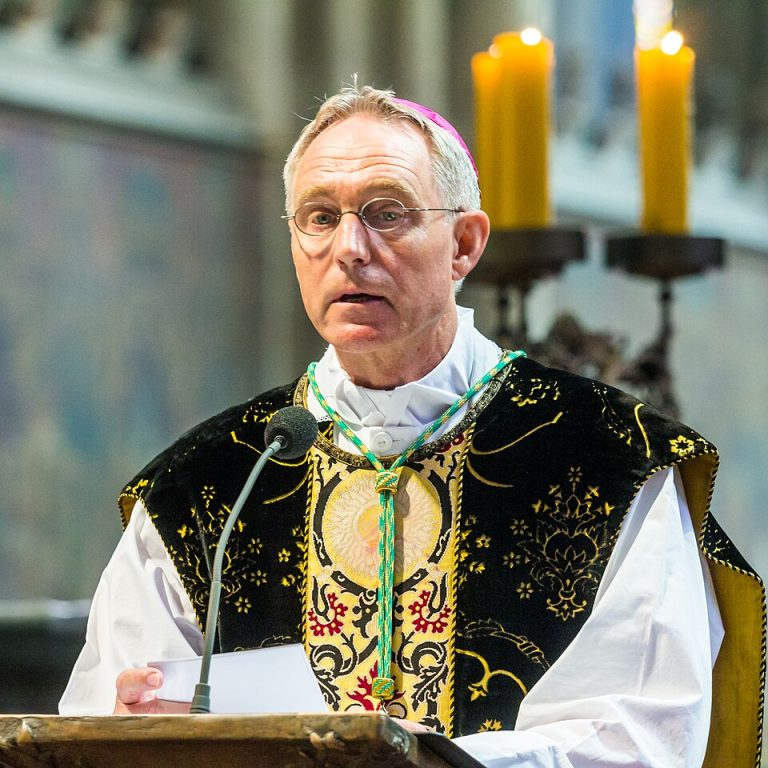
In an interview with La Repubblica, Pope Benedict’s longtime personal secretary discusses Benedict XVI and Pope Francis’s relationship, including tensions over the traditional Mass Archbishop Georg Gänswein has said that Pope Emeritus Benedict XVI never criticised the restrictions imposed on the traditional Mass by Pope Francis, despite being personally troubled by them. In an interview published by La Repubblica on April 20, Archbishop Gänswein, who served for years as Benedict’s personal secretary, said: “Benedict never commented on Pope Francis’s motu proprio Traditionis custodes. In my book I wrote that when we read L’Osservatore Romano [about Traditionis custodes], Benedict’s heart grew heavy. That is true, but I am the one saying it, not him.” The archbishop, now Apostolic nuncio in Lithuania, also spoke at length about the unprecedented coexistence of two popes following Benedict’s resignation in 2013. “There was only one Pope. The other was still called Pope, but he was in reality the Pope Emeritus. That is a very important difference,” he said. He added that Pope Emeritus Benedict XVI himself took visible steps to mark the distinction, removing elements of papal dress and adopting a simpler presentation, even as he retained the title “Pope Emeritus”, which Gänswein confirmed “he chose himself”. Responding to claims that the resignation had been shaped by scandal, Gänswein rejected any link to the Vatileaks scandal or other controversies. “None of what you have recalled had anything to do with it. Neither Vatileaks, nor the so called ‘gay lobbies’, nor anything else. The resignation was the fruit of deep reflection and intense prayer. The Pope put the question to his conscience and then made his decision.” He recalled the moment of the conclave that elected Francis, describing how he saw the white smoke from his office before going to the Sala Regia. “Then the door opened and from a distance I saw the cardinals congratulating the new Pope. Almost at once, the name Jorge Mario Bergoglio spread through the entire hall like wildfire.” When he met the newly elected Pope, Gänswein said Francis spoke first: “I would like to meet Benedict. Can you help me?” The first meeting between the two men took place at Castel Gandolfo on March 23, 2013. Gänswein said the encounter was marked by mutual deference. “When they entered the chapel, Pope Benedict wanted to let Pope Francis go first, but Francis refused. The same thing happened with the prie-dieu.” He added that Pope Emeritus Benedict XVI had prepared a box of documents relating to the Vatileaks inquiry, which he handed over personally. “He wanted to explain the contents to Francis and tell him what he thought. He did it in writing, as usual, and put everything inside.” Archbishop Gänswein confirmed that Pope Francis chose not to reside in the Apostolic Palace after his election. “The Pope told me to find him something else,” he said, admitting that he initially did not take the request seriously. He later understood the decision more clearly when Francis explained: “I have never lived in such large rooms. I want to live in smaller ones.” The Pope subsequently remained at the Casa Santa Marta. The interview also addressed perceptions of tension between the two pontificates. Archbishop Gänswein said reports of sustained opposition organised around Benedict were exaggerated. “From what I experienced, the real situation was greatly exaggerated.” He acknowledged that “there were some observations about Francis’s behaviour and choices”, but added: “It is perfectly normal to comment on a Pope’s decisions; it is not in itself forbidden.” Reflecting on his own position, Archbishop Gänswein referred to a remark he had made about carrying the “mark of Cain”. He clarified: “I did say that, but in general, not with reference to Pope Francis.” He added that Benedict’s figure “aroused both friends and enemies”, and that his own association with the former Pope had remained a defining factor. Archbishop Gänswein also described the personal relationship that developed between the two popes in more ordinary terms. He pointed to small gestures, including visits and the exchange of gifts, as evidence of a cordial rapport. “One could sense it, atmospherically, so to speak, from the climate that had been created between them,” he said, noting that such gestures were “signs of mutual attention”. He also gave a detailed account of the moment following Benedict’s death, when Francis arrived at the Mater Ecclesiae Monastery. “Pope Francis had told me: ‘When the hour comes, please call me directly.’ I did so on my mobile phone. Shortly afterwards the Pope arrived.” Archbishop Gänswein said: “Francis blessed his predecessor, then sat down beside him, remained in silence for a few minutes, and then we all prayed together.” Asked about a comparison between recent popes, Gänswein declined to offer a clear characterisation of the current pontificate beyond noting the significance of the name. “That is a difficult question at the moment,” he said. “But the name Leo itself already says something, don’t you think?” The remarks of Archbishop Georg Gänswein over recent years, taken together with testimony from those close to Pope Emeritus Benedict XVI, suggest a more restrained relationship than some accounts presented during the years of his retirement alongside Pope Francis. The evidence increasingly suggests that the relationship may have been difficult, even if this was never publicly acknowledged by Pope Emeritus Benedict XVI himself. His silence, long interpreted as serene acquiescence, now appears as an act of discipline intended to avoid any impression of a divided papacy. The clearest point of tension concerns the motu proprio Traditionis custodes, which reversed the more permissive framework established by Benedict for the older form of the Roman rite in Summorum Pontificum. Archbishop Gänswein said in an interview with Die Tagespost on January 20, 2023: “It was very hard. I believe that reading the new motu proprio broke Pope Benedict’s heart because his intention had been to help all those who had found their home in the traditional Mass, to find inner peace, liturgical peace, so that they would abandon the position of Archbishop Lefebvre.” That judgement, offered by the man who knew Benedict most intimately in his final years, corresponds to a known priority of Benedict’s pontificate: the reconciliation of those attached to the older liturgy. Sources close to Archbishop Gänswein and to Pope Emeritus Benedict XVI have further confirmed this, telling AdVaticanum that the promulgation of Traditionis custodes “caused [Benedict] pain”. That pain was not expressed publicly. Instead, Pope Emeritus Benedict XVI maintained the silence he had promised upon his resignation. More significant, and less often discussed, is the way Archbishop Gänswein’s own position further complicates the picture. Once Prefect of the Papal Household, he was effectively sidelined and later sent to Germany and then the Baltics as nuncio. The same sources told AdVaticanum that Pope Emeritus Benedict XVI made both formal and informal requests that his secretary be allowed to remain in the Vatican. They said: “There wasn’t an actual relationship. Sometimes Benedict asked favours of Francis to keep Gänswein in the Vatican and not remove him, both formally and informally.” These requests, it is said, went unanswered. This asymmetry is also discernible in reflections offered by the papal biographer Peter Seewald in an interview with Nico Spuntoni. Seewald contrasted the widely remembered homily delivered by then Cardinal Ratzinger at the funeral of Pope St John Paul II with the more restrained tone of the rites following Benedict’s own death. “We all remember the warm words that Cardinal Ratzinger spoke at the requiem for John Paul II,” he said. “But no one remembers Bergoglio’s words at the requiem for Benedict XVI. They were as cold as the whole ceremony, which had to be rather brief so as not to honour his predecessor too much. At least that was my impression.” Pressed on whether such a judgement was too severe, Seewald continued: “I mean, how does one manifest friendship? With a mere statement in words, or by living it?” He pointed to differences “in temperament, culture, intellect and above all in the direction of the pontificates”, adding that Benedict had promised obedience and “remained silent so as not to give the slightest impression of wanting to interfere in his successor’s governance”. That silence, he suggested, was not without consequence. “Benedict trusted Francis. But he was bitterly disappointed several times.” Historically, the coexistence of a reigning Pope and a Pope Emeritus was itself without precedent in the modern Church. Pope Emeritus Benedict XVI sought to define that relationship through withdrawal, discretion and loyalty. His intention was to remove himself entirely from the exercise of authority. Yet the very novelty of the situation meant that every gesture and every silence acquired a significance beyond the personal.
Apr. 23, 2026