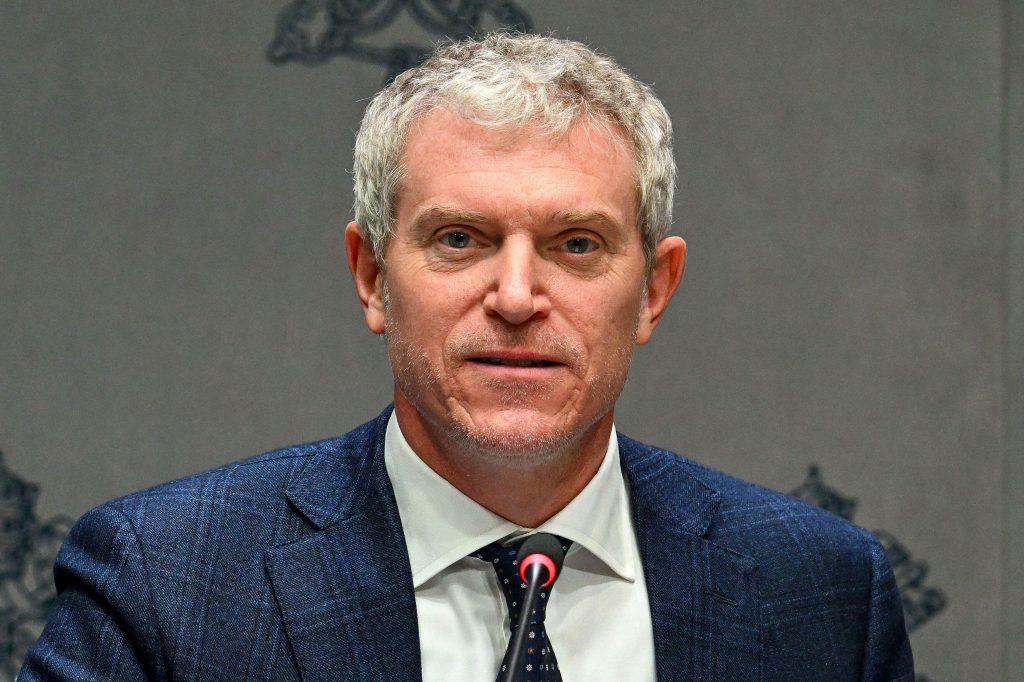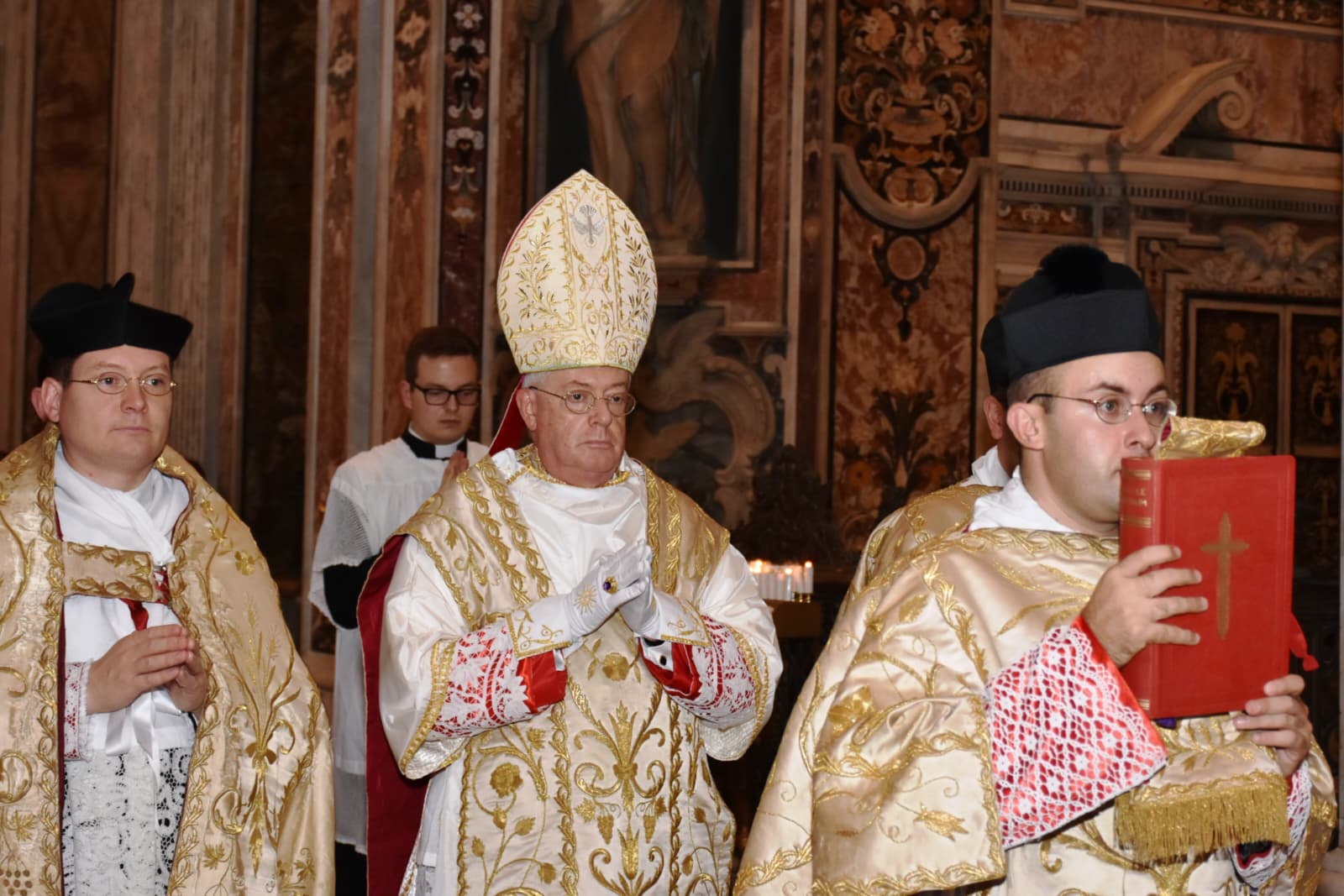
AdVaticanum recently sat down with Archbishop Guido Pozzo, Titular Archbishop of Bagnoregio and Superintendent of the Economy of the Pontifical Sistine Chapel Choir. In this exclusive interview, the Italian prelate discusses his administrative responsibilities in supporting the historic choir, recent developments under Pope Leo XIV, the importance of Gregorian chant and sacred polyphony, and practical ways to recover the Church’s musical and liturgical heritage. He also offers reflections on the role of Latin in the liturgy, the complementary relationship between the Novus Ordo and the Vetus Ordo, and how both forms of the Roman Rite can contribute to ecclesial unity rather than division.
Archbishop Guido Pozzo was ordained priest in 1976 and, in 1987, became a member of the staff of the Congregation for the Doctrine of the Faith (CDF), renamed in 2022 as the Dicastery for the Doctrine of the Faith (DDF). A seasoned curial prelate, he has held a variety of positions across the Curia and is a respected figure who brings considerable diplomatic skill and liturgical knowledge to his service of the Church.
AV: Your Excellency, as Superintendent of the Economy of the Pontifical Sistine Chapel Choir, could you share with us what your principal duties and responsibilities have involved over the past several years? How does the administrative and economic oversight of this historic ensemble support its artistic and liturgical mission in the life of the Universal Church?
+GP: The primary task of the Superintendent for the Economy of the Pontifical Musical Chapel is to oversee its proper functioning and administrative activity. Given the close link between the Choir of the Pontifical Musical Chapel and the schola of the Pueri Cantores, which is a state-recognised equal-status school, the Superintendent serves as its legal representative before the Italian State. Although the economic and administrative sphere is distinct from the specifically musical, artistic, and liturgical sphere, there is close collaboration between the person responsible for the Pontifical Musical Chapel (the Master of the Pontifical Liturgical Celebrations), the Choir Director, and the Superintendent for the Economy. The work of the Administrative Office is functional and directed towards achieving the goals of the Pontifical Musical Chapel.
AV: How have you found your role serving under the relatively new pontificate of Pope Leo XIV?
+GP: For centuries, the Pontifical Musical Chapel has preserved the musical tradition of the Church and traces its origins to the ancient Roman Schola Cantorum. Today, following Pope Francis’s Motu Proprio of 2019, it forms part of the Office for the Liturgical Celebrations of the Supreme Pontiff. Its task, now as in the past, is to take care of everything concerning the musical execution of the liturgical celebrations presided over by the Roman Pontiff, or in his name and by his mandate.
In this context, the Chapel has the task of safeguarding and promoting the artistic-musical heritage produced over the centuries by the Chapel itself, as a privileged instrument of evangelisation and of spreading the cultural and spiritual patrimony of the Church. Pope Leo, in continuity with his predecessors, shows himself to be particularly sensitive in recognising and appreciating the role of sacred music in the service of evangelisation and the dissemination of knowledge of the richness of the Church’s musical and religious heritage. To this end, the Choir of the Sistine Chapel also distinguishes itself through regular concert activity in Italy and abroad, carrying the Christian message through sacred chant (Gregorian and classical polyphony) even to peoples and cultures far removed from the Christian tradition.
AV: The Vatican has recently released a series of Gregorian chant videos under the title “Let’s Sing with the Pope.” Could you share with readers a little bit about the project?
+GP: “Let us Sing with the Pope” is an initiative of the Pontifical Institute of Sacred Music launched in May 2025 to teach the faithful simple Gregorian chants through social media tutorials. The project aims to involve the Christian community in singing the parts of the Mass celebrated in Latin, such as the Gloria, the Pater Noster, and the Agnus Dei. The initiative seems more than praiseworthy and certainly deserves to be encouraged, because it seeks to make the heritage of Gregorian chant accessible and to foster the active participation of the faithful in liturgical celebrations.
AV: What, in your considered judgment as Superintendent of the Economy of the Pontifical Sistine Chapel Choir, role should Gregorian chant and sacred music have in the Roman liturgy?
+GP: Gregorian chant is the proper chant of the Roman liturgy and must be given the principal place, as taught by Sacrosanctum Concilium of the Second Vatican Council (no. 116). Through its texts it reconnects us to the entire Catholic spiritual tradition, and its melodies, which highlight the ritual words in the proper way, easily lead to contemplation of the heavenly mysteries. The liturgical quality of Gregorian chant consists first of all in its being essentially and simply prayer. It is a chant made solely for God, which expresses the worship of faith and adoration that the Church raises to God. Secondly, it is connatural to the liturgy because the text is essential and the melody is employed only to serve the contemplation of the divine mysteries.
Alongside Gregorian chant stands sacred polyphony, with its immense heritage of art and beauty, which must be rediscovered and restored to its due honour, so that the liturgy of the Church may once again become the place where one experiences the most mature fruit of service to the worship of God.
AV: It has been suggested that incorporating certain fixed parts of the Ordinary Form of the Mass, such as the Pater Noster immediately after the Consecration or the words of consecration themselves, in Latin could lead to a greater sense of liturgical uniformity and ecclesial unity across different cultures and languages. As someone who is one of the stewards of the Pope’s own Choir, which sings in Latin daily, what are your thoughts on whether selective use of Latin in the vernacular Mass might enrich the faithful’s experience of the universal character of the Roman liturgy?
+GP: I personally would not exclude the possibility (without making it a juridical obligation) of inserting, in certain fixed parts of the Novus Ordo Mass celebrated in the vernacular, some words and texts in Latin. What seems to me even more important, however, is that in every diocese there should be at least one celebration of Holy Mass in Latin according to the Novus Ordo, animated by Gregorian chant, especially on Sundays and solemn liturgical feasts. This would foster among the faithful a deeper perception of the universal character of the Roman liturgy.
AV: More broadly, how can we use Latin in the liturgy, whether in the Ordinary Form or in the Choir’s own repertoire, to serve as a source of spiritual enrichment for the entire Church rather than as a barrier? In your experience overseeing the Sistine Chapel Choir, what pastoral fruits have you observed when Latin is allowed to resonate alongside the vernacular?
+GP: “A Church that embraces all peoples needs a universal language, but has no reason to adopt the language of this or that people… Humanly speaking, the Church needs a universal, unchangeable, learned language; whoever conspires to deprive her of it makes war on her unity.” These are the words of Fr Luigi Taparelli in his Theoretical Essay on Natural Law (1835), which I have no difficulty in making my own. Liturgical Latin expresses and guarantees the sacral dimension of the liturgy. To address God, the most appropriate words are those that God Himself, through His revelation, has placed on the lips of believers and those who pray. The Catholic Church has adopted the Vulgate, the Latin edition of the Bible, for her life, prayer, and doctrine. Disseminated by St Jerome in the fourth century and then revised after the Council of Trent, the Vulgate was also recognised by the Second Vatican Council, which admitted a limited and reasonable use of the vernacular languages; these, however, were to coexist alongside liturgical Latin (Sacrosanctum Concilium 36 §1).
To the objection that Latin is no longer a commonly spoken language and is therefore a “dead” language, one may reply that a language that is no longer spoken does not mean a dead language. A dead language is one that has disappeared from the culture and memory of a people. Latin is the living foundation for understanding the cultural tradition and the doctrine of the Church and of Catholic Tradition. Moreover, Latin offers theological precision in verbal formulation and the solemnity of the prayed word, thus helping the faithful to understand that the Mass is the moment in which one enters the mysterium fidei, because we enter with Christ into the oratio offered by the entire Mystical Body to the Father in the Holy Spirit. The most significant pastoral fruits consist in the conscious, progressive recovery of the vertical, cultic dimension of the liturgy, introducing the faithful into the experience of encounter with the incarnate, dead, and risen God, vitally present in the sacrament.
AV: The Church today celebrates the liturgy in both the Novus Ordo and the earlier Vetus Ordo. In your view, how can these two expressions of the same Roman Rite best contribute to the unity of the Church rather than appearing as contrasting alternatives?
+GP: First of all, it is necessary to clear the field of a major misunderstanding: that of considering the two forms of the Roman Rite as opposed or irreconcilable. I would prefer not to designate them with the terms “ordinary form” and “extraordinary form”, but simply as the Novus Ordo, that is, the Roman Rite reformed by St Paul VI, and the Vetus Ordo, the ancient Roman Rite, in use according to the liturgical books of 1962. It is necessary to escape from the ideological cages that set the two forms of the Roman Rite against each other. Certainly, the Novus Ordo is the common, universal, and habitual form of Catholic liturgy. The form of the ancient Roman Rite is particular and special; therefore, there is a concrete norm, which it is for the ecclesiastical authority to establish, regarding the conditions under which it is to be celebrated.
The liturgical reform of Vatican II must not be understood as a rupture with the traditional liturgy, but must be read as a renewal in substantial continuity. Unfortunately, the line of rupture with Tradition taken by large sectors of the Church’s life has led to an ecclesial and liturgical crisis that is still present. It was Cardinal Joseph Ratzinger himself who used grave expressions on the liturgical question:
“I am convinced that the ecclesial crisis in which we find ourselves today depends to a large extent on the collapse of the liturgy” — he used the word “collapse” of the liturgy — “it remains to be seen,” continues J. Ratzinger, “to what extent the individual stages of the liturgical reform of Vatican II were true improvements or rather banalisations, to what extent they were pastorally wise or, on the contrary, ill-considered.”
Once again, therefore, the crucial issue is not the renewal desired by the Council, but the reception and the concrete form of its implementation in practice. Critical observations about questionable forms of implementation cannot call into question the Missal published by St Paul VI and later reissued a third time with the approval of St John Paul II, which remains the ordinary and universal form of the Eucharistic liturgy. However, the celebration of Holy Mass in the antiquior rite certainly helps to recover and highlight, in a more pregnant and marked way, certain aspects and certain doctrinal truths that risk being obscured by a mistaken or banalised way of celebrating the reformed rite.
For example, the convivial aspect of the Eucharist, that is, the Eucharist as a banquet (already highlighted by Pius XII in the encyclical Mediator Dei, and certainly emphasised by Vatican II and the liturgical reform), is so accentuated at the expense of the essentially sacrificial nature of the Eucharist that one forgets that without the sacrifice there is no communion. Communion arises from the sacrifice of Christ, not the other way round. The aspect of assembly and social participation, which is undoubtedly emphasised and made more visible in the liturgical reform, is sometimes emphasised at the expense of the transcendent and Christocentric element. The aspect of the common priesthood of all the faithful is emphasised at the expense of the irreplaceable role of the ministerial priesthood. It is clear that in the texts and liturgical books of the Novus Ordo there is no such imbalance; rather, it is found above all in the way the minds of the Christian people, and also of priests, are formed, and in the way the rite is concretely understood, interpreted, and celebrated by some.
Consider, for example, the concept of actuosa participatio (active participation), so emphasised in the liturgical reform. It is not reducible to external activity, speeches, words, or comments, to a kind of “do-it-yourself”. It also includes silence, which expresses a real, deep, and personal participation, because the liturgy does not ask for arbitrary and attractive creativity, but demands solemn repetition. There is therefore a real risk of this collapse, of this instrumentalisation of the reformed rite to the detriment of the integrity of the faith and of divine worship.
Finally, I would like to draw attention to some of the underlying reasons for the difficulties of a peaceful integration of the ancient rite into the life of the Church. The fundamental reasons are essentially two. Some are of a practical order and we can leave them aside because they are certainly not important or serious. The first fundamental reason for the difficulties is found in the lack, or presumed lack, of obedience to the Second Vatican Council, which certainly wanted to reform the liturgical books. The second reason is seen in the risk of a rupture of ecclesial unity due to the difference between these two liturgical forms, which may also imply divergence in forms of catechesis and pastoral care.
As regards the first difficulty, it must be recalled that Vatican II certainly asked for a revision of the liturgical books, but also laid down certain fundamental criteria, and it is in the light of these criteria that the revision, and above all the practice of celebrations in the post-conciliar period, must be evaluated. Otherwise, one is not disobeying St Pius V; one is disobeying the Second Vatican Council. The criteria are formulated in numbers 34 and 36 of Sacrosanctum Concilium. The Council did not abrogate the previous books but asked for a renewal and a revision.
The other difficulty would be the existence of two different forms of the rite, which would represent an obstacle to the unity of the Church, to liturgical and pastoral unity. Here a distinction must be made, I believe, between a theological aspect and a practical one. From the theological point of view, it is well known that in the Church there have always existed different forms of the Latin rite, most of which fell into disuse following the greater unification of civil and secular European cultures. Nevertheless, until Vatican II, alongside the Roman rite in the Latin Church there existed the Ambrosian rite, the Mozarabic rite (of Toledo), that of Braga (Portugal), and the variants of the Roman rite: the Dominican, Carmelite, and Carthusian rites. No one was ever surprised by these differences. No one found it scandalous to participate in the Dominican rite, which has some variants with respect to the Roman rite of St Pius V.
What must be avoided, I believe, is judging the two forms of the Roman Rite on the basis of their external characteristics. Public opinion considers the following to be essential to the new liturgy: that it be celebrated in the vernacular and not in Latin, because otherwise, they say, “we don’t understand anything”; that the priest face the faithful; that a certain space be left to the free creativity of the celebrating priest and also of the lay faithful participating in the celebration, so that they can move around the altar and intervene with short or long reflections. In the ancient liturgy, on the contrary, it was considered essential that it be in Latin, that the celebrant face the altar (coram Deo), and that the faithful participate, yes, but in silence. It is not that the faithful did not participate at all before; they participated, but through silence, and not, as the reform of St Paul VI proposes and encourages, through a more active and visible role. The difference is therefore between the visible and the invisible, between silence and external activity that is phenomenologically perceptible: there is therefore a difference. But the question is whether it is an essential difference.
For some, the two liturgical forms would express two fundamentally different attitudes in conceiving both the liturgy and the Church: a hierarchical Church versus a “People of God” Church. Some pronounce: “Before the Council the Church was hierarchical and pyramidal; now instead it is communal and popular; the whole people participates.” We reply: certainly there are different emphases and highlights. But the communion of which the Second Vatican Council speaks, the Church as communion, is a communio hierarchica. And even before Vatican II, it is not that the people and the faithful were considered second-class persons in relation to the priest.
In any case, the point of view that considers the phenomenological, empirical aspect essential for the liturgy is not the essential point of view. The contrasts that have come to light do not in reality originate in the Council. I insist on emphasising this. In Sacrosanctum Concilium it is stated that Latin must be preserved, while giving ample space to the vernacular, but it is stated that Latin must be preserved. So how does one truly obey the Council? By making Latin disappear completely?
In conclusion, I would like to reiterate that this is not a question of diminishing the principles and criteria of the Conciliar Constitution Sacrosanctum Concilium on the Sacred Liturgy; on the contrary, it is precisely a question of recovering those criteria even for the celebration of the ordinary form. There will certainly remain different spiritual and theological emphases between the two forms, but not as two opposed ways of being Catholic or of celebrating the praise and sacrifice of the Lord, but rather as a common patrimony, albeit with different emphases, of the one faith.
AV: Many Catholics today appreciate both the Novus Ordo and the Tridentine form of the Mass. From a liturgical and musical standpoint, why would you say these two expressions of the one Roman Rite do not stand in fundamental opposition to each other, but can instead be seen as complementary enrichments of the Church’s worship?
+GP: In the Motu Proprio Summorum Pontificum, Pope Benedict XVI expressly declared that the ancient use of the Roman Liturgy is to be considered a precious treasure to be preserved for all the faithful. In a recent letter to the French Bishops, Pope Leo XIV urged the prelates to foster the reconciliation and unity of the Church, avoiding the marginalisation and exclusion of those faithful who show a particular sensitivity and attachment to the liturgical form of the ancient Roman Rite, provided that they accept the orientations of the Second Vatican Council in liturgical matters and, obviously, do not oppose or contest the Novus Ordo.
On the other hand, the denunciation of the intolerable deviations and deformations of the liturgy in the Novus Ordo form, frequently cheapened by sloppiness, arbitrary omissions of the rubrics, and manipulations, which have occurred and unfortunately still occur, even through the unjustified tolerance of ecclesiastical authorities, cannot and must not lead to calling into question the reformed liturgy. When the Mass of St Paul VI is celebrated with fidelity, recollection, and awareness of the mystery, the spiritual distance between the ancient Roman Rite and the reformed rite appears much less pronounced than some would like to maintain.
Pope Leo XIV has expressed himself along these lines, speaking some time ago with the journalist Elise Ann Allen. The Holy Father stressed that the deep issue does not consist in the language of the celebration nor in the distinction between the Ancient Roman Rite (Vetus Ordo) and the renewed Missal of the Novus Ordo, but in the liturgy’s capacity to arouse in the soul wonder before the living God. The crucial point today, in my view, is that the liturgy must once again become a renewed encouragement to believe, to live a life starting from the centre and dynamism of faith, to rediscover God by rediscovering Christ, and thus to rediscover the centrality of the Christian faith celebrated in the liturgical mystery. It is in the relationship with the liturgy that the destiny of the faith of the Church is decided (Benedict XVI).
AV: Your Grace, thank you for your time and priestly ministry.
RISPOSTE AI QUESITI
AV: AV: Eccellenza, come Sovrintendente all’Economia del Coro della Cappella Sistina Pontificia, potrebbe condividere con noi quali sono stati i suoi principali compiti e responsabilità negli ultimi anni? In che modo la supervisione amministrativa ed economica di questo storico ensemble sostiene la sua missione artistica e liturgica nella vita della Chiesa Universale?
+GP: Compito del Sovrintendente all’economia della Cappella Musicale Pontificia è principalmente quello di vigilare sul funzionamento e l’attività amministrativa di questo organismo. Dato il legame stretto tra il Coro della Cappella Musicale Pontificia e la schola dei pueri cantores, che è una scuola paritaria, riconosciuta dallo Stato italiano, il Sovrintendente è il suo rappresentante legale presso lo Stato italiano. Pur essendo l’ambito economico e amministrativo distinto da quello propriamente musicale, artistico e liturgico, sussiste una stretta collaborazione tra il responsabile della Cappella Musicale Pontificia, che è il Maestro delle Celebrazioni liturgiche Pontificie, il Maestro Direttore del Coro e il Sovrintendente dell’economia. Il lavoro dell’Ufficio Amministrativo è funzionale e finalizzato al raggiungimento delle finalità della Cappella Musicale Pontificia.
AV: Come ha vissuto il suo ruolo sotto il pontificato relativamente nuovo di Papa Leone XIV?
+GP: La Cappella Musicale Pontificia da secoli custodisce la tradizione musicale della Chiesa e ha la sua origine nell’antica Schola Cantorum Romana. Attualmente, a seguito del Motu proprio di Papa Francesco del 2019, essa fa parte dell’Ufficio delle Celebrazioni Liturgiche del Sommo Pontefice. Oggi, come nei tempi precedenti, suo compito è curare tutto ciò che riguarda l’esecuzione musicale nelle celebrazioni liturgiche presiedute dal Romano Pontefice, oppure in Suo nome e per Suo mandato. In questo contesto, la Cappella ha il compito di custodire e promuovere l’eredità artistico-musicale prodotta nei secoli dalla Cappella stessa come strumento privilegiato di evangelizzazione e di divulgazione del patrimonio culturale e spirituale della Chiesa. Papa Leone XIV, in continuità con i suoi predecessori, mostra di essere particolarmente sensibile nel riconoscere e apprezzare il ruolo della musica sacra al servizio dell’evangelizzazione e della diffusione della conoscenza della ricchezza del patrimonio musicale e religioso della Chiesa. A tal fine il Coro della Cappella Sistina si distingue anche per una periodica attività concertistica in Italia e all’estero, portando il messaggio cristiano attraverso il canto sacro (gregoriano e della polifonia classica) anche a popoli e culture lontane dalla tradizione cristiana.
AV: Il Vaticano ha recentemente pubblicato una serie di video di canto gregoriano dal titolo “Cantiamo con il Papa”. Potrebbe condividere con i lettori qualche informazione su questo progetto?
+GP: “Cantiamo con il Papa” è un’iniziativa del Pontificio Istituto di Musica Sacra promossa nel maggio 2025 per insegnare ai fedeli canti gregoriani semplici tramite tutorial social. Il progetto mira a coinvolgere la comunità cristiana nel canto delle parti della Messa celebrate in latino, come il Gloria, il Pater Noster e l’Agnus Dei. L’iniziativa appare più che lodevole e certamente da incoraggiare, perché si propone di rendere accessibile il patrimonio del canto gregoriano e di favorire la partecipazione attiva dei fedeli alle celebrazioni liturgiche.
AV: Quale ruolo, a suo giudizio di Sovrintendente all’Economia del Coro della Cappella Sistina Pontificia, dovrebbero avere il canto gregoriano e la musica sacra nella liturgia romana?
+GP: Il canto gregoriano è il canto proprio della liturgia romana, cui deve essere riservato il posto principale, come insegna la Sacrosanctum Concilium, del Concilio Vaticano II, n. 116, perché tramite i suoi testi, ci ricollega a tutta la tradizione spirituale cattolica e le melodie stesse, che mettono nel giusto risalto le parole rituali, conducono facilmente alla contemplazione dei misteri celesti. La qualità liturgica del canto gregoriano consiste anzitutto nel suo essere essenzialmente e semplicemente preghiera. E’ un canto fatto unicamente per Dio, che esprime il culto di fede e di adorazione che la Chiesa innalza a Dio. In secondo luogo esso è connaturale alla liturgia perché il testo è essenziale, e la melodia viene adoperata soltanto per servire alla contemplazione dei misteri divini.
Accanto al gregoriano, sta la polifonia sacra con il suo immenso patrimonio di arte e bellezza che deve essere riscoperto e riportato nel debito onore, affinché la liturgia della Chiesa torni ad essere il luogo in cui si sperimenta il frutto più maturo del servizio al culto di Dio.
AV: È stato suggerito che l’inserimento di alcune parti fisse della Forma Ordinaria della Messa, come il Pater Noster subito dopo la Consacrazione o le stesse parole della consacrazione, in latino potrebbe favorire una maggiore uniformità liturgica e unità ecclesiale tra culture e lingue diverse. Come uno dei responsabili del Coro del Papa, che canta quotidianamente in latino, quali sono i suoi pensieri riguardo a un uso selettivo del latino nella Messa in lingua vernacola, per arricchire l’esperienza dei fedeli del carattere universale della liturgia romana?
+GP: personalmente non escluderei la possibilità (senza che ciò diventi un obbligo giuridico) di inserire in alcune parti fisse della Messa del Novus Ordo celebrata nelle lingue vernacole parole e testi in latino. Ciò che mi sembra però ancora più importante è che nelle Diocesi sia prevista nella Cattedrale o nel Duomo almeno una celebrazione della Santa Messa in latino nel Novus Ordo, animata dal canto gregoriano, specialmente nelle domeniche e nelle solennità liturgiche. Ciò favorirebbe l’arricchimento nei fedeli della percezione del carattere universale della liturgia romana.
AV: Più in generale, come possiamo usare il latino nella liturgia – sia nella Forma Ordinaria sia nel repertorio proprio del Coro – affinché sia fonte di arricchimento spirituale per tutta la Chiesa e non un ostacolo? Nella sua esperienza di supervisione del Coro della Cappella Sistina, quali frutti pastorali ha osservato quando il latino viene lasciato risuonare accanto alla lingua vernacola?
+GP: “Una Chiesa che abbraccia tutti i popoli abbisogna di una lingua universale, ma non ha motivo di adottare una lingua di questo o di quello… La Chiesa abbisogna, umanamente parlando, di una lingua universale, inalterabile, dotta, chi cospira a privarnela fa guerra alla sua unità”. Sono parole del P. Luigi Taparelli nel saggio teoretico di diritto naturale (1835), che non ho difficoltà a farle mie. Il latino liturgico esprime e assicura la dimensione sacrale della liturgia. Per rivolgersi a Dio le parole più appropriate sono quelle che Dio stesso con la sua rivelazione ha messo nella bocca dei credenti e degli oranti. La Chiesa Cattolica ha assunto per la sua vita e la sua preghiera e dottrina la Vulgata, ossia l’edizione latina della Bibbia. Diffusa da san Gerolamo nel IV secolo e poi rifatta dopo il Concilio di Trento. Lo stesso Concilio Vaticano II ha ammesso un uso limitato e ragionevole delle lingue nazionali, che però avrebbero dovuto coesistere accanto al latino liturgico (SC 36, §1). All’obiezione che il latino non sia più una lingua correntemente parlata, e quindi sia una lingua morta, si può rispondere che una lingua non più parlata non significa una lingua morta. Una lingua morta è una lingua scomparsa dalla cultura e dalla memoria di un popolo. Il latino è la base vivente per comprendere la tradizione culturale e la dottrina della Chiesa e della Tradizione cattolica. Il latino, inoltre, offre la precisione teologica della formulazione verbale e la solennità della parola pregata, aiutando così i fedeli a capire che la Messa è il momento in cui si entra nel mysterium fidei, perché entriamo con Cristo nell’oratio rivolta dall’intero Corpo mistico al Padre nello Spirito Santo. I frutti pastorali più rilevanti consistono nella consapevole ripresa progressiva della dimensione verticale, cultuale della liturgia, introducendo i fedeli nell’esperienza dell’incontro con il Dio incarnato, morto e risorto, vitalmente presente nel sacramento.
AV: La Chiesa celebra oggi la liturgia sia nel Novus Ordo sia nel Vetus Ordo. Secondo lei, come possono queste due espressioni dell’unico Rito Romano contribuire al meglio all’unità della Chiesa, anziché apparire come alternative contrastanti?
+GP: Occorre in primo luogo rimuovere il campo da un grosso equivoco: quello di ritenere opposte o inconciliabili le due forme liturgiche del Rito Romano, che preferirei non denominare con i termini di forma ordinaria e forma straordinaria, ma semplicemente come Novus Ordo, cioè il Rito Romano riformato da S. Paolo VI, e Vetus Ordo, il Rito Romano antico, in uso secondo i libri liturgici del 1962. E’ necessario uscire dalle gabbie ideologiche che contrappongono le due forme del Rito Romano. Certamente il Novus Ordo è la forma comune, universale e abituale della liturgia cattolica. La forma del Rito Romano antico è particolare e speciale, per cui si dà una normativa concreta, che spetta all’autorità ecclesiastica stabilire, sulle condizioni per cui deve essere celebrata.
La riforma liturgica del Vaticano II non dev’essere compresa come rottura con la Liturgia tradizionale, ma dev’essere letta come rinnovamento nella continuità sostanziale. Purtroppo la linea della rottura con la Tradizione da parte di larghi settori della vita della Chiesa ha portato ad una crisi ecclesiale e liturgica tuttora presente. E’ stato lo stesso Papa Benedetto XVI, ancora da Cardinale, a usare gravi espressioni sulla questione liturgica:
“Sono convinto che la crisi ecclesiale in cui oggi ci troviamo dipende in gran parte dal crollo della Liturgia – ha usato questa parola: ‘crollo’ della Liturgia – resta da vedere – continua ancora J. Ratzinger – fino a che punto le singole tappe della riforma liturgica del Vaticano II siano stati veri miglioramenti o non piuttosto banalizzazioni, sino a che punto siano state pastoralmente sagge o non, al contrario, sconsiderate”. Ancora una volta quindi la questione cruciale non è il rinnovamento voluto dal Concilio, ma la recezione e la forma di attuazione nella prassi concreta di tale rinnovamento.
Le osservazioni critiche circa le discutibili forme di attuazione non possono rimettere in discussione il Messale pubblicato da S. Paolo VI, poi riedito una terza volta con l’approvazione di S. Giovanni Paolo II, che rimane la forma ordinaria e universale della Liturgia eucaristica. Ma la celebrazione della Santa Messa nel rito antiquior aiuta certamente a riprendere e a evidenziare in misura più pregnante, più marcata certi aspetti, certe verità dottrinali che rischiano di essere oscurate da un certo modo sbagliato o banalizzato di celebrare il rito riformato. Esemplificando: l’aspetto conviviale dell’Eucaristia, cioè l’Eucaristia come banchetto ( già Pio XII l’aveva messo in evidenza nell’Enciclica Mediator Dei, ma certamente il Vaticano II e poi la riforma liturgica hanno sottolineato questo momento, questa dimensione conviviale dell’Eucaristia), viene talmente accentuato a scapito della natura essenzialmente sacrificale dell’Eucaristia, dimenticando quindi che senza il sacrificio non c’è comunione. La comunione nasce dal sacrificio di Cristo, non il contrario. L’aspetto della partecipazione assembleare e sociale che viene indubbiamente sottolineato e reso anche più visibile nella riforma liturgica talvolta è a scapito dell’elemento e della dimensione trascendente e cristocentrica. L’aspetto del sacerdozio comune di tutti i fedeli viene sottolineato a scapito del ruolo insostituibile del sacerdozio ministeriale. E’ chiaro che nei testi, nei Libri liturgici del Novus Ordo non c’è questo sbilanciamento, ma esso si trova soprattutto nel modo di formare la mente del popolo cristiano, e anche dei sacerdoti. Lo sbilanciamento si trova nel modo di comprendere, interpretare, celebrare concretamente il rito da parte di alcuni.
Consideriamo, ad esempio, il concetto di actuosa participatio (partecipazione attiva) così messo in risalto nella riforma liturgica. Essa non è riducibile ad un’attività esteriore, discorsi, parole, commenti, ad una specie di ‘fai da te’. Essa è anche il silenzio, che esprime una partecipazione reale profonda e personale, perché la liturgia non chiede creatività arbitraria e accattivante, ma esige ripetizioni solenni. Quindi, c’è il rischio effettivo di questo crollo, di questa strumentalizzazione del rito riformato a detrimento dell’integrità della fede e del culto divino.
E per concludere, vorrei attirare l’attenzione su alcune ragioni che stanno alla base, delle difficoltà di una pacifica integrazione nella vita della Chiesa dell’antico rito. Le ragioni di fondo sono sostanzialmente due: alcune sono di ordine pratico e le possiamo anche tralasciare perché non sono certo importanti e gravi. La prima ragione di fondo delle difficoltà è trovata nella mancanza, o presunta mancanza, di obbedienza al Concilio Vaticano II che voleva certamente riformare i Libri liturgici. La seconda ragione è vista nel rischio di una rottura dell’unità ecclesiale a motivo della differenza di queste due forme liturgiche che possono poi implicare anche una divergenza nelle forme di catechesi e di pastorale.
– Quanto alla prima difficoltà, occorre ricordare che il Vaticano II ha certo chiesto una revisione dei Libri liturgici, ma ha fissato anche alcuni criteri fondamentali, ed è alla luce di questi criteri che bisogna valutare la revisione e soprattutto la prassi delle celebrazioni liturgiche nel dopo-Concilio. Altrimenti non si disubbidisce a San Pio V, si disubbidisce al Concilio Vaticano II! I criteri sono formulati nei numeri 34 e 36 della Sacrosanctum Concilium. Il Concilio non ha abrogato i Libri precedenti ma ha chiesto un rinnovamento e una revisione.
– L’altra difficoltà sarebbe l’esistenza di due forme differenti del rito, che rappresenterebbero un ostacolo all’unità della Chiesa, all’unità liturgica e pastorale. Qui occorre distinguere, credo, un aspetto teologico e un aspetto pratico. Dal punto di vista teologico è noto che nella Chiesa sono esistite sempre diverse forme del rito latino e che esse sono cadute in disuso, gran parte di esse, in seguito alla maggiore unificazione delle culture civili, secolari, europee. Comunque, fino al Vaticano II, accanto al rito romano, nel rito latino, vi è il rito ambrosiano, il rito mozarabico, cioè di Toledo, quello di Braga (Portogallo), e le varianti del rito romano: il rito domenicano, quello carmelitano, quello dei certosini. Nessuno si è mai meravigliato di queste differenze. Nessuno ha trovato scandaloso partecipare al rito domenicano che ha qualche variante rispetto al rito romano di San Pio V.
Ciò che si deve evitare, io credo, è giudicare le due forme del Rito Romano sulla base delle loro caratteristiche esteriori. L’opinione pubblica considera essenziale della nuova liturgia: che sia celebrata in lingua vernacola, e non in latino, perché altrimenti, dicono, “non capiamo niente”; che il sacerdote sia rivolto verso i fedeli; che si sia lasciato un certo spazio alla libera creatività del sacerdote celebrante e anche dei fedeli laici che partecipano alla celebrazione, così che possano muoversi attorno all’altare e intervenire con brevi o lunghe riflessioni. Nell’antica liturgia, al contrario, si riteneva essenziale che essa sia in latino, che il celebrante sia rivolto all’altare (coram Deo), che i fedeli partecipino sì, ma in silenzio. Non è che prima i fedeli non partecipassero affatto; essi partecipavano, ma attraverso il silenzio, e non come invece propone e sollecita la riforma di S. Paolo VI attraverso un ruolo più attivo e visibile. Quindi la differenza è tra visibile e invisibile, tra il silenzio e l’attività esterna, fenomenologicamente percepibile: c’è quindi una differenza. Ma la domanda è se si tratta di una differenza essenziale.
Per qualcuno le due forme liturgiche esprimerebbero due atteggiamenti di fondo differenti di concepire sia la Liturgia sia la Chiesa: Chiesa gerarchica e Chiesa popolo di Dio. Certuni sentenziano: “prima del Concilio la Chiesa era gerarchica e piramidale, adesso invece è comunionale e popolare, tutto il popolo partecipa”. Rispondiamo: certo, ci sono delle accentuazioni e delle sottolineature diverse. Ma la comunione di cui parla il Concilio Vaticano II, la Chiesa come comunione, è una communio hierarchica,! E così anche prima del Vaticano II, non è che il popolo e i fedeli fossero considerati persone di serie inferiore rispetto al sacerdote.
Comunque, il punto di vista che considera essenziale per la liturgia l’aspetto fenomenologico, empirico, non è il punto di vista essenziale. I contrasti che si sono messi in luce in realtà non hanno origine nel Concilio. Ci tengo a sottolinearlo. Nella Sacrosanctum Concilium si dice che il latino deve essere mantenuto, pur dando ampio spazio alla lingua vernacola, ma si dice che il latino deve essere mantenuto. Allora, come si obbedisce veramente al Concilio? Facendo scomparire totalmente il latino?
Allora, alla fine vorrei ribadire che qui non si tratta di ridimensionare i principi e i criteri della Costituzione Conciliare Sacrosanctum Concilium sulla Divina Liturgia, anzi, si tratta proprio di riprendere quei criteri anche per celebrare nella forma ordinaria. Rimarranno certamente degli accenti, delle sottolineature spirituali e teologiche differenti tra le due forme, ma non come due modi opposti di essere cattolici o di celebrare la lode e il sacrificio del Signore, ma piuttosto come un patrimonio comune, pur con delle sottolineature differenti, dell’unica fede.
AV: AV: Molti cattolici oggi apprezzano sia il Novus Ordo sia la forma tridentina della Messa. Dal punto di vista liturgico e musicale, perché direbbe che queste due espressioni dell’unico Rito Romano non si trovano in opposizione fondamentale tra loro, ma possono invece essere considerate arricchimenti complementari del culto della Chiesa?
+GP: Papa Benedetto XVI nel Motu Proprio Summorum Pontificum dichiarava espressamente che l’uso antico della Liturgia Romana è da considerare tesoro prezioso da conservare per tutti i fedeli. Papa Leone XIV in una recente lettera ai Vescovi francesi ha esortato i Presuli a favorire la riconciliazione e l’unità della Chiesa, evitando di marginalizzare e di non includere i fedeli che mostrano una sensibilità e un attaccamento particolare per la forma liturgica del Rito Romano antico, purchè accettino gli orientamenti del Concilio Vaticano II in materia liturgica, e ovviamente non si oppongano o contestino il Novus Ordo. D’altra parte, la denuncia delle insopportabili deviazioni e deformazioni della liturgia nella forma del Novus Ordo, numerose volte svilita da sciatteria, omissioni arbitrarie delle rubriche, manipolazioni, che sono avvenute e purtroppo avvengono ancora, anche per una ingiustificata tolleranza delle autorità ecclesiastiche, non può e non deve condurre ad una rimessa in discussione della Liturgia riformata. Se la Messa di S. Paolo VI viene celebrata con fedeltà, raccoglimento e coscienza del mistero, la distanza spirituale tra il Rito Romano antico e il Rito Riformato appare molto meno accentuata di quanto qualcuno vorrebbe sostenere.
In tale linea si è espresso Papa Leone XIV, parlando tempo fa con la giornalista Elise Ann Allen. Il Santo Padre ha sottolineato che la questione profonda non consiste nella lingua della celebrazione né nella distinzione tra Rito Romano Antico (Vetus Ordo) o Messale rinnovato del Novus Ordo, ma la capacità della liturgia di suscitare nell’anima lo stupore dinnanzi al Dio vivente. Il punto cruciale oggi, a mio avviso, è che la liturgia deve ridiventare un rinnovato incoraggiamento a credere, a vivere una vita a partire dal centro e dal dinamismo della fede, a riscoprire Dio riscoprendo Cristo, e dunque a riscoprire la centralità della fede cristiana, celebrata nel mistero liturgico. E’ nel rapporto con la liturgia che si decide il destino della fede della Chiesa (Benedetto XVI).
AV: Eccellenza, la ringrazio per il suo tempo e per il suo ministero sacerdotale.