

Synodality
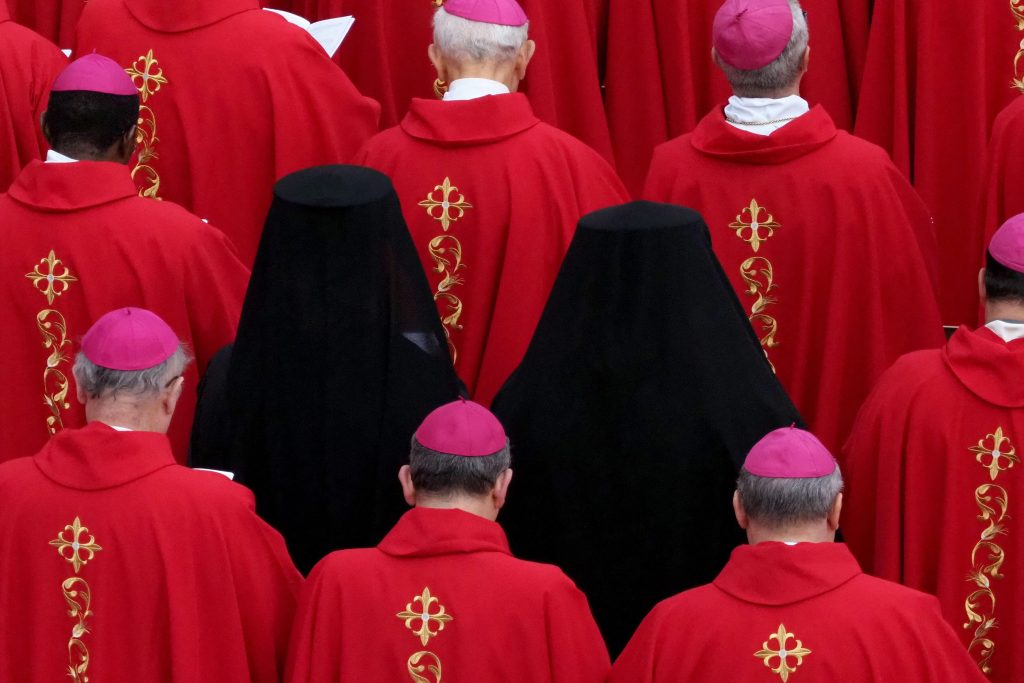
Cardinal Cupich on synodality
Cardinal Blase Cupich has described synodality as “the Church learning to dance”. Writing in the Vatican newspaper L’Osservatore Romano, the Archbishop of Chicago argued that “both dance and synodality require a shift from individual performance to collective harmony”, transforming individuals into “a single, moving body”. The reflection, published on 7 July under the title Synodality […] Cardinal Blase Cupich has described synodality as “the Church learning to dance”. Writing in the Vatican newspaper L’Osservatore Romano, the Archbishop of Chicago argued that “both dance and synodality require a shift from individual performance to collective harmony”, transforming individuals into “a single, moving body”. The reflection, published on 7 July under the title Synodality is like dancing , sees the cardinal use his childhood experience of learning the Croatian kolo, a Slavic folk dance, in his parish hall to explain one of the central themes of Pope Leo XIV’s pontificate. Rather than presenting synodality as a process centred on meetings or structures, Cardinal Cupich argues that it is fundamentally about listening to the Holy Spirit and to one another while remaining rooted in the Church’s tradition. Reflecting on the kolo, in which dancers join hands and move together in a circle or chain, Cardinal Cupich writes that the dance became “a means of socialising” and helped him understand the meaning of synodality, which derives from the Greek word synodos , meaning “walking together” or “travelling the same path”. Like the dance, the Cardinal writes, synodality “invites the entire community to assume the responsibility of moving forward in unison, attentive to the Holy Spirit and to one another.” The cardinal repeatedly returns to the importance of listening, arguing that just as dancers cannot begin without first listening to the music, so the Church cannot become authentically synodal without listening before speaking. “The fundamental step is not to speak or promulgate policies, but to listen deeply: to the Holy Spirit, Scripture, tradition, but also to listen attentively to one another, especially those on the margins,” he writes. “Just as a dancer who ignores the music becomes disconnected from the group, members of a community who don’t listen cease to act synodally.” He goes on to explain that synodality is not intended to diminish the distinct responsibilities of bishops, clergy, religious and lay faithful. Instead, he argues, each vocation contributes to the Church’s common mission in much the same way that individual dancers perform different movements within a single choreography. “The hierarchy, the laity, religious communities and theologians all have different charisms and roles,” Cardinal Cupich writes. “Synodality doesn’t flatten these differences; rather, like a great choreographer, it intertwines them. The beauty of dance depends on the fact that each dancer’s movement is needed for the entire performance to function.” The article also portrays synodality as a process requiring flexibility and trust rather than rigid planning. Describing it as “inherently a journey into uncharted territory”, the cardinal argues that dialogue inevitably brings moments of tension but that such disagreements should become opportunities for discernment rather than division. “When a community encounters tension or disagreement,” the Archbishop of Chicago writes, “synodality requires it not to abandon the stage, but to use that friction to pivot, adapt, and find a new way forward together.” Another central theme is continuity with the Church’s past. Comparing the dance floor to the foundations laid by previous generations, Cardinal Cupich argues that today’s Catholics inherit a tradition that makes genuine creativity possible rather than restricting it. He warns against what he calls the “tyranny of the present”, insisting that authentic synodality must remain in conversation not only with those living today but also with the saints and earlier generations of believers. “The boundaries set by Scripture, dogma, and historical councils are not restrictive cages,” Cupich writes. “They are the stable parameters that give our current movements context, security, and legitimacy.” The article concludes by returning to the image of dance as a way of expressing the Church’s communion. “Synodality is the Church learning to dance,” Cardinal Cupich writes. “It is a constant practice of listening to the divine melody, honoring each participant’s unique steps, and moving forward in a beautifully coordinated witness to the world.”
Jul. 9, 2026
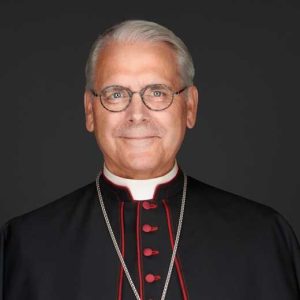
Archbishop Coakley calls for simpler presentation of synodality
The president of the United States Conference of Catholic Bishops has called for a simpler presentation of synodality. Speaking after a Vatican meeting with Pope Leo XIV, Archbishop Paul Coakley said synodality must be explained in a way that is readily understood by Catholics in the pews The president of the United States Conference of Catholic Bishops has called for a simpler presentation of synodality, warning that unfamiliar language risks distancing ordinary Catholics from the process. Archbishop Paul Coakley of Oklahoma City made the appeal while speaking to the Catholic News Service following a meeting at the Vatican with Pope Leo XIV, where participants reviewed progress in implementing the final document of the Synod on Synodality and discussed the challenges facing its reception across the world. Although bishops reported encouraging signs that synodal practices are becoming more firmly established in North America, Archbishop Coakley said one of the principal obstacles remains explaining synodality in a way that is readily understood by Catholics in the pews. The president warned that technical language risks limiting participation rather than broadening it. “Synodality is often presented and perceived by many as a cumbersome and complicated process with language and terminology that is unfamiliar to most Catholics,” the archbishop said. “Unless we can simplify how synodality is presented, it risks becoming the exclusive domain of specialists or ‘the initiated’ rather than a way of simply living our faith together.” The meeting, held in Rome from 23 to 25 June, brought together representatives from Latin America, Africa, Asia, Europe, Oceania, the Middle East and North America, together with the coordinators of the continental synodal teams. Part of the discussions centred on how local Churches have been putting into practice the Synod on Synodality’s final document, issued in October 2024, as preparations continue for the next phase of the worldwide process. The North American delegation included Archbishop Coakley, Auxiliary Bishop Juan Miguel Betancourt of Hartford, who serves as the United States bishops’ liaison for the synod, Bishop Pierre Goudreault, president of the Canadian Conference of Catholic Bishops, and Julia McStravog, senior adviser to the United States synod leadership team. Speaking after the meeting, Archbishop Coakley said a clear conclusion from the discussions was the need for better formation in synodality, not only in understanding its methods but also its spiritual foundations. Rather than creating entirely new structures, the archbishop suggested that the Church should continue developing the consultative bodies that already exist in parish and diocesan life. He noted that the Church in the United States has long encouraged lay participation through parish pastoral councils, diocesan councils, finance committees and advisory bodies. The task now, Coakley said, is to deepen discernment within those existing structures and to foster “an appropriate spirituality based on discernment and rooted in prayer”. Bishop Betancourt said synod leaders from across the United States continue to meet each month to exchange experiences and priorities, with those conversations strengthening cooperation between dioceses and helping local Churches adopt the synodal method of “conversations in the Spirit”. According to the bishop, the process has already influenced pastoral planning in several dioceses, informing decisions on parish consolidation, Mass schedules, the allocation of clergy and the distribution of diocesan resources. The Bishop of Hartford also highlighted the cultural diversity of the Catholic Church in the United States, describing it as an opportunity to broaden participation, encourage co-responsibility and strengthen missionary outreach. At the same time, the bishop acknowledged that two significant challenges remain: the unfamiliar language surrounding synodality and continuing reluctance among some Catholics to become involved in the process. Wider participation by the lay faithful, particularly those who are distant from the life of the Church, is essential if synodality is to become embedded, he said, because every baptised person shares responsibility for the Church’s mission. The bishop said: “Increasing participation by the lay faithful across the global Church, especially among the marginalized or distant, is essential to making the Church’s work more synodal.” Addressing concerns that synodality represents a departure from Catholic tradition, Bishop Betancourt rejected that interpretation. Instead, he described it as a recovery of the Church’s own tradition of communal discernment ordered towards evangelisation rather than institutional change. “Synodality is not parting from Catholic tradition but a deeper return to it,” he said. “It’s about discerning God’s will, not about personal preferences or agendas.” Bishop Goudreault also revealed that, after eight years as bishop, he had invited his diocesan team to evaluate his own ministry, describing accountability as a natural consequence of synodality. The exercise, he said, had allowed him to recognise both strengths and areas requiring improvement. The discussions in Rome also offered further insight into Pope Leo XIV’s priorities as he continues the work begun under Pope Francis. Archbishop Coakley said the Pope “clearly wants to build on the synodal vision outlined and presented by Pope Francis” while developing it in his own way. Bishop Betancourt said Pope Leo has consistently presented synodality as a means of strengthening communion throughout the Church rather than altering Catholic teaching. The Pope, he said, has “repeatedly made clear that synodality is not about changing doctrine or undermining the hierarchical communion of the Church”. Instead, it provides “a foundation for evangelisation, a shared process of listening, discerning, and building relationships”. The meeting came only days after the Vatican published the full programme for an October gathering marking the tenth anniversary of Amoris Laetitia . A preparatory framework issued jointly by the Dicastery for the Laity, Family and Life and the General Secretariat of the Synod invites Church leaders to reflect on five principal themes as they consider how the Gospel can be proclaimed more effectively to families. Attention will now turn to the next stages of the synodal process. Diocesan and eparchial evaluation assemblies are scheduled during the first half of 2027, followed by national and regional gatherings later that year. Continental assemblies will meet in early 2028 before an ecclesial assembly convenes in Rome with Pope Leo XIV in October 2028.
Jul. 7, 2026
Vatican sets out next phase of Synod on Synodality
The Vatican has confirmed the next stage of the Synod on Synodality, with a series of international meetings planned through to 2028 The Vatican has outlined the next stage of the Synod on Synodality, confirming that a series of international meetings will take place over the coming two years. In a statement issued on April 17, the General Secretariat of the Synod said it had convened the XVI Ordinary Council in an online session chaired by Cardinal Mario Grech. The meeting opened “with a moment of prayer led by Sr Nathalie Becquart”, before turning to what the Secretariat described as “the current phase of implementation of the Final Document of the XVI Assembly”. It forms part of what it describes as the “implementation phase” of the 2024 assembly. The statement said that the Secretary General “opened the session with several communications concerning the current phase of implementation of the Final Document of the XVI Assembly, the work of the Study Groups, whose final reports are in the process of being published, and the forthcoming organisation of two meetings”. Among the key developments is the convocation of a preparatory gathering at the Vatican from June 23 to 25. According to the Secretariat, this meeting will serve to prepare the continental evaluation assemblies scheduled for the first months of 2028. Those invited include “one representative of the Patriarchs of the Council of the Patriarchs of the Eastern Churches, the Presidents of the International Meetings of Episcopal Conferences, as well as the Presidents of the Episcopal Conferences of the United States and Canada, each accompanied by the Coordinator of the Synodal Team of the respective body”. The statement added: “The Holy Father Leo XIV will take part in a specific working session.” The June meeting forms part of a wider timetable which will see the synodal process continue through to 2028, when continental assemblies will assess the reception and application of the Synod’s conclusions. A global assembly in Rome is expected to follow later that year. The Secretariat also confirmed that a further document to guide this phase is in preparation. During the April 17 session, Fr Giacomo Costa presented “a proposal for a document for the implementation phase of the Synod, particularly concerning the organisation of the evaluation assemblies”. The Council, it said, “discussed the document at length and approved its general structure”. It added that the final version, intended as a complement to the “Pathways for the Implementation Phase” published in June 2025, “will be revised by the Ordinary Council and published by the beginning of summer”. In a separate development, the Vatican provided new details of a meeting of bishops’ conference presidents to be held in Rome from October 7 to 14, focusing on Amoris laetitia. The gathering had previously been announced by Pope Leo XIV in a message marking the tenth anniversary of the document’s publication. According to the Secretariat, the October meeting “will be organised by the Dicastery for the Laity, the Family and Life”, with the General Secretariat of the Synod providing “organisational and methodological support”. It stressed that “this is not a synodal assembly, but a consultative meeting of the Holy Father with the Presidents of the Episcopal Conferences and of the Synods of the Eastern Catholic Churches sui iuris”. In his March 19 message, Pope Leo XIV said the purpose of the gathering would be “to proceed, in mutual listening, to a synodal discernment on the steps to be taken in order to proclaim the Gospel to families today […] and taking into account what is currently being done in the local Churches”. The April 17 statement concluded with a note of thanks to Bishop Luis Marín de San Martín for his service to the Secretariat, stating that members had asked Cardinal Grech “to convey to H.E. Msgr Luis Marín de San Martín their gratitude for his years of service”, and assuring him of their prayers following his appointment as Almoner of His Holiness and Prefect of the Dicastery for the Service of Charity. The Vatican’s latest moves on the Synod on Synodality indicate that the process has been established as a continuing feature of Church governance and, under Pope Leo XIV, it is acquiring a firmer institutional shape. What is now emerging is a phase of consolidation, with the Holy See proceeding in a measured manner. There has been no pause or quiet shelving of a process associated with Pope Francis. On the contrary, it is moving forward with precision, as the promised roadmap, due in early summer, will formalise a multi-year implementation phase running through to 2028. This continuity indicates that synodality is now treated as a structural principle. The Synod of Bishops, established by Pope Paul VI in 1965, was conceived as a consultative body assisting the Roman Pontiff. What has since developed is an expansion of its process, including a prolonged phase of reception and evaluation. The personal involvement of Pope Leo XIV is also notable, as the Secretariat has confirmed that he will take part in a specific working session during the June meeting. Popes do not routinely participate in mid-level preparatory gatherings, which suggests a direct interest in shaping the outcome. The explicit inclusion of the presidents of the United States and Canadian episcopal conferences, named alongside their synodal coordinators, is also notable. Other regions are referenced more generally through continental bodies such as CELAM, CCEE and SECAM. This level of specificity suggests continued attention to the reception of synodality in the English-speaking world, particularly in North America. During the 2023–2024 assemblies, several bishops from the United States were among those who raised concerns about doctrinal clarity and safeguards. The forthcoming June meeting can therefore be understood as part of an effort to ensure alignment ahead of the evaluation stage beginning in 2028. A similar approach is evident in the handling of the October meeting on Amoris laetitia. The Vatican has made clear that this will not be a synodal assembly but a consultative meeting organised by the Dicastery for the Laity, the Family and Life, with support from the Synod Secretariat. A decade after its publication, the document’s treatment of the divorced and remarried remains contested. Holding the meeting outside the formal synodal framework appears intended to manage the tone of the discussion. This dual approach, advancing synodality while containing its more contentious applications, indicates that Pope Leo XIV is maintaining the trajectory set by Pope Francis while seeking to give it a more stable institutional form.
Apr. 23, 2026