

Kneelers
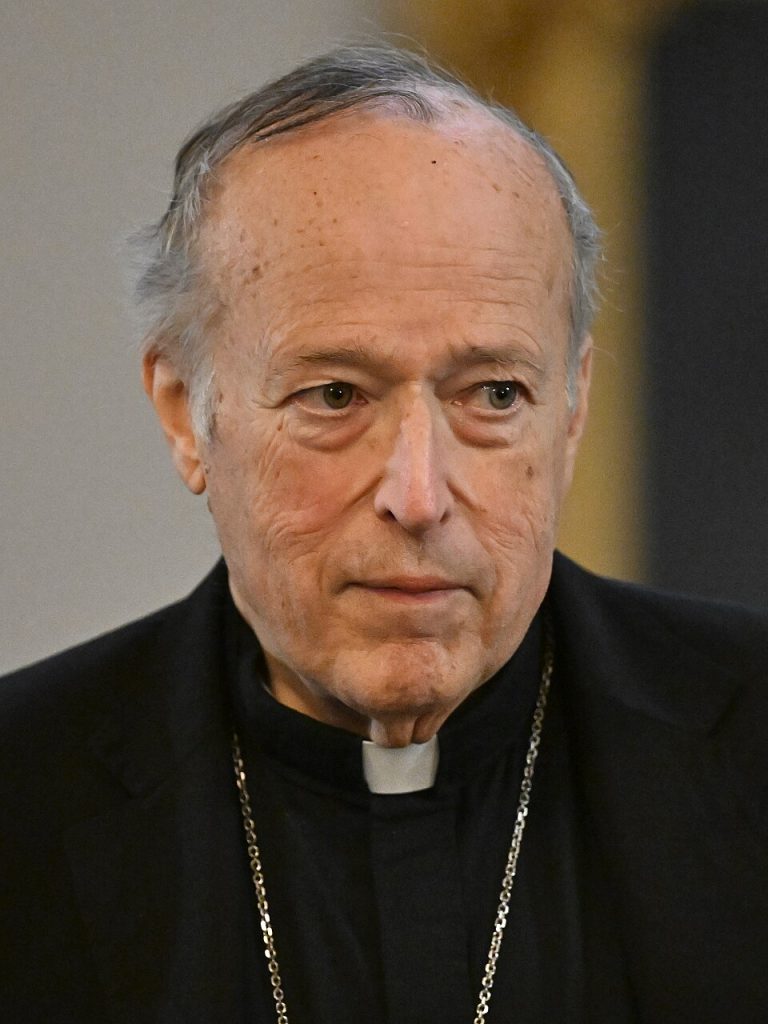
Cardinal McElroy reportedly gives verdict on altar rails in Washington
A reported directive from Cardinal Robert McElroy sets out policy on altar rails and kneelers in the Archdiocese of Washington Cardinal Robert McElroy of Washington has reportedly directed that altar rails are not to be installed or reinstalled in churches across the Archdiocese of Washington. The reported directive, first highlighted by journalist Christine Niles of Stella Maris Media, notes from a recent meeting with priests that discouraged the use of temporary kneelers for the reception of Holy Communion. According to Niles, concerns raised during the discussion included the potential disruption of Communion processions and the possibility that the use of kneelers could transform what Church law regards as an individual option into a more widespread practice. The Archdiocese of Washington has not publicly issued a statement on the reported policy, and no formal decree has yet appeared among official archdiocesan communications. The issue centres on the manner in which Catholics receive Holy Communion. In the United States, the norm approved by the bishops and confirmed by the Holy See is for communicants to receive standing after making a gesture of reverence. At the same time, universal Church law makes clear that Catholics who choose to kneel for Communion are not to be denied the sacrament on that account. The reported Washington policy comes after discussions in several American dioceses over altar rails, kneelers and other traditional liturgical furnishings. In recent months, the Diocese of Charlotte, North Carolina, became the focus of Vatican attention after Bishop Michael Martin ordered that altar rails, kneelers and prie-dieus were not to be used for the reception of Communion in public celebrations. The move caused more than 30 diocesan priests to submit formal dubia to the Vatican regarding the scope of episcopal authority over such practices. Bishop Martin wrote in a pastoral letter issued last December that the norms approved by the United States Conference of Catholic Bishops “do not envision the use of altar rails, kneelers, or prie-dieus for the reception of Communion”, arguing that their use contradicts the normative posture established by the conference. Supporters of altar rails and kneeling during Communion argue that such practices visibly express belief in the Real Presence of Christ in the Eucharist and foster a spirit of reverence. Among the most prominent advocates has been Bishop Athanasius Schneider, Auxiliary Bishop of Astana in Kazakhstan, who has repeatedly encouraged the faithful to receive Communion kneeling and on the tongue. In his book Dominus Est – It is the Lord! , Bishop Schneider wrote: “Would it not be more liturgically proper if, at the moment of Holy Communion … they would greet Him and receive Him on their knees?” He argued that kneeling before the Blessed Sacrament provides a visible witness to the Church’s faith in the Eucharistic mystery. Cardinal Raymond Burke has likewise spoken in favour of the practice, pointing to the example set by Pope Benedict XVI during his pontificate. Reflecting on Benedict’s decision to distribute Communion to kneeling communicants, Cardinal Burke said: “The Holy Father is giving a very clear lesson by his own insistence that the faithful receive Communion kneeling and on the tongue.” Similar views have been expressed by Cardinal Antonio Cañizares Llovera, the former prefect of the Congregation for Divine Worship and the Discipline of the Sacraments. He has urged Catholics to receive Communion on the tongue while kneeling, saying: “It is to simply know that we are before God himself and that He came to us and that we are undeserving.” Other bishops have emphasised the importance of maintaining the posture established by episcopal conferences for the sake of unity during the Communion procession. Cardinal Blase Cupich of Chicago has similarly stressed that the faithful process together as an expression of their identity as the Body of Christ and receive Holy Communion standing in accordance with the norm approved for the United States. He has described the practice as a “powerful symbolic expression” of ecclesial unity. The reported Washington directive has attracted particular attention because it concerns one of the largest and most influential dioceses in the United States. Cardinal McElroy, who was installed as Archbishop of Washington in March 2025 after serving for a decade as Bishop of San Diego, has become one of the most prominent voices among the American hierarchy. The controversy also follows another recent decision by the cardinal that generated headlines. Earlier this month, he removed Monsignor Stephen Rossetti as an exorcist of the Archdiocese of Washington and ended the archdiocese’s affiliation with the St Michael Center for Spiritual Renewal after comments linking UFO phenomena to demonic activity. Cardinal McElroy said the statements “gravely undermine the Church’s very precise teaching on the devil, demons and exorcism”.
Jun. 15, 2026
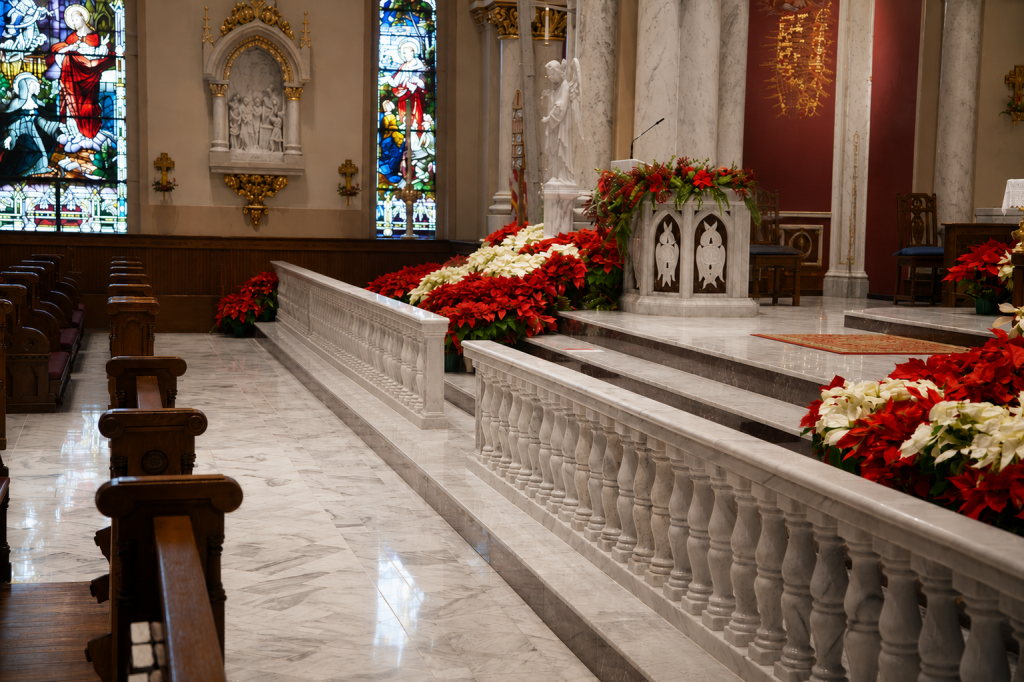
Archbishop Fisher orders return of kneelers across Sydney churches
Archbishop Anthony Fisher has called for kneelers to be restored in every Sydney church where they have been removed, describing kneeling as one of the clearest expressions of faith in Christ’s Real Presence Catholic churches across Sydney are to restore kneelers where they have been removed after Archbishop Anthony Fisher called for their return in a Corpus Christi pastoral letter aimed at strengthening Eucharistic devotion throughout the archdiocese. The Archbishop of Sydney made the appeal as he encouraged Catholics to rediscover traditional practices of reverence before the Blessed Sacrament and urged parish priests to expand opportunities for Eucharistic adoration ahead of the International Eucharistic Congress. “I also ask our parish clergy to restore kneelers in every church where they are missing,” Archbishop Fisher wrote in the letter issued on 3 June. The archbishop said kneeling remained one of the clearest outward expressions of faith in Christ’s Real Presence and reminded Catholics that receiving Holy Communion while kneeling remains fully permitted under the liturgical norms of the Church. “In most cases, this reverence is shown by bowing deeply; however, many people choose to receive Communion while kneeling,” His Grace said. “This is a perfectly valid option envisaged in the current Missal. Kneeling was the standard way of receiving Holy Communion in the Latin Church for many centuries.” There has been renewed attention on Eucharistic worship in the Church and a growing effort in a number of dioceses worldwide to encourage Eucharistic adoration, Benediction and public processions. In the letter, the Australian prelate challenged clergy, religious and laity to deepen their devotion to the Eucharist through regular attendance at Mass, frequent Confession, prayer before the Blessed Sacrament and participation in parish devotions. “To find time and enthusiasm to adore the Eucharistic Lord in Mass and outside of Mass,” the Archbishop urged the faithful. He also called on priests to increase access to churches for private prayer and Eucharistic adoration. “To offer at least one holy hour each week in each parish, and to collaborate with adjoining parishes to increase availability of prayer before the Blessed Sacrament, including a Perpetual Adoration chapel in each deanery,” Archbishop Anthony Fisher wrote. The archbishop said the physical gestures adopted by Catholics during worship were not merely matters of custom but reflected fundamental beliefs about God. “Of the various physical postures, kneeling most clearly reveals our beliefs about God and our relationship with Him,” he said. While acknowledging that prayer postures can vary between cultures and traditions, Archbishop Fisher noted that kneeling has formed part of Western Christian prayer for centuries and remains deeply rooted in Sacred Scripture. Citing examples from both the Old and New Testaments, he pointed to figures including Moses, Solomon, Daniel, the Magi and the Apostles, all of whom knelt or bowed before God in worship, thanksgiving or supplication. He rejected suggestions that kneeling is incompatible with modern Christian life, observing that some people regard it as “the grovelling of a slave” or inconsistent with a culture that wishes to “bow to no-one”. “Yet kneeling has a history for us,” he wrote. “We kneel to recognise Him and then we rise to make Him known,” the Archbishop wrote. The Archbishop ended the letter by stating: “Lord, grant us the grace to receive you reverently, worship you truly and serve you with hearts renewed.” Archbishop Fisher’s call for the restoration of kneelers also echoes the approach taken by his predecessor, Cardinal George Pell, who repeatedly defended traditional postures of reverence during Mass. In 2005, while serving as Archbishop of Sydney, Cardinal Pell issued a directive reminding clergy and faithful that kneeling during key moments of the liturgy remained the norm within the archdiocese. Responding to suggestions that standing should replace kneeling during parts of the Eucharistic Prayer, Cardinal Pell wrote that he had “no enthusiasm for this practice [standing during these times] and in fact the archdiocese does not have a policy in favour of standing”. His Eminence added: “The practice of kneeling after the Sanctus until the end of the Eucharistic Prayer and also before Communion when the priest says ‘This is the Lamb of God’ is to be retained in the Archdiocese of Sydney.” The late cardinal further instructed that “the practice of requiring people to stand during the Eucharistic Prayer may not be introduced without my permission”, citing the General Instruction of the Roman Missal in support of maintaining the established practice. Specifically, the General Instruction of the Roman Missal states that the faithful may receive Communion kneeling or standing, according to the norms established by individual bishops’ conferences, while also calling for an act of reverence before reception of the Blessed Sacrament. In countries such as the United States, the approved adaptation to the General Instruction provides that Holy Communion is ordinarily received standing, while preserving the right of individual communicants to kneel. The norm states: “Holy Communion is to be received standing, unless an individual member of the faithful wishes to receive Communion while kneeling.” The right of Catholics to receive Holy Communion while kneeling was reaffirmed by the Holy See in the 2004 instruction Redemptionis Sacramentum. “Therefore, it is not licit to deny Holy Communion to any of Christ’s faithful solely on the grounds, for example, that the person wishes to receive the Eucharist kneeling or standing,” the document states. The instruction remains one of the clearest statements from Rome on the question and has frequently been cited in discussions concerning the manner in which Holy Communion is received.
Jun. 10, 2026
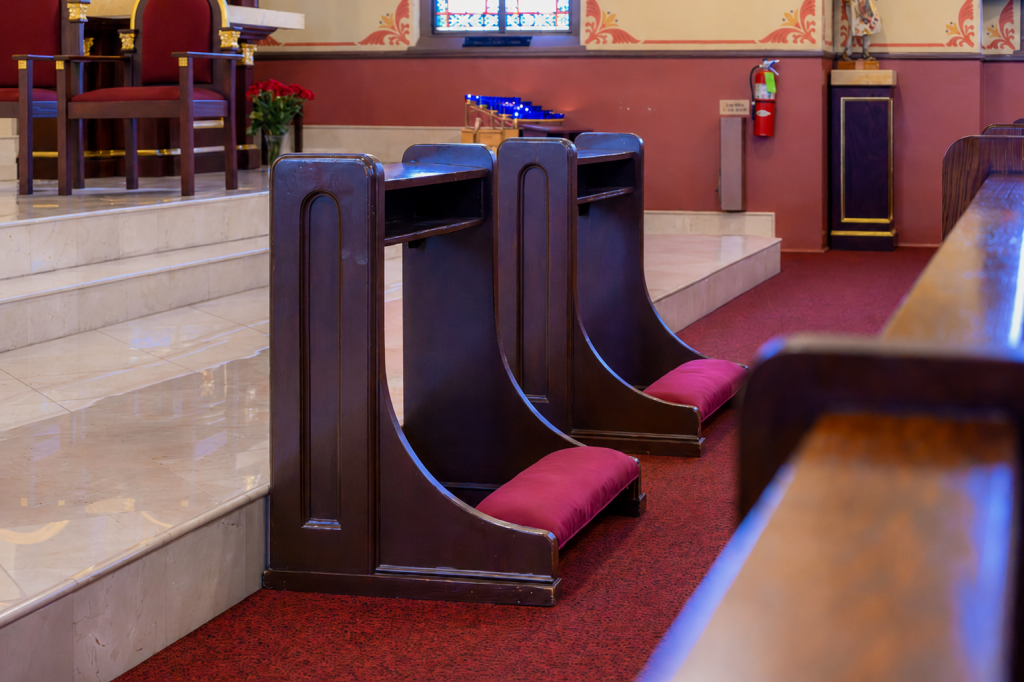
Costa Rican archbishop bans kneelers for Communion in churches
The Archdiocese of San José in Costa Rica has ordered that kneelers are no longer to be installed for the distribution of Holy Communion The Archbishop of San José in Costa Rica has ordered that kneelers are no longer to be placed in churches for the distribution of Holy Communion. The measure was set out in a circular dated May 13 and signed by Fr Francisco Morales González, the episcopal delegate for liturgy, acting on the instruction of Archbishop José Rafael Quirós Quirós. The document was issued following questions raised in recent weeks about the installation of kneelers in some churches for communicants wishing to receive Holy Communion on the knee. “From now on, kneelers are not to be installed in churches for the distribution of Communion,” the circular letter stated. The archdiocese said the decision had been taken because the presence of kneelers could lead some members of the faithful to conclude that kneeling was “the only form established by the Church” for receiving Holy Communion. The circular also argued that kneelers could impede access for elderly worshippers and those with mobility difficulties who are accustomed to receiving Communion standing. While the decree effectively prohibits the installation of kneelers during Communion, the archdiocese stressed that Catholics still retain the right to receive the Eucharist while kneeling. The document cited Redemptionis Sacramentum , the 2004 Vatican instruction on certain matters concerning the Eucharist, together with Benedict XVI’s apostolic exhortation Sacramentum Caritatis , both of which reaffirm that communicants may not be refused Holy Communion for choosing to receive kneeling. “No minister can impose a single way of receiving Communion,” the letter said, reiterating that the faithful remain free to receive either standing or kneeling, and either on the tongue or in the hand, in accordance with the norms permitted by the Church. The move has nevertheless been interpreted by some Catholics as a discouragement of the increasingly visible practice of kneeling for Communion, particularly among younger worshippers and those drawn to more traditional forms of Catholic piety. Although the universal law of the Church permits communicants to receive kneeling, episcopal conferences in many countries obtained permission for standing to become the normative posture. In 2002 the Vatican’s Congregation for Divine Worship stated that communicants who chose to kneel could not be denied the sacrament on those grounds. The ruling was later reinforced in Redemptionis Sacramentum , which declared: “It is not licit to deny Holy Communion to any of Christ’s faithful solely on the grounds, for example, that the person wishes to receive the Eucharist kneeling or standing.” Archbishop Quirós, who has led the Archdiocese of San José since 2013, has not publicly commented beyond the contents of the letter.
May 20, 2026