

Donald Trump
US bishops say Trump administration should remove IVF from fertility benefits rule
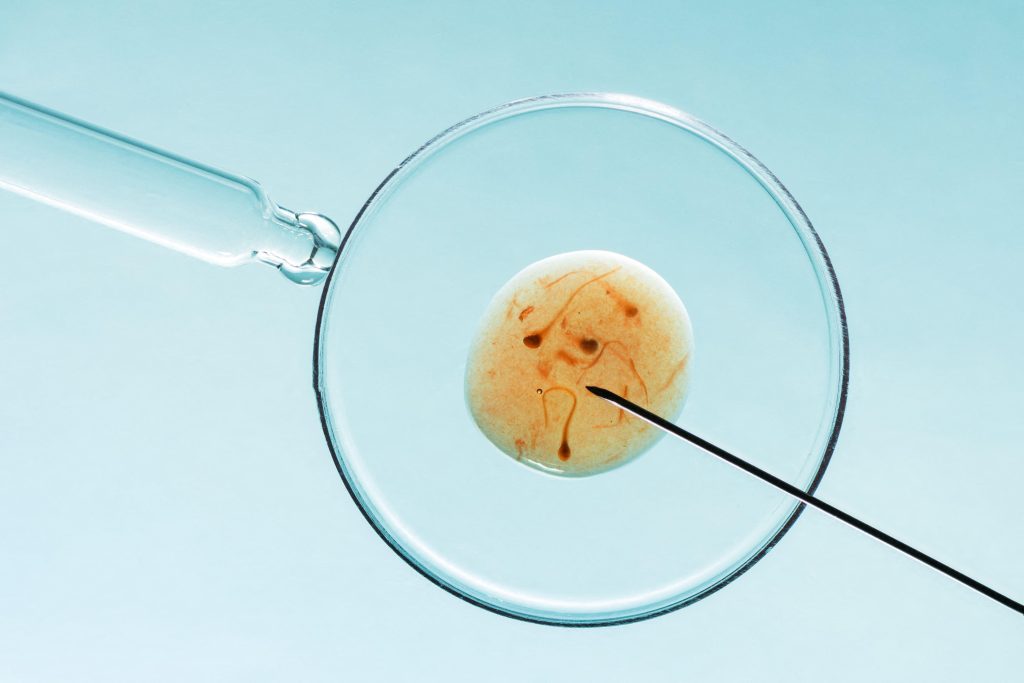
The US Conference of Catholic Bishops has submitted a 17-page response to the Trump administration’s proposed fertility benefits rule, arguing that IVF should be removed and that federal policy should instead support treatments that address the underlying causes of infertility The United States Conference of Catholic Bishops has urged the Trump administration to remove in vitro fertilisation (IVF) from a proposed federal rule designed to expand fertility benefits. In a 17-page submission to the Departments of Labour, Health and Human Services, and the Treasury, the bishops welcomed the administration’s recognition that infertility is “a serious matter” and supported efforts to assist couples suffering from it. However, they contended that the proposed regulation should instead prioritise treatments that address the underlying causes of infertility. “We urge the Departments to refocus the rule on therapeutic, restorative treatments, and to abandon its inclusion of IVF, which is profoundly flawed both legally and morally,” wrote William J. Quinn, the USCCB’s general counsel, and Daniel Balserak, associate general counsel, in the closing recommendations of the public comment submitted on 13 July. While President Donald Trump has repeatedly expressed support for expanding access to IVF, the bishops argue that any federal framework should distinguish between restorative medical care and assisted reproductive technologies. At the centre of the bishops’ argument is the claim that infertility should be understood principally as a symptom of underlying medical conditions rather than as a disease in itself. Consequently, they argue that public policy should encourage medical interventions that seek to restore normal reproductive function. “The Church affirms the deep desire of spouses to welcome children and supports medical efforts to address infertility,” the submission states. “At the same time, public policy should not promote practices that undermine the dignity of human life or sever the connection between procreation and the marital act.” The bishops devote considerable attention to restorative reproductive medicine (RRM), describing it as an approach that seeks to identify and treat the causes of infertility rather than circumvent them. They welcomed sections of the proposed rule that would permit employers to offer benefits covering the diagnosis and treatment of infertility-related conditions, including disorders such as endometriosis, polycystic ovary syndrome and hormonal imbalances. They also praised the administration’s acknowledgement that medical treatments addressing the root causes of infertility should be encouraged, arguing that these provisions should be made even more explicit in the final regulation. According to the submission, restorative reproductive medicine “seeks to cooperate with or restore the normal physiology and anatomy of the human reproductive system without the use of methods that are inherently suppressive, circumventive, or destructive to natural human functions.” The bishops proposed several amendments that would strengthen support for restorative care, including clearer references to such treatments in the regulations, greater public awareness of restorative reproductive medicine, and safeguards ensuring that patients are able to access providers even when they are located outside their home states. They also suggested that employers offering fertility benefits should consider requiring restorative treatments before resorting to assisted reproductive technologies. The submission argues that IVF is fundamentally different from restorative medicine because it does not treat infertility but instead bypasses the medical conditions causing it. “In contrast to restorative reproductive medicine, in vitro fertilization does not aim to treat the underlying causes of infertility but seeks to bypass them,” the USCCB wrote. The document goes on to argue that IVF “kills countless children and violates others’ rights and dignity”, asserting that the destruction, freezing and selection of embryos represent a profound violation of human dignity. While acknowledging that couples pursuing IVF often do so with “the most sincere and loving intentions”, the bishops maintain that the procedure itself cannot be morally justified. “It must be said that being conceived by IVF does not make a person have any less dignity than anyone else,” the submission states. “All people bear the image and likeness of God and have equal, infinite dignity as a result. It is precisely for that reason that we advocate protecting them and their dignity in all circumstances and at all stages of life.” Beyond moral objections, the bishops also question whether IVF can properly be regarded as a treatment for infertility. They argue that because the procedure does not cure reproductive disorders, its inclusion within an excepted health benefit stretches the legal meaning of therapeutic care. They further contend that the proposed rule risks moving beyond healthcare into what they describe as a broader “family-formation benefit”, which they argue Congress did not authorise through existing legislation. The submission also criticises the proposal’s suggested lifetime benefit cap of $120,000, arguing that the figure has effectively been determined by the cost of IVF rather than by the cost of genuinely therapeutic medical treatment. Should the administration nevertheless decide to retain IVF within the final rule, the bishops’ conference calls for extensive safeguards. These include limiting the number of embryos created during each treatment cycle, excluding coverage for embryo destruction, selective reduction abortions and genetic screening, requiring fuller informed consent about IVF’s success rates and risks, and ensuring that IVF is used only after a confirmed diagnosis of infertility. Quoting Pope Francis, the submission states that children have “a right to grow up in a family with a father and a mother capable of creating a suitable environment for the child’s growth and emotional development”, arguing that the proposed regulations should define infertility in relation to the inability of a married man and woman to conceive naturally. The document concludes by setting out seven principal recommendations, including limiting fertility benefits to therapeutic treatments, redefining infertility in medical rather than social terms, recalibrating benefit limits around restorative medicine instead of IVF, strengthening religious liberty protections and excluding assisted reproductive technologies that the bishops believe violate human dignity. “The proposed rule represents a valuable opportunity to advance real solutions to infertility that respect the God-given dignity of parents and of children, born and preborn,” Quinn and Balserak conclude. “We urge the Departments to refocus the rule on therapeutic, restorative treatments, and to abandon its inclusion of IVF, which is profoundly flawed both legally and morally.”
Jul. 17, 2026
Bishop Barron warns against ‘demonisation’ of Trump over immigration
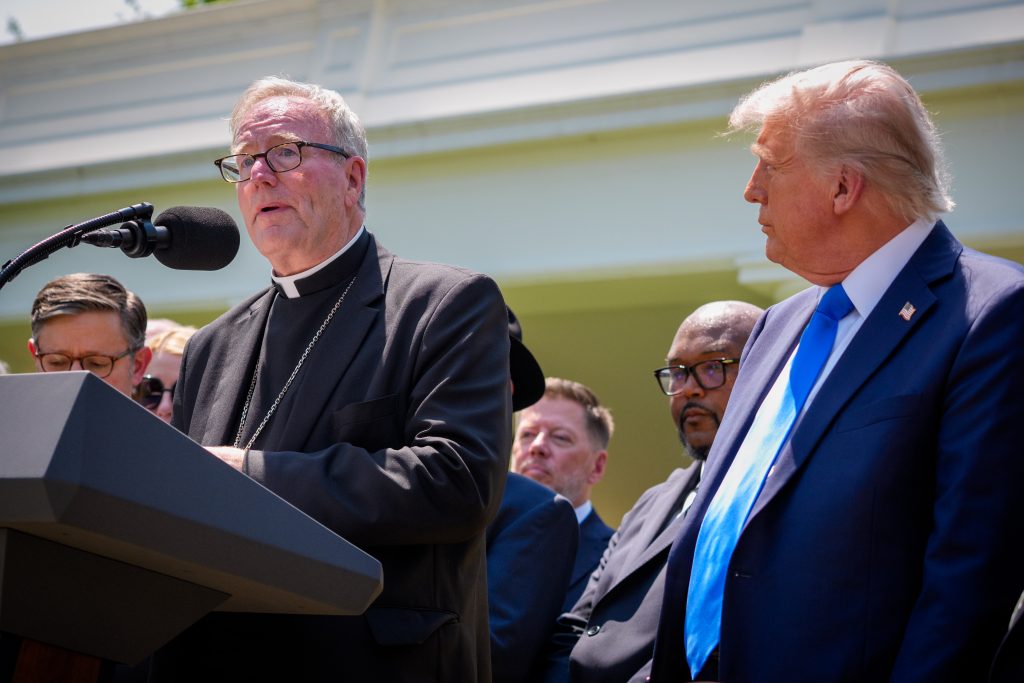
Bishop Robert Barron has warned Catholics against the “demonisation” of Donald Trump’s administration over immigration policy and said that support for border enforcement can arise from “very good moral reasons” Bishop Robert Barron has called on Catholics to resist the “demonisation” of President Donald Trump’s administration over immigration policy. The Bishop of Winona-Rochester made the remarks during an interview with Fox News Digital in which he urged greater dialogue between Catholics of differing political convictions and warned against reducing the immigration debate to partisan caricatures. Bishop Barron, perhaps the most recognisable Catholic from the United States after the Pope, said that conservatives who support tighter immigration controls should not automatically be dismissed as lacking compassion. “I don’t think it’s fair to say to a conservative, to a Republican, you’re just being difficult and anti-humanitarian,” Bishop Barron said, while arguing that the Church should instead encourage “bridges of conversation”. His Grace suggested that some Catholics on the political left had failed to extend to conservatives the same spirit of dialogue they often advocate elsewhere in public life. “At times, the Catholic left is great for calling for dialogue and bridge-building, until it comes to conservatives,” Bishop Barron said. “When it comes to conservatives, just tell them what they should be doing and saying.” The bishop continued: “No, no, let’s build bridges of conversation. That’s a role the Church can play. What I don’t want from the Church is a kind of demonisation of the Trump administration.” Bishop Barron said disagreements over immigration policy, or other contentious issues such as the recent conflict involving Iran, should be approached through serious discussion rather than ideological condemnation. “If there are points of disagreement, whether it’s immigration or it’s the [Iran] war or whatever, let’s talk about it, let’s talk,” His Grace said, while acknowledging that efforts to foster those conversations within ecclesial circles had “not always met with success”. The bishop also revealed that he had recently been moved by comments from Tom Homan, the former acting director of US Immigration and Customs Enforcement and President Trump’s so-called “border czar”, during a White House call connected to the president’s Religious Liberty Commission, on which Bishop Barron serves. According to Bishop Barron, Homan spoke emotionally about the human consequences of weak border enforcement and particularly about trafficking networks exploiting children. “He said that because he’s seen the terrible destruction caused by an open border,” Bishop Barron explained. “He was talking especially about human trafficking, the human trafficking of children, the disappearance of children we’ve lost track of completely in this process.” The bishop said Homan had rejected what he described as “the simplistic view that an open border is humanitarian”. “An open border also produces enormous moral problems,” Bishop Barron said, adding that Homan’s concern appeared deeply personal and sincere. “You could tell that it was affecting him very deeply, very personally. I found that very moving.” His Grace argued that support for immigration enforcement should not simply be interpreted through a partisan lens, but could arise from genuine moral concern. “It’s not just, well, the bad guy, Republicans, who want to enforce immigration laws,” Bishop Barron said. “It’s Republicans for very good moral reasons who want to enforce immigration law.” At the same time, the bishop stressed that the immigration debate contains “values on both sides” and suggested that the Church could help facilitate a more serious exchange between political leaders and Catholic moral teaching. Bishop Barron referred to tensions between President Trump and Pope Leo XIV, saying that part of the difficulty stemmed from attempts to treat the Holy Father as though he were merely another political figure. “Popes, I think, are supposed to use the moral structure of the Church’s teaching to move prudential judgement in the right direction,” Bishop Barron said. “Now what’s a president’s responsibility? His responsibility is to make those prudential judgements.” The bishop suggested that prominent Catholics within the Trump administration, including Vice President JD Vance, Secretary of State Marco Rubio and the US ambassador to the Holy See, Brian Burch, should engage directly with Vatican officials in order to foster more constructive discussion. “The Church provides a moral framework. Terrific,” Bishop Barron said. “Now, let’s have a real conversation with those whose job it is to make that decision, but have it conditioned by this moral framework. That would be more fruitful.” The remarks come amid continuing divisions among American Catholics over immigration policy and the proper balance between national sovereignty and humanitarian obligations towards migrants and refugees. The US bishops’ conference has frequently criticised aspects of the Trump administration’s immigration policies in recent years, particularly mass deportation proposals and restrictions on asylum claims, while conservative Catholics have increasingly argued that border enforcement and opposition to human trafficking are themselves matters of Catholic social concern. The debate has become one of the defining fault lines in American Catholic life, particularly following the rise of populist politics in the United States and Europe, with bishops and theologians often divided over how Catholic teaching on solidarity, the dignity of migrants and the responsibilities of the state should be applied in practice. Bishop Barron’s comments suggest he believes the Church’s role is not to align itself unquestioningly with either political camp, but to insist upon serious moral engagement between them.
May 27, 2026