

Dicastery For Divine Worship
Vatican letter rules on German bishops’ request for lay preaching at Mass
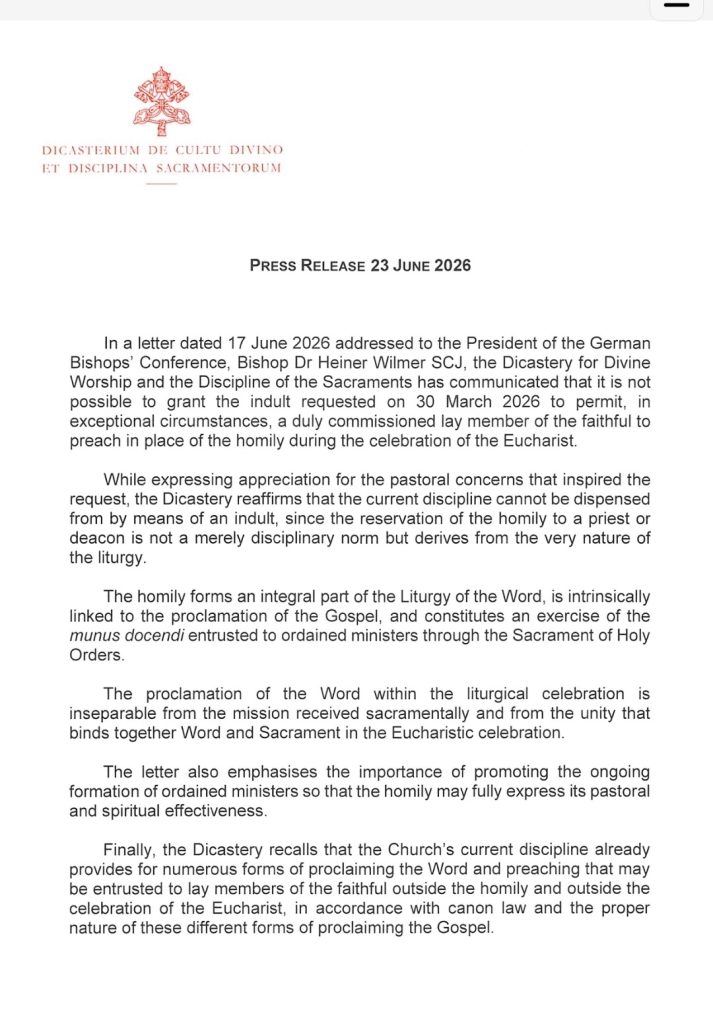
A Vatican letter has ruled on a request from the German bishops to allow lay people to preach the homily during Mass The Vatican has rejected a request from the German Bishops’ Conference to permit lay people to preach the homily during Mass. In a letter dated 17 June to Bishop Heiner Wilmer SCJ, president of the German Bishops’ Conference, the Dicastery for Divine Worship and the Discipline of the Sacraments said it was “not possible to grant the indult requested” by the bishops on 30 March. The request sought permission for “a duly commissioned lay member of the faithful to preach in place of the homily during the celebration of the Eucharist” in exceptional circumstances. The decision was made public by the dicastery on 23 June. While expressing appreciation for the pastoral concerns behind the request, the Vatican department said that “the current discipline cannot be dispensed from by means of an indult”. It added: “The reservation of the homily to a priest or deacon is not a merely disciplinary norm but derives from the very nature of the liturgy.” The dicastery said the homily “forms an integral part of the Liturgy of the Word”, is “intrinsically linked to the proclamation of the Gospel”, and “constitutes an exercise of the munus docendi entrusted to ordained ministers through the Sacrament of Holy Orders”. It further stated that “the proclamation of the Word within the liturgical celebration is inseparable from the mission received sacramentally and from the unity that binds together Word and Sacrament in the Eucharistic celebration”. The Holy See also used the letter to underline the importance of priestly formation, saying that ongoing formation should enable homilies to express their “pastoral and spiritual effectiveness”. At the same time, the dicastery noted that Church law already provides opportunities for lay Catholics to proclaim the Gospel and preach in settings other than the homily during Mass. The statement said: “The Church’s current discipline already provides for numerous forms of proclaiming the Word and preaching that may be entrusted to lay members of the faithful outside the homily and outside the celebration of the Eucharist, in accordance with canon law and the proper nature of these different forms of proclaiming the Gospel.” The request was submitted amid continuing discussions in Germany concerning the role of lay people within the life of the Church, with questions relating to lay ministry, governance and preaching featuring prominently in recent years, particularly during the Synodal Way process, which brought together bishops and lay representatives to debate a range of issues affecting the Church in Germany. The preaching of the homily during Mass has long been reserved to bishops, priests and deacons. Canon 767 of the Code of Canon Law states that, among the forms of preaching, “the homily is pre-eminent” and that it is reserved to a priest or deacon. The discipline was reaffirmed in the 1997 Vatican instruction Ecclesiae de Mysterio , issued with the approval of St John Paul II, which stated that the homily “must be reserved to the sacred minister, priest or deacon”, excluding “non-ordained members of the faithful” from preaching it during the Eucharistic celebration. The dicastery’s rejection directly addresses a formal request submitted by the German Bishops’ Conference following its spring plenary assembly, held from 23 to 26 February 2026 in Würzburg. At that meeting, the newly elected conference president, Bishop Heiner Wilmer SCJ, announced that the bishops had discussed and adopted a regulatory framework to govern lay preaching at Mass. The roots of the initiative go back to 10 March 2023, during the final plenary assembly of the Synodal Way in Frankfurt, where participants including bishops and lay delegates approved a text on the proclamation of the Gospel. That text called on the German bishops to “draw up a particular norm and obtain permission from the Holy See” allowing theologically and spiritually qualified lay faithful, commissioned by the bishop, to deliver the homily during Eucharistic celebrations on Sundays and feast days. This is not the first such rejection. After the 2023 Synodal Way vote, Cardinal Arthur Roche, then prefect of the Dicastery for Divine Worship and the Discipline of the Sacraments, responded negatively in a detailed letter dated 29 March 2023 to the then president of the German Bishops’ Conference, Bishop Georg Bätzing. Cardinal Roche rejected the proposal for regular lay preaching in place of the homily at Mass, warning that it could create “misunderstandings about the figure and identity of the priest” in the minds of the faithful. He stressed the inseparability of Word and Sacrament as expressions of sacra potestas conferred by Holy Orders, rather than merely functional tasks, and pointed to Pope Francis’s 2021 expansion of the instituted ministries of lector and acolyte to women and lay people as a more appropriate avenue for lay liturgical involvement. Despite that earlier rejection, the German bishops proceeded with their February 2026 decision to formalise and resubmit the request. The letter is reproduced in full below:
Jun. 23, 2026
Vatican reported rebuke of Argentine bishops and the limits of bishops’ conferences
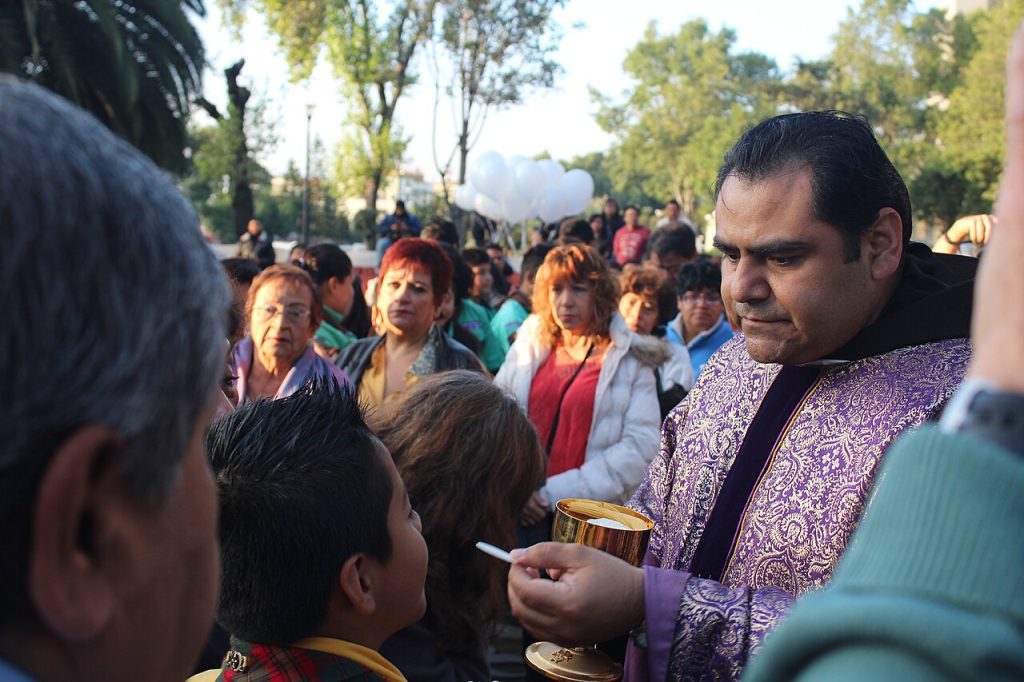
The Vatican has reportedly intervened after two Argentine bishops introduced measures discouraging Catholics from receiving Holy Communion kneeling and on the tongue. The intervention raises the question: why have dioceses and bishops’ conferences established “norms” discouraging practices which remain fully licit under universal Church law? The Dicastery for Divine Worship and the Discipline of the Sacraments has reportedly intervened with two Argentine bishops after restrictions were imposed on Catholics wishing to receive Holy Communion kneeling and on the tongue. According to the Argentine Catholic outlet El Wanderer , officials from the dicastery held discussions with Archbishop Marcelo Colombo of Mendoza, president of the Argentine Bishops’ Conference, and Bishop Gabriel Barba of San Luis over measures introduced in their dioceses concerning the manner in which the Eucharist may be received. The report said Vatican officials reminded both bishops that “the faithful have the freedom to receive Communion according to the methods established by the Church, and this freedom cannot be restricted”. The intervention follows months of controversy in Argentina after Archbishop Colombo and Bishop Barba both introduced policies widely interpreted as discouraging or effectively prohibiting traditional modes of reception. In September last year, Archbishop Colombo stated publicly that “in Argentina, Communion is received standing”, referring to norms approved by the Argentine bishops which designate standing as the ordinary posture for the reception of Holy Communion. The norms also provide for a bow before receiving the sacrament. The controversy intensified after an incident at the Basilica of San Francisco in Mendoza in September 2025, when worshippers attempting to receive Communion kneeling were publicly rebuked. Reports from Argentine Catholic media said Fr Alberto Zini, a Franciscan friar serving at the basilica, shouted “Get up!” at communicants who knelt before him. At least one worshipper was allegedly refused Communion while kneeling and was instructed to receive in the hand instead. A Catholic teacher who witnessed the incident later wrote to Archbishop Colombo to complain about the treatment of the faithful at the Mass. In his response, the archbishop reportedly defended the existing norms in the archdiocese, citing liturgical provisions contained in the Argentine edition of the Roman Missal and decisions of the bishops’ conference concerning the posture for Communion. The dispute quickly became a focal point for wider tensions within the Argentine Church over liturgical practice and the place of traditional forms of devotion. Bishop Barba also came under criticism after issuing a clarification before Corpus Christi in June 2025 encouraging the faithful in San Luis to receive Communion in the hand. The diocese had long been associated with more traditional Eucharistic practice under the late Bishop Juan Rodolfo Laise, who became known internationally for defending the right of Catholics to receive Communion on the tongue. The dispute deepened further in October when Bishop Barba reportedly wrote to candidates preparing to become extraordinary ministers of Holy Communion, instructing them to receive the Eucharist only in the hand in order to act as “pedagogues” of the practice and to “preach by example”. The Holy See has repeatedly affirmed over several decades that Catholics retain the right to receive Holy Communion on the tongue where the practice is permitted by the Church. The Congregation for Divine Worship stated in the 2004 instruction Redemptionis Sacramentum that “each of the faithful always has the right to receive Holy Communion on the tongue”. If the reports from Argentina are accurate, the Dicastery for Divine Worship and the Discipline of the Sacraments has effectively rebuked Archbishop Colombo and Bishop Barba after both dioceses adopted practices which discouraged, restricted or practically penalised Catholics who wished to receive Communion kneeling or on the tongue. Many bishops and clergy across the Western Church have acted as though Communion in the hand and standing were mandatory, despite repeated Vatican instructions stating the opposite. In practice, Catholics attached to older forms of Eucharistic reverence have often been treated as troublesome, divisive or psychologically suspect. The language changes from diocese to diocese, from “pastoral unity” to “liturgical norms” and “ecclesial maturity”, but the underlying message is usually the same: conform to the preferred style of the local hierarchy. Archbishop Colombo’s subsequent defence of the diocesan norms only deepened the controversy. His argument rested on the claim that Argentine liturgical norms establish standing as the manner in which Communion is received. Yet this is precisely where many bishops misunderstand the distinction between what is normative and what is compulsory. Rome settled this question years ago. Redemptionis Sacramentum , issued in 2004 under Pope St John Paul II, explicitly states: “It is not licit to deny Holy Communion to any of Christ’s faithful solely on the grounds, for example, that the person wishes to receive the Eucharist kneeling or standing.” The same instruction further declares that every member of the faithful “always has the right to receive Holy Communion on the tongue”. The Holy See recognised that local liturgical bureaucracies had begun treating permissions as prohibitions and preferences as law. What is happening is part of a much older post-conciliar pattern in which traditional devotional practices are tolerated officially while being marginalised culturally. San Luis illustrates this particularly well. Under the late Bishop Laise, the diocese became known for defending Communion on the tongue and maintaining a visibly traditional Eucharistic culture long after much of the Church had abandoned it. Bishop Barba’s subsequent insistence that extraordinary ministers receive only in the hand in order to act as “pedagogues” of the practice was therefore interpreted by many as a deliberate attempt to reshape the liturgical identity of the diocese. Since Vatican II, bishops’ conferences have accumulated enormous practical influence, often behaving as though they possess a kind of national magisterium. Yet they remain subordinate to universal law. They cannot abolish rights guaranteed by Rome, nor can they transform local customs into binding obligations where the Holy See has explicitly preserved legitimate freedom. The irony is difficult to miss. Much of the rhetoric surrounding modern ecclesial governance emphasises decentralisation and synodality. Yet Argentina demonstrates the inevitable problem with excessive decentralisation in liturgical matters: local ideological preferences quickly begin presenting themselves as universal Catholicism. One bishop discourages kneeling, another marginalises Latin and another treats ad orientem worship as pastorally unacceptable. Before long, practices which the Church still permits exist only on paper. Image credit: By ProtoplasmaKid – Own work, CC BY-SA 4.0, https://commons.wikimedia.org/w/index.php?curid=43442907
May 13, 2026
Ordinariate bishop rejects claims priests ordered to concelebrate
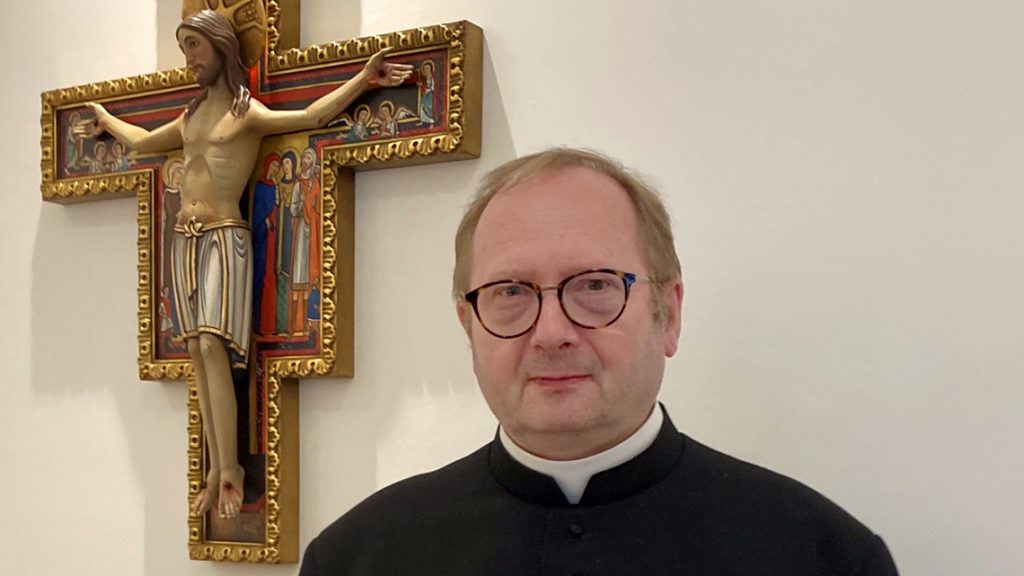
Bishop David Waller has dismissed reports that Ordinariate clergy were instructed by Rome to concelebrate Holy Mass, calling the claim a “mischievous lie” The Bishop of the Personal Ordinariate of Our Lady of Walsingham has rejected claims that priests of the ordinariates have been instructed to concelebrate Mass, insisting that no such directive has been issued by Rome and describing the reports as false. The story first circulated on April 23 on the website Rorate Caeli, which claimed that the Prefect of the Dicastery for Divine Worship and the Discipline of the Sacraments, Cardinal Arthur Roche, had “ordered” ordinariate clergy to concelebrate and had further prohibited priests from functioning as deacons or subdeacons within ordinariate liturgies. The claims were penned by the liturgist Peter Kwasniewski, who suggested that the measures followed a meeting in Rome and reflected concerns about liturgical practice within the ordinariates. However, Bishop David Waller told Niwa Limbu, AdVaticanum Vatican correspondent, that the reports were unfounded. “It is totally untrue,” he said. “It is a mischievous lie!” He said that no new instructions had been issued and that recent discussions among the three ordinaries had been limited to reiterating existing norms. “What is true is that the three Ordinariate bishops had a conversation about liturgy and have reminded our priests that Divine Worship: The Missal is governed by the rubrics printed in the rite, its rubrical directory and the General Instruction of the Roman Missal. Nothing new there, it’s all printed in the missal. It is not permissible to introduce different rubrics from different rites – never was.” He added: “The three bishops have simply reminded people what the rubrics of our rite require. Any rite is both words and rubrics and must be followed.” Subsequently, Peter Kwasniewski acknowledged that Bishop David Waller had denied that a meeting with Cardinal Arthur Roche had taken place. He wrote that this “may be technically correct”, adding that his source had clarified that the meeting in question involved Bishop Steven Lopes rather than the three ordinaries together, although originally it was noted that it was the “Bishops of the Ordinariate”. “This may be technically correct; when queried, my source specified that it was a meeting of Bishop Steven Lopes with Cardinal Roche, which makes sense if Roche perceived a problem specifically with the more traditionally minded members of the Anglican Ordinariate in the United States,” he wrote. In a separate communication with The Pillar, Bishop David Waller reiterated that no priest would be compelled to concelebrate. The bishop said that concelebration was “permitted and encouraged” but added: “Any priest has the right to celebrate individually. That’s law, not just for the ordinariate.” He also denied that any meeting with Cardinal Arthur Roche had taken place during a visit to Rome in March. The visit, he said, included an audience with Pope Leo and meetings with officials of the Dicastery for the Doctrine of the Faith, which has oversight of the ordinariates. In the email cited by The Pillar, he explained that he had discussed liturgical matters with Bishop Steven Lopes and Archbishop Anthony Randazzo. “The three bishops did discuss some liturgical matters and note, as a matter of fact, that, as is the case with any rite, ‘Divine Worship’ must be celebrated according to its rubrics,” he said. “The rubrics are: those in the text of the rite itself, the rubrical directory printed in the missal, the General Instruction of the Roman Missal, and the Ceremonial of Bishops.” He added: “In some places, very few in the UK, there has been a tendency to draw on rubrics from other rites, and that is not permissible.” As an example, he said that a priest might use the text of the ordinariate missal while adopting the manual actions of the older Roman Rite. “Any rite is words and rubrics, and it is a liturgical abuse to mix and match,” he said. Rorate Caeli later amended its report, removing the reference to a meeting between the three bishops and Cardinal Arthur Roche. In a note appended to the article, it said that Bishop David Waller had denied such a meeting, while maintaining that a separate encounter involving Bishop Steven Lopes may have taken place. A source close to Bishop Steven Lopes told AdVaticanum that a message had circulated internally within Ordinariate priestly circles in America but indicated that it was unlikely that he had met Cardinal Arthur Roche, noting that all three bishops had followed similar itineraries in Rome. The Personal Ordinariate of Our Lady of Walsingham was established in 2011 following the promulgation of Anglicanorum coetibus by Pope Benedict XVI, providing a structure for groups of former Anglicans to enter into full communion with the Catholic Church while retaining elements of their liturgical and spiritual patrimony. It was followed by the establishment of the Personal Ordinariate of the Chair of St Peter in 2012 for North America and the Personal Ordinariate of Our Lady of the Southern Cross for Australia and parts of Asia.
Apr. 24, 2026