

Corpus Christi
“Jesus of Nazareth is passing by”
From the Ark of the Covenant to the tabernacle, Fr Daniel Seward explains how the Old Testament points towards the mystery of the Eucharist The very first journey made by the incarnate Son of God was from Nazareth to Ein Karem, enclosed within the womb of His Blessed Mother. Mary walked through the hill country of Judea, following the route of the Ark of the Covenant one thousand years before. We call Mary the Ark of the Covenant because she was the first Eucharistic vessel, carrying Jesus along the road. The Ark of the Covenant contained a piece of the manna that fell upon the Israelites in the wilderness, “Your fathers ate the manna in the desert”; it also housed the tablets of the Law and Aaron’s rod that bloomed. Our Lord is the Bread of Life, the giver of the Law, and the High Priest of our Salvation. So everything that we see about the Ark is a shadow and a prophecy of Jesus Himself. On the day of the dedication of the Tabernacle, two of Aaron’s sons, Nadab and Abihu, brought unholy fire into the sanctuary and were themselves consumed by fire. The Levites carrying the Ark across the River Jordan passed along the riverbed with dry feet, as the Jordan parted before the Ark. Joshua carried the Ark seven times around the city of Jericho, and its walls tumbled down. When the Ark was captured by the Philistines, everywhere that it stayed, the enemies of God were struck down by tumours. Placed in the temple of the Philistine god Dagon, the Ark brought his colossal statue crashing to the ground. The milch cows that pulled the Ark away from the Philistines brought it straight back to the land of Israel, passing their lowing calves without a second glance. When the men of Beth Shemesh presumptuously opened the Ark, seventy of them were struck down by the Lord. When the Ark was being transported to Jerusalem by King David, and reached the threshing floor of Nacon, the oxen stumbled, and Uzzah put out his hand to steady the Ark, and fell down dead. If all these things applied to the type and the shadow, how much more terrible and awe-inspiring is the reality: that Sacrament in which our Lord and Saviour dwells among us bodily, made present in His entirety to each of us. This is what St Paul tells the Corinthians: “Therefore whoever eats this bread or drinks this cup of the Lord in an unworthy manner will be guilty of the body and blood of the Lord. But let a man examine himself, and so let him eat of the bread and drink of the cup. For he who eats and drinks in an unworthy manner eats and drinks judgment to himself, not discerning the Lord’s body. For this reason many are weak and sick among you, and many sleep.” When King David eventually brought the Ark to Jerusalem, he leapt and danced before it, sacrificing to the Lord and distributing food and drink to all the people of Israel. In the Old Covenant the glory of God was concealed: in the gold-overlaid acacia wood box, under the mercy seat and the two cherubim, and in the cloud that covered Moses’ encounters with the Lord, or the dedication of the Tabernacle and the Temple. When Our Lady travelled through the mountains of Judea, she concealed the secret of God’s presence within her womb. Only John the Baptist, within Elizabeth’s womb, recognised the presence of the Christ, and, like David leaping before the Ark, leapt in homage to Jesus. Our Lord would travel again, with His parents, into Egypt. According to legendary traditions preserved by Coptic Christians, as the Holy Family passed through the land, pagan idols and statues fell to the ground, and springs rose from the earth. In a more reliable canonical account, St Mark’s Gospel tells how, when Jesus crossed to the other side of the Sea of Galilee, into the pagan territory of the Gerasenes, and had come out of the boat, immediately there met Him out of the tombs a man with an unclean spirit, filled with a legion of demons, whom the Lord cast into the herd of swine. “Jesus of Nazareth is passing by.” As Our Lord walked towards Jericho, a blind man, Bartimaeus, sitting by the roadside begging, heard these words and cried out, “Son of David, have mercy on me!” The Lord gave him his sight, and Bartimaeus followed Him, glorifying God, and all the people, when they saw it, gave praise to God. Bartimaeus recognised who Jesus is, even though he could not see. The demons on the far side of the Jordan quailed in terror before Him, although He was clothed in His humanity. The idols of Egypt crumbled to dust before a baby. John the Baptist knew Him, even before they were born. And we know Him. We know Him, concealed under the appearances of Bread and Wine. We know that in the Eucharist, there is no bread and wine. We know that here in our Tabernacle, and upon our altar, and given to be present as our very food, is the One whose glory rested upon the Ark in mystery, before whom David leapt and danced, and who gave the manna from heaven. The Eucharist is not only the sign; it is the reality. We too must approach with reverence, with faith, with awe, and also with trust and gratitude, because what Moses glimpsed in shadow, we receive in its fulness: the Body, Blood, Soul, and Divinity of Jesus Christ. Tonight, and again on Sunday, we will take Him on another journey through the streets of York. Many will see Him and will not know Him, but can we not hope that He will cast out evil, touch hearts, turn people from sin, inspire conversion and pour out His mercy on all whom He will pass? We can do our simple part by pouring out all the outward tokens of our love, by pointing to the One whom we carry. If the Blessed Sacrament passes you, and you can kneel, kneel down. Above all, be present. Our Lady didn’t send a letter to Elizabeth; she took Jesus to her. David, when exiled from Jerusalem, longed above all to be able to approach the Lord in His sanctuary: “One thing have I asked of the Lord, that I will seek after; that I may dwell in the house of the Lord all the days of my life, to behold the beauty of the Lord, and to inquire in his temple.” “O God, You are my God; Early will I seek You; My soul thirsts for You; My flesh longs for You In a dry and thirsty land Where there is no water. So I have looked for You in the sanctuary, To see Your power and Your glory.” When David flees before Absalom, he says to Zadok the priest, “If I find favour in the eyes of the Lord, he will bring me back and let me see both [the Ark] and his habitation.” Just as the Lord makes Himself physically present to us, so we have to respond in the same way. It’s no good generally agreeing with the Catholic religion but not coming to Mass. The actual, bodily celebration of the Holy Mass was the reason why our martyrs laid down their lives. It’s no good vaguely approving of processions but not taking part in them. David and John the Baptist leapt, and you can walk, and show to the disordered world that in the Eucharist there is peace, mercy and love. Our Holy Father Pope Leo, in his encyclical published last week, Magnifica Humanitas, presents the Blessed Sacrament as the antidote to the virtual world of loneliness, in which individuals are reduced to algorithms and human relationships are obliterated by artificial intelligence. The Pope says: “The spirituality that we need is a Eucharistic spirituality, that is a spirituality of ecclesial unity in love.” In other words, to receive and to worship the Lord in Holy Communion is never a purely individual act. It must be communion, it must lead us to a shared witness, it must lead us to look outwards and to bring about the Kingdom of God in the world. Pope Leo says: “It is from this communion that Christian solidarity also arises, since, as Pope Benedict XVI said, ‘union with Christ is also union with all those to whom he gives himself’… In the Eucharist we find a visible manifestation of the reality that we ‘are the Church of Christ, his members, his body. We are brothers and sisters in him. And in Christ, though many and diverse, we are one: In Illo uno unum.’ The Eucharist opens us to justice and sharing, with a preferential concern for those who are burdened by poverty or marginalisation. And while new economic and technological networks can generate exclusion, isolation and dependencies, the Church, nourished by the Eucharist, is called to make visible a different paradigm, one that preserves human connections, gives a voice to the invisible and ensures that processes are aimed at respecting people’s dignity.” Isaiah said, “Truly You are God who hides Himself, O God of Israel, the Saviour.” But here, in the Sacrament of Unity, is the God who manifests Himself, who bursts into our world, whom we will carry onto our streets, who breaks the bonds of slavery and estrangement, who has come to bring Life. “Jesus of Nazareth is passing by.” Fr Daniel Seward is Parish Priest at the York Oratory, a thriving Catholic community in the centre of York, served by the Oratorian priests and brothers. For more information about their work, please visit: yorkoratory.com.
Jun. 12, 2026
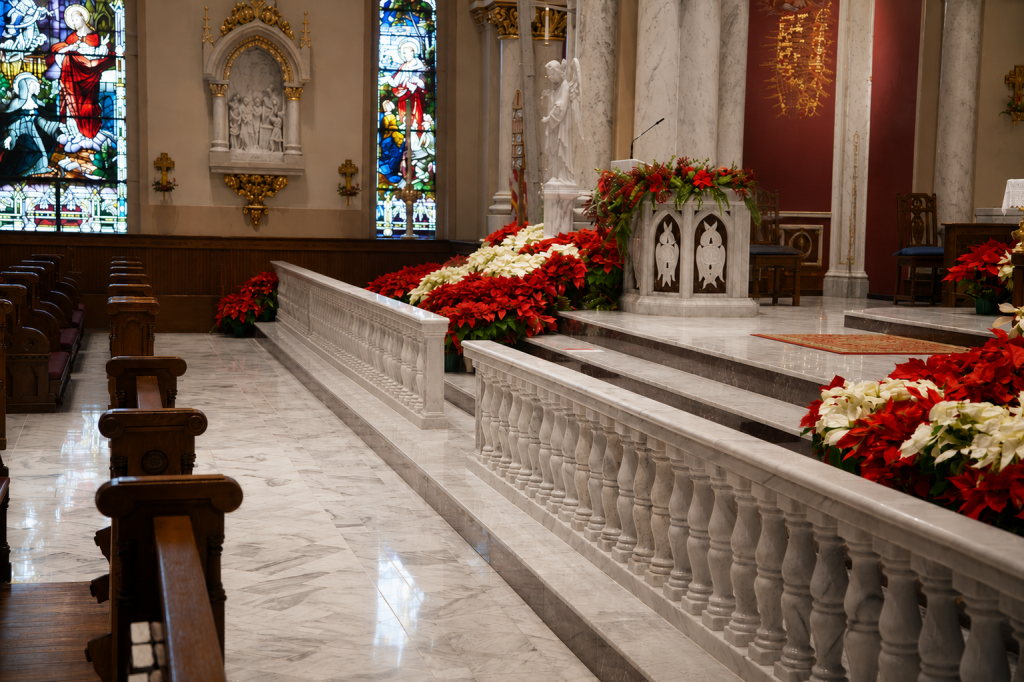
Archbishop Fisher orders return of kneelers across Sydney churches
Archbishop Anthony Fisher has called for kneelers to be restored in every Sydney church where they have been removed, describing kneeling as one of the clearest expressions of faith in Christ’s Real Presence Catholic churches across Sydney are to restore kneelers where they have been removed after Archbishop Anthony Fisher called for their return in a Corpus Christi pastoral letter aimed at strengthening Eucharistic devotion throughout the archdiocese. The Archbishop of Sydney made the appeal as he encouraged Catholics to rediscover traditional practices of reverence before the Blessed Sacrament and urged parish priests to expand opportunities for Eucharistic adoration ahead of the International Eucharistic Congress. “I also ask our parish clergy to restore kneelers in every church where they are missing,” Archbishop Fisher wrote in the letter issued on 3 June. The archbishop said kneeling remained one of the clearest outward expressions of faith in Christ’s Real Presence and reminded Catholics that receiving Holy Communion while kneeling remains fully permitted under the liturgical norms of the Church. “In most cases, this reverence is shown by bowing deeply; however, many people choose to receive Communion while kneeling,” His Grace said. “This is a perfectly valid option envisaged in the current Missal. Kneeling was the standard way of receiving Holy Communion in the Latin Church for many centuries.” There has been renewed attention on Eucharistic worship in the Church and a growing effort in a number of dioceses worldwide to encourage Eucharistic adoration, Benediction and public processions. In the letter, the Australian prelate challenged clergy, religious and laity to deepen their devotion to the Eucharist through regular attendance at Mass, frequent Confession, prayer before the Blessed Sacrament and participation in parish devotions. “To find time and enthusiasm to adore the Eucharistic Lord in Mass and outside of Mass,” the Archbishop urged the faithful. He also called on priests to increase access to churches for private prayer and Eucharistic adoration. “To offer at least one holy hour each week in each parish, and to collaborate with adjoining parishes to increase availability of prayer before the Blessed Sacrament, including a Perpetual Adoration chapel in each deanery,” Archbishop Anthony Fisher wrote. The archbishop said the physical gestures adopted by Catholics during worship were not merely matters of custom but reflected fundamental beliefs about God. “Of the various physical postures, kneeling most clearly reveals our beliefs about God and our relationship with Him,” he said. While acknowledging that prayer postures can vary between cultures and traditions, Archbishop Fisher noted that kneeling has formed part of Western Christian prayer for centuries and remains deeply rooted in Sacred Scripture. Citing examples from both the Old and New Testaments, he pointed to figures including Moses, Solomon, Daniel, the Magi and the Apostles, all of whom knelt or bowed before God in worship, thanksgiving or supplication. He rejected suggestions that kneeling is incompatible with modern Christian life, observing that some people regard it as “the grovelling of a slave” or inconsistent with a culture that wishes to “bow to no-one”. “Yet kneeling has a history for us,” he wrote. “We kneel to recognise Him and then we rise to make Him known,” the Archbishop wrote. The Archbishop ended the letter by stating: “Lord, grant us the grace to receive you reverently, worship you truly and serve you with hearts renewed.” Archbishop Fisher’s call for the restoration of kneelers also echoes the approach taken by his predecessor, Cardinal George Pell, who repeatedly defended traditional postures of reverence during Mass. In 2005, while serving as Archbishop of Sydney, Cardinal Pell issued a directive reminding clergy and faithful that kneeling during key moments of the liturgy remained the norm within the archdiocese. Responding to suggestions that standing should replace kneeling during parts of the Eucharistic Prayer, Cardinal Pell wrote that he had “no enthusiasm for this practice [standing during these times] and in fact the archdiocese does not have a policy in favour of standing”. His Eminence added: “The practice of kneeling after the Sanctus until the end of the Eucharistic Prayer and also before Communion when the priest says ‘This is the Lamb of God’ is to be retained in the Archdiocese of Sydney.” The late cardinal further instructed that “the practice of requiring people to stand during the Eucharistic Prayer may not be introduced without my permission”, citing the General Instruction of the Roman Missal in support of maintaining the established practice. Specifically, the General Instruction of the Roman Missal states that the faithful may receive Communion kneeling or standing, according to the norms established by individual bishops’ conferences, while also calling for an act of reverence before reception of the Blessed Sacrament. In countries such as the United States, the approved adaptation to the General Instruction provides that Holy Communion is ordinarily received standing, while preserving the right of individual communicants to kneel. The norm states: “Holy Communion is to be received standing, unless an individual member of the faithful wishes to receive Communion while kneeling.” The right of Catholics to receive Holy Communion while kneeling was reaffirmed by the Holy See in the 2004 instruction Redemptionis Sacramentum. “Therefore, it is not licit to deny Holy Communion to any of Christ’s faithful solely on the grounds, for example, that the person wishes to receive the Eucharist kneeling or standing,” the document states. The instruction remains one of the clearest statements from Rome on the question and has frequently been cited in discussions concerning the manner in which Holy Communion is received.
Jun. 10, 2026
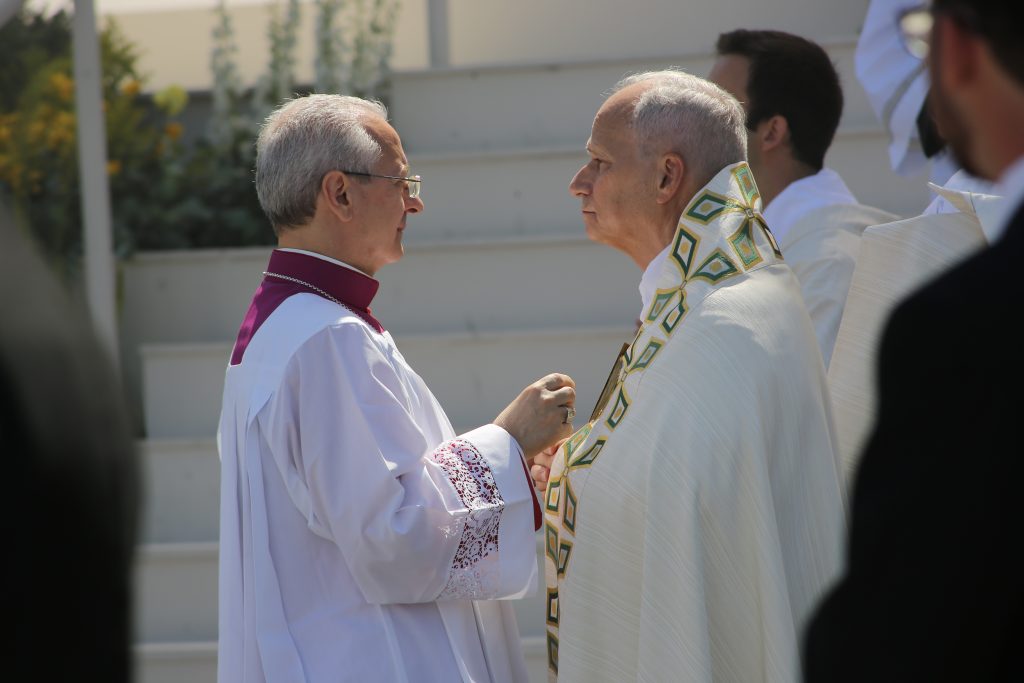
Day two of Pope Leo XIV’s visit to Spain sees one of Europe’s largest Catholic gatherings outside World Youth Day
An estimated 1.5 million people gathered in Madrid for Pope Leo XIV’s Corpus Christi Mass and procession on the second day of his apostolic visit to Spain. The crowd surpassed that of Saint John Paul II’s 2003 visit to Madrid and ranks among the largest Catholic gatherings in Europe outside World Youth Day Pope Leo’s second day of his apostolic visit to Spain began with Holy Mass for the feast of Corpus Christi. This year, Corpus Christi fell on Thursday 4 June. However, Spain, like many other countries, now transfers the solemnity to the following Sunday. Mass was celebrated in Plaza de Cibeles in central Madrid, with an estimated 1.5 million people in attendance. Earlier estimates had placed the number at 1.2 million, but as the day progressed a clearer picture emerged and the figures rose. The number is staggering. Indeed, excluding Saint John Paul II’s dramatic returns to Kraków during the Communist era, it might have been the largest European gatherings of Catholics outside a World Youth Day. By comparison, Pope John Paul II’s Mass in Ireland on 29 September 1979 attracted an estimated 1.25 million people. When he celebrated Mass in Madrid in 2003, around one million attended. Even accounting for Spain’s population growth since 2003, the figure represents a substantially larger proportion of the Spanish public coming out to see the Pope. The increase is in line with an apparent resurgence in Catholic identity in the country. A recent survey found that 45 per cent of Spaniards aged 15 to 29 identify as Catholic today, compared with 31.6 per cent in 2020. Spaniards often speak of there being “two Spains”. One is the conservative, Catholic Spain that takes pride in its saints, traditions and culture. The other seeks to sever those connections in the name of progressivism. It appears that, despite being governed by a socialist administration, the former remains vibrant. Panis Angelicus, music from the Taizé Community and the Tantum Ergo, Pange Lingua and Salve Regina all featured in a varied but traditionally inclined programme of liturgical music. Perhaps most notable for those looking for signs of tradition was the choir’s rendition of Verbum Supernum Prodiens, written by Saint Thomas Aquinas for the feast of Corpus Christi. Among the faithful were hundreds of children who had made their First Holy Communion this year and who, after Mass, took part in the Corpus Christi Eucharistic procession. There were also more than 150 bishops and some 1,600 priests in attendance. Their Majesties King Felipe VI and Queen Letizia of Spain, accompanied by Princess Leonor and Infanta Sofía, also attended the Mass. During his homily, Pope Leo XIV urged Spain’s Catholics not to allow their faith to become “a museum of the past”, but to remain a living source of charity, service and evangelisation. Reflecting on the Eucharist and Spain’s Catholic heritage, the Holy Father called on the faithful to become “builders of a new world” and to carry Christ’s presence into society, particularly through care for the poor, the suffering and those who have lost hope. For the Corpus Christi procession, a Galician artistic tradition was brought to Madrid, with more than 30,000 carnations transforming the city centre. This was made possible by the Asociación de Alfombristas del Corpus Christi de Ponteareas (Association of Corpus Christi Carpet Makers of Ponteareas). The decorations, known as floral carpets, covered more than 500 metres of Calle de Alcalá, one of Madrid’s longest streets. After the procession, the Holy Father took a short break from what has already been an exceptionally busy visit and held a private meeting with members of the Augustinian Order at the Apostolic Nunciature. As an Augustinian himself, Pope Leo has long been accustomed to community life and makes a point of visiting his religious brothers during his travels. Spain has historically had one of the largest Augustinian communities in the world, and Spanish Augustinians played a major role in the evangelisation of the Philippines, Latin America and parts of Africa. At 6pm, the Pope met representatives from the worlds of art, culture, business, labour and academia at Madrid’s Movistar Arena. The event, entitled “Weaving Networks with the Worlds of Culture, Art, the Economy and Sport”, aimed to encourage institutions and individuals to work together in taking responsibility for the human person amid rapid technological change. The gathering also highlighted Spain’s rich cultural heritage, with flamenco and classical guitar performances. Among those in attendance was the actor Antonio Banderas, who told the Pope he was “a victim of God’s spell” and described Jesus Christ as “the main protagonist of the movie of life”. Much like other events during the papal visit, the gathering placed considerable emphasis on Spain’s cultural heritage and its Catholic roots, bringing those traditions into public life. This theme was echoed in the words of the Holy Father, who asked those present: “What is it that we are sowing today, what exactly is flourishing and what is silently withering in our society; what values are we preserving and which are we allowing to die?” At the end of his second day, the papal visit appears to have so far been an outstanding success. Alongside the record attendance, another notable feature has been the absence of significant counter-protests. When Pope Benedict XVI visited Madrid for World Youth Day in 2011, there were loud and at times violent street protests demanding that his visit should not be funded by the state. Their absence is another indication that Catholicism in Spain is currently experiencing a period of renewed confidence.
Jun. 8, 2026
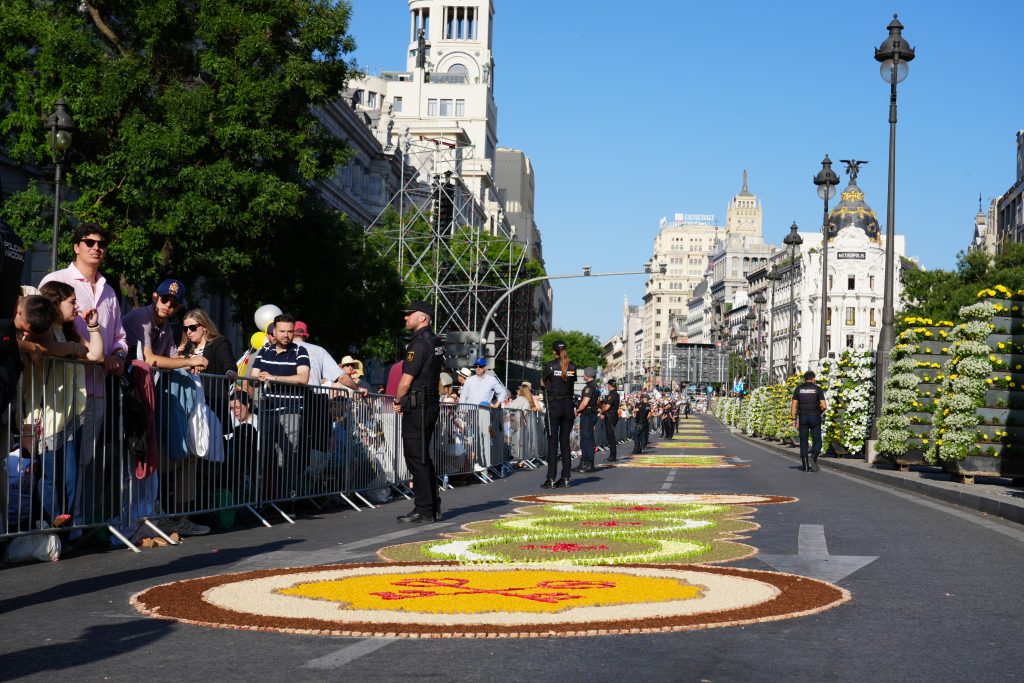
30,000 carnations line Madrid streets for Pope Leo XIV’s Corpus Christi procession
More than 30,000 carnations transformed the centre of Madrid as Pope Leo XIV led a Corpus Christi procession attended by an estimated 1.2 million people More than 30,000 carnations filled the centre of Madrid for the Corpus Christi procession led by the Holy Father during his apostolic visit to Spain. The Asociación de Alfombristas del Corpus Christi de Ponteareas (Association of Corpus Christi Carpet Makers of Ponteareas) was responsible for bringing the floral display to the Spanish capital. Located in the south of the province of Pontevedra, Ponteareas is internationally recognised for its Corpus Christi celebrations, a tradition that residents have maintained for more than 200 years by creating spectacular carpets made from flowers and natural plant materials for the procession of the Blessed Sacrament. This form of ephemeral floral art is considered one of the most important expressions of Galician cultural heritage. The celebration has been declared a Festival of International Tourist Interest and, in April 2024, was granted Cultural Interest status by the Xunta de Galicia. The decorations, known as floral carpets, covered more than 500 metres of Calle de Alcalá, one of Madrid’s longest streets. Miguel Ángel García of the Association of Corpus Christi Carpet Makers of Ponteareas explained: “The carpets of Ponteareas are much more than an artistic expression; they are a manifestation of faith passed down from generation to generation. The carpets are made in honour of the Blessed Sacrament. That this tradition can form part of the Corpus Christi celebrations in Madrid, coinciding with the visit of Pope Leo XIV, is a recognition of the work of hundreds of people who, for more than two hundred years, have kept this heritage alive.” Twenty-four carpet makers from Ponteareas worked alongside more than 160 volunteers to create the artwork in honour of the Blessed Sacrament. Accompanied by other clergy, including Cardinal Pietro Parolin, as well as children who made their First Holy Communion this year, the Pope processed from Plaza de Cibeles along Calle de Alcalá towards Gran Vía and the Church of San José before returning to Cibeles. An estimated 1.2 million people attended, a substantial crowd and around 20 per cent more than the number reported to have welcomed Saint John Paul II during his 2003 visit. Photo credit: Marcos Nogales
Jun. 7, 2026
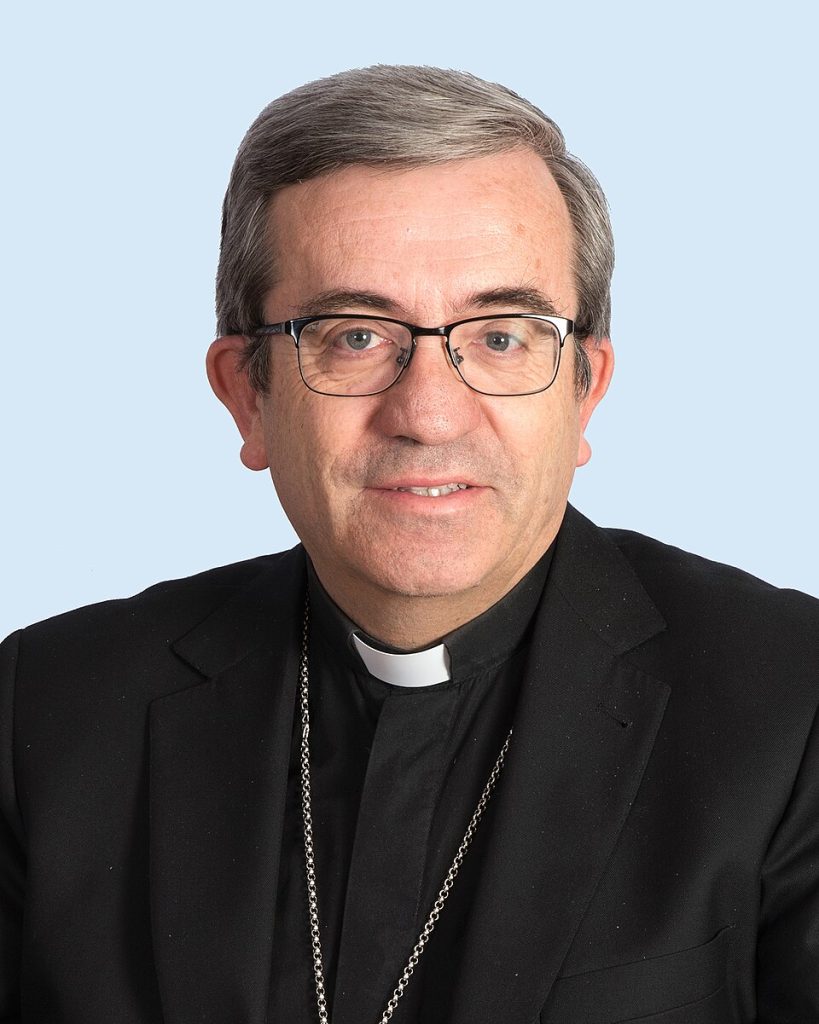
Archbishop Argüello issues Corpus Christi reminder on who may receive Communion
Archbishop Luis Argüello, president of the Spanish Bishops’ Conference, has reiterated that Catholics living in a new conjugal relationship following the breakdown of a valid sacramental marriage cannot receive Holy Communion The president of the Spanish Bishops’ Conference has reminded Catholics that those living in a new conjugal relationship following the breakdown of a valid marriage cannot receive Holy Communion. Archbishop Luis Argüello of Valladolid made the remarks in a pastoral message for Corpus Christi in which he reflected on the Eucharist and the dispositions required to receive it worthily. “When a marital relationship has broken down and those who were part of that marriage are living a new conjugal relationship,” Communion cannot be received, the archbishop said. Archbishop Argüello said those in such circumstances remained members of the Church, but that “this breaking of the Sacrament of the Covenant prevents Eucharistic communion”. “They may participate in the celebration, as well as in the life of the Church in many ways, but receiving Holy Communion is not possible,” the president of the Bishops’ Conference said. The Archbishop of Valladolid issued the message as Catholics in Spain prepare to celebrate Corpus Christi later this month. In the reflection, published as part of his diocesan pastoral programme for the first half of June, Argüello also referred to other situations which he said were incompatible with receiving Communion. These included “participating in a sinful relationship”, as well as abuses committed against others “whether in the economic or labour sphere, or in the psychological or emotional sphere”. He also referred to those publicly defending positions contrary to Christian morality. “In those cases, we cannot approach Communion without a firm decision to change our lives, making reparation for the damage caused by our situation of sin,” the archbishop said. Archbishop Argüello said the inability to receive Communion should encourage Catholics to seek a resolution consistent with the Church’s teaching on both marriage and the Eucharist. “The pain of not receiving Communion should awaken the desire to seek a solution that respects the meaning of the two sacraments at stake: Matrimony and the Eucharist,” Archbishop Argüello said. The intervention comes as Archbishop Luis Argüello prepares to accompany Pope Leo XIV during the pontiff’s apostolic visit to Spain from 6 to 12 June. Archbishop Argüello, who was elected president of the Spanish Bishops’ Conference in 2024, has become one of the most prominent voices in the Spanish Church. His election was widely viewed as signalling a more doctrinally direct approach from the episcopal conference following the presidency of Cardinal Juan José Omella. Catholic teaching holds that a valid sacramental marriage is indissoluble. For that reason, those who enter a new conjugal relationship while a previous sacramental marriage remains valid are ordinarily unable to receive the Eucharist. The issue received renewed attention during and after the Synods on the Family convened by Pope Francis and following the publication of the apostolic exhortation Amoris Laetitia in 2016. Archbishop Argüello’s latest remarks, however, amounted to a straightforward restatement of the Church’s doctrine.
Jun. 2, 2026
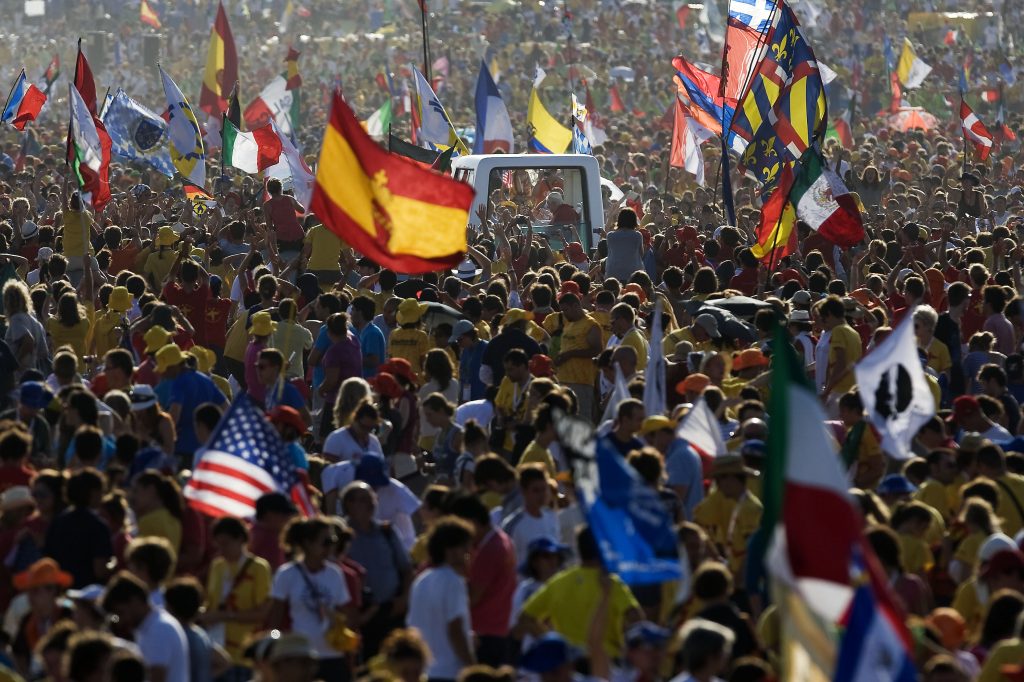
Pope Leo’s Spain itinerary released ahead of June visit
The Vatican has released the full itinerary for Pope Leo XIV’s apostolic journey to Spain from June 6 to June 12. The visit will include stops in Madrid, Barcelona, Gran Canaria and Tenerife The Holy See Press Office has released the itinerary for the anticipated apostolic journey of Pope Leo XIV to Spain, scheduled to take place from June 6 to June 12. According to the programme, the Pope will depart Rome on the morning of June 6 and arrive in Madrid at 10.30 local time, where he will be received at Adolfo Suárez Madrid-Barajas Airport before attending a welcome ceremony at the Royal Palace. He will then make a “courtesy visit to Their Majesties the King and Queen of Spain” and take part in a “meeting with authorities, civil society and the diplomatic corps”, during which he is due to deliver an address. In the evening, he is scheduled to visit the operators and those assisted by the social project “CEDIA 24 hours” before presiding at a “prayer vigil with young people in Plaza de Lima”. On June 7, the Pope will celebrate Mass in Plaza de Cibeles, followed by a Corpus Christi procession. Later that afternoon, he will meet privately with members of the Order of Saint Augustine at the Apostolic Nunciature. The day will continue with a gathering titled “Building Networks with the World of Culture, Art, Economy and Sport” at the Movistar Arena, where he is expected to speak, before concluding with a private dinner at the residence of the cardinal archbishop of Madrid. The programme for June 8 centres on meetings with political and ecclesial authorities. The Pope will meet the Prime Minister at the Apostolic Nunciature before travelling to the Congress of Deputies for a “meeting with members of the Spanish Parliament”, at which he will give an address. He will then meet the bishops of Spain at the headquarters of the Episcopal Conference. In the evening, he will take part in a “prayer and homage to the Virgin of Almudena in the Cathedral of Santa María de la Almudena”, before attending a “meeting with the diocesan community at Real Madrid FC’s Santiago Bernabéu Stadium”. On June 9, the Pope will meet the volunteers who have made the trip possible at IFEMA Madrid before departing for Barcelona. Upon arrival, he will pray the midday office at the Cathedral of the Holy Cross and Saint Eulalia and later preside at a prayer vigil at the Lluís Companys Olympic Stadium. The following day includes a visit to the “Brians 1” penitentiary centre, which, when combined with “Brians 2” on the same site, is the largest prison in Catalonia, where he will greet inmates and staff. He will then travel to Montserrat for the “prayer of the Holy Rosary at the Abbey of Our Lady of Montserrat”, an abbey which saw many of its monks murdered in the Spanish Civil War and subsequently became a symbol of Catalan nationalism. The Holy Father will have a meal with the 70 or so Benedictine monks of the abbey, who have recently celebrated 1,000 years of the monastery. Returning to Barcelona, he will meet representatives of diocesan charity and assistance organisations before celebrating Mass at the Basilica of the Holy Family, which will include the inauguration of the Tower of Jesus Christ. On June 11, the Pope will travel to Las Palmas de Gran Canaria, where he will meet organisations involved in receiving migrants at the port of Arguineguín. The Canary Islands are one of the main entry points for migrants trying to enter the EU, as the Spanish archipelago sits just off the coast of northwestern Africa and is considerably easier to access for African migrants than other parts of Europe. Later on the 11th day, the Pope will address bishops, priests, deacons, Religious and pastoral workers at the Cathedral of Saint Anne before celebrating Mass at the Gran Canaria Stadium. The final day of the visit, June 12, will see the Pope travel to Santa Cruz de Tenerife. He is scheduled to meet migrants at the “Las Raíces” centre and take part in a gathering focused on “the realities of migrant integration in the Plaza del Cristo de La Laguna”. The visit will conclude with Mass in the port of Santa Cruz de Tenerife, followed by a farewell ceremony and departure for Rome in the afternoon, with arrival at Fiumicino expected at 20.10 local time. The six-day visit is the first papal trip to the country in almost a decade and a half. Pope Emeritus Benedict XVI visited in 2011 as part of the country’s World Youth Day celebrations. However, Pope Francis did not travel to Spain during his 13-year pontificate, creating a general sense that the Catholic country is overdue a papal presence. The Spanish Episcopal Conference is organising the visit, with financing partially sourced from private donations and a 10,000-person volunteer team coordinated by the Archdiocese of Madrid.
May 6, 2026