

Cardinal Camillo Ruini
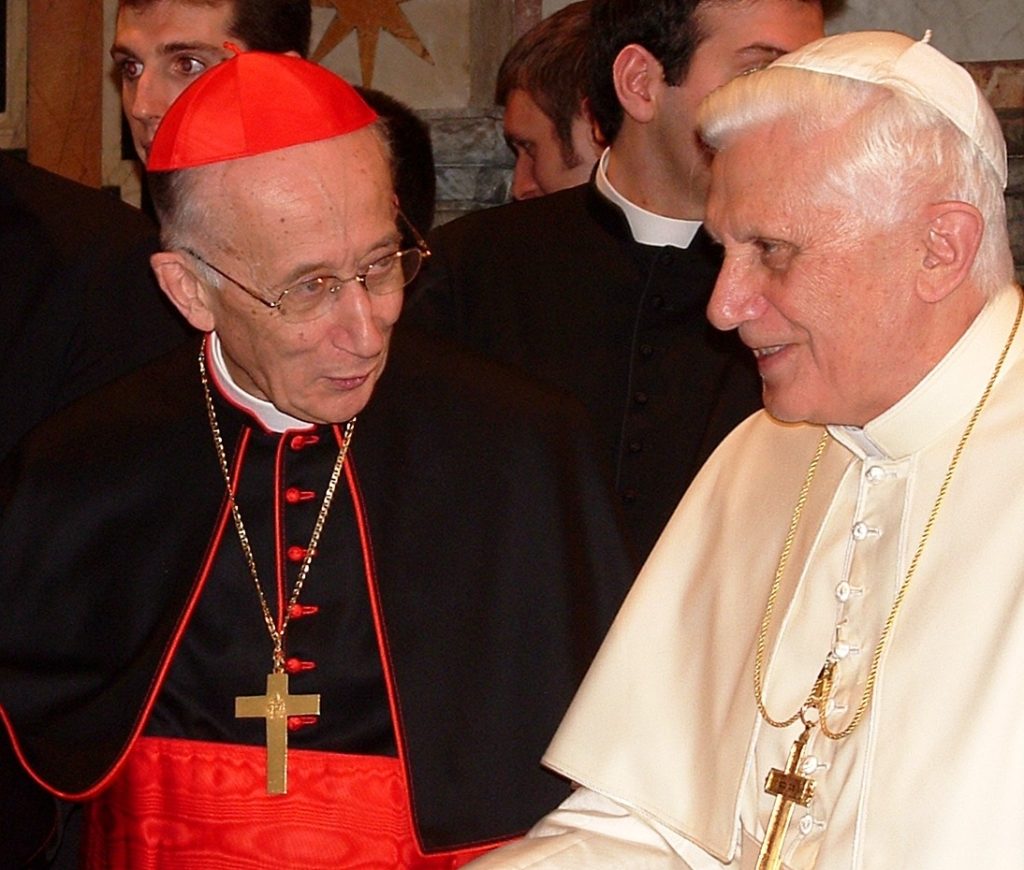
Cardinal Ruini’s testament reveals final thoughts on Pope Francis
The full testament of Cardinal Camillo Ruini has been published, including passages on Pope Francis and the post-conciliar Church that this publication can reveal some close to the late cardinal feared might never be made public. Read more. The full testament of Cardinal Camillo Ruini has been published after people close to the late cardinal expressed concern that parts of the document might never be made public. The disclosure followed the late cardinal’s death and Pope Leo XIV’s citation of the testament during his homily at Ruini’s Requiem Mass. The testament was exclusively published by Messa in Latino , which released the complete spiritual text and stated that it was doing so to prevent the document from being “cut” or amended. The revelation has taken on additional significance as AdVaticanum can reveal that there were concerns the testament would not be published in its entirety. To date, neither the Holy See Press Office nor the Vatican has done so. On good authority, this publication can reveal that people close to the late cardinal wanted the complete testament published, particularly those sections dealing with the post-Second Vatican Council Church and Pope Francis. Reflecting on the last pontificate, Cardinal Ruini expressed gratitude for what he described as the late Pope’s “extraordinary evangelising drive”, but also acknowledged a struggle with some of the directions taken by the Church in recent years. “When Pope Francis was elected, I rejoiced and, to the extent I could, immediately supported him,” the late cardinal wrote. “Even today, I rejoice and thank him for his extraordinary evangelising drive.” Yet the cardinal continued with a note of candour unusual in a spiritual testament: “I must confess, however, that I find myself in a state of unease, certainly not for personal reasons, but because I struggle to understand certain orientations that seem to reopen wounds that have barely healed since the Council. I humbly ask the Lord to convince me inwardly that the Church is His and that He Himself cares for it, beyond our human views.” Long regarded as one of the most influential churchmen of the post-war Italian Church, Cardinal Ruini was a steadfast supporter of the Second Vatican Council while also becoming one of the most prominent critics of what he viewed as distortions in its implementation. That dual concern is visible throughout the testament. Reflecting on his years as a priest in Reggio Emilia, Cardinal Ruini gave thanks for the Council itself, writing that he was grateful “for the Second Vatican Council, for having experienced it and helped others experience it joyfully in Reggio Emilia, and also for having given me the clarity and strength to oppose the post-conciliar excesses”. The cardinal presented himself as a defender of the Council who believed that some developments undertaken in its name had gone beyond the intentions of the Fathers who gathered in Rome between 1962 and 1965. The testament also sheds fresh light on Ruini’s relationship with the last three pontificates. He described St John Paul II as “a very special grace”, recalling more than two decades of close collaboration after becoming one of the Polish Pope’s most trusted advisers. “In John Paul II, I experienced your presence, Lord,” Cardinal Ruini wrote. “I was able to touch firsthand the union in prayer, the inseparability of prayer, life and apostolate, the courage of faith that guides history, and the capacity to love and forgive.” His words concerning Pope Benedict XVI were similarly affectionate. “After John Paul II, I collaborated for three years with Benedict XVI, and I thank him wholeheartedly, also for the affection he continues to show me,” the late cardinal wrote. Yet despite his immense ecclesiastical influence, the testament is notable for its intensely personal and penitential tone. Cardinal Ruini repeatedly asks forgiveness for failures, weaknesses and sins, presenting himself not as a prince of the Church but as a Christian preparing for judgement. “I confess first of all the weakness of my faith,” the former Cardinal Archpriest of St John Lateran wrote. “Despite all this, however, in the depths of my heart I have always been sustained by faith, even though, by the grace of God, I believe I have never succumbed to temptation.” The testament also reveals a recurring theme of gratitude. Cardinal Ruini meticulously recalled family members, friends, priests, collaborators and colleagues who shaped his life, from his childhood in Sassuolo to his years at the Gregorian University and the Almo Collegio Capranica, and later his service as President of the Italian Bishops’ Conference and Cardinal Vicar of Rome. At the same time, he acknowledged that the authority he exercised could sometimes be accompanied by severity. “I recognise and confess, however, that I have at times acted with substantial harshness,” he wrote, before asking forgiveness from those whom he had caused pain. In the end, however, the testament is less a political statement than a spiritual examination of conscience. Its final pages are occupied not by ecclesiastical disputes but by an appeal for mercy and perseverance. “Lord, faithful God, never tire of loving me, calling me, and converting me,” Cardinal Ruini wrote. “Father, rich in mercy, grant me and all my brothers and sisters in humanity the grace of final perseverance.”
Jun. 18, 2026
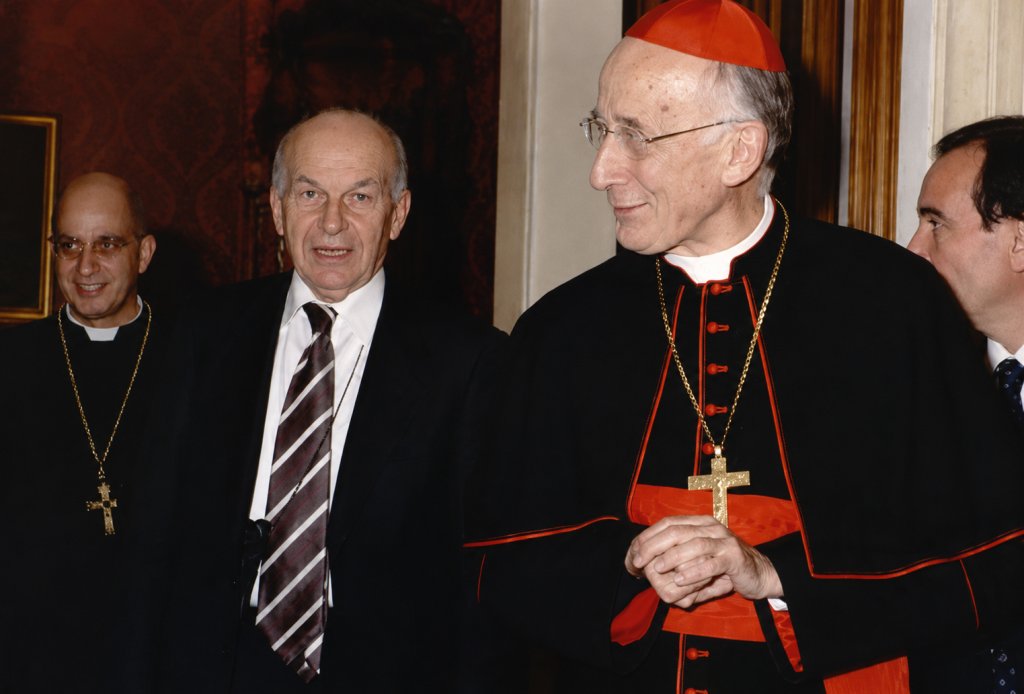
Cardinal Camillo Ruini dies aged 95 ahead of extraordinary consistory
Cardinal Camillo Ruini, one of the most influential figures in modern Italian Catholicism and a close collaborator of Pope John Paul II, has died aged 95. His death comes just days before cardinals gather in Rome for Pope Leo XIV’s extraordinary consistory Cardinal Camillo Ruini, former head of the Italian bishops and one of the most consequential Church leaders of the pontificate of Pope John Paul II, has died aged 95, little more than a week before cardinals from around the world are due to gather in Rome for an extraordinary consistory. The Diocese of Rome announced his death on Tuesday evening. In a statement issued by Cardinal Baldassare Reina, the Pope’s Vicar for Rome, and the diocesan episcopal council, the Church in Rome said: “Grateful for his long and fruitful Christian life and for his service to the Church, we entrust Cardinal Camillo Ruini to the mercy of the Lord.” As president of the Italian Bishops’ Conference from 1991 until 2007 and Vicar General of the Diocese of Rome from 1991 until 2008, he exercised a level of influence rarely achieved by a churchman in post-war Italy. Born in Sassuolo, in the province of Modena, on 19 February 1931, Ruini pursued studies in philosophy and theology in Rome at the Pontifical Gregorian University while residing at the Almo Collegio Capranica. Ordained a priest on 8 December 1954, he returned to his native Emilia-Romagna and spent decades engaged in teaching, formation and pastoral work. He taught philosophy and dogmatic theology in seminaries and theological institutes across the region and became known for his intellectual gifts and organisational abilities. His rise through the Church hierarchy accelerated during the 1980s, particularly after his involvement in preparations for the 1985 National Ecclesial Convention in Loreto, an event that sought to define the Church’s engagement with Italian society after the political and cultural upheavals of the preceding decades. Appointed an auxiliary bishop of Reggio Emilia-Guastalla in 1983, he soon attracted the attention of Rome. In 1986, Pope John Paul II brought him to the capital as secretary-general of the Italian Bishops’ Conference. Five years later, the Polish pontiff elevated him to the College of Cardinals and entrusted him with two of the most important positions in Italian Catholicism. Throughout his leadership, he argued that Catholics should not retreat from public life but should instead engage confidently in the cultural and political debates shaping the nation. His most notable interventions often concerned issues relating to marriage and the family. Cardinal Ruini repeatedly warned against legal measures that he believed would weaken the institution of marriage or undermine the family founded upon it. He emerged as one of the most prominent Catholic opponents of efforts to grant full legal recognition to same-sex relationships, arguing that such measures risked obscuring the unique social role of the family. He also played a decisive role during the 2005 referendum campaign concerning Italy’s laws on artificial insemination and assisted reproduction. Rather than urging Catholics to vote against proposed changes, he encouraged abstention in order to prevent the referendum from reaching the turnout threshold required for validity. The strategy proved successful when participation fell short of the required level, a significant victory for the Church and for Ruini personally. Beyond individual political battles, he frequently reflected on broader cultural trends affecting Europe. He warned against aggressive forms of secularism and argued that Europe risked losing touch with its Christian roots. Tributes poured in from across the political and ecclesiastical spectrum following news of his death. Cardinal Matteo Zuppi, the current president of the Italian Bishops’ Conference, praised his predecessor’s contribution to the Church in Italy. “We gather in prayer and entrust to the mercy of the Father Cardinal Camillo Ruini, whom the Lord has called to Himself. We remember with gratitude his long and fruitful Christian life and his service to the Church,” Cardinal Zuppi said. His Eminence added: “He served the Church with intelligence and pastoral passion. He helped the Church in Italy to think, discern, speak and walk in its own time.” Italian Prime Minister Giorgia Meloni described Ruini as “a great man of the Church, of extraordinary intelligence and profound humanity, who defended with vigour the identity, mission and role of Catholics in Italian society”. She said she had been honoured to know him personally and called him “one of the most lucid minds of Italian society”, expressing hope that his “spiritual, cultural and human legacy” would continue to bear fruit. Deputy Prime Minister Matteo Salvini wrote that Ruini had been “a point of reference for millions of Italian Catholics” who dedicated his life to “the Church, to dialogue, and to the defence of Western values, always with courage and consistency”. Foreign Minister Antonio Tajani also paid tribute, describing him as “an authoritative figure of the Church” and “a strenuous defender of traditional values” who remained “a precious interlocutor for politics and institutions”. His death comes at a notable moment in the life of the Church, arriving shortly before cardinals gather in Rome for Pope Leo XIV’s extraordinary consistory, where Cardinal Ruini would have been a valued participant. The meeting, whose programme was recently outlined by Cardinal Giovanni Battista Re, will draw together members of the College of Cardinals for discussion and consultation. In his letter to the cardinals, Cardinal Re explained that the Holy Father wished to draw upon the experience and counsel of the College while fostering a climate of “listening, freedom and parrhesia” among the participants. The gathering will open with a period of prayer and discussion focused on the international situation, with cardinals invited to share the sufferings, tensions and concerns affecting their local Churches, as well as signs of hope and reconciliation emerging amid conflict and uncertainty. Subsequent sessions will centre on Pope Leo XIV’s encyclical Magnifica humanitas , particularly its reflections on war, peace and the moral responsibilities of nations. Discussions are expected to examine the Holy Father’s call for a renewed commitment to peace and his rejection of attempts to justify armed conflict through appeals to the traditional theory of the “just war”. A further session will consider the encyclical’s broader vision of Christian hope and integral human development in a rapidly changing world. The final day of discussions will focus on the implementation of the Synod process and preparations for the Synodal Assemblies of 2027 and 2028, before concluding with an open dialogue between the cardinals and the Pope.
Jun. 17, 2026