

Latest
Newly surfaced Vatican letter rejects German blessing proposals
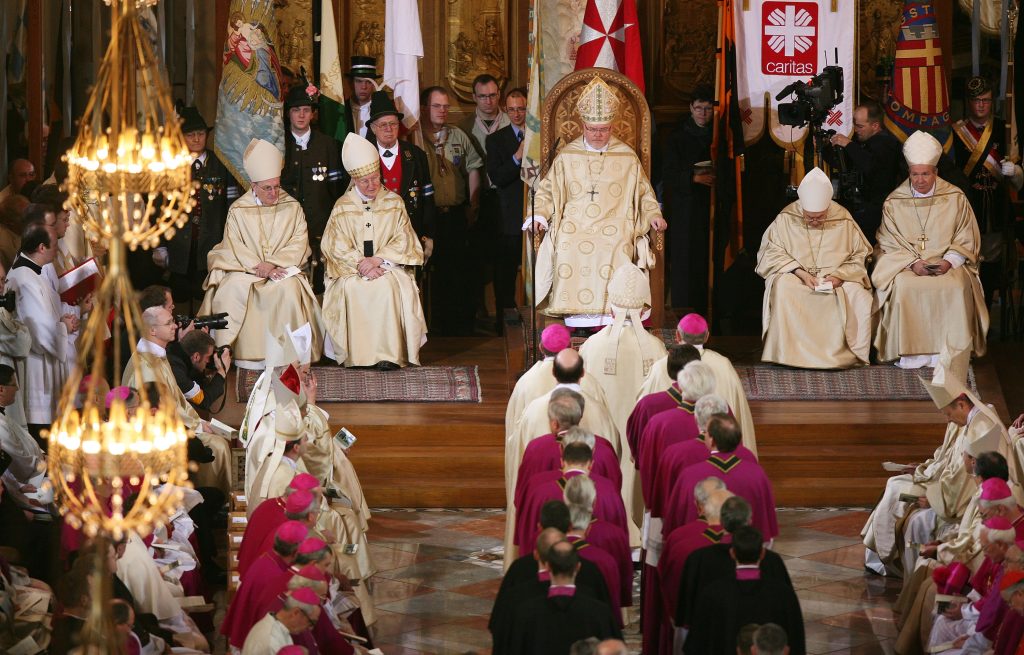
A newly surfaced letter from the Dicastery for the Doctrine of the Faith, dated November 2024, rejects Germany’s plans for formal blessings of couples in irregular unions, warning they risk resembling a sacramental rite and contradict Fiducia supplicans A letter from the Dicastery for the Doctrine of the Faith has emerged rejecting proposals from Germany for the formalised blessing of couples in irregular unions. The document, published in Spanish on X by Fr Jorge Enrique Mújica, head of the news site Zenit, was signed by Cardinal Víctor Manuel Fernández, dated November 18 2024 and addressed to Bishop Stephan Ackermann. It concerns a pastoral handbook prepared in Germany under the title Blessings for couples who love one another . The text had been submitted to Rome ahead of a planned vote by the German bishops. Citing Fiducia supplicans , the dicastery states: “The Church does not have the power to confer its liturgical blessing when that would somehow offer a form of moral legitimacy to a union that presumes to be a marriage or to an extra-marital sexual practice.” It continues: “With such blessings ‘nothing is intended to be legitimised, but only to open one’s life to God’ … nor to ‘sanction … anything’, but only to ask for God’s help ‘to live better’.” The letter raises concern that the German text refers explicitly to the blessing of “a union” and envisages an “official regulation” by pastors, adding that such an approach risks becoming “the object of a true and proper ‘acclamation,’ a gesture that is normally foreseen in the matrimonial rite”. It concludes that “one in fact seems to aim at legitimising the status of such couples, in a sense contrary to what is affirmed by Fiducia supplicans ”. It further reiterates that the declaration excludes any practice that could resemble a sacramental rite, stating that blessings must not “become a liturgical or semi-liturgical act, similar to a sacrament” and insisting: “For this reason, one must neither promote nor provide for a ritual for the blessings of couples in an irregular situation.” The dicastery also criticises the proposed handbook for internal inconsistency. While it speaks of “spontaneity and freedom”, it nevertheless provides a fixed structure for the celebrations. The letter notes that “a fixed formulary is then offered for their realisation, contradicting what was previously affirmed” and adds that “a sort of liturgy or para-liturgy is prescribed with regard to the blessing of same-sex couples”. The publication of the letter follows recent comments by Pope Leo XIV, who addressed the issue during a press conference on a return flight from Africa. He said: “The Holy See has made it clear that we do not agree with the formalised blessing of (homosexual) couples … or of couples in irregular situations, beyond what … was allowed for by Pope Francis in saying all people receive blessings.” His Holiness added: “When a priest gives the blessing at the end of Mass … there are blessings for all people,” before referring to Pope Francis’s phrase “tutti, tutti, tutti”, and warning that “to go beyond this today … could cause more disunity than unity”. Despite the intervention from Rome, bishops in Germany have defended the proposals. Bishop Georg Bätzing said the practice “serves the people” and “does not jeopardise the unity of the Church”, while acknowledging differences within the wider Church. The guidelines were developed jointly with the Central Committee of German Catholics, whose president, Irme Stetter-Karp, said they are intended to provide blessings “for couples who do not wish to enter into a sacramental church marriage or for whom such a marriage is not an option”, adding: “There is no possibility of confusing it with the sacrament of marriage.” In Munich, Cardinal Reinhard Marx has instructed clergy to follow guidance under the title Segen gibt der Liebe Kraft . In a letter to clergy and pastoral staff, he wrote: “To all couples who love each other and seek a blessing from the Church for their partnership, I wish that they may feel God’s grace in this blessing.” The directive states that “no couple should be turned away” and requires that priests unwilling to conduct such blessings refer couples to another minister. The archdiocese has also confirmed that training sessions for clergy and pastoral workers will begin in June to support the implementation of the policy across parishes.
May 4, 2026
US seeks to reset Vatican ties as Rubio heads to Rome
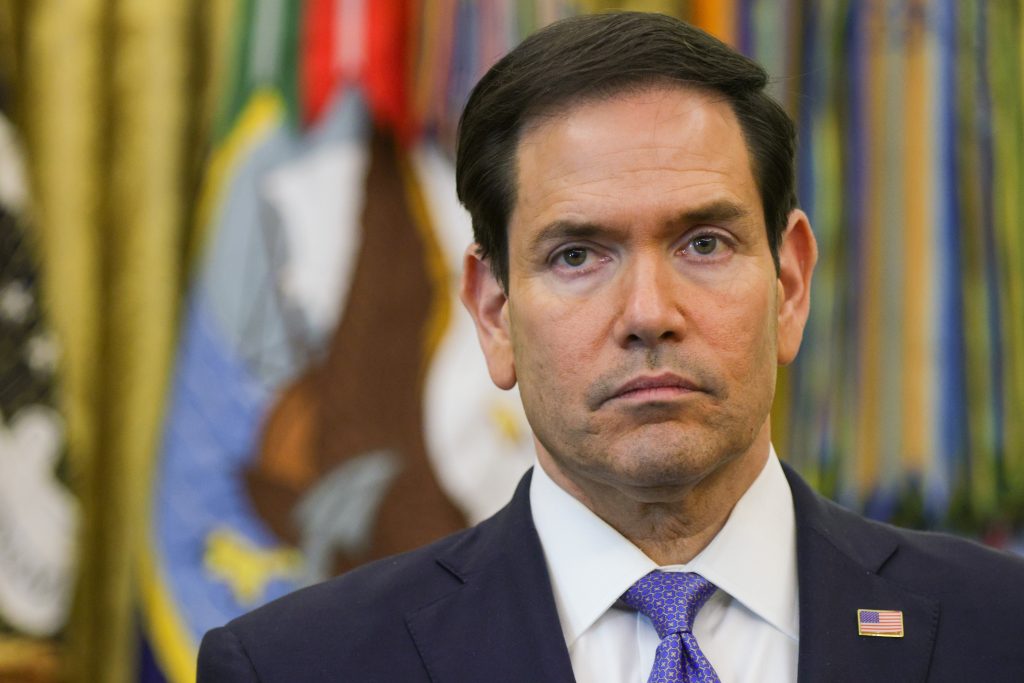
Marco Rubio is set to meet Pope Leo XIV and Cardinal Parolin in Rome, as Washington moves to ease tensions with the Vatican after recent clashes over Iran and criticism from President Trump The United States Secretary of State, Marco Rubio, is expected to arrive in Rome on 7 May for meetings with Vatican and Italian officials, in what is understood to be an effort by Washington to stabilise relations. The visit, confirmed by the Holy See Press Office, will include a meeting with the Pope and talks with Pietro Parolin, as well as senior figures within the Italian government. It comes almost a year to the day since the election of Pope Leo XIV, and marks the first senior-level engagement between the current US administration and the Vatican since the deterioration in relations prompted by the President’s remarks about the pontiff. Over the past month, President Donald Trump has publicly criticised Pope Leo in recent weeks over the Holy See’s opposition to the United States’ military action against Iran. In one post circulated on social media, the President described the Pope as “WEAK on Crime, and terrible for Foreign Policy”. The Vatican has not issued an official response to Rubio’s visit, but the Holy See has continued to articulate its position on the conflict. Speaking to journalists last month while travelling to Africa, Pope Leo said he had “no fear of the Trump administration, or speaking out loudly of the message of the Gospel”. The Pope has repeatedly criticised the use of military force, warning against what he described in a separate address as the actions of “tyrants” who expend vast resources on warfare. Rubio’s presence in Rome is also expected to include discussions with Italian officials, amid signs of strain between Washington and Rome. Italy’s Prime Minister, Giorgia Meloni, had been regarded as a close ally of the Trump administration, but relations have cooled following her criticism of the US position on Iran and her public disapproval of the President’s remarks about the Pope. She described the attacks as “unacceptable”, placing her government at odds with Washington on both diplomatic tone and policy substance. According to Italian press reports, Rubio’s visit was communicated to the government in Rome through diplomatic channels, with indications that efforts have been underway to “rebuild the bridge” between the two countries. Meetings are expected to include Foreign Minister Antonio Tajani, with further contacts under discussion. It remains unclear whether a meeting with Meloni herself will take place. The wider diplomatic context has been further complicated by tensions between the United States and other European allies. Recent statements from Washington have included threats to reassess troop deployments in Europe, including in Italy, Germany and Spain, following criticism from European leaders over the Iran campaign. Italian Defence Minister Guido Crosetto has rejected suggestions that Rome has failed to support US operations, particularly in relation to maritime security. Rubio’s role as a senior Catholic within the administration has been noted. The timing of the visit, with the United States approaching midterm elections later this year, has also attracted attention. Catholic voters remain a significant voting bloc in American politics, having come out in support for all presidential victories in recent history. Trump himself received an estimated 57 per cent of the Catholic vote in 2024. Whether Rubio’s meetings in Rome will succeed in easing tensions remains to be seen, but the decision to send the Secretary of State signals an acknowledgement within Washington that the President is seeking to ease relations with the Vatican.
May 4, 2026
Cardinal Marx denounces “reactionary propaganda” over German Synodal Path
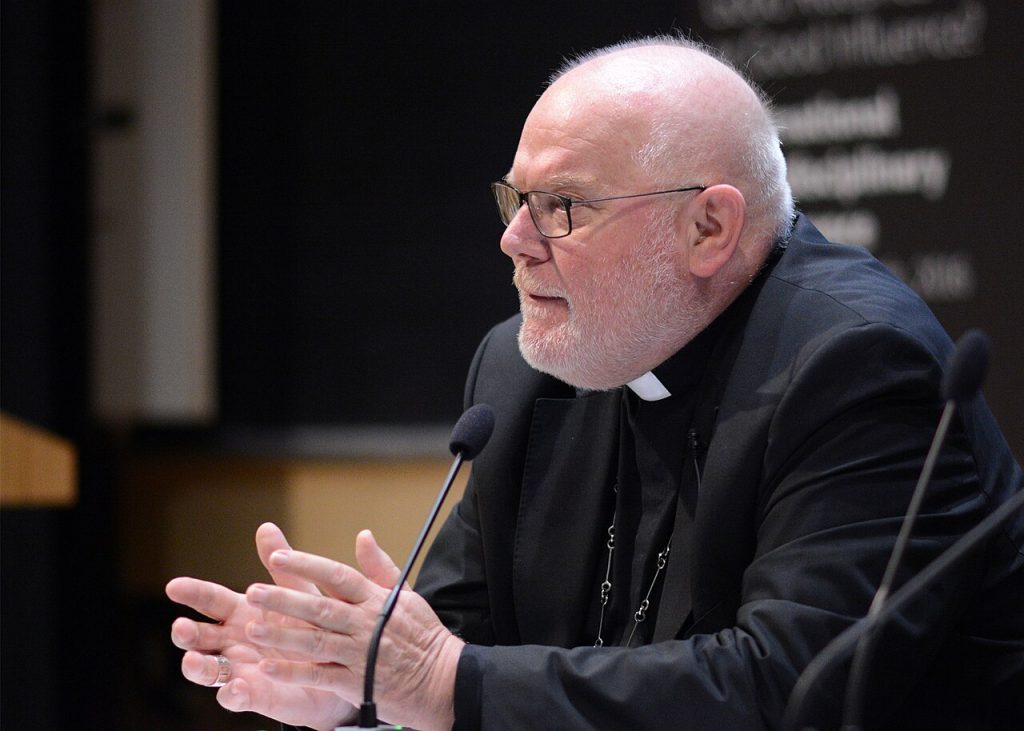
Cardinal Reinhard Marx has criticised what he called “reactionary propaganda” surrounding Germany’s Synodal Path, rejecting claims of a rupture with Rome and defending the direction of the German Church Cardinal Reinhard Marx has criticised what he described as “reactionary propaganda” directed against Germany’s Synodal Path. In an interview with Herder Korrespondenz , the Archbishop of Munich and Freising said that narratives portraying the German Church as moving towards rupture were being driven in a coordinated way, especially in the United States. “This is a social media phenomenon, and it applies to both politics and the Church,” he said, adding that he had raised the issue directly with Pope Francis and Pope Leo XIV. Cardinal Marx rejected suggestions that the Synodal Path risks breaking communion with Rome and defended the particular character of Catholic life in Germany. Referring to earlier concerns expressed in Rome about possible Protestant influence, he said: “I didn’t think that was fair,” insisting that the German Church’s development must be understood in light of its own historical experience. He acknowledged, however, that communication with the Vatican could have been handled differently as tensions emerged. “Perhaps we should have talked more amongst ourselves,” he said, suggesting that earlier and broader dialogue might have prevented misunderstandings from taking hold. The cardinal also pointed to the approach of Pope Leo XIV, saying the Pope had shown a willingness to listen to differing voices within the Church rather than act unilaterally. “He doesn’t simply want to decide something spontaneously, but is interested in the opinions of many different people,” Marx said, noting that the Pope has already received a number of German bishops in audience. Alongside his comments on the Synodal Path, Marx addressed the financial position of the Holy See, describing current difficulties as manageable. Writing in the same publication, he said that the situation does not amount to a structural crisis, but requires more effective coordination and oversight. He pointed to the complexity of Vatican finances, where multiple entities operate with separate reporting systems, and suggested that greater unity in administration would improve transparency. He noted that the central structures of the Church rely heavily on income from the Institute for the Works of Religion and the resources of Vatican City State, including the museums, while traditional sources such as Peter’s Pence are no longer sufficient on their own. Without such support, he indicated, it would be difficult to sustain the costs of the Roman Curia, the diplomatic service and the Church’s global communications. Marx confirmed that proposals are under consideration to strengthen fundraising and rationalise financial management, including the possible creation of a dedicated office for this purpose. He also referred to ongoing concerns over pension liabilities, noting that these issues reflect wider pressures faced by institutions internationally rather than a uniquely Vatican problem. The Synodal Path, launched in 2019 by the German bishops and lay representatives, has been the focus of sustained scrutiny from Rome, particularly over its discussions on authority, morality and Church governance. While the Vatican has repeatedly stressed the limits of national initiatives, German bishops have maintained that the process is intended as a contribution to the wider life of the universal Church rather than a departure from it. Image credit: By Dermot Roantree – Own work, CC BY-SA 4.0, https://commons.wikimedia.org/w/index.php?curid=115697769
May 4, 2026
Papal Foundation approves record $15 million in grants for 2026
The Papal Foundation has approved more than $15 million in grants for 2026, its largest total to date, funding over 140 projects worldwide The Papal Foundation has approved more than $15 million in grants for 2026, marking the largest total in its 38-year history. The announcement came as Pope Leo XIV received members, trustees and stewards of the foundation at the Apostolic Palace at the conclusion of their annual pilgrimage. The Chicago-born pontiff thanked donors for their sustained financial backing of projects ranging from humanitarian aid to clerical education, telling them their generosity had enabled “countless people to experience in a concrete fashion the goodness and kindness of God in their own communities”. According to figures released by the foundation, the 2026 grants will support more than 140 projects across approximately 75 countries, continuing a steady increase in annual distributions in recent years. In 2023, the foundation allocated around $9.5 million to 114 projects in 57 countries, rising to roughly $14 million in 2025 for 116 projects in more than 60 countries. The latest total represents a further expansion rather than an isolated increase, with consistent growth in the foundation’s grant-making capacity. The foundation also reported a notable rise in new membership, with 25 families joining in the year since the election of Pope Leo XIV. Membership as a steward requires a contribution of at least $1 million, forming part of an endowment used to fund papal projects. The increase is viewed as a sign of renewed engagement among wealthy American Catholics following the election of the first pope born in the United States. During the audience, the Pope referred to his own experience of the foundation’s work during his time as Bishop of Chiclayo, stating: “I have already been aware of your work, especially during my years of service as Bishop of Chiclayo, where I saw first-hand the positive impact of the Foundation’s grants, as both the Diocese and a religious community were blessed to receive assistance on various projects, thanks to your generosity.” He continued by expressing gratitude for the organisation’s role in supporting the universal Church, saying: “I am, therefore, deeply grateful for your ongoing commitment to assist the Successor of Peter in his mission to care for the needs of the universal Church.” The Pope pointed in particular the role of the foundation in funding scholarships for priests and Religious from developing countries to study at pontifical universities in Rome. “Many priests and consecrated men and women have likewise been able to receive an advanced education from the Pontifical Universities in Rome that would otherwise not have been possible, forming them to be future leaders in the Church,” he said. The Pope also emphasised the wider spiritual dimension of charitable giving, stating: “All members of the Church, by virtue of our Baptism, share the responsibility to proclaim the Gospel today with words as well as with charitable deeds.” He added that “by funding projects, humanitarian aid and scholarships for people from around the world, the Papal Foundation participates in the Church’s ongoing evangelical mission”. Referring to the liturgical season, the Pope described Easter as a “time focusing on mission as well as peace” and recalled Christ’s words to the Apostles, “Peace be with you!” He told members that their work contributes not only to the Church’s mission but also to peace at local and regional levels. Concluding his remarks, the Pope asked for continued support and prayers, saying: “I ask for your continued prayers for my ministry as the Successor of Saint Peter and for the needs of the Church.” He added: “You will probably never meet everyone who has benefitted from your kindness, so in their name I express heartfelt appreciation.” The Papal Foundation, established in 1988 by Cardinal John Krol of Philadelphia, was created to provide direct financial support for the charitable priorities of the Pope. Based in Pennsylvania, it includes all United States cardinals as ex officio members and is governed by a board of lay trustees and bishops. Since its inception, it has distributed more than $250 million to projects around the world. Speculation that financial concerns may have influenced the election of Pope Leo XIV has been rejected by senior Church figures. Speaking in Rome at the presentation of a book examining relations between the United States and the Holy See, Cardinal Gerhard Ludwig Müller said: “Although Cardinal Reinhard Marx dedicated a full day to discussing the Holy See’s finances in the pre-conclave, this did not influence the final decision.” He added that the election of a pope “is based on different criteria”, stressing the spiritual nature of the process. During the pontificate of Pope Francis, contributions linked to Vatican causes experienced a noticeable decline, particularly in the years following the global financial crisis and during the Covid-19 pandemic. Reports of financial corruption within Vatican structures further weakened donor confidence, especially among American benefactors, while Pope Francis’s criticism of aspects of free market capitalism was also seen to have cooled enthusiasm in some quarters.
May 4, 2026

Britain’s foremost exorcist
Fr Jeremy Davies, a former doctor who became a priest, spent 35 years as an exorcist, carrying out his ministry with quiet discipline, intellectual conviction and pastoral care If you entered Our Lady Help of Christians in Luton town centre for the 7am Mass on a weekday morning in the 2010s, you were one of few. Luton, a town about an hour’s drive from England’s capital, is known for its poverty and its history of extremism. An outpost of Al-Muhajiroun, radical Muslims famously held Islamist rallies there to protest the return of fallen British soldiers from Afghanistan. It is also home to the English Defence League, founded by Luton native Tommy Robinson, who has become one of the most recognisable faces of Britain’s hard right. There are many more mosques than Catholic churches in Luton. A parish priest in Bury Park, the town’s most densely Muslim area, once told me there were 16 mosques within his parish boundaries. Evangelicals also maintain a strong presence, particularly in High Town, an area with a large white working-class population. Hope Church, a Newfrontiers congregation, is particularly active in serving the town’s more marginalised residents. However, if you did enter Our Lady Help of Christians for the 7am Mass, you would likely have found yourself at a liturgy celebrated by Britain’s leading exorcist, Fr Jeremy Davies. Born in 1935 on the solemnity of the Annunciation, it was not expected that he would enter the priesthood. His father, a senior officer at RAF Fighter Command, left his wife and children to remarry, and there was still a healthy amount of anti-Catholic sentiment in civilised English society.
May 4, 2026
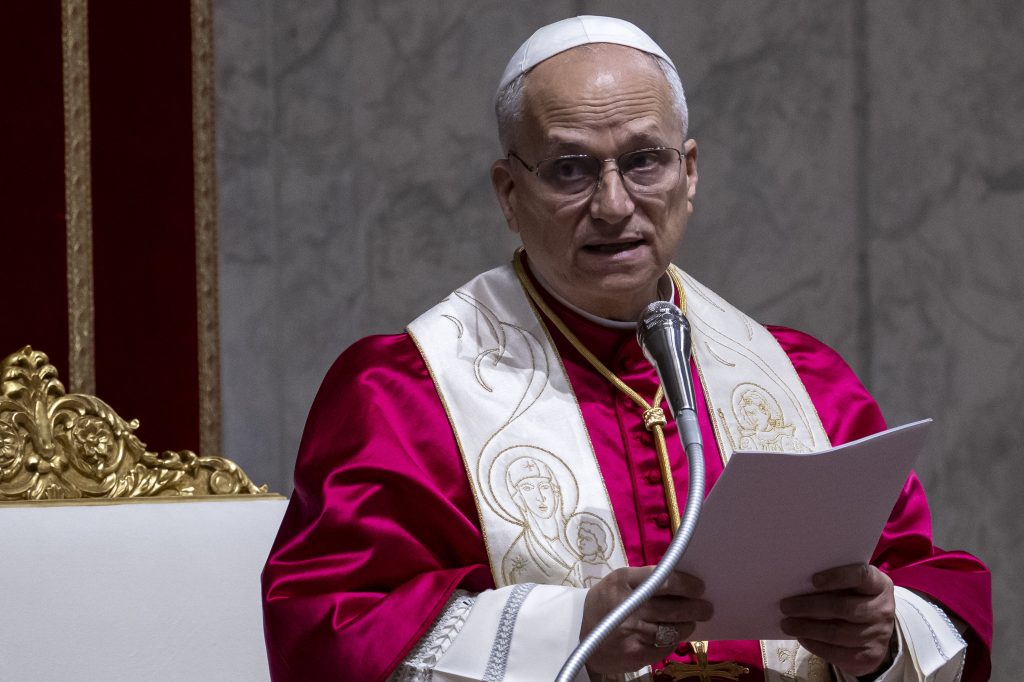
Pope Leo XIV’s first encyclical set for May 15 release
Pope Leo XIV is expected to publish his first encyclical on May 15, aligning it with landmark social teaching documents. The provisional text, Magnifica humanitas, is set to address artificial intelligence, global instability and the state of international law Pope Leo XIV’s first encyclical is expected to be signed and published soon, placing its release close to a date long associated with landmark papal social teaching documents. According to reports from the German Catholic news agency KNA, it will be signed on May 15. The text will be the first major teaching document of his pontificate. Circulating under the provisional title Magnifica humanitas , it is expected to address a range of issues, including artificial intelligence, international peace and what sources describe as a crisis in international law. Previous reports indicate that the document will set out the Pope’s initial response to these questions within the framework of Catholic social teaching. The encyclical follows earlier indications that the Holy See had been preparing a document focused specifically on artificial intelligence. At the beginning of February, reports pointed to work under way on a text examining the ethical and anthropological implications of emerging technologies. Pope Leo XIV has already spoken about the risks associated with technological development, warning of the dangers posed by “uncontrolled technology” and the importance of safeguarding human dignity. According to the same reports, the encyclical will also address geopolitical instability and the perceived weakening of international legal structures. By doing this, the document is expected to set out the Vatican’s response to the principal challenges facing humanity in the 21st century. The anticipated date of May 15 places the encyclical within a well-established tradition. On May 15, 1891, Pope Leo XIII issued Rerum Novarum , the foundational text of modern Catholic social doctrine, addressing the condition of workers during the industrial age. The same date was chosen in 1931 by Pope Pius XI for Quadragesimo Anno , which developed the Church’s teaching on social order and introduced the principle of subsidiarity. Thirty years later, on May 15, 1961, Pope John XXIII promulgated Mater et Magistra , focusing on economic justice and social development. The expected treatment of artificial intelligence would build on recent Vatican teaching. In January 2025, the Dicastery for the Doctrine of the Faith and the Dicastery for Culture and Education issued Antiqua et Nova , a joint note on “the relationship between artificial intelligence and human intelligence”. The document said AI could bring “important innovations” but warned that it also carried the danger of deepening inequality, manipulating public opinion and expanding “the instruments of war well beyond the scope of human oversight”. It added that artificial intelligence “should not be seen as an artificial form of human intelligence, but as a product of it”, and insisted that it “should be used only as a tool to complement human intelligence rather than replace its richness”. No official text has yet been released, and the title Magnifica humanitas remains provisional.
May 4, 2026