

Latest
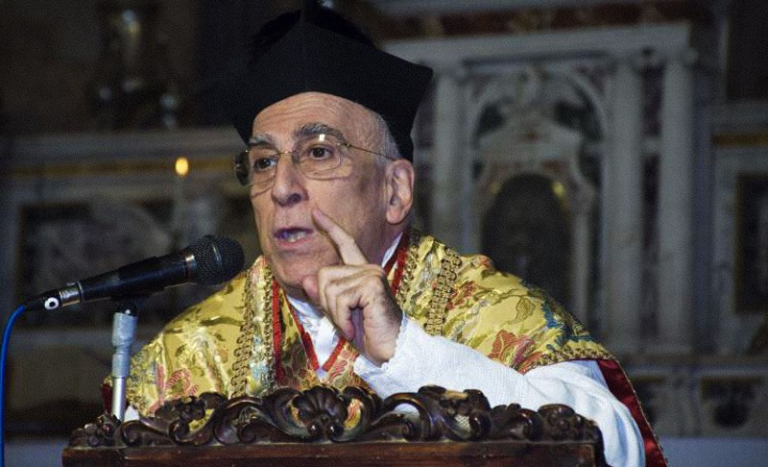
Monsignor Bux: ‘The crisis of the liturgy is the crisis of the Church’
Monsignor Nicola Bux speaks to AdVaticanum about the SSPX, Traditionis Custodes, the “reform of the reform”, women’s ordination, Anglicanism and what he describes as the Church’s liturgical and doctrinal crisis under the post-conciliar era Monsignor Nicholas Bux is a priest and theologian whose work has spanned academia, pastoral ministry and service to the Roman Curia. Born in Bari, southern Italy, in 1947 into a modest family, he studied at the Pontifical Gregorian University before being ordained in 1975 by Archbishop Anastasio Ballestrero, the Discalced Carmelite archbishop later known for overseeing the first modern scientific examination of the Shroud of Turin in 1978. A specialist in Eastern liturgy and sacramental theology, he obtained a doctorate at the Pontifical Oriental Institute and went on to teach in his native Bari, Jerusalem and Rome. His service to the Holy See began under Pope John Paul II, who appointed him a consultant to the Congregation for the Causes of Saints and the Congregation for the Doctrine of the Faith. A collaborator of Cardinal Joseph Ratzinger, later Pope Benedict XVI, he contributed to synodal preparations and Eucharistic texts, and later served during Benedict XVI’s pontificate in roles connected to synodal assemblies and papal liturgies. AV: Monsignor Bux, since leaving Rome and your responsibilities in the Roman Curia, what have you been doing? How have you been spending your time? Are there any particular projects, writings or pastoral activities you are currently working on? How did your work and apostolate develop following the resignation of Pope Benedict XVI, particularly during the pontificate of Pope Francis? Monsignor Nicholas Bux: After concluding my collaboration with the Congregation for the Doctrine of the Faith and the Office for the Liturgical Celebrations of the Supreme Pontiff upon Benedict XVI’s resignation, I continued working until 2019 with the Congregation for the Causes of Saints and until 2021 with the Congregation for Divine Worship. Having reached the age limit for teaching theology in a faculty, I have continued giving conferences in Italy and abroad, and publishing on topics related to Eastern liturgy, ecclesiology and ecumenism. During the pontificate of Pope Francis, in which the Magisterium experienced a serious crisis, I devoted myself to explaining the reasons why one must remain in the Church, resisting despotic forms and avoiding the mistake of placing oneself outside it. By dying within the Church – like the grain of wheat that falls to the earth – one contributes to overcoming the crisis and renewing it. Together with theologian friends, we promoted the Scuola Ecclesia Mater, an Italian network of clerics and laity, with study sessions and spiritual exercises. Along with Cardinals Caffarra, Brandmüller, Burke and Sarah, we continue to advance the idea and practice of the “reform of the reform” of the liturgy and the Church according to the thought of Pope Benedict, as well as the international Summorum Pontificum pilgrimage at the end of October in Rome. I can say, in light of the Pope’s latest address to the French bishops, that we were right. AV: Looking back on the years spent in the Curia, particularly your service at the Dicastery for Divine Worship and the Discipline of the Sacraments, what were the most significant challenges or moments you faced? NB: In 2009, after a plenary meeting of the Congregation that had decided to propose to the Pope the inclusion in the Missal of certain rites from the Vetus Ordo Missae – for example, the Offertory, to be used ad libitum – the news was leaked by someone, and an alarm was sounded by those who feared an attack on the post-conciliar liturgical reform, so everything was stopped. Another issue we began to address was that of mega-concelebrations. The rite of concelebration promulgated by Paul VI in 1965 prescribed no more than 50 concelebrants so that they could “stand around the altar”, even if not all could immediately touch the altar table and pronounce the words of consecration over the bread and wine. These are the intention and external action required for a true concelebration and simultaneous consecration. Otherwise, saying “This is my body … this is the chalice …” does not correspond – to use the liturgists’ terms – to the truth of the sign, because one should say “That is my body …” These are the conditions for the validity of a concelebrated Mass, so that it is sacramental and not merely a ceremony, as Pius XII affirmed. The limit set by Paul VI has disappeared in the current Missal, so doubts arise about the validity of the celebration when the number of concelebrants overflows the presbyteral area or when it takes place outdoors in enormous spaces, where non-liturgical equipment of the concelebrants is added – hats, sunglasses, water bottles and cameras. AD: You were in the Curia during the period of negotiations with the Priestly Society of Saint Pius X (SSPX). In light of the Society’s recent decision to proceed with episcopal consecrations without a papal mandate, what is your current judgment on the SSPX? NB: Setting aside the good intentions of individuals, over time the Society has lost the vital sap of Catholic thought, as already happened with the Orthodox. Catholic thought flows only if one remains united to the main tree, despite the weakening of the Magisterium. Otherwise, one arrives at a museum-like conception of Tradition. One can understand the fears, but it is not justified to remove oneself from the Church in order to self-preserve. The organic development of doctrine, to use the expression of the new Doctor Saint John Henry Newman, is thus lacking. The Church is a mother and one must allow oneself to be corrected, because a true Christian must accept dying, and at the time established by God, will be reborn to new life, as has happened with the charisms of the Saints. Where Peter is, there is the Church: one cannot disregard this visible principle of unity willed by Jesus Christ, in relation to the invisible one, which is the Holy Spirit. AV: Pope Leo XIV recently sent a letter, through Cardinal Parolin, to the French bishops, urging them to find “generous” pastoral solutions for communities attached to the Traditional Latin Mass ahead of their plenary assembly. What does this letter indicate about the current pontificate’s approach to the Traditional Latin Mass, and how do you interpret its tone in light of Traditionis Custodes? NB: The antiquior usus of the Mass has resisted for over sixty years; this is the reality and we must take note of it, just as Saint Pius V did with rites that were over two hundred years old at the time of the Tridentine reform. With this realism, Benedict XVI stated: “What earlier generations held as sacred, remains sacred and great for us too, and it cannot be all of a sudden entirely forbidden or even considered harmful. It behooves all of us to preserve the riches which have grown in the faith and prayer of the Church, and to give them their proper place” (Summorum Pontificum, 10). It seems to me that Pope Leo wants to recover this “gaze” and has invited the French bishops and the faithful of Christian communities – traditional or not – to look at each other fraternally. It seems to me that the Pope wants, in an Augustinian way, to let consensus mature from within the ecclesial community: bishops, priests and faithful. I am certain that gradually, in this way, the other episcopates will be led to do the same in their dioceses. AV: Does accepting the Second Vatican Council require Catholics to accept the post-Vatican II liturgical reform in its current form? NB: The liturgy is the epiphany of the Church, which gathered solemnly in the Second Vatican Council, celebrated it constantly in the form then in force during its sessions, thus becoming an integral part of that infallible Magisterium, as stated in the Catechism of the Catholic Church (cf. 891). When the Church gathers in Council, it performs a liturgical act because it places itself in adoring listening to God. For this reason, Benedict XVI, in his address to the Roman Curia on December 22, 2005, invited us to read the event as “reform in the continuity of the one subject Church.” With this gaze towards God, the Council elaborated as its first document the liturgical constitution Sacrosanctum Concilium, and Paul VI established a Consilium to implement it. However, one cannot identify the Council tout court with the work of the Consilium, because it was not without defects. Cardinal Ratzinger observed: “Anyone who thinks that not everything in this reform has been successful, and that some things are modifiable or even need revision, is not for that reason an enemy of the Council.” Therefore, the equation does not hold: accepting the validity of the Second Vatican Council means accepting the liturgical reform that would express the reality of the liturgy intimately linked to the vision of the Church in Lumen Gentium, as the text distributed by Cardinal Roche at the Consistory last January seems to suggest. Instead, Benedict XVI intended to apply the Liturgical Constitution, safeguarding “legitimate diversities” – that is, the pluralism of rites – and, at the same time, “the substantial unity of the Roman rite” (SC 38). With the motu proprio Summorum Pontificum, he restored the ancient Roman rite, which had never been juridically abrogated. AV: How do you assess the current liturgical crisis in the Church, and what steps do you believe are necessary for authentic liturgical renewal and a true “reform of the reform”? NB: The Holy Father placed the Liturgy on the agenda of the Consistory, proposing to the Cardinals an in-depth historical, theological and pastoral reflection “to preserve the healthy tradition and yet open the way to legitimate progress” (SC 23). To preserve tradition and progress legitimately, one must understand the nature of the liturgy. “The crisis of the Liturgy, and therefore of the Church, in which we continue to find ourselves,” affirmed Benedict XVI, “is due only to a minimal extent to the difference between the old and new liturgical books.” It is becoming ever clearer that, behind all the controversies, a profound dissent has emerged concerning the essence of liturgical celebration, its derivation, its representative and its correct form. At first, Paul VI was convinced that the liturgical reform had translated and supported the indications of the Liturgical Constitution. But arbitrary experimentation continued, which sharpened the nostalgia for the ancient rite. Thus, in the Bull Apostolorum Limina for the proclamation of the 1975 Holy Year, regarding liturgical renewal, he stated: “We consider it extremely opportune that this work be re-examined and receive new developments.” John Paul II, in the apostolic letter Vicesimus quintus annus of 1988, spoke openly of “erroneous applications.” Now, the Dicastery, before anything else, if it wants to render a service to all Catholics, must have the courage to clarify the causes, promoting the study and full publication of the documents of the Consilium for the implementation of the Constitution on the Sacred Liturgy, preserved in its archive. This is a wish addressed to the Holy Father in the book La liturgia non è uno spettacolo, co-authored by myself and Saverio Gaeta. I believe we must proceed with the “reform of the reform” proposed several times by Joseph Ratzinger, which begins “from the presence of the sacred in hearts, from the liturgy and its mystery”. In truth, there are already signs: the spread of Eucharistic adoration, receiving Communion kneeling and on the tongue, rediscovering the traditional liturgy in which silence and the Mystery of the Lord’s Presence in His Church prevail, beginning from its heart, which is the Eucharist, the Divine and indeed “Sacred Liturgy”. What would happen if the priest’s orientation ad Deum or towards the Cross were permitted during the Eucharistic Liturgy of the Mass, as the clearest sign of continuity with the apostolic tradition and that of the East? This rebirth of the sacred is the condition for the renewal of the Church. Monsignor Bux and John Paul II AV: Turning to ecumenism, the Church of England has just installed Sarah Mullally as the first female Archbishop of Canterbury. In your view, what does this development mean for today’s Catholic-Anglican relations, especially regarding apostolic succession, the ordination of women and the possibility of true theological convergence? NB: There is a contradiction: on the one hand, at least 700 Anglican pastors are welcomed into the Catholic Church – a sign of the profound crisis of the Anglican Communion, which in Great Britain records only 2 per cent Sunday attendance – while on the other hand, a congratulatory message from the Pope is sent for the installation of the so-called primate Sarah Mullally. “So-called” first of all because her office is null, as she is a woman who, according to Catholic teaching, cannot be ordained to the priesthood; then, as a member of the Anglican Communion, her ordination is invalid – otherwise one would not understand why we established Ordinariates to re-ordain bishops and priests coming from it. Finally, because she is not effectively the Primate of Canterbury, since two-thirds of Anglicans do not recognise her as such. It is true that, as Christians, we are united in baptism, but we do not agree on everything that belongs to Christ, John Paul II said to German Protestants in November 1980, primarily on the sacraments. Has no one at the Council for Christian Unity noticed this and told the Pope? Do they not realise that, with such behaviour, many Catholic faithful are scandalised? If one really did not want to tell the truth, it would have been better not to send any message at all. AD: The Church continues to face a serious vocation crisis in many parts of the West. A common response has been the creation of “pastoral units” or groupings of parishes to address the shortage of priests. Do you see this as a real solution, or does it risk becoming an illusion that simply masks a strategic retreat from the traditional understanding of priestly ministry in the Church? NB: Since the post-conciliar period, the number of priests has decreased dramatically, and today in Europe about 10 per cent of the baptised go to Mass. Among the causes are the crisis of the family and the failure to transmit Catholic thought in catechesis to the younger generations. It was also a mistake to admit girls to altar service in place of the “little clergy”, the nursery of vocations. Then, despite the immense paper production by the Italian Bishops’ Conference on the urgency of announcing the Gospel to those far away, instead of strengthening capillary presence in the territories, they invented “pastoral units” – a fig leaf to cover the strategic retreat due to the shortage of priests. When will it be understood that so-called “pastoral care” begins from the deep unity of the Church, which in turn is nourished by the diversity and identity of individuals and groups that together constitute Tradition – and that innovation occurs only from within it? Isn’t that precisely what the word “Tradition” indicates? AV: In contemporary debate, there is often talk of adapting the liturgy and ecclesial institutions “to man” and “to the times”, but these expressions are rarely accompanied by a clear explanation of what is really meant by “man” or “times” in light of the Church’s perennial mission and the deposit of faith. What is your theological evaluation of this approach? NB: In the Second Vatican Council’s liturgical constitution (SC 48), there is mention of the need to adapt the liturgy to the needs of our times (cf. also 1, 4, 107, 110), but it is never explained exactly what these are. The discussions among the conciliar fathers in the three drafts leading to the final version provide no further information on these expressions. In a positive sense, it could mean that we need to present the Gospel in ever new ways in every age. In a negative sense, it could mean that our age is so unique that we must adapt the Gospel and divine worship to it – that is, to ourselves. Perhaps, in the post-conciliar liturgical reform, this second interpretation prevailed, but without reflection, as if it were something obvious and therefore required no explanation. Thus, the “legitimate progress” that was to be balanced by “healthy tradition” (SC 23) has become a “pathological search for novelty”, just as Cardinal Roche notes in the text distributed at the Consistory. AV: Monsignor Bux, thank you very much for being so generous with your time and for your years of priestly ministry.
May 7, 2026
Pope Leo’s Spain itinerary released ahead of June visit
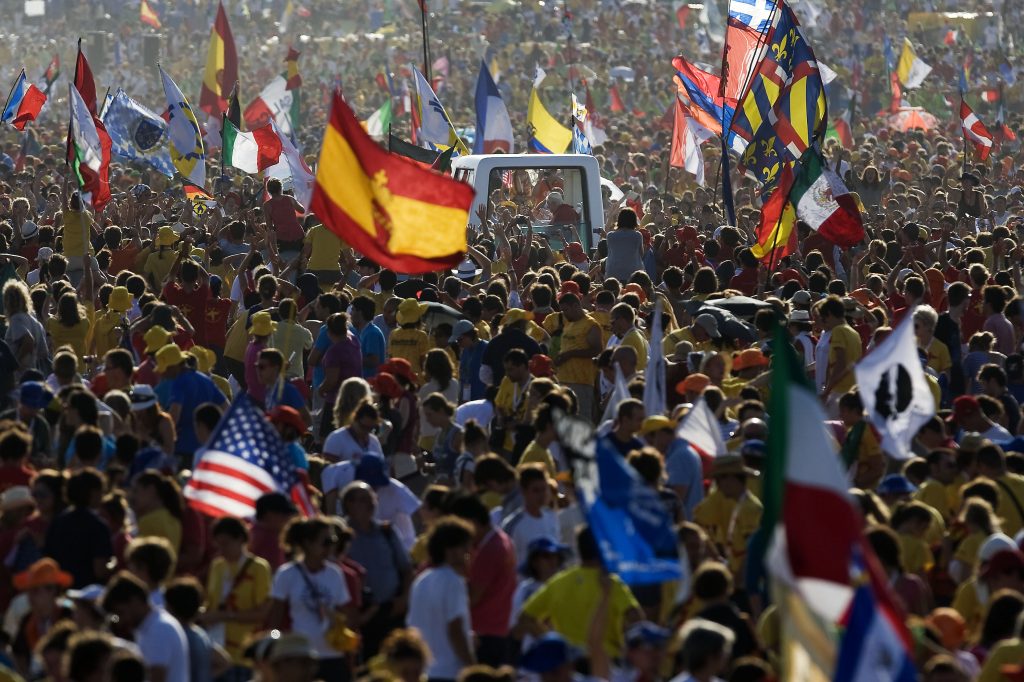
The Vatican has released the full itinerary for Pope Leo XIV’s apostolic journey to Spain from June 6 to June 12. The visit will include stops in Madrid, Barcelona, Gran Canaria and Tenerife The Holy See Press Office has released the itinerary for the anticipated apostolic journey of Pope Leo XIV to Spain, scheduled to take place from June 6 to June 12. According to the programme, the Pope will depart Rome on the morning of June 6 and arrive in Madrid at 10.30 local time, where he will be received at Adolfo Suárez Madrid-Barajas Airport before attending a welcome ceremony at the Royal Palace. He will then make a “courtesy visit to Their Majesties the King and Queen of Spain” and take part in a “meeting with authorities, civil society and the diplomatic corps”, during which he is due to deliver an address. In the evening, he is scheduled to visit the operators and those assisted by the social project “CEDIA 24 hours” before presiding at a “prayer vigil with young people in Plaza de Lima”. On June 7, the Pope will celebrate Mass in Plaza de Cibeles, followed by a Corpus Christi procession. Later that afternoon, he will meet privately with members of the Order of Saint Augustine at the Apostolic Nunciature. The day will continue with a gathering titled “Building Networks with the World of Culture, Art, Economy and Sport” at the Movistar Arena, where he is expected to speak, before concluding with a private dinner at the residence of the cardinal archbishop of Madrid. The programme for June 8 centres on meetings with political and ecclesial authorities. The Pope will meet the Prime Minister at the Apostolic Nunciature before travelling to the Congress of Deputies for a “meeting with members of the Spanish Parliament”, at which he will give an address. He will then meet the bishops of Spain at the headquarters of the Episcopal Conference. In the evening, he will take part in a “prayer and homage to the Virgin of Almudena in the Cathedral of Santa María de la Almudena”, before attending a “meeting with the diocesan community at Real Madrid FC’s Santiago Bernabéu Stadium”. On June 9, the Pope will meet the volunteers who have made the trip possible at IFEMA Madrid before departing for Barcelona. Upon arrival, he will pray the midday office at the Cathedral of the Holy Cross and Saint Eulalia and later preside at a prayer vigil at the Lluís Companys Olympic Stadium. The following day includes a visit to the “Brians 1” penitentiary centre, which, when combined with “Brians 2” on the same site, is the largest prison in Catalonia, where he will greet inmates and staff. He will then travel to Montserrat for the “prayer of the Holy Rosary at the Abbey of Our Lady of Montserrat”, an abbey which saw many of its monks murdered in the Spanish Civil War and subsequently became a symbol of Catalan nationalism. The Holy Father will have a meal with the 70 or so Benedictine monks of the abbey, who have recently celebrated 1,000 years of the monastery. Returning to Barcelona, he will meet representatives of diocesan charity and assistance organisations before celebrating Mass at the Basilica of the Holy Family, which will include the inauguration of the Tower of Jesus Christ. On June 11, the Pope will travel to Las Palmas de Gran Canaria, where he will meet organisations involved in receiving migrants at the port of Arguineguín. The Canary Islands are one of the main entry points for migrants trying to enter the EU, as the Spanish archipelago sits just off the coast of northwestern Africa and is considerably easier to access for African migrants than other parts of Europe. Later on the 11th day, the Pope will address bishops, priests, deacons, Religious and pastoral workers at the Cathedral of Saint Anne before celebrating Mass at the Gran Canaria Stadium. The final day of the visit, June 12, will see the Pope travel to Santa Cruz de Tenerife. He is scheduled to meet migrants at the “Las Raíces” centre and take part in a gathering focused on “the realities of migrant integration in the Plaza del Cristo de La Laguna”. The visit will conclude with Mass in the port of Santa Cruz de Tenerife, followed by a farewell ceremony and departure for Rome in the afternoon, with arrival at Fiumicino expected at 20.10 local time. The six-day visit is the first papal trip to the country in almost a decade and a half. Pope Emeritus Benedict XVI visited in 2011 as part of the country’s World Youth Day celebrations. However, Pope Francis did not travel to Spain during his 13-year pontificate, creating a general sense that the Catholic country is overdue a papal presence. The Spanish Episcopal Conference is organising the visit, with financing partially sourced from private donations and a 10,000-person volunteer team coordinated by the Archdiocese of Madrid.
May 6, 2026
Vatican synod reports propose new model for choosing bishops
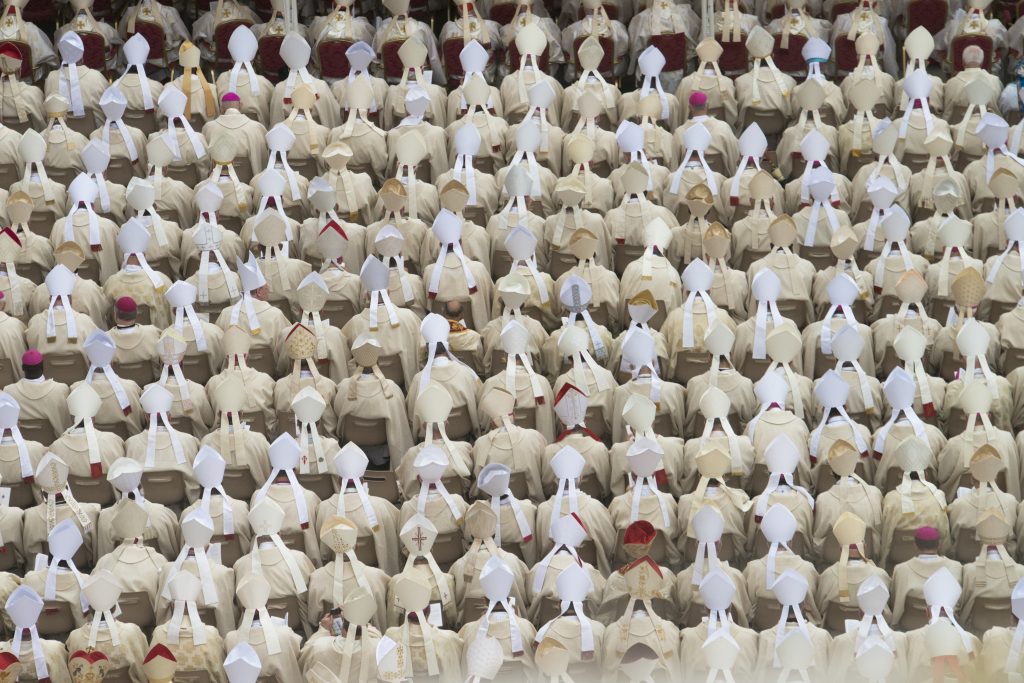
New Vatican synod reports set out proposals to widen consultation in the selection of bishops and introduce new methods for addressing doctrinal questions The Vatican has released new synodal reports outlining proposed criteria for the selection of bishops and new methods for addressing doctrinal and pastoral questions. The texts, published by the General Secretariat of the Synod of Bishops and overseen by Cardinal Mario Grech, include the first part of the final report of Study Group No. 7 on some aspects of the person and ministry of the bishop (in particular: criteria for selecting candidates to the episcopacy, the judicial function of bishops, the nature and structure of ad limina Apostolorum visits) from a missionary synodal perspective, together with the final report of Study Group No. 9 on theological criteria and synodal methodologies for shared discernment of emerging doctrinal, pastoral and ethical issues. Introducing the documents, Cardinal Grech said: “Discernment lies at the heart of selecting a bishop,” a motif in line with the wider synodal emphasis on listening and participation. The report on bishops states that “there is no shepherd without a flock, and no flock without a shepherd”. It sets out a number of qualities expected of candidates, including the ability to “build communion”, “engage in dialogue”, and demonstrate “deep knowledge of local cultures”. It also calls for apostolic nuncios to adopt “a synodal and missionary profile”, adding that they should be capable of recognising those same characteristics in potential candidates for the episcopate. A more structured consultation process is proposed for dioceses approaching an episcopal succession. The report states: “As an episcopal succession approaches, the bishop is to convene the presbyteral council and the diocesan pastoral council, whose members express, in a collegial manner, an opinion on the needs of the diocese and submit to the bishop – in a sealed envelope – the names of priests they consider suitable for the episcopate.” It adds: “Where possible, consultation is also to include the cathedral chapter, the finance council, the lay council, and representatives of consecrated persons, young people and the poor.” The document further recommends that consultation should involve “an equivalent number of consecrated men and women, laymen and laywomen” in order “to bring out the truth as fully as possible”. Provision is also made for the ongoing formation of clergy, with the suggestion that dedicated teams be established to assist bishops. In cases of a vacant see, the report proposes the creation of diocesan committees that may be consulted by the apostolic nuncio “to clarify the state of the diocese, the profile of the new shepherd, and possible candidates”. Alongside these measures, the report calls on the dicasteries of the Roman Curia to review their procedures “in a more synodal direction” and suggests the introduction of periodic independent evaluations of the selection process. The companion report on theological discernment proposes what it describes as a “change of paradigm” in addressing difficult questions facing the Church. Drawing on the witness of the early Church in the Acts of the Apostles, it highlights the importance of unity amid cultural diversity. It states that the term “emerging” should be preferred to “controversial” when referring to such questions, explaining that “the aim is not merely to resolve problems but to build the common good through relational conversion, shared learning and transparency”. The document introduces what it calls the “principle of pastorality”, adding that “there can be no proclamation of the Gospel without taking responsibility for the interlocutor, in whom the Spirit is already at work”. It sets out three methodological steps: “listening to ourselves, listening to reality, and convening different forms of knowledge”, and reiterates that “conversation in the Spirit remains the privileged tool for developing an ecclesial culture of synodality”. The report also indicates areas where these methods are to be applied, including the experience of Catholics with homosexual tendencies and questions relating to active nonviolence. It emphasises the importance of testimony, stating that lived experience should serve as “the starting point for paths of ethical and theological discernment”. The publication of the synodal reports of Study Groups No. 7 and No. 9 represents a structural reconfiguration within the Church, as both documents shift the centre of gravity from a hierarchical model towards one governed by process, consultation and “discernment”. This begins in the framing of Study Group No. 7. Under “Purpose and Scope” (p. 3, §a–b, e–g), the report states: “The Assembly calls for a review of the criteria for selecting candidates for the episcopate, balancing the authority of the apostolic nuncio with participation of episcopal conferences. There are also requests to expand consultation with the faithful People of God…” It continues: “The relevant canons of the Code of Canon Law … must be adapted in accordance with the synodal spirit of the following proposals.” The subordination of canon law to a “synodal spirit” reverses the traditional order, and while it does not explicitly say so, it places the Church’s law within a contemporary process. The shift becomes more pronounced in the section on discernment within the local Church (pp. 5–6, §c–g). The report states: “The bishop must convene the presbyteral council and the diocesan pastoral council … each of these bodies will collegially formulate a written opinion … [and] submit … the names of priests … suitable for the episcopate.” It adds: “Where circumstances allow, the cathedral chapter, the diocesan finance council, the lay council, the unions of consecrated men and women, and diocesan groups that institutionally represent youth and the poor should also be convened.” This is not consultation in the traditional sense, but formalises a structured, representative process of nomination. The inclusion of “groups that institutionally represent youth and the poor” introduces categories that are sociological rather than ecclesial and are not rooted in God. Historically, while acclamation by clergy and people existed, it was precisely curtailed to avoid factionalism and politicisation. The same dynamic appears in the section on a vacant see (pp. 6–7, §b–d): “A Committee for the Provision of the Local Church is established … composed of two diocesan priests … two consecrated men or women and two laypersons … The nuncio relies on this committee … to receive opinions on possible candidates.” In effect, this creates a standing local body that mediates between Rome and the diocese in the nomination of a bishop. The proposed model, even if not formally altering doctrine, introduces a practical expectation of local participation that approximates a nomination process. The development continues in the criteria for bishop candidates themselves (p. 4, §b–c): “It is necessary to consider … his ‘synodal competencies’ … openness to complexity, a disposition towards innovation, the ability to adapt to new situations.” These criteria stand alongside, and risk displacing, the traditional requirements set out in canon 378: sound doctrine, good morals, piety and prudence. The emphasis shifts from what a bishop is to how he operates within a process. If Study Group No. 7 alters governance, Study Group No. 9 addresses doctrine more directly. In its introductory framework (pp. 3–6), the report states that the synodal process “calls for a conversion of heart and mind as well as a transformation of practices” and explicitly prioritises method: “priority to ‘how?’ … favouring ‘the account of the lived experience of the People of God, read and interpreted ecclesially in the light of Revelation’ rather than ‘abstract theoretical assumptions’.” This is a decisive methodological claim. It shifts the starting point of theological reflection from revealed truth, as authoritatively taught, to experience interpreted within a communal process. The report makes this explicit in its call for “a paradigm shift” and a “shared commitment to a historical, experiential, and practical hermeneutics that is genuinely human” (p. 8 ff.). The tension becomes acute in the application of this method. In the section on “emerging issues” (p. 23 ff.), the report selects the experience of persons with same-sex attraction as a test case. The annexed testimonies are not incidental illustrations; they are the material for discernment. Annex A1 (Portugal) states: “The real sin was not my love, but my lack of trust in His desire for my fulfilled life.” It describes a same-sex partner as a “husband” and rejects approaches centred on chastity. Annex A2 (USA) is more explicit: “My sexuality isn’t a perversion, disorder, or cross; it’s a gift from God… If I could choose to be gay, I would.” The difficulty lies in how the report uses these testimonies. They are presented as voices to be “listened to” within a process of discernment that seeks “possible pathways”. The underlying pattern across both documents is therefore the same: the Church hierarchy is reframed as facilitation. While not alien to Catholic life, this is a sign a rebalancing that places pressure on the Church’s traditional understanding of herself. Photo credit: Jeffrey Bruno from New York City, United States – Canonization 2014- The Canonization of Saint John XXIII and Saint John Paul II, CC BY-SA 2.0, https://commons.wikimedia.org/w/index.php?curid=32427716
May 6, 2026
Benedictine Abbot Primate says the Latin Mass has a ‘lasting place’ in the Church
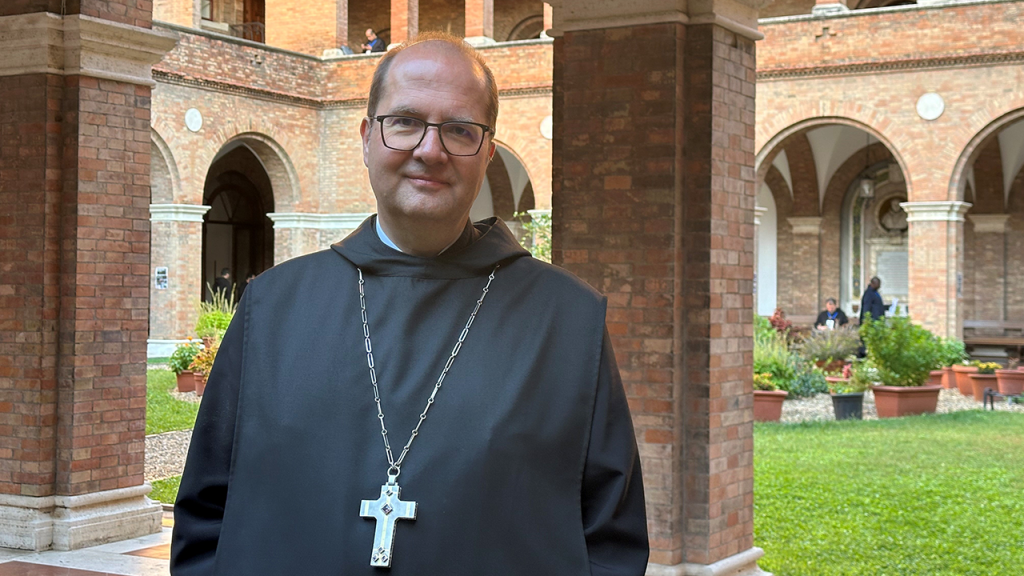
The Abbot Primate of the Benedictines has said the Traditional Latin Mass has secured a lasting place in the Church and should be permitted in some areas The Abbot Primate of the Benedictines has said that the TLM has acquired a lasting place within the Church and “should be permitted, at least in some areas”. Fr Abbot Jeremias Schröder, who has held the office since September 2024, made the remarks while reflecting on developments in monastic life at Rome’s Sant’Anselmo. He pointed to the lived experience of Benedictine communities, where the older and newer forms of the liturgy continue to exist side by side. “Among us Benedictines, traditional liturgy and modern liturgy coexist in a very harmonious way,” Abbot Schröder said. Abbot Schröder added that within the Confederation there are “about ten abbeys that celebrate according to the old rite, most of them in France”, many belonging to the Solesmes Congregation, where the majority nevertheless use the post-conciliar missal. He also referred to the group of monasteries associated with the Abbey of Fontgombault, as well as Le Barroux and its daughter houses, noting their full integration within the wider Benedictine family. Reflecting on the broader question, he said: “After Pope Benedict opened doors here, it will no longer be possible to completely eradicate the old form. We have brothers and sisters who have built their religious lives on this form of prayer and Mass. This has now also gained a place in the Church and should be permitted, at least in some areas.” His remarks came as he described monastic life as marked by contrasting trends across different regions. Some communities, he said, are in visible decline, while others have experienced unexpected renewal. “We’re dealing with two opposing movements,” he said. “On the one hand, there are indeed communities that are slowly dying out, and managing this transition well is a major challenge. And then there are others that had already been written off but are managing to recover.” He cited the case of Georgenberg Monastery in Tyrol, where a planned winding down did not take place after new members joined the community. “I was actually supposed to wind it down, so to speak, but then a few new members joined, and the community is now vibrant again,” he said. Asked whether stricter observance plays a decisive role in the survival of religious houses, he rejected a simple distinction. “I don’t know if strictness is the right distinguishing criterion,” he said, instead pointing to continuity and the internal life of communities as more significant factors. “If there are no new members for a long time, something breaks down. The quality of community life is very important. You can sense whether there are shared goals and a good sense of togetherness. Such monasteries always attract people,” he said, adding: “I am confident that this way of life will not die out.” On practical questions affecting contemporary monastic life, he said that the use of smartphones and social media is handled at the level of individual monasteries. “Each monastery decides that for itself,” he said, though he stressed that the issue must be addressed during formation. “It absolutely has to be a topic in novitiate training, and renunciation has to be practised,” Abbot Schröder said, noting that in some cases this includes handing in mobile phones during the novitiate. The extent of restrictions, he added, varies according to the character of each community, with more contemplative houses likely to adopt stricter approaches than those engaged in pastoral or educational work. He also referred to the growing use of artificial intelligence within ecclesiastical settings, particularly in multilingual contexts. “This applies especially to simultaneous interpretation at synods and assemblies,” Abbot Schröder said. “And I must say, simultaneous interpretation via AI works really well.” Abbot Jeremias Schröder joined St Ottilien Archabbey in Germany as a novice in 1984. In October 2000 he was elected archabot. In 2015, he was selected to take part at the Fourteenth Ordinary General Assembly of the Synod of Bishops as one of the elected representatives of the International Union of Superiors General. In 2024 he was elected as Abbot Primate of the Benedictine Confederation.
May 5, 2026
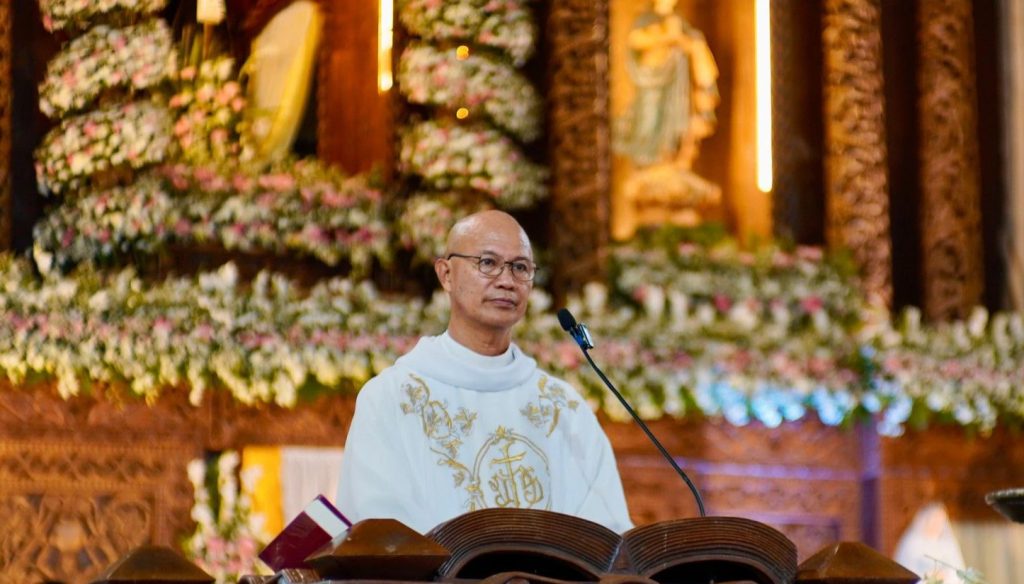
Bishop-designate of Tagbilaran withdraws weeks before ordination
In the Philippines, Father Gerardo Fortich Saco Jr. has withdrawn from his appointment as Bishop of Tagbilaran less than two months after his nomination, halting his scheduled ordination and leaving the diocese without a bishop Father Gerardo Fortich Saco Jr. has withdrawn from his appointment as Bishop of Tagbilaran, a regional diocese in the Philippines, less than two months after his nomination by the Holy See. The priest announced that he would not proceed with his episcopal ordination, which had been scheduled for May 26 at the Cathedral of Saint Joseph the Worker, bringing an abrupt halt to his succession to the see. In a statement addressed to the faithful of the diocese, Father Saco said his decision followed a period of discernment and reflection. “It comes from a deep awareness of my own human limitations and inadequacies,” he said, confirming what he described as a “change of heart” after initially accepting the appointment. He asked for understanding from clergy and laity alike, while making clear that he would continue in priestly ministry. “Please be assured of my continued commitment as a priest to journey with you in faith in the Risen Lord, who never abandons us in moments of trial and need,” he said. The Holy See announced his appointment on March 25. At the time, Father Saco was serving as diocesan administrator of Tagbilaran, a role he had held since 2025 following the transfer of the previous bishop to the Archdiocese of Cebu, the countries largest. His withdrawal leaves the diocese without a bishop, with no immediate indication of when a new appointment may be made. Father Saco, a native of Tagbilaran, was ordained to the priesthood on April 26, 1993. His priestly ministry began with parish assignments and also included time abroad. He served on missions in Libya between 2001 and 2003 and later worked as a visiting priest in a parish in New York. He later assumed wider diocesan roles, serving as episcopal vicar for the laity from 2015 to 2021 and subsequently taking on senior administrative responsibilities. He was appointed vicar general in 2023 before becoming diocesan administrator. Withdrawals from episcopal appointments after their announcement remain uncommon, particularly so close to the date set for ordination. In such cases, the reasons are not always made public, and the process returns to the Holy See for consideration of a new candidate.
May 5, 2026
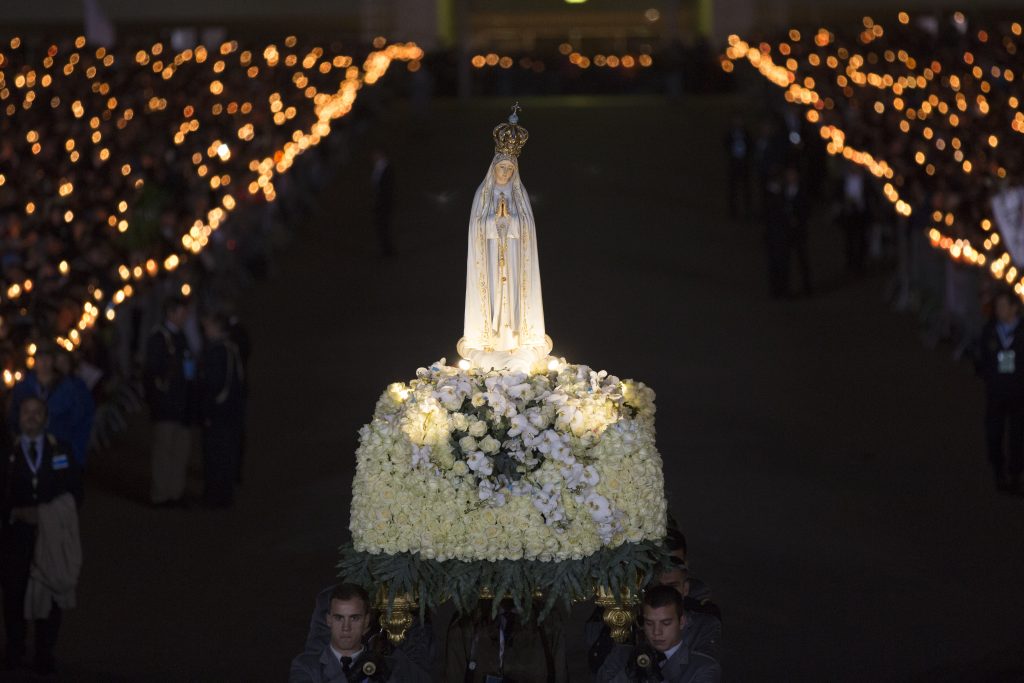
May: the month of Mary
The Church has long dedicated the month of May to Mary. Br René Stockman, former Superior General of the Congregation of the Brothers of Charity, reflects on how Catholics can use the month to renew their devotion to Our Lady and let her example transform their lives It remains a pious devotion to honour Mary in a special way during the month of May. Pilgrimages, praying the rosary together, reciting her litany, giving a special place to a statue of Mary: these are time-honoured customs that we would do well to uphold. Even in the most austere church, a statue of Mary will never be missing. The presence of debates on whether or not to officially recognise the title of Mary as Co-Redemptrix says something about the importance she had in the work of salvation. Even if it is not desirable to enshrine this in dogma, we can hardly deny her cooperation. There is only one person who may bear the title of Mother of God, because she brought the God-man Jesus into the world at the Incarnation. From this, a rich popular devotion has developed around the person of Mary, and countless images of her have been created. Pilgrimages to Lourdes, Fatima and other places where Mary once appeared continue to draw large crowds, and there we encounter the most diverse people. This is not a matter that attracts only simple, devout souls, or the sick who hope for a cure. It is striking that dioceses, which struggle to keep their parishes alive, with church closures and the repurposing of churches as an almost logical consequence, see remarkable success in their Marian shrines. After all, it is there that they can most easily and directly reach their faithful. Just as Mary was once the link between heaven and earth, she continues to connect us today. Here she certainly deserves a renewed understanding of her title as Mary Mediatrix. Mary enables people who are completely estranged from their church and parish life to reconnect with the faith through her. She never intended to be the end goal, but always the path to her Son: through Mary to Jesus. What St Louis de Montfort emphasised in his devotion to Mary at the end of the seventeenth century, Pope St John Paul II sought to depict on his coat of arms with the “M” of Mary pointing to the “cross” of Jesus. “Totus tuus,” entirely yours, was his motto, also a phrase from that same St Louis de Montfort with which he sought to express his total devotion to Jesus through Mary. The fact that the Reformation criticised the place Mary occupied in the Church – and that Vatican II therefore cautiously devoted only a chapter to Mary in its constitution “Lumen Gentium” and did not grant her a separate document – had precisely to do with the danger of forgetting Mary’s proper place and placing her alongside or even above her Son. That is why the expression “through Mary to Jesus” is the best formulation one can conceive of when speaking of Mary in our life of faith. From this we come to the question of what Mary can and may still mean today in our life of faith and, more broadly, in our lives as such. This will, of course, be interpreted by each person in their own way, but we may already cite a number of words and virtues that are particularly applicable to her. At the Annunciation, we encounter Mary as the devout woman who is open to the word of the Lord, listens to it patiently and manages to give this totally unexpected event a central place in her life. Her “yes” will sound to many today like a threat to personal freedom, and a curtailment of the self-determination that has become so important to so many. It puts an end to the myth that we can have total control over the course of our lives. We must indeed dare to take our lives into our own hands, actively participate in social life and strive to respond positively to the expectations placed upon us, but at the same time we must remain open to the unexpected that, as it were, befalls us, and discover new perspectives and challenges within it. In the language of faith, this means that, like Jesus himself, we must constantly ask ourselves what God’s will is in our lives, and realise that what unexpectedly befalls us may well be precisely what God is asking of us at that moment. Mary teaches us to recognise God’s hand in our lives and not to flee from events that occur outside our plans. People, circumstances and even setbacks can be placed in our path to help us discover our true calling. But often we only see in hindsight the positive impact this unexpected event has had on our lives. Mary accepts without seeing everything and without even understanding everything, but she trusts that God will not abandon her. Mary receives a special mission when she learns that she will become the Mother of God, but that does not affect her humility; quite the contrary. She calls herself the humble handmaid who lets it be done “according to Thy word.” Is humility not the most threatened virtue, and is the world not being damaged by people who consider themselves better than others? The pride and lust for power that stem from this are corrupting our society, and we see the consequences of this on both the micro and macro levels. What we see magnified in today’s tyrants, we also see all around us and, in all honesty, must often recognise in ourselves as well, or at least the tendency towards it. Pride, envy and arrogance are the dangerous trio that claim so many victims today. There is only one remedy capable of countering this: namely, humility, the antithesis of pride. With her boundless humility, Mary brings us back to the human being as we were created by God and of whom He said it was good. She helps us on our way to restoring the broken harmony within us and to truly becoming what we were created to be and what we are called to be: human beings in whom the likeness of God’s image may rise up within us. At the foot of her Son’s cross, Mary receives the commission to become the mother of all who wish to walk with Him. She is a mother who does not flee from suffering but excels in compassion. Entering St Peter’s Basilica in Rome, the first thing one encounters is Michelangelo’s famous Pietà. Beyond the immense artistic value of this sculpture, it radiates above all the compassion of a woman who takes her dead son into her arms and wordlessly calls on us to become compassionate people as well. Extreme suffering can only be eased by the presence of fellow human beings who do not abandon those who are suffering. The greatest suffering experienced by the elderly stems from the feeling that they no longer matter in society and have been abandoned by everyone. It is a loneliness that leads them to the desperate question of whether they are still wanted in this society and whether it would not be better to end their lives. When, as a child, I regularly visited an elderly great-aunt at the nursing home where she lived, I was deeply moved by an even older woman whom I always saw sitting with a rosary in her hand and who told me that Mary was her only comfort. In addition to the example of compassion that Mary radiates, she has evidently taken very seriously the mission she received from her Son to become the mother of many, of all, and has given and continues to give shape to this in many ways. For that elderly woman who had no one left, there was only Mary, who remained close to her in a mystical way and kept her company. The encounter with that woman left a deep impression on me and also strengthened my devotion to Mary. Perhaps this month of May can be an excellent opportunity to give Mary a place in our lives in a renewed way. Through Mary to Jesus.
May 5, 2026