

Latest
Vatican and US embassy clarify Iran ambassador’s papal honour
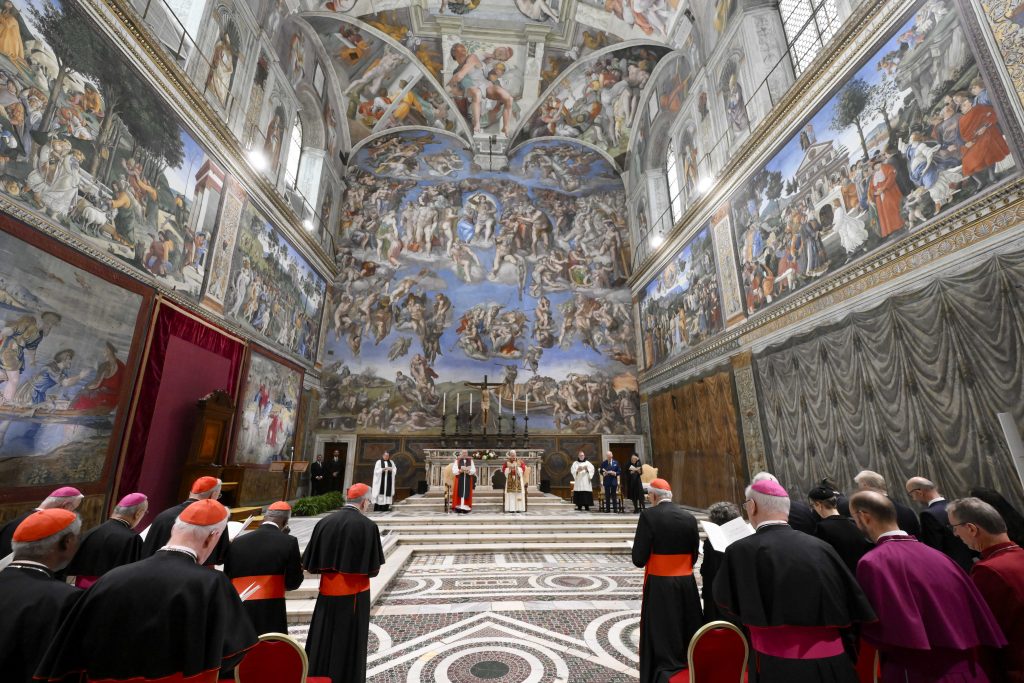
The Vatican and the United States Embassy to the Holy See have issued clarifications after Iranian media reports claimed Pope Leo XIV had personally granted a special honour to Iran’s ambassador to the Holy See The Vatican and the United States Embassy to the Holy See have both issued clarifications after Iranian media reports claimed that Pope Leo XIV had personally granted a special honour to Iran’s ambassador to the Holy See. Mohammad Hossein Mokhtari, the Iranian ambassador, was among 13 diplomats who received the Grand Cross of the Order of Pius IX during a ceremony held in the Vatican on May 12 for ambassadors who had completed at least two years of service accredited to the Holy See. Iranian state-linked outlets described the award as a significant gesture by the Pope towards Tehran, with some reports claiming the distinction recognised the ambassador’s efforts “to promote messages of peace, justice, and opposition to warmongering”. Iranian press suggested that “the award and the pope’s denunciation of the aggression are closely linked to the ongoing efforts of the Iranian embassy at the Vatican to promote messages of peace, justice, and opposition to warmongering”. The reports prompted criticism on social media and led to public clarification from both the Vatican and the American diplomatic mission to the Holy See. In a statement published online, the United States Embassy to the Holy See said: “Contrary to some reports, Pope Leo has not bestowed an exclusive special honour on the Iranian Ambassador to the Holy See. This decoration is given to all accredited ambassadors to the Holy See after 2+ years of service and has been standard practice for many years.” The Holy See press office confirmed the same account in comments to journalists, stating that the honour “is an award bestowed upon ambassadors after two years of service at the Holy See”. The Vatican added: “Yesterday, the Sostituto presented it to 13 ambassadors, including Iran’s ambassador.” The ceremony took place on the anniversary of Pope Leo XIV’s election and was presided over by Archbishop Paolo Rudelli, the substitute for general affairs of the Secretariat of State (Sostituto), who presented the insignia and official parchments to the diplomats. The certificates accompanying the awards were signed by Cardinal Pietro Parolin, the Vatican Secretary of State. The Order of Pius IX, also known as the Pian Order, is one of the principal papal orders of knighthood and is regularly conferred upon heads of state, royalty and ambassadors accredited to the Holy See. Although the Supreme Order of Christ and the Order of the Golden Spur formally rank above it, both honours have effectively fallen dormant. In practical diplomatic terms, the Order of Pius IX is regarded as the Holy See’s highest active distinction. The order was restored by Blessed Pius IX in 1847, though its origins date back to the 16th century under Pope Pius IV. Recent recipients have included King Charles III, who received the honour during his visit to the Vatican, as well as King Juan Carlos I of Spain, King Albert II of Belgium and King Carl XVI Gustaf of Sweden. Recipients of the Grand Cross wear a dark blue sash edged in red, together with a silver breast star bearing the insignia of the order. The original members of the order historically formed part of the papal lay court and accompanied the pope in ceremonial and official duties within the Apostolic Palace.
May 15, 2026
Argentina’s bishops warn middle class is turning to Church charities in economic crisis
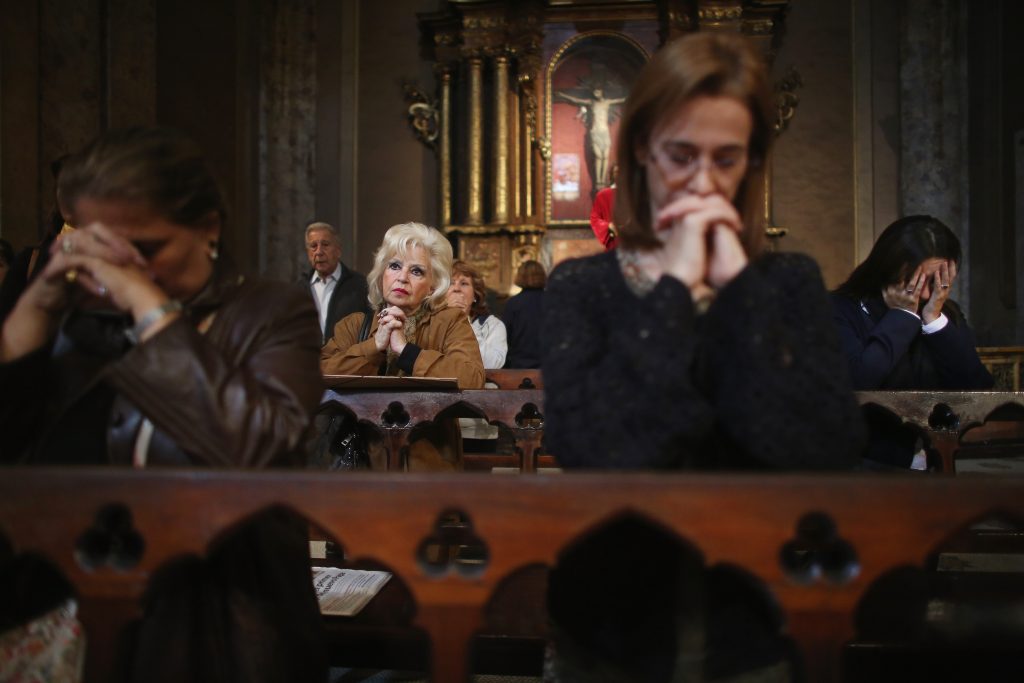
Argentina’s Catholic bishops have warned that worsening economic conditions are driving growing numbers of middle-class families to seek help from Church charities Argentina’s Catholic bishops have warned of a deepening social crisis as increasing numbers of middle-class families turn to Church charities for food and assistance amid worsening economic conditions. Archbishop Marcelo Daniel Colombo, president of the Argentine Episcopal Conference, said Church agencies were seeing a sharp rise in demand from people who, until recently, had not required support. “There are people from the lower middle class who are coming to ask for help from Caritas,” Archbishop Colombo told Futurock radio. “Many who are poor today were helping us at Caritas a few months or years ago. We are also very distressed by the increase in the number of middle and lower-class people coming to ask for help.” The archbishop also warned of rising homelessness across the country. “The number of people experiencing homelessness is very alarming,” he said. Argentina is currently in a period of economic instability, with inflation, unemployment and cuts to public spending putting growing pressure on households. Catholic charities and diocesan agencies have reported increased demand at parish soup kitchens and food distribution centres in recent months. Archbishop Colombo defended the principle of social justice and stressed the responsibility of the state to support the vulnerable. “Social justice is the dimension of support provided by the state to those who are vulnerable,” he said. “No one should be left out of social life when they lack the necessities to live.” The archbishop also rejected suggestions that the Church was acting as a political opposition to President Javier Milei’s government. “I think that sometimes some sectors of the leadership believe that the Church is a political opposition, and the truth is that we are not,” he said. “We try to offer our perspective where our poorest people are invisible.” The bishops’ conference has already intervened publicly over concerns surrounding funding for disability care. In April, the conference sent a letter to Argentina’s health minister, Mario Lugones, warning that Church-run institutions caring for disabled people were facing severe financial strain because of delayed and insufficient state payments. “Many of them are in an extremely serious economic crisis, due to the delay and insufficiency of state contributions, which has generated deficits that compromise essential aspects of care, such as food, medicines and the payment of salaries of those who dedicate their lives to the care of people with disabilities,” the bishops wrote. Concerns over deteriorating social conditions were echoed this week during a meeting between Church representatives and several Peronist mayors from Greater Buenos Aires. Among those attending were Jorge Ferraresi of Avellaneda, Mariel Fernández of Moreno, Andrés Watson of Florencio Varela, Ariel Sujarchuk of Escobar, Fernando Espinosa of La Matanza and Pablo Descalzo of Ituzaingó, alongside Gabriel Katopodis, infrastructure minister for the Province of Buenos Aires. Following the meeting, Ferraresi said participants had shared “the harsh assessment of the situation in our neighbourhoods and the need for all sectors to join forces to bring work and food to the homes of every Argentine family”. Archbishop Colombo later confirmed that the bishops were considering further dialogue initiatives in response to the crisis. Born in Buenos Aires in 1961, Archbishop Colombo studied canon law at the Pontifical University of St Thomas Aquinas after his ordination to the priesthood in 1988 for the Diocese of Quilmes. He later served as rector of the diocesan seminary and held several legal and pastoral roles before being appointed Bishop of Orán by Pope Benedict XVI in 2009. In 2013, Pope Francis transferred him to the Diocese of La Rioja before appointing him Archbishop of Mendoza in 2018. He became president of the Argentine bishops’ conference in November 2024 after previously serving as vice-president and second vice-president of the body. There is a historical precedent in Argentina for interventions from the Catholic hierarchy. When the country gained independence at the beginning of the 19th century, the Church was deeply embedded in the formation of the Argentine state. Juan Manuel de Rosas, the longtime governor of Buenos Aires who dominated Argentine politics between 1829 and 1852, enjoyed the support of the Church, with the exception of the Jesuit order, whom he expelled from the country. Many bishops also supported the rise of Juan Domingo Perón in the 1940s, though relations soured in the 1950s as Perón pursued anti-Catholic policies. The military dictatorship of the 1970s and 1980s was a particularly contentious time for the Church, with clerics at times unsure where to lend their support. This was perhaps most famously seen in the kidnapping of Jesuit priests Orlando Yorio and Franz Jalics, who, it has been claimed, were abducted after Jorge Bergoglio, later Pope Francis and then provincial superior of the Jesuits, withdrew protection from the priests. In the country’s more than 40 years of democracy, the Church has continued to make itself heard, opposing the secularisation introduced by President Raúl Alfonsín in the 1980s and leading the charge to defend the rights of the unborn during subsequent presidencies. Archbishop Colombo’s opposition therefore follows a well-trodden pattern, though it is noticeable that he is deliberately avoiding direct “political opposition” and instead focusing on the plight of the poor.
May 14, 2026
St Leo the Great on the Ascension and the triumph of faith
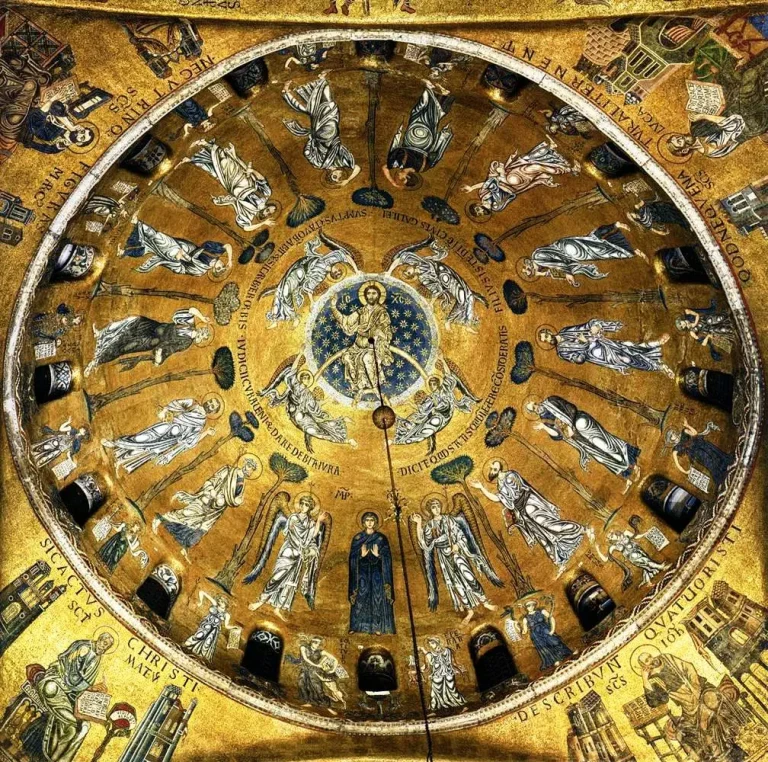
In this sermon for the Feast of the Ascension, St Leo the Great reflects on Christ’s triumph over death, the transformation of the Apostles after the Ascension, and the call for Christians to lift their hearts above earthly things and towards eternity The mystery of our salvation, dearly beloved, which the Creator of the universe valued at the price of His blood, has now been carried out under conditions of humiliation from the day of His bodily birth to the end of His Passion. And although even in the form of a slave many signs of Divinity have beamed out, yet the events of all that period served particularly to show the reality of His assumed Manhood. But after the Passion, when the chains of death were broken, which had exposed its own strength by attacking Him, Who was ignorant of sin, weakness was turned into power, mortality into eternity, contumely into glory, which the Lord Jesus Christ showed by many clear proofs in the sight of many, until He carried even into heaven the triumphant victory which He had won over the dead. As therefore at the Easter commemoration, the Lord’s Resurrection was the cause of our rejoicing, so the subject of our present gladness is His Ascension, as we commemorate and duly venerate that day on which the Nature of our humility in Christ was raised above all the host of heaven, over all the ranks of angels, beyond the height of all powers, to sit with God the Father. On which Providential order of events we are founded and built up, that God’s Grace might become more wondrous, when, notwithstanding the removal from men’s sight of what was rightly felt to command their awe, faith did not fail, hope did not waver, love did not grow cold. For it is the strength of great minds and the light of firmly faithful souls unhesitatingly to believe what is not seen with the bodily sight, and there to fix one’s affections whither you cannot direct your gaze. And whence should this Godliness spring up in our hearts, or how should a man be justified by faith, if our salvation rested on those things only which lie beneath our eyes? Hence our Lord said to him who seemed to doubt Christ’s Resurrection until he had tested by sight and touch the traces of His Passion in His very Flesh: “Because you have seen Me, you have believed: blessed are they who have not seen and yet have believed” (John 20:29). In order, therefore, dearly beloved, that we may be capable of this blessedness, when all things were fulfilled which concerned the Gospel preaching and the mysteries of the New Testament, our Lord Jesus Christ, on the fortieth day after the Resurrection in the presence of the disciples, was raised into heaven, and terminated His presence with us in the body, to abide on the Father’s right hand until the times Divinely foreordained for multiplying the sons of the Church are accomplished, and He comes to judge the living and the dead in the same flesh in which He ascended. And so that which till then was visible of our Redeemer was changed into a sacramental presence, and that faith might be more excellent and stronger, sight gave way to doctrine, the authority of which was to be accepted by believing hearts enlightened with rays from above. This Faith, increased by the Lord’s Ascension and established by the gift of the Holy Ghost, was not terrified by bonds, imprisonments, banishments, hunger, fire, attacks by wild beasts, or refined torments of cruel persecutors. For this Faith throughout the world not only men, but even women, not only beardless boys, but even tender maids, fought to the shedding of their blood. This Faith cast out spirits, drove off sicknesses, and raised the dead; and through it the blessed Apostles themselves also, who after being confirmed by so many miracles and instructed by so many discourses, had yet been panic-stricken by the horrors of the Lord’s Passion and had not accepted the truth of His Resurrection without hesitation, made such progress after the Lord’s Ascension that everything which had previously filled them with fear was turned into joy. For they had lifted the whole contemplation of their mind to the Godhead of Him that sat at the Father’s right hand, and were no longer hindered by the barrier of corporeal sight from directing their mind’s gaze to That Which had never quitted the Father’s side in descending to earth, and had not forsaken the disciples in ascending to heaven. The Son of Man and Son of God, therefore, dearly beloved, then attained a more excellent and holier fame, when He betook Himself back to the glory of the Father’s Majesty, and in an ineffable manner began to be nearer to the Father in respect of His Godhead, after having become farther away in respect of His manhood. A better instructed faith then began to draw closer to a conception of the Son’s equality with the Father without the necessity of handling the corporeal substance in Christ, whereby He is less than the Father, since, while the Nature of the glorified Body still remained, the faith of believers was called upon to touch not with the hand of flesh, but with the spiritual understanding the Only-begotten, Who was equal with the Father. Hence comes that which the Lord said after His Resurrection, when Mary Magdalene, representing the Church, hastened to approach and touch Him: “Touch Me not, for I have not yet ascended to My Father” (John 20:17): that is, I would not have you come to Me as to a human body, nor yet recognise Me by fleshly perceptions: I put you off for higher things, I prepare greater things for you. When I have ascended to My Father, then you shall handle Me more perfectly and truly, for you shall grasp what you cannot touch and believe what you cannot see. But when the disciples’ eyes followed the ascending Lord to heaven with upward gaze of earnest wonder, two angels stood by them in raiment shining with wondrous brightness, who also said: “You men of Galilee, why do you stand gazing into heaven? This Jesus Who was taken up from you into heaven shall so come as you saw Him going into heaven” (Acts 1:11). By which words all the sons of the Church were taught to believe that Jesus Christ will come visibly in the same Flesh wherewith He ascended, and not to doubt that all things are subjected to Him on Whom the ministry of angels had waited from the first beginning of His Birth. For, as an angel announced to the blessed Virgin that Christ should be conceived by the Holy Ghost, so the voice of heavenly beings sang of His being born of the Virgin also to the shepherds. As messengers from above were the first to attest His having risen from the dead, so the service of angels was employed to foretell His coming in very Flesh to judge the world, that we might understand what great powers will come with Him as Judge, when such great ones ministered to Him even in being judged. And so, dearly beloved, let us rejoice with spiritual joy, and let us with gladness pay God worthy thanks and raise our hearts’ eyes unimpeded to those heights where Christ is. Minds that have heard the call to be uplifted must not be pressed down by earthly affections; they that are foreordained to things eternal must not be taken up with the things that perish; they that have entered on the way of Truth must not be entangled in treacherous snares, and the faithful must so take their course through these temporal things as to remember that they are sojourning in the vale of this world, in which, even though they meet with some attractions, they must not sinfully embrace them, but bravely pass through them. For to this devotion the blessed Apostle Peter arouses us, and entreating us with that loving eagerness which he conceived for feeding Christ’s sheep by the threefold profession of love for the Lord, says: “Dearly beloved, I beseech you, as strangers and pilgrims, abstain from fleshly lusts which war against the soul” (1 Peter 2:11). But for whom do fleshly pleasures wage war, if not for the devil, whose delight it is to fetter souls that strive after things above with the enticements of corruptible good things, and to draw them away from those abodes from which he himself has been banished? Against his plots every believer must keep careful watch that he may crush his foe on the side whence the attack is made. And there is no more powerful weapon, dearly beloved, against the devil’s wiles than kindly mercy and bounteous charity, by which every sin is either escaped or vanquished. But this lofty power is not attained until that which is opposed to it be overthrown. And what so hostile to mercy and works of charity as avarice, from the root of which spring all evils? And unless it be destroyed by lack of nourishment, there must needs grow in the ground of that heart in which this evil weed has taken root the thorns and briars of vices rather than any seed of true goodness. Let us then, dearly beloved, resist this pestilential evil and follow after charity, without which no virtue can flourish, that by this path of love whereby Christ came down to us, we too may mount up to Him, to Whom with God the Father and the Holy Spirit is honour and glory for ever and ever. Amen.
May 14, 2026
Phoenix auxiliary bishop attacks anti-synodality book backed by Cardinal Müller
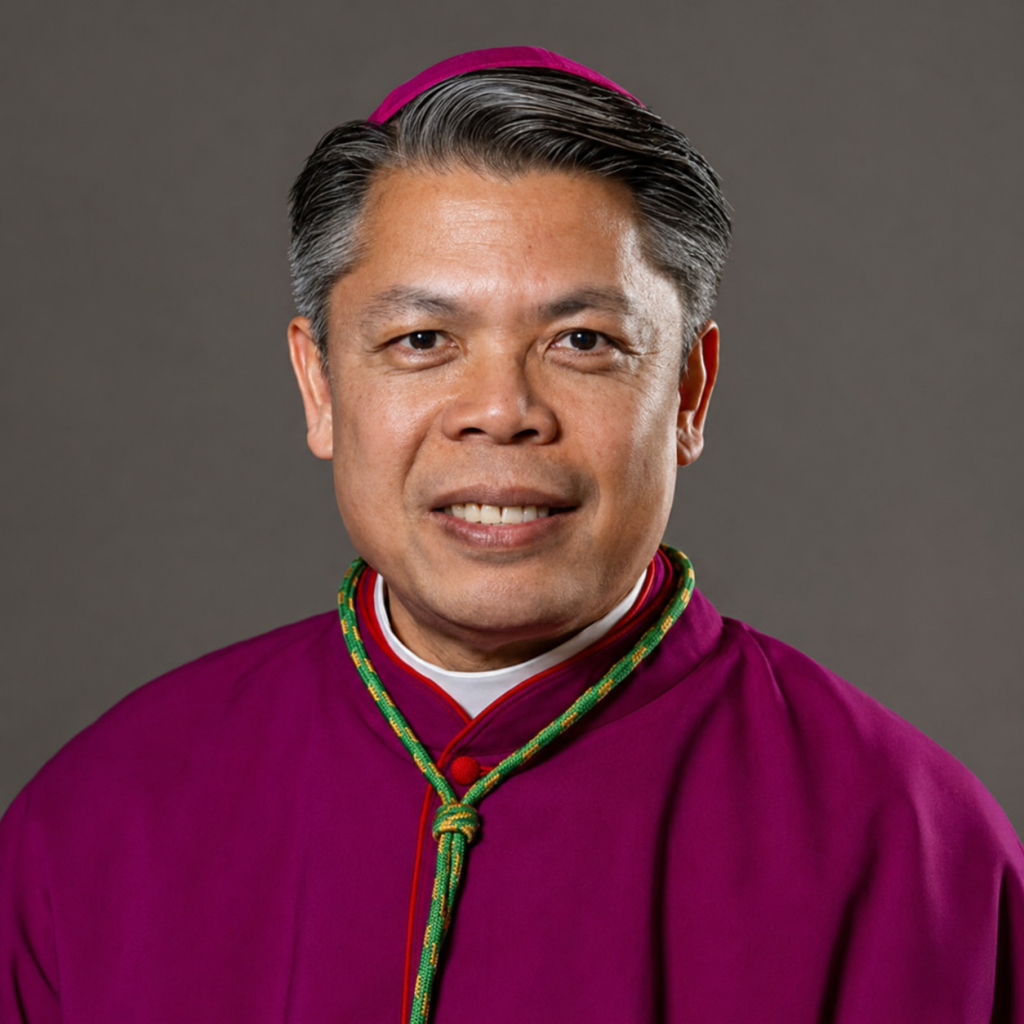
Bishop Peter Dai Bui of Phoenix has sharply criticised The Trojan Horse in the Catholic Church, a book backed by Cardinal Gerhard Müller which argues that the Synod on Synodality seeks to undermine the Church’s hierarchical structure Bishop Peter Dai Bui, auxiliary bishop of the Diocese of Phoenix, has written a scathing criticism of the book The Trojan Horse in the Catholic Church , published by the lay group Catholics for Catholics (CforC). The Trojan Horse in the Catholic Church is written under the pseudonym “Father Enoch” by a priest-author, with Cardinal Gerhard Müller writing the foreword. The book, written in the form of a two-part essay entitled “Replacing the Hierarchical Structure of the Church” and “Overturning the Moral Order”, seeks to explain how the Synod on Synodality is intended to undermine the governing hierarchy of the Church. In the book, Fr Enoch writes that “the first goal of the Synod is to invert the hierarchical structure of the Church as instituted by her Founder and our Saviour, Jesus Christ” because it “undercuts the authority or sacred power with which He endowed the Apostles and their successors in office, the bishops: to teach, to govern, and to sanctify”. Fr Enoch argues that this attempt to overturn the hierarchy of the Church found its roots in the pontificate of Pope Francis. He writes that during the Francis era it appeared that “nothing had changed in the Vatican”, while in fact “a quiet revolution had been taking place”. Fr Enoch argues that this revolution originated in the 2014 Synod on the Family and the subsequent 2016 Apostolic Exhortation Amoris Laetitia , reaching a crescendo in the 2023 Synod on Synodality. Fr Enoch takes issue with the term “synodality”, quoting Cardinal Burke saying that it has “no history in the doctrine of the Church and for which there is no reasonable definition”. He also argues that “the hierarchical structure of the early Church [was] deeply embedded already in the early second century”, making its removal contrary to Christianity. The second part of the book focuses on the “homosexual agenda”, particularly Amoris Laetitia , Fiducia Supplicans and various actions taken by the German Synodal Way. The essay is a damning assessment of the pontificate of Pope Francis, portraying much of it as a “push for the homosexualist agenda”. In his response, Bishop Peter Dai Bui argues that synodality is “as old as Emmaus, as old as the Council of Jerusalem, where the apostles and the whole community gathered to discern together and wrote”. He specifically uses the example of Emmaus as an illustration of synodality, where the two disciples were “trying to make sense of a catastrophe they could not yet name”. Bishop Dai Bui defends synodality as not being a challenge to the deposit of faith, which “cannot be subject to revision by any synod, any council, or any pope”, but rather as the Church asking itself how to “walk with human beings whose lives are complicated, wounded and often far from the fullness of what the Church proclaims?” On Catholics for Catholics specifically, the article claims that it is “not a theological institute and it holds no magisterial standing”. It also argues that Cardinal Müller’s reflections are “contested by others who were present in the same room”. Responding to the criticism, Catholics for Catholics pointed to what it described as the contradiction of a bishop criticising the opinions of a lay group while defending synodality as an exercise in listening to the laity. John Yep, president of Catholics for Catholics, stated: “Why is the bishop reprimanding us as lay Catholics trying to defend the Faith?” He also pointed out that while Catholics for Catholics is not a theological institute, “the former head of the Doctrine of the Faith, Cardinal Gerhard Müller, as well as its very accomplished author, would most definitely qualify as theologians who carry weight.” Referencing the bishop’s use of the story of Emmaus, Yep commented: “If Jesus Christ would have received that ‘Synod Report’ [the final report of Study Group 9, which addressed homosexual behaviour] on the road to Emmaus, he would have said the same thing – or worse – than what he told the two disciples when they erred in their understanding. ‘O Stulti!’, Christ said, which literally means ‘O stupid or foolish ones.’ I wonder if Christ would say the same thing today to any bishop promoting this new ‘synodal Church.’” Catholics for Catholics, with the assistance of its supporters, has been able to send a copy of The Trojan Horse in the Catholic Church to every bishop in the United States and to more than a quarter of the country’s priestly population. Yep argued that Bishop Bui’s attempt to discredit the book had resulted in greater support, adding: “For that, we are grateful.” Bishop Peter Dai Bui was appointed auxiliary bishop of Phoenix by Pope Leo XIV in December 2025 and received episcopal consecration the following February. A native of Vietnam, his family fled the country after the war and arrived in the United States when he was a child. He was ordained a priest in 2003 and was initially a member of the Legionaries of Christ. He later left the congregation and was incardinated into the Diocese of Phoenix in 2009.
May 14, 2026
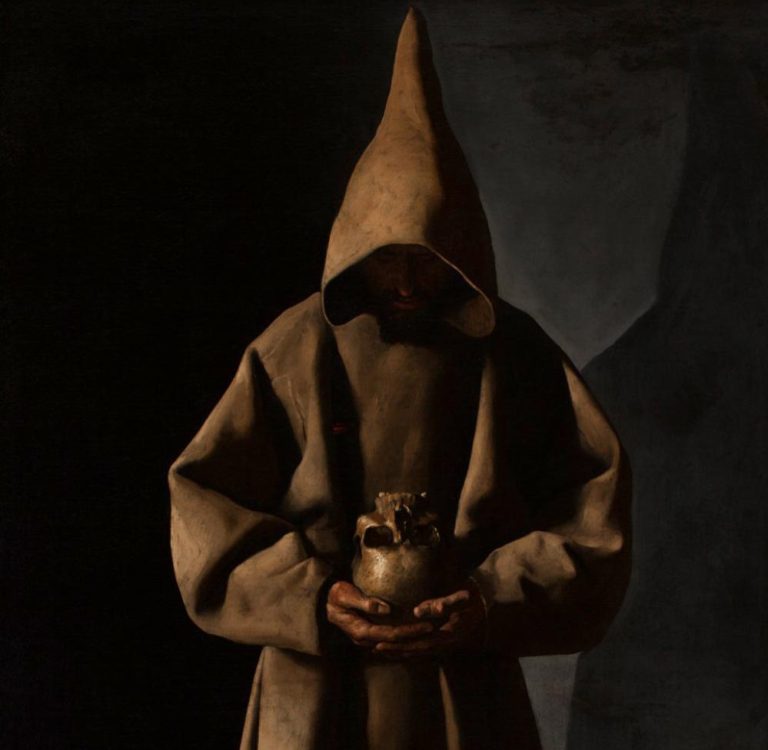
St Francis and memento mori
Brother René Stockman reflects on St Francis of Assisi, “Sister Death” and the Christian tradition of memento mori There comes a moment in our lives when we will have to let go of everything and we will appear before God. During our lives, we are afraid to show who we truly are. We erect so many façades that we try to keep standing with great effort. Eventually, however, they will all collapse, like a house of cards swept away by the wind. It reminds me of St Francis of Assisi, who stripped himself of his clothes twice. The first time was when he bade farewell to his lavish life and left his home. In the market square of Assisi, in the presence of his parents, the bishop and a whole crowd, he returned his clothes to his parents. For him, it was a sign of a radical break with his past and, at the same time, the start of a completely new life that he himself called his marriage to Lady Poverty. The bishop covered his nakedness with his cloak to protect him from the covetous eyes of the crowd, but also to welcome him into the Church through this symbolic act. From then on, through his radical living out of the Gospel, he would rebuild the Church of Jesus, which he had received as a special calling from the Lord Himself. What he had initially understood purely in material terms, he would later experience as a spiritual calling and, as a friar, he would travel about to proclaim the Good News everywhere. With this act, a new religious order was born: the mendicant friars, who simultaneously became urban Religious and set in motion an entirely new movement within the Church. By divesting himself of his clothes, he sought to embody the evangelical virtue of poverty in the most radical way and, from then on, to walk through the world as an authentic human being, in the footsteps of his and the world’s only Master, Jesus Christ. In doing so, he broke with a part of the Church that lived behind a façade of wealth and was far removed from the ideal of the Gospel. Later Francis divested himself of his clothes for the second time. This time, not of the lavish costume he wore before his conversion, but of his meagre habit. This time he need not fear covetous glances, for his body had been completely emaciated by illness. He wanted to return to the place where it all began, to his Assisi, to end his hymn of praise to life there and to embrace Sister Death with total surrender. Francis wanted to appear before God as we know humanity from the story of creation: naked and without any form of desire. As soon as he had made the Lord the sole centre of his life he began a process of purification that brought him into total harmony with God, with himself, with his fellow human beings and with all of creation, so that he was ready to appear before God as He had originally created humankind. Before the Fall, humankind was naked, yet felt no shame. Shame arose when desire made its entrance, as described in the Book of Genesis: “Then the eyes of both of them were opened, and they realised they were naked. So they sewed fig leaves together and made loincloths for themselves” (Gen. 3:7). They had lost the innocence of their origin and hid themselves even from their Creator: “I heard your thunder in the garden, and I was afraid because I am naked; so I hid myself” (Gen. 3:10). A little further on, we read how God Himself gave clothes to man to cover him: “And Yahweh God made garments of skin for the man and his wife, and He clothed them” (Gen. 3:21). This repeated emphasis on the fundamental change in the perception of the body has a profound meaning. It constitutes the turning point at which the original human is transformed into the historical human, to use the terms of Pope St John Paul II. With the Fall comes a rupture in the original harmony in which man was created, and selfishness makes its entrance. The worm of pride has turned man’s natural desire and his innate passion for the good into a covetous gazing and grasping at one another. The original inner peace is disrupted, and the other becomes a threat. From then on, humanity must protect itself from its fellow humans and also cover its nakedness. Its unguarded relationship with God is also disrupted. We can truly speak of a broken harmony on all levels. Was this harmony then fully restored in Francis? No, for we know from history how, in the last years of his life, he truly had to struggle with his fellow brothers, who were taking a different path. Perhaps he watched with pain as the radicalism of the early beginning was gradually abandoned. What had begun as a protest against the way the Gospel was being violated, both in society and in the Church, gradually grew into a greater conformity with what he had prophetically renounced. But even in the struggle he waged against this, an inner resignation came over him, and he saw that he had to relinquish that as well. Ultimately, it was not he who had founded his order; this was the work of God, for which he was merely an instrument. He even accepted temporary care in the bishop’s palace, where the bishop spared no effort in his good care. On the surface, his stay with the bishop seemed to contradict his ideal of radical poverty, but even that became relative in light of his total surrender to God’s will. We thus see in Francis a total internalisation and a further purification of all his relationships, through which they also grew in harmony. The moment he wished to lie completely naked on the ground to welcome death is therefore the moment he was able to surrender his life in a completely harmonious way into the hands of God. He lay there as Christ hung naked on the Cross, and as Adam had been created by God. He could echo Job: “Naked I came from my mother’s womb, and naked I shall return there; the Lord gave, and the Lord has taken away. Blessed be the name of the Lord” (Job 1:21–22). We can learn much from Francis, but perhaps most of all from this moment, in which he was able to surrender himself completely and entrust himself to God without reserve, without pretence, in his full reality as a naked human being. For that is the path we must all take and for which we must prepare ourselves. It is always about that total self-emptying, through which we grow towards the image that God has placed within us of Himself and that we were allowed to behold in a completely clear and perfect way in Jesus Christ. It is only through the imitation of Christ, by conforming ourselves to Him, that the likeness to the image of God can grow within us. Everyone is called to do this in his or her own way, from and with his or her own personality, in his or her own time and in the concrete circumstances of life at that moment. For Francis, this was in Assisi, at the end of the 12th and the beginning of the 13th century. For him, it was about that radical following of Christ. His radical experience of poverty was his way of becoming totally conformed to Christ and ultimately appearing before his Creator as a new Adam. There are many aspects of Jesus Christ that can inspire us to follow in his footsteps. Within religious life, this is expressed through the many and highly diverse charisms lived out by the members of various orders and congregations. They are like different windows through which one looks out at the world from a large apartment building. Each charism has its own distinct character, and every member of the order or congregation is called to live out this charism as a radical following of Christ. No one charism is better than another, provided it is lived out in a consistent and radical way. But this is not reserved solely for Religious. Every believer is called to take Jesus Christ as his or her model and to follow Him from within his or her own reality. The ultimate goal is that we prepare ourselves for that final encounter with the Lord, in which our death becomes the transition to full life with and in God. We must view our lives as a journey towards this final destination, and we will constantly have to make choices about which path to follow to get there. Sometimes we will lose our way and stray onto wrong paths, but then there is always the Lord who, through His example, can bring us back onto the right path. Here God’s mercy comes into view, which, through His forgiveness, continually encourages us to leave the wrong steps of the past behind, so that we may set out on the right path with renewed courage. We all know that we will eventually arrive at our destination, but we do not know how or when. That is why it is important to prepare ourselves thoroughly and not let death take us by surprise. We should actually become friends with our death, thinking of it daily, not as a terrifying fate looming over us, but as a friendly guest whom we look forward to with a reassuring and even longing heart. This need not be a macabre message, but we realise that for many death is seen as a threatening bogeyman and is therefore truly detested. It is telling that Francis was only able to complete his famous “Canticle of the Sun” in the final phase of his life, concluding with the greeting to “Sister Death”. For him, too, this was a process of growth, through which he became fully reconciled with death and truly welcomed it as a redemptive moment in his life. We, too, will have to go through that process, and it may take a few years, and for some many years, before we, like Francis, can greet death as our sister. But we must dare to set that process in motion and not run away from it, as many unfortunately do. For one day we will have to let go of everything, and leave behind everything that was dear to us on this earth. We must not let this take us by surprise, but cultivate it within ourselves as a positive process and allow it to evolve.
May 13, 2026
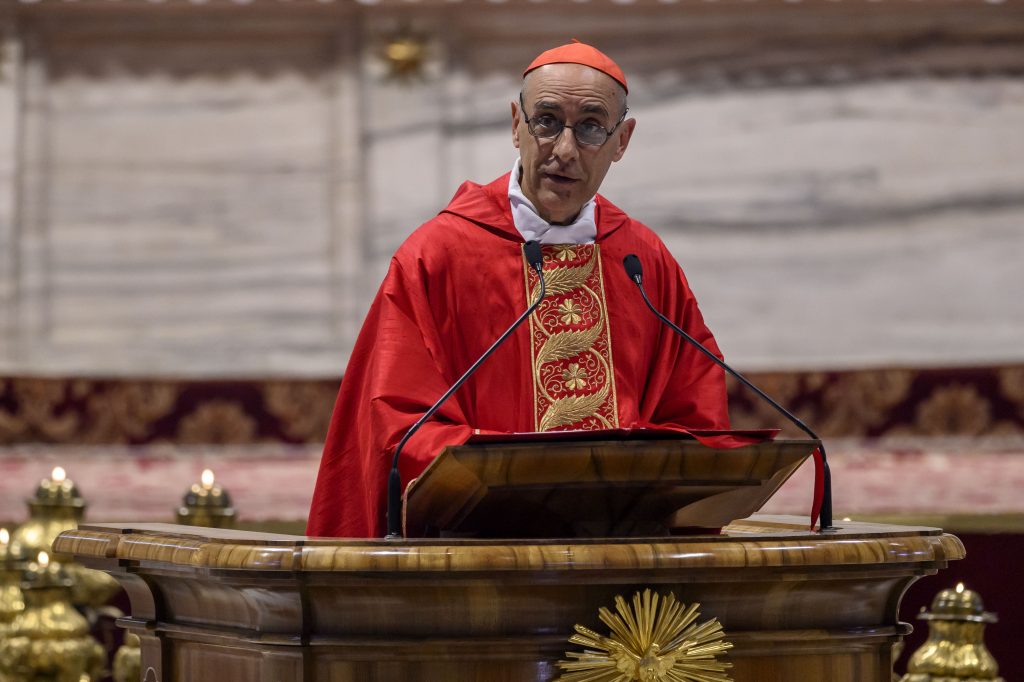
Cardinal Fernández releases statement on SSPX episcopal consecrations
Cardinal Víctor Manuel Fernández, Prefect of the Dicastery for the Doctrine of the Faith, has released a statement warning that planned episcopal consecrations by the Society of St Pius X risk constituting “a schismatic act” Cardinal Víctor Manuel Fernández has warned that the Society of St Pius X risks committing “a schismatic act” through episcopal consecrations without papal approval, in the first public intervention since the meeting with the SSPX on 12 February. In a statement released by the Dicastery for the Doctrine of the Faith on 13 May, the prefect said the planned SSPX episcopal ordinations “do not have the corresponding pontifical mandate” and reiterated the penalties attached under canon law to such an action. “The episcopal ordinations announced by the Priestly Society of Saint Pius X do not have the corresponding pontifical mandate,” Cardinal Fernández said. “This gesture will constitute ‘a schismatic act’ (John Paul II, Ecclesia Dei , n. 3), and ‘formal adherence to the schism constitutes a grave offense against God and entails the excommunication established by Church law’ ( ibid ., 5c; cf. Pontifical Council for Legislative Texts, Explanatory Note , 24 August 1996).” The statement concluded: “The Holy Father continues in his prayers to ask the Holy Spirit to enlighten the leaders of the Priestly Society of Saint Pius X so that they retrace their steps regarding the very serious decision they have taken.” The intervention followed reports earlier on Wednesday morning by Vatican correspondent Nico Spuntoni in the Italian newspaper Il Giornale that the Dicastery for the Doctrine of the Faith was preparing a text concerning the Society and the limits of its relationship with Rome. While no formal canonical decree has yet been issued, Cardinal Fernández’s statement closely resembles the warning sent to Archbishop Marcel Lefebvre shortly before the episcopal consecrations at Écône in 1988. On 17 June 1988, Cardinal Bernardin Gantin, prefect of the Congregation for Bishops, issued a public canonical warning to Lefebvre after the French archbishop announced that he intended to consecrate four bishops without pontifical mandate. “Since on June 15, 1988 you stated that you intended to ordain four priests to the episcopate without having obtained the mandate of the Supreme Pontiff as required by Canon 1013 of the 1983 Code of Canon Law, I myself convey to you this public canonical warning,” Cardinal Gantin wrote. His Eminence continued: “If you should carry out your intention as stated above, you yourself and also the bishops ordained by you shall incur ipso facto excommunication latae sententiae reserved to the Apostolic See in accordance with Canon 1382.” The letter concluded with a direct appeal to Lefebvre “in the name of Jesus Christ” to reconsider what it described as a grave act against the unity of the Church. Furthermore, the statement’s citation of a 1996 explanatory note issued by the Pontifical Council for the Interpretation of Legislative Texts recalls one of the strongest Vatican texts ever published on the canonical status of the SSPX. The 1996 document stated that the 1988 consecrations represented “the consummation of a progressive global situation of a schismatic character” and said that “the whole Lefebvrian movement is to be held schismatic”. It added: “As long as there are no changes which may lead to the re-establishment of this necessary communion, the whole Lefebvrian movement is to be held schismatic, in view of the existence of a formal declaration by the Supreme Authority on this matter.” The explanatory note also addressed Catholics attending SSPX chapels and clergy belonging to the Society. It distinguished between occasional attendance at SSPX liturgies and what it called “formal adherence to the schism”. According to the document, such adherence involved “a free and informed agreement with the substance of the schism” together with an external manifestation of separation from ecclesial communion. The text said that in the case of SSPX priests and deacons “there seems no doubt that their ministerial activity in the ambit of the schismatic movement is a more than evident sign” of formal adherence. The SSPX was founded in 1970 by Archbishop Lefebvre, a former superior general of the Holy Ghost Fathers and one of the leading conservative critics of Vatican II. Tensions between the Society and Rome escalated throughout the 1970s and 1980s over liturgical reform, ecumenism, collegiality and religious liberty. The crisis culminated on 30 June 1988 when Lefebvre consecrated four bishops at Écône without papal approval. The Holy See responded by declaring that Lefebvre, Bishop Antônio de Castro Mayer and the four newly consecrated bishops had incurred automatic excommunication. Two days after the consecrations, Pope St John Paul II issued the motu proprio Ecclesia Dei adflicta , describing the consecrations as “a schismatic act”. Relations improved significantly under Pope Emeritus Benedict XVI. In 2009 he lifted the excommunications of the four bishops as part of an attempt to facilitate reconciliation, though the Society’s canonical status remained unresolved. Pope Francis later granted SSPX priests faculties to validly hear confessions during the Year of Mercy, later extending the provision indefinitely. Local bishops were also authorised under certain conditions to delegate SSPX priests to witness marriages. Despite those concessions, doctrinal discussions between Rome and the Society have remained stalled for years, particularly over the interpretation of Vatican II and the authority of post-conciliar reforms. The Vatican statement issued on Wednesday is the first direct intervention from the doctrinal dicastery since the 12 February meeting with SSPX superior Fr Davide Pagliarani, which the dicastery described as “cordial and sincere”. The DDF reiterated that the ordination of bishops without a mandate from the Roman Pontiff would entail “a decisive rupture of ecclesial communion”, namely “a schism”, with “grave consequences for the Society as a whole”, the dicastery noted. For that reason, it proposed suspending the episcopal ordinations announced for 1 July 2026, which had been declared without papal approval. However, the SSPX rejected the proposal in a communiqué and decided to proceed with the episcopal consecrations.
May 13, 2026