

Latest
German Synodal Conference delayed
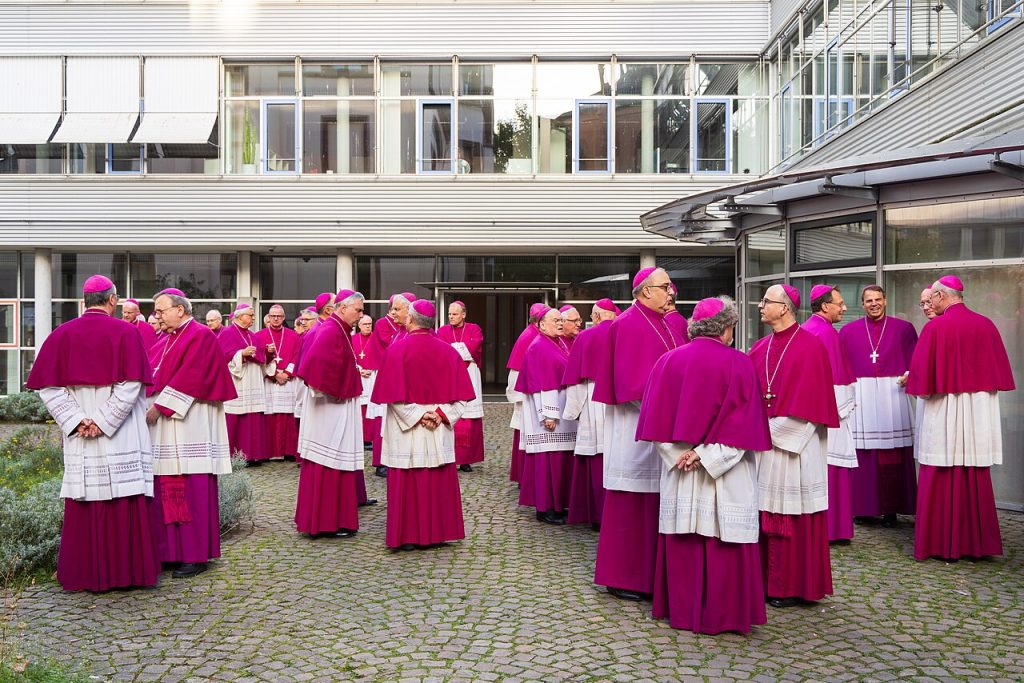
Germany’s planned Synodal Conference is unlikely to meet this November as the Vatican delays approval over its statutes Germany’s planned Synodal Conference is unlikely to meet for the first time this November as originally scheduled, after continued Vatican scrutiny delayed approval of the body’s statutes. Bishop Heiner Wilmer, president of the German Bishops’ Conference, said during the Katholikentag in Würzburg that he no longer expected the inaugural gathering in Stuttgart to proceed on November 6 and 7 because discussions in Rome were still ongoing. “I personally do not expect that we will meet as early as November,” Bishop Wilmer told the broadcaster Phoenix, citing the continuing movement of the proposal “from one discussion to the next”. The Synodal Conference is intended to become a permanent national structure bringing together bishops and lay representatives to deliberate on matters affecting the Church in Germany. The proposal emerged from the Synodal Path, the reform process launched in 2019 following Germany’s abuse crisis. The Vatican has spent months examining the statutes governing the planned body, particularly the issue of joint decision-making between bishops and lay delegates. Rome repeatedly warned during the Synodal Path that no national structure could be established which diminished the authority of diocesan bishops or placed itself above the bishops’ conference. The statutes nevertheless state that the Synodal Conference would deliberate and adopt decisions on “important questions of ecclesial life of supra-diocesan significance”. Despite the delay, Bishop Wilmer insisted he remained confident that the project would eventually move forward, although he acknowledged that “some patience” would be needed while Vatican dicasteries continued their review. The postponement marks another setback for the Synodal Path, which debated proposals including blessings for same-sex couples, changes to Church teaching on sexuality, a greater role for lay governance and the possibility of women’s ordination. Although Vatican officials repeatedly criticised aspects of the process under Pope Francis, the Holy See never formally demanded that it be abandoned. Pope Leo XIV has likewise not intervened publicly against the project since his election. Bishop Wilmer’s remarks echoed those made earlier this year by Bishop Georg Bätzing of Limburg, his predecessor as president of the German Bishops’ Conference, who acknowledged that the Synodal Conference would not proceed without Roman approval. At the beginning of the year, Bishop Bätzing said it would be “a provocation” to move ahead without the consent of the Holy See. The proposed body has continued to face criticism from canon lawyers and several German bishops who argue that it risks creating a parallel structure of authority within the Church. Cardinal Rainer Maria Woelki of Cologne, Bishop Stefan Oster of Passau and Bishop Rudolf Voderholzer of Regensburg all withdrew from the Synodal Path following repeated Vatican interventions. The former Bishop of Eichstätt, Gregor Maria Hanke, also distanced himself from the initiative. The Synodal Committee preparing the future conference subsequently ceased operating directly under the German Bishops’ Conference and instead continued under the sponsorship of an association established by the remaining dioceses. Bishop Oster said in March that he would act “with the universal Church” and was waiting to see how the Vatican responded to the latest proposals. The bishop also noted that German representatives had attempted to reassure Roman officials that the conference would not possess authority over bishops in the strict canonical sense, particularly regarding the distinction between passing resolutions and making binding decisions. “I am waiting with some interest to see how Rome reacts,” the bishop added. “But fundamentally, my position is: if we do it in agreement with the universal Church, then I will participate.” The Bishop of Passau also acknowledged attempts by German representatives to reassure Vatican officials over the wording of the statutes. “The German side tried to make it clear in talks with the Vatican that ‘making resolutions’ is something different from ‘deciding’,” he said. The first meeting of the Synodal Conference had originally been scheduled for Stuttgart this November, with a second assembly planned for Würzburg in April 2027. Photo credit: By Martin Kraft – Own work, CC BY-SA 4.0, https://commons.wikimedia.org/w/index.php?curid=138224261
May 19, 2026
Vatican confirms release date, title and theme of Pope Leo XIV’s first encyclical
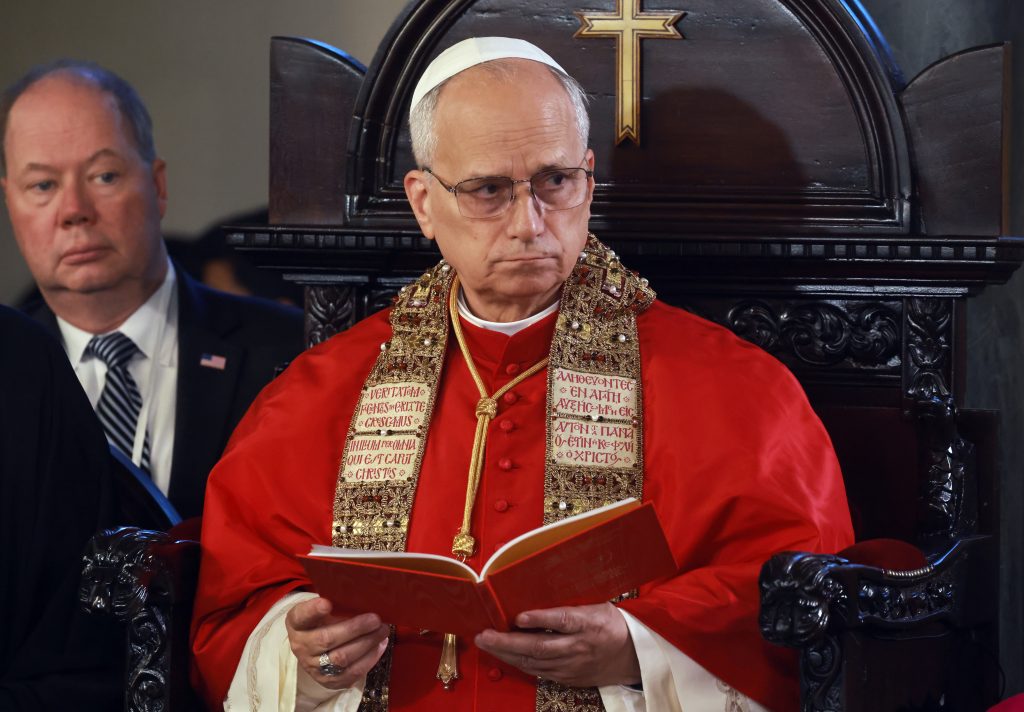
The Vatican has confirmed the release date, title and theme of Pope Leo XIV’s first encyclical The release date for Pope Leo XIV’s first encyclical has been confirmed as May 25. The title of the document has been confirmed as Magnifica Humanitas, and it will focus on preserving the human person in the age of artificial intelligence, according to Vatican News. Although the text will not be released until May 25, it will be signed on May 15, matching the date of the signing and publication of Rerum Novarum, Pope Leo XIII’s best-known encyclical, issued on May 15, 1891. The same date was also chosen in 1931 by Pope Pius XI for Quadragesimo Anno, which developed the Church’s teaching on social order and introduced the principle of subsidiarity. Thirty years later, on May 15, 1961, Pope John XXIII promulgated Mater et Magistra, focusing on economic justice and social development. May 25 also coincides with Pope St John Paul II’s Ut Unum Sint, on ecumenism, which was released on May 25, 1995, and Pope Leo XIII’s Annum Sacrum, released on May 25, 1899, which consecrated the entire human race to the Sacred Heart of Jesus. Magnifica Humanitas will be presented at 11.30am in the Vatican’s Synod Hall. Alongside the Pope, a number of significant prelates, theologians and specialists are scheduled to speak. They include Cardinal Víctor Manuel Fernández, prefect of the Dicastery for the Doctrine of the Faith; Cardinal Michael Czerny SJ, prefect of the Dicastery for Promoting Integral Human Development; Prof Anna Rowlands, a theologian and professor at Durham University; Christopher Olah, co-founder of Anthropic and head of research on the interpretability of artificial intelligence; and Prof Leocadie Lushombo IT, professor of political theology and Catholic social thought at the Jesuit School of Theology at Santa Clara University in California. Closing remarks will be given by Cardinal Secretary of State Pietro Parolin, followed by an address and blessing by the Pope. Addressing artificial intelligence, the encyclical will build on recent Vatican interest in the subject. In January 2025, the Dicastery for the Doctrine of the Faith and the Dicastery for Culture and Education issued Antiqua et Nova, a joint note on “the relationship between artificial intelligence and human intelligence”. The document said AI could bring “important innovations” but warned that it also carried the danger of deepening inequality, manipulating public opinion and expanding “the instruments of war well beyond the scope of human oversight”. It added that artificial intelligence “should not be seen as an artificial form of human intelligence, but as a product of it”, and insisted that it “should be used only as a tool to complement human intelligence rather than replace its richness”.
May 18, 2026
Paris Olympics performer Barbara Butch to direct installations inside Paris churches
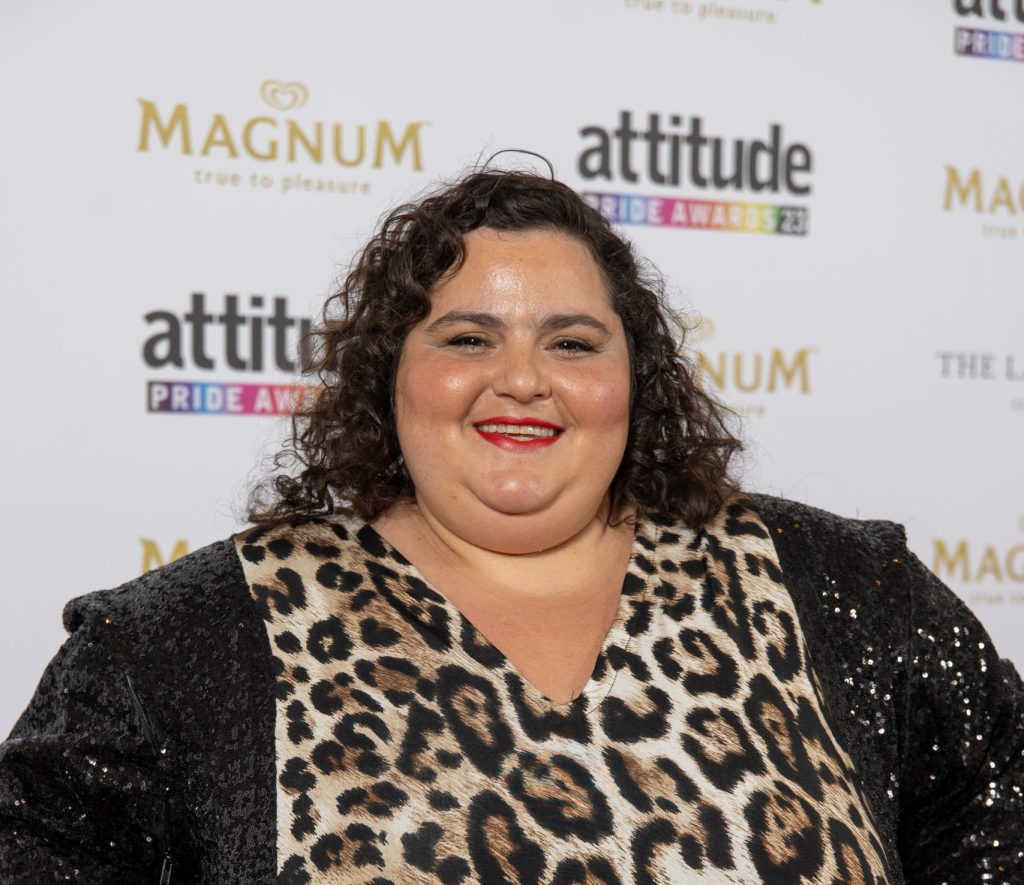
Barbara Butch, the DJ and activist who used the Olympics opening ceremony in 2024 to mock Leonardo da Vinci’s Last Supper, is set to direct a series of immersive art installations inside churches across the French capital during this year’s Nuit Blanche festival Barbara Butch, the French DJ and activist who drew international controversy during the opening ceremony of the Paris 2024 Olympic Games, is to direct a series of artistic installations inside churches across Paris during this year’s Nuit Blanche festival. The all-night arts festival, due to take place on June 6 and 7, will feature immersive projects in several historic churches under Butch’s artistic direction, according to the French Christian outlet Tribune Chrétienne . One installation, titled Sous la peau du ciel (“Beneath the Skin of the Sky”), will be staged inside Saint-Laurent Church in the French capital’s 10th arrondissement. Organisers say visitors will be invited to leave recorded “wishes” over the telephone, which will then be combined with atmospheric sounds and digitally altered to create what has been described as “living and evolving sound material”. Festival material describes the work as “an invisible membrane stretched between human hearts and the atmosphere”, adding that visitors will encounter “a living, moving sonic material, made of dispersed intimacies and celestial energies”. The installation has resulted in criticism from some Catholics in France because of Butch’s involvement in the Paris Olympics opening ceremony. During the event on July 26, 2024, Butch appeared in a performance featuring drag artists and a banquet-style tableau which many viewers said resembled Leonardo da Vinci’s The Last Supper . The segment immediately drew accusations of blasphemy and disrespect towards Christianity. The French Bishops’ Conference said afterwards that the ceremony had included “scenes of derision and mockery of Christianity”. The controversy quickly spread beyond France, with Christian leaders and politicians across Europe, Latin America and the United States condemning the performance. The World Council of Churches said many Christians around the world had been “angered” by the spectacle. Outside Christianity, Iran’s Foreign Ministry summoned the French ambassador for the insulting representation of Jesus, a prophet in Islam. Paris 2024 organisers initially said the segment had been inspired by Leonardo da Vinci’s famous depiction of Christ and the Apostles. Thomas Jolly, the artistic director of the ceremony, later disputed that interpretation and said the scene had instead been inspired by pagan imagery linked to the Greek god Dionysus. Art historians subsequently pointed to similarities with The Feast of the Gods , a 17th-century painting by the Dutch artist Jan van Bijlert. Butch defended the performance in media interviews after the backlash. Speaking to French media, she rejected accusations that the ceremony had mocked Christianity and said critics had misunderstood the artistic intention behind the sequence. Following the controversy, Butch said she had received online abuse and threats. Her lawyer later confirmed that legal complaints had been filed. Born in Paris in 1981, Butch has built a career as a DJ and LGBT activist in France. She has publicly described herself as “a fat, Jewish, queer lesbian” and has campaigned on issues linked to body positivity and lesbian visibility. She first became known on the Paris club scene after performing at venues including Rosa Bonheur and La Machine du Moulin Rouge. In recent years she has also appeared on French television and was named “LGBTI personality of the year” in 2021 by the Association of LGBTI Journalists. Nuit Blanche, first launched by the City of Paris in 2002, regularly transforms public buildings, museums and churches into exhibition spaces for modern art installations and experimental performances. Churches across the French capital have frequently hosted concerts, sound exhibitions and light displays during previous editions of the festival.
May 18, 2026
SSPX sources dismiss speculation over Fr Daniel Themann consecration
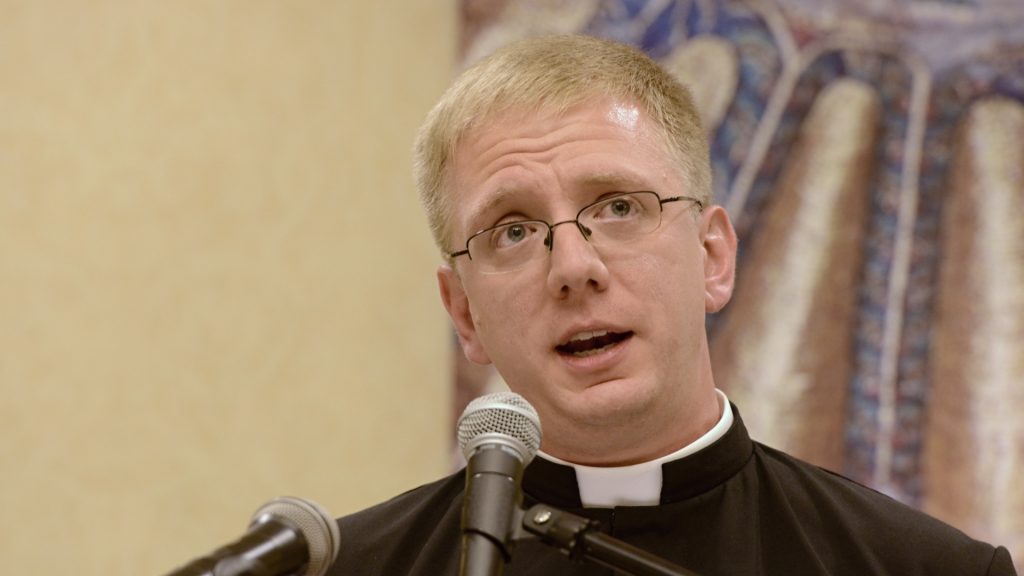
Sources close to the Society of St Pius X have dismissed speculation that Fr Daniel Themann will be among those consecrated bishop this summer Sources close to the Society of St Pius X have dismissed speculation that Fr Daniel Themann will be among the priests consecrated bishop during the Society’s expected episcopal consecrations on July 1, AdVaticanum can reveal. The Australian district superior had been widely discussed in SSPX circles in recent months as a possible candidate for episcopal consecration, particularly following the circulation of a false communiqué on April 1 claiming that decisions had already been made regarding new bishops. But multiple sources have told AdVaticanum that Fr Themann has personally indicated he would instead be reassigned to the United States and was not under consideration for consecration. One source told AdVaticanum that Fr Themann had personally moved to dampen speculation shortly after the circulation of the false April 1 communiqué, reiterating that preparations were already under way for his reassignment to the United States. The source said Fr Themann had spoken openly about the move to those working closely with him and had “spoken to the Sisters under him explicitly about it”. The source added: “It was at the start of April he spoke to Father Themann, after the fake April 1 communiqué. Father reasserted that he was going to be reassigned to the United States and that preparations are already made for a real reassignment to the US.” Another SSPX source said Fr Themann again rejected the rumours several weeks later following Mass, insisting that his future role in America had effectively already been settled and would be ongoing rather than temporary. According to the source, Fr Themann was “adamant” that he would not be among those selected for consecration. The source said: “After May 3, after celebrating a Low Mass, Father was adamant that the position in the US is now confirmed as an ongoing position and he’s not going to be selected for consecration.” A further source within the SSPX general house in Switzerland told this publication that no announcement concerning Fr Themann was expected and that clergy had become increasingly reluctant to discuss the matter because of the level of speculation surrounding the consecrations. The source said: “Fr Daniel Themann is sick of being asked one way or another, so there will be nothing.” The source added: “No one wants to make any comment even off the record, not even an anti-comment, because everything has an implication for who it may or may not be.” The SSPX has not publicly confirmed any of the names of those to be consecrated this summer. The speculation is unsurprising given that Fr Themann has emerged in recent years as one of the Society’s more prominent English-speaking superiors. An American priest, he entered the SSPX after studying industrial management and completing work in business and manufacturing before beginning priestly formation at St Thomas Aquinas Seminary in Winona, Minnesota. He was ordained priest in 2009 by Bishop Bernard Tissier de Mallerais as part of one of the seminary’s largest ordination classes. After serving in the United States and teaching at the Winona seminary, Fr Themann was appointed rector of Holy Cross Seminary in Goulburn, Australia, in 2015 by the then superior general, Bishop Bernard Fellay. During his five years as rector, Fr Themann oversaw the formation of seminarians from across the Asia-Pacific region before succeeding Fr John Fullerton as district superior of Australia and New Zealand in 2020. In that role, Fr Themann has supervised the Society’s chapels, schools and apostolates across both countries while also serving as chairman of the board of St Thomas Aquinas College in Tynong, Victoria. The Society’s last episcopal consecrations took place in 1988, when Archbishop Marcel Lefebvre consecrated four bishops at Écône, Switzerland, without papal approval, leading Rome to declare that the bishops had incurred automatic excommunication. The excommunications were later remitted by Pope Benedict XVI in 2009. Photo credit: St Thomas Aquinas Seminary
May 18, 2026
Tolkien in the Tar Heel State
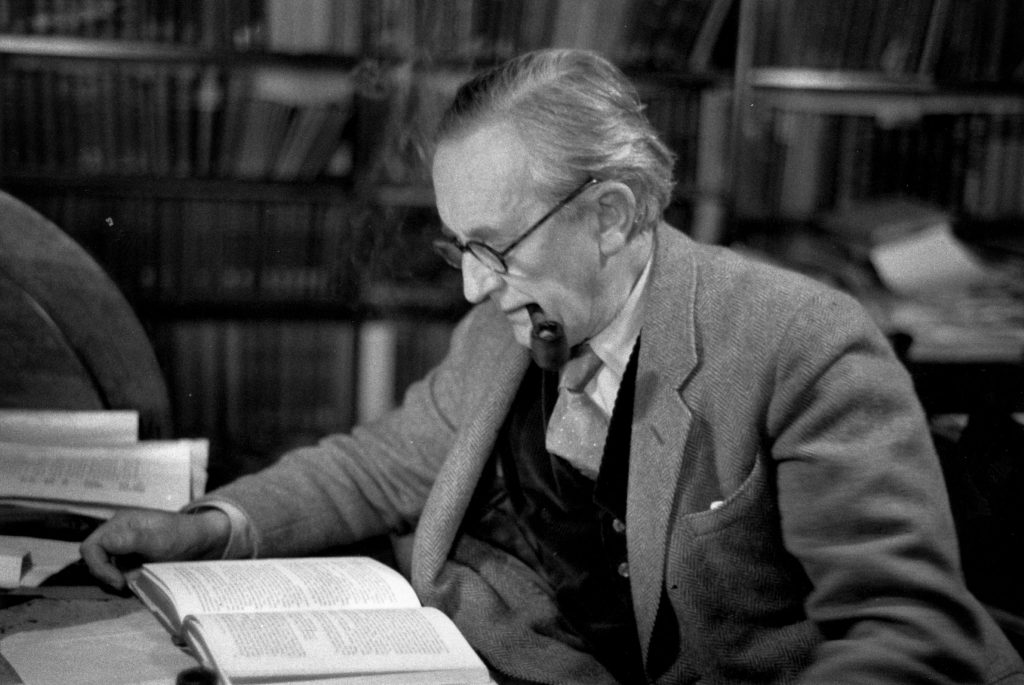
Oscar Yuill reflects on why so many American Catholics are drawn to Tolkien, Chesterton, tweed waistcoats and the world of the English Catholic literary revival, despite its collapse in the country that produced it A friend recently invited my wife and me to North Carolina for a seminary-run BBQ, chock full of vibrant Catholic families and with the promise of succulent meats, home-grown tobacco and chortling allusions to that magnificent beast, the Chesterbelloc. Indeed, I have seldom met an American Catholic, at least of a certain age, who is not immersed in the works of the 20th-century British Catholic literary revival. Photographs from my friend’s wedding, in the same Carolinian town, show toddlers dressed, it seems, for Bilbo Baggins’s eleventy-first birthday. The groomsmen hold churchwarden pipes. And the best man resembles Chesterton to a degree scarcely believable. We had not so much been invited to North Carolina as to 1930s Oxford. Why should this be so? Why is the dominant traditionalist subculture in America so keen to ape the language, liturgical preferences and sartorial eccentricities of a revival that was, arguably, a complete failure? Only in 1852, at the first Provincial Synod of Westminster, had Newman declared: “Canterbury has gone its way. The Church in England has died, and the Church lives again. Westminster and Nottingham, Beverley and Hexham, Northampton and Shrewsbury, if the world lasts, shall become names as musical to the ear, as stirring to the heart, as the glories we have lost.” It seemed for a brief period that Hilaire Belloc, G.K. Chesterton, J.R.R. Tolkien, Gerard Manley Hopkins, Muriel Spark, David Jones, Eric Gill, Christopher Dawson, Ronald Knox, Arnold Lunn and countless others were the fulfilment of Newman’s optimism, inaugurating a new epoch of triumphal cultural Catholicism. (Such, indeed, was the fear among their cultural and moral competitors, such as the Bloomsbury Group.) “Arise,” Newman went on to say, quoting Solomon; “make haste, my love, my dove, my beautiful one, and come. For the winter is now past, and the rain is over and gone. The flowers have appeared in our land.” Bernard Shaw, Hilaire Belloc and G.K. Chesterton in 1927 Yet the flowers in this “Second Spring” were to be the lilacs and “dried tubers” of Eliot’s wasteland. Many of the buds were mown down in Flanders and Ypres and Passchendaele before they could bloom. No sooner had the Catholic Church been replanted in England than all Christendom leapt to the same assisted suicide. Surviving Catholics were forced to contend, in their poems and paintings and novels, with a disintegration of truth and meaning more total than Newman could have predicted, though certainly he detected its stirrings in the spectre of theological liberalism. Even at the level of technique – Evelyn Waugh was one of the first novelists to use the stilted language of “telephonese” – the works of the post-war generation often seemed forced into mirroring the fragmentation of a morally traumatised continent. When the 1960s rolled in, the vandalism extended even to the liturgies that had given them all their only anchor in the maelstrom. (Waugh et al.’s consternation with the Mass of Paul VI is well documented.) Vocations and church attendance cratered, only now showing signs of arrest. To the likes of Wilde, a Catholic conversion was a great, romantic thing, “the only religion to die in”. To Orwell, merely half a century later, commenting on Marchmain’s deathbed conversion in Waugh’s Brideshead: “One cannot really be Catholic and grown-up.” In which case, why grow up at all? Enter, then, the American mind. The average American, particularly in their jamboree-style politics, exudes an earnestness and sincerity that we in England often find perplexing. I am far from the first to make this observation, and I wonder if it has something to do with their lack of a deep “blood memory”: centuries of political and religious strife, culminating in the horrors of Hitler and Stalin, have created in Europe a collection of more or less jaded peoples. For example, patriotism in England or France or Germany may be derided, it may be ironic, it may be defensive. But the one thing it never is, and what in America it routinely is, is perfectly natural. Innocent. Dare I say child-like. I have a son of my own on the way and am looking forward to seeing the world afresh through his eyes. I know that, in four or five years, I have only to hand him a rotten stick covered in lichen and it shall become Excalibur. Children, of course, love belonging to clubs and gangs and posses. There is nothing that a child likes so much as to have a secret society and to make no secret of it. The same could be said of Americans and, in fact, that last sentence was a quote from Chesterton about Americans; I had only to substitute the word “child”. I should be clear. None of this is a comment on the intelligence of Americans. Chesterton himself thought them rather better educated than the average Englishman. I am suggesting, rather, that, for my Carolinian friend, enthusiasm for Tolkien & Co. – and dip pens and bitter ale and tweed waistcoats and churchwarden pipes – are effectively ways in which American Catholicism, much like the American Constitution, puts old wine into new wineskins. Much as the Celtic monks of Skellig Michael, at the outermost reaches of the world, were eventually to look back Romeward for their ecclesiological integrity, it was perhaps inevitable that American Catholics fell in love with a “style” of Catholicism rooted in the soil of the mother country. Wouldn’t you long for the Shire in a nation whose defining image, according to a recent meme, is the liminal space of the glowing Shell petrol station? In the end, my wife and I were compelled to stay put. We couldn’t afford the trip. She’s also 25 weeks pregnant. Add to that an elderly greyhound, for whom finding a dog-sitter is a nightmare. As good, jaded English folk, we know, of course, that Belloc’s cherished Sussex inns are shuttered, Tolkien’s beloved Midlands scoured and Chesterton’s fence torn up with insufficient reason. Tweed is reserved for the Mogg dynasty; pipes, for rosaceous pensioners quaffing their fifth Doom Bar of the morning on a Wetherspoons patio. The Catholic literary revival failed in England: England rejected it, ceding to paganism on the one hand and Islam on the other. Americans don’t have that legacy; to them, it was never a failure. Far away, in the touching sincerity of the American imagination, it all still exists, and can exist anywhere. Christ plays in ten thousand places, including in Gastonia, NC.
May 18, 2026
A homily for the Sunday after the Ascension: Dom Alcuin Reid warns against SSPX excommunications
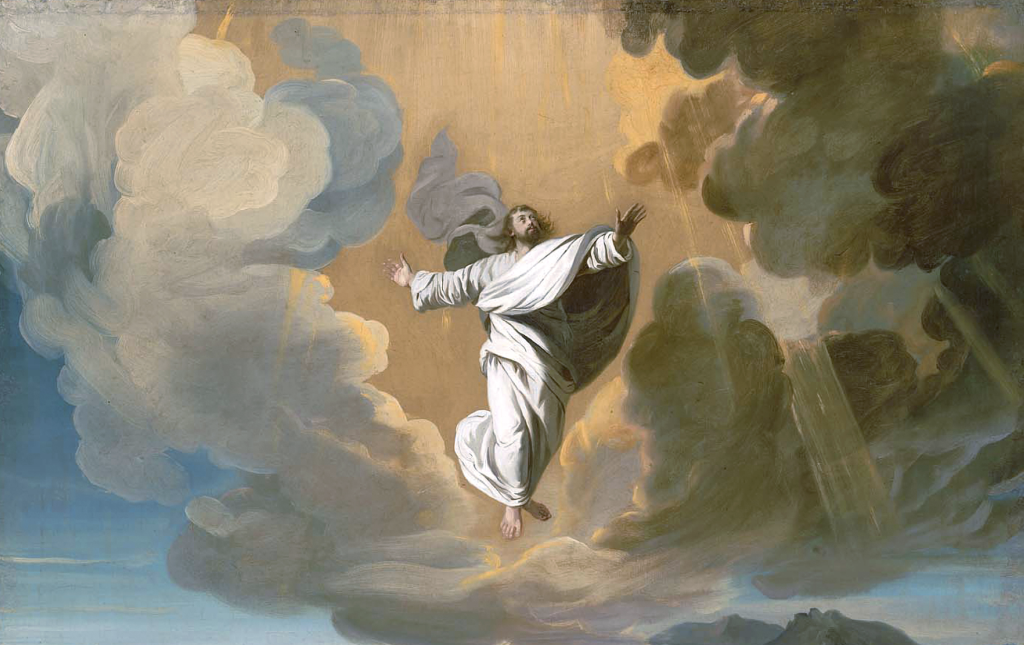
Dom Alcuin Reid warns against possible SSPX excommunications in a homily for the Sunday after the Ascension, saying Catholics attached to the older liturgical rites have faced exclusion and “ecclesiastical displacement” since Traditionis custodes In these days after the Ascension, as the Paschal candle stands extinguished and we wait in expectation and hope for the consoling fire of Pentecost, the Sacred Liturgy of our Holy Mother the Church gives us a somewhat stark warning about living as faithful witnesses to Christ. “They will put you out of the synagogues; indeed, the hour is coming when whoever kills you will think he is offering service to God. And they will do this because they have not known the Father, nor me,” we are informed by the words of Our Lord Himself in this morning’s Gospel. Historically, these words apply to the expulsion of early Christians from the Jewish synagogues as it became clear that Christian faith and life was a substantial development of Jewish belief that the authorities of the time deemed unacceptable. Christianity rightly boasts of and venerates its roots in the Old Covenant, but it remains a fact that the New Covenant fulfils the Old and surpasses it. The Old Covenant no longer suffices. Because of this reality, Christians were expelled from Jewish synagogues and, as we see clearly in the martyrdom of St Stephen (cf. Acts 7), were indeed killed out of a supposedly godly zeal. But what are we to make of this prophecy today? We hear it proclaimed only days after the Holy See has threatened to excommunicate those who plan to consecrate new bishops for the Society of St Pius X, and the new bishops themselves, at the beginning of July. (In spite of much sensational reporting, there is no question of the excommunication of their faithful.) The parallel is not exact: there are many issues involved, and they are complex. But the echo of Our Lord’s prophecy at this time is unnerving, particularly given the zeal with which those who wish to celebrate according to the older liturgical rites of the Church have been excluded from their churches and chapels since the liturgical, historical and pastoral travesty that is the Motu Proprio Traditionis custodes of 2021, which has brought about further disunity and division whilst purportedly seeking unity through the imposition of a ritual uniformity never before known, or required, in the life of the Church. Many are the good and loyal Catholics who have experienced expulsion from their places of worship and the killing off of the sources of grace and pastoral care for themselves and their families at the hands of prelates who, seemingly, “do this because they have not known the Father, nor me.” We ourselves have had to step outside of the system, as it were, in order simply to survive: something no one wishes to do, but which, in extraordinary times, may become truly necessary in conscience. Necessity is the key, as the Society of St Pius X often says. For the older liturgical rites are not a matter of mere aesthetic preference: they are the integral source and summit of our Christian life and mission and guarantee a ritual and doctrinal integrity that is, at best, “watered down” in their successors and which, if we examine the increasingly poisonous fruits of the virus of synodalism that has been unleashed in the Church, is at times utterly compromised, if not downright rejected, by those who would proscribe that which, of its very nature, “remains sacred and great for us too, and it cannot be all of a sudden entirely forbidden or even considered harmful.” (Benedict XVI, Letter, 7 July 2007.) Maintaining the rites of the usus antiquior, including the Divine Office, the sacraments and sacramentals, is not a personal “choice”: it is the conviction that, at this time in the history of the Church, they are necessary to guarantee a continuity of faith and life with the Church founded by Christ on the Apostles, at a time when other means do so less effectively or are at times hijacked for ends utterly inimical to the Deposit of Faith. This is not to malign the good will of many of those in authority, or of clergy, religious and laity who have struggled for decades, and who continue to struggle, to be faithful, often in the face of much opposition and, at times, from bishops and other ecclesiastical superiors. Nor is it to question the validity of the newer rites when celebrated correctly. This is, however, to underline the pastoral necessity, that is, the necessity for the salvation of souls, of free access to the Church’s unadulterated rites and teaching: something that the fruits produced by communities who celebrate them make abundantly evident. Sadly, this is a reality which still seems to be ignored. What, then, can we do when the choice seems to be between disobedience and dissolution? This is no small question, and we do well to consult St Thomas Aquinas and other sound theologians on its implications. In doing so, we find that material disobedience to positive law, as distinct from Divine law, can, extraordinarily, be tolerated for a truly necessary good: a father must feed and protect his family. There is no virtue in allowing them to starve to death or to be destroyed by danger. At certain times we must act outside the norm. And, as the fourth century martyrs of Abitene teach us so eloquently, sacramental starvation is not tolerable: sine dominico, non possumus (without the Sunday Eucharist, without the liturgy and the sacraments, we simply cannot live). But first and foremost, we must pray. In the context in which we find ourselves, the counsel of this morning’s Epistle is particularly pertinent: “Keep sane and sober for your prayers,” St Peter insists. So too he urges us: “Above all hold unfailing your love for one another, since charity covers a multitude of sins. Practice hospitality ungrudgingly to one another. As each has received a gift, employ it for one another, as good stewards of God’s varied grace.” Prayer, charity, hospitality and mutual service are most certainly necessary at all levels of the Church in our times, and persevering in each of them will bring many graces, particularly for those who are persecuted or who, as it were, find themselves “ecclesiastically displaced”. In these days when we await the coming of the Counsellor whom Our Lord promises to send us from the Father, we can, then, each redouble our prayers that the Spirit of Truth shall truly inhabit those in authority and, as we shall sing in the Sequence of Pentecost, flecte quod est rigidum, fove quod est frigidum, rege quod est devium. (Bend what is inflexible, warm what is chilled, correct what has gone astray.) Not only should we beg Almighty God to send the Holy Spirit to melt the hearts that govern the Church, we should also implore Him in particular to fill the Holy Father with His sevenfold gifts of wisdom, understanding, counsel, fortitude, knowledge, piety and fear of the Lord in the exercise of his unenviable but utterly crucial duty to protect the integrity of the Deposit of Faith and the unity of the Church under it, of which the Sacred Liturgy is the living source and sacramental. The Holy Father needs our prayers at this time! Let us begin praying earnestly that, through the inspiration and gifts of God the Holy Spirit, charity and Truth will prevail on all sides and all talk of excommunication shall cease; that true hospitality will be shown; and that those who have been given the gift of the episcopacy and papacy will employ them, as good stewards, in the service of all their flock after the example of the Good Shepherd Himself (cf. Jn 10). With the help of our prayers, through the power of God the Holy Spirit, this can yet come to pass. Dom Alcuin Reid is the Prior of the Monastère Saint-Benoît in Brignoles, France, www.monasterebrignoles.org
May 17, 2026