

Latest
Report from Day 1 of the Consistory: The second session
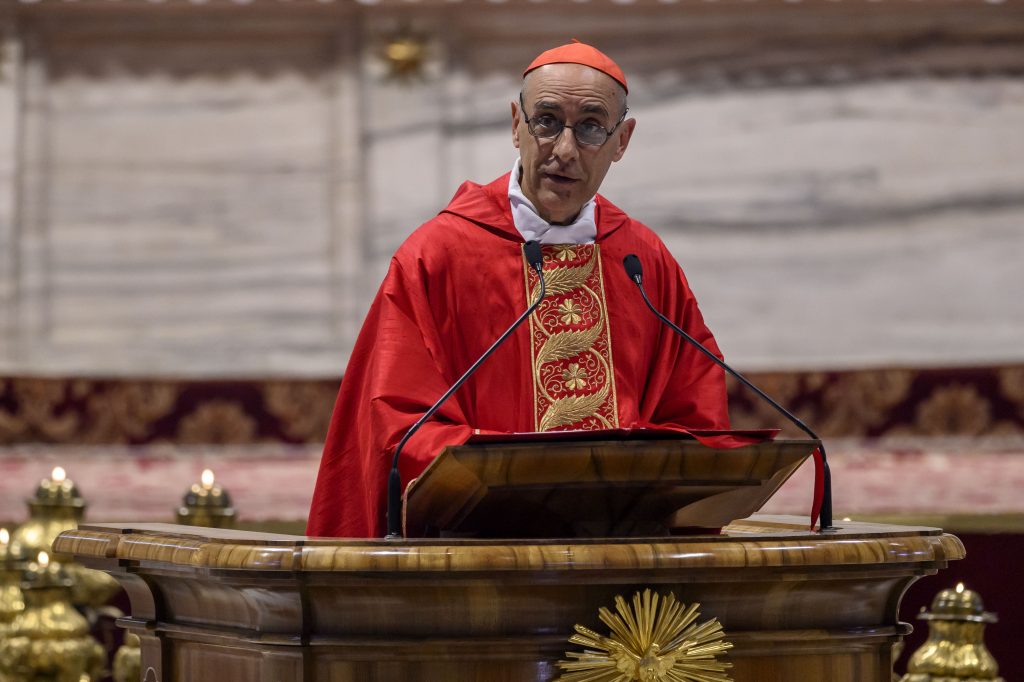
Cardinal Víctor Manuel Fernández delivered the principal theological meditation during the second session of the first day of Pope Leo XIV’s Extraordinary Consistory The College of Cardinals concluded the first day of Pope Leo XIV’s Extraordinary Consistory with Cardinal Víctor Manuel Fernández clarifying the Pope’s call for the Catholic Church to move beyond the traditional just war theory. Following presentations by the working groups, the remainder of the afternoon was devoted to open interventions from cardinals, who returned repeatedly to the themes of the Pope’s landmark encyclical. According to the Holy See Press Office, the interventions centred on the need for Christians to transform society through the witness of their lives, while many cardinals expressed gratitude for what they described as the spirit of communion fostered during the Consistory. The Holy See said the discussions stressed Christian witness as the means by which “mentalities and cultures” could be changed, with cardinals reflecting that authentic evangelisation depended not simply on words but on lives capable of demonstrating the Gospel before an increasingly sceptical world. The interventions also returned to one of the most striking passages of Magnifica Humanitas , in which Pope Leo acknowledged that the Church had been too slow in unequivocally condemning slavery. According to the Holy See, cardinals said the Pope’s forthright admission had “opened the hearts of millions to the Gospel”, bringing “light and hope to the Church”. Rather than weakening the Church’s witness, they suggested that the Pope’s willingness to confront painful chapters of history had strengthened its credibility in the modern world. Cardinals also described the encyclical as a personal appeal directed not only to Catholics generally but particularly to members of the College of Cardinals, calling them to assume responsibility for building peace in a world marked by conflict and instability. They noted the continuing importance of symbolic acts of reconciliation, recalling St John Paul II’s Prayer Meeting for Peace in Assisi in 1986 as an example of the Church exercising moral leadership beyond political divisions. The session concluded shortly before 7.30 pm with Pope Leo leading the cardinals in prayer. Earlier in the day, Cardinal Víctor Manuel Fernández, Prefect of the Dicastery for the Doctrine of the Faith, delivered the principal theological meditation on the fifth chapter of Magnifica Humanitas , offering what amounted to the clearest exposition yet of Pope Leo’s teaching on war and legitimate defence. Cardinal Fernández argued that the encyclical’s originality lay not simply in its treatment of armed conflict but in its diagnosis of what it calls the “culture” of power, a global mentality that enables wars to emerge and continue with diminishing resistance from societies increasingly shaped by modern communications and artificial intelligence. He said the encyclical’s most significant doctrinal development was its assertion that “the ‘just war’ theory […] is outdated”, explaining that Pope Leo was not abandoning the Church’s concern for legitimate defence but warning that the traditional doctrine had “all too often been used to justify any kind of war”. “The Church’s Social Doctrine is manipulated to provide a theoretical foundation for the most unjust wars,” Cardinal Fernández said. “Instead of stopping wars, it helps to justify them.” He insisted that legitimate self-defence remained part of Catholic teaching, but only when understood “in the strictest sense”, rejecting broad interpretations that had been used to justify so-called pre-emptive wars. Recalling the Catechism’s traditional conditions governing legitimate defence, Cardinal Fernández stressed that military action could only be justified where grave and certain aggression had occurred, all peaceful means had failed, success remained realistically possible, and military action would not inflict greater harm than the evil being resisted. He argued that these principles had become increasingly difficult to satisfy given the destructive capacity of modern weapons. “The destruction of entire cities cannot be considered a proportionate defensive action,” he said, before citing Gaza and southern Lebanon as examples where the scale of military intervention had become impossible to reconcile with classical Catholic teaching on proportionality. “The enormous disproportion of the military interventions in Gaza and southern Lebanon, for example, is evident,” he said. Referring to civilian casualties and widespread destruction, he added that “the percentage of civilian deaths relative to the total population, the enormous number of children killed… and the number of homes bombed allow us to speak of total destruction.” He argued that appeals to self-defence had become increasingly elastic, not only in the Middle East but also in Ukraine and elsewhere, asking: “What remains of the conditions that sought to limit wars?” Cardinal Fernández suggested that contemporary conflicts reflected a broader cultural shift identified by the encyclical as the “normalisation of war” and a “troubling revival of war as an instrument of international politics”, accompanied by what Pope Leo describes as a “loss of historical memory”. The Argentine cardinal warned that this culture was sustained through systematic misinformation, the discrediting of political opponents, and the cultivation of fear. Quoting directly from the encyclical, he said modern politics increasingly relied upon “misinformation and ridiculing opponents, and systematically cultivating fears and resentments”, creating “an environment in which new conflicts can develop almost imperceptibly”. He also criticised what he described as a false political realism that dismissed peace as naïve. “This so-called realism,” he said, “dismisses peace and dialogue as utopian or irrational positions that ignore the risks at stake.” He warned that even bishops could become trapped by such thinking through fear of appearing unrealistic. Cardinal Fernández also criticised what he called selective moral consistency in international affairs, pointing to differing responses to conflicts depending on political alliances. He argued that countries often condemned abuses committed by adversaries while overlooking similar violations committed by allies, concluding that geopolitical interests frequently displaced objective moral principles. The cardinal’s meditation concluded on a more hopeful note, presenting Catholic social teaching as offering a coherent alternative to ideological polarisation. He said the Church remained distinctive because it consistently defended unborn life while simultaneously protecting migrants, opposing war, defending vulnerable populations, and rejecting abortion, all without becoming captive to electoral politics or ideological factions. “It always proclaims the saving love of Christ,” he said, “but never separates it from the constant defence of human dignity in every circumstance, since such a defence lies at the heart of the Gospel.” He ended by turning the challenge back upon the bishops themselves, asking whether local Churches reflected the same integrity found in papal teaching or whether they too had succumbed to the culture of power that the encyclical seeks to overcome.
Jun. 27, 2026
Report from Day 1 of the Consistory: The opening session
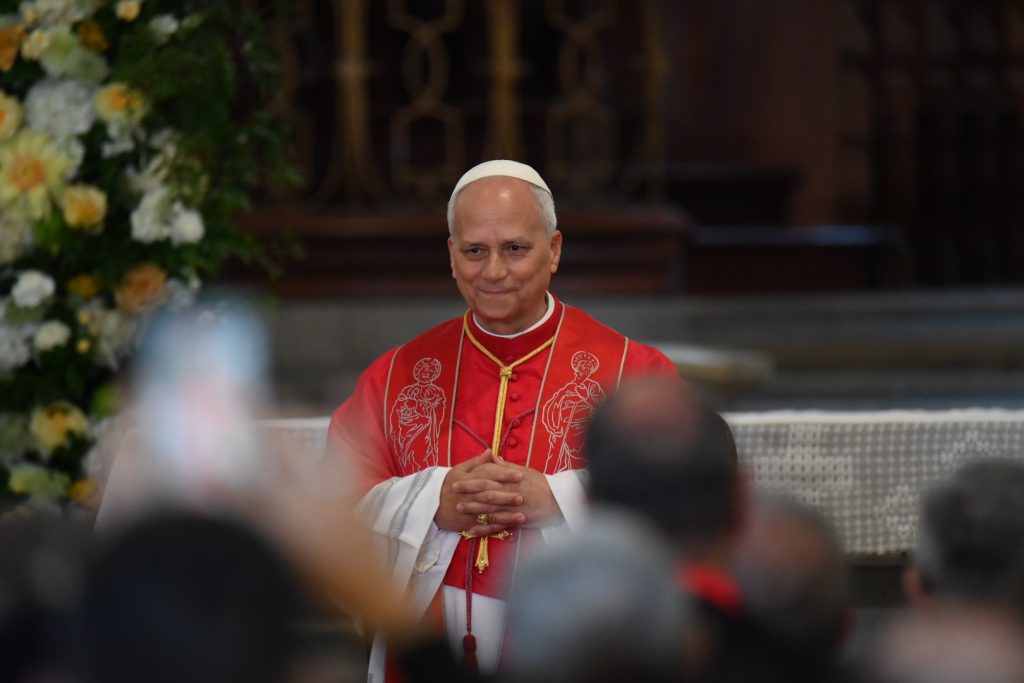
Report from Day 1 of the Consistory: During the opening session, Pope Leo XIV and the College of Cardinals examined the wounds of today’s world The College of Cardinals opened the Extraordinary Consistory by reflecting on the wounds of the modern world, with Pope Leo XIV urging the Church’s senior prelates to discern how to proclaim the Gospel at a time marked by war, loneliness, secularisation and growing social fragmentation. Following Mass in St Peter’s Basilica on the morning of 26 June, 178 cardinals gathered in the Paul VI Hall for the first working session of the two-day meeting. After the singing of the Veni Creator , Cardinal Luis José Rueda Aparicio opened proceedings before Cardinal Giovanni Battista Re, Dean of the College of Cardinals, welcomed the assembly. Pope Leo XIV then delivered an introductory address before Cardinal Rueda Aparicio introduced the day’s theme, “In What World Are We Called to Proclaim the Gospel?”, reminding the cardinals of the Holy Father’s request for their assistance and assuring him of “their support, with faith, joy, and availability”. The principal reflection was delivered by Cardinal Grzegorz Ryś of Łódź, who framed the discussions around Christ’s parable of the Good Samaritan. Rather than approaching the modern world through political or sociological analysis, the Polish cardinal argued that the Church should begin with the individual person. “The old story of the Samaritan,” he said, recalling St Paul VI’s closing address to the Second Vatican Council, should remain the Church’s exemplum atque norma , its “model” and “paradigm”, for understanding the contemporary world. “The old story of the Samaritan does not speak about ‘the world’; its subject is a single person – ‘a certain man’,” Cardinal Ryś said. “Instead of talking about an abstract and sociological concept of ‘the world’, let us think about concrete MAN and WOMAN,” because each person is both a “co-creator of the world” and “a primary and fundamental way for the Church”. Reflecting on the wounded traveller, Cardinal Ryś said modern humanity increasingly resembles the victim left on the roadside. “Violence has nearly become a name of today’s world,” he observed, pointing to “32 wars” currently taking place while noting that children and young people frequently encounter “drastic violence at school”. Such violence, he warned, “starts with aggressive language, and it ends with murder and suicide”. The traveller’s robbery, he continued, was also symbolic of modern society. Having been stripped of everything, the man is deprived not only of his possessions but also of his dignity. Nakedness, the cardinal noted, was a biblical sign of slavery, adding that contemporary forms of slavery range from the exploitation of migrants to addictions “caused by drugs, pornography, all kinds of addictions, and even modern technologies”. He described today’s men and women as increasingly “beaten and injured”, explaining that humanity is now in need of “a field hospital”. While some wounds are visible, he said, others remain “deeply hidden and never exposed, yet determine a person’s behaviour and actions”, leaving countless people scarred physically, psychologically and spiritually. Cardinal Ryś devoted particular attention to loneliness, describing the Gospel’s image of the traveller abandoned by passers-by as one of the defining characteristics of contemporary life. The wounded man, he said, is “left behind”, forced to face his suffering alone while others deliberately pass him by. “This is another sort of violence that today’s men and women face: indifference,” he said, recalling Cardinal Timothy Radcliffe’s description of modern society as suffering a “tsunami of loneliness”. Despite possessing “the best, most sophisticated means of communication”, modern men and women remain relictus – abandoned. The cardinal also reflected on the traveller being “half-dead”, asking, “How many people today live on such an edge or margin of life?” He suggested the root of many contemporary problems lies in humanity’s movement away from God, observing that the wounded traveller was descending “from Jerusalem to Jericho”, away from the Temple. That image, he argued, reflects societies that have become “secularised, seeking greatness in freedom from religion”, or which misuse religion “to promote ideas and actions absolutely foreign to it”. Turning to the Samaritan himself, Cardinal Ryś argued that Christians should not only seek to teach the modern world but also be willing to learn from it. Although regarded as “a foreigner, an alien, even an enemy”, the Samaritan becomes Christ’s example of authentic charity. “What does today’s Samaritan teach?” the cardinal asked. His first answer was simple: “compassion.” Referring to the Latin phrase misericordia motus , he said mercy should not become the object of rivalry between the Church and the world. “There are so many charitable activities and works in the world we can admire and follow, or simply take part in,” he said. “Instead of stupid jealousy and pretence, it is much better to learn and to encounter. Mercy and charity may be a meeting place of the Church and the world, the place of true dialogue and healing unity.” Following a prolonged period of silent prayer, the cardinals divided into working groups before returning to the Paul VI Hall for reports from the secretaries of the various groups. According to the Holy See Press Office, the discussions displayed remarkable agreement across the College of Cardinals. Summarising the discussions, the Press Office said: “All groups emphasised in deeply conscious terms the suffering experienced by men and women in this time of profound social transformation.” Among the principal concerns raised were “growing polarisation within societies and communities”, which the cardinals said generates “political tensions and violence” while being fuelled by “social divisions, the use of false information, and widespread communication that fails to foster understanding”. The reports warned that such polarisation “hinders governance and coexistence” and contributes to increasing violence at every level of society. Several groups also raised “a lack of respect for religious and ethnic minorities” that “undermines religious freedom and leads to hostility, or even violence, particularly against the Church”. Some also referred specifically to “the rise of anti-Semitism”. The cardinals repeatedly returned to the weakening of family life and growing individualism. According to the Press Office summary, many linked “the crisis of the family, especially loneliness, among both the elderly and the young” to “the rise in suicides and drug use”. Discussions also focused extensively on young people facing economic uncertainty, unemployment and financial instability. Other reports highlighted “a general sense of distrust, fatalism, and impotence towards institutions, democracy, and the future”, together with declining birth rates, criminal gangs, juvenile delinquency and drug trafficking. Several groups also pointed to “the role of secularism, the loss of transcendent and spiritual values, and the meaning of life”, warning that “the spreading sense of weariness and the absence of a perspective of truth mark the inability to recognise otherness and to build relationships”. Migration likewise featured prominently. The cardinals agreed on “the need to address the phenomenon of migration in a humane and Christian manner”, recognising that migration “is changing the face of peoples, societies, and communities”, while making “effective integration policies” increasingly urgent. Despite the sombre diagnosis, the reports also identified numerous signs of hope. According to the Holy See, every group stressed “the need for the Church to show herself as a mother, a welcoming place”, even if this requires “restructuring parishes”, while remaining capable of “acknowledging her own mistakes and making suffering a moment of growth”. The summary added that “a strong awareness of the responsibility entrusted to the Church in the current historical moment also emerged”. While “many institutions are experiencing a crisis of credibility”, the cardinals believed “the Church feels called to speak with authority for the dignity of the person, for peace, reconciliation, and the common good”. Pope Leo returned for the closing plenary session before thanking the cardinals for their participation. Recalling Cardinal Ryś’s meditation, the Holy Father reflected on “the image of the victim, almost dead”, adding: “If we are not blind, it is true that there is so much suffering.” Loneliness and suffering, he said, are products of contemporary society, and the Church’s response is to invite people into communion “not only by opening churches and celebrating the sacraments, but by creating opportunities and experiences of encounter”. The format of the Extraordinary Consistory itself reflects the increasingly synodal style that has become established in Vatican consultation. As in January’s consistory, the cardinals were divided into small working groups led by presidents and secretaries before moving through three stages consisting of personal interventions, shared listening, and the drafting of a common report. Those reports were then presented to the wider assembly before participants were invited to make brief interventions or submit written observations. The methodology mirrors the process employed during the Synod on Synodality and indicates that the consultative approach developed under the previous pontificate continues to shape the work of the College of Cardinals under Pope Leo XIV. Photo credit: Eros R. Santana/ACFI/EUROPA PRESS
Jun. 27, 2026
Bishop Strickland gives another reflection on the SSPX
In a new reflection on the Society of St. Pius X, Bishop Joseph Strickland examines the legacy of Archbishop Marcel Lefebvre In the wake of the July 1 consecration of new bishops for the Society of Saint Pius X, Bishop Joseph Strickland has given his view on the SSPX at large. Writing on his website, Pillars of Faith , the former Bishop of Tyler encouraged readers to, as discussions continue regarding the Society of St. Pius X, ask themselves: “What has moved these priests and faithful throughout the past fifty years?” The 67-year-old bishop did not wade into the consecrations themselves, but instead took a step back and examined the life of Archbishop Marcel Lefebvre, the Society’s founder, whose desire to preserve what he believed to be the authentic faith of the Church led to conflict with Rome and ultimately to his excommunication, a penalty he carried until his death in 1991. The bishop said that Archbishop Lefebvre “did not embark upon this path because it was easy, nor because it brought him honor or peace”, but because “he believed that precious treasures entrusted by Christ to His Church – the Holy Sacrifice of the Mass, the reverent celebration of the sacred mysteries, the formation of holy priests, and the perennial teachings of the Catholic Faith – were in danger of being diminished.” Bishop Strickland suggested that this had been a consistent theme throughout the Society’s history, stating that “looking honestly at their history, one sees men and women who have sacrificed greatly because they believed they were preserving the treasures entrusted to the Church by Christ Himself.” Acknowledging that many Catholics would disagree with the Society’s decision not to submit to Rome at various points in its history, the bishop wrote that “whether every decision made along the way was prudent is a question that reasonable Catholics may discuss”, but reaffirmed that its motivation was “to remain close to Our Lord and faithful to the deposit of faith.” Reflecting on the present state of the Church, Bishop Strickland said that “across the world, many public challenges to Catholic doctrine and morality have caused great confusion among the faithful” and asked: “Why do those who openly reject settled teachings of the Church often appear to face little correction, while those whose deepest desire is to preserve the Church’s sacred inheritance are viewed with the gravest penalties?” Entrusting the matter to Divine Providence, he further asked that every Catholic “pray – not only for the faithful of the Society of St. Pius X, but also for the Holy Father, for the bishops, and for all those entrusted with the grave responsibility of shepherding Christ’s flock.” The bishop’s reflection follows a similar pattern to that of a number of Church figures in recent years who have been reluctant to criticise the intentions of Archbishop Lefebvre and the Society itself, but have instead sought to heal the divide between the Society and Rome. His reference to those “who openly reject settled teachings of the Church” and “face little correction”, while there has been talk of the wholesale excommunication of members of the Society, is a point that many have commented upon. Bishop Strickland was likely referring to the German Synodal Way and other Catholic groups that have issued proposals seeking changes to Catholic moral teaching. Many have pointed to what they see as an inconsistency in comparison with the Society. While some might legitimately argue that the Society deviates from Catholic doctrine by questioning the Second Vatican Council and aspects of its teaching, the German Synodal Way has openly and repeatedly questioned Catholic teaching on sexuality and the liturgy, in a way that many believe goes considerably further in the opposite direction than the SSPX. Bishop Strickland himself is no stranger to public disagreement with Church authorities. Particularly critical of Pope Francis’ pontificate, the Diocese of Tyler was subjected to an apostolic visitation in 2023 during his leadership. The visitation ultimately led to his removal from office later that year. While he did express concern over Pope Leo’s election in 2025, telling commentator Glenn Beck, “He was involved in naming bishops that I find very troubling”, he has generally been significantly less critical of the current pontificate. Bishop Strickland’s previous commentary on the Society has followed a similar line. Writing in February this year, he said that “when those who openly contradict the Church’s teaching are tolerated, while those who seek continuity are treated as suspect, something has been inverted.”
Jun. 26, 2026
Mottos and Coats of Arms of new SSPX bishops released
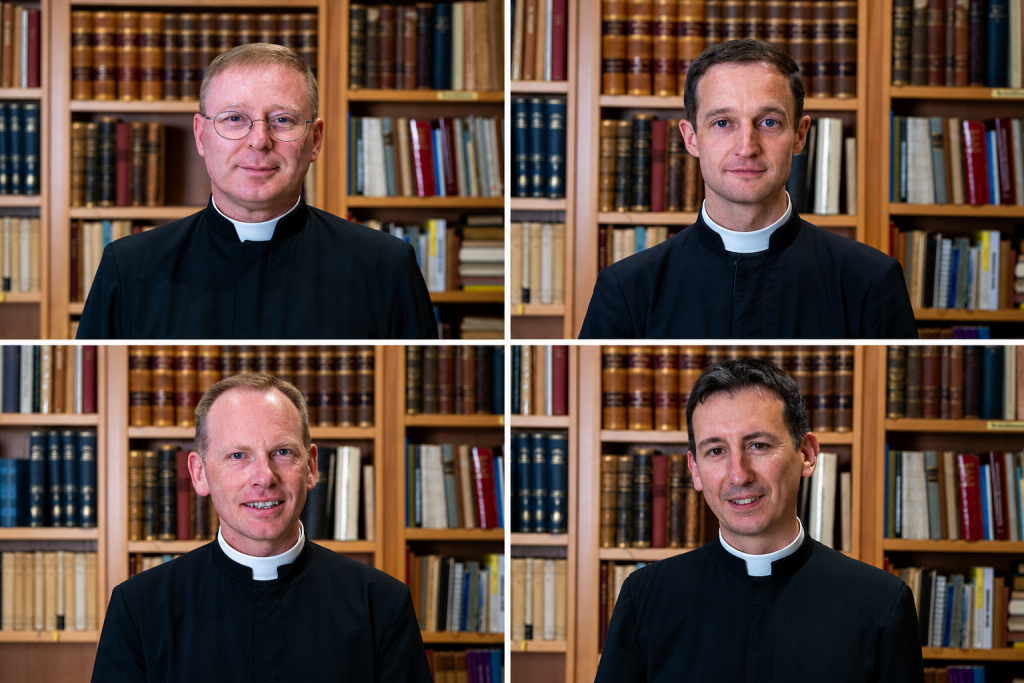
The SSPX has released the episcopal mottos and coats of arms of the four priests who will be consecrated bishops at Écône on 1 July Ahead of the 1 July consecrations at Écône, the Society of Saint Pius X has released the coats of arms and episcopal mottos of the four priests who are to be consecrated bishops. With two of the bishops from France, one from Switzerland and one from the United States, the coats of arms incorporate their nationalities and cultural heritage, as well as their spiritual influences and the paths that led them to the priesthood. Tens of thousands are expected to gather at Écône for the consecrations, which will go ahead without a papal mandate, with the Society stating that there is a “grave necessity for the salvation of souls”. At present, only two of the bishops consecrated by Archbishop Marcel Lefebvre in 1988 are still alive: Bishop Bernard Fellay and Bishop Alfonso de Galarreta. The Society has more than 700 priests serving an estimated one million faithful throughout the world. With both remaining bishops now in their late sixties, the Society considers it necessary to provide younger bishops to continue its work and provide for the needs of its priests and faithful. Below are their coats of arms, alongside their official photographs released by the Society. Bishop-elect Schreiber Bishop Pascal Schreiber’s coat of arms is quartered, following a long-standing heraldic tradition in German-speaking countries. The first quarter features the triumphant face of Christ the King as seen in the vision of Saint Nicholas of Flüe, patron saint of Switzerland, whose spirituality the bishop credits with inspiring his vocation to the priesthood. In the saint’s vision, the six rays surrounding Christ’s face symbolise God’s perfect knowledge, wisdom and presence, while also expressing the believer’s journey towards a deeper understanding of the divine through prayer and contemplation. The second and third quarters display the Schreiber family arms: a golden lion holding a quill on a red field. The lion represents courage, strength and kingship, while the quill is a reference to the family name, Schreiber , meaning “scribe” or “writer”, and symbolises literary work. The fourth quarter contains an eight-pointed golden star on a black field. The star recalls both Christ, the “bright morning star”, and the Blessed Virgin Mary under her title Stella Maris (“Star of the Sea”), while also referring to Saint Nicholas of Flüe, who recounted seeing a star that illuminated the world before his birth and later became a recurring feature of his mystical life. The use of black, red and gold throughout the shield also reflects the colours of the German flag, acknowledging the country in which the Society’s seminary at Zaitzkofen is situated. The bishop-elect has chosen the motto Virgo Fidelis (“Virgin Most Faithful”), taken from the Litany of Loreto. The title expresses Mary’s perfect fidelity to God as daughter of the Father, Mother of the Son and Spouse of the Holy Ghost, while asking her intercession that Christians may remain faithful to their own vocation. The motto also holds particular significance within the Society of Saint Pius X. Archbishop Marcel Lefebvre included the invocation Virgo Fidelis in the Society’s statutes, encouraging its members to renew their commitments each year on the Feast of the Immaculate Conception by seeking from the Blessed Virgin “the grace of fidelity”. The bishop-elect also points to the title as a reminder of the virtues of purity and fortitude, concluding with Christ’s words from the Beatitudes: “Blessed are the clean of heart: for they shall see God.” Bishop-elect Michael Goldade Bishop-elect Goldade’s coat of arms is set against a blue field with a decorative border of twelve golden ears of wheat linked by intertwined stalks. At its centre is a golden shield bearing the Vendéen Heart: two intertwined red hearts surmounted by a crown and a cross. The wheat carries both personal and biblical significance. It recalls the bishop’s roots in North Dakota and his upbringing in Kansas, the two leading wheat-producing states in the United States, while the twelve ears also represent the twelve members of his family. The symbolism extends throughout Sacred Scripture. The wheat recalls the patriarch Joseph, one of Jacob’s twelve sons and guardian of Egypt’s grain, who is seen as a foreshadowing of Saint Joseph, foster-father of Christ and protector of the universal Church. It also points to the Blessed Eucharist and the Holy Sacrifice of the Mass, which stand at the heart of the Society of Saint Pius X. The number twelve evokes both the Apostles, the foundations of the Church, and the twelve baskets of fragments gathered after the multiplication of the loaves, symbolising the fullness of God’s providence. The blue background is a tribute to the Blessed Virgin Mary, described as the virginal field from which the Bread of Life came forth, while the gold of the central shield signifies the divinity of Christ and also alludes to the bishop’s family name, Goldade. The crowned intertwined hearts represent the Sacred Hearts of Jesus and Mary, a longstanding devotion of the Goldade family, and also form part of the heraldic tradition of the Society of Saint Pius X. The bishop-elect has chosen the motto *Adeamus Cum Fiducia* (“Let us go therefore with confidence”), taken from the Letter to the Hebrews: “Let us go therefore with confidence to the throne of grace: that we may obtain mercy, and find grace in seasonable aid” (Heb. 4:16). These words also open the Introit of the Mass of the Immaculate Heart of Mary, linking the motto closely to the liturgy. The motto expresses complete confidence in the intercession of the Blessed Virgin Mary as Mediatrix of all graces and “Throne of Grace”, through whom Christ dispenses his gifts. It also recalls the opening prayers of the Mass — “I will go in to the altar of God” — reflected in the ears of wheat surrounding the shield. Through the united Hearts of Jesus and Mary and the graces flowing from the Holy Sacrifice of the Mass, the bishop-elect presents the motto as an expression of hope and trust in God’s providence. Bishop-elect Poinsinet de Sivry Bishop-elect Michel Poinsinet de Sivry’s coat of arms is divided horizontally into two halves. The upper section features a silver sword with a golden hilt crossed by a golden palm branch on a red field, while the lower section depicts a white swan with a golden beak swimming on silver waves against a blue background. Together, the two halves express the themes of combat, victory and fidelity that underpin the bishop’s chosen episcopal motto. The sword represents the spiritual battle waged by the Church to extend the reign of Christ over the world through the fruits of his Redemption. It also symbolises the “sword of the Spirit” described by Saint Paul in the Letter to the Ephesians, identifying the Word of God as the Church’s chief weapon against the errors of the world. Crossing the sword is a palm branch, the traditional emblem of victory and martyrdom, representing the triumph won by the Church through the witness of the saints and martyrs. The lower half of the shield bears a swan taken from the Poinsinet de Sivry family coat of arms. The swan symbolises fidelity through its lifelong pairing with a single mate, while its white plumage represents purity. Together, these qualities are presented as virtues closely associated with the life of faith. The bishop-elect has adopted the motto Fides Vincit Mundum (“Faith Conquers the World”), taken from the First Letter of Saint John: “This is the victory which overcometh the world, our faith” (1 Jn. 5:4). The words recall Christ’s own declaration, “I have overcome the world” (Jn. 16:33), emphasising that Christians share in that victory through faith in him. The motto also reflects the Church’s understanding of the Christian life as a spiritual struggle, echoing both Saint Augustine’s image of the “Two Cities” and Saint Ignatius of Loyola’s meditation on the “Two Standards”. For the bishop-elect, it expresses confidence that, despite the trials facing the Church today, Christ’s victory is certain, while also reflecting the Society of Saint Pius X’s understanding of its own mission and history. Bishop-elect Hanappier Bishop-elect Marc Hanappier’s coat of arms centres on the Paschal Lamb standing on a blue field, surrounded by three silver fleurs-de-lis. The Lamb bears the banner of the Resurrection and pours its blood into a golden chalice at its feet, while a golden halo marked with a red cross identifies it as the victorious Christ. The imagery is drawn from the Book of Revelation, where the Lamb who was slain is worshipped by the saints and angels as worthy of all honour, glory and dominion. The Lamb symbolises Christ’s victory through his sacrifice and points directly to the Holy Sacrifice of the Mass. The blood flowing into the chalice represents the Precious Blood offered for the salvation of the world and given to the faithful in the Eucharist to purify and strengthen them. The image also recalls the Introit of the Mass of Christ the King, which proclaims the triumph of the Lamb who was slain. Surrounding the Lamb are three silver fleurs-de-lis. Traditionally symbols of royalty, they also represent the purity of the Blessed Virgin Mary, recalling the words of the Song of Songs: “As the lily among thorns, so is my love among the daughters.” Set against the blue background, they also evoke France, while their number reflects the arms of the city of Versailles, where the Hanappier family is based. The bishop-elect has chosen the motto Dignus Est Agnus (“Worthy is the Lamb”), taken from the fifth chapter of the Book of Revelation. The phrase recalls Saint John the Baptist’s proclamation, “Behold the Lamb of God”, through which the first disciples were drawn to Christ, and presents the Lamb as the source of priestly vocations. The motto also highlights Christ as both the eternal High Priest and the sacrificial victim whose offering is made present at every Mass. The bishop-elect further links the image of the Lamb receiving the sealed book in Revelation to Christ’s lordship over all of history, affirming that every age and every nation ultimately finds its meaning in his sacrifice. For this reason, the words “Worthy is the Lamb” express both the centrality of the Eucharistic sacrifice and the conviction that salvation is found in Christ alone.
Jun. 26, 2026
Read in full: Pope Leo XIV’s Extraordinary Consistory homily
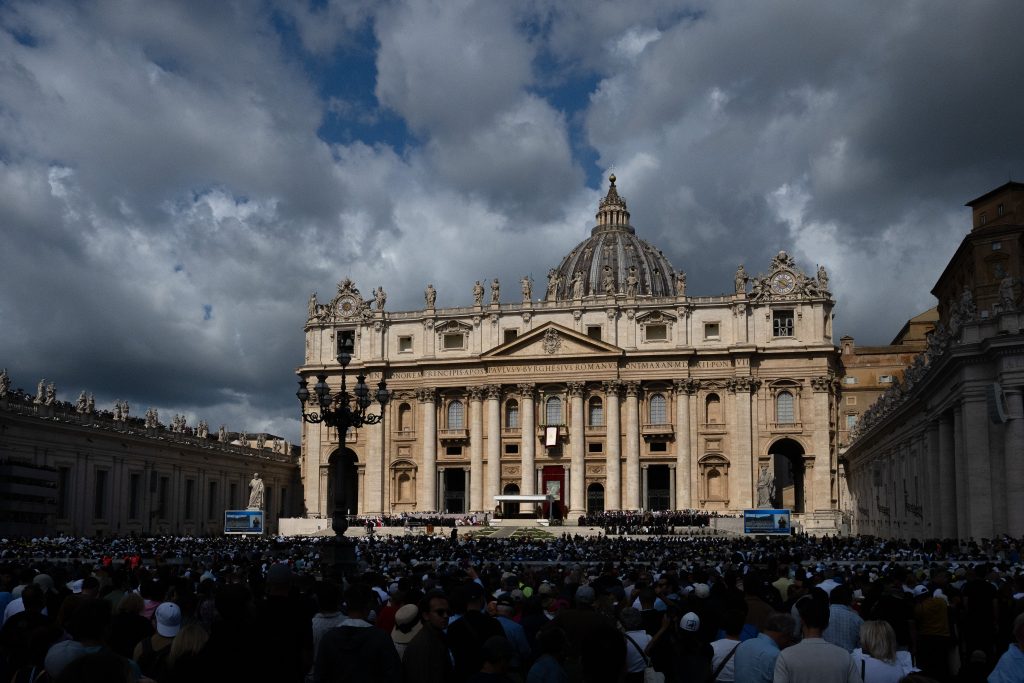
Read Pope Leo XIV’s homily to the Cardinals at the opening Mass of the Extraordinary Consistory in full At 7:30 this morning, in Saint Peter’s Basilica, the Holy Father Leo XIV presided over Holy Mass with the Cardinals gathered in the Extraordinary Consistory from 26 to 27 June 2026. AdVaticanum gives the English translation to the Homily given today: Dearest brothers, We have gathered around the altar of the Lord, near the tomb of Saint Peter, to begin the Consistory. We come to celebrate this Eucharist from every part of the world: together with our lives, we therefore offer to God the communities and peoples we carry in our hearts, as well as our pastoral projects and experiences, both joyful and challenging. This variety of affections and thoughts now concentrates: that is, it finds that luminous center, which is Christ. He himself, in person, addresses us, saying: “I am the true vine” (Jn 15:1). Through Jesus, grace and truth flow into our lives (cf. Jn 1:17), renewing us intimately: these divine gifts are also the fertile sap of the Consistory we inaugurate today. It is the Gospel itself that prepares the conditions for it to be fruitful: “Abide in me, and I in you” (Jn 15:4). On the one hand, the Master warns us that “without me you can do nothing” (v. 5), on the other, he wants his disciples to bear “much fruit” (v. 8). Yes, much: the grace of God does not produce stunted growth in those who welcome it, but rather a thriving development. The eternal Word, in fact, became man so that all “may have life, and have it abundantly” (Jn 10:10). Begun in faith, this life is even strengthened by the test of pruning, because it is cultivated by the Father’s care. As we ask God to grant us strength and wisdom, it is significant that our Consistory takes place on the eve of the solemnity of the Holy Apostles Peter and Paul. Let us pause together in this memory, which recalls the pillars of the Catholic and Roman Church, the two missionary martyrs whose preaching became so integral to their lives that it became part of Sacred Scripture. Listening today to St. Paul’s words to the Corinthians, we can note their happy consonance with those of the Gospel. The different charisms, ministries, and ecclesial activities are like branches of the one vine, that is, of the one Lord (cf. 1 Cor 12:4–6) who infuses the Holy Spirit into his Church. This organic unity corresponds to the criterion that makes all those ecclesial services good and enjoyable: the criterion of the common good (cf. v. 7). Dearest ones, from the Word of God that we have heard, I would like to draw some indications for our discernment in these days. First, the example of Saints Peter and Paul encourages us to share true freedom in faith. Indeed, it is precisely our relationship with the Lord Jesus that frees us from sin and fear: while he calls us to follow him, he himself sends us into the world as successors of the Apostles. Proclaiming the Gospel, celebrating the Sacraments, and dedicating ourselves to the Lord’s flock is accomplished and bears fruit to the extent of our belief in him, the Good Shepherd. Faith is that virtue, never to be taken for granted, that gives life to the Church, because it corresponds to the grace that nourishes the branches of the one vine. The living Church is the Church that believes, through the gift of the Holy Spirit poured into our hearts: this Church bears much fruit. Just as divine grace precedes human freedom, so the Church’s faith precedes ours and demands to be witnessed to with ardour. This mission has Christ as its beginning and end: in the words of the psalmist, “Proclaim his salvation day after day; declare his glory among the nations” (Ps 96:2–3). Second, we ask for the gift of peace in unity. While we invite all peoples to faith, in which we are truly free, international tensions and conflicts gravely wound the human family. However, initiatives and experiences are not lacking; indeed, they are multiplying in the Church and throughout the world that call for respect for human dignity, justice, law, and simply for humanity. This is a reason for hope, because it attests to the beauty of the work of God, who created us in his image and likeness, as a sign of his glory in the world. When this sign is wounded, we are all wounded. When it is corrupted, we all suffer. When it is killed, we all feel torn apart. Therefore, war is never worthy of man, and is never blessed by God, because the Creator has endowed us with the intelligence and will to resolve conflicts as human beings and not as beasts, perhaps equipped with hyper-technological weapons. The unity of the human family precedes individual peoples and states. This is not just a biological fact: it is an ethical principle. Peace is a duty of justice because we are one human family, a magnificent humanitas that finds in Christ its Head and Redeemer. Reflecting on the Encyclical I promulgated on May 15, we must therefore continue on the path traced by Saint Paul VI: when he “introduced the expression ‘civilization of love,’ the world was marked by the Cold War, the arms race, and serious economic imbalances. In that context, the Church pointed to an alternative path to the ideological opposition between systems, imagining a social order in which justice and charity are intertwined” (Encyclical Letter Magnifica Humanitas, 186. Cf. Saint Paul VI, Regina Caeli, May 17, 1970). This is how Christian witness becomes the prophecy of a new world, evangelization and service, a cultural and social project that integrally promotes human development. While proclaiming the Gospel, amid joys and persecutions, the Church is never partisan: she is for everyone, and to each she addresses the same word of conversion and salvation. Third, today and always, let us enjoy harmony in obedience, that is, in the listening that recognizes the gift of the Word, made flesh for us. Through this exercise, the Holy Spirit guides us, himself pointing out pastoral problems and opportunities, purifying intentions and correcting what deviates from the common path. The implementation of the Synod, to which we are committed, invites everyone to proceed in the unity of faith, in the promotion of peace, in obedience to the living Word, who is Jesus. In this light, “the enormous and rapid cultural changes demand that we constantly seek to express the truths of all time in a language that allows us to recognize their enduring newness” (Francis, Apostolic Exhortation Evangelii Gaudium, 41). The one Word, made man, is indeed expressed in all languages: the dead and risen Christ is the true vine, who bears fruit through all the cultures that Christians transform from within. Thus, while the ideologies of the world wither, the Holy Spirit makes fraternal understanding, charity, and missionary zeal flourish in the Church. Working together, our collegiality epitomizes the synodality in which all the baptized participate, in the unity of the People of God. Synodality and collegiality are, in fact, forms of Christian fraternity, which binds us as baptized persons and as bishops. Therefore, the help you can give me in the exercise of the Petrine ministry finds in me the one who asks, not the one who commands. The authority of the primacy, in fact, belongs to one who listens and only therefore leads, to one who learns and only therefore teaches, always following the one Master. May the intercession of the Holy Apostles Peter and Paul accompany us on this exciting journey.
Jun. 26, 2026
A novena of Benedict XVI’s greatest homilies and addresses, day 6: the 2012 Christmas Address to the Roman Curia
Day six of our novena marking the 75th anniversary of Pope Benedict XVI’s priestly ordination features his 2012 Christmas Address to the Roman Curia To mark the 75th anniversary of Pope Benedict XVI’s priestly ordination, AdVaticanum is publishing a nine-day novena of some of the most important homilies and addresses of his public life. Today we publish Pope Benedict XVI’s Christmas Address to the Roman Curia, delivered on 21 December 2012. In what would be his final Christmas address before his resignation, Benedict reflected on some of the principal challenges facing the Church and society. Returning to themes that had shaped his pontificate, he addressed the relationship between faith and reason, the interpretation of the Second Vatican Council and the growing tendency to separate human freedom from the order of creation. Delivered just weeks before he announced his resignation, the address offers one of the clearest summaries of Benedict’s theological vision and his understanding of the challenges confronting the Church in the modern world. Dear Cardinals, Brother Bishops and Priests, Dear Brothers and Sisters, It is with great joy that I meet you today, dear Members of the College of Cardinals, Representatives of the Roman Curia and the Governorate, for this traditional event in the days leading up to the feast of Christmas. I greet each one of you cordially, beginning with Cardinal Angelo Sodano, whom I thank for his kind words and for the warm good wishes that he extended to me on behalf of all present. The Dean of the College of Cardinals reminded us of an expression that appears frequently during these days in the Latin liturgy: Prope est iam Dominus, venite, adoremus! The Lord is already near, come, let us adore him! We too, as one family, prepare ourselves to adore the Child in the stable at Bethlehem who is God himself and has come so close as to become a man like us. I willingly reciprocate your good wishes and I thank all of you from my heart, including the Papal Representatives all over the world, for the generous and competent assistance that each of you offers me in my ministry. Once again we find ourselves at the end of a year that has seen all kinds of difficult situations, important questions and challenges, but also signs of hope, both in the Church and in the world. I shall mention just a few key elements regarding the life of the Church and my Petrine ministry. First of all, as the Dean of the College of Cardinals mentioned, there were the journeys to Mexico and Cuba – unforgettable encounters with the power of faith, so deeply rooted in human hearts, and with the joie de vivre that issues from faith. I recall how, on my arrival in Mexico, there were endless crowds of people lining the long route, cheering and waving flags and handkerchiefs. I recall how, on the journey to the attractive provincial capital Guanajuato, there were young people respectfully kneeling by the side of the road to receive the blessing of Peter’s Successor; I recall how the great liturgy beside the statue of Christ the King made Christ’s kingship present among us – his peace, his justice, his truth. All this took place against the backdrop of the country’s problems, afflicted as it is by many different forms of violence and the hardships of economic dependence. While these problems cannot be solved simply by religious fervour, neither can they be solved without the inner purification of hearts that issues from the power of faith, from the encounter with Jesus Christ. And then there was Cuba – here too there were great liturgical celebrations, in which the singing, the praying and the silence made tangibly present the One that the country’s authorities had tried for so long to exclude. That country’s search for a proper balancing of the relationship between obligations and freedom cannot succeed without reference to the basic criteria that mankind has discovered through encounter with the God of Jesus Christ. As further key moments in the course of the year, I should like to single out the great Meeting of Families in Milan and the visit to Lebanon, where I consigned the Post-Synodal Apostolic Exhortation that is intended to offer signposts for the life of churches and society in the Middle East along the difficult paths of unity and peace. The last major event of the year was the Synod on the New Evangelization, which also served as a collective inauguration of the Year of Faith, in which we commemorate the opening of the Second Vatican Council fifty years ago, seeking to understand it anew and appropriate it anew in the changed circumstances of today. All these occasions spoke to fundamental themes of this moment in history: the family (Milan), serving peace in the world and dialogue among religions (Lebanon) and proclaiming the message of Jesus Christ in our day to those who have yet to encounter him and to the many who know him only externally and hence do not actually recognize him. Among these broad themes, I should like to focus particularly on the theme of the family and the nature of dialogue, and then to add a brief observation on the question of the new evangelization. The great joy with which families from all over the world congregated in Milan indicates that, despite all impressions to the contrary, the family is still strong and vibrant today. But there is no denying the crisis that threatens it to its foundations – especially in the western world. It was noticeable that the Synod repeatedly emphasized the significance, for the transmission of the faith, of the family as the authentic setting in which to hand on the blueprint of human existence. This is something we learn by living it with others and suffering it with others. So it became clear that the question of the family is not just about a particular social construct, but about man himself – about what he is and what it takes to be authentically human. The challenges involved are manifold. First of all there is the question of the human capacity to make a commitment or to avoid commitment. Can one bind oneself for a lifetime? Does this correspond to man’s nature? Does it not contradict his freedom and the scope of his self-realization? Does man become himself by living for himself alone and only entering into relationships with others when he can break them off again at any time? Is lifelong commitment antithetical to freedom? Is commitment also worth suffering for? Man’s refusal to make any commitment – which is becoming increasingly widespread as a result of a false understanding of freedom and self-realization as well as the desire to escape suffering – means that man remains closed in on himself and keeps his “I” ultimately for himself, without really rising above it. Yet only in self-giving does man find himself, and only by opening himself to the other, to others, to children, to the family, only by letting himself be changed through suffering, does he discover the breadth of his humanity. When such commitment is repudiated, the key figures of human existence likewise vanish: father, mother, child – essential elements of the experience of being human are lost. The Chief Rabbi of France, Gilles Bernheim, has shown in a very detailed and profoundly moving study that the attack we are currently experiencing on the true structure of the family, made up of father, mother, and child, goes much deeper. While up to now we regarded a false understanding of the nature of human freedom as one cause of the crisis of the family, it is now becoming clear that the very notion of being – of what being human really means – is being called into question. He quotes the famous saying of Simone de Beauvoir: “one is not born a woman, one becomes so” (on ne naît pas femme, on le devient). These words lay the foundation for what is put forward today under the term “gender” as a new philosophy of sexuality. According to this philosophy, sex is no longer a given element of nature, that man has to accept and personally make sense of: it is a social role that we choose for ourselves, while in the past it was chosen for us by society. The profound falsehood of this theory and of the anthropological revolution contained within it is obvious. People dispute the idea that they have a nature, given by their bodily identity, that serves as a defining element of the human being. They deny their nature and decide that it is not something previously given to them, but that they make it for themselves. According to the biblical creation account, being created by God as male and female pertains to the essence of the human creature. This duality is an essential aspect of what being human is all about, as ordained by God. This very duality as something previously given is what is now disputed. The words of the creation account: “male and female he created them” (Gen 1:27) no longer apply. No, what applies now is this: it was not God who created them male and female – hitherto society did this, now we decide for ourselves. Man and woman as created realities, as the nature of the human being, no longer exist. Man calls his nature into question. From now on he is merely spirit and will. The manipulation of nature, which we deplore today where our environment is concerned, now becomes man’s fundamental choice where he himself is concerned. From now on there is only the abstract human being, who chooses for himself what his nature is to be. Man and woman in their created state as complementary versions of what it means to be human are disputed. But if there is no pre-ordained duality of man and woman in creation, then neither is the family any longer a reality established by creation. Likewise, the child has lost the place he had occupied hitherto and the dignity pertaining to him. Bernheim shows that now, perforce, from being a subject of rights, the child has become an object to which people have a right and which they have a right to obtain. When the freedom to be creative becomes the freedom to create oneself, then necessarily the Maker himself is denied and ultimately man too is stripped of his dignity as a creature of God, as the image of God at the core of his being. The defence of the family is about man himself. And it becomes clear that when God is denied, human dignity also disappears. Whoever defends God is defending man. At this point I would like to address the second major theme, which runs through the whole of the past year from Assisi to the Synod on the New Evangelization: the question of dialogue and proclamation. Let us speak firstly of dialogue. For the Church in our day I see three principal areas of dialogue, in which she must be present in the struggle for man and his humanity: dialogue with states, dialogue with society – which includes dialogue with cultures and with science – and finally dialogue with religions. In all these dialogues the Church speaks on the basis of the light given her by faith. But at the same time she incorporates the memory of mankind, which is a memory of man’s experiences and sufferings from the beginnings and down the centuries, in which she has learned about the human condition, she has experienced its boundaries and its grandeur, its opportunities and its limitations. Human culture, of which she is a guarantee, has developed from the encounter between divine revelation and human existence. The Church represents the memory of what it means to be human in the face of a civilization of forgetfulness, which knows only itself and its own criteria. Yet just as an individual without memory has lost his identity, so too a human race without memory would lose its identity. What the Church has learned from the encounter between revelation and human experience does indeed extend beyond the realm of pure reason, but it is not a separate world that has nothing to say to unbelievers. By entering into the thinking and understanding of mankind, this knowledge broadens the horizon of reason and thus it speaks also to those who are unable to share the faith of the Church. In her dialogue with the state and with society, the Church does not, of course, have ready answers for individual questions. Along with other forces in society, she will wrestle for the answers that best correspond to the truth of the human condition. The values that she recognizes as fundamental and non-negotiable for the human condition she must propose with all clarity. She must do all she can to convince, and this can then stimulate political action. In man’s present situation, the dialogue of religions is a necessary condition for peace in the world and it is therefore a duty for Christians as well as other religious communities. This dialogue of religions has various dimensions. In the first place it is simply a dialogue of life, a dialogue of being together. This will not involve discussing the great themes of faith – whether God is Trinitarian or how the inspiration of the sacred Scriptures is to be understood, and so on. It is about the concrete problems of coexistence and shared responsibility for society, for the state, for humanity. In the process, it is necessary to learn to accept the other in his otherness and the otherness of his thinking. To this end, the shared responsibility for justice and peace must become the guiding principle of the conversation. A dialogue about peace and justice is bound to move beyond the purely pragmatic to become an ethical struggle for the truth and for the human being: a dialogue concerning the values that come before everything. In this way what began as a purely practical dialogue becomes a quest for the right way to live as a human being. Even if the fundamental choices themselves are not under discussion, the search for an answer to a specific question becomes a process in which, through listening to the other, both sides can obtain purification and enrichment. Thus this search can also mean taking common steps towards the one truth, even if the fundamental choices remain unaltered. If both sides set out from a hermeneutic of justice and peace, the fundamental difference will not disappear, but a deeper closeness will emerge nevertheless. Two rules are generally regarded nowadays as fundamental for interreligious dialogue: 1. Dialogue does not aim at conversion, but at understanding. In this respect it differs from evangelization, from mission; 2. Accordingly, both parties to the dialogue remain consciously within their identity, which the dialogue does not place in question either for themselves or for the other. These rules are correct, but in the way they are formulated here I still find them too superficial. True, dialogue does not aim at conversion, but at better mutual understanding – that is correct. But all the same, the search for knowledge and understanding always has to involve drawing closer to the truth. Both sides in this piece-by-piece approach to truth are therefore on the path that leads forward and towards greater commonality, brought about by the oneness of the truth. As far as preserving identity is concerned, it would be too little for the Christian, so to speak, to assert his identity in a such a way that he effectively blocks the path to truth. Then his Christianity would appear as something arbitrary, merely propositional. He would seem not to reckon with the possibility that religion has to do with truth. On the contrary, I would say that the Christian can afford to be supremely confident, yes, fundamentally certain that he can venture freely into the open sea of the truth, without having to fear for his Christian identity. To be sure, we do not possess the truth, the truth possesses us: Christ, who is the truth, has taken us by the hand, and we know that his hand is holding us securely on the path of our quest for knowledge. Being inwardly held by the hand of Christ makes us free and keeps us safe: free – because if we are held by him, we can enter openly and fearlessly into any dialogue; safe – because he does not let go of us, unless we cut ourselves off from him. At one with him, we stand in the light of truth. Finally, at least a brief word should be added on the subject of proclamation, or evangelization, on which the post-synodal document will speak in depth, on the basis of the Synod Fathers’ propositions. I find that the essential elements of the process of evangelizing appear most eloquently in Saint John’s account of the calling of two of John the Baptist’s disciples, who become disciples of Jesus Christ (1:35-39). First of all, we have the simple act of proclamation. John the Baptist points towards Jesus and says: “Behold the Lamb of God!” A similar act is recounted a few verses later. This time it is Andrew, who says to his brother Simon “We have found the Messiah” (1:41). The first and fundamental element is the straightforward proclamation, the kerygma, which draws its strength from the inner conviction of the one proclaiming. In the account of the two disciples, the next stage is that of listening and following behind Jesus, which is not yet discipleship, but rather a holy curiosity, a movement of seeking. Both of them, after all, are seekers, men who live over and above everyday affairs in the expectation of God – in the expectation that he exists and will reveal himself. Stimulated by the proclamation, their seeking becomes concrete. They want to come to know better the man described as the Lamb of God by John the Baptist. The third act is set in motion when Jesus turns round, approaches them and asks: “What do you seek?” They respond with a further question, which demonstrates the openness of their expectation, their readiness to take new steps. They ask: “Rabbi, where are you staying?” Jesus’ answer “Come and see!” is an invitation to walk with him and thereby to have their eyes opened with him. The word of proclamation is effective in situations where man is listening in readiness for God to draw near, where man is inwardly searching and thus on the way towards the Lord. His heart is touched when Jesus turns towards him, and then his encounter with the proclamation becomes a holy curiosity to come to know Jesus better. As he walks with Jesus, he is led to the place where Jesus lives, to the community of the Church, which is his body. That means entering into the journeying community of catechumens, a community of both learning and living, in which our eyes are opened as we walk. “Come and see!” This saying, addressed by Jesus to the two seeker-disciples, he also addresses to the seekers of today. At the end of the year, we pray to the Lord that the Church, despite all her shortcomings, may be increasingly recognizable as his dwelling-place. We ask him to open our eyes ever wider as we make our way to his house, so that we can say ever more clearly, ever more convincingly: “we have found him for whom the whole world is waiting, Jesus Christ, the true Son of God and true man”. With these sentiments, I wish you all from my heart a blessed Christmas and a happy New Year. Thank you.
Jun. 26, 2026