

Washington
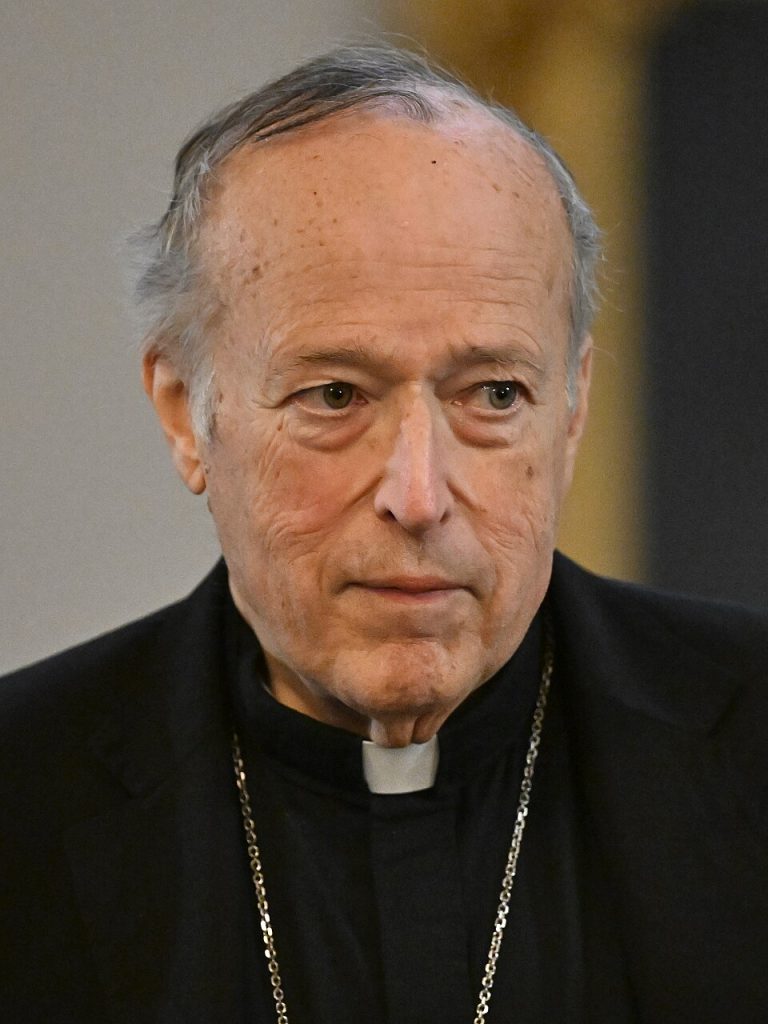
Cardinal McElroy reportedly gives verdict on altar rails in Washington
A reported directive from Cardinal Robert McElroy sets out policy on altar rails and kneelers in the Archdiocese of Washington Cardinal Robert McElroy of Washington has reportedly directed that altar rails are not to be installed or reinstalled in churches across the Archdiocese of Washington. The reported directive, first highlighted by journalist Christine Niles of Stella Maris Media, notes from a recent meeting with priests that discouraged the use of temporary kneelers for the reception of Holy Communion. According to Niles, concerns raised during the discussion included the potential disruption of Communion processions and the possibility that the use of kneelers could transform what Church law regards as an individual option into a more widespread practice. The Archdiocese of Washington has not publicly issued a statement on the reported policy, and no formal decree has yet appeared among official archdiocesan communications. The issue centres on the manner in which Catholics receive Holy Communion. In the United States, the norm approved by the bishops and confirmed by the Holy See is for communicants to receive standing after making a gesture of reverence. At the same time, universal Church law makes clear that Catholics who choose to kneel for Communion are not to be denied the sacrament on that account. The reported Washington policy comes after discussions in several American dioceses over altar rails, kneelers and other traditional liturgical furnishings. In recent months, the Diocese of Charlotte, North Carolina, became the focus of Vatican attention after Bishop Michael Martin ordered that altar rails, kneelers and prie-dieus were not to be used for the reception of Communion in public celebrations. The move caused more than 30 diocesan priests to submit formal dubia to the Vatican regarding the scope of episcopal authority over such practices. Bishop Martin wrote in a pastoral letter issued last December that the norms approved by the United States Conference of Catholic Bishops “do not envision the use of altar rails, kneelers, or prie-dieus for the reception of Communion”, arguing that their use contradicts the normative posture established by the conference. Supporters of altar rails and kneeling during Communion argue that such practices visibly express belief in the Real Presence of Christ in the Eucharist and foster a spirit of reverence. Among the most prominent advocates has been Bishop Athanasius Schneider, Auxiliary Bishop of Astana in Kazakhstan, who has repeatedly encouraged the faithful to receive Communion kneeling and on the tongue. In his book Dominus Est – It is the Lord! , Bishop Schneider wrote: “Would it not be more liturgically proper if, at the moment of Holy Communion … they would greet Him and receive Him on their knees?” He argued that kneeling before the Blessed Sacrament provides a visible witness to the Church’s faith in the Eucharistic mystery. Cardinal Raymond Burke has likewise spoken in favour of the practice, pointing to the example set by Pope Benedict XVI during his pontificate. Reflecting on Benedict’s decision to distribute Communion to kneeling communicants, Cardinal Burke said: “The Holy Father is giving a very clear lesson by his own insistence that the faithful receive Communion kneeling and on the tongue.” Similar views have been expressed by Cardinal Antonio Cañizares Llovera, the former prefect of the Congregation for Divine Worship and the Discipline of the Sacraments. He has urged Catholics to receive Communion on the tongue while kneeling, saying: “It is to simply know that we are before God himself and that He came to us and that we are undeserving.” Other bishops have emphasised the importance of maintaining the posture established by episcopal conferences for the sake of unity during the Communion procession. Cardinal Blase Cupich of Chicago has similarly stressed that the faithful process together as an expression of their identity as the Body of Christ and receive Holy Communion standing in accordance with the norm approved for the United States. He has described the practice as a “powerful symbolic expression” of ecclesial unity. The reported Washington directive has attracted particular attention because it concerns one of the largest and most influential dioceses in the United States. Cardinal McElroy, who was installed as Archbishop of Washington in March 2025 after serving for a decade as Bishop of San Diego, has become one of the most prominent voices among the American hierarchy. The controversy also follows another recent decision by the cardinal that generated headlines. Earlier this month, he removed Monsignor Stephen Rossetti as an exorcist of the Archdiocese of Washington and ended the archdiocese’s affiliation with the St Michael Center for Spiritual Renewal after comments linking UFO phenomena to demonic activity. Cardinal McElroy said the statements “gravely undermine the Church’s very precise teaching on the devil, demons and exorcism”.
Jun. 15, 2026
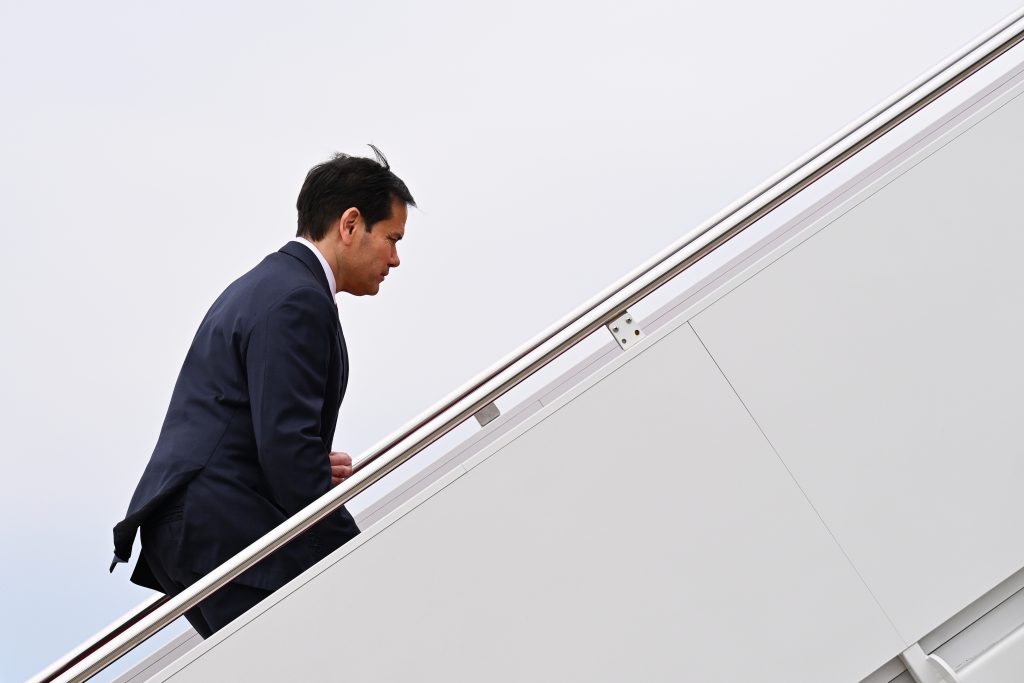
Rubio in Rome after month of tension between Washington and Vatican
US Secretary of State Marco Rubio met Pope Leo XIV and senior Vatican officials on Thursday after weeks of tensions between Washington and the Holy See. The Vatican said the talks were “cordial” and focused on conflicts, humanitarian crises and peace efforts US Secretary of State Marco Rubio met Pope Leo XIV at the Vatican on Thursday amid growing tensions between Washington and the Holy See. Secretary Rubio was received by the Pope in the Apostolic Palace during a visit to Rome that also included meetings with Cardinal Pietro Parolin and Archbishop Paul Richard Gallagher. A statement issued afterwards by the Holy See Press Office said the talks had been “cordial” and that both sides had reaffirmed their “shared commitment to fostering sound bilateral relations between the Holy See and the United States of America”. The Vatican said views had been exchanged “regarding situations on the regional and international levels, with particular attention given to countries experiencing war, political tensions and difficult humanitarian situations, as well as the need to work tirelessly for peace”. Holy See officials later indicated that discussions included conflicts and instability affecting parts of the Middle East and Africa, with particular reference to Lebanon and Iran. The situation in Cuba was also raised during the meetings. Ahead of the visit, Cardinal Parolin, the Vatican Secretary of State, had signalled that difficult issues would be discussed openly during Mr Rubio’s time in the Vatican. Speaking to journalists on May 6, the Cardinal Secretary of State said: “We will listen to him, the initiative came from them. We will speak about everything that has happened in these days. We could not fail to touch on these topics.” He said the discussions would concern “international politics and above all conflicts”, including Latin America and “probably also the question of Cuba … all those that are the most pressing issues”. Cardinal Parolin also stressed the importance of maintaining dialogue with Washington despite recent disagreements between senior figures in the United States and the Holy See. “One cannot do without the United States,” His Eminence said. “Despite some difficulties occurring, they certainly remain an interlocutor for the Holy See. Also because they have a role in almost all the situations we are experiencing today.” The cardinal was also asked about criticism directed at Pope Leo XIV by allies of President Trump in recent weeks following papal comments on international diplomacy and war. “To attack him in this way or to reproach what he does seems a bit strange to me,” Cardinal Parolin said, before adding: “The Pope does what he must do: the Pope is the Pope.” Asked whether he relied more upon Mr Rubio or President Trump, the cardinal replied: “Me? I do not rely on anyone. I rely only on Our Lord Jesus Christ.” The Vatican Secretary of State also reiterated the Holy See’s longstanding position on diplomacy and nuclear disarmament, saying the Church continued to favour the resolution of conflicts “through negotiation … of good will, sincere, so that all parties can express their point of view and find points of convergence”. He added that the Pope remained “open to all options” for dialogue, including with President Trump himself. After the meeting, the United States also issued its own account of the discussions through the State Department and the American embassy to the Holy See. According to a statement attributed to State Department spokesman Tommy Pigott, Mr Rubio and Cardinal Parolin discussed “mutual cooperation and pressing international issues”. The statement said the Secretary of State welcomed the recent arrival of Archbishop Christophe Pierre Caccia as the new Apostolic Nuncio to the United States and that both sides reviewed “ongoing humanitarian efforts in the Western Hemisphere and efforts to achieve a durable peace in the Middle East”. It added that the discussions reflected “the enduring partnership between the United States and the Holy See in advancing religious freedom”. A separate message posted by the United States embassy to the Holy See said Mr Rubio had met Pope Leo XIV “to discuss the situation in the Middle East and topics of mutual interest in the Western Hemisphere”. Another embassy statement issued before the visit said Washington was looking forward to “further strengthen[ing] the relationship between the United States and the Holy See”.
May 8, 2026