

Taybeh
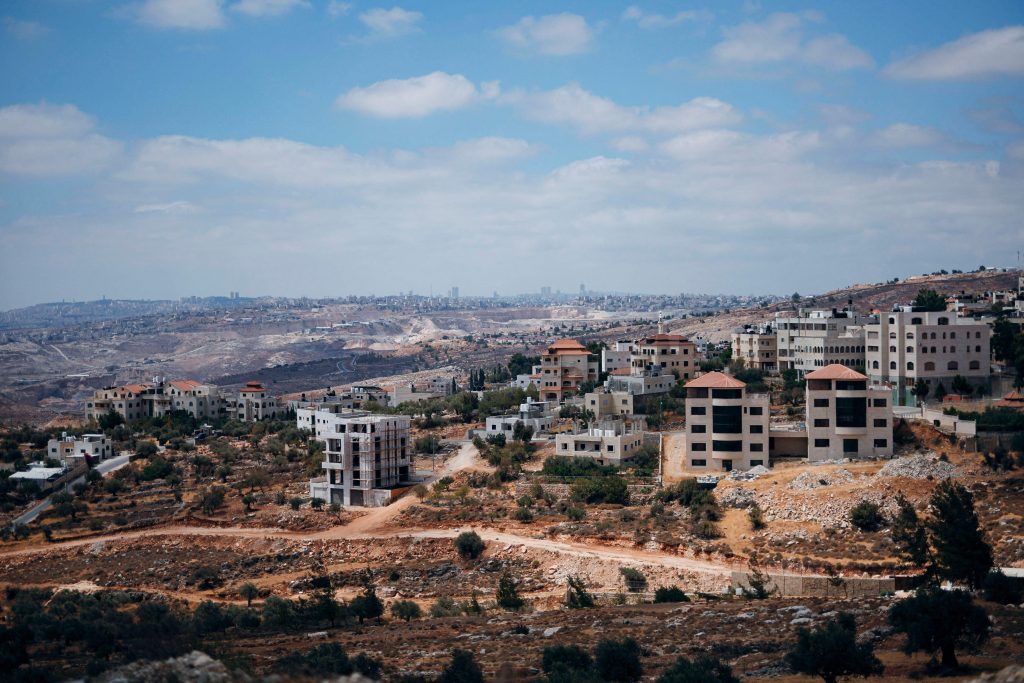
Israeli settlement reported near West Bank’s last Christian town
Taybeh, the West Bank’s last entirely Christian town, is under threat. Speaking exclusively to AdVaticanum, parish priest Fr Bashar Fawadleh warns that “silence today could allow an irreparable reality tomorrow” The Christian leaders of Taybeh have issued an urgent appeal after reports of a new Israeli settlement outpost on land overlooking the West Bank’s last entirely Christian town. According to local verifiable sources in Taybeh and field monitoring cited by the Vulnerable People Project, groups of settlers have been seen repeatedly on Jabal Al-Massis, a hill east of Ramallah that belongs to Taybeh, in what is described as preparations for the establishment of a new outpost immediately adjacent to Palestinian homes. Taybeh’s clergy are now calling for international intervention. Fr Bashar Fawadleh, parish priest of Christ the Redeemer Parish, has asked for diplomats, ambassadors, the United Nations, churches and international organisations to visit the area, monitor developments closely and use diplomatic means to prevent the outpost from becoming established. If gone ahead with, the development would create a permanent settler presence on the edge of the town, bringing with it an increased risk of violence, intimidation and restrictions on residents’ freedom of movement. Speaking exclusively to AdVaticanum, Fr Fawadleh said the issue extended well beyond a dispute over land. “When an outpost is established right on our doorsteps, the issue is no longer just a land dispute, but an attack on people’s right to live in safety and dignity,” he said. “Taybeh is not asking for privileges, but for the protection of children, families, land, and the Christian heritage that has survived in this town for two thousand years. Silence today could allow an irreparable reality tomorrow,” the priest said. This development follows months of warnings from the priests serving Taybeh’s three Christian churches. Fr Fawadleh, together with Fr Jack-Nobel Abed and Greek Orthodox priest Fr Daoud Khoury, has repeatedly argued that the eastern part of the town, which accounts for more than half of Taybeh’s territory, has become increasingly vulnerable to the gradual establishment of settlement outposts. The clergy have maintained that such sites frequently begin as small encampments before expanding over time, with the result that they become permanent features of the landscape and centres for further encroachment onto surrounding land. Jabal Al-Massis has already featured in the news, as the hill was the scene of a recent arson attack in which settlers allegedly set fire to a large area opposite the town’s fuel station. According to the parish, residents attempting to extinguish the blaze were obstructed as they tried to reach the site. In recent days, settlers reportedly established another outpost near Nablus, preventing villagers from accessing their agricultural land, while a Bedouin home east of Taybeh was set on fire. Studies suggest that settlers and soldiers have carried out thousands of attacks across the West Bank since the beginning of 2025, resulting in the destruction of hundreds of homes and the displacement of tens of thousands of Palestinians. Jason Jones, head of the Vulnerable People Project, explained that the reported construction on Jabal Al-Massis will add to the pressure put on the Christian community. “Settlers are now planting an outpost at every side of Taybeh, marking a dangerous new stage in the slow strangulation of the last Christian town in the West Bank,” he said in a statement. “Each new settlement expansion becomes a base for the next attack, the next blocked road, the next family pushed off its land. The world cannot continue to watch – we must stand with Taybeh now.” In separate comments given exclusively to AdVaticanum, Jones reflected on the significance of the town’s Christian heritage and urged greater solidarity from Christians abroad. “I’ve walked through Taybeh – a town that has survived sixteen centuries of empires but may not survive the world’s silence,” he said. “Today it stands surrounded by seven settlements choking the life out of its residents, as settlers have now planted a new outpost on Jabal Al-Massis, within sight of homes where families have kept the Christian faith since the fifth century. Now is the time for Christians around the world to stand with our brothers and sisters in Taybeh as they face their latest challenge, this new settlement.” The Vulnerable People Project says it continues to monitor developments on the ground as it seeks to verify further reports concerning activity on the hill overlooking the town. For Taybeh’s clergy, the concern is not just the appearance of another isolated settlement, but the cumulative effect of successive outposts surrounding the community. They argue that each new presence alters daily life by increasing pressure on residents and creating conditions that become progressively more difficult to reverse. Taybeh is in the Holy Land. Situated north-east of Jerusalem near Ramallah, it is recognised as the last remaining entirely Christian town in the West Bank, with a continuous Christian presence stretching back many centuries. As reports continue to emerge from Jabal Al-Massis, Taybeh’s priests insist that international attention cannot wait until construction is complete. Their message is that immediate engagement is needed if the town’s Christian community, its families and its historic presence are to be safeguarded from what they believe is an increasingly precarious future. Israeli settlements in the West Bank began after the 1967 Six-Day War, when Israel captured the territory from Jordan. Over the following decades, successive Israeli governments authorised or supported the expansion of settlements, while other outposts were established without formal government approval but have often remained in place or later received official recognition. Much of the international community considers the settlements to be illegal under the Fourth Geneva Convention, a position endorsed by the United Nations and the International Court of Justice, although Israel disputes this interpretation. The Christian population of the Holy Land has steadily declined over the past century, with emigration, conflict, economic hardship and political instability all contributing to shrinking communities in both the West Bank and Gaza. Once sizeable Christian populations in cities such as Jerusalem, Bethlehem and Ramallah have diminished significantly, while smaller communities have become increasingly vulnerable as opportunities for younger generations have narrowed.
Jul. 7, 2026
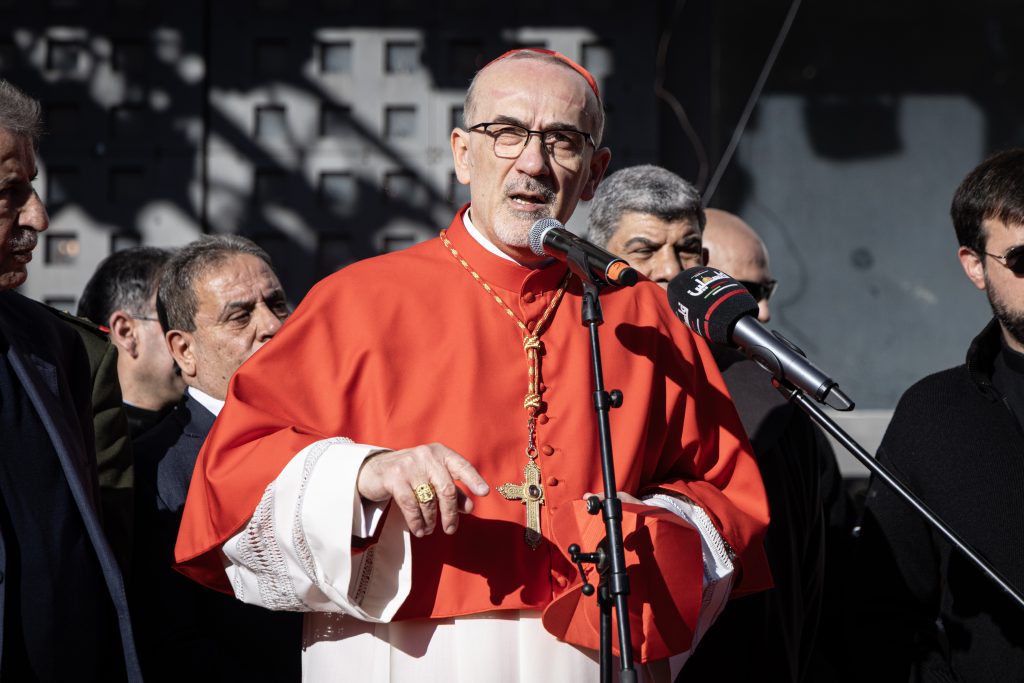
Cardinal Pizzaballa intervenes after alleged IDF attempt to halt Marian festival in West Bank
Cardinal Pierbattista Pizzaballa has reportedly intervened with Israeli authorities after military personnel allegedly attempted to halt a Marian festival in Taybeh, the last entirely Christian Palestinian town in the West Bank Cardinal Pierbattista Pizzaballa has intervened after the Israeli Defence Force personnel allegedly attempted to halt a Catholic Marian festival in the Christian West Bank village of Taybeh on Friday. Representatives of the Vulnerable People Project (VPP), an organisation that seeks to protect vulnerable people around the world from violence, said they were present in the village when Israeli military vehicles entered Taybeh early in the morning and ordered organisers preparing for the annual celebration in honour of the Blessed Virgin Mary to leave the area. The parish priest overseeing the festival immediately contacted Church authorities, and the matter was escalated to Cardinal Pizzaballa, the Latin Patriarch of Jerusalem. According to VPP, the cardinal subsequently spoke with Israeli authorities and secured permission for the event to proceed. The incident took place in Taybeh, regarded as the last entirely Christian Palestinian town in the West Bank. Jason Jones, founder and president of the Vulnerable People Project, told this publication that the events highlighted the precarious position of Christian communities throughout the region. “Christians with influence and power in the United States may be the last line of defence between vulnerable Christian communities and the forces driving them from their ancestral homelands,” he said. “From Gaza to the West Bank and Lebanon, ancient Christian communities are under immense pressure. If they are erased and we remained silent, we will share responsibility for that loss.” The president of VPP added: “The disruption of a Marian festival by the IDF is not just an attack on a celebration; it is another warning sign that the Christian presence in the Holy Land is in peril. “At the Vulnerable People Project, we launched Save West Bank Christians because we believe the descendants of the first Christians have the right to remain where Christianity was born. The time for solidarity is now.” A spokesman for the Latin Patriarchate of Jerusalem declined to comment. Lex Pouliot, manager of Middle East projects for the Vulnerable People Project, who witnessed the events, told AdVaticanum that organisers had initially feared disruption from Israeli settlers. “Our fear this morning was that radical settlers would disrupt preparations for the Marian Festival,” she said. “Instead, it was far more disturbing to watch the Israeli military intervene. Hearing a stun grenade explode as Christians prepared for a permitted religious celebration brought into sharp focus the countless stories I have heard throughout my time in the West Bank. “What we witnessed today should concern Christians around the world.” The allegations follow months of complaints from Church leaders and residents over increasing pressure on the Christian community in Taybeh. In March, Fr Bashar Fawadleh appealed for international attention after reporting that settlers had taken over privately owned land belonging to village residents. In April, Cardinal Pizzaballa and other heads of Churches in Jerusalem lodged a formal complaint with the authorities over alleged encroachments on Church-owned property in the area. During Holy Week, Cardinal Pizzaballa and Father Francesco Ielpo OFM, Custos of the Holy Land, were blocked from entering the Church of the Holy Sepulchre to celebrate Holy Mass, marking the first time in centuries that Mass had not been celebrated inside the church on Palm Sunday. The clerics later issued a joint statement describing the incident as a “grave precedent” that disregarded “the sensibilities of billions of people around the world who, during this week, look to Jerusalem”. The latest incident also follows reports that Israeli soldiers entered a brewery compound in Taybeh on Thursday. According to VPP, troops prevented the owner from accessing parts of the property while members of the organisation were interviewing local workers. Taybeh, identified with the biblical Ephraim, is the last remaining entirely Christian Palestinian town in the West Bank. Home to about 1,000 residents, the village has become increasingly vocal about pressure from nearby settler activity in recent years. Neither the Israel Defense Forces nor Israeli authorities had publicly responded to the allegations at the time of publication.
May 30, 2026