

Sspx Excommunications
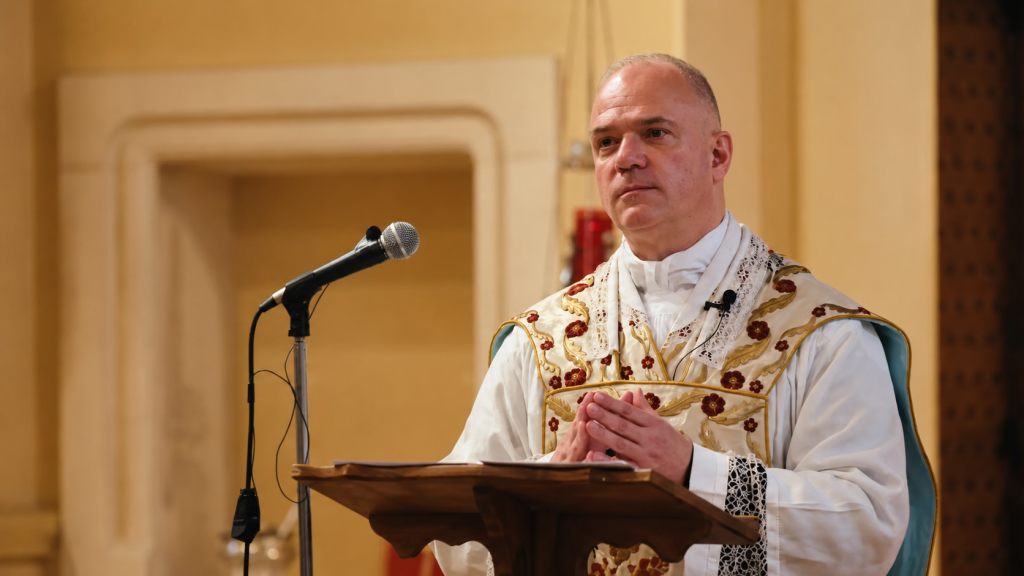
SSPX Superior General urges faithful to stand firm as canonical battle begins
The Superior General of the Society of Saint Pius X has issued his first direct appeal to the laity since the Vatican declared the Society’s bishops excommunicated. In an internal pastoral letter, Fr Davide Pagliarani tells the faithful to remain steadfast as the SSPX prepares for what it expects will be a lengthy canonical dispute with the Holy See The Society of Saint Pius X Superior General has urged the lay faithful attached to the society to remain steadfast as the society prepares for what is expected to be a prolonged canonical battle with the Holy See. In a pastoral letter, Father Davide Pagliarani thanked supporters for their loyalty following the consecration of four bishops at Écône on 1 July. He also portrayed the Vatican’s response as an unjust humiliation borne for the sake of preserving what the Society describes as the Church’s tradition. The letter is the SSPX leadership’s first direct appeal to the laity since the Holy See declared that the bishops involved had incurred automatic excommunication. Addressing the faithful directly, Father Pagliarani recalled the thousands who attended the consecrations at Écône where weather interrupted the liturgy. Quoting Psalm 17, the Superior General described the storm that swept across the ceremony as a moment that deepened rather than diminished his gratitude. “I was the privileged witness to a liturgy of exceptional beauty,” Father Pagliarani wrote, before turning to what he described as an even more moving sight: “a vast crowd of faithful who remained in their places throughout the storm and prayed to Our Lady for the new bishops, for the Church, and for the Pope.” The letter repeatedly returns to the role of the ordinary faithful, presenting them as the principal reason for the consecrations rather than the bishops themselves. “Ultimately, these consecrations were performed for each of you, dear faithful,” Father Pagliarani wrote. “Your souls are the true treasure entrusted to the Society.” Father Pagliarani’s letter leaves little doubt that the Society rejects both the legal and theological basis of the Vatican’s conclusions. “The consecrations have been condemned, and the severity of the sanctions imposed is unprecedented,” he wrote. While acknowledging that the bishops were the principal target of the decree, the Superior General argued that “even the faithful are affected.” Father Pagliarani called the condemnation “utterly unjust”, and said it represented “an immense humiliation for people whose sole aim is to defend the true faith and work for the salvation of souls.” The Superior General also suggested that the sanctions extend beyond individuals to the wider traditionalist cause itself. “Ultimately, it is Tradition itself, which we cherish above all else, that is excommunicated in all those who embody it,” the letter states. “It is obvious that, before God, such a condemnation cannot be valid.” “If Providence allows a crisis such that the teaching of the faith is mysteriously obscured, that same faith must continue to live in souls,” Father Pagliarani wrote. The Superior General added that “the small candle that each of you received on the day of your baptism must remain lit in your heart and mind until the very last day.” “The Fraternity will never abandon you,” Father Pagliarani concluded. “Your souls will never lose their value and worth in the eyes of its priests.” AdVaticanum understands that the message was read to congregations across SSPX chapels on Sunday and had been circulated internally beforehand as part of an embargoed circular letter sent throughout the Society. According to information obtained by the publication, the accompanying internal circular letter by Fr Le Roux, Secretary General, also sought to prepare superiors and members for the next stage of the dispute following the Society’s preliminary canonical recourse against the Vatican decree, outlining the movement’s intentions as it navigates the post-consecration fallout. Following the 1 July consecrations, the Dicastery for the Doctrine of the Faith issued a decree on 2 July declaring that Bishop Alfonso de Galarreta, Bishop Bernard Fellay as co-consecrator, and the four newly consecrated bishops had incurred latae sententiae excommunication under canons 1387 and 1364. The accompanying explanatory note extended well beyond the declaration concerning the bishops. It stated that all sacred ministers of the Society are in schism and subject to the same penalty, described their sacramental ministry as illicit, asserted that confessions heard by SSPX priests and marriages celebrated by them are invalid, and warned clergy and faithful against formal adherence to the movement, citing the criteria established by the Pontifical Council for Legislative Texts in 1996. The publication of the letter follows a series of increasingly detailed SSPX responses to the Vatican decree. In in-house SSPX articles published after the sanctions, including Invalid Punishments, Valid Sacraments , followed by Nuclear Excommunication and Hundreds of Thousands of Catholics Purportedly Excommunicated: How Should We See This? , the Society maintained that the penalties are canonically null because a state of necessity excuses any alleged offence. It further argued that neither bishops, priests nor lay faithful had incurred excommunication and insisted that confessions and marriages remain valid through the Church’s principles governing supplied jurisdiction and matrimonial consent. On 11 July, the SSPX General House lodged a preliminary recourse with the Dicastery for the Doctrine of the Faith. In a communiqué published two days later, the Society stated that the appeal had been submitted under canon 1734 and the following canons, adding that it “has the effect of suspending the execution of the decree, in accordance with canon 1353.” The appeal, the communiqué said, had been presented “in a spirit of respect for ecclesiastical authority and of faithful attachment to justice, truth and the good of the Church.” Whether that legal argument ultimately succeeds appears uncertain. In an interview published by AdVaticanum on 18 July, Archbishop Juan Ignacio Arrieta, the former Secretary of the Dicastery for Legislative Texts, offered a detailed canonical assessment of the Holy See’s position. Archbishop Arrieta described the decree as “an act owed”, arguing that the dicastery merely declared a penalty that had already been incurred automatically under canon 1387. The former Vatican official nevertheless distinguished between the declaration of excommunication and the faculties previously granted by Pope Francis. Regarding confessions, Archbishop Arrieta stated that the faculty had been granted by a pontifical act and therefore “an act of the same nature is required to revoke it.” Revocation, Archbishop Arrieta said, “requires direct authorisation from the Pope himself.” On marriages, however, Archbishop Arrieta concluded that the present circumstances make it improbable that diocesan bishops could lawfully grant the necessary delegation, meaning marriages celebrated by SSPX clergy would be canonically null for lack of canonical form. In the same article, a priest close to the Dicastery for the Doctrine of the Faith told AdVaticanum that the Society’s preliminary recourse was “unlikely to be granted”, arguing that the dicastery had not imposed a penalty but merely declared one already incurred for what was described as a well-known offence. Any lifting of the excommunications, the priest suggested, would require repentance by those involved. With the preliminary recourse now before the Dicastery for the Doctrine of the Faith, and internal correspondence indicating that the Society is preparing for the next phase of the confrontation, the pastoral appeal suggests that the SSPX expects the dispute to continue well beyond the coming months.
Jul. 20, 2026
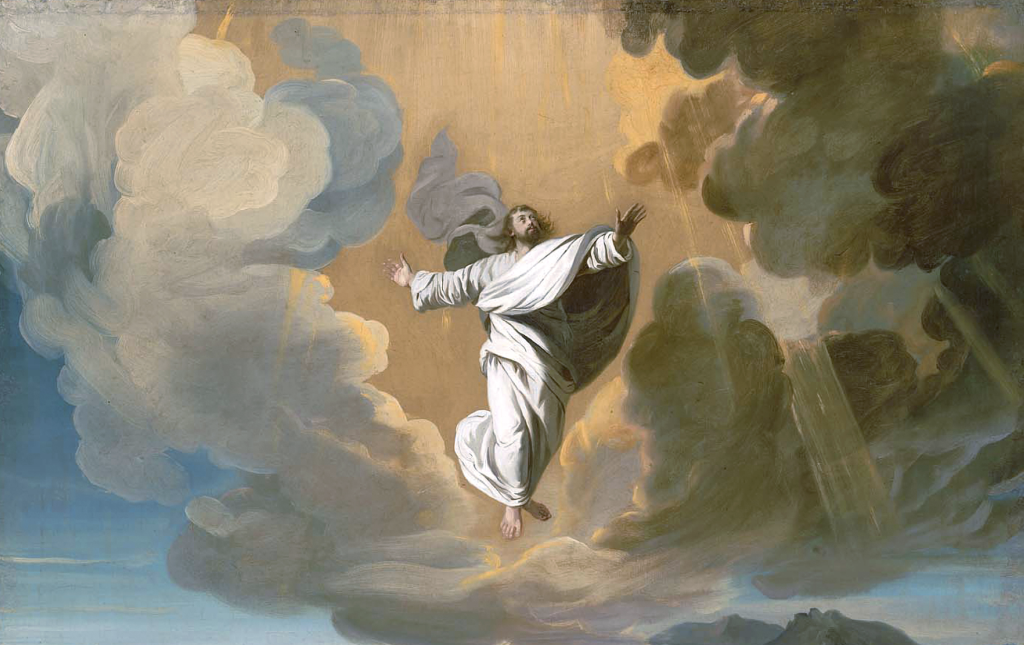
A homily for the Sunday after the Ascension: Dom Alcuin Reid warns against SSPX excommunications
Dom Alcuin Reid warns against possible SSPX excommunications in a homily for the Sunday after the Ascension, saying Catholics attached to the older liturgical rites have faced exclusion and “ecclesiastical displacement” since Traditionis custodes In these days after the Ascension, as the Paschal candle stands extinguished and we wait in expectation and hope for the consoling fire of Pentecost, the Sacred Liturgy of our Holy Mother the Church gives us a somewhat stark warning about living as faithful witnesses to Christ. “They will put you out of the synagogues; indeed, the hour is coming when whoever kills you will think he is offering service to God. And they will do this because they have not known the Father, nor me,” we are informed by the words of Our Lord Himself in this morning’s Gospel. Historically, these words apply to the expulsion of early Christians from the Jewish synagogues as it became clear that Christian faith and life was a substantial development of Jewish belief that the authorities of the time deemed unacceptable. Christianity rightly boasts of and venerates its roots in the Old Covenant, but it remains a fact that the New Covenant fulfils the Old and surpasses it. The Old Covenant no longer suffices. Because of this reality, Christians were expelled from Jewish synagogues and, as we see clearly in the martyrdom of St Stephen (cf. Acts 7), were indeed killed out of a supposedly godly zeal. But what are we to make of this prophecy today? We hear it proclaimed only days after the Holy See has threatened to excommunicate those who plan to consecrate new bishops for the Society of St Pius X, and the new bishops themselves, at the beginning of July. (In spite of much sensational reporting, there is no question of the excommunication of their faithful.) The parallel is not exact: there are many issues involved, and they are complex. But the echo of Our Lord’s prophecy at this time is unnerving, particularly given the zeal with which those who wish to celebrate according to the older liturgical rites of the Church have been excluded from their churches and chapels since the liturgical, historical and pastoral travesty that is the Motu Proprio Traditionis custodes of 2021, which has brought about further disunity and division whilst purportedly seeking unity through the imposition of a ritual uniformity never before known, or required, in the life of the Church. Many are the good and loyal Catholics who have experienced expulsion from their places of worship and the killing off of the sources of grace and pastoral care for themselves and their families at the hands of prelates who, seemingly, “do this because they have not known the Father, nor me.” We ourselves have had to step outside of the system, as it were, in order simply to survive: something no one wishes to do, but which, in extraordinary times, may become truly necessary in conscience. Necessity is the key, as the Society of St Pius X often says. For the older liturgical rites are not a matter of mere aesthetic preference: they are the integral source and summit of our Christian life and mission and guarantee a ritual and doctrinal integrity that is, at best, “watered down” in their successors and which, if we examine the increasingly poisonous fruits of the virus of synodalism that has been unleashed in the Church, is at times utterly compromised, if not downright rejected, by those who would proscribe that which, of its very nature, “remains sacred and great for us too, and it cannot be all of a sudden entirely forbidden or even considered harmful.” (Benedict XVI, Letter, 7 July 2007.) Maintaining the rites of the usus antiquior, including the Divine Office, the sacraments and sacramentals, is not a personal “choice”: it is the conviction that, at this time in the history of the Church, they are necessary to guarantee a continuity of faith and life with the Church founded by Christ on the Apostles, at a time when other means do so less effectively or are at times hijacked for ends utterly inimical to the Deposit of Faith. This is not to malign the good will of many of those in authority, or of clergy, religious and laity who have struggled for decades, and who continue to struggle, to be faithful, often in the face of much opposition and, at times, from bishops and other ecclesiastical superiors. Nor is it to question the validity of the newer rites when celebrated correctly. This is, however, to underline the pastoral necessity, that is, the necessity for the salvation of souls, of free access to the Church’s unadulterated rites and teaching: something that the fruits produced by communities who celebrate them make abundantly evident. Sadly, this is a reality which still seems to be ignored. What, then, can we do when the choice seems to be between disobedience and dissolution? This is no small question, and we do well to consult St Thomas Aquinas and other sound theologians on its implications. In doing so, we find that material disobedience to positive law, as distinct from Divine law, can, extraordinarily, be tolerated for a truly necessary good: a father must feed and protect his family. There is no virtue in allowing them to starve to death or to be destroyed by danger. At certain times we must act outside the norm. And, as the fourth century martyrs of Abitene teach us so eloquently, sacramental starvation is not tolerable: sine dominico, non possumus (without the Sunday Eucharist, without the liturgy and the sacraments, we simply cannot live). But first and foremost, we must pray. In the context in which we find ourselves, the counsel of this morning’s Epistle is particularly pertinent: “Keep sane and sober for your prayers,” St Peter insists. So too he urges us: “Above all hold unfailing your love for one another, since charity covers a multitude of sins. Practice hospitality ungrudgingly to one another. As each has received a gift, employ it for one another, as good stewards of God’s varied grace.” Prayer, charity, hospitality and mutual service are most certainly necessary at all levels of the Church in our times, and persevering in each of them will bring many graces, particularly for those who are persecuted or who, as it were, find themselves “ecclesiastically displaced”. In these days when we await the coming of the Counsellor whom Our Lord promises to send us from the Father, we can, then, each redouble our prayers that the Spirit of Truth shall truly inhabit those in authority and, as we shall sing in the Sequence of Pentecost, flecte quod est rigidum, fove quod est frigidum, rege quod est devium. (Bend what is inflexible, warm what is chilled, correct what has gone astray.) Not only should we beg Almighty God to send the Holy Spirit to melt the hearts that govern the Church, we should also implore Him in particular to fill the Holy Father with His sevenfold gifts of wisdom, understanding, counsel, fortitude, knowledge, piety and fear of the Lord in the exercise of his unenviable but utterly crucial duty to protect the integrity of the Deposit of Faith and the unity of the Church under it, of which the Sacred Liturgy is the living source and sacramental. The Holy Father needs our prayers at this time! Let us begin praying earnestly that, through the inspiration and gifts of God the Holy Spirit, charity and Truth will prevail on all sides and all talk of excommunication shall cease; that true hospitality will be shown; and that those who have been given the gift of the episcopacy and papacy will employ them, as good stewards, in the service of all their flock after the example of the Good Shepherd Himself (cf. Jn 10). With the help of our prayers, through the power of God the Holy Spirit, this can yet come to pass. Dom Alcuin Reid is the Prior of the Monastère Saint-Benoît in Brignoles, France, www.monasterebrignoles.org
May 17, 2026