

Society Of St Pius X
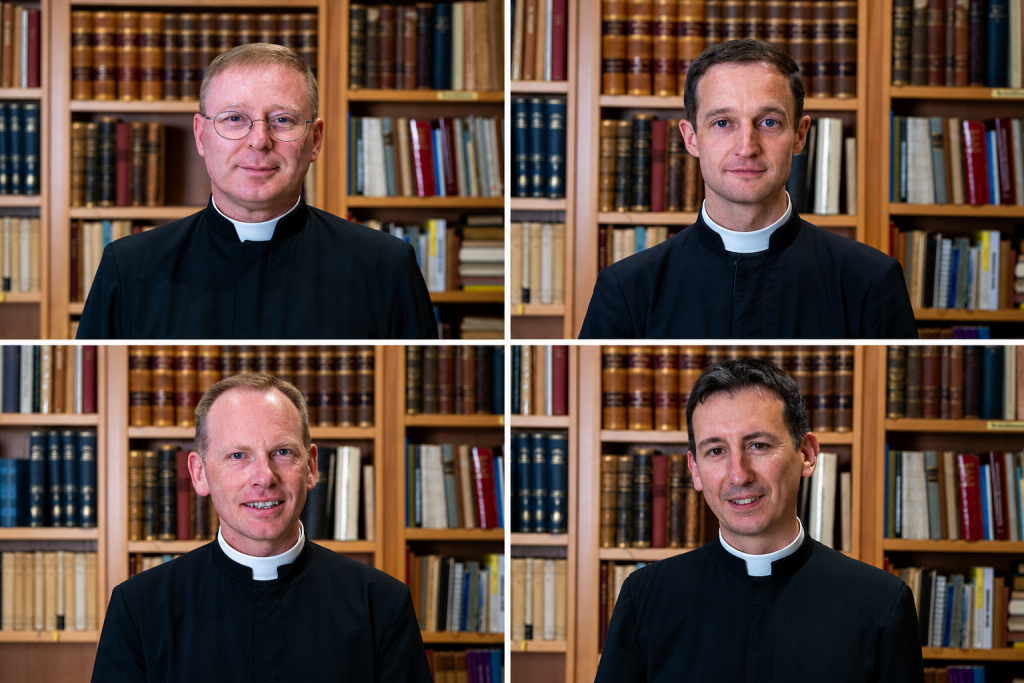
Mottos and Coats of Arms of new SSPX bishops released
The SSPX has released the episcopal mottos and coats of arms of the four priests who will be consecrated bishops at Écône on 1 July Ahead of the 1 July consecrations at Écône, the Society of Saint Pius X has released the coats of arms and episcopal mottos of the four priests who are to be consecrated bishops. With two of the bishops from France, one from Switzerland and one from the United States, the coats of arms incorporate their nationalities and cultural heritage, as well as their spiritual influences and the paths that led them to the priesthood. Tens of thousands are expected to gather at Écône for the consecrations, which will go ahead without a papal mandate, with the Society stating that there is a “grave necessity for the salvation of souls”. At present, only two of the bishops consecrated by Archbishop Marcel Lefebvre in 1988 are still alive: Bishop Bernard Fellay and Bishop Alfonso de Galarreta. The Society has more than 700 priests serving an estimated one million faithful throughout the world. With both remaining bishops now in their late sixties, the Society considers it necessary to provide younger bishops to continue its work and provide for the needs of its priests and faithful. Below are their coats of arms, alongside their official photographs released by the Society. Bishop-elect Schreiber Bishop Pascal Schreiber’s coat of arms is quartered, following a long-standing heraldic tradition in German-speaking countries. The first quarter features the triumphant face of Christ the King as seen in the vision of Saint Nicholas of Flüe, patron saint of Switzerland, whose spirituality the bishop credits with inspiring his vocation to the priesthood. In the saint’s vision, the six rays surrounding Christ’s face symbolise God’s perfect knowledge, wisdom and presence, while also expressing the believer’s journey towards a deeper understanding of the divine through prayer and contemplation. The second and third quarters display the Schreiber family arms: a golden lion holding a quill on a red field. The lion represents courage, strength and kingship, while the quill is a reference to the family name, Schreiber , meaning “scribe” or “writer”, and symbolises literary work. The fourth quarter contains an eight-pointed golden star on a black field. The star recalls both Christ, the “bright morning star”, and the Blessed Virgin Mary under her title Stella Maris (“Star of the Sea”), while also referring to Saint Nicholas of Flüe, who recounted seeing a star that illuminated the world before his birth and later became a recurring feature of his mystical life. The use of black, red and gold throughout the shield also reflects the colours of the German flag, acknowledging the country in which the Society’s seminary at Zaitzkofen is situated. The bishop-elect has chosen the motto Virgo Fidelis (“Virgin Most Faithful”), taken from the Litany of Loreto. The title expresses Mary’s perfect fidelity to God as daughter of the Father, Mother of the Son and Spouse of the Holy Ghost, while asking her intercession that Christians may remain faithful to their own vocation. The motto also holds particular significance within the Society of Saint Pius X. Archbishop Marcel Lefebvre included the invocation Virgo Fidelis in the Society’s statutes, encouraging its members to renew their commitments each year on the Feast of the Immaculate Conception by seeking from the Blessed Virgin “the grace of fidelity”. The bishop-elect also points to the title as a reminder of the virtues of purity and fortitude, concluding with Christ’s words from the Beatitudes: “Blessed are the clean of heart: for they shall see God.” Bishop-elect Michael Goldade Bishop-elect Goldade’s coat of arms is set against a blue field with a decorative border of twelve golden ears of wheat linked by intertwined stalks. At its centre is a golden shield bearing the Vendéen Heart: two intertwined red hearts surmounted by a crown and a cross. The wheat carries both personal and biblical significance. It recalls the bishop’s roots in North Dakota and his upbringing in Kansas, the two leading wheat-producing states in the United States, while the twelve ears also represent the twelve members of his family. The symbolism extends throughout Sacred Scripture. The wheat recalls the patriarch Joseph, one of Jacob’s twelve sons and guardian of Egypt’s grain, who is seen as a foreshadowing of Saint Joseph, foster-father of Christ and protector of the universal Church. It also points to the Blessed Eucharist and the Holy Sacrifice of the Mass, which stand at the heart of the Society of Saint Pius X. The number twelve evokes both the Apostles, the foundations of the Church, and the twelve baskets of fragments gathered after the multiplication of the loaves, symbolising the fullness of God’s providence. The blue background is a tribute to the Blessed Virgin Mary, described as the virginal field from which the Bread of Life came forth, while the gold of the central shield signifies the divinity of Christ and also alludes to the bishop’s family name, Goldade. The crowned intertwined hearts represent the Sacred Hearts of Jesus and Mary, a longstanding devotion of the Goldade family, and also form part of the heraldic tradition of the Society of Saint Pius X. The bishop-elect has chosen the motto *Adeamus Cum Fiducia* (“Let us go therefore with confidence”), taken from the Letter to the Hebrews: “Let us go therefore with confidence to the throne of grace: that we may obtain mercy, and find grace in seasonable aid” (Heb. 4:16). These words also open the Introit of the Mass of the Immaculate Heart of Mary, linking the motto closely to the liturgy. The motto expresses complete confidence in the intercession of the Blessed Virgin Mary as Mediatrix of all graces and “Throne of Grace”, through whom Christ dispenses his gifts. It also recalls the opening prayers of the Mass — “I will go in to the altar of God” — reflected in the ears of wheat surrounding the shield. Through the united Hearts of Jesus and Mary and the graces flowing from the Holy Sacrifice of the Mass, the bishop-elect presents the motto as an expression of hope and trust in God’s providence. Bishop-elect Poinsinet de Sivry Bishop-elect Michel Poinsinet de Sivry’s coat of arms is divided horizontally into two halves. The upper section features a silver sword with a golden hilt crossed by a golden palm branch on a red field, while the lower section depicts a white swan with a golden beak swimming on silver waves against a blue background. Together, the two halves express the themes of combat, victory and fidelity that underpin the bishop’s chosen episcopal motto. The sword represents the spiritual battle waged by the Church to extend the reign of Christ over the world through the fruits of his Redemption. It also symbolises the “sword of the Spirit” described by Saint Paul in the Letter to the Ephesians, identifying the Word of God as the Church’s chief weapon against the errors of the world. Crossing the sword is a palm branch, the traditional emblem of victory and martyrdom, representing the triumph won by the Church through the witness of the saints and martyrs. The lower half of the shield bears a swan taken from the Poinsinet de Sivry family coat of arms. The swan symbolises fidelity through its lifelong pairing with a single mate, while its white plumage represents purity. Together, these qualities are presented as virtues closely associated with the life of faith. The bishop-elect has adopted the motto Fides Vincit Mundum (“Faith Conquers the World”), taken from the First Letter of Saint John: “This is the victory which overcometh the world, our faith” (1 Jn. 5:4). The words recall Christ’s own declaration, “I have overcome the world” (Jn. 16:33), emphasising that Christians share in that victory through faith in him. The motto also reflects the Church’s understanding of the Christian life as a spiritual struggle, echoing both Saint Augustine’s image of the “Two Cities” and Saint Ignatius of Loyola’s meditation on the “Two Standards”. For the bishop-elect, it expresses confidence that, despite the trials facing the Church today, Christ’s victory is certain, while also reflecting the Society of Saint Pius X’s understanding of its own mission and history. Bishop-elect Hanappier Bishop-elect Marc Hanappier’s coat of arms centres on the Paschal Lamb standing on a blue field, surrounded by three silver fleurs-de-lis. The Lamb bears the banner of the Resurrection and pours its blood into a golden chalice at its feet, while a golden halo marked with a red cross identifies it as the victorious Christ. The imagery is drawn from the Book of Revelation, where the Lamb who was slain is worshipped by the saints and angels as worthy of all honour, glory and dominion. The Lamb symbolises Christ’s victory through his sacrifice and points directly to the Holy Sacrifice of the Mass. The blood flowing into the chalice represents the Precious Blood offered for the salvation of the world and given to the faithful in the Eucharist to purify and strengthen them. The image also recalls the Introit of the Mass of Christ the King, which proclaims the triumph of the Lamb who was slain. Surrounding the Lamb are three silver fleurs-de-lis. Traditionally symbols of royalty, they also represent the purity of the Blessed Virgin Mary, recalling the words of the Song of Songs: “As the lily among thorns, so is my love among the daughters.” Set against the blue background, they also evoke France, while their number reflects the arms of the city of Versailles, where the Hanappier family is based. The bishop-elect has chosen the motto Dignus Est Agnus (“Worthy is the Lamb”), taken from the fifth chapter of the Book of Revelation. The phrase recalls Saint John the Baptist’s proclamation, “Behold the Lamb of God”, through which the first disciples were drawn to Christ, and presents the Lamb as the source of priestly vocations. The motto also highlights Christ as both the eternal High Priest and the sacrificial victim whose offering is made present at every Mass. The bishop-elect further links the image of the Lamb receiving the sealed book in Revelation to Christ’s lordship over all of history, affirming that every age and every nation ultimately finds its meaning in his sacrifice. For this reason, the words “Worthy is the Lamb” express both the centrality of the Eucharistic sacrifice and the conviction that salvation is found in Christ alone.
Jun. 26, 2026

Pope Leo’s SSPX appeal reveals the real fault line
Pope Leo XIV has urged the SSPX not to proceed with its planned episcopal consecrations on 1 July. Yet his remarks may have revealed something more significant: where Rome believes the real obstacle to reconciliation lies. Analysis by Niwa Limbu Pope Leo XIV has made a fresh appeal to the Society of St Pius X (SSPX) to abandon plans to consecrate four bishops without papal approval. Speaking to journalists outside Villa Barberini in Castel Gandolfo on 16 June, the Pope said he was considering making one final request to the traditionalist society before the planned consecrations on 1 July at the SSPX seminary in Écône, Switzerland. “We have invited them, and I am still considering making another appeal, to say: ‘Do not do this. Let us try to live communion in the Church,’” the Pope said. “But it is their choice. They must understand what it means for them and for the Church.” The remarks represent Pope Leo’s clearest public intervention since the SSPX announced earlier this year that it intended to proceed with the episcopal consecrations despite the absence of a pontifical mandate. The Society has argued that the measure is necessary to ensure the continuation of its sacramental and apostolic work. Its leadership has maintained that an “objective state of grave necessity” exists within the Church, requiring the appointment of new bishops to safeguard the future of the fraternity’s ministry. The Vatican, however, has repeatedly expressed concern that episcopal consecrations carried out against the explicit will of the Roman Pontiff would constitute a grave rupture in ecclesial discipline. The prospect of such a step led to the crisis of 1988, when Archbishop Marcel Lefebvre consecrated four bishops without papal approval, resulting in Rome declaring that a schismatic act had taken place. Pope Leo indicated that the dispute is not merely procedural but touches on deeper theological questions. Referring to the SSPX’s longstanding criticisms of the Second Vatican Council, he said division within the Church remained “a painful matter”, adding that the Society continued to reject “certain fundamental elements of the Church, beginning with various points of the Second Vatican Council”. His Holiness added: “If they make those choices, I am sorry. But we must move forward.” The Pope’s comments come after months of exchanges between the Holy See and the Society. Earlier this year, the SSPX confirmed its intention to proceed with the consecrations, while subsequent contacts between Rome and the fraternity failed to produce an agreement. On 12 February, a meeting took place in Rome between SSPX Superior General Fr Davide Pagliarani and Cardinal Víctor Manuel Fernández, Prefect of the Dicastery for the Doctrine of the Faith. The encounter, described by the Vatican as “cordial and sincere”, saw Cardinal Fernández propose a structured path of theological dialogue aimed at addressing unresolved doctrinal questions, particularly those concerning the Second Vatican Council and the “minimum requirements necessary for full communion”. Cardinal Fernández made clear that any such dialogue could only proceed if the SSPX agreed to suspend the planned 1 July consecrations. He warned that proceeding without a papal mandate would constitute a “decisive rupture of ecclesial communion (schism)” with grave canonical consequences, including automatic excommunication. In a letter dated 18 February and made public the following day, Fr Pagliarani responded that, while the SSPX welcomed the idea of renewed doctrinal discussions in principle, it could not accept the condition of postponing the consecrations. “We both know in advance that we cannot agree doctrinally, particularly regarding the fundamental orientations adopted since the Second Vatican Council,” he wrote, while renewing the Society’s request for a personal audience with Pope Leo XIV. Subsequent exchanges failed to bridge the gap. In May, the Vatican reiterated its warnings, and the SSPX published a “Declaration of Catholic Faith” outlining what it considers the minimum necessary for communion while reiterating its concerns about post-conciliar errors. On 26 May, the Society publicly named the four priests slated for consecration, framing the act as a necessary service to souls amid the ongoing crisis in the Church. As the 1 July date at the Écône seminary approaches, negotiations appear effectively stalled. The SSPX maintains its position that an “objective state of grave necessity” justifies the consecrations to ensure the continuation of its sacramental ministry, while the Vatican insists on canonical obedience and prior doctrinal resolution. Generally speaking, Pope Leo XIV addressed the Society of St Pius X in a manner that was pastoral, regretful yet resolute, characteristic of his style thus far. The delivery was conversational and non-confrontational, yet doctrinally unambiguous. By speaking informally to journalists rather than issuing a formal Vatican statement, the Pope signalled personal investment without escalating the matter into a formal magisterial intervention. This approach is indicative of how Vatican communications have evolved in handling such matters. Most importantly, it marks a change from previous pontificates. It represents the first time a Pope has offered an off-the-cuff public comment on the SSPX situation in the lead-up to planned episcopal consecrations. By contrast, there was no specific public comment by Pope John Paul II on the planned 1988 SSPX episcopal consecrations prior to Archbishop Lefebvre’s announcement and the immediate lead-up in early June 1988. What is really happening remains unclear, with little clarified in the public exchanges between Rome and the Society. The Pope’s remarks reflect this ongoing and opaque reality. For many hoping for a resolution to the SSPX question, the latest developments will bring both frustration and renewed determination. The Pope’s sorrow is evident and more irenic than some had feared. Yet the public emphasis on Vatican II as the fault line confirms long-held suspicions. Rome still views critiques the of post-conciliar Church as the core obstacle, not merely Lefebvrist intransigence. If the SSPX holds to what the Church taught before Vatican II, and Leo indicates that it cannot be accepted because of what Vatican II taught, then there is a perceived mutual exclusivity between what Catholicism was and what Catholicism is. How can continuity be maintained when pre-conciliar teachings appear at odds with the post-conciliar emphases now presented as essential?
Jun. 17, 2026
‘This is not synodal’: Bishop Schneider on possible SSPX excommunications
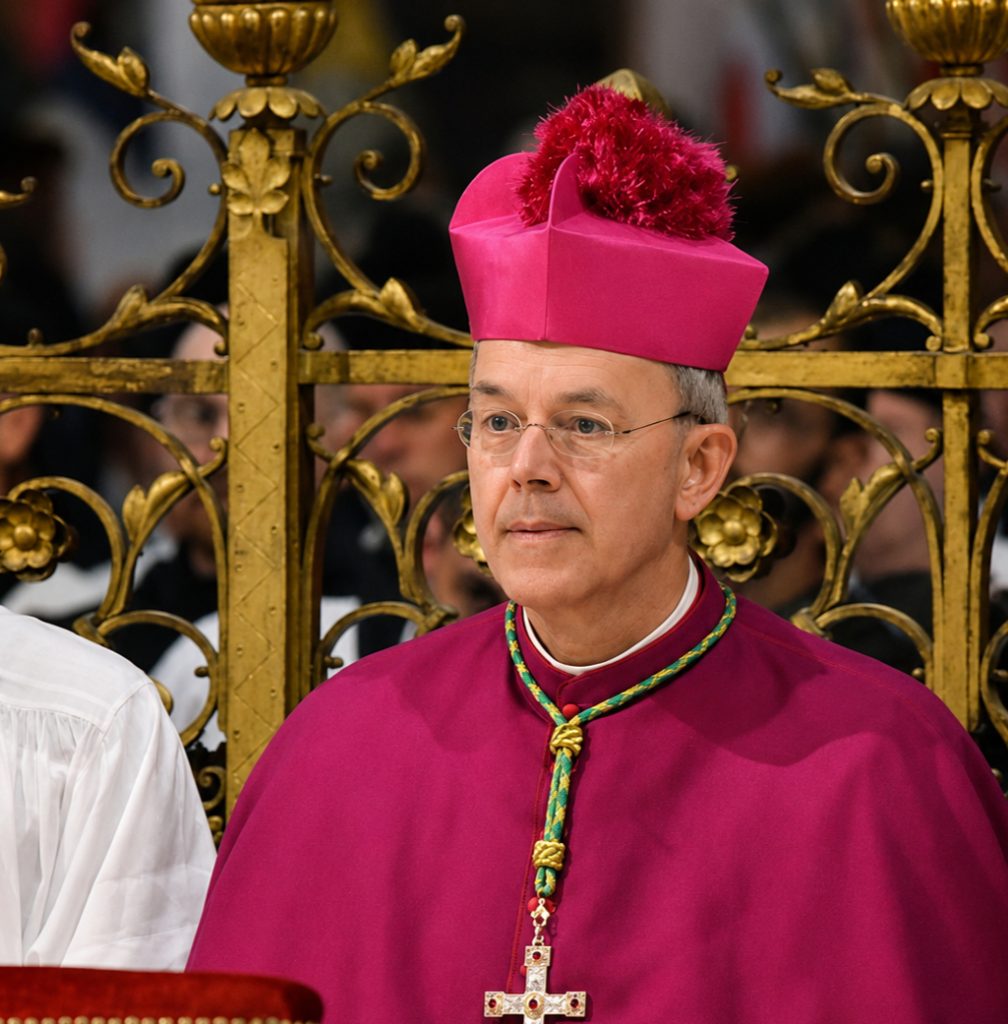
Bishop Athanasius Schneider, Auxiliary Bishop of Astana in Kazakhstan, has said that excommunicating the SSPX would be “not synodal” and warned that, if the Pope were to excommunicate the Society, “this will go down in history as a huge error of rigidity”. Speaking to EWTN’s The World Over with Raymond Arroyo, the 65 year old […] Bishop Athanasius Schneider, Auxiliary Bishop of Astana in Kazakhstan, has said that excommunicating the SSPX would be “not synodal” and warned that, if the Pope were to excommunicate the Society, “this will go down in history as a huge error of rigidity”. Speaking to EWTN’s The World Over with Raymond Arroyo , the 65 year old prelate spoke openly about the planned July episcopal consecrations by the Society of St Pius X, which have led to reports that the entire Society and its faithful could find themselves excommunicated. Bishop Schneider pointed to what he described as a contradiction in the approach, saying that the Vatican is “promoting the inclusivity of synodal methods and are generous with the German Synodal Way” as well as being “generous with the Communist Chinese Party to grant them to ordain bishops there”, whilst coming down with full ecclesial force on the Society of St Pius X. The bishop further said that he had written to the Pope asking him to give the SSPX permission to consecrate bishops “as a first step to integrate them, to create an atmosphere of mutual trust”. He also appealed directly to the Pope during the interview, saying: “Holy Father, please avoid such a wound in the Church which you can avoid.” Throughout the interview, Bishop Schneider was notably more forgiving towards the Society than other prelates have been when discussing the its canonical irregularity. He said that he did not think they were “schismatics” and that they “love the Pope, pray for the Pope, and want simply to have the guarantee to transmit the faith of all times without any ambiguity”. When the topic turned to whether the concerns of the SSPX were purely related to their attachment to the Tridentine Mass, the bishop responded by saying “the problem is deeper”. Acknowledging their criticisms of parts of the Second Vatican Council, he said: “There are ambiguities in some council texts. There are ambiguities in the post-conciliar Magisterium.” He also appeared grateful for the role played by the Society in raising such questions about the Second Vatican Council, telling Arroyo that “we must be honest, and therefore we must be thankful to the Society of Pius X to address it publicly”. Appointed a bishop at the age of 49 by Pope Benedict XVI, Bishop Schneider has long been associated with the traditional Latin Mass and the communities attached to it. In 2015 he was appointed by the Holy See to carry out visitations to two SSPX seminaries. After the visit, he stated that “there are no serious reasons to deny the clergy and faithful of the Society of Saint Pius X official canonical recognition”. At present, every indication points towards the Society of St Pius X consecrating bishops on July 1, with a website recently created requiring attendees to complete compulsory registration “for security reasons”. Photo by: Monegasque2 – Own work, CC BY-SA 4.0, https://commons.wikimedia.org/w/index.php?curid=48468039
May 16, 2026