

Saint Claude La Colombi Re
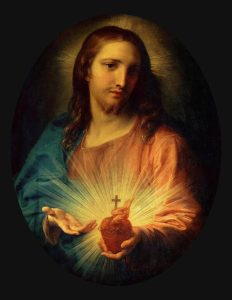
The healing power of the Sacred Heart
In a reflection for the month of the Sacred Heart, Brother René Stockman considers the writings of Saint Claude La Colombière, the reality of suffering, and the healing that comes through trust in God’s mercy “My God, I am so firmly convinced that You watch over those who have placed their hope in You, and that one will lack nothing when one expects everything from You, that I have resolved to live without worry from now on and to entrust to You everything that troubles me: ‘Lord, You let me dwell in safety. I need not be afraid; I can sleep in peace’ (Psalm 4:9). People may take everything from me: my possessions, my honour; illness may sap my strength so that I can no longer even serve You; I may even lose Your grace through my sins: but never shall I lose the hope that I shall keep until the last day of my life. Nothing and no one will be able to take this hope from me”. These words are those of Saint Claude La Colombière, a 17th-century Jesuit who was the spiritual director of Saint Marguerite-Marie Alacoque in Paray-le-Monial. The latter is perhaps better known to us because of the devotion to the Sacred Heart of Jesus, which gained a special place within the Church through her. Saint Claude La Colombière is less known. I first discovered him during a chance visit to Paray-le-Monial and was struck by the words he wrote about his trust in God’s mercy. For that faith in God’s mercy is the very heart of the Sacred Heart devotion to which we are especially invited during the month of June. God’s mercy is the absolute expression of his love for each and every one of us and is therefore truly unconditional. If we become truly convinced of this, then we will be able to identify with the words of Claude de Colombière. He takes as his starting point the line from Psalm 4: “Lord, you let me dwell in safety. I need not be afraid; I can sleep in peace.” We all know moments when we are anything but sleeping peacefully, because all sorts of problems disturb our sleep. These may be the conflicts we had the previous day with someone close to our hearts, or a disappointment suffered at the hands of a person from whom we certainly did not expect it. As Claude points out, our honour can be wounded and we can be portrayed in a completely false light. We may be falsely accused, causing everything we have built up as good to vanish into thin air, as it were, and be overshadowed by negativity. We may fall victim to gossip that drags our name through the mud, and we know the proportions this can take today when it finds its way onto the internet. And yes, illness too can completely derail our plans and push us into an unwanted passivity, leaving us lacking even the strength to pray. It is a list that could be added to. But the intention here is not to list everything that can disturb our sleep and our inner peace, tranquillity and serenity. The question is how we deal with all this, and whether, if we wish to maintain the illusion of having the strength to process it all ourselves, we will actually succeed in doing so. Claude de Colombière does not run away from the problems that befall him or the disappointments he faces; he faces them squarely. But he knows how to hand them over and entrust them to God’s mercy. It is thanks to his growing realisation that he is truly loved by God that he becomes convinced that nothing is too much to entrust to God’s mercy. God’s loving and merciful heart is so much greater than his own heart, troubled by the many worries that surround and afflict him, that it has the power to fully compensate for and heal the loss of his inner peace, and to bestow upon him, as it were, a new heart. The unconditional love and mercy that God radiates towards him, and towards us, causes an equally unconditional hope to grow within him and within us, a hope that no one and nothing can take away from us. Here we need no artificial means to regain our peace of mind, but will be healed from within and our wounds will be completely healed, so that not even a painful scar will remain. At a time when everything is expected of medical technology, including the healing of psychological and existential ailments and wounds, the therapy offered to us here may sound rather unscientific. We have become accustomed to a different language. There is a grain of truth in the observation that the confessional has been replaced by the psychologist’s chair and penance for the prescription for a psychotropic drug. In saying this, we do not detract from the merits of the ever-advancing field of medicine, through which so many people can be helped more effectively; yet we do ask ourselves whether, by losing faith in God’s mercy, we have not closed off a path to deeper healing and restoration. It is from this same conviction that we can look up to the image of Jesus, who showed Saint Faustina his open heart, from which a stream of blood and water flowed, and in which Jesus inspired Sister Faustina to utter the words: “Jesus, I trust in You.” It is through the blood and water flowing to us from the opened heart of Jesus that we can be purified and healed of everything that troubles us. It is this grace that we may receive in the sacrament of Confession, from which many have completely turned away through ignorance or growing indifference. When we ignore sin, the conviction that we do not need forgiveness grows. It is enough to forgive ourselves, or, from a position of moral relativism, to decide for ourselves what is good and bad, so that ultimately we regard everything we do as good. But in the sacrament of reconciliation we are able to experience that healing power of God’s mercy, and moral relativism will slip away. As Claude de Colombière points out, we are called to entrust everything that weighs us down to God’s mercy and never lose hope again. That is why devotion to the Sacred Heart is not merely a relic of a distant past, but an invitation to open ourselves directly to God’s unconditional love and mercy and to allow Him to heal us from within. Sacred Heart of Jesus, have mercy on us.
Jun. 14, 2026