

Sacred Heart Of Jesus
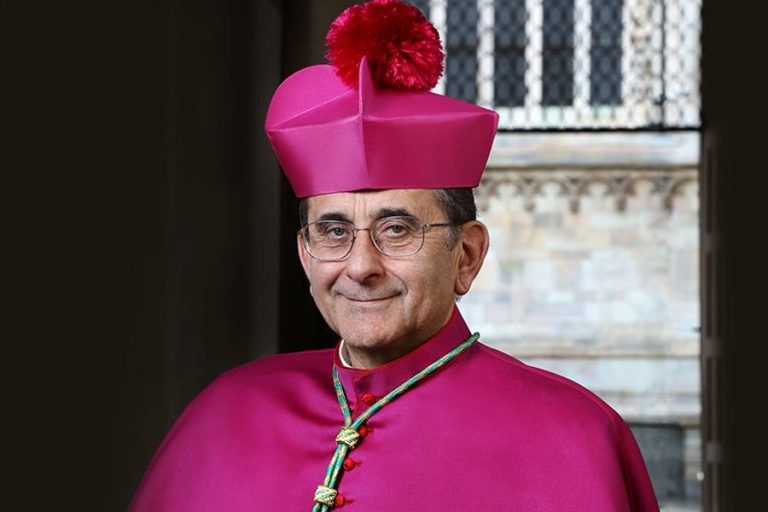
Archbishop of Milan criticised after LGBT Mass attendee receives Communion in ‘Ah Men’ T-shirt
A Mass celebrated by the Archbishop of Milan for an LGBT Catholic group has attracted criticism after images emerged of a participant wearing a rainbow-themed “Ah Men” T-shirt, a play on the word “Amen”, and later claiming he repeated the phrase while receiving Holy Communion The Archbishop of Milan has faced criticism after celebrating a Mass for an LGBT Catholic group on the Solemnity of the Sacred Heart of Jesus. Archbishop Mario Delpini presided at the Mass on 27 June at the Church of San Carlo al Lazzaretto in Milan, a church that has hosted gatherings of Catholics who experience same-sex attraction for several years. The event took place a week after the archbishop cancelled the annual Corpus Christi celebration, stating that “overtourism” and “heavy traffic” had made the prayerful nature of the event impossible. The liturgy was organised by Gruppo del Guado, an association founded in the 1980s for homosexual Catholics. Promotional material for the event featured a church rendered in rainbow colours and highlighted the participation of the Archbishop of Milan. According to reports in the Italian Catholic press, the Mass took place during Milan’s Pride celebrations and attracted around 50 participants. Local media reported that those present expressed appreciation for the archbishop’s attendance. During his homily for the feast of the Sacred Heart, Archbishop Delpini reflected on God’s love and election of His people. Quoting Scripture, he told those gathered: “The Lord has bound himself to you and chosen you not because you are the most numerous people; you are the smallest, but because he loves you.” The archbishop’s presence at the celebration quickly became the subject of criticism in parts of the Italian Catholic media, where questions were raised about the timing of the event and its association with a group dedicated to ministry among Catholics who identify as homosexual. The controversy intensified after images circulated on social media showing a participant wearing a T-shirt featuring a rainbow-coloured image of Jesus and the phrase “Ah Men”, a play on the liturgical response “Amen” and a reference to attraction between men. The individual later stated on Instagram that he had repeated the phrase while receiving Holy Communion from Archbishop Delpini. The incident drew particular criticism because it occurred during the Eucharistic celebration and on the Solemnity of the Sacred Heart of Jesus, one of the principal feasts of the Church’s liturgical year. The Church of San Carlo al Lazzaretto, where the Mass was celebrated, is situated in the Porta Venezia district of Milan, an area known for its association with the city’s LGBT community. The church has become a regular meeting place for Catholics with same-sex attraction, who gather there for prayer and Mass throughout the year. The latest controversy is not the first time Archbishop Delpini and the Archdiocese of Milan have faced scrutiny over questions relating to homosexuality and pastoral outreach. In a pastoral proposal for 2023–24, the archbishop called for particular attention to be given to “accompanying and understanding the experience of love and the different nuances of attraction, both to people of different genders and to people of the same gender”. The document stressed the importance of accompaniment and listening, while encouraging the Christian community to “assume responsibility for teaching about love” in all its dimensions. The guidance was criticised by some Catholic commentators, who argued that the language risked creating confusion about the Church’s teaching on homosexuality. Riccardo Cascioli, editor of the Italian Catholic newspaper La Nuova Bussola Quotidiana, wrote at the time that the Archdiocese of Milan had “fully embraced the line drawn by the gay lobby that has now taken command of the Catholic Church”. Referring to the pastoral emphasis on accompaniment, he questioned where such accompaniment was intended to lead. “Certainly, everyone must discover ‘his or her own vocation of love’, but this love is such a vague concept that anything can be put into it,” he wrote. The Archdiocese of Milan also attracted criticism in 2023 after a prayer vigil against “homo-transphobia” was held in one of its churches during Pride events in the city. Antonio Brandi, president of the pro-life organisation Pro Vita & Famiglia, questioned the decision and accused the event of promoting ideas contrary to Catholic teaching. “How can a Catholic church host an event that, while understandably praying against all discrimination, endorses theories that the Church rejects and that have no scientific basis?” he asked. Brandi also criticised material distributed during the vigil and objected to the inclusion of incidents that organisers cited as examples of “homo-transphobia”. The archdiocese defended its approach and rejected accusations that it had departed from Catholic teaching. Archbishop Delpini has also recently defended initiatives aimed at fostering dialogue with people of other faiths. Earlier this year, he responded to criticism after Muslim children attending summer activities at a parish oratory were given an opportunity to pray. The archbishop said the aim had been “to pay attention to non-Christian children” and ensure they were not present “only to play”, but were also able to pray. “There are also those who would like to teach me how to be a bishop,” he said. Appointed Archbishop of Milan by Pope Francis in 2017, Delpini leads the largest diocese in Italy and one of the largest in Europe. The see has historically been among the most prominent in the Catholic Church and was once occupied by Giovanni Battista Montini before his election as Pope Paul VI. The Archdiocese of Milan, which follows the distinctive Ambrosian Rite, has long been regarded as one of the most influential dioceses in the Catholic world. Its archbishops have frequently played a leading role in the life of the Church in both Italy and internationally. The archdiocese has not issued a public statement addressing the controversy.
Jun. 18, 2026
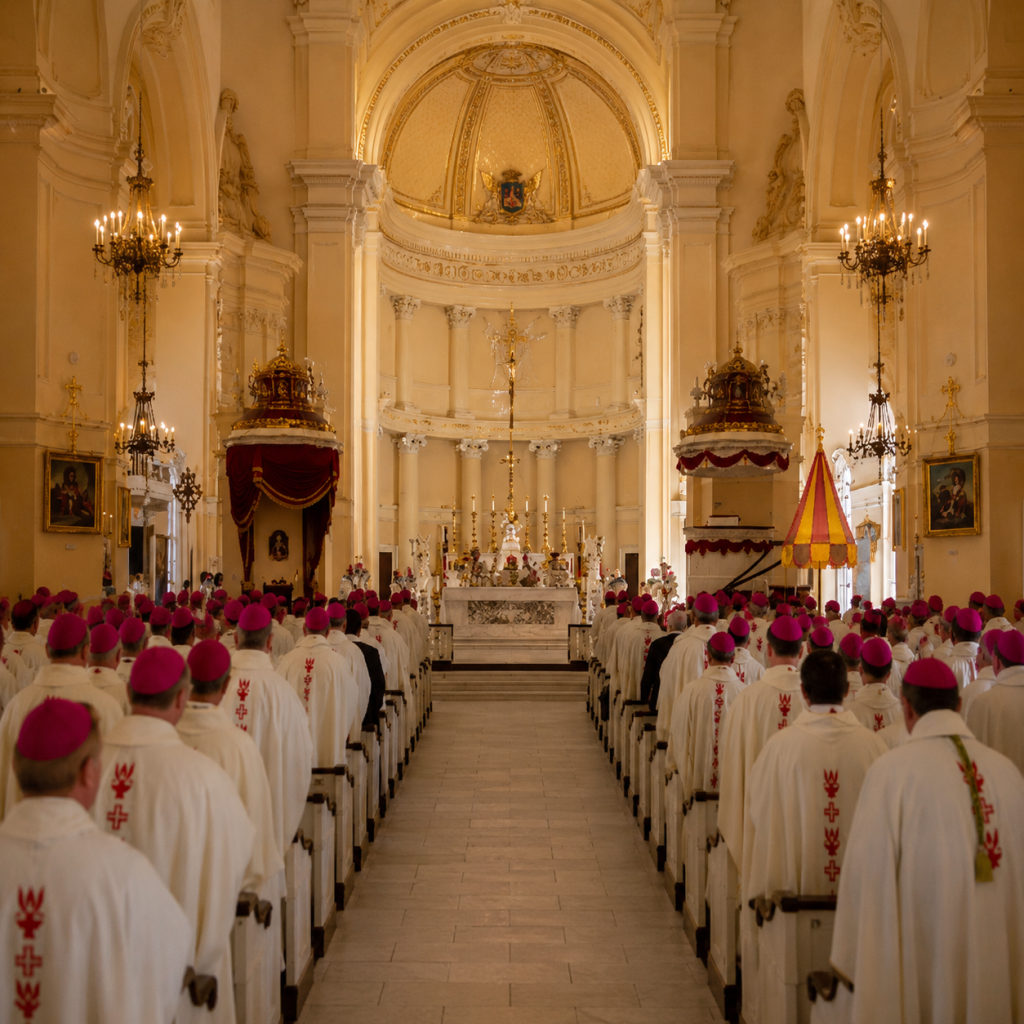
Consecration, canonisation causes and safeguarding votes headline US bishops’ meeting
The US bishops have concluded their Spring Plenary Assembly in Orlando after approving revisions to the Dallas Charter, advancing two sainthood causes and carrying out a national consecration of the United States to the Sacred Heart of Jesus The bishops of the United States have concluded their 2026 Spring Plenary Assembly in Orlando, Florida, with a series of votes on liturgy, safeguarding and sainthood causes, culminating in the historic consecration of the nation to the Sacred Heart of Jesus as part of the country’s semiquincentennial celebrations. The three day meeting of the United States Conference of Catholic Bishops (USCCB), held from 10 to 12 June at the Omni Resort in ChampionsGate, was the first spring assembly under the leadership of Archbishop Paul S. Coakley of Oklahoma City since his election as president of the conference last year. Public sessions were held on 10 and 11 June before the bishops moved into private discussions and concluding business. The gathering opened with prayer, the approval of the agenda and minutes from previous meetings, and addresses from Archbishop Coakley and the Apostolic Nuncio to the United States, Archbishop Gabriele Giordano Caccia. Bishops also received reports on synodality, Hispanic ministry, prison outreach and safeguarding, while voting on a number of key measures affecting the life of the Church in the United States. In his presidential address, Archbishop Coakley centred his remarks on the theme of Christian hope, warning that contemporary society faces profound threats to human dignity and increasing social fragmentation. The archbishop said the bishops had a responsibility to restore hope wherever it had been lost, particularly through defending the dignity of every human person. “Society tends to disregard and cast aside what it deems useless,” Archbishop Coakley said. “But life, human life, can never be adequately valued based on it being useful or useless. Or a burden or unworthy of protection.” “To restore hope necessitates preaching exactly that, that life is a gift from God. Every life has value and dignity, and we cannot forfeit that dignity, even when it is besmirched by sin and wickedness. It comes from God.” The USCCB president linked this mission to opposition to abortion, euthanasia, racism, abuse and the neglect of the poor, arguing that the Church must be a visible witness to the value of every human life. Archbishop Coakley also highlighted the problem of political and ecclesial division, describing polarisation as a serious obstacle to the Church’s mission. “Polarisation within our country, and even within our Church, is a scandal that can only be overcome through encounter, through the cultivation of interpersonal relationships and conversations between those who may disagree,” the archbishop said. “We must never give up on those who are different or see things differently. We must continue to proclaim the truth of Christ, and the dignity given to each person by the Lord.” The archbishop said the bishops’ conference was working to promote faithful citizenship by encouraging dialogue and placing faith before politics: “A faith that inspires hope, respect, and the pursuit of the common good.” Archbishop Coakley also referred to a January visit to the White House, describing it as cordial while stressing the importance of continued engagement with political leaders. “[W]e must stay in the conversation,” he said, adding that “now is the time for dialogue and building bridges”. One of the most significant discussions of the assembly concerned Catholic higher education. Bishops heard from educational leaders about the challenges facing Catholic colleges and universities at a time of declining religious identity and increasing secularisation. Among the contributions was a presentation by Dr Jonathan J. Schnell, president of the University of St Thomas in Houston, who urged Catholic institutions to recover a stronger sense of their mission. Dr Schnell argued that Catholic universities should embrace their distinctive religious identity rather than resemble secular institutions or political organisations. He said academic freedom must always be ordered towards truth and warned against reducing higher education to workforce preparation. Instead, he said, Catholic colleges should understand themselves as forming the Church’s future intellectual leaders and potentially future Doctors of the Church. Dr Schnell expressed concern about declining numbers of Catholics among faculty and students, revealing that he had recently declined an offer to lead a Catholic institution where most staff and students were not Catholic. “We have changed the demographic and the composition of the faculty and the student body to the point that it has affected what [John Henry] Newman called the genius loci, the spirit of the place,” he said. Drawing on Newman’s vision of a Catholic university, Dr Schnell said Catholic identity depended not only on liturgies and theology classes but on the culture of campus life itself, including student conversations, traditions and the shared assumptions of the academic community. “This Catholic identity can be formed but not engineered,” he said, arguing that it should influence curricula, appointments and decisions about public honours and speaking invitations. Addressing the bishops directly, Dr Schnell urged them to take a more active role in safeguarding Catholic identity. “You could be more vocal, you could be more pushy, and I think you are being too respectful. You own the word ‘Catholic’. We academic administrators don’t,” he said. The assembly also advanced two causes for canonisation. By voice vote, the bishops authorised the opening of the diocesan cause of Monsignor Joseph Francis Buh, a Slovenian born missionary priest who ministered in Minnesota during the nineteenth century and became known for his pastoral work among immigrant communities. The bishops likewise approved the advancement of the cause of Servant of God John Rick Miller, a Catholic layman, husband, father, businessman and international missionary whose spirituality was marked by devotion to the Sacred Heart, the Immaculate Heart of Mary and Eucharistic adoration. The cause was promoted by Bishop Thomas John Paprocki of Springfield in Illinois and Archbishop Thomas Wenski of Miami. The bishops also approved portions of a new edition of the Lectionary for Mass and voted in favour of the 2025 Roman Missal–Liturgy of the Hours Supplement, continuing a years long process of revising liturgical texts for use in the United States. Safeguarding issues occupied a substantial part of the second day of the assembly, when bishops debated and ultimately approved revisions to the Charter for the Protection of Children and Young People, commonly known as the Dallas Charter. First adopted in 2002 in response to the clerical abuse crisis, the Charter sets national standards for the protection of minors and for responding to allegations of abuse involving clergy. The revised text passed by a vote of 176 to 22, with six abstentions, after an unsuccessful effort to postpone the decision until November. Archbishop Shawn McKnight of Kansas City proposed delaying the vote so bishops could consult diocesan review boards, priest councils and abuse survivors. “We will be morally committing ourselves, and everybody under us in our dioceses, to what we hold out in this statement,” Archbishop McKnight said. Bishop Earl Fernandes of Columbus supported the proposal, saying: “I don’t know that we lose very much by delaying.” “When they aren’t sufficiently consulted, there’s been strong pushback,” the bishop added. Several bishops echoed those concerns. Archbishop Paul Etienne of Seattle said he would welcome additional consultation with diocesan bodies and safeguarding officials. “I think the request that’s being made is very legitimate,” Archbishop Etienne said. Bishop Oscar Cantú of San Jose argued that little would be lost through a delay and that broader consultation would strengthen support for the document in local Churches. “Maybe many of us have become synodality weary, but I would say this is an occasion where, as has been mentioned, very little is lost in delaying and much is to be gained,” Bishop Cantú said. However, Bishop Barry C. Knestout of Richmond, chairman of the Committee on the Protection of Children and Young People, insisted that the revisions had already undergone extensive consultation and were ready for approval. “I’m not quite sure what’s gained through the additional time,” Bishop Knestout said. “There has been quite a bit of consultation already.” Auxiliary Bishop Adam Parker of Baltimore, a member of the drafting committee, likewise argued that several years of consultation had already taken place and that further delays were unlikely to produce substantial changes. The motion to postpone failed by 126 votes to 73, with five abstentions, clearing the way for the final vote. The revised Charter seeks to maintain an exclusive focus on the abuse of minors by clergy while clarifying terminology and balancing support for victims and survivors with due process protections for accused priests. Bishop Knestout indicated that a separate document addressing misconduct involving adults and vulnerable adults is being developed. The most visible moment of the assembly came on the afternoon of 11 June when the bishops travelled to the Basilica of the National Shrine of Mary, Queen of the Universe for the consecration of the United States to the Sacred Heart of Jesus. The act followed a national novena and formed part of the Church’s contribution to the 250th anniversary of the Declaration of Independence. Relics of Saint Margaret Mary Alacoque, whose seventeenth century visions helped spread devotion to the Sacred Heart, were present during the liturgy. Archbishop William E. Lori of Baltimore preached the homily, focusing on reconciliation, mercy and hope. The consecration was livestreamed nationally and received support from President Donald Trump. The ceremony marked the first time the United States had been formally consecrated to the Sacred Heart by the nation’s bishops and followed a devotion promoted by numerous popes, including Pope Leo XIII, who consecrated the world to the Sacred Heart in 1899. As the bishops concluded their meeting, the themes of hope, renewal and evangelisation remained at the forefront. The combination of practical decisions on liturgy and safeguarding, discussions on Catholic identity and synodality, and the unprecedented consecration of the nation to the Sacred Heart gave the Orlando assembly a significance that extended beyond routine conference business.
Jun. 13, 2026