

Pride
The enduring sin of pride
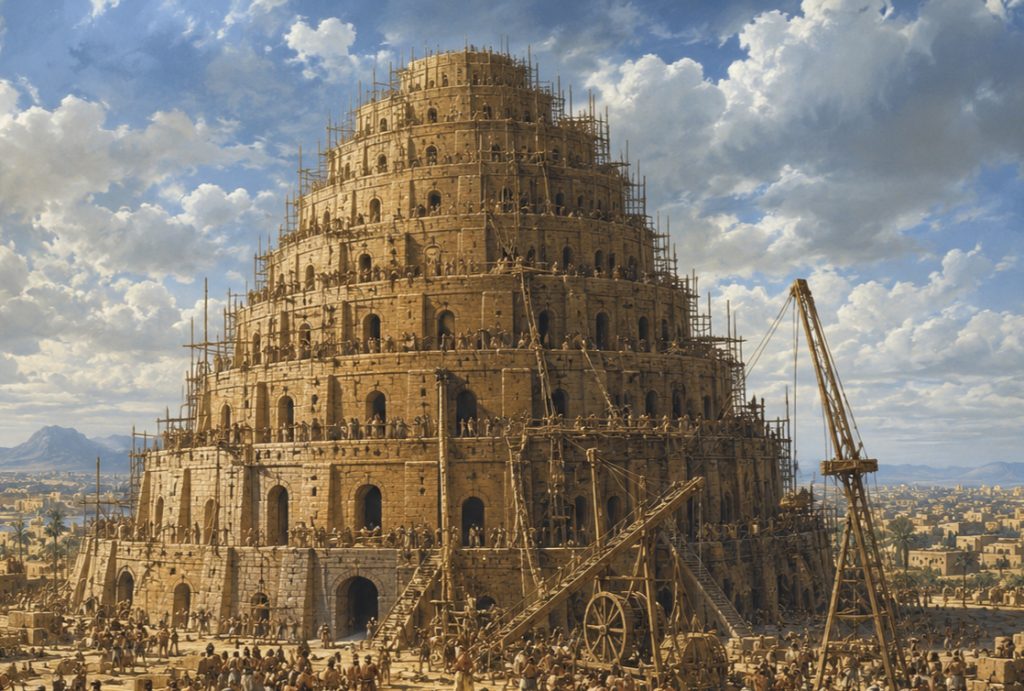
Brother René Stockman, former Superior General of the Congregation of the Brothers of Charity, explores pride as the root of humanity’s oldest temptations Pride is often described as the greatest sin and the cause of all sins. Reference is made to the Book of Genesis in the Bible, where the story of the first humans vividly reveals how evil conquered the human heart by tempting them to become their own gods. “Your eyes will be opened as soon as you eat of it, and then you will be like gods and have knowledge of good and evil” (Gen. 3:5). Their eyes were indeed opened after eating the forbidden fruit, and they saw that they were naked and not at all the gods they had dreamed of being. A little further on, we read another story, this time of people deciding to build a tower that would reach up to heaven in order to affirm their own power and divine status (cf. Gen. 11:1–9). But this too ended in utter failure, leaving an unfinished structure and a confusion of tongues in total chaos. Once again, it was pride that drove them to challenge God and seek to become his equals. Ancient stories that say something, indeed a great deal, about the human tendency, out of pride, to seize power for themselves. Anyone who believes that the age of forbidden fruit and Towers of Babel is behind us need only look at the world around them. Today, people are racing to Mars in the hope of building new empires. When I recently heard that President Trump had placed a 22-foot golden statue of himself on his Miami golf course and described it as “beautiful”, I concluded that there is indeed nothing new under the sun, that history repeats itself endlessly and that people struggle to learn from it. That last point is particularly perilous. It is the blinding force hidden within hubris that drives us to grasp for power and leads us into a pernicious myopia in which we have only our own interests in mind and are ultimately concerned with how we can further expand our power. The manner in which this occurs becomes entirely subordinate to the result that has been set as the goal and dreamt of. Elbowing one’s way through, bribery, corruption and, if necessary, eliminating opponents: it is all in the recipe book for growing in power and prestige. Trump is not alone in the grip of hubris. The temptation to crown ourselves as gods lies within each of us, and the serpent of temptation still slithers about, seeking to ensnare us. Most of us will never erect a golden statue of ourselves, nor build a tower bearing our name. Yet we will often consider ourselves better and greater than others, and we will want this to be confirmed. If we do not immediately receive the recognition we hope for, we will simply leaf through our recipe book to find the right method for rising above others, for humiliating others, for “he must decrease and I must increase”, to paraphrase the words of John the Baptist in reverse (John 3:30). For many, the virtue of humility has been struck from their vocabulary because it has come to be seen as a sign of weakness. There is nothing wrong with wanting to get ahead in life, but if it can only be achieved by humiliating and belittling others and, if necessary, eliminating them, then we are crossing an ethical line that should not be overstepped. Everyone bears a mutual responsibility for respecting, promoting and, where necessary, restoring one another’s human dignity. This, then, is the criterion by which a society can measure itself ethically. Whenever this is compromised because some, out of their arrogance, seek to seize power for themselves at the expense of others, we will have to draw the regrettable conclusion that we have failed to learn the lessons of history.
Jun. 15, 2026