

Prefect Of The Dicastery For Bishops
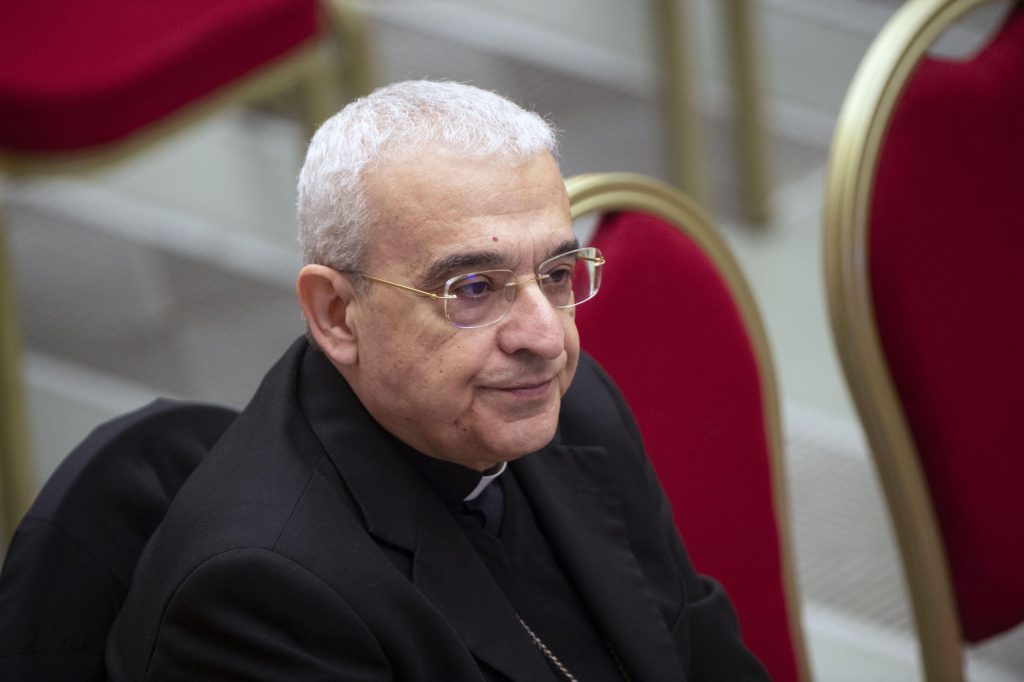
Archbishop Iannone says women bring “different sensitivities” to choosing bishops
Archbishop Filippo Iannone, Prefect of the Dicastery for Bishops, has defended the role of women in identifying episcopal candidates, saying their different approach and sensitivities are a valuable help in choosing future bishops Archbishop Filippo Iannone, Prefect of the Dicastery for Bishops, has said that women bring “different sensitivities” to the process of identifying future bishops. In an interview with the Croatian Catholic weekly Glas Koncila , the Carmelite prelate reflected on the changing demands placed upon bishops, the growing complexity of diocesan life and the work of the Vatican office responsible for recommending episcopal candidates to the Pope. Archbishop Iannone also defended the inclusion of lay people, including women, in the dicastery’s work, describing their contribution as both valuable and practical. Explaining the work of the Dicastery for Bishops, Archbishop Iannone said it is responsible for “all matters pertaining to the establishment, life, and activities of dioceses and the identification of candidates for the episcopate to be presented to the Pope for appointment, as well as the ministry of bishops in the dioceses”. He added that the dicastery works closely with other Vatican departments, noting that one of the defining characteristics of the Roman Curia under Praedicate Evangelium is “interdicasterial collaboration, or collaboration between the dicasteries”. The prefect explained that although “the authority of the Dicastery resides in the Plenary of its members”, its ordinary work is carried out by the prefect and secretary, assisted by officials and informed by the experience of Apostolic Nuncios. “The Dicastery for Bishops, like the others, avails itself of the collaboration of Apostolic Nuncios, who are well acquainted with the reality of the local Churches,” Archbishop Iannone said. Archbishop Iannone also pointed to one of the most significant changes introduced under Pope Francis: the broadening of membership within Vatican dicasteries. He noted that members “are not only bishops, but can also be priests, religious, and lay people”, adding: “And when we say lay people, we make no distinction between men and women.” Asked specifically about the presence of three women serving as members of the Dicastery for Bishops following their confirmation by Pope Leo XIV, Archbishop Iannone said their participation had already demonstrated its value. “I’ve only been presiding over this Dicastery for a few months, but I’ve personally had the opportunity to experience the contribution these women—two religious and one lay—offer to the work of the Dicastery,” Archbishop Iannone said. “It’s a highly appreciated and important contribution, because women also have a different way of approaching situations, of evaluating… they have different sensitivities, and this proves to be a great help for the type of work that must be done, namely, identifying candidates for the episcopate.” The prefect was careful to note that seeking the views of women is not an entirely new development. Long before women became members of the dicastery itself, Apostolic Nuncios were already expected to consult widely while gathering information on potential episcopal candidates. “I would like to emphasise, however, that consulting women is not entirely new,” Archbishop Iannone said. “Even nuncios, when conducting investigations to identify candidates for the office of bishop, do not and must not consult only bishops, but also involve other members of the people of God, obviously always respecting the pontifical secret.” Throughout the interview, Archbishop Iannone repeatedly returned to the responsibilities expected of bishops in the contemporary Church. The prefect described the bishop as a shepherd called to prayer, openness and pastoral leadership. Referring to Pope Leo XIV’s regular meetings with bishops, Archbishop Iannone said the Pontiff continually points to priorities such as evangelisation and care for creation, while also emphasising the spiritual foundations of episcopal ministry. “The figure, the essential model for the bishop, is always and at all times Christ the Good Shepherd,” Archbishop Iannone said. He argued that one of the defining qualities required of a bishop is the ability to foster unity within increasingly diverse diocesan communities. While acknowledging the variety of ecclesial movements and associations now active throughout the Church, Archbishop Iannone warned against groups becoming inward-looking or detached from the wider diocesan family. “The bishop is the father of the entire community,” the archbishop said, describing the capacity to encourage communion among different groups as “certainly one of the most important requirements for a candidate for the episcopal ministry”. The interview also addressed the relationship between the universal Church and the local Churches. Archbishop Iannone pointed to the teaching of the Second Vatican Council, which, he said, established that “the Universal Church is present in the particular Churches and comes from the particular Churches”. A particular Church, he explained, “can say it is a Church to the extent that it is in communion with the other Churches”, warning that “when it separates itself from this communion, it ceases to be the Church of Jesus Christ”. The prefect argued that this understanding allows genuine diversity while safeguarding unity. Referring to the principle traditionally attributed to St Augustine, Archbishop Iannone said: “In essential matters there must be unity; in matters that are debatable, freedom must be allowed; but in everything there must be charity.” He added that episcopal conferences today “have a much broader scope of activity than they enjoyed in previous years”. Archbishop Iannone also rejected attempts to interpret ecclesial governance through political categories. “Applying these categories, which belong to the world of politics, to the Church is misleading,” he said, arguing that “the Church has a different nature”. At the same time, the archbishop acknowledged that today’s faithful have “a greater awareness… of being protagonists in the life of the community”. Rather than presenting participation as a question of competing rights, Archbishop Iannone said the Second Vatican Council had reaffirmed that “every baptised person is responsible for the life of the Church and the apostolate”. He added that those entrusted with leadership through Holy Orders “must allow the faithful to exercise their responsibilities”, pointing to pastoral and finance councils and noting that, under the Code of Canon Law, “every believer has the right, indeed in some cases the duty, to inform the bishops of their own aspirations, to give guidance, and to suggest choices for the life of the community”. That theme returned in his reflections on synodality, which he insisted should never be reduced to claims for influence or power. “Synodality is not a demand, nor should it be understood as a demand,” Archbishop Iannone said. Rather, he argued, synodality requires every member of the Church to recognise responsibility for the life of the local Church rather than expecting the bishop alone to carry every burden. “It is not only the bishop who must bear the burden of the diocese,” he said. “All the faithful must feel burdened by this burden.” The interview also shed light on one of the practical challenges increasingly confronting the Vatican’s appointments process. Archbishop Iannone confirmed that some priests continue to decline episcopal appointments, not principally because of the abuse crisis but because of the growing weight of responsibility attached to the office. “I wouldn’t say it’s solely a consequence of the abuse issue,” Archbishop Iannone said. “I’d rather say that the responsibilities of a bishop have generally increased.” The archbishop pointed to the complexity of diocesan administration, the demands of supporting clergy and declining vocations as contributing factors that leave some priests feeling unprepared for episcopal ministry. “Life has become much more complex,” the Carmelite prelate observed, adding: “The fact that there are priests who don’t accept it is a fact.”
Jul. 17, 2026