

Pope Leo
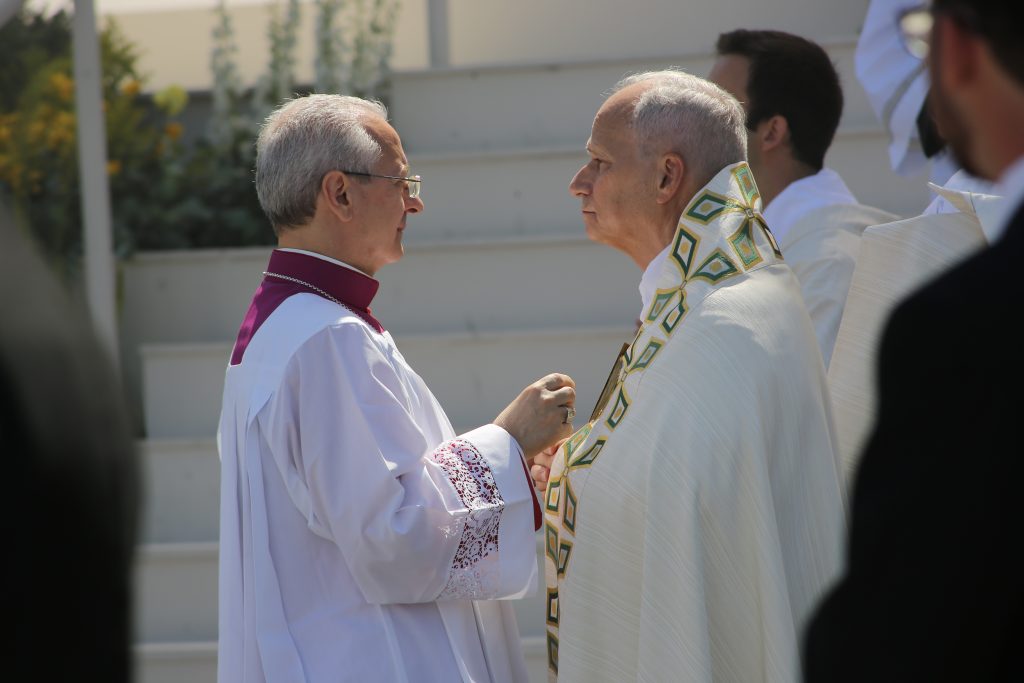
Day two of Pope Leo XIV’s visit to Spain sees one of Europe’s largest Catholic gatherings outside World Youth Day
An estimated 1.5 million people gathered in Madrid for Pope Leo XIV’s Corpus Christi Mass and procession on the second day of his apostolic visit to Spain. The crowd surpassed that of Saint John Paul II’s 2003 visit to Madrid and ranks among the largest Catholic gatherings in Europe outside World Youth Day Pope Leo’s second day of his apostolic visit to Spain began with Holy Mass for the feast of Corpus Christi. This year, Corpus Christi fell on Thursday 4 June. However, Spain, like many other countries, now transfers the solemnity to the following Sunday. Mass was celebrated in Plaza de Cibeles in central Madrid, with an estimated 1.5 million people in attendance. Earlier estimates had placed the number at 1.2 million, but as the day progressed a clearer picture emerged and the figures rose. The number is staggering. Indeed, excluding Saint John Paul II’s dramatic returns to Kraków during the Communist era, it might have been the largest European gatherings of Catholics outside a World Youth Day. By comparison, Pope John Paul II’s Mass in Ireland on 29 September 1979 attracted an estimated 1.25 million people. When he celebrated Mass in Madrid in 2003, around one million attended. Even accounting for Spain’s population growth since 2003, the figure represents a substantially larger proportion of the Spanish public coming out to see the Pope. The increase is in line with an apparent resurgence in Catholic identity in the country. A recent survey found that 45 per cent of Spaniards aged 15 to 29 identify as Catholic today, compared with 31.6 per cent in 2020. Spaniards often speak of there being “two Spains”. One is the conservative, Catholic Spain that takes pride in its saints, traditions and culture. The other seeks to sever those connections in the name of progressivism. It appears that, despite being governed by a socialist administration, the former remains vibrant. Panis Angelicus, music from the Taizé Community and the Tantum Ergo, Pange Lingua and Salve Regina all featured in a varied but traditionally inclined programme of liturgical music. Perhaps most notable for those looking for signs of tradition was the choir’s rendition of Verbum Supernum Prodiens, written by Saint Thomas Aquinas for the feast of Corpus Christi. Among the faithful were hundreds of children who had made their First Holy Communion this year and who, after Mass, took part in the Corpus Christi Eucharistic procession. There were also more than 150 bishops and some 1,600 priests in attendance. Their Majesties King Felipe VI and Queen Letizia of Spain, accompanied by Princess Leonor and Infanta Sofía, also attended the Mass. During his homily, Pope Leo XIV urged Spain’s Catholics not to allow their faith to become “a museum of the past”, but to remain a living source of charity, service and evangelisation. Reflecting on the Eucharist and Spain’s Catholic heritage, the Holy Father called on the faithful to become “builders of a new world” and to carry Christ’s presence into society, particularly through care for the poor, the suffering and those who have lost hope. For the Corpus Christi procession, a Galician artistic tradition was brought to Madrid, with more than 30,000 carnations transforming the city centre. This was made possible by the Asociación de Alfombristas del Corpus Christi de Ponteareas (Association of Corpus Christi Carpet Makers of Ponteareas). The decorations, known as floral carpets, covered more than 500 metres of Calle de Alcalá, one of Madrid’s longest streets. After the procession, the Holy Father took a short break from what has already been an exceptionally busy visit and held a private meeting with members of the Augustinian Order at the Apostolic Nunciature. As an Augustinian himself, Pope Leo has long been accustomed to community life and makes a point of visiting his religious brothers during his travels. Spain has historically had one of the largest Augustinian communities in the world, and Spanish Augustinians played a major role in the evangelisation of the Philippines, Latin America and parts of Africa. At 6pm, the Pope met representatives from the worlds of art, culture, business, labour and academia at Madrid’s Movistar Arena. The event, entitled “Weaving Networks with the Worlds of Culture, Art, the Economy and Sport”, aimed to encourage institutions and individuals to work together in taking responsibility for the human person amid rapid technological change. The gathering also highlighted Spain’s rich cultural heritage, with flamenco and classical guitar performances. Among those in attendance was the actor Antonio Banderas, who told the Pope he was “a victim of God’s spell” and described Jesus Christ as “the main protagonist of the movie of life”. Much like other events during the papal visit, the gathering placed considerable emphasis on Spain’s cultural heritage and its Catholic roots, bringing those traditions into public life. This theme was echoed in the words of the Holy Father, who asked those present: “What is it that we are sowing today, what exactly is flourishing and what is silently withering in our society; what values are we preserving and which are we allowing to die?” At the end of his second day, the papal visit appears to have so far been an outstanding success. Alongside the record attendance, another notable feature has been the absence of significant counter-protests. When Pope Benedict XVI visited Madrid for World Youth Day in 2011, there were loud and at times violent street protests demanding that his visit should not be funded by the state. Their absence is another indication that Catholicism in Spain is currently experiencing a period of renewed confidence.
Jun. 8, 2026
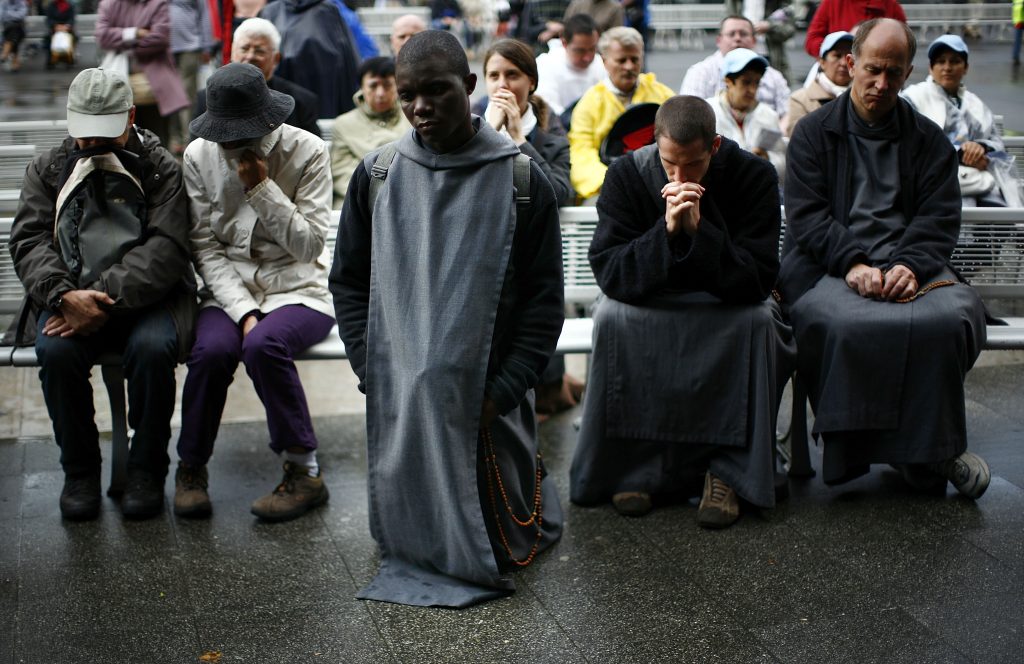
Pope Leo expected to visit France in September
Pope Leo XIV is expected to visit France at the end of September, with Paris and Lourdes among the proposed destinations. The Vatican has yet to formally confirm the journey, which would follow the Pope’s June visit to Spain Pope Leo XIV is expected to visit France at the end of September in what would be his second visit to a European Union country outside Italy since his election last year. The proposed journey was announced by the French Bishops’ Conference on May 6, which said the Pope could travel to Paris and Lourdes, although the Vatican has yet to formally confirm the visit. The invitation was extended by Cardinal Jean-Marc Aveline, president of the bishops’ conference, in coordination with the Apostolic Nuncio, Archbishop Celestino Migliore, and was also supported by President Emmanuel Macron during a meeting with the Pope in Rome on April 10. In a statement issued by the conference, the bishops said: “The Catholic Church in France is preparing to welcome Leo XIV.” They added that, since his election one year ago, “several bishops” had invited the Pope to visit the country before Cardinal Aveline formally renewed the invitation on behalf of the episcopate. The statement said the proposed journey “could take place at the end of September” and noted that “on various occasions, Leo XIV has expressed the great esteem he holds for our country and its spiritual history”. Cardinal Aveline said he had held “several working sessions” with the Pope, including one last week, during which a draft programme was prepared. “His visit would be an opportunity to share with the Pope what our Church in France is experiencing and to let ourselves be encouraged by his words,” the cardinal said. The bishops added that the faithful were being asked “to support the preparation of this event through prayer” while awaiting the official announcement from the Holy See. The expected visit follows the publication of the programme for Pope Leo’s apostolic journey to Spain from June 6 to June 12, his first visit to the country as pontiff. During the six-day trip, he is scheduled to visit Madrid, Barcelona, Montserrat, Las Palmas de Gran Canaria and Santa Cruz de Tenerife. The itinerary includes meetings with King Felipe VI and Queen Letizia, Spain’s political authorities and the country’s bishops, along with Masses in Madrid, Barcelona and the Canary Islands. The Pope is also expected to visit migrants, prisoners, charity workers and young people during the journey. Among the principal events of the Spanish visit will be a Corpus Christi procession in Madrid, a gathering with the diocesan community at the Santiago Bernabéu Stadium and the inauguration of the Tower of Jesus Christ at Barcelona’s Basilica of the Holy Family. The Pope is also due to visit the Benedictine Abbey of Montserrat, which recently marked the millennium of the monastery’s foundation. The abbey remains closely associated with the history of Catalonia and the suffering of the Church during the Spanish Civil War, when a number of its monks were killed. France has received several papal visits in recent decades, including journeys by Pope John Paul II and Pope Benedict XVI. Pope Francis travelled to Marseille in 2023 and to Corsica in 2024, though neither was considered a full state visit to France.
May 7, 2026
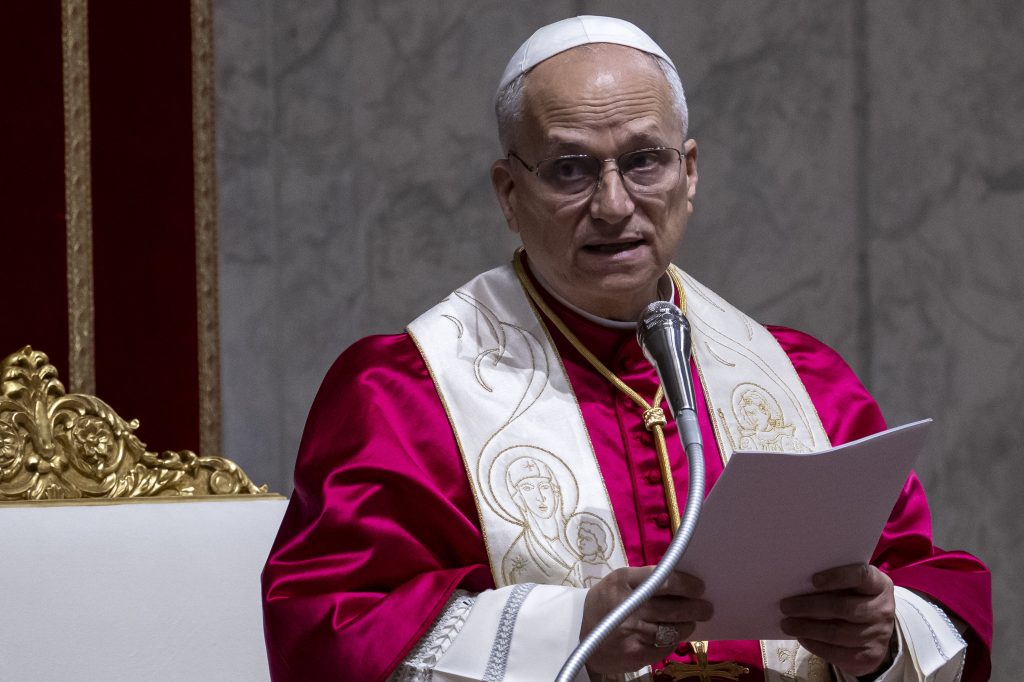
Pope Leo XIV’s first encyclical set for May 15 release
Pope Leo XIV is expected to publish his first encyclical on May 15, aligning it with landmark social teaching documents. The provisional text, Magnifica humanitas, is set to address artificial intelligence, global instability and the state of international law Pope Leo XIV’s first encyclical is expected to be signed and published soon, placing its release close to a date long associated with landmark papal social teaching documents. According to reports from the German Catholic news agency KNA, it will be signed on May 15. The text will be the first major teaching document of his pontificate. Circulating under the provisional title Magnifica humanitas , it is expected to address a range of issues, including artificial intelligence, international peace and what sources describe as a crisis in international law. Previous reports indicate that the document will set out the Pope’s initial response to these questions within the framework of Catholic social teaching. The encyclical follows earlier indications that the Holy See had been preparing a document focused specifically on artificial intelligence. At the beginning of February, reports pointed to work under way on a text examining the ethical and anthropological implications of emerging technologies. Pope Leo XIV has already spoken about the risks associated with technological development, warning of the dangers posed by “uncontrolled technology” and the importance of safeguarding human dignity. According to the same reports, the encyclical will also address geopolitical instability and the perceived weakening of international legal structures. By doing this, the document is expected to set out the Vatican’s response to the principal challenges facing humanity in the 21st century. The anticipated date of May 15 places the encyclical within a well-established tradition. On May 15, 1891, Pope Leo XIII issued Rerum Novarum , the foundational text of modern Catholic social doctrine, addressing the condition of workers during the industrial age. The same date was chosen in 1931 by Pope Pius XI for Quadragesimo Anno , which developed the Church’s teaching on social order and introduced the principle of subsidiarity. Thirty years later, on May 15, 1961, Pope John XXIII promulgated Mater et Magistra , focusing on economic justice and social development. The expected treatment of artificial intelligence would build on recent Vatican teaching. In January 2025, the Dicastery for the Doctrine of the Faith and the Dicastery for Culture and Education issued Antiqua et Nova , a joint note on “the relationship between artificial intelligence and human intelligence”. The document said AI could bring “important innovations” but warned that it also carried the danger of deepening inequality, manipulating public opinion and expanding “the instruments of war well beyond the scope of human oversight”. It added that artificial intelligence “should not be seen as an artificial form of human intelligence, but as a product of it”, and insisted that it “should be used only as a tool to complement human intelligence rather than replace its richness”. No official text has yet been released, and the title Magnifica humanitas remains provisional.
May 4, 2026