

Pedro S Nchez
The biggest loser from Pope Leo XIV’s trip to Madrid: Pedro Sánchez
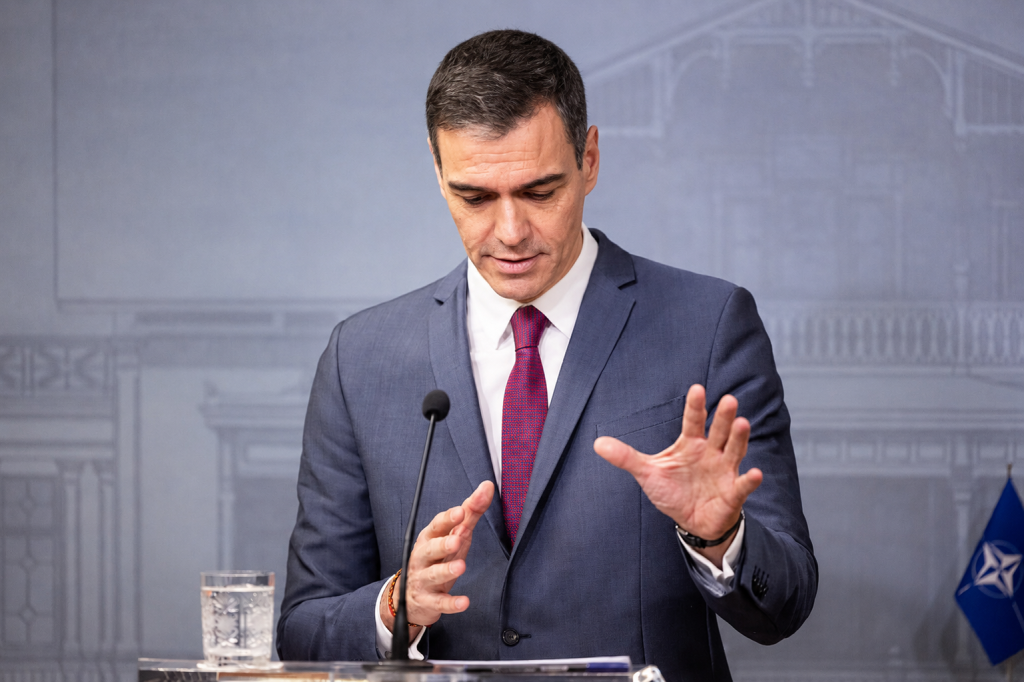
Madrid delivered vast crowds, Spanish flags, a packed Bernabéu and one of Europe’s largest Catholic gatherings outside World Youth Day. For Pedro Sánchez, Pope Leo XIV’s visit may have been a reminder that the Spain he opposes remains very much alive Pedro Sánchez has been noticeably absent during the papal visit to Madrid. He made the trip to the airport to greet the Holy Father and had a private audience before the Pope’s speech at the Spanish parliament, but apart from that, Spain’s prime minister has kept away. With the papal convoy heading to Barcelona, where the apostolic visit will take a turn for the Catalan, that absence will likely continue. However, he is due to make appearances in the third leg of the trip, in the Canary Islands. It is fair to assume that Sánchez is decidedly unhappy with the whole Madrid part of the event. Much of the secular media have covered the papal visit as an endorsement of the leader of the Spanish Socialist Workers’ Party, as he happens to hold views on migrants which are broadly similar to the Holy Father’s. But when one realises that the status of migrants is, shockingly, not the only issue popes and prime ministers can hold opinions on, the situation becomes more complex and, particularly in Madrid, decidedly less favourable for Sánchez. To understand this, it is important to know how Spanish society sees itself. Spaniards will often speak of there being two Spains. There is the socially conservative Spain which is proud of its cultural heritage. Bullfighting, saints and festivals, costumes and pageantry all exist in this Spain, where Catholicism takes pride of place. The Franco era is not openly celebrated, unless you take a turn to the fringes, but in this Spain it is understood, albeit quietly, as not being all bad. The royal family are beyond reproach, unless in favour of the Carlist pretender. The socially conservative Spain finds Madrid as its motherland, with the famous cities of Andalucía, Seville, Granada and Málaga, as its summerhouses. It holds the regions pushing for independence in disdain, with Catalonia being particularly offensive. Dressing smartly, or having a la Rojigualda, the nickname of the Spanish flag, bracelet is generally considered a sign of belonging to this Spain. The other Spain is equally definable, partly because it defines itself as being the opposite of the other. It abhors bullfighting, finds pomp unbearable and is still deeply troubled by the Spanish Civil War and indeed the entire Franco period. The monarchy is either tolerated or actively opposed. Severing the Church from Spanish life is a principal aim. All semblance of the morality of the Church should first be ridiculed and then removed. The unborn have no rights and assisted suicide is the way to sanitise suffering, since suffering is Catholic and therefore bad. Pedro Sánchez comfortably sits within the second Spain. For many, he is the poster boy of left-wing politics and has made it surprisingly appealing. He looks well put together and polished, a far cry from the purple-haired radical left. Under his administration, the second Spain has launched one of its most aggressive attacks on the first. In 2019, after more than four decades of burial at the vast basilica, the remains of Franco were removed from the Valley of the Fallen and, in 2022, the Democratic Memory Law redesignated the Valley of the Fallen as the Valley of Cuelgamuros. The law also accelerated the removal of Franco-era symbols from public life, and abolished a number of noble titles granted during the dictatorship. In 2021, Sánchez introduced assisted suicide, making the apparently Catholic Spain one of the few countries in Europe to permit state-sanctioned suicide. In the same year, LOMLOE, the Celaá Law, was introduced, removing Religious Education from pupils’ grade averages. The law also removed public funding from single-sex schools. Based on no credible pedagogical research, the move was seen as an intentional attempt to harm the country’s hundreds of Opus Dei schools, which are predominantly single-sex. The Pope’s Madrid leg of his trip has been a true celebration of everything the first Spain holds dear. There has been an entire event held to showcase Spanish art and culture, where the Pope asked the Spanish to consider: “What is it that we are sowing today, what exactly is flourishing and what is silently withering in our society; what values are we preserving and which are we allowing to die?” He also delivered a forceful address at the Spanish parliament. In it, he asked: “Can a community that casts into the shadows the unborn child, the elderly, the sick, those who suffer in silence or those who depend entirely on the care of others be called fully just?” Sánchez, who has shown a considerable disinterest in the unborn and elderly through his political opinions, would have been distinctly deterred by the Pope’s question. At Madrid’s Santiago Bernabéu Stadium, he attended a gathering of the dioceses of Madrid, Alcalá de Henares and Getafe in celebration of faith, family and ecclesial communion. He was given a rock star-like welcome, with crowds chanting, “Contigo, León, un solo corazón” (“With you, Leo, one heart”). It was the kind of reception Sánchez could only dream of receiving. The numbers will also be a shock to a prime minister who has no love for the Church. Some 1.5 million attended the Pope’s Corpus Christi Mass, making it one of the largest gatherings of Catholics outside World Youth Day. Sánchez was absent, but with a crowd equivalent to almost half of Madrid gathered, waving Spanish flags and partaking in one of the most ancient solemnities of the Church, the first Spain was out in force. When Sánchez joins the Pope in the Canary Islands, he will be relieved to be reunited on the issue of migration, which will dominate the final leg of his journey. But the magnitude of Madrid will stick with him. A celebration of all things Catholic and traditionally Spanish will likely not have been well received. The numbers will also be a concern, as few could have predicted such a gigantic turnout. The crowds are in line with an apparent resurgence in Catholic identity in the country, with a recent survey finding that 45 per cent of Spaniards aged 15 to 29 identify as Catholic today, compared with 31.6 per cent in 2020. For a socialist, that is a very bad thing.
Jun. 9, 2026
Vatican accepts monks’ appeal over Valle de Cuelgamuros plans
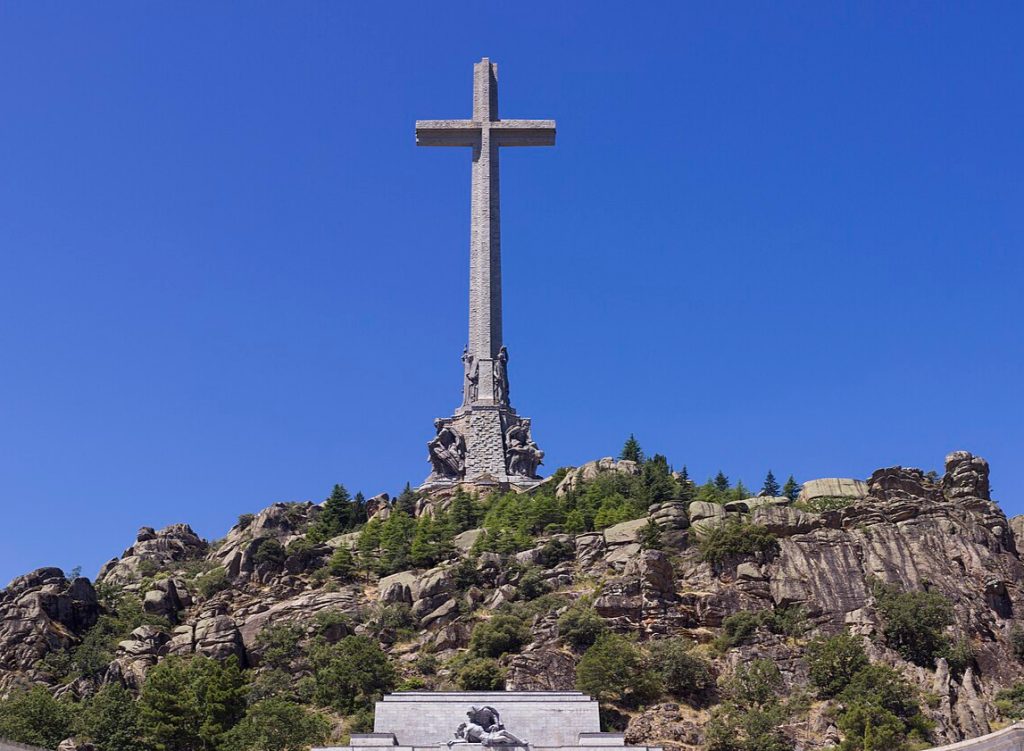
The Vatican has accepted an appeal from Benedictine monks at Valle de Cuelgamuros against government plans, with ministers claiming an agreement with Cardinal José Cobo and the Vatican, while bishops deny any sign-off The Vatican has formally accepted an appeal lodged by the Benedictine monks of the Valle de Cuelgamuros against plans to “re-signify” the historic and religious monument. Pedro Sánchez administration’s initiative, officially titled “La base y la cruz” (The Base and the Cross), emerged as the winner of an international architectural competition. The winning proposal envisions transforming parts of the complex, including the entrance atrium, the side chapels dedicated to Marian devotions along the nave, and the Chapel of the Blessed Sacrament near the main altar. The formal presentation of the project is scheduled for June 2026, deliberately timed to coincide with the anticipated apostolic visit of Pope Leo XIV to Spain. However, Minister Félix Bolaños has claimed that an accord was reached with Cardinal José Cobo of Madrid and the Vatican, declaring: “we reached the agreement with Cardinal Cobo and with the Vatican.” The Spanish Episcopal Conference has, however, pushed back strongly. Monsignor Francisco César García Magán, secretary general and auxiliary bishop of Toledo, stated after the bishops’ 129th plenary assembly that “the Vatican has not been a signatory, there has been no signatory from the Vatican”, and he repeated on several occasions that “no representative of the Vatican has signed”. This is similar to the Archdiocese of Madrid’s statement from March 2025, which clarified that Cardinal Cobo had acted only as a designated interlocutor within an ecclesial commission, without a formal mandate from Rome over the pontifical basilica. Cardinal Cobo has consistently maintained that neither he nor the Archdiocese of Madrid holds canonical authority over the Basilica of the Holy Cross or the Benedictine community. He has insisted that ultimate responsibility rests solely with the Holy See. The Benedictine monks argue that the alleged agreement lacks proper ecclesiastical authority because it was advanced by Cardinal Cobo without the direct involvement of the monastery’s prior or the Holy See, which retains direct jurisdiction over this pontifical basilica, elevated by Pope John XXIII in 1960. The monks have raised particular objections to changes planned for the entrance atrium, a space integral to their liturgical life that has hosted major ceremonies, including priestly ordinations. One such ordination took place there in October of last year, with Cardinal Cobo himself in attendance. Church officials emphasise that canonical norms protecting consecrated spaces remain fully in force, prohibiting any uses unrelated to worship until authorised works can legitimately begin. Further complications surround the status of the Benedictine community. Former prior Santiago Cantera was removed from his post last year amid reported government pressure and internal ecclesiastical decisions. Parallel legal challenges have also emerged. Appeals have been lodged citing procedural deficiencies, including the absence of required licences from the San Lorenzo de El Escorial town hall and the Community of Madrid. Monsignor Luis Argüello, president of the Spanish Episcopal Conference, has called for renewed dialogue. He urged both the government and the Benedictine community to reach “a reasonable and satisfactory agreement for both parties.” His intervention notably made no reference to any prior agreement involving Cardinal Cobo. As of April, the Vatican’s acceptance of the monks’ appeal has moved the entire dispute into a structured canonical process that runs alongside ongoing proceedings in the Spanish courts. The government continues to insist it will begin work on the surroundings and parts of the basilica in June. The Valle de Cuelgamuros, with its massive underground Basilica of the Holy Cross and the world’s tallest Christian cross, remains one of Spain’s most symbolically charged locations. It combines profound religious significance as a consecrated pontifical basilica with its complex historical and political role as a burial site for tens of thousands from both sides of the Spanish Civil War. Pedro Sánchez has taken an interest in the memorial site since the beginning of his time in office, commenting in August 2018, just months after his election, that it should be a “resting place” for those buried there and “a civil cemetery.” In 2022, under the Democratic Memory Law (Ley de Memoria Democrática), Sánchez’s government changed the name from “Valle de los Caídos” (Valley of the Fallen) to “Valle de Cuelgamuros” (the geographical area in which it is located). However, Sánchez’s minority government is coming under increasing pressure from a growing conservative bloc. Among those voters, typically characterised by Vox and People’s Party supporters, there is strong opposition to government intervention at the site and significant criticism of what is seen as his attempts to politicise a religious and historical monument.
Apr. 27, 2026