

Palmarian Church
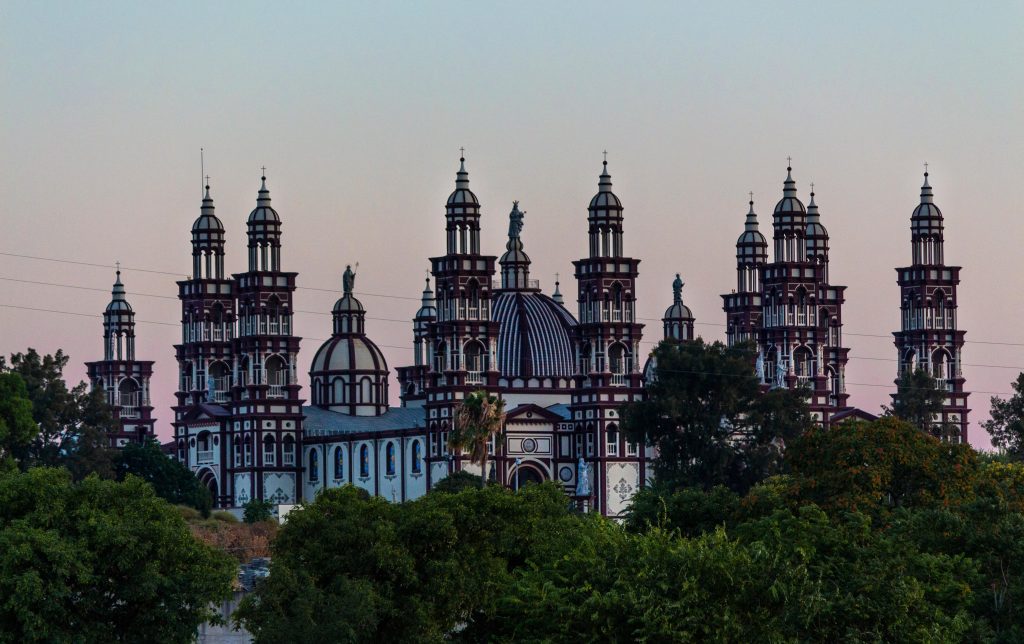
The Palmarian Church’s response to the SSPX and the story behind it
The Palmarian Church has responded to the SSPX excommunications by insisting that the true Catholic Church is not in Rome, but in El Palmar de Troya. Our latest explores the extraordinary history behind one of Catholicism’s most unusual schisms The Palmarian Church, a small sect based in Andalusia, Spain, which believes the true Pope resides among its members, has reacted to the excommunications of the Society of Saint Pius X. In a 14-minute message delivered by “Pope Peter III”, also known as Joseph Odermatt of Switzerland, the church’s position was set out across its various social media channels. Using the papal “We”, Odermatt introduced himself as the “Vicar of Christ and Successor of Saint Peter”, saying he wished to “address all Catholic faithful who are wandering through the spiritual desert after witnessing the collapse and the general excommunication of the followers of Marcel Lefebvre”. He began by claiming that the decree had no validity, since “Pope Gregory XVII”—the church’s founder, Clemente Domínguez y Gómez, who died in 2005—had already excommunicated the group decades earlier. He then turned to Archbishop Ngô Đình Thục, the Vietnamese prelate who illicitly ordained Gómez and his companions to the priesthood and episcopate in 1976. Odermatt claimed that “Archbishop Thục did not act on a whim. He visited the sacred apparition site of El Palmar de Troya and witnessed its mysteries and miracles with his own eyes.” He also described Thục’s later repudiation of the illicit consecrations and his decision to distance himself from the group as a “great falsehood repeated by his critics”. He went on to argue that Thục “recognised the grave crisis of the Church” and that obtaining the proper permission to ordain and consecrate Gómez was “a matter of human law, not divine law”. Odermatt also claimed that Archbishop Marcel Lefebvre, founder of the SSPX, was visited by the Blessed Virgin Mary and instructed to visit El Palmar de Troya, but refused because he “preferred political manoeuvring, pride, comfortable drawing rooms, and the applause of men over the direct intervention of Heaven”. He appears to be referring to Gómez’s request in the mid-1970s for Lefebvre to visit the group and ordain its members as bishops. It is generally understood that Lefebvre declined but recommended Archbishop Thục as a prelate who might be willing to do so. He was equally critical of Lefebvre’s dialogue with Cardinal Joseph Ratzinger before the 1988 episcopal consecrations, during which the two sought an agreement acceptable to both the Vatican and the SSPX. Odermatt claimed that, by signing the May 1988 protocol, Lefebvre “accepted the authority of the apostate Code of Canon Law, and recognised the modern Vatican antipopes as legitimate authorities.” Odermatt argued that the SSPX lives with an internal contradiction by recognising the Pope while telling its followers that they must “disobey him every day in order to save their souls.” His criticism of the SSPX, which extended to sedevacantists, whom he described as holding a “theological absurdity”, served as a segue into his presentation of the Palmarian church as the true Church. He urged Catholics to recognise that the “Holy See remains secure and undefiled at El Palmar de Troya”. He concluded his monologue by declaring that the “true Church—one, holy, catholic, apostolic and Palmarian—is at El Palmar de Troya with the true Pope, Peter III, Supreme Pontiff and Vicar of Christ by the grace of God.” The story of the Palmarian church dates back to 30 May 1968, when four schoolgirls in the small and newly established Andalusian town of El Palmar de Troya went to pick flowers. The girls claimed to see the Virgin Mary, leading to an explosion of reported religious experiences in the area, including stigmatas, solar visions, the Eucharist miraculously materialising on visionaries’ tongues, and pilgrims claiming to feel the Infant Jesus in their arms. People also claimed that Padre Pio appeared, decrying the loss of the traditional Catholic faith. In late 1969, Clemente Domínguez y Gómez emerged on the rapidly growing religious scene in the small town. Having been rejected by the local seminary, the Dominicans and the army, he was working as an office clerk. Gómez quickly established himself as the principal visionary, claiming to have received visions of more than sixty saints and angels, as well as Christ and the Virgin Mary. Under Gómez, the messages shifted from concern about the state of the modern Church to stark criticism of the Second Vatican Council and warnings of the End Times. The Archbishop of Seville, Cardinal José Bueno y Monreal, denounced the site and prohibited any Catholic rites from being celebrated there, making it clear that the movement had no ecclesiastical approval. In the early 1970s, the town became a melting pot for followers of various alleged apparitions and Catholics who took issue with the post-conciliar Church. The circulation and promotion of Gómez’s visions became a rallying point for these disaffected Catholics. A watershed moment came when the Second Baroness of Castillo de Chirel donated 16 million pesetas, enough to purchase the apparition site and send Gómez and his closest followers on missions around the world. The group then established itself as a religious order, the Carmelites of the Holy Face, adopting distinctive brown habits with large scapulars. Whilst harbouring some priests among their ranks, they failed to attract any bishops, and most of their members, including Gómez, remained laymen. Archbishop Ngô Đình Thục then arrived and illicitly ordained Gómez, his right-hand man and several others to the priesthood before consecrating them bishops shortly afterwards. Thục’s motivations are difficult to ascertain. Before arriving in El Palmar de Troya, he had celebrated the Novus Ordo Mass and, during the Second Vatican Council, had spoken in favour of the ordination of women. However, by the early 1980s, Thục declared that the Mass of St Pius V was the only Mass acceptable before God and came to believe that the See of Rome was vacant. Whatever his motivations, it appears that he arrived in part through the mediation of the Society of Saint Pius X. He later repented of his actions and was reconciled with Rome, only to continue illicitly consecrating bishops some years later. All those consecrated at El Palmar were excommunicated. For some time, Gómez had been preaching that Pope Paul VI was being drugged and held against his will by the Roman Curia, whom he claimed were secretly communists and Freemasons, and that one day the Pontiff would escape and arrive in El Palmar de Troya. According to Palmarian doctrine, Paul VI was instead murdered by poison administered by his Secretary of State before he could make the journey. Upon the Pope’s death in August 1978, Gómez declared himself his successor after claiming to have been crowned in a vision by Christ Himself, and that the Holy See had moved from Rome to El Palmar de Troya. Taking the name Gregory XVII, he created 24 cardinals and opted for a formal coronation using the papal tiara, in contrast to Pope John Paul I. This marked the creation of the Santa Iglesia Católica Apostólica y Palmariana (Holy Catholic Apostolic Palmarian Church). Gregory XVII became its supreme leader, exercising absolute authority over a hierarchy of cardinals, bishops, priests, nuns and lay faithful. The comparatively short history of the Palmarian church has been tumultuous. Gómez is said to have lived a playboy lifestyle alongside his closest cardinals, whilst those lower in the hierarchy endured lives of improvised penance. Notable events during his reign included the accusation that he kidnapped a 17-year-old Venezuelan girl in 1979, the registration of the church as a recognised religious entity in Spain in 1987, the canonisation of thousands of new saints including General Francisco Franco and Christopher Columbus, the abolition of the office of cardinal in 1995, and, in 2001, the banning of the Bible in favour of the Palmarian Bible, which includes episodes such as the Nativity and Immaculate Conception of St Joseph. The greatest challenge to his leadership came in 2000, when a group of priests and nuns formed a loose resistance movement against the increasingly severe and erratic rules imposed by Gómez. Robert McCormack, formerly Fr Gido Maria, was a central figure in this resistance. He has described how it grew from concern for younger priests and the Palmarian faithful, many of whom were suffering under Gómez’s dictates and becoming increasingly vulnerable to mental health problems. McCormack secretly introduced non-Palmarian books and ideas to support these members. Ultimately, he and 24 other professed religious were expelled from the church. When Gómez died in 2005, his right-hand man, Manuel Alonso Corral, became the Palmarian Pope without a conclave, as Gómez had already designated him as his successor. Taking the name Peter II, he continued his predecessor’s teachings with remarkable continuity. He proclaimed few new dogmas, seeing his role principally as defending the teaching of his close friend. However, he did dogmatically declare himself to be a descendant of St Ferdinand III of Castile. Corral was also an isolationist, urging members to sever ties with the outside world and, like the Red Hot Chili Peppers before him, encouraging Palmarians to throw away their televisions. If Corral was an isolationist, his successor, Ginés Jesús Hernández Martínez, who took the name Gregory XVIII, was an authoritarian. Formerly the church’s Secretary of State and Corral’s second-in-command, he further isolated the remaining members and ordered the faithful to shun relatives who had “apostasised”. Children over the age of 18 who had left the church were to be expelled from the family home, whilst younger children were to be spoken to as little as possible. Martínez was known for his temper, and members lived in fear of personal attacks. Palmarian Popes Gregory XVII, Gregory XVIII and Peter II In April 2016, he abdicated the Palmarian papacy and left the church with his girlfriend, herself a former Palmarian. Martínez then gave interviews to the Spanish media, prompting widespread coverage, including reports that he and his girlfriend were later tried by the Spanish authorities for armed robbery. Martínez remains a figure disliked by virtually everyone connected with the Palmarian church. Former members remember his harsh rules and merciless treatment of the faithful, whilst current members regard him as the apostate pope who dragged the church into public scandal. Joseph Odermatt, taking the name Peter III, immediately succeeded Martínez. He is presented as a calm and serene figure weighed down by the burden of his office. Odermatt has also done more than any previous Palmarian pope to present the church to the outside world. In 2018, under his leadership, multilingual websites, Instagram accounts and Facebook pages were launched. Today they showcase elaborate papal processions, defences of Palmarian teaching, and brief hagiographies of the church’s numerous saints. Today, the church is dwindling and is believed to have only several thousand members, a fraction of its peak membership. However, the 14-minute address delivered by Odermatt will be well received by Palmarians, who are likely to see any division within the Roman Catholic Church as vindication of their belief that they alone preserve the true faith.
Jul. 15, 2026