

Orkney
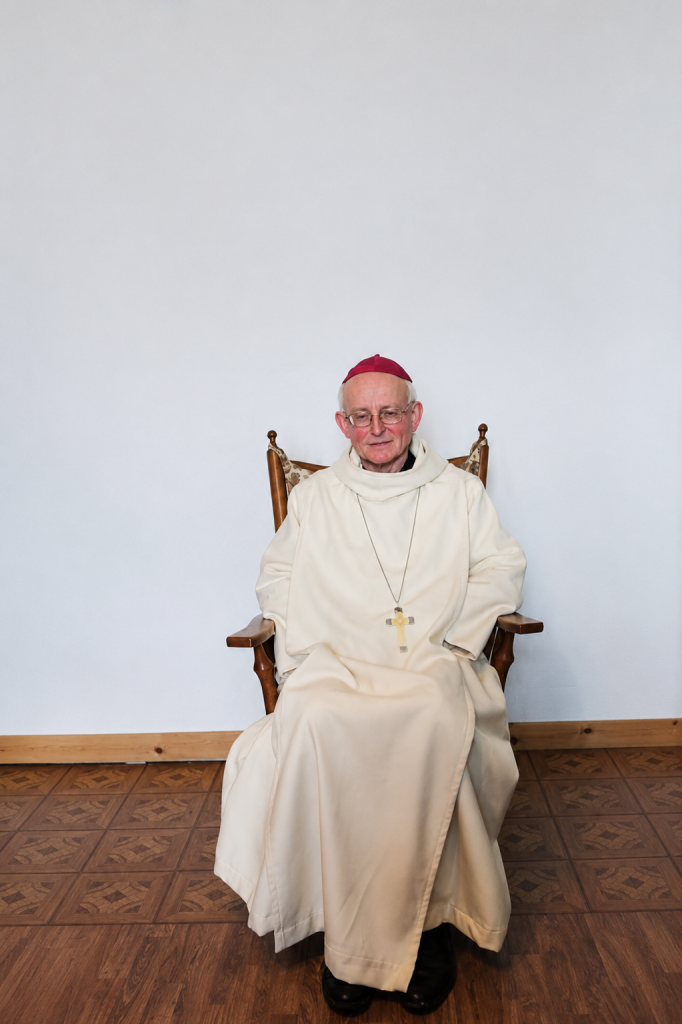
Aberdeen bishop says Catholics should not attend planned Papa Stronsay consecration
The Bishop of Aberdeen has warned Catholics not to attend the planned episcopal consecration of Fr Michael Mary on Papa Stronsay, saying any such ordination would be unlawful and a grave act of disobedience The Bishop of Aberdeen has warned Catholics not to attend the planned episcopal consecration of the founder of the Sons of the Most Holy Redeemer by a sedevacantist bishop. The statement by Bishop Hugh Gilbert OSB follows the announcement that Fr Michael Mary, the founder and Rector Major of the congregation based on the island of Papa Stronsay in Orkney, is due to be consecrated a bishop on 25 July by bishops associated with the sedevacantist movement. In a statement issued after news of the planned ceremony reached the Diocese of Aberdeen, Bishop Gilbert said he was obliged to clarify the Church’s position because the consecration is expected to take place within the geographical boundaries of his diocese. “Any such episcopal ordination would be unlawful and a grave act of disobedience, separating those taking part from communion with the Catholic Church,” the bishop said. “No member of the faithful should attend. This action is not ‘for the good of the Catholic Church’ as is falsely claimed.” The statement added: “This ordination would be celebrated without a papal mandate, by a group of bishops who deny that Our Holy Father Pope Leo XIV is actually the pope.” His Grace concluded: “This development is greatly to be regretted, and we can only pray that those concerned have a change of heart.” The statement marks the latest chapter in a dramatic rupture between the community and Rome that has unfolded over the past two years and culminated in plans for an episcopal consecration without papal approval. The announcement was made earlier on 18 June by Bishop Pierre Roy, a Canadian sedevacantist bishop, who said that Fr Michael Mary would receive episcopal consecration at the monastery on Papa Stronsay with the assistance of Bishops Rodrigo Ribeiro da Silva and Fernando Altamira. In a lengthy explanation of his decision, Bishop Roy argued that the congregation’s growing international presence required a resident bishop. He said the order now has a presence in Scotland, New Zealand and the United States, and undertakes apostolic work elsewhere in Oceania. “The Redemptorists have houses in Scotland, New Zealand, and the United States,” he wrote. “From these houses, they visit Samoa, Australia, and other places.” Bishop Roy argued that it had become increasingly difficult for him to provide oversight personally and said it was “reasonable and necessary to give the Redemptorists a bishop who could properly care for a flock that already knew the sound of his fatherly voice”. Bishop Roy openly acknowledged that the consecration would take place “in the absence of an apostolic mandate”, arguing that the Holy See is occupied by illegitimate authorities and therefore incapable of granting one. That position is the central claim of sedevacantism, a movement which maintains that there is currently no valid pope. Although different groups identify different points at which the papacy supposedly became vacant, they generally argue that the reforms and teachings associated with the Second Vatican Council demonstrate that recent pontiffs could not have been legitimate successors of St Peter. Founded in 1988 by Fr Michael Mary, during a period of intense turmoil following the episcopal consecrations carried out by Archbishop Marcel Lefebvre that same year, the congregation eventually established itself on Papa Stronsay, a remote island in the Orkney archipelago. The election of Pope Benedict XVI appeared to heal divisions with some traditionalist communities, and the congregation sought reconciliation with Rome, entering into full communion with the Holy See in 2008. That reconciliation appeared to be firmly consolidated in 2012 when the community received formal canonical recognition from Bishop Gilbert as a diocesan institute within the Diocese of Aberdeen. For a period, the congregation seemed to have secured a stable future within the life of the Church. However, tensions later emerged, particularly following controversies connected with the community’s activities in New Zealand. Disputes concerning alleged exorcisms and wider questions of governance and ecclesial obedience led to increasing scrutiny from Church authorities. Matters eventually reached a turning point when Bishop Michael Gielen of Christchurch withdrew the community’s faculties and ordered its departure from the diocese. Appeals failed, and relations between the congregation and ecclesiastical authorities deteriorated rapidly. The decisive break came when the community publicly rejected key developments in the post-conciliar Church and concluded that the Catholic faith could not be reconciled with what it described as the modern Church that emerged after the Second Vatican Council. That declaration prompted a strongly worded response from Bishop Gilbert, who said the diocese “deeply regrets the tone, direction and key elements” of the community’s position and warned that it was incompatible with the Catholic understanding of ecclesial unity.
Jun. 19, 2026
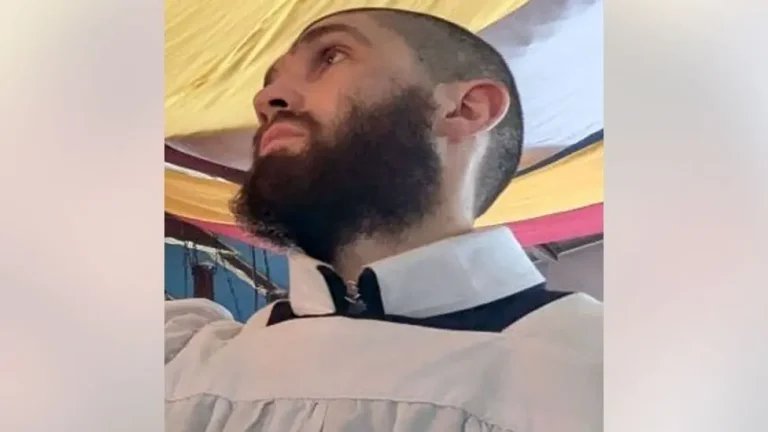
Body of missing Papa Stronsay monk found
A body has been recovered from the sea near Orkney in the search for Brother Ignatius, the 24-year-old monk who disappeared from the Sons of the Most Holy Redeemer on Papa Stronsay in April. Police Scotland said formal identification has yet to take place, but his family has been informed The body of a young monk missing from Papa Stronsay’s Sons of the Most Holy Redeemer since April has been recovered from the sea near Orkney. Police Scotland said a man’s body was discovered in the water off the neighbouring island of Stronsay shortly after 7.30am on May 7. Formal identification has yet to take place, but the family of Justin Evans, 24, known in religion as Brother Ignatius, has been informed. In a statement, Police Scotland said: “The death is being treated as unexplained. Inquiries are ongoing. A report will be submitted to the procurator fiscal in due course.” Brother Ignatius, originally from New Zealand, disappeared from Golgotha Monastery on Papa Stronsay shortly before midnight on April 11. He had been living with the Sons of the Most Holy Redeemer, a traditionalist Redemptorist community based on the isolated Orkney island. The disappearance prompted a major multi-agency search operation involving Police Scotland, HM Coastguard, an RNLI lifeboat and rescue helicopter crews. The search focused on the coastline and surrounding waters amid fears that the monk had entered the sea during harsh weather conditions. Last month, the Bishop of Aberdeen, Hugh Gilbert OSB, confirmed that authorities believed the monk had “come to harm in conditions involving the sea” and announced that official search efforts had been suspended. In a statement released through the diocese regarding today’s news, Bishop Gilbert said: “The Diocese has learned with deep sadness of the disappearance and presumed death of Justin Evans, also known as Brother Ignatius, aged 24, a member of the Redemptorist Community on the island of Papa Stronsay. “It is believed that he came to harm in conditions involving the sea. The local police and coastguard services have now called off their searches. “Brother Ignatius was known for his humility and charity, and our prayers are with his community and family at this difficult time.” The monk had been with the community for around two years. Members of the monastery described his disappearance as the greatest tragedy to affect the order since its arrival on Papa Stronsay in 1999. Speaking previously to local media in Scotland, Fr Michael Mary, the superior of the community, said: “The situation is utterly tragic. We are a close community and this has hit us all very hard and is deeply hurting.” He added that Brother Ignatius came from a deeply religious family and that three of his brothers had also entered monastic life. “Two brothers lived here with him so we are living both a deep family tragedy and a huge community loss,” he said. The Sons of the Most Holy Redeemer, also known as the Transalpine Redemptorists, settled on the island after purchasing it for £200,000 more than 25 years ago. The community had previously been based on the Isle of Sheppey in Kent before relocating to Orkney in search of a more secluded monastic life centred on prayer, penance and the traditional liturgy. The community originated within the orbit of the Society of St Pius X before distancing itself from the Society in the early 2000s amid internal disputes over authority and relations with Rome. After a prolonged period in an irregular canonical position, the monks and priests were reconciled with the Holy See under Pope Emeritus Benedict XVI in 2008 and recognised as a religious institute of diocesan right under the Diocese of Aberdeen. Their return to communion was at the time viewed as a notable success in Benedict XVI’s efforts to restore unity with traditionalist groups attached to the pre-conciliar liturgy. That reconciliation has now effectively collapsed following the publication of “ The Dogma to Steer By” . The language of the community’s latest statement places it firmly within the sedevacantist milieu, going considerably further than the Society of St Pius X, which continues to recognise the legitimacy of the Roman Pontiff despite its opposition to aspects of the Second Vatican Council and subsequent reforms. The Papa Stronsay monks now openly reject the authority of “Leo XIV and his bishops” while advocating an “Imperfect General Council” to restore the Church, a position associated with more radical traditionalist currents.
May 7, 2026