

Nico Spuntoni
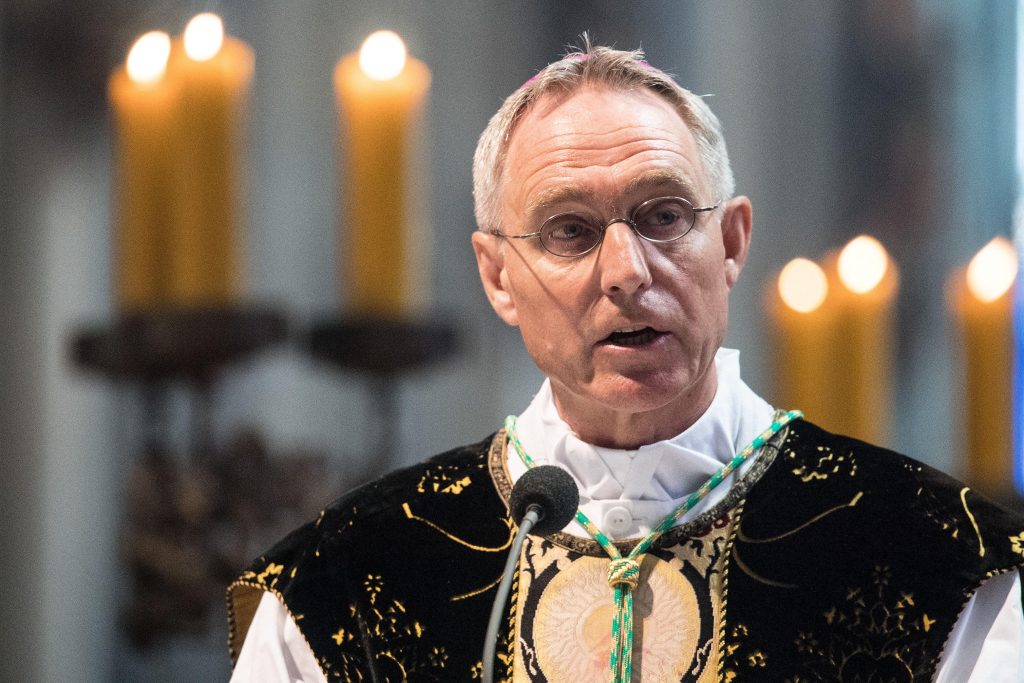
Archbishop Gänswein says now is the ‘kairos’ to lift Traditionis Custodes restrictions
Archbishop Georg Gänswein has said he believes “now is the kairos” to lift the restrictions imposed by Traditionis Custodes. Speaking in an interview with Il Giornale, Pope Benedict XVI’s former personal secretary also reflected on Benedict’s hopes for the older Roman Rite and recalled the pain he witnessed after the 2021 motu proprio Nineteen years after Pope Benedict XVI issued Summorum Pontificum , Archbishop Georg Gänswein, the late pontiff’s longtime personal secretary, expressed hope that the restrictions imposed under Traditionis Custodes could eventually be lifted. Speaking to the Italian newspaper Il Giornale , Vatican correspondent Nico Spuntoni, on the anniversary of Benedict’s 7 July 2007 apostolic letter, Archbishop Gänswein reflected on the origins of Summorum Pontificum , the former Pope’s intentions in liberalising the celebration of the pre-conciliar Roman Rite, and Benedict’s reaction after his successor, Pope Francis, substantially reversed that policy in 2021. Asked about recent calls for the removal of restrictions on the Traditional Latin Mass, Archbishop Gänswein replied: “I read it with interest. I also hope for a decision along these lines.” According to Archbishop Gänswein, Benedict’s principal objective was not only to expand opportunities for celebrating the older liturgy but to restore its place within the life of the Church. “To give full rights to a rite that had never been abolished,” the Archbishop said. “His goal was to restore its full citizenship in the Church and restore peace to the liturgy.” The former papal secretary recalled that Benedict remained undeterred despite opposition from sections of the episcopate. “He was used to receiving criticism,” Archbishop Gänswein said. “But when he was convinced that something was right, he continued towards his goal.” Although Summorum Pontificum was viewed as an important step in Benedict’s efforts to heal divisions with the Society of St Pius X, Archbishop Gänswein suggested that reconciliation with the traditionalist fraternity was not its primary purpose. Archbishop Gänswein said the motu proprio was conceived principally with the Church’s internal liturgical life in mind. Benedict had become convinced, following his experience overseeing matters relating to the implementation of Ecclesia Dei , that changes were needed in the way the older liturgy was regulated. Particular emphasis was placed on the attraction of the older liturgy among younger Catholics. Archbishop Gänswein said Benedict had always believed that a form of worship celebrated for centuries would continue to draw new generations of the faithful. “He had great faith in young people,” he said, adding that Benedict was pleased by the growth of communities established under the former Ecclesia Dei commission, which provided a canonical home for Catholics attached to the older liturgy while remaining fully within the structures of the Church. Asked whether Summorum Pontificum had succeeded, Archbishop Gänswein answered unequivocally: “Yes, it was about to bear fruit.” He pointed to the annual Paris-to-Chartres pilgrimage as evidence of growing interest among younger Catholics, arguing that many participants were drawn by what Gänswein described as “the beauty of the liturgy”. Archbishop Gänswein also rejected the suggestion that Catholics devoted to the Traditional Latin Mass are necessarily opposed to the reforms of the Second Vatican Council. “These young people are nourished by the beauty of the liturgy; they are not at all opposed to the Second Vatican Council,” the Archbishop said. “It is not true that those with a traditional liturgical sensibility who participate in Tridentine Masses are anti-conciliar; those who say so are motivated solely by ideology.” Perhaps the most damning part of the interview concerned Benedict XVI’s response after Pope Francis promulgated Traditionis Custodes , the motu proprio that substantially restricted the provisions of Summorum Pontificum and returned greater authority over celebrations of the older rite to diocesan bishops while introducing significant new limitations. Archbishop Gänswein said he personally read the text of Traditionis Custodes to the Pope Emeritus. “When I read Traditionis Custodes to him,” he recalled, “I saw that there was pain in his heart. That was my impression.” Looking to the future, he added: “Now I believe it is the kairos [the right moment] to remove those prohibitions and overcome the incident represented by that text.” The interview by Nico Spuntoni is in line with previous reporting by AdVaticanum, which cited sources close to both Archbishop Gänswein and Pope Emeritus Benedict XVI as saying that the promulgation of Traditionis Custodes “caused [Benedict] pain”. According to those sources, Benedict never expressed those feelings publicly, remaining faithful to the promise of silence he made following his resignation in 2013. The same report also revisited Archbishop Gänswein’s own position following Benedict’s retirement. Once serving as Prefect of the Papal Household while continuing as Benedict’s personal secretary, Archbishop Gänswein later left the Vatican before eventually being appointed Apostolic Nuncio to the Baltic states. As reported by AdVaticanum, Pope Emeritus Benedict XVI made both formal and informal requests for Archbishop Gänswein to remain in the Vatican after his own retirement. One source claimed, “Sometimes Benedict asked favours of Francis to keep Gänswein in the Vatican and not remove him, both formally and informally.” The report said those requests went unanswered.
Jul. 8, 2026