

Latin America
Pope Leo XIV accepts resignation of Peruvian bishop accused of sexual abuse
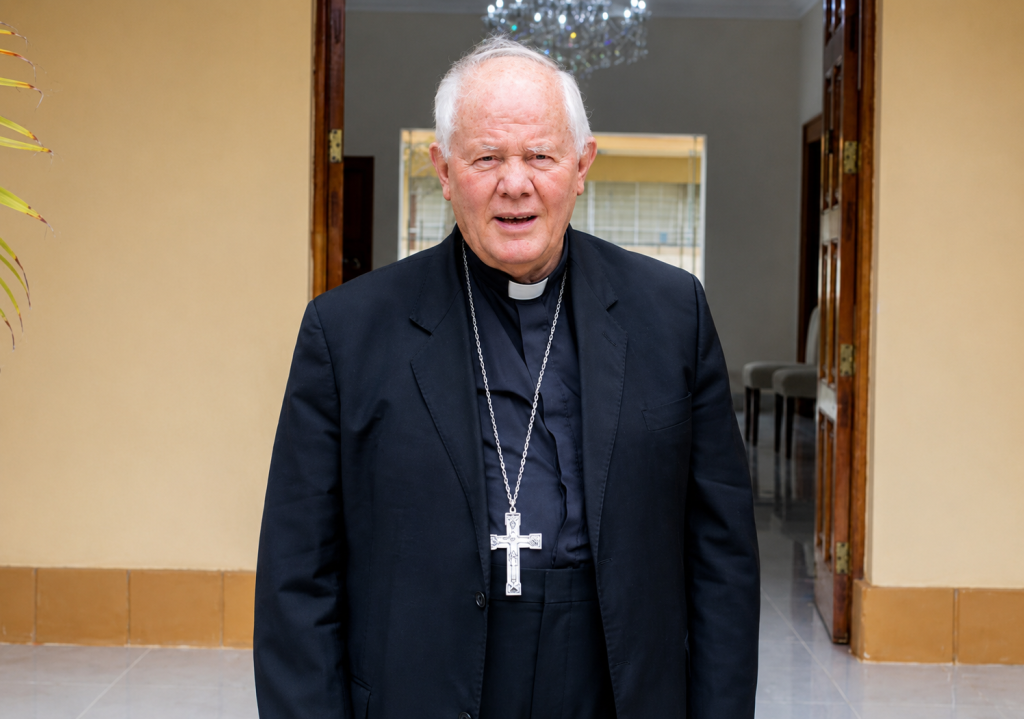
Pope Leo XIV has accepted the resignation of Bishop Antonio Santarsiero Rosa of Huacho, Peru. The bishop stands accused of sexual abuse and leaves office after reaching the canonical retirement age of 75 Pope Leo XIV has accepted the resignation of a Peruvian bishop as attention begins to turn towards the Pontiff’s expected journey to Latin America in November. The Holy See Press Office announced on 15 July that the Pope had accepted the resignation of Bishop Antonio Santarsiero Rosa, O.S.J., from the Diocese of Huacho after he reached the canonical retirement age of 75. No successor has yet been appointed, leaving the diocese temporarily without a bishop as the Vatican considers its next appointment. Bishop Santarsiero, who turned 75 on 13 June, was required under Canon 401 §1 of the Code of Canon Law to submit his resignation upon reaching the customary retirement age for bishops. Allegations have been made against the bishop, although the Vatican’s announcement made no reference to the accusations. A priest in 2024 submitted a dossier to the Apostolic Nunciature in Lima and to the Dicastery for Bishops alleging that Bishop Santarsiero had sexually abused both a former seminarian and the priest himself. According to the allegations, the former seminarian claimed that the bishop subjected him to unwanted sexual contact over a period of years beginning while he was still a minor. The complaint further alleged that promises of scholarships, employment and opportunities within the diocese were used to exert influence over him. The same dossier also contained allegations from a priest who had previously served as Bishop Santarsiero’s secretary. According to the documentation, the priest claimed he had been subjected to unwanted physical contact and psychological pressure. The complaint further alleged that, after rejecting the bishop’s alleged advances, attempts were made to undermine his credibility by circulating claims about his sexual orientation. When the allegations became public earlier this year, Bishop Santarsiero rejected them in their entirety. As the accusations attracted increasing attention, the bishop stepped aside from his responsibilities as Secretary General of the Peruvian Episcopal Conference, stating that he wished to “clarify the truth”, according to the conference’s statement. He has continued to categorically deny every allegation made against him. According to the material submitted by the complainant, documentation detailing the accusations was first presented to Cardinal Robert Prevost, then Prefect of the Dicastery for Bishops, in November 2024 before being personally delivered in Rome the following month. The Vatican has not publicly confirmed receipt of those submissions or indicated whether a canonical investigation was opened in response. The case has attracted attention because of the relationship between the then Cardinal Prevost, now Pope Leo XIV, and Bishop Santarsiero within the Peruvian episcopate. Both men served together in the leadership of the Peruvian Episcopal Conference for several years. Bishop Santarsiero became president of the conference’s Economic Council in 2017, while then Bishop Robert Prevost was elected Second Vice-President in 2018. Both were re-elected to those positions in 2022 for the 2022–2025 term and worked alongside one another until Pope Francis appointed Archbishop Prevost Prefect of the Dicastery for Bishops in January 2023. Their association did not end with Archbishop Prevost’s move to Rome. The two bishops continued to appear together at ecclesiastical events, including a Mass celebrated by Cardinal Prevost in Chiclayo in November 2023, which Bishop Santarsiero attended. There is no evidence or suggestion that either as Bishop or Pope that Pope Leo XIV had any reason to suspect that Bishop Santarsiero was behaving improperly. Their association is normal and expected with their ecclesiastical positions. Born in Avigliano, Italy, in 1951, Bishop Santarsiero entered the Oblates of St Joseph in 1973 after qualifying in typography. He pursued philosophical and theological studies at the Pontifical and Civil Theological Faculty of Lima before being ordained to the priesthood on 14 June 1980. His episcopal ministry began in 2001 when Pope St John Paul II appointed him Prelate of Huari. Following his episcopal ordination later that year, he led the territorial prelature until 2004, when the same Pope transferred him to the Diocese of Huacho. Bishop Santarsiero formally took possession of the diocese on 25 April 2004 and remained there for more than 21 years. The timing of the resignation is also notable given Pope Leo XIV’s expected apostolic journey to Latin America later this year. As AdVaticanum has previously reported, unlike the Pope’s recent visit to Spain, which centred on a single country, the November trip is expected to encompass several countries. AdVaticanum understands that the Holy See is preparing an itinerary that will include Peru, Uruguay and Argentina, with elements of the Peruvian programme already beginning to emerge ahead of an official announcement expected later this month. The acceptance of Bishop Santarsiero’s resignation removes one unresolved leadership issue in the Peruvian Church before the Pope’s anticipated arrival. The Holy See has offered no explanation beyond accepting the resignation submitted in accordance with canon law, but the decision leaves the Diocese of Huacho vacant as preparations continue for the Pontiff’s expected visit to the region. AdVaticanum understands that Peru is expected to present the greatest challenges during the visit, primarily because of continuing tensions surrounding the Archdiocese of Lima. Local reporting has pointed to ongoing internal disputes and power struggles linked to a series of decisions taken by Cardinal Carlos Castillo. AdVaticanum further understands that planned public appearances involving Pope Leo XIV and Cardinal Castillo have been kept to a minimum, effectively sidelining the Archbishop of Lima during the anticipated visit.
Jul. 16, 2026
Pope Leo XIV expected to begin first Latin America tour in Uruguay this November
Pope Leo XIV is expected to make his first visit to Latin America this November, with Uruguay likely to be the first stop on a tour that AdVaticanum understands will also include Argentina and Peru. Preparations are already underway and Vatican officials are visiting key sites ahead of the expected announcement later this month Pope Leo XIV is expected to make his first visit to Latin America in November, with Uruguay set to become one of the destinations on a tour that is also expected to include Argentina and Peru. Although the Holy See Press Office has yet to publish the official itinerary, Cardinal Daniel Sturla, Archbishop of Montevideo, has said preparations are already underway and expressed confidence that the visit will take place. He described the visit as a moment of great significance for the Church in Uruguay after decades without a papal visit. Speaking at a press conference at the headquarters of the Uruguayan Episcopal Conference, Cardinal Sturla announced that Vatican officials had arrived in the country to continue preparations for the anticipated journey. Although the Cardinal stressed that the final dates and programme remain subject to confirmation by the Holy See, with an announcement expected at the end of July, he said the visit would be in November as part of what will be Leo XIV’s first visit to the Americas since his election in May 2025. The Cardinal revealed that he had personally extended an invitation to the newly elected Pope only days after the beginning of his pontificate. Recalling their first meeting, Cardinal Sturla said he told Leo: “Holy Father, we are waiting for you. We come from Uruguay. Remember that Francis did not visit Uruguay or Argentina, so we are waiting for you.” Those remarks alluded to the long-standing disappointment felt by many Catholics in both Uruguay and neighbouring Argentina that Pope Francis never returned to either country during his pontificate, despite repeated speculation that such a journey would eventually take place. Leo XIV’s anticipated visit would represent the first papal visit to Uruguay since St John Paul II travelled there in 1988. Although no official programme has yet been released, Cardinal Sturla indicated that Montevideo is expected to feature prominently on the itinerary, while a possible visit to Paysandú, in the north of the country, remains under consideration. “Our desire is to be the first ones visited,” His Eminence said, adding that “there are many signs” suggesting Uruguay will open the South American tour. Nevertheless, the Cardinal cautioned against assuming details that have not yet been formally confirmed. “The idea is for him to go to a department in the north; it might be Paysandú, but since it’s not confirmed, we shouldn’t raise false expectations.” Among the principal events under discussion is a Mass at the National Shrine of the Virgin of the Thirty-Three in Florida on 8 November, coinciding with the feast of Uruguay’s patroness. Cardinal Sturla expressed the hope that Pope Leo would preside over the celebration, describing such a possibility as “a tremendous gift for the Virgin and for all of us who can celebrate Holy Mass with the Pope there.” Preparatory work has already extended beyond logistical planning. According to the Cardinal, Vatican representatives have visited Montevideo, Florida and Paysandú to assess venues and organise the practical arrangements required for the papal visit. Particular attention has also been given to Casavalle, one of the most disadvantaged areas of Montevideo, where the Catholic Church has long been involved in extensive charitable and pastoral work. Cardinal Sturla said it was important that the Holy Father should witness those initiatives first-hand and have the opportunity to meet those who benefit from them. Alongside the pastoral programme, Pope Leo is also expected to meet President Yamandú Orsi, who personally presented the invitation to visit Uruguay during a meeting at the Vatican. However, Cardinal Sturla indicated that no address to the Uruguayan Parliament is expected as the Vatican generally avoids institutional events that could become politically contentious. “The Pope is a unifying factor, and if something provokes controversy, he will surely not speak in Parliament,” he said. . Also participating in the press conference was communications consultant Yago de la Cierva, who coordinated Pope Leo XIV’s recent visit to Spain. He urged those beginning preparations to prepare well in advance. “What I am here to tell you is that you have no idea what is coming your way,” he warned those who will prepare the Uruguay papal visit. Unlike the Pope’s recent visit to Spain, which focused on a single country, the forthcoming apostolic journey is expected to mirror the structure of his African tour by encompassing several nations in one regional visit. While attention has understandably centred on Uruguay following Cardinal Daniel Sturla’s announcement, AdVaticanum understands that the November journey has been conceived as a wider South American tour that will also include Peru and Argentina. Elements of the Peruvian itinerary have already begun to emerge, while preparations are advancing across all three countries ahead of the Holy See’s formal announcement, expected later this month.
Jul. 15, 2026