

Israel
Israeli settlement reported near West Bank’s last Christian town
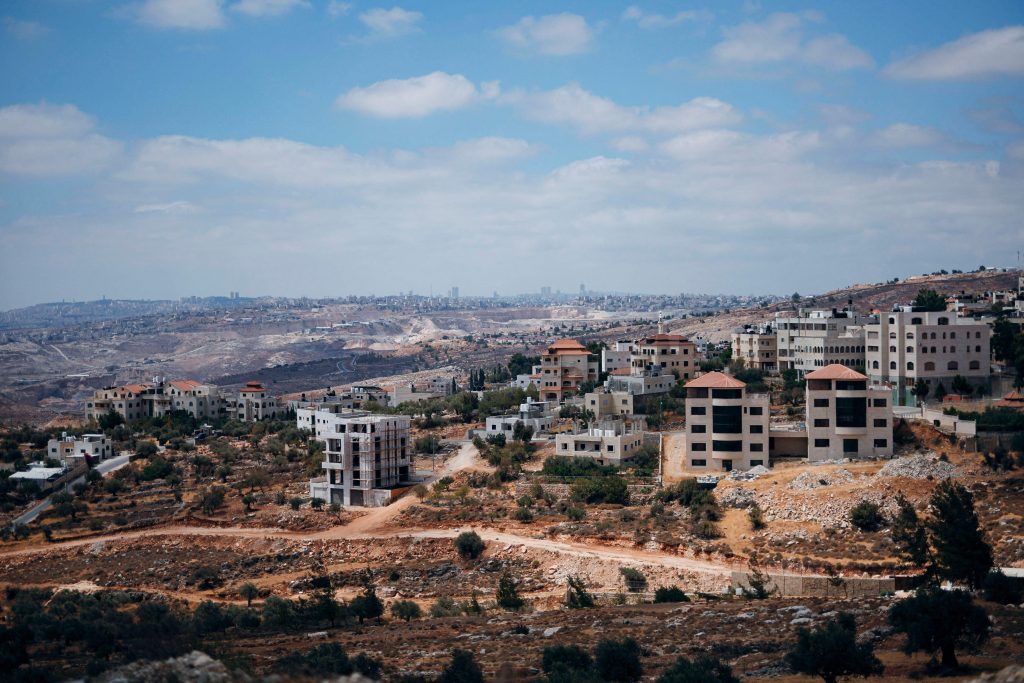
Taybeh, the West Bank’s last entirely Christian town, is under threat. Speaking exclusively to AdVaticanum, parish priest Fr Bashar Fawadleh warns that “silence today could allow an irreparable reality tomorrow” The Christian leaders of Taybeh have issued an urgent appeal after reports of a new Israeli settlement outpost on land overlooking the West Bank’s last entirely Christian town. According to local verifiable sources in Taybeh and field monitoring cited by the Vulnerable People Project, groups of settlers have been seen repeatedly on Jabal Al-Massis, a hill east of Ramallah that belongs to Taybeh, in what is described as preparations for the establishment of a new outpost immediately adjacent to Palestinian homes. Taybeh’s clergy are now calling for international intervention. Fr Bashar Fawadleh, parish priest of Christ the Redeemer Parish, has asked for diplomats, ambassadors, the United Nations, churches and international organisations to visit the area, monitor developments closely and use diplomatic means to prevent the outpost from becoming established. If gone ahead with, the development would create a permanent settler presence on the edge of the town, bringing with it an increased risk of violence, intimidation and restrictions on residents’ freedom of movement. Speaking exclusively to AdVaticanum, Fr Fawadleh said the issue extended well beyond a dispute over land. “When an outpost is established right on our doorsteps, the issue is no longer just a land dispute, but an attack on people’s right to live in safety and dignity,” he said. “Taybeh is not asking for privileges, but for the protection of children, families, land, and the Christian heritage that has survived in this town for two thousand years. Silence today could allow an irreparable reality tomorrow,” the priest said. This development follows months of warnings from the priests serving Taybeh’s three Christian churches. Fr Fawadleh, together with Fr Jack-Nobel Abed and Greek Orthodox priest Fr Daoud Khoury, has repeatedly argued that the eastern part of the town, which accounts for more than half of Taybeh’s territory, has become increasingly vulnerable to the gradual establishment of settlement outposts. The clergy have maintained that such sites frequently begin as small encampments before expanding over time, with the result that they become permanent features of the landscape and centres for further encroachment onto surrounding land. Jabal Al-Massis has already featured in the news, as the hill was the scene of a recent arson attack in which settlers allegedly set fire to a large area opposite the town’s fuel station. According to the parish, residents attempting to extinguish the blaze were obstructed as they tried to reach the site. In recent days, settlers reportedly established another outpost near Nablus, preventing villagers from accessing their agricultural land, while a Bedouin home east of Taybeh was set on fire. Studies suggest that settlers and soldiers have carried out thousands of attacks across the West Bank since the beginning of 2025, resulting in the destruction of hundreds of homes and the displacement of tens of thousands of Palestinians. Jason Jones, head of the Vulnerable People Project, explained that the reported construction on Jabal Al-Massis will add to the pressure put on the Christian community. “Settlers are now planting an outpost at every side of Taybeh, marking a dangerous new stage in the slow strangulation of the last Christian town in the West Bank,” he said in a statement. “Each new settlement expansion becomes a base for the next attack, the next blocked road, the next family pushed off its land. The world cannot continue to watch – we must stand with Taybeh now.” In separate comments given exclusively to AdVaticanum, Jones reflected on the significance of the town’s Christian heritage and urged greater solidarity from Christians abroad. “I’ve walked through Taybeh – a town that has survived sixteen centuries of empires but may not survive the world’s silence,” he said. “Today it stands surrounded by seven settlements choking the life out of its residents, as settlers have now planted a new outpost on Jabal Al-Massis, within sight of homes where families have kept the Christian faith since the fifth century. Now is the time for Christians around the world to stand with our brothers and sisters in Taybeh as they face their latest challenge, this new settlement.” The Vulnerable People Project says it continues to monitor developments on the ground as it seeks to verify further reports concerning activity on the hill overlooking the town. For Taybeh’s clergy, the concern is not just the appearance of another isolated settlement, but the cumulative effect of successive outposts surrounding the community. They argue that each new presence alters daily life by increasing pressure on residents and creating conditions that become progressively more difficult to reverse. Taybeh is in the Holy Land. Situated north-east of Jerusalem near Ramallah, it is recognised as the last remaining entirely Christian town in the West Bank, with a continuous Christian presence stretching back many centuries. As reports continue to emerge from Jabal Al-Massis, Taybeh’s priests insist that international attention cannot wait until construction is complete. Their message is that immediate engagement is needed if the town’s Christian community, its families and its historic presence are to be safeguarded from what they believe is an increasingly precarious future. Israeli settlements in the West Bank began after the 1967 Six-Day War, when Israel captured the territory from Jordan. Over the following decades, successive Israeli governments authorised or supported the expansion of settlements, while other outposts were established without formal government approval but have often remained in place or later received official recognition. Much of the international community considers the settlements to be illegal under the Fourth Geneva Convention, a position endorsed by the United Nations and the International Court of Justice, although Israel disputes this interpretation. The Christian population of the Holy Land has steadily declined over the past century, with emigration, conflict, economic hardship and political instability all contributing to shrinking communities in both the West Bank and Gaza. Once sizeable Christian populations in cities such as Jerusalem, Bethlehem and Ramallah have diminished significantly, while smaller communities have become increasingly vulnerable as opportunities for younger generations have narrowed.
Jul. 7, 2026
Italian bishops clash over calls to exclude Israeli novelist from literary festival
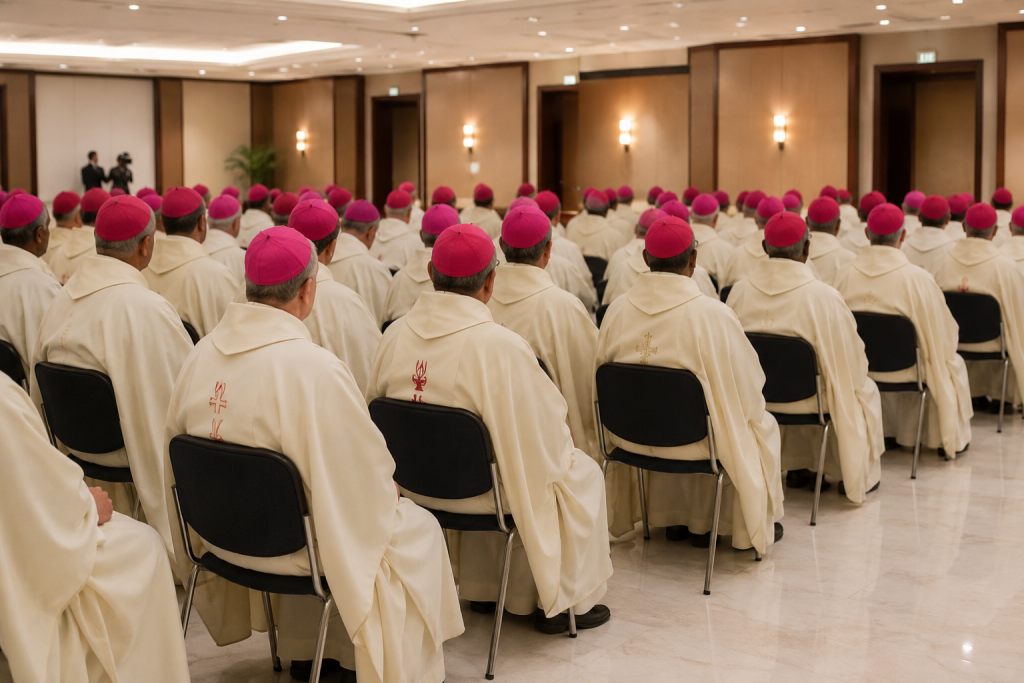
A public dispute between senior Italian bishops has erupted over calls to exclude Israeli novelist Eshkol Nevo from a literary festival in southern Italy, with one archbishop backing a petition against his appearance while others defend dialogue and condemn attempts to silence him A row over the appearance of an Israeli novelist at a literary festival in southern Italy has exposed divisions within the Italian Catholic hierarchy, with senior bishops publicly disagreeing with one another. Archbishop Franco Moscone of Manfredonia-Vieste-San Giovanni Rotondo has been criticised after signing a petition calling on organisers of the Il Libro Possibile festival to reconsider hosting the Israeli writer Eshkol Nevo at an event due to take place in Vieste next month. The petition, addressed to regional authorities and festival organisers, argues that Nevo has not taken a sufficiently clear public stance against the actions of the Israeli government in Gaza. Among its signatories are politicians, activists, academics and clergy, including Archbishop Moscone, whose archdiocese includes one of the festival venues. Speaking to Italian media, the archbishop defended his decision to support the initiative and rejected accusations that it amounted to censorship. “The issue is not that Nevo is Israeli,” His Grace said, arguing instead that intellectuals have a responsibility to speak clearly in the face of injustice. He said the novelist had not shown sufficient “criticism and clarity” regarding the actions of the Israeli government and described the situation in Gaza as a matter that could not be ignored by public figures with influence and visibility. The intervention quickly resulted in backlash from other Church leaders. Archbishop Giuseppe Baturi, Archbishop of Cagliari and Secretary General of the Italian Bishops’ Conference, sought to distance the bishops’ conference from the controversy while defending the principle of open dialogue. In an interview with Corriere della Sera, Archbishop Baturi said: “Peace is not built by preventing those who think differently from speaking, but by creating the conditions for them to be heard.” He stressed that the Italian Bishops’ Conference had “not intervened on the merits of the matter” and said Archbishop Moscone’s decision to sign the appeal was “a personal choice and the exercise of freedom of thought and expression”. “In the Church, personal conscience is not erased, but rather placed within a path of communion,” His Grace said. Addressing the conflict in the Holy Land, Archbishop Baturi echoed recent appeals by Cardinal Pierbattista Pizzaballa, the Latin Patriarch of Jerusalem, warning against language that strips people of their humanity. “Violence also stems from language that dehumanises others, and the Church must fight it: denounce violence and terrorism, but not fuel words that make others unrecognisable as human beings,” he said. More critical comments came from Archbishop Carmelo Pennisi of Monreale, who told the Italian daily, La Stampa, that the campaign against the writer was “an act of antisemitism”. The comments have brought into the open disagreements among Italian bishops over how Catholics should respond to the conflict in the Holy Land, which has generated strong reactions across Italy since the Hamas attacks of 7 October 2023 and the subsequent Israeli military campaign in Gaza. Festival organisers have refused to alter their programme and confirmed that Nevo will participate as scheduled. Rosella Santoro, the artistic director of Il Libro Possibile, said the festival would continue to provide a platform for a wide range of voices and rejected suggestions that writers should be judged according to the policies of their governments. Organisers noted that Nevo has repeatedly spoken publicly in favour of peace and dialogue and has expressed criticism of elements within Israeli politics. They also pointed out that the festival programme includes Palestinian voices and journalists covering the conflict, alongside Catholic representatives involved in interreligious dialogue and peace initiatives. The petition was promoted by activists and public figures in Puglia, including members of left-wing political movements and campaign groups opposed to the war in Gaza. While supporters argue that public figures should take stronger positions against the conflict, critics have questioned why Nevo was singled out given his record of supporting negotiations and criticising aspects of Israeli government policy. Nevo is one of Israel’s most prominent contemporary authors. His novels, translated into numerous languages, have earned an international readership. His best-known works include The Symmetry of Desires, Neuland and Three Floors, the latter adapted for cinema by Nanni Moretti. In recent years he has been associated with demonstrations against the government of Benjamin Netanyahu and has publicly criticised far-right figures within Israeli politics. The disagreement surrounding Nevo’s participation in Il Libro Possibile has become one of the clearest examples of those tensions within the Italian Church. Despite calls for his exclusion, the novelist remains on the programme and is expected to appear in Vieste on 21 July.
Jun. 16, 2026
Vatican nuncio says Israeli military activity forced aid convoy to divert in southern Lebanon
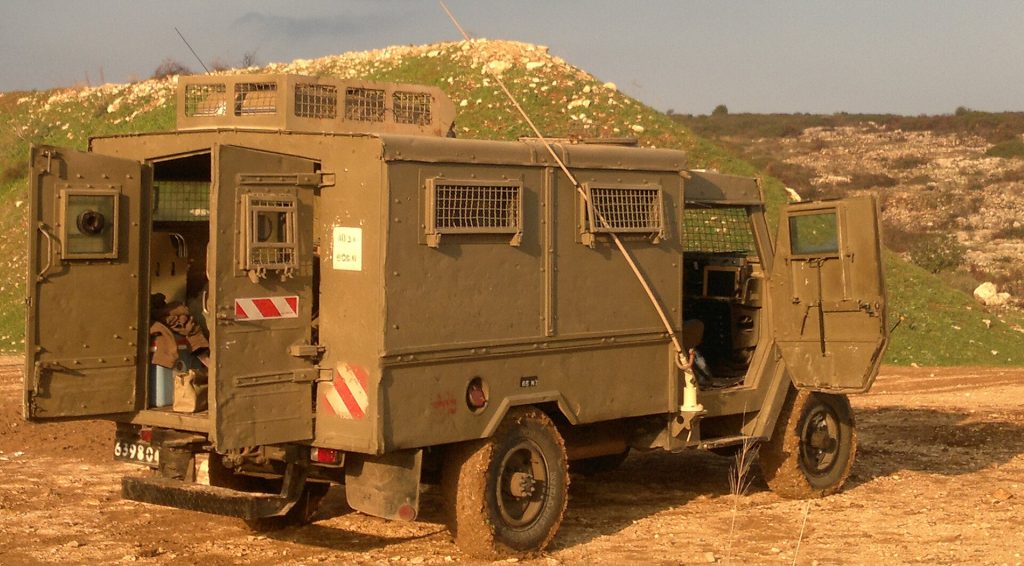
Archbishop Paolo Borgia, the Apostolic Nuncio to Lebanon, has described how a humanitarian convoy carrying food, medicine and fuel to isolated Christian communities in southern Lebanon was forced to divert after encountering Israeli military activity near the border The Apostolic Nuncio in Lebanon has described how a humanitarian convoy carrying aid to isolated Christian communities in the country’s south was forced to divert by the IDF. Archbishop Paolo Borgia, the Apostolic Nuncio to Lebanon, was leading a convoy of dozens of trucks laden with food, medicine and fuel when security concerns forced it to divert on 11 June while travelling towards the predominantly Christian village of Debel, close to the Israeli border. The convoy, organised with the support of Caritas and other Catholic agencies, had left Beirut early in the morning and was intended to reach Debel, as well as the neighbouring Christian villages of Ain Ebel and Rmeich. The mission also included displaced residents seeking to return temporarily to their homes after weeks of conflict and instability. Speaking to Vatican Media, Archbishop Borgia said the convoy had been unable to continue along its planned route after violence erupted in the area. “It was not possible to continue along the route” that had previously been coordinated with the relevant authorities, His Grace said, explaining that an alternative route had to be found after the security situation deteriorated. According to reports from those travelling with the convoy, Israeli military vehicles were present in the area and gunfire could be heard nearby. One individual quoted by AFP said: “We came face to face with several IDF tanks. We heard some gunfire directed at targets behind us. It wasn’t clear whether they were trying to intimidate us or targeting Hezbollah bases. There were moments of panic.” The convoy was delayed and ultimately forced to retrace part of its journey before obtaining fresh authorisations and proceeding by a different route. Archbishop Borgia said the aid mission eventually reached Debel after a journey lasting about 10 hours. The Archbishop stressed that the vehicles were carrying humanitarian assistance urgently needed by communities that have become increasingly cut off from the rest of Lebanon because of continuing military operations in the south. “We were all in our vehicles, in a long convoy carrying various kinds of humanitarian aid, especially food supplies, fruit, vegetables, water, as well as medicines and fuel,” the nuncio said. The aid was intended not only for households but also for local businesses and agricultural producers struggling to maintain daily life amid the conflict. Archbishop Borgia explained that supplies had been brought for village shops facing shortages, as well as for farmers and livestock breeders whose livelihoods have been severely disrupted. Although the convoy encountered danger, the nuncio said those involved had attempted to remain calm. “These are frightening situations, but one tries to deal with them calmly and keep a cool head in the moment,” the Archbishop said. There has been concern among Lebanon’s Christian communities over the security situation in the south of the country. In recent days, Israeli evacuation orders have reportedly been extended to areas containing Christian neighbourhoods that had previously not been directly affected by such measures. The city of Tyre, home to a significant Christian minority alongside its larger Muslim population, was among the areas affected by recent evacuation instructions. Residents were told to move north of the Zahrani River as Israeli military operations continued against Hezbollah positions. Israel and Hezbollah have remained locked in a cycle of confrontation despite ongoing diplomatic efforts aimed at reducing tensions across the region. The conflict along the Lebanese border has continued to produce civilian displacement and widespread disruption to normal life, particularly in villages situated close to the frontier. Archbishop Borgia indicated that the Church had no intention of abandoning the affected communities despite the dangers involved. “We are in a situation of war, but we will continue our commitment to helping the people,” Archbishop Borgia said. “I believe there will already be another convoy next week.” According to Archbishop Borgia, the June convoy marked his twentieth visit to southern Lebanon since the conflict began, comprising 17 humanitarian convoys and three pastoral visits. “It is important to be present,” His Grace said, “because this gives people the possibility of remaining in their communities and surviving.” The nuncio emphasised that the Church’s role extends beyond the delivery of material assistance. The presence of Church representatives in conflict zones also serves as a sign of solidarity with communities facing uncertainty and hardship. “With our presence, we bring the presence of the Pope, of the universal Church, and of the Lebanese Church, together with closeness and solidarity,” he said, adding that people needed “to feel understood and accompanied, embraced by the love of the Church itself”. The Church has played a significant humanitarian role throughout Lebanon’s recent crises, from the country’s economic collapse and the Beirut port explosion to repeated outbreaks of regional conflict. Catholic charities, religious orders and diocesan structures have often provided support in areas where state services have struggled to operate effectively. Southern Lebanon has long been home to some of the country’s oldest Christian communities, particularly among Maronite Catholics and Melkite Greek Catholics. Villages such as Debel, Ain Ebel and Rmeich have endured periods of conflict stretching back decades, including the Israeli occupation of southern Lebanon, the 2006 Lebanon war and subsequent border tensions. The Holy See has repeatedly called for peace in the region and for the protection of civilians regardless of religion or nationality. (photo credit: קרלוס הגדול – Own work, CC BY-SA 3.0, https://commons.wikimedia.org/w/index.php?curid=18059264 )
Jun. 16, 2026