

Idf
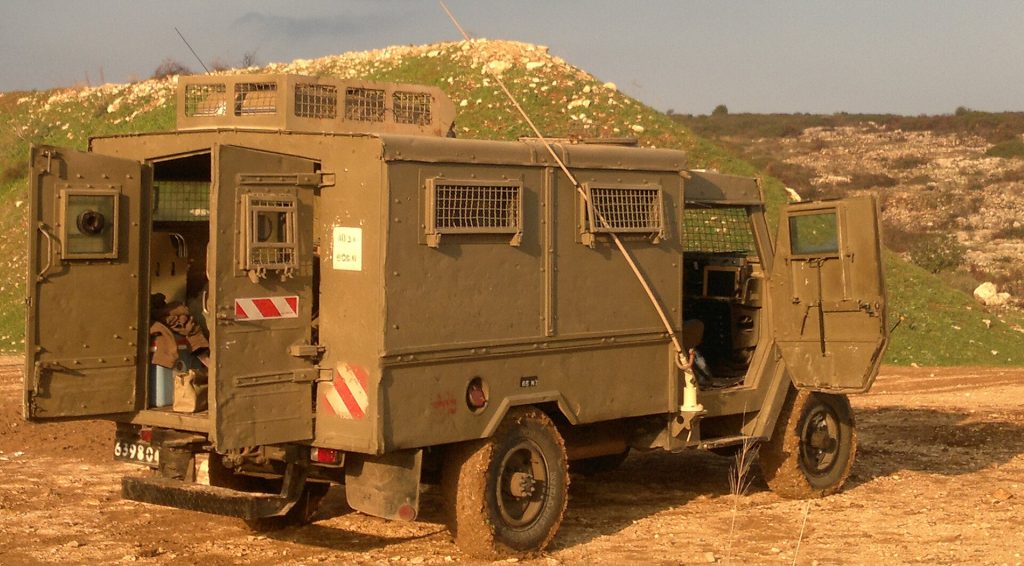
Vatican nuncio says Israeli military activity forced aid convoy to divert in southern Lebanon
Archbishop Paolo Borgia, the Apostolic Nuncio to Lebanon, has described how a humanitarian convoy carrying food, medicine and fuel to isolated Christian communities in southern Lebanon was forced to divert after encountering Israeli military activity near the border The Apostolic Nuncio in Lebanon has described how a humanitarian convoy carrying aid to isolated Christian communities in the country’s south was forced to divert by the IDF. Archbishop Paolo Borgia, the Apostolic Nuncio to Lebanon, was leading a convoy of dozens of trucks laden with food, medicine and fuel when security concerns forced it to divert on 11 June while travelling towards the predominantly Christian village of Debel, close to the Israeli border. The convoy, organised with the support of Caritas and other Catholic agencies, had left Beirut early in the morning and was intended to reach Debel, as well as the neighbouring Christian villages of Ain Ebel and Rmeich. The mission also included displaced residents seeking to return temporarily to their homes after weeks of conflict and instability. Speaking to Vatican Media, Archbishop Borgia said the convoy had been unable to continue along its planned route after violence erupted in the area. “It was not possible to continue along the route” that had previously been coordinated with the relevant authorities, His Grace said, explaining that an alternative route had to be found after the security situation deteriorated. According to reports from those travelling with the convoy, Israeli military vehicles were present in the area and gunfire could be heard nearby. One individual quoted by AFP said: “We came face to face with several IDF tanks. We heard some gunfire directed at targets behind us. It wasn’t clear whether they were trying to intimidate us or targeting Hezbollah bases. There were moments of panic.” The convoy was delayed and ultimately forced to retrace part of its journey before obtaining fresh authorisations and proceeding by a different route. Archbishop Borgia said the aid mission eventually reached Debel after a journey lasting about 10 hours. The Archbishop stressed that the vehicles were carrying humanitarian assistance urgently needed by communities that have become increasingly cut off from the rest of Lebanon because of continuing military operations in the south. “We were all in our vehicles, in a long convoy carrying various kinds of humanitarian aid, especially food supplies, fruit, vegetables, water, as well as medicines and fuel,” the nuncio said. The aid was intended not only for households but also for local businesses and agricultural producers struggling to maintain daily life amid the conflict. Archbishop Borgia explained that supplies had been brought for village shops facing shortages, as well as for farmers and livestock breeders whose livelihoods have been severely disrupted. Although the convoy encountered danger, the nuncio said those involved had attempted to remain calm. “These are frightening situations, but one tries to deal with them calmly and keep a cool head in the moment,” the Archbishop said. There has been concern among Lebanon’s Christian communities over the security situation in the south of the country. In recent days, Israeli evacuation orders have reportedly been extended to areas containing Christian neighbourhoods that had previously not been directly affected by such measures. The city of Tyre, home to a significant Christian minority alongside its larger Muslim population, was among the areas affected by recent evacuation instructions. Residents were told to move north of the Zahrani River as Israeli military operations continued against Hezbollah positions. Israel and Hezbollah have remained locked in a cycle of confrontation despite ongoing diplomatic efforts aimed at reducing tensions across the region. The conflict along the Lebanese border has continued to produce civilian displacement and widespread disruption to normal life, particularly in villages situated close to the frontier. Archbishop Borgia indicated that the Church had no intention of abandoning the affected communities despite the dangers involved. “We are in a situation of war, but we will continue our commitment to helping the people,” Archbishop Borgia said. “I believe there will already be another convoy next week.” According to Archbishop Borgia, the June convoy marked his twentieth visit to southern Lebanon since the conflict began, comprising 17 humanitarian convoys and three pastoral visits. “It is important to be present,” His Grace said, “because this gives people the possibility of remaining in their communities and surviving.” The nuncio emphasised that the Church’s role extends beyond the delivery of material assistance. The presence of Church representatives in conflict zones also serves as a sign of solidarity with communities facing uncertainty and hardship. “With our presence, we bring the presence of the Pope, of the universal Church, and of the Lebanese Church, together with closeness and solidarity,” he said, adding that people needed “to feel understood and accompanied, embraced by the love of the Church itself”. The Church has played a significant humanitarian role throughout Lebanon’s recent crises, from the country’s economic collapse and the Beirut port explosion to repeated outbreaks of regional conflict. Catholic charities, religious orders and diocesan structures have often provided support in areas where state services have struggled to operate effectively. Southern Lebanon has long been home to some of the country’s oldest Christian communities, particularly among Maronite Catholics and Melkite Greek Catholics. Villages such as Debel, Ain Ebel and Rmeich have endured periods of conflict stretching back decades, including the Israeli occupation of southern Lebanon, the 2006 Lebanon war and subsequent border tensions. The Holy See has repeatedly called for peace in the region and for the protection of civilians regardless of religion or nationality. (photo credit: קרלוס הגדול – Own work, CC BY-SA 3.0, https://commons.wikimedia.org/w/index.php?curid=18059264 )
Jun. 16, 2026
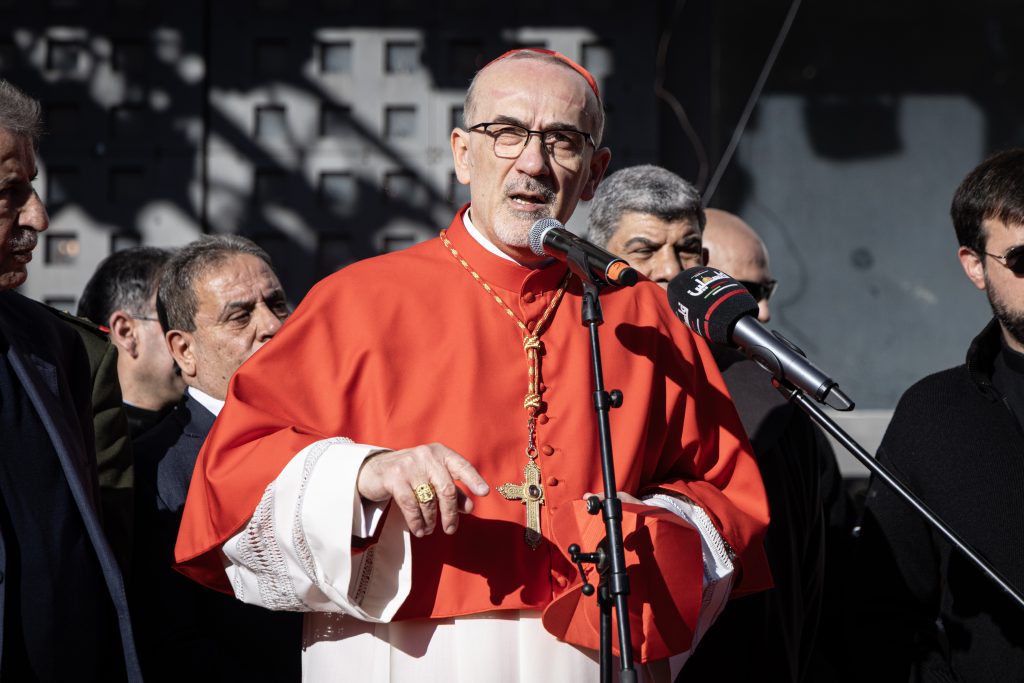
Cardinal Pizzaballa intervenes after alleged IDF attempt to halt Marian festival in West Bank
Cardinal Pierbattista Pizzaballa has reportedly intervened with Israeli authorities after military personnel allegedly attempted to halt a Marian festival in Taybeh, the last entirely Christian Palestinian town in the West Bank Cardinal Pierbattista Pizzaballa has intervened after the Israeli Defence Force personnel allegedly attempted to halt a Catholic Marian festival in the Christian West Bank village of Taybeh on Friday. Representatives of the Vulnerable People Project (VPP), an organisation that seeks to protect vulnerable people around the world from violence, said they were present in the village when Israeli military vehicles entered Taybeh early in the morning and ordered organisers preparing for the annual celebration in honour of the Blessed Virgin Mary to leave the area. The parish priest overseeing the festival immediately contacted Church authorities, and the matter was escalated to Cardinal Pizzaballa, the Latin Patriarch of Jerusalem. According to VPP, the cardinal subsequently spoke with Israeli authorities and secured permission for the event to proceed. The incident took place in Taybeh, regarded as the last entirely Christian Palestinian town in the West Bank. Jason Jones, founder and president of the Vulnerable People Project, told this publication that the events highlighted the precarious position of Christian communities throughout the region. “Christians with influence and power in the United States may be the last line of defence between vulnerable Christian communities and the forces driving them from their ancestral homelands,” he said. “From Gaza to the West Bank and Lebanon, ancient Christian communities are under immense pressure. If they are erased and we remained silent, we will share responsibility for that loss.” The president of VPP added: “The disruption of a Marian festival by the IDF is not just an attack on a celebration; it is another warning sign that the Christian presence in the Holy Land is in peril. “At the Vulnerable People Project, we launched Save West Bank Christians because we believe the descendants of the first Christians have the right to remain where Christianity was born. The time for solidarity is now.” A spokesman for the Latin Patriarchate of Jerusalem declined to comment. Lex Pouliot, manager of Middle East projects for the Vulnerable People Project, who witnessed the events, told AdVaticanum that organisers had initially feared disruption from Israeli settlers. “Our fear this morning was that radical settlers would disrupt preparations for the Marian Festival,” she said. “Instead, it was far more disturbing to watch the Israeli military intervene. Hearing a stun grenade explode as Christians prepared for a permitted religious celebration brought into sharp focus the countless stories I have heard throughout my time in the West Bank. “What we witnessed today should concern Christians around the world.” The allegations follow months of complaints from Church leaders and residents over increasing pressure on the Christian community in Taybeh. In March, Fr Bashar Fawadleh appealed for international attention after reporting that settlers had taken over privately owned land belonging to village residents. In April, Cardinal Pizzaballa and other heads of Churches in Jerusalem lodged a formal complaint with the authorities over alleged encroachments on Church-owned property in the area. During Holy Week, Cardinal Pizzaballa and Father Francesco Ielpo OFM, Custos of the Holy Land, were blocked from entering the Church of the Holy Sepulchre to celebrate Holy Mass, marking the first time in centuries that Mass had not been celebrated inside the church on Palm Sunday. The clerics later issued a joint statement describing the incident as a “grave precedent” that disregarded “the sensibilities of billions of people around the world who, during this week, look to Jerusalem”. The latest incident also follows reports that Israeli soldiers entered a brewery compound in Taybeh on Thursday. According to VPP, troops prevented the owner from accessing parts of the property while members of the organisation were interviewing local workers. Taybeh, identified with the biblical Ephraim, is the last remaining entirely Christian Palestinian town in the West Bank. Home to about 1,000 residents, the village has become increasingly vocal about pressure from nearby settler activity in recent years. Neither the Israel Defense Forces nor Israeli authorities had publicly responded to the allegations at the time of publication.
May 30, 2026