

Genoa
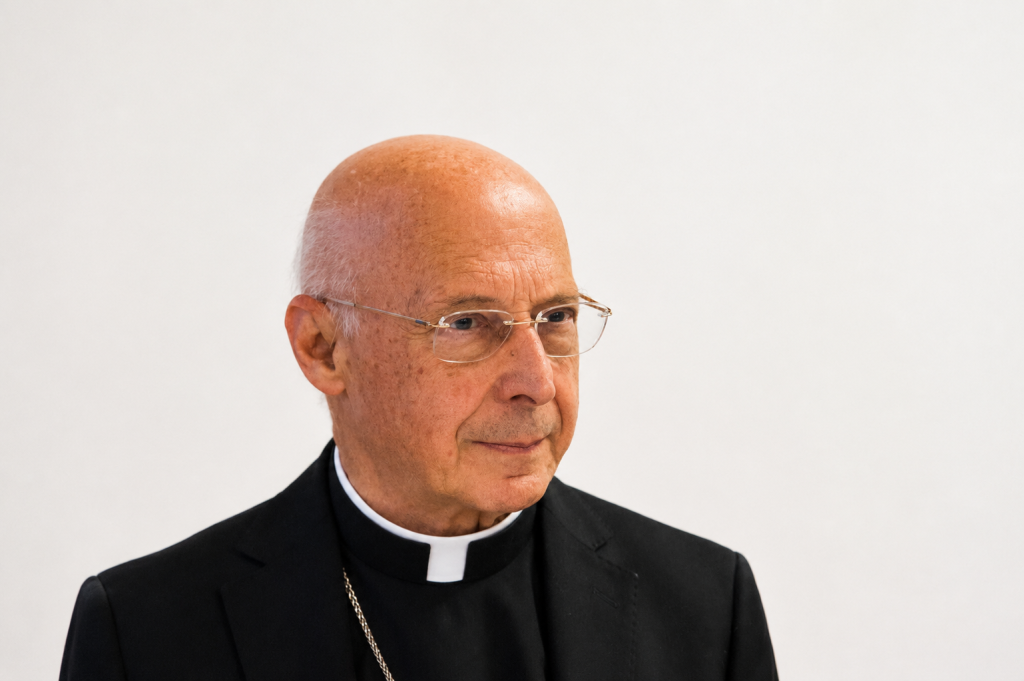
EXCLUSIVE: Cardinal Bagnasco reflects on the Vetus Ordo, vocations and family life
AdVaticanum recently sat down with Cardinal Angelo Bagnasco, Archbishop Emeritus of Genoa. In this short but exclusive interview, the Italian prelate reflects on his years of service as Archbishop of Genoa and on the deeply pastoral approach he developed over decades as a parish priest, seminary formator and diocesan leader. He discusses how best to […] AdVaticanum recently sat down with Cardinal Angelo Bagnasco, Archbishop Emeritus of Genoa. In this short but exclusive interview, the Italian prelate reflects on his years of service as Archbishop of Genoa and on the deeply pastoral approach he developed over decades as a parish priest, seminary formator and diocesan leader. He discusses how best to accompany young people in their search for meaning, the importance of beauty and depth in the Church’s liturgical and sacramental life, the place of both the Ordinary and Extraordinary Forms of the Roman Rite, the challenges facing family life, and the conditions needed to foster priestly vocations in today’s Europe. Cardinal Angelo Bagnasco was ordained a priest in 1966. After serving as a curate working with young people and university students, he held several key diocesan roles, including Director of the Catechetical Office and Director of the Liturgical Office of Genoa. Appointed Archbishop of Genoa in 2006, he led the archdiocese for fourteen years until his retirement in May 2020. Created a cardinal in 2007, he has participated in numerous consistories and continues to offer his wisdom and pastoral experience to the Church as a respected elder statesman. AV: Your Eminence, since your retirement from the office of Archbishop of Genoa in May 2020, how have these years of service as Archbishop Emeritus unfolded for you personally, and in what ways have you continued to accompany the Catholic faithful spiritually? +AB: Prayer has no age. With time it is refined and expands. Sixty years of priesthood, of which 29 have been spent in the episcopate, and the responsibilities I have received — as you recalled — have allowed me to meet people, know situations, receive confidences about their lives, and witness the humble and widespread goodness that is much greater and stronger than noisy and ostentatious evil. Every priest is a sign of Jesus beside souls: he brings the light of the Gospel, the strength of the Sacraments, and the motherhood of the Church. The joys and sorrows, the hopes and concerns of humanity are his home, and in the home of his prayer he brings the world. This is the substance: some forms may change, but the substance does not pass away. AV: Throughout your years of priestly and episcopal ministry, you have been known for your emphasis on pastoral closeness. What does authentic pastoral ministry require of a bishop or priest, and how can shepherds remain close to their people while always leading them to Christ? +AB: One must be among the people, not to blend in and lose one’s identity, but as a shepherd who knows his flock and is known by them. There is a continuous and serene tension: that souls do not stop at us, but through us encounter Him, Christ the Lord. Sometimes it is easier to give conferences on pastoral care than to actually do pastoral care — that is, to be with people as shepherds. Initiatives can be thought out and must be proposed, but without prayer and closeness one gets nowhere, and souls remain lost. AV: Your Eminence, from your very first years as a curate engaged with university students, scouts, and high school students, and later through your leadership of the diocesan catechetical office and the Liturgical Apostolate, you have always placed great emphasis on the formation of new generations. What pastoral efforts have you found most effective in drawing young people closer to God, and how can the Church today respond generously to their search for meaning? +AB: God is truth and love, and the priest must be a sign of both for everyone, particularly for the youngest, who are still at the beginning of life. Love is expressed in a gaze of sympathy and esteem, in closeness and availability, and in patient trust. It is not a matter of inventing new languages or initiatives, but of touching the paths of the heart. In a society of solitude, it is necessary that each person feels seen and recognised as precious. But God is also truth, and every person needs truth; they want to know who they are and what meaning their life has. The priest must draw out from every soul the deep questions, often submerged by the distractions that assail it. These questions open up the religious sense, which is God’s signature in every soul. Here begins, in one way or another, the journey of the spiritual life — that is, the living relationship with Christ, the true and complete answer to the heart of every young person. AV: Your Eminence, for several years you were Director of the Liturgical Office of Genoa and have always shown deep pastoral attention to the celebration of the sacred rites. Many Catholics, especially younger ones, show a strong attachment to the Extraordinary Form of the Roman Rite ( Vetus Ordo ) and find in it a profound source of spiritual nourishment, reverence, and continuity with the Church’s tradition. In your view, how can the Church today best welcome and integrate these legitimate aspirations, so that the liturgy — both in the Ordinary Form and the Extraordinary Form — may truly become a source of unity rather than division? +AB: The need for spirituality is widespread in our time, marked by secularism — living as if God did not exist. The more the prevailing culture denies God, the more He is present in the human heart. Indifference, sooner or later, turns into a need, and this becomes the presence of a “beyond” that has revealed itself in Jesus. In the Catholic Church there are many rites: in Milan, for example, there is the Ambrosian Rite. The document of Benedict XVI, Summorum Pontificum , does not create a new liturgical rite, but recognises, within the one Roman Rite, an ordinary form and an extraordinary form. The latter is linked to certain conditions. The unity of faith is not in question, but rather legitimate personal sensibilities. If, in this area, differences do not become absolutes, banners, or parties, then why not? The good of souls is the mission of the Church. AV: Your Eminence, the family has long been recognised as the first school of faith and the foundation of Christian life, yet today it faces numerous cultural and social challenges. In your opinion, how can the Church best support and strengthen family life, while also helping parents and Catholic communities to transmit the faith effectively to new generations? In particular, what role should Catholic education play, both within the family and in parish life, in forming children in a deep and living spirituality? +AB: Societies shaped by the prevailing culture want the family to become ever more fluid. Common sense recognises the family for what it is: a man and a woman and, if they are blessed with them, children. It is a stable and permanent union, consecrated for believers by the sacrament of marriage. As Cicero wrote, it is “the first form of society.” It is the foundation of society, the natural home of life, the primary educator of children, and a school of virtue and relationships. It guarantees the future. For this reason, the State must commit itself to supporting it economically and defending it culturally. It is therefore an incomparable and indispensable institution. Today, instead, there is a systematic desire to expand and dilute its meaning, as with every point of reference. The goal is to leave the younger generations confused in order to manipulate them for the sake of power and profit. Nihilism preaches the emptiness of the soul, and this emptiness has an unbearable weight: it creates every form of escape, dependency, and violence, and fuels consumerism. The Christian community must pray and emerge from the corner of irrelevance. It must help people become aware of what is being sown and of the deceptions built on appearance and emptiness. To speak the truth with clarity is the first act of love towards one’s neighbour, whatever their age. It must bear witness through its life and through the courage of its voice. I see in Europe a growing expectation. It is the path towards Christ, who is the way, the truth, and the life. AV: Finally, Your Eminence, despite the spiritual challenges affecting Italy and Western Europe, we are also witnessing encouraging signs in the growing number of young men, often from a new generation of Catholics, who are discerning a vocation to the priesthood and entering seminaries with great enthusiasm. What spiritual conditions do you consider most effective today for attracting and forming these young vocations? In your experience, how can the Church encourage more young people to embrace the priesthood through a profound encounter with the richness of the Catholic tradition? +AB: Jesus is the one who gives the vocation to the priesthood; the Church has the task of recognising it and forming the candidates. Both in Italy and across Europe I see encouraging signs of vocations: God continues to call. We have become somewhat deaf, lacking silence and reflection on what truly matters: the will of the Lord, His faithful closeness, and His voice. We must create and offer times and places of prayer and silence — experiences that I see attracting many young people. We adults must trust them and look upon them with sympathy, without flattering them. They seek the lofty truth of life, of faith, and of the Church. Mediocrity does not fascinate them. Many times they have told me: “To stake our lives, we want a true, certain, and lofty goal.” Not only youth ministry but also places of formation, beginning with parents, must reflect on these words.
Jul. 8, 2026