

France
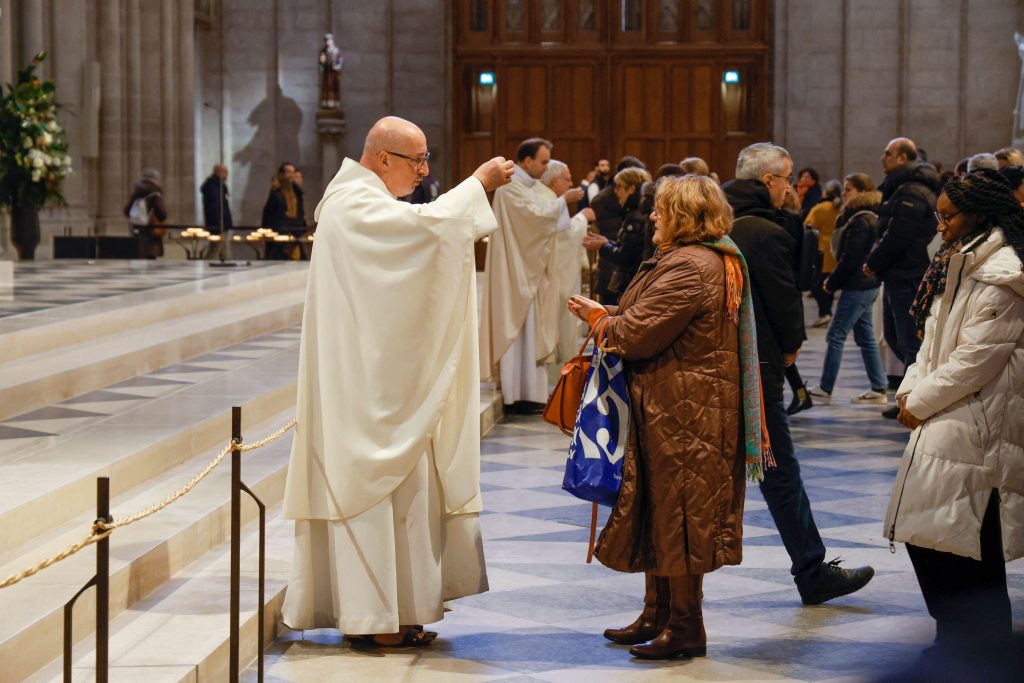
French bishop says Catholic MPs backing assisted suicide should not receive Communion
A French bishop has warned Catholic lawmakers who support assisted suicide legislation should not receive Holy Communion. The intervention was made by Bishop Marc Aillet of Bayonne just days before members of the French National Assembly are expected to vote on the government’s controversial end-of-life bill on 15 July. Speaking to France Catholique on 7 […] A French bishop has warned Catholic lawmakers who support assisted suicide legislation should not receive Holy Communion. The intervention was made by Bishop Marc Aillet of Bayonne just days before members of the French National Assembly are expected to vote on the government’s controversial end-of-life bill on 15 July. Speaking to France Catholique on 7 July, Bishop Aillet argued that support for euthanasia is not simply a matter of differing political judgement but concerns an objective moral principle rooted in both Christian doctrine and natural law. “When a member of parliament declares himself Catholic while supporting legislation that authorises taking a life, he objectively places himself in opposition to a constant teaching of the Church, but also to a fundamental principle of human reason,” Bishop Aillet said. The bishop used Samaritanus Bonus , the 2020 instruction issued by the Congregation for the Doctrine of the Faith, to justify his position. The letter states that it is “an intrinsically evil act, whatever the circumstances”. Referring to Catholic politicians serving in public office, Bishop Aillet said: “A Catholic engaged in public life cannot ignore this.” His comments go beyond a reiteration of Church teaching by directly addressing the sacramental implications for Catholic legislators. Asked whether supporting the legislation carried spiritual consequences, Bishop Aillet replied that it did because “the Christian faith engages one’s entire existence”. While stressing the need for every individual to examine his or her conscience, he argued that public support for legislation fundamentally opposed to Catholic moral teaching created “a real problem of ecclesial coherence”. “The Catholic parliamentarians who voted for this bill must weigh the consequences,” the bishop said. “If they are aware of this inconsistency, they will no longer be able to receive Communion.” Bishop Aillet added that “the Church is justified in reminding them of this, as some bishops have done in the United States”, before inviting Catholic lawmakers to undertake “a sincere examination of conscience”. Bishop Aillet also challenged one of the principal arguments advanced by supporters of the legislation: that euthanasia represents an act of compassion towards those enduring profound suffering. “We must distinguish true compassion from what John Paul II called ‘false mercy’,” the bishop said. “A truly fraternal society does not respond to distress by eliminating the suffering individual, but by developing palliative care, psychological, familial and spiritual support.” He further rejected the suggestion that the legislation represented an expansion of personal freedom. “Authentic freedom is ordered toward the good,” Bishop Aillet argued, warning that public understanding of the issue had become distorted by “the dominant discourse that seriously clouds consciences” and “the media onslaught influenced by powerful lobbies”. Bishop Aillet urged Catholics to educate themselves and to offer practical support to those who are sick, elderly or isolated. The bishop also addressed the pastoral challenges posed by requests for euthanasia. While reiterating that suicide remains “objectively contrary to the will of God”, Bishop Aillet emphasised that the Church continues to recognise the complex personal circumstances that may diminish an individual’s freedom, including suffering, loneliness, depression and social pressure. The bishop said priests should accompany those requesting euthanasia by helping them “rediscover hope, reconcile with God, and renounce their plan”, describing authentic pastoral care as encouraging patients “to choose life until its natural end, never condoning a lethal act”. Particular concern was also expressed for healthcare workers who could find themselves required to implement the law should it ultimately be enacted. Bishop Aillet warned that doctors, nurses and other medical professionals entered their vocation to care for patients rather than intentionally end their lives. “My first thought is the moral dilemmas this law risks creating,” Bishop Aillet said. “Healthcare professionals chose their profession to care for, relieve and support patients. Now they would be asked to participate in the killing of a patient.” For that reason, he insisted that “civil law cannot abolish the demands of moral conscience” and argued that robust legal protection for conscientious objection would be essential, regardless of whether healthcare workers were religious believers. Bishop Aillet also questioned whether France wished to force institutions founded upon respect for human life into closure or exile. “Do we want these establishments to close, when they manage tens of thousands of beds?” Bishop Aillet asked. “Do we want them to go into exile abroad, like the religious orders expelled from France at the beginning of the 20th century? Are we going to imprison the nuns who do not comply with this law?” He concluded that “we must defend the freedom of these institutions with determination.” The bishop also reflected on Pope Leo XIV’s forthcoming visit to France, whose chosen motto is “So that the world may have life”. Although acknowledging that the legislation could be approved before the Pope arrives, Bishop Aillet argued that the Church’s witness would remain unchanged regardless of the parliamentary outcome. “Even if a law is passed, it does not end the duty of Christians to bear witness,” he said. “I expect the Holy Father to forcefully reaffirm the inalienable dignity of all human life.” He also expressed the hope that Pope Leo would encourage families, caregivers, volunteers and all those accompanying the sick and elderly, insisting that “the ultimate issue is spiritual”. “A society weakens when it presents death as a solution,” he said, before concluding that Christ came “so that people may have life, and have it to the full”, a hope which “the Church will continue to proclaim, regardless of legislative developments.” This publication has previously reported that Pope Leo XIV is believed to have held a series of direct telephone conversations with President Emmanuel Macron devoted exclusively to the proposed euthanasia and assisted suicide legislation. The proposed legislation has been championed by President Emmanuel Macron’s government under the language of “aid in dying”, with ministers presenting the measure as a compassionate response for adults suffering from incurable illness accompanied by unbearable and untreatable suffering. Opposition has remained. The bill has already encountered significant resistance in the Senate, where a third vote rejected the legislation by a narrow margin before returning it to the National Assembly for what may become its decisive reading.
Jul. 14, 2026
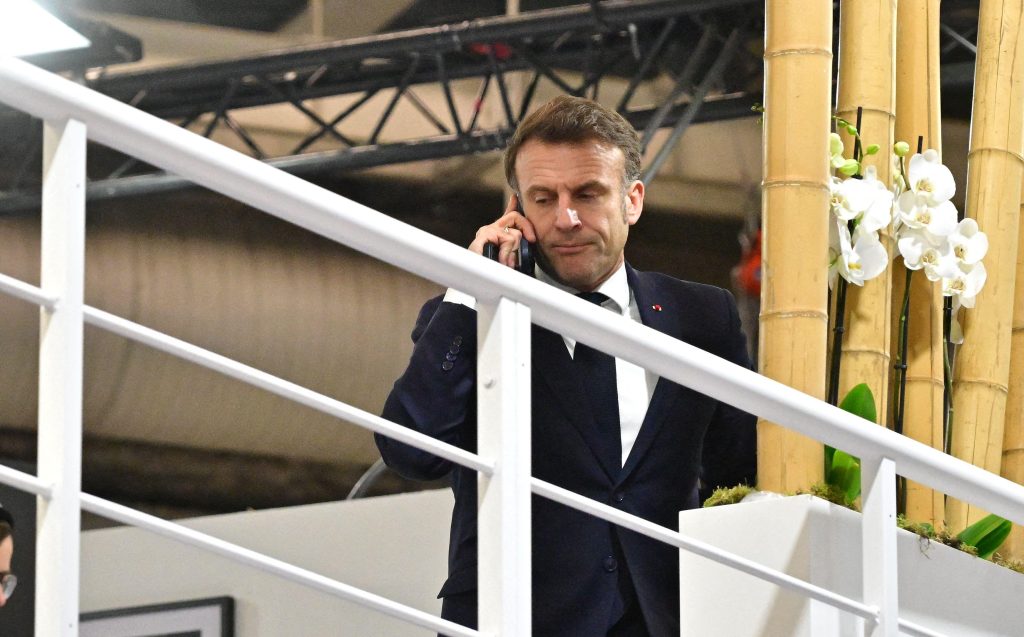
Pope Leo XIV personally lobbied Macron over French euthanasia bill, sources say
Exclusive: Sources tell AdVaticanum that Pope Leo XIV held regular direct calls with President Emmanuel Macron in an effort to slow France’s euthanasia bill ahead of his forthcoming visit to the country A notable feature of the June Consistory was Pope Leo XIV’s call for frankness in addressing the pressing issues facing the Church. According to sources close to AdVaticanum, this approach has recently been put into practice through the Pope’s personal engagement with the highest levels of the French government on the question of euthanasia. The intervention has taken place through quiet but consistent channels. While sources could not confirm exactly when it began, Pope Leo XIV is said to have initiated a series of direct communications with Emmanuel Macron. According to sources within both the diplomatic sphere and the Vatican, His Holiness has been making regular 15-minute phone calls to the French President focused solely on the euthanasia and assisted suicide bill. These conversations have centred on ways to slow the bill’s progress and prevent France from following paths seen in other nations, such as Canada, where the law is now responsible for more than 5 per cent of deaths. It is understood that His Holiness has been focusing particularly on euthanasia because several European countries, including the United Kingdom, are pursuing similar legislation, and a liberalisation in France may encourage others to follow. The third vote in the Senate on the euthanasia and assisted suicide bill failed, with senators rejecting the measure by a narrow margin. The bill will now return to the National Assembly for what could prove a decisive reading. Sources have also told AdVaticanum that His Holiness’s strengthened focus on life issues is a defining priority of his pontificate. This is reflected in the promotion of Archbishop Renzo Pegoraro, President of the Pontifical Academy for Life, who was elevated from monsignor to the episcopate in under a year. The political dimension of the upcoming papal trip to France is likely another factor behind the Pope’s personal engagement. The overall atmosphere surrounding the visit will be shaped by the country’s policy of laïcité, the strict secular framework separating Church and State. The French legislature will be keen to avoid any appearance of external influence on matters of public policy, particularly on moral questions such as euthanasia. However, the Pope is likely to use the visit to make a firm defence of human life, as seen during his recent apostolic journey to Spain. On that occasion, as the first Pontiff to address the Spanish Parliament, he asked: “Can a community that casts into the shadows the unborn child, the elderly, the sick, those who suffer in silence, or those who depend entirely on the care of others be called fully just?” He went on to insist that “every human life must be recognised and safeguarded from conception to its natural end, in every circumstance of its existence.” President Macron has publicly backed the assisted suicide legislation, describing it as “aid in dying” for adults facing incurable illness and intractable suffering. His government has framed the measure as a compassionate option, avoiding terms such as euthanasia or assisted suicide. His party and its allies in the National Assembly have largely supported the bill, arguing that it protects personal dignity and individual choice in end-of-life decisions. Yet the Senate’s repeated rejections indicate significant resistance to the state facilitating suicide. Pope Leo XIV has met President Macron on several occasions since his election. Their first in-person meeting took place shortly after the conclave in May 2025, when Macron travelled to Rome for a private audience at the Vatican to discuss European affairs, including migration and peacebuilding. If the bill ultimately passes, the Pope’s visit to France will carry clear political sensitivities. He will encounter an environment in which any strong defence of the Church’s teaching on the sanctity of life may prompt accusations of interference in domestic affairs. With the French visit on the horizon, the climate of secular sensitivity means that every word and gesture will carry weight. Macron’s government has continued to advance the legislation despite Senate setbacks, setting the stage for potential tension. Yet the repeated failures in the Senate also suggest that concerns about assisted suicide—particularly its implications for the value of human life and the protection of the vulnerable—remain firmly present within French political life.
Jul. 13, 2026
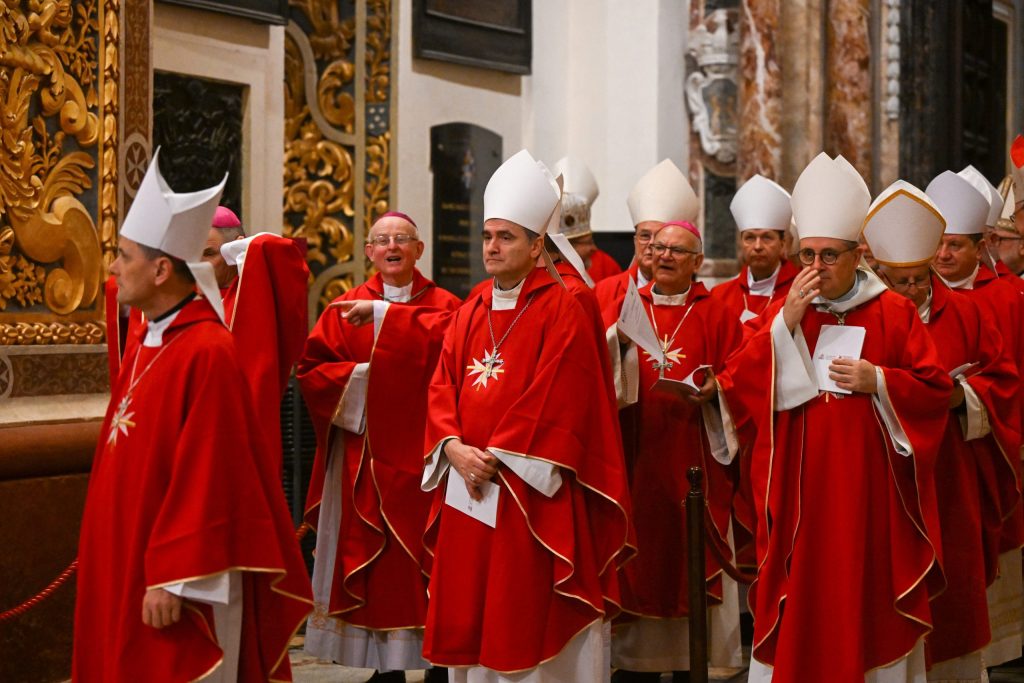
French bishops release itinerary for papal trip
Pope Leo XIV’s visit to France will take him to Paris, Lourdes and Metz from 25 to 28 September. As his apostolic journey to Spain draws to a close, the French bishops have released the first details of the papal itinerary The French bishops have released the first details of Pope Leo XIV’s apostolic journey to France, confirming a programme that will take the Pontiff to Paris, Lourdes and Metz during a visit scheduled from 25 to 28 September. The itinerary, published by the Conference of Bishops of France on 9 June, includes Solemn Vespers at Notre-Dame Cathedral in Paris on the opening day of the visit, a national youth prayer vigil, an open-air Mass in the French capital, a pilgrimage to Lourdes, and a final Mass in Metz. The announcement was made by Cardinal Jean-Marc Aveline, Archbishop of Marseille and president of the bishops’ conference, who said preparations had been under way for several months and that discussions with the Pope had begun shortly after the start of his pontificate. “From the very beginning of his pontificate, I invited Leo XIV to visit us,” Cardinal Aveline wrote. “He was not difficult to convince, so great is his esteem for our country, for its role in the world, for its rich spiritual history, and for its missionary zeal.” The cardinal said he had begun working with the Pope on a draft programme for the visit in April and noted that a steering committee had already been established to coordinate preparations between the bishops’ conference and the dioceses due to receive the Pontiff. According to the schedule released by the bishops, Pope Leo will begin the visit on Friday, 25 September, with Solemn Vespers at Notre-Dame de Paris. Priests, deacons and their wives, consecrated persons, religious brothers and sisters, and seminarians from across France have been invited to attend. Later that evening, the Pope will join young people from throughout the country for a large prayer vigil in Paris. The following afternoon, Saturday 26 September, he will celebrate a solemn open-air Mass in the French capital. On Sunday 27 September, Pope Leo will travel to Lourdes, where he is scheduled to celebrate Mass on the meadow facing the grotto associated with the apparitions of the Blessed Virgin Mary to St Bernadette Soubirous in 1858. The final event announced by the bishops is a Mass at Saint-Étienne Cathedral in Metz on Monday 28 September. The bishops stressed that the Holy See has yet to publish the complete programme and that further practical information regarding participation in the various events will be released in due course. The visit was first announced by the French bishops in May. At the time, they described the prospect of welcoming the new Pope as “a great joy and a great responsibility” and said his presence would be an opportunity for the Church in France to share its experiences with the successor of St Peter while being strengthened by his ministry. In his latest message, Cardinal Aveline urged Catholics to prepare spiritually for the visit. “Above all, we must prepare ourselves to receive the grace that God wishes to bestow upon France and our Church,” he said. “Through our inner openness and our missionary boldness, let us prepare ourselves to cooperate in the work that the Holy Spirit will accomplish in hearts during the visit of the successor of Peter.” Notre-Dame Cathedral is one of the most iconic symbols of French Catholicism, Gothic architecture and national identity. Located on the Île de la Cité in Paris, it is dedicated to the Virgin Mary and has been the site of major historical events, including coronations and Te Deums. It suffered a devastating fire in 2019 but reopened in late 2024. The visit will mark the first papal visit to the cathedral since its reopening. The Mass in Lourdes will take place at one of the world’s most important Marian shrines, associated with St Bernadette’s 1858 apparitions of the Virgin Mary. The shrine attracts millions of pilgrims each year for prayer, healing and the famous torchlight processions. Previous papal visitors have included Pope John Paul II and Pope Benedict XVI. Less attention has been given to the Mass at Saint-Étienne Cathedral in Metz. Nicknamed the “Lantern of the Good Lord” because of its vast stained-glass windows, among the largest collections in the world, the cathedral stands in the Moselle region of Lorraine near the German border. The area has a complex history shaped by shifting frontiers, war and reconciliation. The date of the Mass falls almost exactly 38 years after St John Paul II’s visit to Metz in October 1988, creating a notable historical parallel.
Jun. 12, 2026
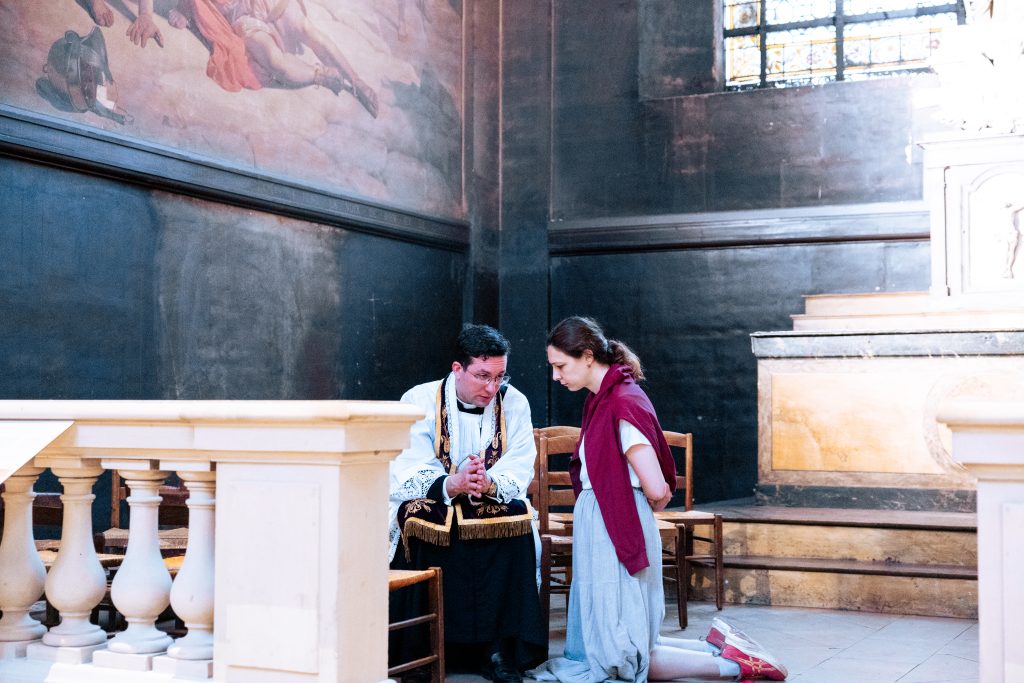
France drops plan to force priests to break seal of confession
France’s parliament has abandoned plans that would have required Catholic priests to report information heard in confession. The controversial proposal was removed from a child protection bill after opposition from bishops and concerns over religious freedom France’s parliament has abandoned controversial plans that would have forced Catholic priests to reveal information heard in the confessional. The National Assembly unanimously adopted the legislation on 1 June following weeks of debate over proposals to strengthen safeguarding measures in schools and extracurricular activities in the wake of the Bétharram abuse scandal. The affair, centred on the Notre-Dame de Bétharram school in south-west France, led to hundreds of allegations of physical, sexual and psychological abuse and intensified demands for stronger protections for children. While the bill ultimately passed with cross-party support, lawmakers removed a provision that had provoked strong opposition from the Catholic Church and concerns among legal experts over religious freedom. The original text would have required ministers of religion to report abuse against minors even when the information was obtained during sacramental confession. It stated that ministers of religion were subject to reporting obligations for information acquired “in the exercise of their ministry” and that no appeal to the seal of confession could exempt them from that duty. The French bishops mounted a public campaign against the proposal before it reached the Assembly chamber, warning that it threatened fundamental liberties protected by French law. In a statement issued ahead of the debate, the Conference of Bishops of France said it shared the determination of public authorities to combat violence against children but expressed “great concern” about elements of the legislation. The bishops said the text called into question “several fundamental freedoms”, including “freedom of conscience, professional secrecy, freedom of education or freedom of religion”. Bishop Jean-Marc Eychenne of Grenoble emerged as one of the leading critics of the measure. “The secrecy of confession is not a privilege for priests, but a right for the faithful,” the bishop said. After intense parliamentary discussions, deputies withdrew the clause before the final vote, allowing the wider legislation to proceed without the measure targeting the seal of confession. Lawmakers also removed a separate proposal that would have tightened state oversight of private schools operating under contract with the government, including many Catholic institutions. The outcome was welcomed by Church leaders, who stressed that their opposition was directed at the confessional provision rather than efforts to improve safeguarding. Bishop Matthieu Rougé of Nanterre said he was “very happy” that parliament had focused on what he described as the “real objectives” of protecting minors and combating violence in educational settings. Referring to the confession controversy, he suggested the issue had entered the debate in a “somewhat parasitic” way. The dispute nevertheless reopened a long-running argument in France over the relationship between Church teaching and state authority. Under Catholic canon law, the seal of confession is absolute. Canon 983 states that “the sacramental seal is inviolable”, and any priest who directly violates it incurs automatic excommunication. The Church teaches that a confessor can never reveal what has been disclosed during the sacrament, regardless of the circumstances. The principle has been formally protected since the Fourth Lateran Council in 1215 and has survived centuries of political upheaval, including the French Revolution and later anti-clerical campaigns that sought to remove the influence of the Church. Photo credit: Notre-Dame de Chrétienté
Jun. 3, 2026
Proposed law could force French priests to break seal of confession
France’s Catholic bishops have urged lawmakers to reject legislation that would require priests to break the seal of confession, stating that “the secrecy of confession is not a privilege for priests, but a right for the faithful” France’s Catholic bishops have urged lawmakers to reject a proposed law that would require priests to report abuse disclosed in confession. The intervention comes ahead of a debate in the National Assembly on 1 June on a bill intended to strengthen the protection of children and combat violence in schools following the Bétharram abuse scandal, which saw hundreds of complaints emerge against the Priests of the Sacred Heart of Jesus of Bétharram in relation to their school in Lestelle-Bétharram and led to allegations that former French Prime Minister François Bayrou had participated in a cover-up. The legislation, introduced by Renaissance deputy Violette Spillebout and supported by Paul Vannier of La France Insoumise, would significantly expand mandatory reporting obligations relating to violence against minors. A key provision states that ministers of religion would no longer be exempt from reporting information obtained in the exercise of their ministry. Paragraph 9 of the proposed legislation states: “Ministers of religion are not exempt with regard to information which they have become aware of in the exercise of their ministry.” The explanatory memorandum accompanying the bill goes further, stating that ministers of religion are subject to reporting obligations “even if they became aware of them in the course of their duties: no ‘seal of confession’ can prevent them from doing so”. In a statement issued before Monday’s debate, the Conference of Bishops of France said it shared the determination of public authorities to combat violence against children but expressed “great concern” about elements of the proposed legislation. The bishops said the text called into question “several fundamental freedoms” and appealed directly to parliamentarians to reconsider the measures before they come before the Assembly. According to the bishops, the proposal raises questions concerning “freedom of conscience, freedom of worship and respect for private life”, while also challenging long-established protections surrounding professional confidentiality and religious ministry. Bishop Jean-Marc Eychenne of Grenoble has emerged as one of the most outspoken critics of the proposal. “The secrecy of confession is not a privilege for priests, but a right for the faithful,” he said. Under the Code of Canon Law, a priest is absolutely forbidden from revealing anything heard during confession, regardless of the circumstances. Priests who directly violate the seal face the Church’s most severe penalties. The inviolability of confession has been recognised in Catholic practice since the early centuries of Christianity and was given formal expression by the Fourth Lateran Council in 1215, which ordered priests to maintain absolute secrecy regarding sins disclosed during confession. The principle has remained unchanged ever since. Under the Ancien Régime, French legal authorities generally recognised the special status of confessional secrecy and treated it as a protected professional confidence. Although tensions periodically arose between civil authorities and ecclesiastical institutions, the seal remained embedded in both legal and religious culture. The French Revolution transformed relations between Church and state. The Civil Constitution of the Clergy subordinated the Church to the revolutionary government and subjected priests to unprecedented state control. While revolutionary legislation did not directly abolish the seal of confession, the wider campaign against the Church created profound pressures on sacramental life and religious practice. During the nineteenth century and under the Napoleonic legal order, French law continued to recognise protections surrounding professional secrecy. The relationship between religious confidentiality and state authority remained the subject of debate, particularly as republican governments expanded their influence over public life. Those tensions resurfaced during the anti-clerical campaigns of the Third Republic, which introduced aggressive secularising measures and sought to reduce the influence of the Church in French society. Yet even during periods of intense conflict between Church and state, the confessional seal itself remained intact. More recently, the issue returned to national prominence following the publication of the Sauvé Report into clerical sexual abuse in 2021. The report recommended that the Church clarify that the secrecy of confession should not prevent the reporting of abuse against minors and vulnerable persons. The recommendation sparked a public confrontation between Church leaders and the French government after Archbishop Éric de Moulins-Beaufort, then president of the bishops’ conference, defended the inviolability of confession. Interior Minister Gérald Darmanin subsequently summoned the archbishop for discussions amid a national debate over the relationship between French law and canon law. Five years later, the dispute has returned to the National Assembly in an even more direct form. As deputies prepare to debate the bill, French bishops are warning that a measure introduced in response to abuse scandals could fundamentally alter the relationship between the state and one of the Catholic Church’s most closely guarded sacraments.
May 30, 2026
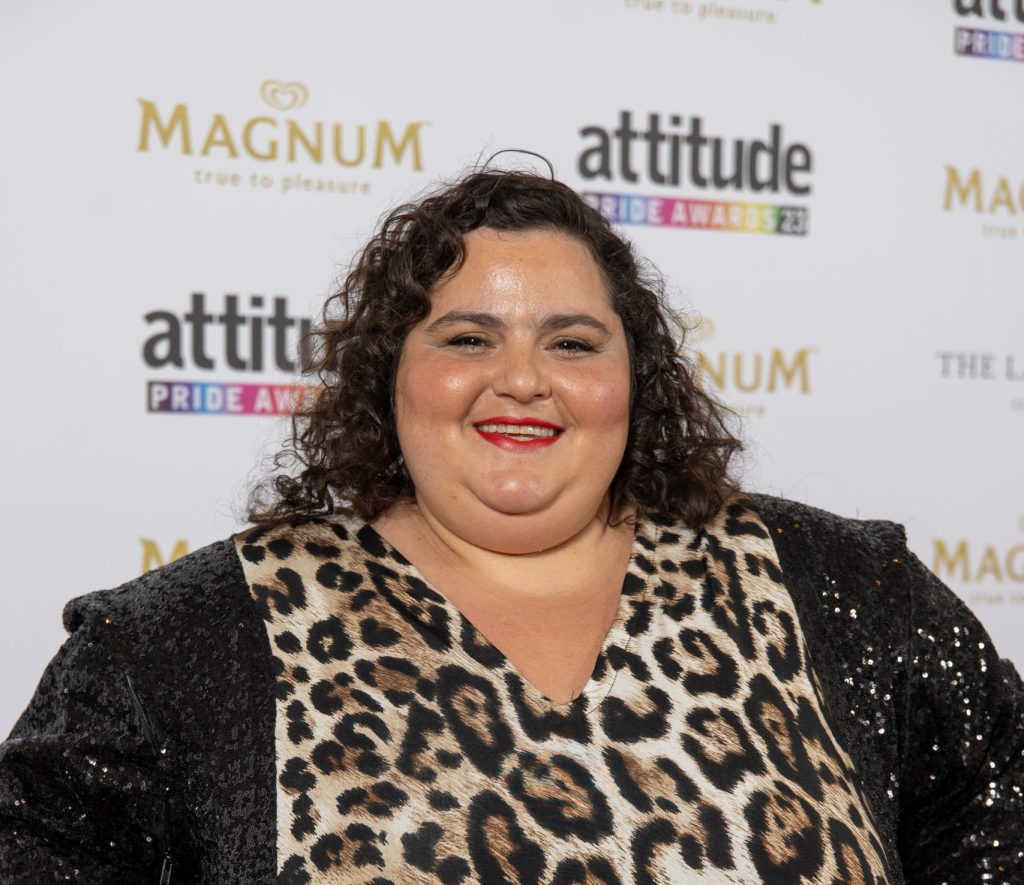
Paris Olympics performer Barbara Butch to direct installations inside Paris churches
Barbara Butch, the DJ and activist who used the Olympics opening ceremony in 2024 to mock Leonardo da Vinci’s Last Supper, is set to direct a series of immersive art installations inside churches across the French capital during this year’s Nuit Blanche festival Barbara Butch, the French DJ and activist who drew international controversy during the opening ceremony of the Paris 2024 Olympic Games, is to direct a series of artistic installations inside churches across Paris during this year’s Nuit Blanche festival. The all-night arts festival, due to take place on June 6 and 7, will feature immersive projects in several historic churches under Butch’s artistic direction, according to the French Christian outlet Tribune Chrétienne . One installation, titled Sous la peau du ciel (“Beneath the Skin of the Sky”), will be staged inside Saint-Laurent Church in the French capital’s 10th arrondissement. Organisers say visitors will be invited to leave recorded “wishes” over the telephone, which will then be combined with atmospheric sounds and digitally altered to create what has been described as “living and evolving sound material”. Festival material describes the work as “an invisible membrane stretched between human hearts and the atmosphere”, adding that visitors will encounter “a living, moving sonic material, made of dispersed intimacies and celestial energies”. The installation has resulted in criticism from some Catholics in France because of Butch’s involvement in the Paris Olympics opening ceremony. During the event on July 26, 2024, Butch appeared in a performance featuring drag artists and a banquet-style tableau which many viewers said resembled Leonardo da Vinci’s The Last Supper . The segment immediately drew accusations of blasphemy and disrespect towards Christianity. The French Bishops’ Conference said afterwards that the ceremony had included “scenes of derision and mockery of Christianity”. The controversy quickly spread beyond France, with Christian leaders and politicians across Europe, Latin America and the United States condemning the performance. The World Council of Churches said many Christians around the world had been “angered” by the spectacle. Outside Christianity, Iran’s Foreign Ministry summoned the French ambassador for the insulting representation of Jesus, a prophet in Islam. Paris 2024 organisers initially said the segment had been inspired by Leonardo da Vinci’s famous depiction of Christ and the Apostles. Thomas Jolly, the artistic director of the ceremony, later disputed that interpretation and said the scene had instead been inspired by pagan imagery linked to the Greek god Dionysus. Art historians subsequently pointed to similarities with The Feast of the Gods , a 17th-century painting by the Dutch artist Jan van Bijlert. Butch defended the performance in media interviews after the backlash. Speaking to French media, she rejected accusations that the ceremony had mocked Christianity and said critics had misunderstood the artistic intention behind the sequence. Following the controversy, Butch said she had received online abuse and threats. Her lawyer later confirmed that legal complaints had been filed. Born in Paris in 1981, Butch has built a career as a DJ and LGBT activist in France. She has publicly described herself as “a fat, Jewish, queer lesbian” and has campaigned on issues linked to body positivity and lesbian visibility. She first became known on the Paris club scene after performing at venues including Rosa Bonheur and La Machine du Moulin Rouge. In recent years she has also appeared on French television and was named “LGBTI personality of the year” in 2021 by the Association of LGBTI Journalists. Nuit Blanche, first launched by the City of Paris in 2002, regularly transforms public buildings, museums and churches into exhibition spaces for modern art installations and experimental performances. Churches across the French capital have frequently hosted concerts, sound exhibitions and light displays during previous editions of the festival.
May 18, 2026